Custom Walk in Melbourne, Australia by qciphotography9396 created on 2025-08-01
Guide Location: Australia » Melbourne
Guide Type: Custom Walk
# of Sights: 12
Tour Duration: 2 Hour(s)
Travel Distance: 3.5 Km or 2.2 Miles
Share Key: PKCSP
Guide Type: Custom Walk
# of Sights: 12
Tour Duration: 2 Hour(s)
Travel Distance: 3.5 Km or 2.2 Miles
Share Key: PKCSP
How It Works
Please retrieve this walk in the GPSmyCity app. Once done, the app will guide you from one tour stop to the next as if you had a personal tour guide. If you created the walk on this website or come to the page via a link, please follow the instructions below to retrieve the walk in the app.
Retrieve This Walk in App
Step 1. Download the app "GPSmyCity: Walks in 1K+ Cities" on Apple App Store or Google Play Store.



Step 2. In the GPSmyCity app, download(or launch) the guide "Melbourne Map and Walking Tours".
Step 3. Tap the menu button located at upper right corner of the "Walks" screen and select "Retrieve custom walk". Enter the share key: PKCSP
1) Bourke Street
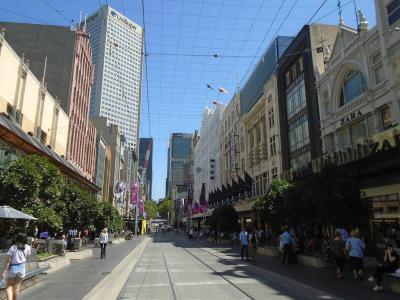
Bourke Street holds a significant place in Melbourne's central business district and is a key part of the Hoddle Grid. It used to be the main entertainment area in inner-city Melbourne during the Marvellous Melbourne era. Today, it's a popular spot for tourists and a major route for trams.
Back in the Marvellous Melbourne era, Bourke Street was home to many theaters and cinemas in the city. Nowadays, it's primarily known as a major shopping area. The Bourke Street Mall stretches between Elizabeth and Swanston Streets, offering numerous retail stores. To the west, you'll find various offices, and to the east, there are plenty of restaurants. It's known for its vibrant atmosphere, which stands in contrast to the more formal Collins Street. People often use the phrase "Busier than Bourke Street" to describe a crowded or bustling place.
The street's name honors Sir Richard Bourke, an Irish-born British Army officer who served as the Governor of New South Wales from 1831 to 1837, a period when the Hoddle Grid was being developed.
The Bourke Street Mall, located between Swanston and Elizabeth Streets, is a pedestrian and tram-only area. It's famous for its retail hubs, including Melbourne's GPO, H&M, Zara, Cotton On, and flagship stores for Myer and David Jones.
Back in the Marvellous Melbourne era, Bourke Street was home to many theaters and cinemas in the city. Nowadays, it's primarily known as a major shopping area. The Bourke Street Mall stretches between Elizabeth and Swanston Streets, offering numerous retail stores. To the west, you'll find various offices, and to the east, there are plenty of restaurants. It's known for its vibrant atmosphere, which stands in contrast to the more formal Collins Street. People often use the phrase "Busier than Bourke Street" to describe a crowded or bustling place.
The street's name honors Sir Richard Bourke, an Irish-born British Army officer who served as the Governor of New South Wales from 1831 to 1837, a period when the Hoddle Grid was being developed.
The Bourke Street Mall, located between Swanston and Elizabeth Streets, is a pedestrian and tram-only area. It's famous for its retail hubs, including Melbourne's GPO, H&M, Zara, Cotton On, and flagship stores for Myer and David Jones.
2) Hardware Lane
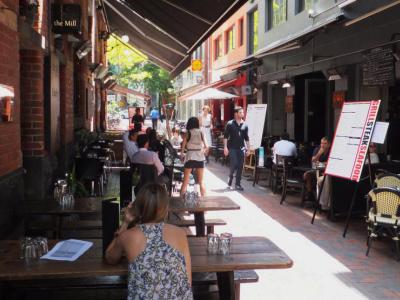
Hardware Lane is one of those Melbourne spots where you stroll in for a coffee and accidentally stay long enough to consider ordering dinner… and maybe dessert. Stretching north to south between Bourke and Little Lonsdale Streets, it even switches names halfway through—because in Melbourne, even the laneways like a costume change. North of Lonsdale, it becomes Hardware Street, as if preparing for its next act...
By daylight, the lane buzzes with cafés, restaurants, hairdressers, and the occasional fast-food joint for those feeling less “culinary adventure” and more “quick rescue mission.” Come evening, the red brick pavement glows under warm lights, the traffic barriers go up from 11 a.m. to 11 p.m., and you might even catch a live jazz set drifting through the tables like the soundtrack to a European holiday you forgot you booked.
Its past is just as colorful. Back in 1857, it was Wrights Lane, and even earlier, it played host to Kirk’s Horse Bazaar—a bustling 1840s marketplace where traders haggled over horses instead of brunch menus. It later became home to Melbourne’s Tattersall’s Club, where bookmakers and punters settled their bets, proving that lively negotiation has always been part of the lane’s DNA.
By the late 1800s, Wrights Lane was lined with hotels: Kirks Bazaar Hotel on one corner, the Governor Arthur Hotel on the other, and the Shamrock Hotel holding court at the Lonsdale end. Today, not a single hotel remains, but the lane has kept the flair for hospitality—just with better coffee and fewer horses...
Keep an eye out for Dynon’s Building at numbers 63–73. Designed by William Pitt—renowned for his work on some of the city's finest Gothic revival buildings, including the Princess Theatre—its four handsome warehouses give the lane a touch of historical swagger.
By daylight, the lane buzzes with cafés, restaurants, hairdressers, and the occasional fast-food joint for those feeling less “culinary adventure” and more “quick rescue mission.” Come evening, the red brick pavement glows under warm lights, the traffic barriers go up from 11 a.m. to 11 p.m., and you might even catch a live jazz set drifting through the tables like the soundtrack to a European holiday you forgot you booked.
Its past is just as colorful. Back in 1857, it was Wrights Lane, and even earlier, it played host to Kirk’s Horse Bazaar—a bustling 1840s marketplace where traders haggled over horses instead of brunch menus. It later became home to Melbourne’s Tattersall’s Club, where bookmakers and punters settled their bets, proving that lively negotiation has always been part of the lane’s DNA.
By the late 1800s, Wrights Lane was lined with hotels: Kirks Bazaar Hotel on one corner, the Governor Arthur Hotel on the other, and the Shamrock Hotel holding court at the Lonsdale end. Today, not a single hotel remains, but the lane has kept the flair for hospitality—just with better coffee and fewer horses...
Keep an eye out for Dynon’s Building at numbers 63–73. Designed by William Pitt—renowned for his work on some of the city's finest Gothic revival buildings, including the Princess Theatre—its four handsome warehouses give the lane a touch of historical swagger.
3) Tattersalls Lane
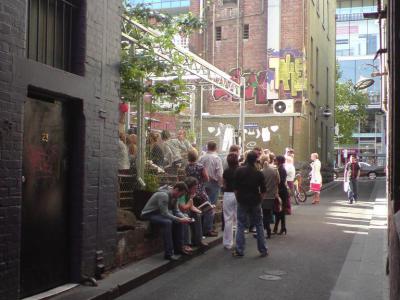
At a glance, Tattersalls Lane may look like a narrow cut-through, but give it a few steps and it turns into a full-blown mood—somewhere between Melbourne’s business core and the bright pull of Chinatown. The laneway takes its name from the old Tattersalls Hotel and Club, though its 19th-century life of brooms, barrels, and back-of-house chores is long gone. Today, it feels more like a compact festival ground that never officially ends. Its location beside Little Bourke Street keeps a steady flow of Chinatown energy drifting in, and that influence colours nearly everything: the food, the pace, and the unapologetically late hours.
The star, of course, is Section 8—a bar built from shipping containers that somehow became one of Melbourne’s most recognisable meeting spots. It sets the tone for the whole lane: open air, slightly chaotic, and effortlessly cool. From there, you’re surrounded by an easy jumble of dumpling joints, Thai and pan-Asian counters, quick-fire noodle kitchens, and snack stalls dishing out skewers, stir-fries, and bubble tea long after office lights go dark. Graffiti wraps the walls, neon hums overhead, and the seating looks like it was collected from five different garages—which is exactly why people love it.
A few venues stand out even in all that colour. The Shanghai Dumpling House remains a crowd magnet, Xiaolong Kan turns hot pots into theatre, and an all-you-can-eat Indian spot adds unexpected spice to the mix. Above the laneway, Ferdydurke serves cocktails with a wink and a view of the action below. Street art completes the backdrop, changing often enough that the lane feels like a rotating exhibition.
For visitors, Tattersalls Lane delivers a concentrated hit of Melbourne’s laneway spirit—informal, multicultural, lively, and best approached with curiosity. It’s a small stretch with a big personality, and it rewards anyone who lets the night unfold one bite, one beat, and one mural at a time...
The star, of course, is Section 8—a bar built from shipping containers that somehow became one of Melbourne’s most recognisable meeting spots. It sets the tone for the whole lane: open air, slightly chaotic, and effortlessly cool. From there, you’re surrounded by an easy jumble of dumpling joints, Thai and pan-Asian counters, quick-fire noodle kitchens, and snack stalls dishing out skewers, stir-fries, and bubble tea long after office lights go dark. Graffiti wraps the walls, neon hums overhead, and the seating looks like it was collected from five different garages—which is exactly why people love it.
A few venues stand out even in all that colour. The Shanghai Dumpling House remains a crowd magnet, Xiaolong Kan turns hot pots into theatre, and an all-you-can-eat Indian spot adds unexpected spice to the mix. Above the laneway, Ferdydurke serves cocktails with a wink and a view of the action below. Street art completes the backdrop, changing often enough that the lane feels like a rotating exhibition.
For visitors, Tattersalls Lane delivers a concentrated hit of Melbourne’s laneway spirit—informal, multicultural, lively, and best approached with curiosity. It’s a small stretch with a big personality, and it rewards anyone who lets the night unfold one bite, one beat, and one mural at a time...
4) Little Bourke Street
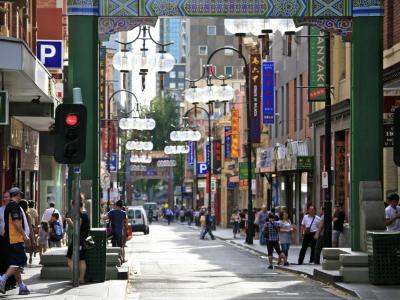
Little Bourke Street may sound modest, but don’t be fooled by its name—this is one of Melbourne’s original east-to-west thoroughfares and the heartbeat of the city’s Chinatown. Heading toward its eastern end, the street suddenly turns into a maze of neon signs, narrow laneways, and arcades that have been buzzing with life since the 1850s, when Chinese immigrants first made this neighbourhood their Australian home.
Today, Chinatown still delivers the classics—dumplings, herbal shops, and sizzling woks—but the menu has expanded far beyond China’s borders. Within a few steps, you can wander from Thai curries to Japanese noodles, Malaysian sweets, Vietnamese grills, Indian spices, and Korean barbecue. Add in annual celebrations like Lunar New Year, and you’ll understand why the area feels like a festival even on a slow afternoon. And if the aromas don’t catch your attention, the architecture will: Victorian-era buildings dressed up with colourful Chinese motifs create a quirky fusion that’s unmistakably Melbourne.
For anyone curious about how Chinese communities shaped the city, pop into the Museum of Chinese Australian History on Cohen Place. It’s compact, engaging, and full of stories that bring the neighbourhood to life. Nearby, the MidCity Arcade offers its own sheltered world of fusion eateries, quirky shops, and splashes of street art—perfect for a wander when the weather can’t make up its mind.
And before you leave, look for the Facing Heaven Archway on Cohen Street. With imperial lions guarding its base and a design inspired by a Ming-dynasty gateway, it’s the kind of landmark that practically insists on being photographed.
Melbourne’s Chinatown may sit on Little Bourke Street—but there’s nothing little about its personality.
Today, Chinatown still delivers the classics—dumplings, herbal shops, and sizzling woks—but the menu has expanded far beyond China’s borders. Within a few steps, you can wander from Thai curries to Japanese noodles, Malaysian sweets, Vietnamese grills, Indian spices, and Korean barbecue. Add in annual celebrations like Lunar New Year, and you’ll understand why the area feels like a festival even on a slow afternoon. And if the aromas don’t catch your attention, the architecture will: Victorian-era buildings dressed up with colourful Chinese motifs create a quirky fusion that’s unmistakably Melbourne.
For anyone curious about how Chinese communities shaped the city, pop into the Museum of Chinese Australian History on Cohen Place. It’s compact, engaging, and full of stories that bring the neighbourhood to life. Nearby, the MidCity Arcade offers its own sheltered world of fusion eateries, quirky shops, and splashes of street art—perfect for a wander when the weather can’t make up its mind.
And before you leave, look for the Facing Heaven Archway on Cohen Street. With imperial lions guarding its base and a design inspired by a Ming-dynasty gateway, it’s the kind of landmark that practically insists on being photographed.
Melbourne’s Chinatown may sit on Little Bourke Street—but there’s nothing little about its personality.
5) Collins Street
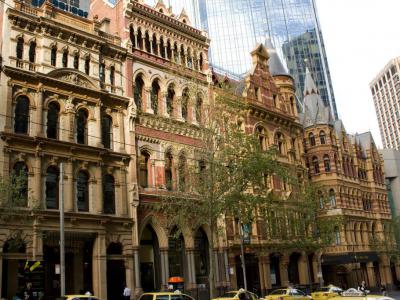
Collins Street is one of those Melbourne originals—the kind that’s been here since the city first got its grid in 1837. Surveyor Robert Hoddle drew the lines, measured the angles, and declared that this street would be exactly one mile long and one chain (that is, 99 feet) wide. And Melbourne, obedient as ever, still follows his blueprint. The name itself comes from Lieutenant-Governor David Collins, who led the founding of Sorrento in 1803—which was the first British settlement in Australia outside of Sydney (back when Tasmania was still Van Diemen’s Land and Australia’s map was mostly wishful thinking)...
Head to the east end, and you’ll hear locals call it the “Paris End”—and honestly, they have a point. With its leafy trees, heritage facades, cafés spilling onto the sidewalk, and boutiques that look like they charge by the eyebrow raise, it gives off an unmistakably French mood. Walk west toward Queen Street, and the atmosphere shifts. This has been Melbourne’s financial district since the 1800s—less croissants, more contracts. The Block Arcade sits at the retail heart of it all, linking Swanston and Elizabeth Streets with old-world charm and enough mosaic flooring to make a Roman jealous.
Over the years, Collins Street has had its share of upgrades, no doubt. Elm trees arrived in 1875, trams clattered in by 1885—originally cable-drawn until electricity took over in 1930. Sadly, not everything survived progress: many boom-time buildings were swept away during the 1950s and '60s redevelopment wave.
But a few architectural gems still hold their ground. The Collins Street Baptist Church, Scot’s Presbyterian Church, and Saint Michael’s Uniting Church keep the Victorian spirit alive, while Alston’s Corner (designed in 1914) shows off Edwardian flair. And at the business end, the dramatic Gothic towers—nicknamed the “Cathedrals of Commerce”—remind you that even accountants can have a sense of style...
Head to the east end, and you’ll hear locals call it the “Paris End”—and honestly, they have a point. With its leafy trees, heritage facades, cafés spilling onto the sidewalk, and boutiques that look like they charge by the eyebrow raise, it gives off an unmistakably French mood. Walk west toward Queen Street, and the atmosphere shifts. This has been Melbourne’s financial district since the 1800s—less croissants, more contracts. The Block Arcade sits at the retail heart of it all, linking Swanston and Elizabeth Streets with old-world charm and enough mosaic flooring to make a Roman jealous.
Over the years, Collins Street has had its share of upgrades, no doubt. Elm trees arrived in 1875, trams clattered in by 1885—originally cable-drawn until electricity took over in 1930. Sadly, not everything survived progress: many boom-time buildings were swept away during the 1950s and '60s redevelopment wave.
But a few architectural gems still hold their ground. The Collins Street Baptist Church, Scot’s Presbyterian Church, and Saint Michael’s Uniting Church keep the Victorian spirit alive, while Alston’s Corner (designed in 1914) shows off Edwardian flair. And at the business end, the dramatic Gothic towers—nicknamed the “Cathedrals of Commerce”—remind you that even accountants can have a sense of style...
6) Cathedral Arcade
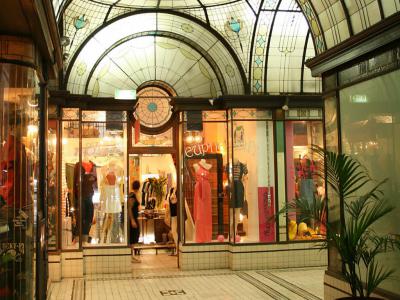
Swing around the corner of Flinders Lane and Swanston Street, and you’ll slip straight into Cathedral Arcade—the ground-floor gateway to the ever-intriguing Nicholas Building. A couple of cafés and boutique shops keep the space humming, but the real reason people pause here is the architecture itself. The leadlight archway and central domes, completed in 1925, glow like a preserved slice of Melbourne’s Art Deco dream, which is why the whole arcade proudly sits on the Victorian Heritage Register.
Above it rises the Nicholas Building, designed by Harry Norris and completed in 1926, right as Melbourne was embracing its Art Deco moment with enthusiasm. Its look is sometimes described as Commercial Palazzo, sometimes as Chicago School—either way, the terracotta façade and oversized Ionic and Doric columns certainly know how to strike a pose. For decades, this building has been something of a vertical village for creative types: fashion designers, illustrators, architects, and assorted makers who add a quiet dose of artistic electricity to every floor.
You can wander into the Nicholas Building directly through Cathedral Arcade, but if you’re lucky enough to visit on an Open Studio day, the experience gets even better. That’s when the artists throw open their doors and let you peek into their worlds—paint-splattered desks, half-finished projects, and all that... It’s one of the few chances in Melbourne where you can admire heritage architecture downstairs and creative chaos upstairs, all in a single stop.
Above it rises the Nicholas Building, designed by Harry Norris and completed in 1926, right as Melbourne was embracing its Art Deco moment with enthusiasm. Its look is sometimes described as Commercial Palazzo, sometimes as Chicago School—either way, the terracotta façade and oversized Ionic and Doric columns certainly know how to strike a pose. For decades, this building has been something of a vertical village for creative types: fashion designers, illustrators, architects, and assorted makers who add a quiet dose of artistic electricity to every floor.
You can wander into the Nicholas Building directly through Cathedral Arcade, but if you’re lucky enough to visit on an Open Studio day, the experience gets even better. That’s when the artists throw open their doors and let you peek into their worlds—paint-splattered desks, half-finished projects, and all that... It’s one of the few chances in Melbourne where you can admire heritage architecture downstairs and creative chaos upstairs, all in a single stop.
7) Centre Place
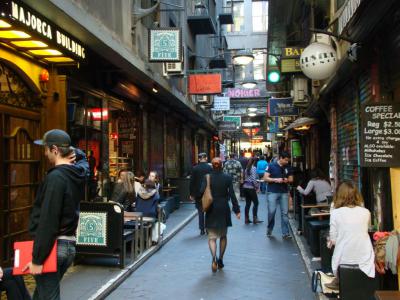
If your ideal afternoon involves good food, a little shopping, and a healthy splash of street art, Centre Place is ready to check every box. Picture a narrow, bustling laneway that feels like Melbourne’s own version of Harry Potter's Diagon Alley—minus the owls, plus a lot more caffeine... Its blue cobblestones are framed by tiny boutiques, hole-in-the-wall cafés, and bars that seem to squeeze into every available corner, all wrapped in layers of graffiti that change with the seasons—and sometimes overnight...
This little artery sits along the pedestrian path linking Flinders Street Station to the Collins Street shopping area. Anyone making that journey inevitably slips through a greatest-hits lineup of Melbourne laneways: Campbell Arcade, Degraves Street, Centre Place, and Centreway Arcade. It’s like a walking sampler of the city’s personality, and Centre Place tends to be the loudest voice in the chorus.
The laneway didn’t always have this magnetic pull, though. Back in the 1980s, it received a full makeover aimed at drawing in more restaurants and small businesses. The plan worked a little too well—today it’s one of the Central Business District’s most beloved pockets, buzzing from breakfast to late afternoon with locals, office workers, and camera-wielding visitors discovering just how much life can fit into one very tight alley.
This little artery sits along the pedestrian path linking Flinders Street Station to the Collins Street shopping area. Anyone making that journey inevitably slips through a greatest-hits lineup of Melbourne laneways: Campbell Arcade, Degraves Street, Centre Place, and Centreway Arcade. It’s like a walking sampler of the city’s personality, and Centre Place tends to be the loudest voice in the chorus.
The laneway didn’t always have this magnetic pull, though. Back in the 1980s, it received a full makeover aimed at drawing in more restaurants and small businesses. The plan worked a little too well—today it’s one of the Central Business District’s most beloved pockets, buzzing from breakfast to late afternoon with locals, office workers, and camera-wielding visitors discovering just how much life can fit into one very tight alley.
8) Princes Bridge
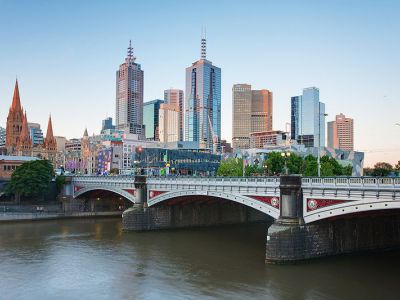
Princes Bridge, originally known as Prince's Bridge, is a prominent structure in the heart of Melbourne, spanning the Yarra River. It occupies a historical location as one of the city's earliest river crossings and serves as a prominent entrance into the city center from the southern side. This bridge connects Swanston Street on the northern bank of the Yarra River to Saint Kilda Road on the southern bank, accommodating both vehicular and pedestrian traffic, as well as trams.
Construction of the present bridge began with the laying of its foundation stone on September 7, 1886. A memorial stone featuring a suitable inscription was placed at the west end of the southern abutment. The bridge was officially inaugurated on October 4, 1888, just in time for the second International Exhibition hosted in Melbourne.
Princes Bridge spans a width of 30 meters (approximately 99 feet) and stretches over a length of 120 meters (around 400 feet). It is supported by bluestone piers adorned with Harcourt granite squat half columns, which in turn carry three iron girder arch spans. The coat of arms displayed on the bridge represent the municipal councils that contributed to the construction costs.
Due to its strategic location, Princes Bridge often serves as a central focal point for various celebratory events in Melbourne, including the Moomba Festival, New Year's Eve festivities, and numerous gatherings along the Yarra River as it flows through the city.
Construction of the present bridge began with the laying of its foundation stone on September 7, 1886. A memorial stone featuring a suitable inscription was placed at the west end of the southern abutment. The bridge was officially inaugurated on October 4, 1888, just in time for the second International Exhibition hosted in Melbourne.
Princes Bridge spans a width of 30 meters (approximately 99 feet) and stretches over a length of 120 meters (around 400 feet). It is supported by bluestone piers adorned with Harcourt granite squat half columns, which in turn carry three iron girder arch spans. The coat of arms displayed on the bridge represent the municipal councils that contributed to the construction costs.
Due to its strategic location, Princes Bridge often serves as a central focal point for various celebratory events in Melbourne, including the Moomba Festival, New Year's Eve festivities, and numerous gatherings along the Yarra River as it flows through the city.
9) St. Paul's Cathedral
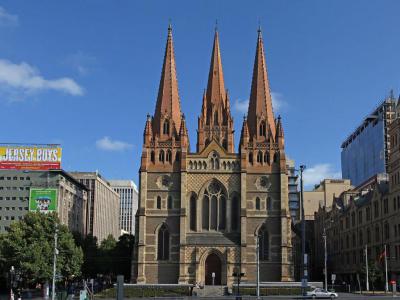
Sitting just across from the hustle of Flinders Street Station, Saint Paul’s Cathedral is a calm reminder to everyone that Melbourne’s skyline had a spiritual side long before espresso bars and laneway murals took over. This spot is more meaningful than it looks: it was here that the very first Christian service in the fledgling settlement was held in 1835, after which the site briefly served as a corn market. Indeed, only in Melbourne could a place go from a prayer to a produce before becoming a cathedral...
The building itself is the work of English architect William Butterfield, who designed it in the Gothic Revival style—characterized by soaring arches with a slightly rebellious streak. The foundation stone went in during 1880, the cathedral was consecrated in 1891, and the spires joined the complex in the 1920s, giving Saint Paul’s the silhouette that now anchors the Central Business District.
Inside, the soundscape is just as impressive. The T.C. Lewis organ, shipped from England, remains one of the finest surviving creations of the celebrated 19th-century organ maker. And if you happen to be nearby on a Wednesday or Friday evening—or on a Sunday morning—you’ll hear the bells, too. Cast in 1889 at London’s Whitechapel Bell Foundry, they offer something rare: true 13-bell change ringing, a tradition that usually stays on English soil.
Saint Paul’s keeps its doors open most of the week, so step inside whenever the mood strikes. Whether you’re drawn by the architecture, the music, or simply the peaceful break from the city’s pace, the cathedral delivers a moment of calm in the middle of Melbourne’s constant motion...
The building itself is the work of English architect William Butterfield, who designed it in the Gothic Revival style—characterized by soaring arches with a slightly rebellious streak. The foundation stone went in during 1880, the cathedral was consecrated in 1891, and the spires joined the complex in the 1920s, giving Saint Paul’s the silhouette that now anchors the Central Business District.
Inside, the soundscape is just as impressive. The T.C. Lewis organ, shipped from England, remains one of the finest surviving creations of the celebrated 19th-century organ maker. And if you happen to be nearby on a Wednesday or Friday evening—or on a Sunday morning—you’ll hear the bells, too. Cast in 1889 at London’s Whitechapel Bell Foundry, they offer something rare: true 13-bell change ringing, a tradition that usually stays on English soil.
Saint Paul’s keeps its doors open most of the week, so step inside whenever the mood strikes. Whether you’re drawn by the architecture, the music, or simply the peaceful break from the city’s pace, the cathedral delivers a moment of calm in the middle of Melbourne’s constant motion...
10) Hosier Lane
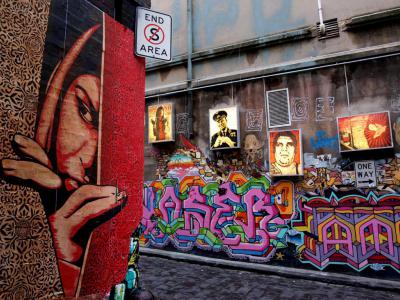
Hosier Lane is a cobblestone street situated on the southern border of the central city layout, renowned for its cultural importance and role as a hub for urban art. It was designated as a Street Art Gallery in 1998, thanks to the City Lights Initiative's endeavors. This lane is conveniently located opposite the entrance to the Atrium at Federation Square on Flinders Street, making it a prominent spot in the city.
This lane has gained recognition for the high quality and often politically-themed nature of its art. It has been featured in the state-sponsored publication, "The Melbourne Design Guide," as well as in Tourism Victoria's "Lose Yourself in Melbourne" advertising campaign. These appearances have raised questions about Victoria's contrasting approach to graffiti. The walls covered in graffiti and various art installations have become a popular backdrop for fashion and wedding photography.
Furthermore, Hosier Lane is famous for its upscale cocktail lounges, including the well-known Misty and MoVida. The lane's prominence was further highlighted when Chef Frank Camorra from MoVida conducted an open-air cooking session on Masterchef Australia season 2, showcasing it as a major attraction in Melbourne.
This lane has gained recognition for the high quality and often politically-themed nature of its art. It has been featured in the state-sponsored publication, "The Melbourne Design Guide," as well as in Tourism Victoria's "Lose Yourself in Melbourne" advertising campaign. These appearances have raised questions about Victoria's contrasting approach to graffiti. The walls covered in graffiti and various art installations have become a popular backdrop for fashion and wedding photography.
Furthermore, Hosier Lane is famous for its upscale cocktail lounges, including the well-known Misty and MoVida. The lane's prominence was further highlighted when Chef Frank Camorra from MoVida conducted an open-air cooking session on Masterchef Australia season 2, showcasing it as a major attraction in Melbourne.
11) Old Treasury Building
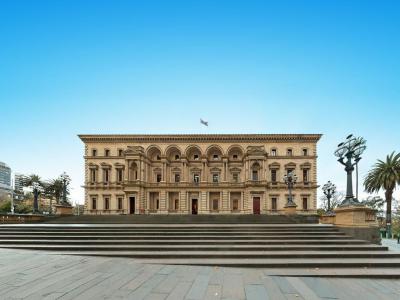
Located within one of Australia's most esteemed 19th-century Gothic Revival buildings, the City Museum of Old Treasury offers an excellent opportunity to delve into Melbourne's rich history. Constructed in 1862, this building served as a key government facility for 130 years and initially functioned as a secure repository for Melbourne's newfound wealth during the gold rush era. In 1992, following the conclusion of its governmental role, the building underwent restoration and was reborn as the City Museum of Old Treasury in 1994. Today, visitors can explore numerous permanent exhibitions along with temporary and visiting displays.
One notable permanent exhibition is "Victorian Archival Treasures," where you can gain insights into various aspects of Melbourne's history, such as Ned Kelly, gold miners from the 1850s, indigenous Victorians, renowned criminals, and the city's early settlement. "Built On Gold" delves into the gold rush period from 1852 to 1862, and this exhibition is situated within the building's former gold vaults. "Growing Up In Old Treasury" recounts the experiences of the Maynard family, who resided in the basement of the building during the 1920s when the father served as superintendent.
One notable permanent exhibition is "Victorian Archival Treasures," where you can gain insights into various aspects of Melbourne's history, such as Ned Kelly, gold miners from the 1850s, indigenous Victorians, renowned criminals, and the city's early settlement. "Built On Gold" delves into the gold rush period from 1852 to 1862, and this exhibition is situated within the building's former gold vaults. "Growing Up In Old Treasury" recounts the experiences of the Maynard family, who resided in the basement of the building during the 1920s when the father served as superintendent.
12) Parliament House of Victoria
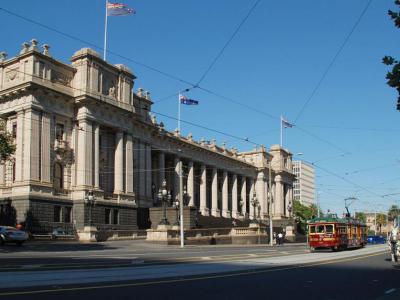
If you're wandering up Bourke Street and wonder why a massive Greek temple seems to be moonlighting as a government office, that would be Parliament House—Victoria’s political headquarters and one of Melbourne’s proudest 19th-century flexes. This is where the state’s two chambers meet: 88 seats downstairs in the Legislative Assembly and 40 upstairs in the Legislative Council. In essence, it is the place where democracy happens… in carefully structured debates and occasionally dramatic headlines.
It all started back in 1851, when Victoria broke away from New South Wales and suddenly needed a building that would declare, “Yes, we are absolutely capable of running our own affairs.” Architects Charles Pasley and Peter Kerr took that mission very seriously, borrowing heavily from ancient Greece and Rome (which is what you do when setting up a new democracy), then positioning their creation on one of the most commanding sites in the young city.
Construction kicked off in 1856, although “construction” may be too generous a word for a project that unfolded in slow, theatrical acts over 70 years. The two parliamentary chambers were finished first, so lawmakers could start legislating, while the rest of the building politely caught up. Additions like the library, Queen’s Hall, and the eastern wing appeared over time. Although the original plans also envisioned an elaborate dome above the building’s central vestibule, cost concerns meant this feature never materialized. Still, the colonnade and Grand Vestibule delivered enough grandeur to make the dome’s absence feel almost intentional.
Then came 1901, when Australia became a federation, and Melbourne was tapped to host the brand-new Federal Parliament. For 26 years, national politics unfolded inside this very building while Victoria’s Parliament temporarily moved out (proving that Parliament House could multitask long before it became a résumé requirement).
Today, after rounds of restoration and modern upgrades, the building continues its original job: housing Victoria’s Parliament, while looking impressive enough to remind everyone where the big decisions are made...
It all started back in 1851, when Victoria broke away from New South Wales and suddenly needed a building that would declare, “Yes, we are absolutely capable of running our own affairs.” Architects Charles Pasley and Peter Kerr took that mission very seriously, borrowing heavily from ancient Greece and Rome (which is what you do when setting up a new democracy), then positioning their creation on one of the most commanding sites in the young city.
Construction kicked off in 1856, although “construction” may be too generous a word for a project that unfolded in slow, theatrical acts over 70 years. The two parliamentary chambers were finished first, so lawmakers could start legislating, while the rest of the building politely caught up. Additions like the library, Queen’s Hall, and the eastern wing appeared over time. Although the original plans also envisioned an elaborate dome above the building’s central vestibule, cost concerns meant this feature never materialized. Still, the colonnade and Grand Vestibule delivered enough grandeur to make the dome’s absence feel almost intentional.
Then came 1901, when Australia became a federation, and Melbourne was tapped to host the brand-new Federal Parliament. For 26 years, national politics unfolded inside this very building while Victoria’s Parliament temporarily moved out (proving that Parliament House could multitask long before it became a résumé requirement).
Today, after rounds of restoration and modern upgrades, the building continues its original job: housing Victoria’s Parliament, while looking impressive enough to remind everyone where the big decisions are made...
