Custom Walk in Santorini, Greece by slsparksra_5553e created on 2025-08-27
Guide Location: Greece » Santorini
Guide Type: Custom Walk
# of Sights: 6
Tour Duration: 7 Hour(s)
Travel Distance: 20.5 Km or 12.7 Miles
Share Key: 3YDQ8
Guide Type: Custom Walk
# of Sights: 6
Tour Duration: 7 Hour(s)
Travel Distance: 20.5 Km or 12.7 Miles
Share Key: 3YDQ8
How It Works
Please retrieve this walk in the GPSmyCity app. Once done, the app will guide you from one tour stop to the next as if you had a personal tour guide. If you created the walk on this website or come to the page via a link, please follow the instructions below to retrieve the walk in the app.
Retrieve This Walk in App
Step 1. Download the app "GPSmyCity: Walks in 1K+ Cities" on Apple App Store or Google Play Store.



Step 2. In the GPSmyCity app, download(or launch) the guide "Santorini Map and Walking Tours".
Step 3. Tap the menu button located at upper right corner of the "Walks" screen and select "Retrieve custom walk". Enter the share key: 3YDQ8
1) Oia Castle (must see)
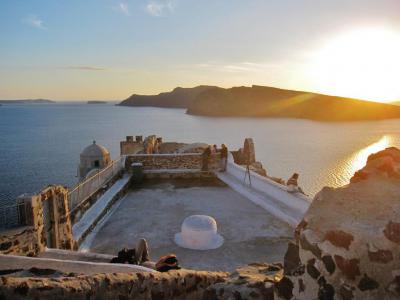
This ancient castle dates back to the late 15th century. The castle's ruins remain one of Oia's most visited attractions and are a popular spot to watch the sunset from.
Oia Castle was built to protect the island and its residents against pirates. Pirates would steal property, kidnap men and women, and sell the kidnapped people at slave markets.
Because of the constant threat, residents built their houses close together in hard-to-reach cliffs. Then, when residents saw pirates approaching, they fled to the castle and hid their valuables in pits under the castle.
The castle's high location made it an excellent lookout station. Venetian rules had residences in the middle of the castle. Its defensive structure made it hard to conquer, but Turkish invaders did succeed in capturing the castle in 1577.
A 1956 earthquake heavily damaged the castle, and most structures fell into the sea. The castle's tower and wall fragments are all that remain. From the castle's ruins, visitors can enjoy beautiful views of the Santorini islands, the volcanic islands of Nea Kameni, Palea Kameni. Visitors can also see Thira and Thirassia from this vantage point.
Today, tourists and locals come to the castle to watch the sunset each night. If you want to participate in this special nightly celebration, come early and grab your spot.
Oia Castle was built to protect the island and its residents against pirates. Pirates would steal property, kidnap men and women, and sell the kidnapped people at slave markets.
Because of the constant threat, residents built their houses close together in hard-to-reach cliffs. Then, when residents saw pirates approaching, they fled to the castle and hid their valuables in pits under the castle.
The castle's high location made it an excellent lookout station. Venetian rules had residences in the middle of the castle. Its defensive structure made it hard to conquer, but Turkish invaders did succeed in capturing the castle in 1577.
A 1956 earthquake heavily damaged the castle, and most structures fell into the sea. The castle's tower and wall fragments are all that remain. From the castle's ruins, visitors can enjoy beautiful views of the Santorini islands, the volcanic islands of Nea Kameni, Palea Kameni. Visitors can also see Thira and Thirassia from this vantage point.
Today, tourists and locals come to the castle to watch the sunset each night. If you want to participate in this special nightly celebration, come early and grab your spot.
2) Windmill of Oia
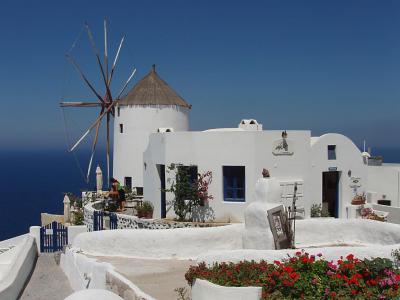
The Windmill of Oia is one of Oia's most iconic photography spots. This picture-perfect windmill is also available as a unique villa rental. If you want to capture the best sunset-watching spot and make memories to last a lifetime, look into renting the Windmill of Oia.
The Windmill of Oia features two bedrooms, a bathroom, and a small kitchen. A winding stone staircase takes guests to each room in the windmill villa. An enormous deck provides breathtaking views and a great spot to relax and watch the world go by.
Santorini is a windy island and is home to about 70 historic windmills. The original windmills might have been built as early as the 14th century. Traditional Santorini windmills were used to grind flour and housed bakeries as well. Most of the windmills you see today were built during the 17th century or later.
The Windmill of Oia features two bedrooms, a bathroom, and a small kitchen. A winding stone staircase takes guests to each room in the windmill villa. An enormous deck provides breathtaking views and a great spot to relax and watch the world go by.
Santorini is a windy island and is home to about 70 historic windmills. The original windmills might have been built as early as the 14th century. Traditional Santorini windmills were used to grind flour and housed bakeries as well. Most of the windmills you see today were built during the 17th century or later.
3) Archaeological Museum of Thera
No one can deny the richness of Greek culture or the influence it has had on the civilizations of the world. Western philosophy, art, science, education, and sports all have roots in Ancient Greece. The Archaeological Museum of Thera is an exhibition hall that features sculptures and inscriptions from the Archaic to the Roman periods. When you visit, you will take a trip back in time and experience history at its finest.
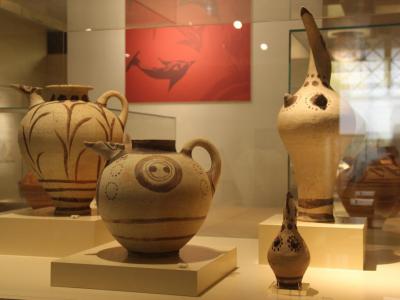
It also has a collection of vases and clay figurines from the Geometric to the Hellenistic periods. The gallery was established in 1902 by the Ministry of Public Works. In 1960, the building was reconstructed to replace the structure that collapsed during the 1956 earthquake.
Although not as stunning as the National Archaeological Museum in Athens, the museum is nonetheless special and interesting. What makes the gallery unique is that its vast and fine collection comes from excavations on the island.
Some of the most important items from the exhibitions include the Theran Amphora with Geometric Decoration, the Volcanic (Trachyte) Boulder, the Upper Part of an Archaic Funerary Kouros, the Torso of an Archaic Funerary Kouros, the Clay Daedalic Figurine, and the Attic Black-Figure Kylix.
Tip:
You can buy a combination ticket for Akrotiri, the Archaeological Museum of Thera and the Museum of Prehistoric Thera.
Unfortunately, at this museum, the descriptions of the items are in French and Greek with no English translation.
It also has a collection of vases and clay figurines from the Geometric to the Hellenistic periods. The gallery was established in 1902 by the Ministry of Public Works. In 1960, the building was reconstructed to replace the structure that collapsed during the 1956 earthquake.
Although not as stunning as the National Archaeological Museum in Athens, the museum is nonetheless special and interesting. What makes the gallery unique is that its vast and fine collection comes from excavations on the island.
Some of the most important items from the exhibitions include the Theran Amphora with Geometric Decoration, the Volcanic (Trachyte) Boulder, the Upper Part of an Archaic Funerary Kouros, the Torso of an Archaic Funerary Kouros, the Clay Daedalic Figurine, and the Attic Black-Figure Kylix.
Tip:
You can buy a combination ticket for Akrotiri, the Archaeological Museum of Thera and the Museum of Prehistoric Thera.
Unfortunately, at this museum, the descriptions of the items are in French and Greek with no English translation.
4) 25 Martiou Street
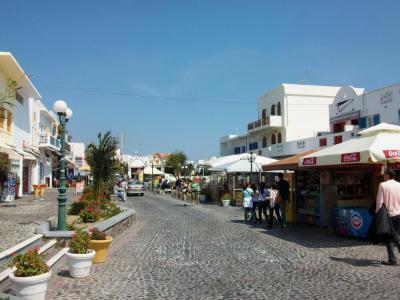
25 Martiou Street, in Santorini, is a picturesque destination that embodies the distinctive charm of this renowned island. Situated in the bustling neighborhood of Thira, the street is acclaimed for its vibrant shopping scene that ranges from quaint boutiques and artisan workshops to a plethora of souvenir shops offering everything from unique handcrafted items to budget-friendly mementos.
As the main shopping hub of Santorini, 25 Martiou Street is framed by the island's iconic architecture - white-washed buildings with blue-domed roofs that reflect the classic Cycladic style. This aesthetic is complemented by vivid splashes of color from blooming bougainvillea vines, enhancing the street’s visual appeal. The cobblestone pathways invite visitors to leisurely explore the area, which offers not only retail therapy but also a taste of local life through its cozy cafes and traditional Greek tavernas.
The street’s proximity to stunning views of the Aegean Sea and the famous Santorini sunsets add to its allure, making it a perfect backdrop for both relaxation and exploration. Whether you're interested in shopping for unique souvenirs, enjoying the local cuisine, or simply taking in the scenic vistas, 25 Martiou Street provides a captivating experience that highlights the beauty and cultural richness of Santorini.
As the main shopping hub of Santorini, 25 Martiou Street is framed by the island's iconic architecture - white-washed buildings with blue-domed roofs that reflect the classic Cycladic style. This aesthetic is complemented by vivid splashes of color from blooming bougainvillea vines, enhancing the street’s visual appeal. The cobblestone pathways invite visitors to leisurely explore the area, which offers not only retail therapy but also a taste of local life through its cozy cafes and traditional Greek tavernas.
The street’s proximity to stunning views of the Aegean Sea and the famous Santorini sunsets add to its allure, making it a perfect backdrop for both relaxation and exploration. Whether you're interested in shopping for unique souvenirs, enjoying the local cuisine, or simply taking in the scenic vistas, 25 Martiou Street provides a captivating experience that highlights the beauty and cultural richness of Santorini.
5) Museum of Prehistoric Thera (must see)
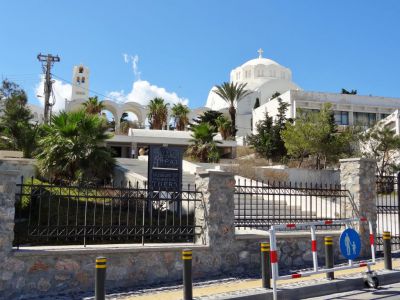
The Museum of Prehistoric Thera allows one to take a step back in time to explore ancient civilizations. The exhibition hall’s collection comes from excavations of ancient Akrotiri and other sites around the Aegean Islands. If you have a strong interest in the prehistoric, this is the place for you. The exhibition hall opened in 2000.
The museum’s collection is organized into four areas, research, geology, the history of the island from the early 17th century BC, and the mature Late Cycladic I period. Although the gallery is very small, it is very well organized and manages to present an interesting mix of artifacts.
Pottery cups, plant fossils, jewelry, jars, marble figures, and plaster casts of furniture, household equipment, tools, and weapons are some of the many items that you will see. Two recommend items to not miss are the frescoes that show Minoans gathering saffron stamens from blooming crocuses and the painted swallows that migrated to the cliffs each year. Other impressive items include wall paintings of the Ladies and Papyri and the Blue Monkeys.
Why You Should Visit:
To enjoy what many experts rated as one of the most important museums in the world since it uniquely shows ordinary everyday life in an Ancient city and civilization buried 3700 years ago, almost 1800 years before Pompei! Everything this museum houses demonstrates how advanced and artistic this ancient civilization was, before being displaced by a major eruption of the island's volcano.
Tip:
Highly recommended in combination with a visit to the archaeological excavations in Akrotiri, where the objects were dug out. You can purchase combination tickets to visit this museum as well as the Akrotiri site.
The museum’s collection is organized into four areas, research, geology, the history of the island from the early 17th century BC, and the mature Late Cycladic I period. Although the gallery is very small, it is very well organized and manages to present an interesting mix of artifacts.
Pottery cups, plant fossils, jewelry, jars, marble figures, and plaster casts of furniture, household equipment, tools, and weapons are some of the many items that you will see. Two recommend items to not miss are the frescoes that show Minoans gathering saffron stamens from blooming crocuses and the painted swallows that migrated to the cliffs each year. Other impressive items include wall paintings of the Ladies and Papyri and the Blue Monkeys.
Why You Should Visit:
To enjoy what many experts rated as one of the most important museums in the world since it uniquely shows ordinary everyday life in an Ancient city and civilization buried 3700 years ago, almost 1800 years before Pompei! Everything this museum houses demonstrates how advanced and artistic this ancient civilization was, before being displaced by a major eruption of the island's volcano.
Tip:
Highly recommended in combination with a visit to the archaeological excavations in Akrotiri, where the objects were dug out. You can purchase combination tickets to visit this museum as well as the Akrotiri site.
6) Akrotiri Excavation Site (must see)
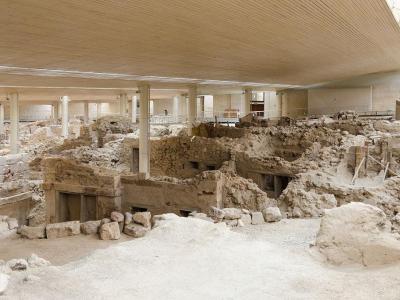
The Akrotiri Excavation Site in Santorini is a significant archaeological site that unveils a well-preserved Cycladic Bronze Age settlement. Named after the nearby village of Akrotiri, this site offers a unique glimpse into ancient life due to its exceptional preservation in volcanic ash from the Theran eruption in the 16th century BCE.
The earliest signs of human activity at Akrotiri date back to the fifth millennium BCE, starting as a modest fishing and farming village. By the end of the third millennium BCE, Akrotiri had developed into a thriving community, likely bolstered by trade with other Aegean cultures, as evidenced by foreign pottery fragments found at the site. Its strategic location on the main sailing route between Cyprus and Minoan Crete further facilitated its growth, particularly in the copper trade. This prosperity is reflected in the settlement’s sophisticated infrastructure, which included paved streets, an extensive drainage system, and advanced craft production.
Excavations on Santorini started in the 19th century, but it was Spyridon Marinatos's comprehensive excavations in 1967 that unveiled the significance of Akrotiri. Marinatos's efforts led to the discovery of the buried city, revealing buildings preserved to heights of more than one story, which posed distinctive challenges for the excavation process.
Excavated artifacts are now housed in the Museum of Prehistoric Thera, showcasing a wide array of objects and artworks, including pottery, which is abundant due to the sudden evacuation of the town. The variety of pottery found, from storage jars to cooking vessels, provides insight into the daily life and activities of the settlement’s inhabitants.
One noteworthy aspect of the excavation is the preservation of furniture. Volcanic ash created molds of disintegrated wooden objects, allowing archaeologists to use plaster to create casts of furniture, such as beds and tables. Offering tables, often found at the site, were made of clay or plaster and decorated similarly to wall paintings.
Why You Should Visit:
Very carefully prepared space showing a whole village's old buildings and life. Excellent guides and lots of information.
The whole area is covered with a hi-tech roof, so you can walk without being grilled by the sun.
The earliest signs of human activity at Akrotiri date back to the fifth millennium BCE, starting as a modest fishing and farming village. By the end of the third millennium BCE, Akrotiri had developed into a thriving community, likely bolstered by trade with other Aegean cultures, as evidenced by foreign pottery fragments found at the site. Its strategic location on the main sailing route between Cyprus and Minoan Crete further facilitated its growth, particularly in the copper trade. This prosperity is reflected in the settlement’s sophisticated infrastructure, which included paved streets, an extensive drainage system, and advanced craft production.
Excavations on Santorini started in the 19th century, but it was Spyridon Marinatos's comprehensive excavations in 1967 that unveiled the significance of Akrotiri. Marinatos's efforts led to the discovery of the buried city, revealing buildings preserved to heights of more than one story, which posed distinctive challenges for the excavation process.
Excavated artifacts are now housed in the Museum of Prehistoric Thera, showcasing a wide array of objects and artworks, including pottery, which is abundant due to the sudden evacuation of the town. The variety of pottery found, from storage jars to cooking vessels, provides insight into the daily life and activities of the settlement’s inhabitants.
One noteworthy aspect of the excavation is the preservation of furniture. Volcanic ash created molds of disintegrated wooden objects, allowing archaeologists to use plaster to create casts of furniture, such as beds and tables. Offering tables, often found at the site, were made of clay or plaster and decorated similarly to wall paintings.
Why You Should Visit:
Very carefully prepared space showing a whole village's old buildings and life. Excellent guides and lots of information.
The whole area is covered with a hi-tech roof, so you can walk without being grilled by the sun.
