Custom Walk in Dushanbe, Tajikistan by juliansmith476 created on 2025-09-03
Guide Location: Tajikistan » Dushanbe
Guide Type: Custom Walk
# of Sights: 16
Tour Duration: 4 Hour(s)
Travel Distance: 6.7 Km or 4.2 Miles
Share Key: NCG4U
Guide Type: Custom Walk
# of Sights: 16
Tour Duration: 4 Hour(s)
Travel Distance: 6.7 Km or 4.2 Miles
Share Key: NCG4U
How It Works
Please retrieve this walk in the GPSmyCity app. Once done, the app will guide you from one tour stop to the next as if you had a personal tour guide. If you created the walk on this website or come to the page via a link, please follow the instructions below to retrieve the walk in the app.
Retrieve This Walk in App
Step 1. Download the app "GPSmyCity: Walks in 1K+ Cities" on Apple App Store or Google Play Store.



Step 2. In the GPSmyCity app, download(or launch) the guide "Dushanbe Map and Walking Tours".
Step 3. Tap the menu button located at upper right corner of the "Walks" screen and select "Retrieve custom walk". Enter the share key: NCG4U
1) Massive Statue of Somoni (must see)
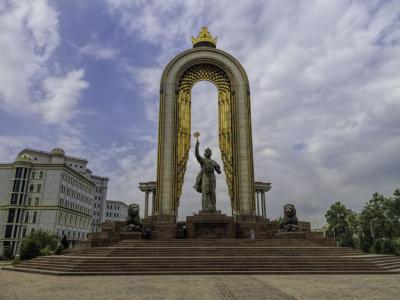
The Statue of Somoni was founded on September 9th, 1999 and is an attraction worth seeing. Tajik considers Somoni the father of modern Tajikistan. The statue is about 11 meters high. They say that the crown is made almost of pure gold and weighs about 10 kilos. This monument was built in honour of Ismail Somoni, who was a Tajik idol who even had currency named after him. The monument looks great and the huge golden ark above the statue of Somoni looks impressive.
2) Silk Road
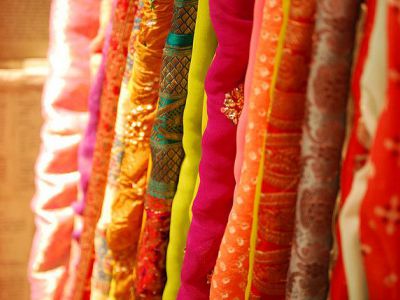
This shop is probably one of the best souvenir shops. If you are looking for something special to bring back home, you may find a lot of interesting and useful things here, for example, traditional Tajik robes, carpets and jewelery. Moreover, you may find the best silk materials and different things made of this fabric.
3) Rudaki Park
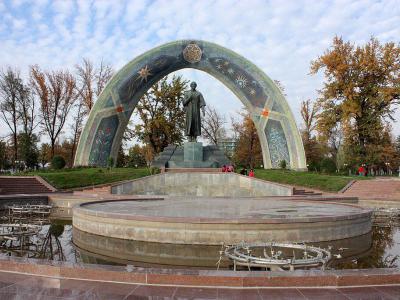
Rudaki Park is dedicated to Rudaki, a significant Persian poet often referred to as the father of artistic verse. The park features benches and well-maintained gardens, making it a popular spot for both locals and international visitors during the summer.
At the north side of the park, there is a statue of Rudaki standing on a tall grey pedestal, leaning on a cane. His name is inscribed on the base in Tajik and Persian script, along with the years of his life, 858-941. A few lines from one of his poems are also included on the lower section of the base.
Rudaki, known as the ‘Adam of Poets,’ was the first to write poetry in the modern Persian language. Born in Panjakent, his mausoleum is a place of interest. Despite reportedly writing over a million poems, only a few have survived. Rudaki Avenue, nearby, is named in his honor.
At the north side of the park, there is a statue of Rudaki standing on a tall grey pedestal, leaning on a cane. His name is inscribed on the base in Tajik and Persian script, along with the years of his life, 858-941. A few lines from one of his poems are also included on the lower section of the base.
Rudaki, known as the ‘Adam of Poets,’ was the first to write poetry in the modern Persian language. Born in Panjakent, his mausoleum is a place of interest. Despite reportedly writing over a million poems, only a few have survived. Rudaki Avenue, nearby, is named in his honor.
4) Statue of Tajik poet Rudaky (must see)
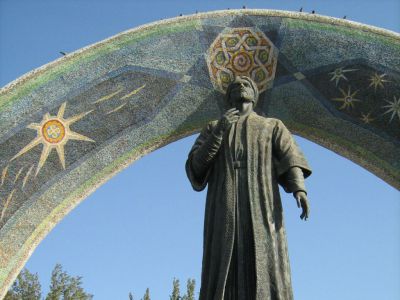
In 2007 the statue of Lenin was replaced by the statue of Tajik, the poet Rudaky. It was made to honour Rudaki's birthday in 1150 and to emphasize that he was the father of Tajik poetry. It is made of bronze by sculptor Vladimir Kozlov and is an exact copy of a monument previously established in Petersburg Smolny Palace. The statue is very beautiful and is surrounded by a colourful arc with paintings of stars and the sun.
5) National Library of Tajikistan
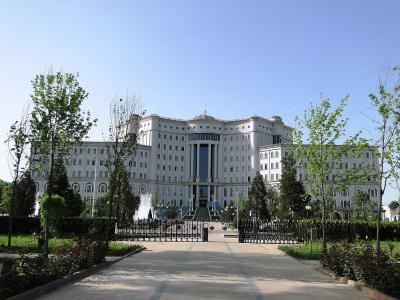
The National Library of Tajikistan is the primary library of the country, dedicated to preserving the cultural heritage of the Republic of Tajikistan. Originally established in 1933 and named after the Persian author Ferdowsi, the library underwent significant changes in 2012 with the opening of a new nine-story building and its renaming to the National Library of Tajikistan. This modern facility includes 15 reading halls and over 20 departments.
Access to the library is free for any Tajik citizen with a passport. The library's main focus is on works of national significance by Tajik people and internationally renowned works by Tajik authors. It also houses a digital collection known as the "Tajikistan National Electric Library," which is freely accessible to citizens within Tajikistan.
Access to the library is free for any Tajik citizen with a passport. The library's main focus is on works of national significance by Tajik people and internationally renowned works by Tajik authors. It also houses a digital collection known as the "Tajikistan National Electric Library," which is freely accessible to citizens within Tajikistan.
6) Palace of Nations
Palace of Nations, also known as Kohi Millat, is the place where the President of Tajikistan, Emomali Rahmonov sometimes holds meetings or brings the summit. This place is very important for the country, because all the main events and meetings are held there and questions about future life, politics and economics are solved.
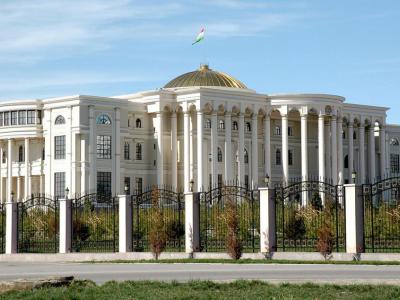
It was built in 2002 and is of a very beautiful, white colour; the building is very impressive and has a lot of arched windows. The roof is supported by massive columns. On top, there is a golden dome, which gives the building a rich, serious look. In the middle of the dome there is a flag of Tajikistan. Inside the building, everything is made stylishly and luxuriously and is a truly amazing place to see.
It was built in 2002 and is of a very beautiful, white colour; the building is very impressive and has a lot of arched windows. The roof is supported by massive columns. On top, there is a golden dome, which gives the building a rich, serious look. In the middle of the dome there is a flag of Tajikistan. Inside the building, everything is made stylishly and luxuriously and is a truly amazing place to see.
7) Dushanbe Flagpole
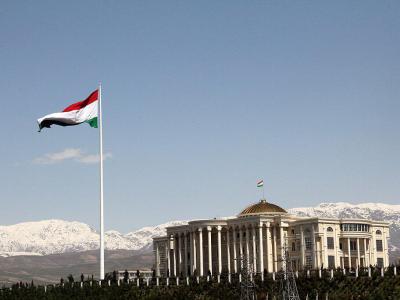
The Dushanbe Flagpole is a free-standing flagpole situated in front of the Palace of Nations. Standing at 165 meters (541 feet), it was the tallest flagpole in the world from its completion in 2011 until the 171-meter (561-foot) Jeddah Flagpole was erected in 2014. Currently, it ranks as the fourth tallest flagpole globally. It displays a 30-meter by 60-meter (98-foot by 197-foot) Flag of Tajikistan, which weighs 700 kilograms (1,540 pounds).
The flagpole is made up of 12-meter sections of steel tube, assembled using a crane.
The design phase started in July 2009, and the sections were fabricated in Dubai by October 2010. These sections were then transported to Dushanbe, where construction began on November 24, 2010, coinciding with Tajikistan's National Flag Day. The final assembly and raising of the flagpole occurred in April and May 2011, with the first test flight of the Tajikistan flag on May 24, 2011.
The flagpole is made up of 12-meter sections of steel tube, assembled using a crane.
The design phase started in July 2009, and the sections were fabricated in Dubai by October 2010. These sections were then transported to Dushanbe, where construction began on November 24, 2010, coinciding with Tajikistan's National Flag Day. The final assembly and raising of the flagpole occurred in April and May 2011, with the first test flight of the Tajikistan flag on May 24, 2011.
8) Tajikistan National Museum (must see)
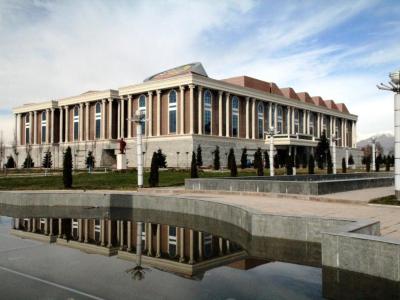
This museum was opened in 1934. This museum is a unique place where you may find a lot of worthy information about the lifestyle in Tajikistan, the Socialist Realist style, Soviet-era literature and much more. You will learn how people lived many years ago, how Tajikistan was formed and who was behind it all. This museum has numerous exhibitions that are dedicated to the President - Emomali Rahmon. You will discover archaeological and ethnographic collections that will teach you more about Tajik history.
9) Amphitheatre
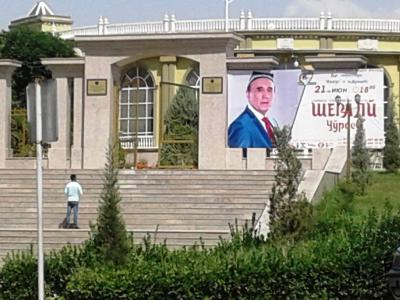
The Amphitheater is one of the main places where cultural and musical events are held. It was built to honour the 80th anniversary in 2004. It has about 1500 seats and can hold about two thousand people! The building is very interesting. It is round in shape and has a lot of arched windows, that bring considerable light into the hall. A big, comfortable stage allows the artists to deliver beautiful performances.
10) Monument to Sadriddin Aini and Maxim Gorky
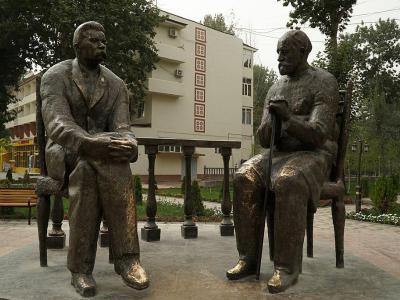
The Monument to Sadriddin Aini and Maxim Gorky is located in the southwestern part of the House of the Union of Writers of Tajikistan, on the north side of Ismail Samani Avenue in Dushanbe. These two authors, considered classics of Russian and Tajik literature from the Soviet period, often met during literary events and influenced each other's work, as noted by literary historians.
The monument features a sculptural composition of the two writers seated together, engaged in a leisurely conversation. A small piece of fence in the background completes the scene. Alongside decorative panels depicting a galaxy of Eastern writers led by Omar Khayyam, the monument adds a distinguished presence to the area around the House of Writers.
The monument features a sculptural composition of the two writers seated together, engaged in a leisurely conversation. A small piece of fence in the background completes the scene. Alongside decorative panels depicting a galaxy of Eastern writers led by Omar Khayyam, the monument adds a distinguished presence to the area around the House of Writers.
11) Writers' Union Building
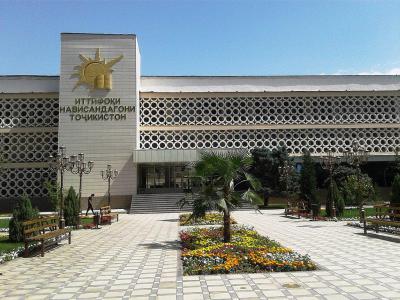
Writers' Union Building is an amazing architectural creation. It looks like a giant wall with many Persian writers and poets standing on pedestals. There are statues of such famous artists as Sadruddin Ayni and Firdausi as well as other people who did a lot for Tajik literature development. This wall is like a memorial to those people who loved and enriched Tajik culture.
12) TSUM
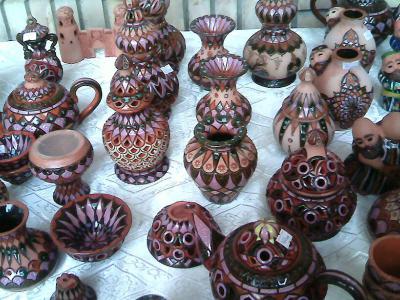
This shop is the main and the biggest shopping venue in Dushanbe. Here you can find different clothes, traditional costumes, suzani embroidery, hats, Pamiri socks, Tajik toys and souvenirs, Tajik art works and crafts, ceramic Central Asian figures and many other beautiful things that are symbols of Tajikistan. The interior of the shop is very interesting: the windows are decorated with Tajik ornaments.
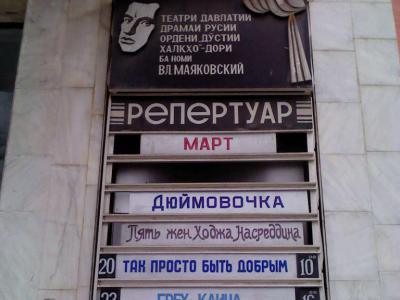
13) Mayakovsky Russian Drama Theater
This theater was founded in 1937. It was opened in 1940 and was called the Mayakovsky Drama Theater. Different artists from the USSR used to come and give performances; even during war the theater didn't cease to work. After the hard times were over, the theater developed and became quite famous. Its repertoire is very variable, from classical to modern dramatic art. It gives about 400 performances a year and is in great demand.
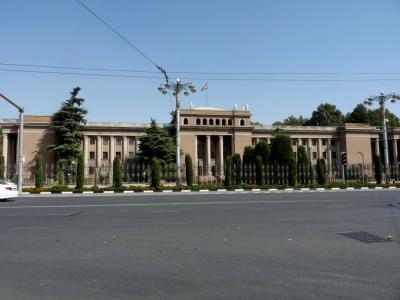
14) Presidential Palace (must see)
Presidential Palace is a place where President of Tajikistan, Emomali Rahmonov sometimes has meetings or brings the summit. This building was built in the 40s and is a classic example of Stalinist administrative architecture. This place is very important to the country, because all the main events and meetings are held there. Questions about future life, politics and economics are solved there. The building is tall and of a light brown colour, which gives it more authority. It is landscaped with fountains and gardens.
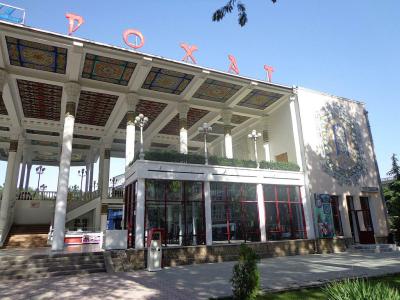
15) Rohat Tea House (Shopping)
This tea house is very popular in Dushanbe - "Rohat" is the true social hub of Dushanbe. While being the most popular tea house in town, for tourists and locals, its first floor is filled with small souvenir shops and the "RAI" art galley, where traditional Tijik art is for sale. You will find national crafts, from paintings to traditional costumes, dolls, painted plates and amazing figurines made of Pamir gemstones.
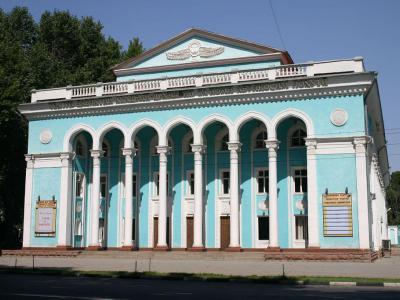
16) Tajik Academic Theatre of A. Lahuti
This theater was founded in 1929 and is one of several buildings in Dushanbe that retains prominent early Stalinist architecture. The plays in the theatre run both in the Tajik and Russian languages, depended on the days. Lahuti was a writer, a poet and a very artful man who contributed greatly to cultural development in Tajik. This theater has a wonderful talented team of 55 artists. All of them have been honoured with prestigious awards from the USSR. This theater is a hot cultural spot in Dushanbe, and one where you can watch beautiful performances and plays by very talented artists both from Tajikistan and from many other corners of the world.
