Custom Walk in Charleston, South Carolina by gretchen_jackson_a4a6f created on 2025-09-04
Guide Location: USA » Charleston
Guide Type: Custom Walk
# of Sights: 13
Tour Duration: 3 Hour(s)
Travel Distance: 4.1 Km or 2.5 Miles
Share Key: JVGHR
Guide Type: Custom Walk
# of Sights: 13
Tour Duration: 3 Hour(s)
Travel Distance: 4.1 Km or 2.5 Miles
Share Key: JVGHR
How It Works
Please retrieve this walk in the GPSmyCity app. Once done, the app will guide you from one tour stop to the next as if you had a personal tour guide. If you created the walk on this website or come to the page via a link, please follow the instructions below to retrieve the walk in the app.
Retrieve This Walk in App
Step 1. Download the app "GPSmyCity: Walks in 1K+ Cities" on Apple App Store or Google Play Store.



Step 2. In the GPSmyCity app, download(or launch) the guide "Charleston Map and Walking Tours".
Step 3. Tap the menu button located at upper right corner of the "Walks" screen and select "Retrieve custom walk". Enter the share key: JVGHR
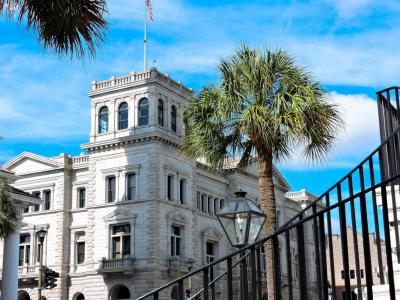
1) Charleston County Courthouse
The design of this Neoclassical building in Charleston was inspired by Leinster House in Dublin, the current seat of the Irish Parliament, architected by James Hoban. The Courthouse itself later served as a model for Hoban's other, most famous creation – the U.S. White House.
George Washington was so impressed with Hoban's previous work that he summoned the architect to Philadelphia in June 1792. The following month, Hoban was declared the winner of the design competition for the presidential mansion in D.C.
An operational courthouse and a museum wrapped into one, this building makes for a nice, albeit short, historical experience. The free self-guided tour is made easy with tidbits of information given by the security guards.
Indeed, history echoes throughout this property hung with original life-size paintings portraying prominent figures like George Washington and Andrew Jackson. While the second-floor porch (from where the Declaration of Independence was read out to Charlestonians) has been unfortunately lost to time, the onsite law library remains intact complete with its wood panels, brass railings, and an impressive collection of leather-bound books in glass cases. An absolute must-see for history lovers!
Tip:
Take a moment to explore the impeccably maintained retro bathroom during your visit.
George Washington was so impressed with Hoban's previous work that he summoned the architect to Philadelphia in June 1792. The following month, Hoban was declared the winner of the design competition for the presidential mansion in D.C.
An operational courthouse and a museum wrapped into one, this building makes for a nice, albeit short, historical experience. The free self-guided tour is made easy with tidbits of information given by the security guards.
Indeed, history echoes throughout this property hung with original life-size paintings portraying prominent figures like George Washington and Andrew Jackson. While the second-floor porch (from where the Declaration of Independence was read out to Charlestonians) has been unfortunately lost to time, the onsite law library remains intact complete with its wood panels, brass railings, and an impressive collection of leather-bound books in glass cases. An absolute must-see for history lovers!
Tip:
Take a moment to explore the impeccably maintained retro bathroom during your visit.

2) Washington Square Park
Located in the beautifully preserved historic district behind City Hall, Washington Square is Charleston's oldest public park, offering a tranquil escape in the heart of the city. Due to its proximity to some of the finest bars and restaurants, it's a popular stop on walking tours. There is plenty of shade and seating in the cozy fenced enclosure where you can relax, snap some photos, people-watch, or simply enjoy Charleston's charm.
Notably, the park features an obelisk-shaped memorial dedicated to the Washington Light Infantry – a miniature version of the obelisk in Washington D.C., made of Carolina gray granite. This memorial, unveiled in 1891, stands 42 feet tall and bears inscriptions of major military battles in U.S. history. Adjacent to it is a statue of George Washington, the "Father of the Nation", which was installed in 1999.
Tip:
The best time to visit the park is in the spring when trees are in bloom.
Notably, the park features an obelisk-shaped memorial dedicated to the Washington Light Infantry – a miniature version of the obelisk in Washington D.C., made of Carolina gray granite. This memorial, unveiled in 1891, stands 42 feet tall and bears inscriptions of major military battles in U.S. history. Adjacent to it is a statue of George Washington, the "Father of the Nation", which was installed in 1999.
Tip:
The best time to visit the park is in the spring when trees are in bloom.

3) Old Exchange and Provost Dungeon (must see)
A public building has occupied the site at East Bay and Broad Streets since Charles Towne's relocation from its original settlement in 1680. The early settlers constructed a court of guard on this spot, using the lower level to imprison pirates and Native Americans, while holding town meetings in the upper hall. The British later erected the current building with striking Palladian architecture to make a grand statement in the bustling colonial port. Completed in 1771, the Exchange quickly became the social, political, and economic center of the growing city. From its steps, the independent colony of South Carolina was officially declared in March 1776.
During the Revolutionary War, the building was transformed into a British prison where signers of the Declaration of Independence were held. In 1788, the convention to ratify the U.S. Constitution convened at the Exchange, and President Washington was lavishly entertained here during his Southern tour. From 1815 to 1896, the Exchange served as both the Charleston post office for the Federal and Confederate governments. An excavation of the dungeon in 1965 revealed part of Charles Towne's original seawall, dating as early as 1698.
Now a National Historic Landmark, the building is open to the public as a museum and offers two halls available for private events. Guided tours, led by costumed guides on each floor, include a visit to the Provost Dungeon, where tales of pirates and colonial days come to life. The experience is both entertaining and educational, shedding light on the building's history and Charleston's unique past. If exploring a real dungeon is high on your bucket list, this place is a must-visit!
Tip:
Aside from delving into the property's rich history, there are engaging activities to enjoy, such as reenactments of the signing of the Declaration of Independence, allowing visitors to immerse themselves in the atmosphere of the 1700s.
During the Revolutionary War, the building was transformed into a British prison where signers of the Declaration of Independence were held. In 1788, the convention to ratify the U.S. Constitution convened at the Exchange, and President Washington was lavishly entertained here during his Southern tour. From 1815 to 1896, the Exchange served as both the Charleston post office for the Federal and Confederate governments. An excavation of the dungeon in 1965 revealed part of Charles Towne's original seawall, dating as early as 1698.
Now a National Historic Landmark, the building is open to the public as a museum and offers two halls available for private events. Guided tours, led by costumed guides on each floor, include a visit to the Provost Dungeon, where tales of pirates and colonial days come to life. The experience is both entertaining and educational, shedding light on the building's history and Charleston's unique past. If exploring a real dungeon is high on your bucket list, this place is a must-visit!
Tip:
Aside from delving into the property's rich history, there are engaging activities to enjoy, such as reenactments of the signing of the Declaration of Independence, allowing visitors to immerse themselves in the atmosphere of the 1700s.
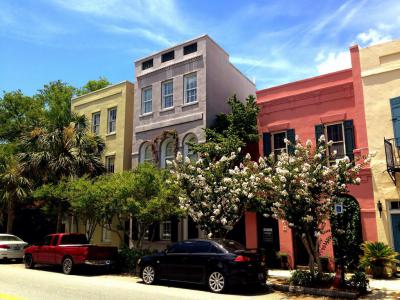
4) Rainbow Row (must see)
Rainbow Row, a series of thirteen pastel-colored mansions facing the Cooper River, is one of the most iconic and photographed sights in the United States. The vibrant, historically accurate colors are a testament to Charleston's Caribbean heritage, a legacy of the English settlers from Barbados who were among the city's earliest residents.
These homes are exceptionally old, considering Charleston's history of fires, hurricanes, and earthquakes. Most of them were built between 1730 and 1750 when they were located right along the Cooper River, serving as storefronts on the wharf. Later, the street was built on top of landfill, creating the current landscape.
Various myths surround the choice of colors. Some claim that intoxicated sailors returning from the port could remember their lodgings based on color, while others suggest that the colors were chosen to indicate the buildings' purpose as stores, making it easier for illiterate slaves to identify where they could shop.
One way or another, each of these houses has a fascinating story to tell about its origin and inhabitants. Despite facing natural calamities and the Civil War, they have remarkably remained intact and have weathered the test of time. If you examine them closely, you can see signs of renovations, including earthquake rods reinforcing the structures to ensure their stability.
Rainbow Row also holds significant importance in American historic preservation. These were the first Charleston homes to undergo restoration and recovery from early-20th-century deterioration. The restoration efforts on Rainbow Row directly inspired the creation of the Preservation Society of Charleston, the first organization of its kind in the United States.
These homes are exceptionally old, considering Charleston's history of fires, hurricanes, and earthquakes. Most of them were built between 1730 and 1750 when they were located right along the Cooper River, serving as storefronts on the wharf. Later, the street was built on top of landfill, creating the current landscape.
Various myths surround the choice of colors. Some claim that intoxicated sailors returning from the port could remember their lodgings based on color, while others suggest that the colors were chosen to indicate the buildings' purpose as stores, making it easier for illiterate slaves to identify where they could shop.
One way or another, each of these houses has a fascinating story to tell about its origin and inhabitants. Despite facing natural calamities and the Civil War, they have remarkably remained intact and have weathered the test of time. If you examine them closely, you can see signs of renovations, including earthquake rods reinforcing the structures to ensure their stability.
Rainbow Row also holds significant importance in American historic preservation. These were the first Charleston homes to undergo restoration and recovery from early-20th-century deterioration. The restoration efforts on Rainbow Row directly inspired the creation of the Preservation Society of Charleston, the first organization of its kind in the United States.
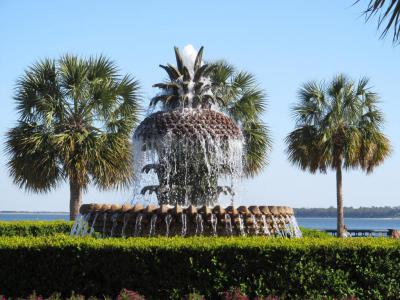
5) Joe Riley Waterfront Park (must see)
Historically, the waterfront area of Charleston, just off the Cooper River, has been a center of maritime traffic, housing wharves and shipping terminals. Refurbished in 1990, it has received numerous accolades, including the Landmark Award from the American Society of Landscape Architects and the National Trust for Historic Preservation.
Waterfront Park is split into sections. At the northern entrance, near the base of Vendue Range, you'll encounter a large fountain that serves as a prominent focal point. From there, Venue Wharf, a wide wooden pier with sheltered swings, extends into the Cooper River.
The park's largest portion consists of two prominent features: a lush canopy of oak trees lining Concord and Prioleau streets for about a quarter-mile; and a 1,200-foot palmetto-lined esplanade that gracefully follows the natural waterline, ensuring public access to the water's edge.
Nestled within the expansive grassy lawn is the famous Pineapple Fountain, located directly in front of the City Gallery and surrounded by trees and benches.
You can pack a picnic lunch, relax on the benches, witness the cruise ships come and go, marvel at the colossal cargo vessels entering one of the nation's busiest ports, and savor the breathtaking sunsets while catching a refreshing breeze on a sunny day.
Why You Should Visit:
Beautifully landscaped areas for picnics; spectacular unobstructed views of Charleston Harbor, the Ravenel Bridge, Patriots Point, and Fort Sumter; a magnificent fountain, a dense oak tree canopy, and numerous benches to engage in the art of people-watching. Sunrises and sunsets here are consistently stunning, and you might even spot dolphins here. There is no admission fee.
Waterfront Park is split into sections. At the northern entrance, near the base of Vendue Range, you'll encounter a large fountain that serves as a prominent focal point. From there, Venue Wharf, a wide wooden pier with sheltered swings, extends into the Cooper River.
The park's largest portion consists of two prominent features: a lush canopy of oak trees lining Concord and Prioleau streets for about a quarter-mile; and a 1,200-foot palmetto-lined esplanade that gracefully follows the natural waterline, ensuring public access to the water's edge.
Nestled within the expansive grassy lawn is the famous Pineapple Fountain, located directly in front of the City Gallery and surrounded by trees and benches.
You can pack a picnic lunch, relax on the benches, witness the cruise ships come and go, marvel at the colossal cargo vessels entering one of the nation's busiest ports, and savor the breathtaking sunsets while catching a refreshing breeze on a sunny day.
Why You Should Visit:
Beautifully landscaped areas for picnics; spectacular unobstructed views of Charleston Harbor, the Ravenel Bridge, Patriots Point, and Fort Sumter; a magnificent fountain, a dense oak tree canopy, and numerous benches to engage in the art of people-watching. Sunrises and sunsets here are consistently stunning, and you might even spot dolphins here. There is no admission fee.
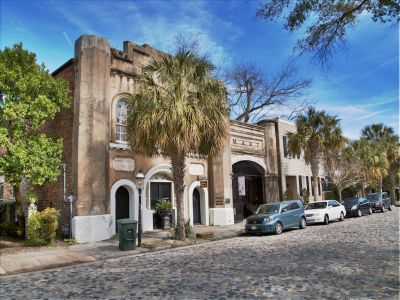
6) Old Slave Mart (must see)
Constructed in 1859, this building, designed in the Gothic Revival and Romanesque styles with a stuccoed façade, originally formed part of the slave market known as Ryan's Mart. Named after city alderman and slave profiteer, Thomas Ryan, it occupied a large enclosed area between Chalmers and Queen Streets, consisting of a four-story slave jail, a kitchen, and a morgue referred to as the "dead house". With slave quarters having been demolished at most antebellum plantations, it is believed to be the last surviving site of a slave auction house.
Since 1938, it has been home to the Old Slave Mart Museum, a highly informative institution portraying the slave trading that occurred here between 1856 and 1863. The museum's knowledgeable staff is well-equipped to answer any questions that may arise while exploring the various exhibits. These delve into the transcontinental and domestic slave trade through large storyboards, personal narratives, and authentic artifacts, including shackles worn by slaves, the whips used to beat them, and even a deed of sale for auctioned slaves.
Among the self-guided educational materials is a firsthand audio account by former slave Elijah Green, born in 1843, who recounted his life's story in 1937. His account offers a sobering, realistic, and educational perspective on the nation's history, with a particular focus on Charleston's African-American heritage, spanning from slavery to emancipation.
Since 1938, it has been home to the Old Slave Mart Museum, a highly informative institution portraying the slave trading that occurred here between 1856 and 1863. The museum's knowledgeable staff is well-equipped to answer any questions that may arise while exploring the various exhibits. These delve into the transcontinental and domestic slave trade through large storyboards, personal narratives, and authentic artifacts, including shackles worn by slaves, the whips used to beat them, and even a deed of sale for auctioned slaves.
Among the self-guided educational materials is a firsthand audio account by former slave Elijah Green, born in 1843, who recounted his life's story in 1937. His account offers a sobering, realistic, and educational perspective on the nation's history, with a particular focus on Charleston's African-American heritage, spanning from slavery to emancipation.

7) Charleston Crafts
Located just across the street from Tommy Condon's Irish Pub & Restaurant, this gallery is a dedicated showcase for the exceptional craftsmanship of South Carolina's finest artists. The exhibitions here encompass a wide range of artistic mediums, including clay, fiber, wood, jewelry, metals, glass, photography, paper, traditional crafts, basketry, leatherwork, toy making, and even the art of soap making. The selection of exhibitors is carefully curated by a panel of fellow artists and gallery owners, ensuring that the displayed works meet the highest standards of craftsmanship.
Charleston Crafts Gallery offers an extensive array of gift options, spanning the spectrum from traditional to contemporary, utilitarian to decorative, and affordable to exclusive. Whether you're seeking a unique keepsake or a distinctive gift, this gallery has something for everyone. Additionally, the gallery keeps things fresh and engaging with ever-changing demonstrations and featured craft artists, making each visit a unique and enriching experience.
Charleston Crafts Gallery offers an extensive array of gift options, spanning the spectrum from traditional to contemporary, utilitarian to decorative, and affordable to exclusive. Whether you're seeking a unique keepsake or a distinctive gift, this gallery has something for everyone. Additionally, the gallery keeps things fresh and engaging with ever-changing demonstrations and featured craft artists, making each visit a unique and enriching experience.

8) Civil War Museum at Market Hall
Designed in the dignified Greek Revival style and currently restored to its original grandeur, the Market Hall building was renowned for its exceptional architectural quality when it was constructed in the 1840s. Modeled after the Temple of the Wingless Victory in Athens, Greece, this structure features a single elevated story resting upon a rusticated open ground-level arcade. Its portico contains four Roman-style Doric columns supporting the pediment and can be accessed via a double flight of stairs with intricate ironwork.
In a way, the building continues to fulfill its original purpose by serving as the front entrance to the adjoining six blocks of covered market space where a variety of fruits, meats, vegetables, and fish were historically sold. However, in 1899, the United Daughters of the Confederacy repurposed the Hall's second floor to establish a museum showcasing Confederate artifacts and other memorabilia from Charleston's Civil War era. While it may not rival the Museum of the Confederacy in Richmond, Virginia, this museum presents a remarkable collection of intriguing relics. Among the exhibits are cannons, uniforms, battle flags, swords, sabres, muskets, and even South Carolina's secession flag. Given the abundance of fascinating items on display, the nominal admission fee is well worth it.
Tip:
Don't forget to peruse the newspapers on display, as they provide a unique perspective on the Civil War.
In a way, the building continues to fulfill its original purpose by serving as the front entrance to the adjoining six blocks of covered market space where a variety of fruits, meats, vegetables, and fish were historically sold. However, in 1899, the United Daughters of the Confederacy repurposed the Hall's second floor to establish a museum showcasing Confederate artifacts and other memorabilia from Charleston's Civil War era. While it may not rival the Museum of the Confederacy in Richmond, Virginia, this museum presents a remarkable collection of intriguing relics. Among the exhibits are cannons, uniforms, battle flags, swords, sabres, muskets, and even South Carolina's secession flag. Given the abundance of fascinating items on display, the nominal admission fee is well worth it.
Tip:
Don't forget to peruse the newspapers on display, as they provide a unique perspective on the Civil War.
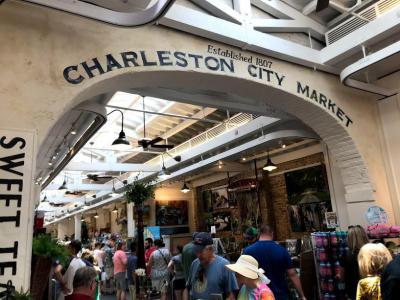
9) Historic City Market (must see)
A visit to Charleston would be incomplete without exploring the Historic City Market. Established in the 1790s, it spans four city blocks, covering a vast 33-acre area, starting from the temple-like Market Hall, which now houses the Confederate Museum.
Back in its prime during the early 20th century, the market provided a livelihood for thousands of African-American entrepreneurs and vendors. Today, it remains operational with dozens of vendors offering a wide range of souvenirs and goods, including clothing, jewelry, chocolates, artwork, Gullah sweetgrass baskets, and regional keepsakes.
Places of note include Callie's Hot Little Biscuit, Carolina Rice, Carolina Tea, and other eateries within the market. The surrounding area also has numerous shops, ice cream parlors, and restaurants, making it worthwhile to plan for several hours of exploration and enjoyment.
An excellent option for a rainy day visit (since it offers shelter), the market allows you to browse comfortably, stay dry, and hopefully discover some great deals. While credit cards are accepted, it's advisable to carry some cash as you might receive discounts for cash payments. Additionally, from April through December, the Night Market hosts local artists and food vendors on weekends.
The entire market complex was declared a National Historic Landmark and added to the National Register of Historic Places in 1973.
Back in its prime during the early 20th century, the market provided a livelihood for thousands of African-American entrepreneurs and vendors. Today, it remains operational with dozens of vendors offering a wide range of souvenirs and goods, including clothing, jewelry, chocolates, artwork, Gullah sweetgrass baskets, and regional keepsakes.
Places of note include Callie's Hot Little Biscuit, Carolina Rice, Carolina Tea, and other eateries within the market. The surrounding area also has numerous shops, ice cream parlors, and restaurants, making it worthwhile to plan for several hours of exploration and enjoyment.
An excellent option for a rainy day visit (since it offers shelter), the market allows you to browse comfortably, stay dry, and hopefully discover some great deals. While credit cards are accepted, it's advisable to carry some cash as you might receive discounts for cash payments. Additionally, from April through December, the Night Market hosts local artists and food vendors on weekends.
The entire market complex was declared a National Historic Landmark and added to the National Register of Historic Places in 1973.
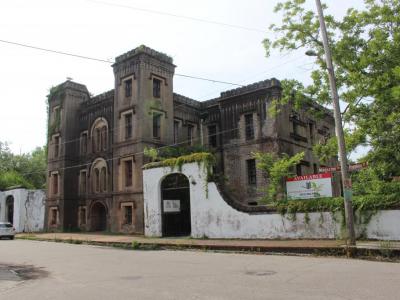
10) Old Charleston Jail
The Old County Jail, in operation from 1802 to 1939, served as the confinement facility for some of Charleston's most notorious criminals, 19th-century pirates, and Civil War prisoners. Situated on Magazine Street in downtown Charleston, this historic building has recently undergone renovation, preserving the original design of the first floor while adding air conditioning for visitors' comfort. Guided tours are available for those interested in delving into the jail's intriguing history. During these tours, participants explore the cells, hallways, and areas where Charleston's earliest wrongdoers resided, gaining insight into the primitive forms of torture and harsh living conditions.
One of the captivating stories told during these tours is that of Lavinia Fisher, the jail's most famous inmate and the first female serial killer in the United States. Over the years, the jail has gained popularity as a tourist attraction, thanks in part to its appearances on various television shows such as Travel Channel, Food Network, Ghost Hunters, Ghost Adventures, and Ghost Brothers.
One of the captivating stories told during these tours is that of Lavinia Fisher, the jail's most famous inmate and the first female serial killer in the United States. Over the years, the jail has gained popularity as a tourist attraction, thanks in part to its appearances on various television shows such as Travel Channel, Food Network, Ghost Hunters, Ghost Adventures, and Ghost Brothers.
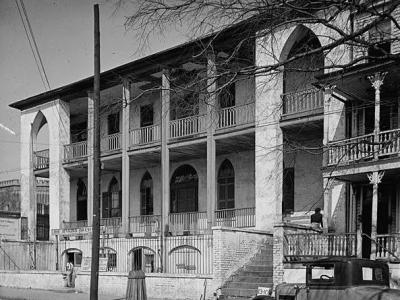
11) Old Marine Hospital
Designated as a National Historic Landmark, the Old Marine Hospital stands as a testament to the architectural prowess of Robert Mills, a Charleston native often hailed as the first professionally trained American architect. Known for his work on iconic structures like the Washington Monument and numerous public buildings across the nation, Mills also played a role in the development of a standardized design pattern for marine hospitals, using the one in Charleston as a model. Remarkably, out of approximately 30 marine hospitals constructed before the Civil War, only eight have survived to this day.
During its construction, the Old Marine Hospital became a focal point of controversy in Charleston's antebellum era. It was perceived by proponents of states' rights as a symbol of the Federal government's overreach, as funding for the hospital was deducted from sailors' wages and supplemented by taxes imposed on the shipping industry. This intervention sparked resentment among many Charlestonians, who were already frustrated with the heavy-handed involvement of the Feds. The appointment of Mills and other professionals from Washington D.C. to oversee the project, along with increased costs, further fueled resentment among supporters of states' rights. By the time the structure was completed in 1834, it was largely rejected by the local community as an unworthy civic achievement.
Despite the controversy, Mills created a building of exquisite charm and refinement. The building's subtle Gothic elements, such as pointed arches, windows, and clustered columns, evoke the aesthetics of medieval religious architecture; even the delicate porch railings were designed to mimic the tracery found around Gothic stained glass windows. The use of piazzas, a common feature in Charleston's domestic architecture, served both practical and climatic purposes, offering protection from the elements.
Following the Civil War, the building was repurposed as a free school for black children by the Episcopal Church. From 1895 to 1939, it served as the Jenkins Orphanage, known for its renowned band that embarked on fundraising tours across the United States and Europe. In 1939, the Housing Authority of Charleston acquired the building for administrative offices, a role it continues to fulfill to this day.
During its construction, the Old Marine Hospital became a focal point of controversy in Charleston's antebellum era. It was perceived by proponents of states' rights as a symbol of the Federal government's overreach, as funding for the hospital was deducted from sailors' wages and supplemented by taxes imposed on the shipping industry. This intervention sparked resentment among many Charlestonians, who were already frustrated with the heavy-handed involvement of the Feds. The appointment of Mills and other professionals from Washington D.C. to oversee the project, along with increased costs, further fueled resentment among supporters of states' rights. By the time the structure was completed in 1834, it was largely rejected by the local community as an unworthy civic achievement.
Despite the controversy, Mills created a building of exquisite charm and refinement. The building's subtle Gothic elements, such as pointed arches, windows, and clustered columns, evoke the aesthetics of medieval religious architecture; even the delicate porch railings were designed to mimic the tracery found around Gothic stained glass windows. The use of piazzas, a common feature in Charleston's domestic architecture, served both practical and climatic purposes, offering protection from the elements.
Following the Civil War, the building was repurposed as a free school for black children by the Episcopal Church. From 1895 to 1939, it served as the Jenkins Orphanage, known for its renowned band that embarked on fundraising tours across the United States and Europe. In 1939, the Housing Authority of Charleston acquired the building for administrative offices, a role it continues to fulfill to this day.
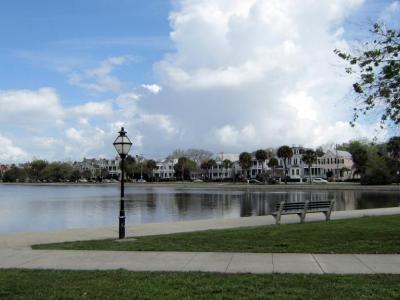
12) Colonial Lake
Historic Colonial Lake, named as a tribute to the "Colonial Commons" established in 1768, has served as a cherished gathering and recreational area in peninsular Charleston for over 150 years. Encircled by broad walkways, it ranks among the city's most favored parks for leisurely afternoon strolls and dog walks. Whether it's joggers and walkers at all hours of the day or fishermen enjoying the pond, the park attracts a diverse range of visitors. The park has a multitude of benches, a seating wall along Rutledge Avenue, and ample open green spaces, making it an ideal spot to take a seat, unwind, and pause during your sightseeing adventures.
In early June 2016, the Charleston Parks Conservancy marked the conclusion of an ambitious $5.9 million revitalization project that had been years in the making, involving extensive planning, fundraising, and design efforts. As part of this endeavor, the Conservancy introduced an initial 20,000 plants to the park, ushering in a fresh horticultural style that adapts to the changing seasons while paying homage to Charleston's history and the natural beauty of the Lowcountry.
Tip:
Make sure not to miss out on the delightful sweet and savory crepes offered at Queen Street Grocery, each named after the islands surrounding Charleston. This establishment, a beloved neighborhood institution, offers a wide range of culinary delights, including pressed breakfast and lunch sandwiches, smoothies, cold brews, and an assortment of craft beers. The art-filled space also functions as a wineshop, so don't hesitate to grab a bottle of your preferred wine, especially if you plan to enjoy a picnic at the Colonial Lake.
In early June 2016, the Charleston Parks Conservancy marked the conclusion of an ambitious $5.9 million revitalization project that had been years in the making, involving extensive planning, fundraising, and design efforts. As part of this endeavor, the Conservancy introduced an initial 20,000 plants to the park, ushering in a fresh horticultural style that adapts to the changing seasons while paying homage to Charleston's history and the natural beauty of the Lowcountry.
Tip:
Make sure not to miss out on the delightful sweet and savory crepes offered at Queen Street Grocery, each named after the islands surrounding Charleston. This establishment, a beloved neighborhood institution, offers a wide range of culinary delights, including pressed breakfast and lunch sandwiches, smoothies, cold brews, and an assortment of craft beers. The art-filled space also functions as a wineshop, so don't hesitate to grab a bottle of your preferred wine, especially if you plan to enjoy a picnic at the Colonial Lake.
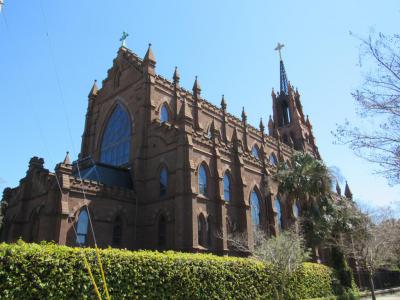
13) Cathedral of St. John the Baptist
The first Cathedral of Saint John the Baptist, completed in 1854, stood as a remarkable specimen of Gothic architecture. Crafted from Connecticut sandstone and crowned by a 200-foot spire, it tragically succumbed to the devastating fire of 1861. However, by 1890, the reconstruction of an almost exact replica of the original edifice had commenced. The design, attributed to Patrick Kelly of Brooklyn, New York, closely adhered to the plans of its predecessor, except for the substitution of a square tower due to budgetary constraints.
It wasn't until 103 years later that a new spire, along with three bells, was finally added atop the tower, culminating the restoration of the historic structure. Comprising Connecticut brownstone, the newer building was eventually completed in 2010. The spacious nave, measuring 150 by 80 feet, is adorned with exquisite stained-glass windows and has a seating capacity for 700 individuals.
Why You Should Visit:
To admire one of North America's most splendid churches, with its unique stained-glass windows, altar, and architectural grandeur.
Tip:
Try to visit on a sunny day to fully appreciate the intricate patterns and colors of the stained-glass windows.
It wasn't until 103 years later that a new spire, along with three bells, was finally added atop the tower, culminating the restoration of the historic structure. Comprising Connecticut brownstone, the newer building was eventually completed in 2010. The spacious nave, measuring 150 by 80 feet, is adorned with exquisite stained-glass windows and has a seating capacity for 700 individuals.
Why You Should Visit:
To admire one of North America's most splendid churches, with its unique stained-glass windows, altar, and architectural grandeur.
Tip:
Try to visit on a sunny day to fully appreciate the intricate patterns and colors of the stained-glass windows.
