Custom Walk in Calgary, Alberta by cindyp56_fb222 created on 2025-09-06
Guide Location: Canada » Calgary
Guide Type: Custom Walk
# of Sights: 16
Tour Duration: 4 Hour(s)
Travel Distance: 7 Km or 4.3 Miles
Share Key: BTZ9Y
Guide Type: Custom Walk
# of Sights: 16
Tour Duration: 4 Hour(s)
Travel Distance: 7 Km or 4.3 Miles
Share Key: BTZ9Y
How It Works
Please retrieve this walk in the GPSmyCity app. Once done, the app will guide you from one tour stop to the next as if you had a personal tour guide. If you created the walk on this website or come to the page via a link, please follow the instructions below to retrieve the walk in the app.
Retrieve This Walk in App
Step 1. Download the app "GPSmyCity: Walks in 1K+ Cities" on Apple App Store or Google Play Store.



Step 2. In the GPSmyCity app, download(or launch) the guide "Calgary Map and Walking Tours".
Step 3. Tap the menu button located at upper right corner of the "Walks" screen and select "Retrieve custom walk". Enter the share key: BTZ9Y
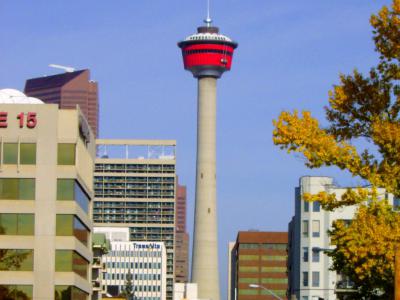
1) Calgary Tower (must see)
Located in downtown Calgary, Calgary Tower stands 191 meter tall. Originally known as the Husky Tower, this observation tower came into existence in 1967 as a part of the urban renewal plan. It was constructed in joint cooperation between Husky oil and Realty Company Limited. The tower was also built to celebrate the 1967 centennial of Canada. It was in 1971 that this World Federation of Great Towers founder member was renamed Calgary Tower.
Calgary Tower was designed and constructed by W. G. Milne & A. Dale and Associates. It took fifteen months to complete building this tower. It can withstand winds up to 161 kilometers per hour and earthquakes.
On your visit to this tower, check out the column that was built in a unique manner by pouring concrete continually for 24 days. Enjoy a delicious meal at the revolving restaurant here. Called Sky 360, the restaurant offers an amazing view. +15 Skyway network connects the base of the tower to Fairmont Palliser Hotel, One Palliser Square and EnCana Place.
Calgary Tower was designed and constructed by W. G. Milne & A. Dale and Associates. It took fifteen months to complete building this tower. It can withstand winds up to 161 kilometers per hour and earthquakes.
On your visit to this tower, check out the column that was built in a unique manner by pouring concrete continually for 24 days. Enjoy a delicious meal at the revolving restaurant here. Called Sky 360, the restaurant offers an amazing view. +15 Skyway network connects the base of the tower to Fairmont Palliser Hotel, One Palliser Square and EnCana Place.
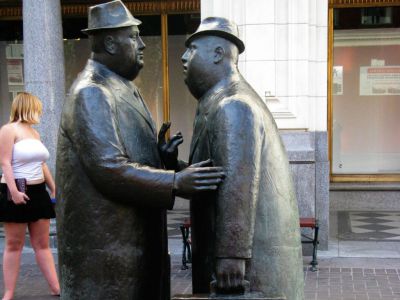
2) The Conversation
Calgary is indeed a city of surprises as any tourist to this city will tell you. There are numerous attractive and interesting tourist attractions that include many unique sculptures that speak volumes about the city and the country.
One of the popular sculptures that tourists never miss is called The Conversation. This is a sculpture that depicts two businessmen who have just met on one of the downtown streets. The sculpture is so realistic that you feel like shaking their hands and joining in the conversation. This sculpture was created by William Hodd McElcheran and was placed in Stephen Avenue in 1981.
It is made of bronze and is kept right on the Pedestrian Mall in Stephen Avenue. Visit this mall and you just cannot miss this Calgary’s most famous sculpture. You will find the businessmen wearing small felt hats and bulky topcoats talking business. They are definitely wheeling and dealing as you can see from their expressions. This artwork belonged to Norcen Energy Resources who in 1981 donated it to the City of Calgary.
On your trip to Calgary, do not miss a visit to the Pedestrian Mall in Stephen Avenue to view this wonderful statue that is certainly the pride of the city.
One of the popular sculptures that tourists never miss is called The Conversation. This is a sculpture that depicts two businessmen who have just met on one of the downtown streets. The sculpture is so realistic that you feel like shaking their hands and joining in the conversation. This sculpture was created by William Hodd McElcheran and was placed in Stephen Avenue in 1981.
It is made of bronze and is kept right on the Pedestrian Mall in Stephen Avenue. Visit this mall and you just cannot miss this Calgary’s most famous sculpture. You will find the businessmen wearing small felt hats and bulky topcoats talking business. They are definitely wheeling and dealing as you can see from their expressions. This artwork belonged to Norcen Energy Resources who in 1981 donated it to the City of Calgary.
On your trip to Calgary, do not miss a visit to the Pedestrian Mall in Stephen Avenue to view this wonderful statue that is certainly the pride of the city.
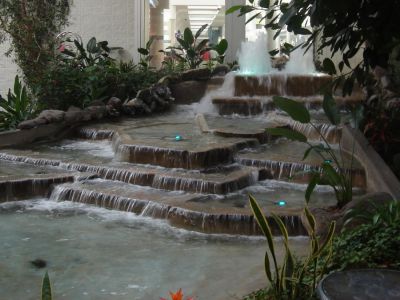
3) Devonian Gardens in Core Shopping Center
Core Shopping Center is a popular spot for tourists and locals. The shopping center includes a number of stores where visitors can pick up necessities, shop for luxury items or find souvenirs. Another reason to go to the Core Shopping Center is not about shopping at all.
Devonian Gardens is an indoor botanical garden that is maintained by the city's parks department. Over 500 trees, a living wall, fountains and even a children's play area are all housed on the top floor of the shopping center.
Visitors are welcome to explore the gardens or find a seat to read a good book. Tables are available for those who would like to have an indoor lunch with an outdoor experience. There is also a public piano that is free for use and a playground just for children.
There is no cost to enjoy this public space. Anyone may stop by for a short visit or stay for as long as they like.
Devonian Gardens is an indoor botanical garden that is maintained by the city's parks department. Over 500 trees, a living wall, fountains and even a children's play area are all housed on the top floor of the shopping center.
Visitors are welcome to explore the gardens or find a seat to read a good book. Tables are available for those who would like to have an indoor lunch with an outdoor experience. There is also a public piano that is free for use and a playground just for children.
There is no cost to enjoy this public space. Anyone may stop by for a short visit or stay for as long as they like.
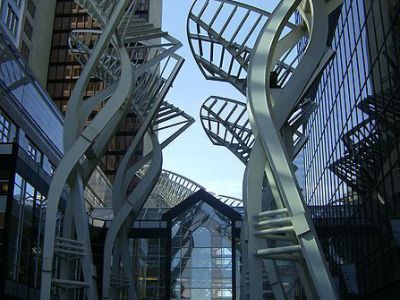
4) Trees Sculptures
The Trees Sculpture is located on Stephen Avenue between Bankers Hall and the Core Shopping Centre. The sculpture was designed by the architect of the Bankers Hall building, The Cohos Evamy Partners, because trees are difficult to grow in Calgary. They also provide an excellent wind break in this busy walking area.
This sculpture goes by many different names. Some call it the Galleria Trees. Other call it the Ten Trees. Everyone who sees them agrees that they are stunning works of art no matter what they are named.
The metal structures are interesting during the daytime, but they should also be viewed at night when they are lit with vibrant, seasonally-themed LED lights. They are also outfitted with a sound system so that music can be played along with the light show.
This sculpture goes by many different names. Some call it the Galleria Trees. Other call it the Ten Trees. Everyone who sees them agrees that they are stunning works of art no matter what they are named.
The metal structures are interesting during the daytime, but they should also be viewed at night when they are lit with vibrant, seasonally-themed LED lights. They are also outfitted with a sound system so that music can be played along with the light show.

5) Central Memorial Park
Also referred to as Memorial Park or Central Park, the Central Memorial Park is in Beltline district, Calgary. At this park, you will find the Memorial Park Library, a cenotaph and R.L. Boyle’s equestrian statue.
This park is spread over 18,900 square meters over an entire city block. It was designed in the year 1889 in Victorian style landscape. Central Memorial park was reopened in May 2010 after it underwent a big budget renovation between 2008 and 2009.
Today it is a hub of exciting activities as many locals and tourists come here to spend enjoyable time. Do not miss out the Boer War monument on your visit to this park. This monument is unique in the sense that you will not find the name of R.L. Boyle, whose statue is here, inscribed on the monument.
This is because, the statue stands as a memorial for all those who fought and sacrificed their lives in the Second Boer War and not exclusively commemorating R.L. Boyle. You will find an inscription of only the dates 1899-1902 on the pedestal.
After the war, another statue of a common First World War soldier was erected outside the Memorial Park by the Imperial Order of the Daughters of the Empire. You can find this statue still standing outside the library section of the park.
This park is spread over 18,900 square meters over an entire city block. It was designed in the year 1889 in Victorian style landscape. Central Memorial park was reopened in May 2010 after it underwent a big budget renovation between 2008 and 2009.
Today it is a hub of exciting activities as many locals and tourists come here to spend enjoyable time. Do not miss out the Boer War monument on your visit to this park. This monument is unique in the sense that you will not find the name of R.L. Boyle, whose statue is here, inscribed on the monument.
This is because, the statue stands as a memorial for all those who fought and sacrificed their lives in the Second Boer War and not exclusively commemorating R.L. Boyle. You will find an inscription of only the dates 1899-1902 on the pedestal.
After the war, another statue of a common First World War soldier was erected outside the Memorial Park by the Imperial Order of the Daughters of the Empire. You can find this statue still standing outside the library section of the park.
6) Counting Crows
Calgary is a city in Alberta, Canada that has a lot to offer tourists in terms of sightseeing. There are many sculptures, museums and parks here that attract thousands of tourists from around the world.
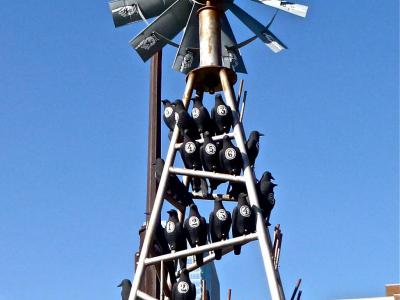
If you are artistically inclined, then you must not miss the Counting Crows sculpture located at Fourth Street and 13th Avenue SW. This sculpture was created by artist Evelyn Grant who handed it over to the City of Calgary in 2001.
Counting Crows is a piece inspired by and based on a traditional English rhyme. People used this rhyme to predict their fortunes. Evelyn Grant is a University of Calgary. She also completed the fine arts program at ACAD.
Counting Crows sculpture resembles an ornamental wind mill. You must visit Fourth Street to view this wonderful sculpture created to perfection by the artist. This is one of the attractions you may miss out with your busy itinerary. So, before you visit Calgary, be sure you include a visit to Counting Crows which reflects Calgary’s artistic talent and passion for sculptures.
Check out all the crows sitting on the windmill. They look so realistic and one look at them and you feel they are ready to fly away.
If you are artistically inclined, then you must not miss the Counting Crows sculpture located at Fourth Street and 13th Avenue SW. This sculpture was created by artist Evelyn Grant who handed it over to the City of Calgary in 2001.
Counting Crows is a piece inspired by and based on a traditional English rhyme. People used this rhyme to predict their fortunes. Evelyn Grant is a University of Calgary. She also completed the fine arts program at ACAD.
Counting Crows sculpture resembles an ornamental wind mill. You must visit Fourth Street to view this wonderful sculpture created to perfection by the artist. This is one of the attractions you may miss out with your busy itinerary. So, before you visit Calgary, be sure you include a visit to Counting Crows which reflects Calgary’s artistic talent and passion for sculptures.
Check out all the crows sitting on the windmill. They look so realistic and one look at them and you feel they are ready to fly away.
7) Brick Couch
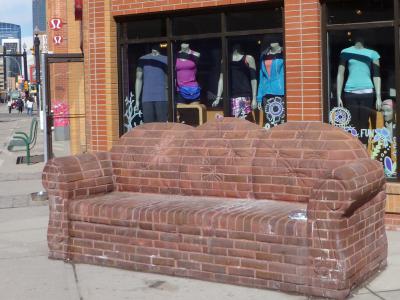
Calgary sculptures not only look realistic, they also create that perfect illusion. Brick Couch is a standing example of an amusing and clever illusion of an inviting, soft couch. This couch is an exciting addition to the street where it is located. It invites people walking around to come and sit on it and enjoy the ambience of the 4th Street.
Created by artists Brian and Dawn, the Brick Couch is made of at least 1100 bricks that are hand-fired. It clearly reflects the way bricks were used historically. Brick Couch is indeed an architectural marvel that must not be missed by any tourist visiting the city.
Brian and Dawn the artists donated this inviting couch to the City of Calgary in 2004. They co-own the Voyager Art & Tile located in Red Deer. This company in Calgary specializes in mosaic, tiles and public art.
One look at the Brick Couch and you know that this is the work of a well qualified ceramic art degree holder. Sure enough, both Brian and Dawn have done their masters in ceramics at the Ohio State University.
This pair of dedicated artists and businessmen has received many awards. They have been commissioned many times for public art. Make sure you see this unique and interesting piece of artwork in Calgary on your trip to the city.
Created by artists Brian and Dawn, the Brick Couch is made of at least 1100 bricks that are hand-fired. It clearly reflects the way bricks were used historically. Brick Couch is indeed an architectural marvel that must not be missed by any tourist visiting the city.
Brian and Dawn the artists donated this inviting couch to the City of Calgary in 2004. They co-own the Voyager Art & Tile located in Red Deer. This company in Calgary specializes in mosaic, tiles and public art.
One look at the Brick Couch and you know that this is the work of a well qualified ceramic art degree holder. Sure enough, both Brian and Dawn have done their masters in ceramics at the Ohio State University.
This pair of dedicated artists and businessmen has received many awards. They have been commissioned many times for public art. Make sure you see this unique and interesting piece of artwork in Calgary on your trip to the city.
8) Hanging Out
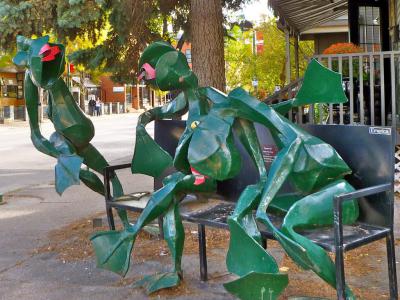
At the lively corner of 4th Street and 21st Avenue Southwest, a trio of oversized amphibians has been turning heads since 1994. Known collectively as Hanging Out, this playful sculpture features three towering frogs-each about 10 feet tall-lounging casually on a steel bench. Created by Calgary artist Peter Smith, the installation combines hand-welded steel, sheet metal, and vibrant paint to bring a humorous, larger-than-life twist to the urban landscape. With a whimsical sense of ease, these frogs have become something of a local institution, often joined by passersby eager to share the bench for a quick photo.
More than just quirky décor, Hanging Out invites reflection on public space, scale, and interaction. “Because of their size,” Smith notes, “they can dominate a frog/human interaction-who is watching whom?” The figures may be fixed in steel, but they exude a laid-back personality that encourages onlookers to slow down, smile, and maybe even strike up a conversation with a stranger. True to their easygoing pose, the frogs don’t mind sharing the bench, offering a rare moment of levity in the daily urban shuffle.
In early 2025, the frogs briefly hopped out of sight, prompting a wave of concern from locals and curious updates on Reddit. But fear not-these steel creatures were merely away for a much-needed restoration. According to the 4th Street BIA, they’re “on a leap of absence” and will return refreshed and shinier than ever. Until then, their spot on the bench remains reserved.
More than just quirky décor, Hanging Out invites reflection on public space, scale, and interaction. “Because of their size,” Smith notes, “they can dominate a frog/human interaction-who is watching whom?” The figures may be fixed in steel, but they exude a laid-back personality that encourages onlookers to slow down, smile, and maybe even strike up a conversation with a stranger. True to their easygoing pose, the frogs don’t mind sharing the bench, offering a rare moment of levity in the daily urban shuffle.
In early 2025, the frogs briefly hopped out of sight, prompting a wave of concern from locals and curious updates on Reddit. But fear not-these steel creatures were merely away for a much-needed restoration. According to the 4th Street BIA, they’re “on a leap of absence” and will return refreshed and shinier than ever. Until then, their spot on the bench remains reserved.
9) Stampede Corral
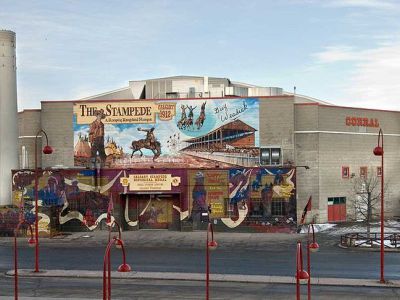
If you are interested in rodeo and ice hockey, you must visit Stampede Corral or Calgary Corral in Calgary, Alberta, Canada. This arena was constructed in 1950 to replace the Victoria Arena. Since then it has been a home to the Calgary Stampeder’s Hockey Club.
This arena hosts the annual Calgary Stampede and has a seating capacity of 6,475. Currently, the arena also houses the United FC indoor soccer club and is managed by the Calgary Stampede non-profit organization. This soccer club takes part in the Canadian Major Indoor Soccer League.
The first ever hockey game played here was on 26th December 1950. During that game, part of the Western Canada Senior Hockey League, the Corral Stampeders defeated the Edmonton Flyers 5:0. Since then, this arena has hosted many prestigious tournaments, among which the 1988 Winter Olympics figure skating and ice hockey events and World Figure Skating Championship in 1972. Quite often, the Stampede Corral also hosts Canada’s Davis Cup tennis team.
During the Calgary Stampede, the arena comes alive with the wrestling super shows. On your visit here, do not miss going through the extensive Canadian private sports photo collection. This collection is on public display. Among other notable events held regularly at the Stampede Corral arena are the Superdogs held during Calgary Stampede and Exhibition, and the Rodeo Royal held in April.
This arena hosts the annual Calgary Stampede and has a seating capacity of 6,475. Currently, the arena also houses the United FC indoor soccer club and is managed by the Calgary Stampede non-profit organization. This soccer club takes part in the Canadian Major Indoor Soccer League.
The first ever hockey game played here was on 26th December 1950. During that game, part of the Western Canada Senior Hockey League, the Corral Stampeders defeated the Edmonton Flyers 5:0. Since then, this arena has hosted many prestigious tournaments, among which the 1988 Winter Olympics figure skating and ice hockey events and World Figure Skating Championship in 1972. Quite often, the Stampede Corral also hosts Canada’s Davis Cup tennis team.
During the Calgary Stampede, the arena comes alive with the wrestling super shows. On your visit here, do not miss going through the extensive Canadian private sports photo collection. This collection is on public display. Among other notable events held regularly at the Stampede Corral arena are the Superdogs held during Calgary Stampede and Exhibition, and the Rodeo Royal held in April.
10) Family of Horses
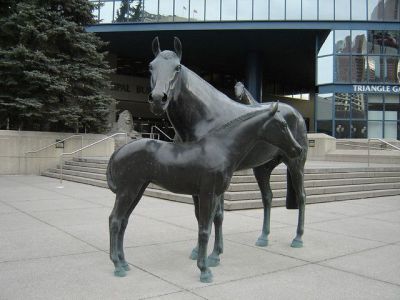
Family of Horses is a statue donated to the City of Calgary by Spruce Meadows owned by the Southern Family. Spruce Meadows came into existence for the exclusive purpose of spreading goodwill, good friendship and good commerce.
The culmination of Southern family’s dream, Spruce Meadows today is managed by corporations, athletes’, volunteers, fans, staff and officials. This unique and memorable place is a dream shared by these stakeholders.
This venue sees many international level sporting events being held. It also organizes show jumping tournaments for different age groups. In a clean and green environment, the horse is celebrated and encouraged to breed and train.
As a contribution to the City of Calgary, Spruce Meadows donated the Family of Horses statues which today stand in front of the City Hall. Spruce Meadow’s contribution to the city reflects Calgary’s deep passion and love for horses.
Tourists to the city enjoy a visit to Spruce Meadows as well as the City Hall to view these statues. You will find the stallion positioned in such a manner that it overlooks the foal and mare. This signifies the strength and kinship among the families here and the special bond they share. Do not miss a visit to the City Hall and see the interesting Family of Man statues on your trip to Calgary.
The culmination of Southern family’s dream, Spruce Meadows today is managed by corporations, athletes’, volunteers, fans, staff and officials. This unique and memorable place is a dream shared by these stakeholders.
This venue sees many international level sporting events being held. It also organizes show jumping tournaments for different age groups. In a clean and green environment, the horse is celebrated and encouraged to breed and train.
As a contribution to the City of Calgary, Spruce Meadows donated the Family of Horses statues which today stand in front of the City Hall. Spruce Meadow’s contribution to the city reflects Calgary’s deep passion and love for horses.
Tourists to the city enjoy a visit to Spruce Meadows as well as the City Hall to view these statues. You will find the stallion positioned in such a manner that it overlooks the foal and mare. This signifies the strength and kinship among the families here and the special bond they share. Do not miss a visit to the City Hall and see the interesting Family of Man statues on your trip to Calgary.
11) Burns Building
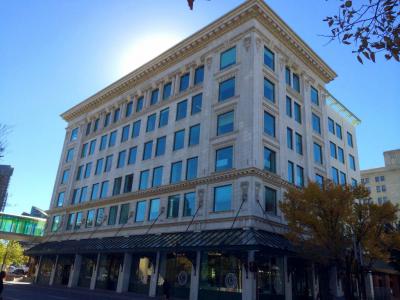
Ask any tourist back from Calgary and he will tell you that no matter what, one should not miss a visit to Burns Building. Located at 237-8th Avenue right across the City Hall and Olympic Plaza, this six storied edifice was constructed by Pat Burns, the meat baron, and was meant to serve as a flagship market and corporate headquarters for Burns Foods. Burns building was constructed during the historically significant year of 1913 when many prominent buildings, such as Lancaster Block, Palliser Hotel, Hudson’s Bay Store and Canada Life Building, came into existence.
Immediately after construction, the Burns Building housed a retail meat market on the ground floor. Enter this level and you will find a dozen towering Doric marble columns that are 25 foot high each. A variety of different tenants occupied the other 35,000 square feet of office space in the Burns.
Burns Building was constructed in Edwardian Classical architectural style. You will find ornamental sculpted moldings including lion heads on the terracotta exterior. The main corridors and stairways of the building are finished with green and white Italian marble. Even back then, this structure featured conveniences such as ventilation and steam heating. Every single office had natural gas lighting apart from electricity. Pay a visit to this historically significant building on your trip to Calgary.
Immediately after construction, the Burns Building housed a retail meat market on the ground floor. Enter this level and you will find a dozen towering Doric marble columns that are 25 foot high each. A variety of different tenants occupied the other 35,000 square feet of office space in the Burns.
Burns Building was constructed in Edwardian Classical architectural style. You will find ornamental sculpted moldings including lion heads on the terracotta exterior. The main corridors and stairways of the building are finished with green and white Italian marble. Even back then, this structure featured conveniences such as ventilation and steam heating. Every single office had natural gas lighting apart from electricity. Pay a visit to this historically significant building on your trip to Calgary.
12) Glenbow Museum (must see)
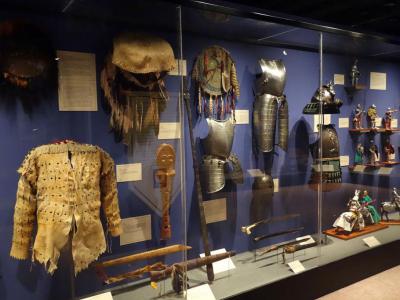
A trip to Calgary is certainly incomplete without a visit to Glenbow Museum. This museum features a total of 20 galleries with 93,000 square feet of exhibition space. As this largest museum in Western Canada displays over one million objects, it is recommended to keep an entire day for your visit here.
You will find four permanent collections here including Ethnology, Cultural history, Mineralogy and Military history. As you browse through the collections, you will learn a lot of interesting things about Canada and its rich history.
Over 100,000 objects from all over the world are on display at the cultural history collection. Right from the 1800s, you will gain a deep insight into the life, culture and history of Western Canada.
This museum also features the largest military collection in Western Canada. Displaying over 26,000 items, this collection features Asian, European and North American firearms and other interesting artifacts spanning five centuries.
Browse through the Glenbow ethnology collection to find at least 48,000 items that take gives you a peek into those indigenous people of North America’s Northern Plains. Glenbow Museum also features Canadian medals, decorations and orders and Japanese arms and armor. Browse through the mineralogy collection to find interesting semi-precious and precious stones as well as minerals from across the world.
Editor's Note: Glenbow Museum building is closed for a major renovation and is expected to reopen in 2026.
You will find four permanent collections here including Ethnology, Cultural history, Mineralogy and Military history. As you browse through the collections, you will learn a lot of interesting things about Canada and its rich history.
Over 100,000 objects from all over the world are on display at the cultural history collection. Right from the 1800s, you will gain a deep insight into the life, culture and history of Western Canada.
This museum also features the largest military collection in Western Canada. Displaying over 26,000 items, this collection features Asian, European and North American firearms and other interesting artifacts spanning five centuries.
Browse through the Glenbow ethnology collection to find at least 48,000 items that take gives you a peek into those indigenous people of North America’s Northern Plains. Glenbow Museum also features Canadian medals, decorations and orders and Japanese arms and armor. Browse through the mineralogy collection to find interesting semi-precious and precious stones as well as minerals from across the world.
Editor's Note: Glenbow Museum building is closed for a major renovation and is expected to reopen in 2026.
13) Family of Man
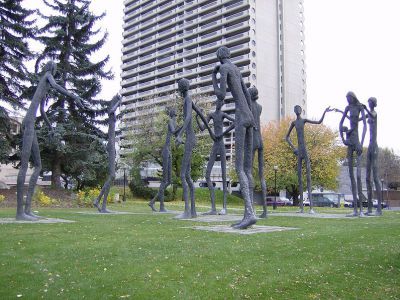
Family of Man is a 21 feet tall set of sculptures that were created exclusively to be displayed at the British Pavilions at Expo 67. These sculptures were designed by Mario Armengol to portray they way Britain handles international responsibilities specifically challenges in the form of world problems.
Mario Armengol expertly depicts two different moods through these sculptures namely the dominating nature of man and a feeling of dependence and insignificance, a completely contradictory mood.
In spite of being 21 feet tall, these sculptures reflect raceless, naked and expressionless human women and men. All sculptures are combined in groups and each one of them extend their hands in gesture of goodwill and fellowship.
After the Expo 67 concluded, the sculptures were bought on behalf of Maxwell Cummings and Sons by Robert Cummings. It was donated to Calgary by this company later. The City of Calgary appointed a special committee to review and identify the best site for these statues. A suitable location was then identified. Today the Family of Man statues stand in front of the Calgary Education Center.
Many tourists come to see these unique and interesting sculptures. Do not miss a visit to this education center and see these sculptures on your trip to Calgary.
Mario Armengol expertly depicts two different moods through these sculptures namely the dominating nature of man and a feeling of dependence and insignificance, a completely contradictory mood.
In spite of being 21 feet tall, these sculptures reflect raceless, naked and expressionless human women and men. All sculptures are combined in groups and each one of them extend their hands in gesture of goodwill and fellowship.
After the Expo 67 concluded, the sculptures were bought on behalf of Maxwell Cummings and Sons by Robert Cummings. It was donated to Calgary by this company later. The City of Calgary appointed a special committee to review and identify the best site for these statues. A suitable location was then identified. Today the Family of Man statues stand in front of the Calgary Education Center.
Many tourists come to see these unique and interesting sculptures. Do not miss a visit to this education center and see these sculptures on your trip to Calgary.
14) Wonderland Sculpture (must see)
The Bow is a crescent shaped skyscraper in Calgary. It is a groundbreaking structure that has been ranked as one of the top 10 architectural projects in the world by "Azure Magazine." A walking tour of Calgary assuredly includes a stop by the Bow, but the reason is more for a sculpture in the plaza than for the skyscraper itself.
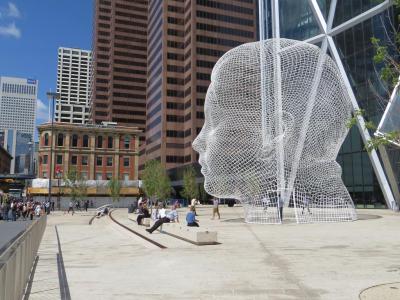
Wonderland is a 39-foot tall (roughly 12 meters) statue in the shape of a young girl's head. The bent wire sculpture was created by artist Jaume Plensa. It is meant to represent the dreams of the young people of the province.
Unlike most sculptures, Wonderland has an entrance that allows visitors to view the artwork from the inside. They can view the city from the perspective of all of those who are represented by this sculpture.
Wonderland is prominently displayed on 6th Avenue. It is a short walk from Olympic Plaza, making it a quick yet meaningful part of a walking tour of the city.
Wonderland is a 39-foot tall (roughly 12 meters) statue in the shape of a young girl's head. The bent wire sculpture was created by artist Jaume Plensa. It is meant to represent the dreams of the young people of the province.
Unlike most sculptures, Wonderland has an entrance that allows visitors to view the artwork from the inside. They can view the city from the perspective of all of those who are represented by this sculpture.
Wonderland is prominently displayed on 6th Avenue. It is a short walk from Olympic Plaza, making it a quick yet meaningful part of a walking tour of the city.
15) Stephen Avenue (must see)
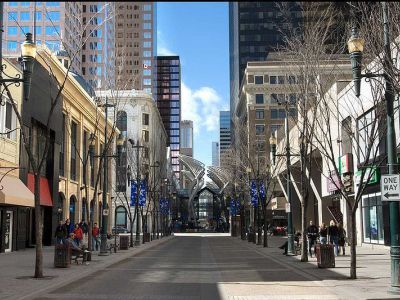
Downtown Calgary is where all the action is and this is the hub of Calgary shopping and sightseeing. On your trip to this city, you must not miss a visit to the major pedestrian mall Stephen Avenue.
This street features some of the best cafes, bars, pubs and finest restaurants. If you love shopping this is where you must be. Stephen Avenue is a shopper’s delight with its high end retail stores and exclusive boutiques.
Some of the major shopping centers here include The Bay Department Store, Scotia Center, Fashion Central, Bankers Hall and The Core Shopping Center. Other attractions located on this street include hotels such as Calgary Marriott and Hyatt Regency Calgary and the famous Telus Convention Center.
Stephen Avenue is also where you can find many ancient, historic buildings. In 1992, the Canadian government declared this street as a Canadian historic site. Stephen Avenue got its name from the first Canadian Pacific Railway president and the first Baron Mount Stephen, George Stephen.
As you walk around the street, you will be impressed by the majestic, sandstone buildings that were built specifically to withstand fire following the 1886 fire that damaged most of the city. Remember to enjoy a visit to this popular street on your trip to Calgary.
This street features some of the best cafes, bars, pubs and finest restaurants. If you love shopping this is where you must be. Stephen Avenue is a shopper’s delight with its high end retail stores and exclusive boutiques.
Some of the major shopping centers here include The Bay Department Store, Scotia Center, Fashion Central, Bankers Hall and The Core Shopping Center. Other attractions located on this street include hotels such as Calgary Marriott and Hyatt Regency Calgary and the famous Telus Convention Center.
Stephen Avenue is also where you can find many ancient, historic buildings. In 1992, the Canadian government declared this street as a Canadian historic site. Stephen Avenue got its name from the first Canadian Pacific Railway president and the first Baron Mount Stephen, George Stephen.
As you walk around the street, you will be impressed by the majestic, sandstone buildings that were built specifically to withstand fire following the 1886 fire that damaged most of the city. Remember to enjoy a visit to this popular street on your trip to Calgary.
16) Mechanical Horse
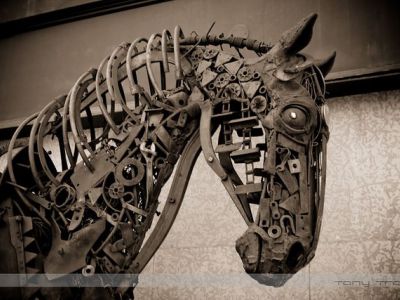
The Mechanical Horse is a striking example of urban steampunk artistry. Crafted from discarded gears, chains, and other metallic components, this life-size sculpture mimics the form of a stallion, its intricate framework revealing every repurposed relic. The sculpture has earned its place as a favoured photo backdrop for both tourists and locals alike.
The work, attributed variously to artists such as Russell Zeid or Dixie Jernett (sometimes known as “Powder the Plow Horse” or “Steam‑Punk Clydesdale”), evokes Alberta’s equine heritage with a modern twist. As a testament to upcycling, the sculpture transforms what was once scrap into a symbol of resilience and creative reuse. Its rusted patina and mechanical details invite viewers to explore the relationship between nature, industry, and artistry.
What sets the Mechanical Horse apart is its eclectic composition. Scraps of farm equipment, automotive parts, and industrial machinery interlace to form its skeleton, while reflective chrome hooves and spines of welded rods give life to its steely visage. This blend of raw materials crafts a narrative of transformation, where abandoned metal gains new purpose, mirroring Calgary’s evolution from frontier town to modern metropolis.
For visitors, encountering the Mechanical Horse offers more than a photo opportunity. It sparks curiosity, prompting questions about its origins, the artistic process behind it, and the stories hidden in its welded seams. Positioned in the heart of a city known for celebrating its Western roots-especially during the Stampede-this sculpture serves as a bridge between past and present, tradition and innovation.
The work, attributed variously to artists such as Russell Zeid or Dixie Jernett (sometimes known as “Powder the Plow Horse” or “Steam‑Punk Clydesdale”), evokes Alberta’s equine heritage with a modern twist. As a testament to upcycling, the sculpture transforms what was once scrap into a symbol of resilience and creative reuse. Its rusted patina and mechanical details invite viewers to explore the relationship between nature, industry, and artistry.
What sets the Mechanical Horse apart is its eclectic composition. Scraps of farm equipment, automotive parts, and industrial machinery interlace to form its skeleton, while reflective chrome hooves and spines of welded rods give life to its steely visage. This blend of raw materials crafts a narrative of transformation, where abandoned metal gains new purpose, mirroring Calgary’s evolution from frontier town to modern metropolis.
For visitors, encountering the Mechanical Horse offers more than a photo opportunity. It sparks curiosity, prompting questions about its origins, the artistic process behind it, and the stories hidden in its welded seams. Positioned in the heart of a city known for celebrating its Western roots-especially during the Stampede-this sculpture serves as a bridge between past and present, tradition and innovation.
