Custom Walk in Salzburg, Austria by yvonne_jackson_ca5fe created on 2025-10-12
Guide Location: Austria » Salzburg
Guide Type: Custom Walk
# of Sights: 16
Tour Duration: 2 Hour(s)
Travel Distance: 2.9 Km or 1.8 Miles
Share Key: 2B5FL
Guide Type: Custom Walk
# of Sights: 16
Tour Duration: 2 Hour(s)
Travel Distance: 2.9 Km or 1.8 Miles
Share Key: 2B5FL
How It Works
Please retrieve this walk in the GPSmyCity app. Once done, the app will guide you from one tour stop to the next as if you had a personal tour guide. If you created the walk on this website or come to the page via a link, please follow the instructions below to retrieve the walk in the app.
Retrieve This Walk in App
Step 1. Download the app "GPSmyCity: Walks in 1K+ Cities" on Apple App Store or Google Play Store.



Step 2. In the GPSmyCity app, download(or launch) the guide "Salzburg Map and Walking Tours".
Step 3. Tap the menu button located at upper right corner of the "Walks" screen and select "Retrieve custom walk". Enter the share key: 2B5FL
1) Hohensalzburg (High Salzburg Fortress) (must see)
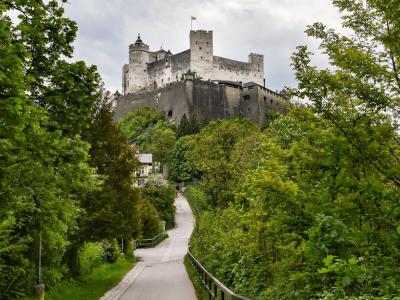
Sitting atop the Fortress Mountain (Festungsberg) at an altitude of 506 meters, the mighty High Salzburg Fortress (Hohensalzburg) dominates the skyline of Salzburg.
Archaeological findings revealed a Roman fort once present at this site. The current construction was started in 1077 by one of the city's prince-archbishops and was more a show of the Catholic Church's power and determination than anything else. Let's say that the archbishops were more businessmen and politicians than churchmen... but that sums up the Middle Ages in many places.
What started as a small castle eventually grew into a grand, whitewashed fortress – 250 meters (820 feet) long and 150 meters (490 feet) wide – making it one of the largest medieval castles in Europe, so foreboding in fact, that no army ever tried attacking it for over eight centuries.
Still, during the course of history, the fortress did see action – during the German Peasants' War in 1525 – and underwent further modifications in the Thirty Years' War (which lasted from 1618 to 1648). By the 19th century, after a stint as a military barracks and a storage depot, the fortress was decommissioned, in 1861, and opened to the public by Habsburg Emperor Franz Josef.
Being one of Europe's best-preserved castles, it has undergone significant transformations since its refurbishment in the late 19th century, including the addition of the Fortress Railway (Festungsbahn) funicular in 1892.
Inside, the fortress boasts luxurious state apartments, the Golden Hall, and the Golden Chamber, exemplifying its role as both a residence and a refuge. It features the "Salzburg Bull," a large mechanical organ, dating from 1502, that plays daily between Palm Sunday and October 31, at 7, 11, and 18 o'clock. The fortress is adorned with marble pillars, a coffered ceiling with gold stars, and a chapel with a star-vaulted ceiling. The bedchamber combines historic splendor with modern updates, showcasing precious textiles, gilded wainscoting, and a once state-of-the-art toilet...)))
On top of that, the High Salzburg Fortress offers unique panoramic views of the city, mountains, and surrounding plains, as well as cafés and a handful of museums. It’s a pleasant place to grab an ice cream cone and wander the whitewashed maze of buildings while soaking up the medieval ambiance.
Tip:
It's worth going to for the views alone, but the short guided tour is also fascinating. They do a great job telling the story of this fortress and its growth over the centuries.
Don't miss visiting the few rooms with the marionettes on display, and try to leak into the old church as well.
Although most visitors opt for the one-minute trip on the funicular, consider walking up if you are in good shape and the weather allows, as it makes the experience more enjoyable and there are some nice things to see on the way.
To save money and avoid the crowds, take advantage of online booking using the 'early bird' pricing (you'll then scan tickets from your device to get access to the site). If time allows, take advantage of dinner and the concerts which feature local musicians playing wonderful classical music from the region.
Archaeological findings revealed a Roman fort once present at this site. The current construction was started in 1077 by one of the city's prince-archbishops and was more a show of the Catholic Church's power and determination than anything else. Let's say that the archbishops were more businessmen and politicians than churchmen... but that sums up the Middle Ages in many places.
What started as a small castle eventually grew into a grand, whitewashed fortress – 250 meters (820 feet) long and 150 meters (490 feet) wide – making it one of the largest medieval castles in Europe, so foreboding in fact, that no army ever tried attacking it for over eight centuries.
Still, during the course of history, the fortress did see action – during the German Peasants' War in 1525 – and underwent further modifications in the Thirty Years' War (which lasted from 1618 to 1648). By the 19th century, after a stint as a military barracks and a storage depot, the fortress was decommissioned, in 1861, and opened to the public by Habsburg Emperor Franz Josef.
Being one of Europe's best-preserved castles, it has undergone significant transformations since its refurbishment in the late 19th century, including the addition of the Fortress Railway (Festungsbahn) funicular in 1892.
Inside, the fortress boasts luxurious state apartments, the Golden Hall, and the Golden Chamber, exemplifying its role as both a residence and a refuge. It features the "Salzburg Bull," a large mechanical organ, dating from 1502, that plays daily between Palm Sunday and October 31, at 7, 11, and 18 o'clock. The fortress is adorned with marble pillars, a coffered ceiling with gold stars, and a chapel with a star-vaulted ceiling. The bedchamber combines historic splendor with modern updates, showcasing precious textiles, gilded wainscoting, and a once state-of-the-art toilet...)))
On top of that, the High Salzburg Fortress offers unique panoramic views of the city, mountains, and surrounding plains, as well as cafés and a handful of museums. It’s a pleasant place to grab an ice cream cone and wander the whitewashed maze of buildings while soaking up the medieval ambiance.
Tip:
It's worth going to for the views alone, but the short guided tour is also fascinating. They do a great job telling the story of this fortress and its growth over the centuries.
Don't miss visiting the few rooms with the marionettes on display, and try to leak into the old church as well.
Although most visitors opt for the one-minute trip on the funicular, consider walking up if you are in good shape and the weather allows, as it makes the experience more enjoyable and there are some nice things to see on the way.
To save money and avoid the crowds, take advantage of online booking using the 'early bird' pricing (you'll then scan tickets from your device to get access to the site). If time allows, take advantage of dinner and the concerts which feature local musicians playing wonderful classical music from the region.
2) Residenz (Residence Palace) (must see)
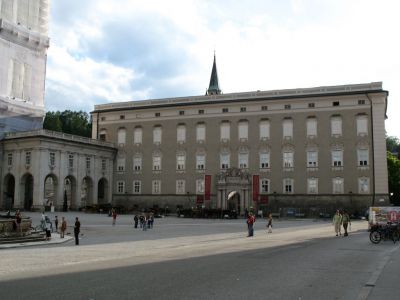
At the very heart of Salzburg's baroque historic district, the Residence Palace, also known as the Old Residence (Alte Residenz), overlooks Cathedral Square (Domplatz) and the spacious Residence Square (Residenzplatz) with its famous marble fountain. First mentioned in 1120, for centuries this place accommodated prince-archbishops of Salzburg who used it as a symbol of their political status.
The palace, in its present form, emerged at the turn of the 17th century as the home of Wolf Dietrich von Raitenau, the most powerful among the city's prince-archbishops. The Wallistrakt wing of the palace, added in 1604, was the accommodation extension purpose-built for him. Throughout the 18th century, additional Baroque elements and artworks enhanced the palace's grandeur. Following the secularization of Salzburg in 1803, the property served the Austrian imperial family.
The Residence Galery (Residenzgalerie), added in 1923, houses an art collection that was gathered to replace the one lost during the Napoleonic wars. The gallery's sumptuous chambers and halls showcase a magnificent cross-section of European painters from the 16th to the 19th centuries (featuring the likes of Rembrandt, Rubens, and Brueghel).
Since the 1950s, the palace courtyard has provided a lovely setting for the Salzburg opera festival and is a good place to discover Mozart's lesser-known treasures.
It was in the state rooms of this palace that Mozart first performed for Salzburg's Archbishop. At the age of 14, he became the first violinist of the court orchestra, while at the age of 19, his violin concert (KV 219 in A major) was performed for the first time in the Conference Hall.
Tip:
Admission to the Residence Palace is included in the Salzburg Card if you buy it online before visiting. The tour can take two to three hours if you listen to the complete overview.
You can get an audio guide and visit many rooms within the palace (audience rooms, ballrooms, private rooms, etc.) while enjoying a superb aerial view of the square below.
The palace, in its present form, emerged at the turn of the 17th century as the home of Wolf Dietrich von Raitenau, the most powerful among the city's prince-archbishops. The Wallistrakt wing of the palace, added in 1604, was the accommodation extension purpose-built for him. Throughout the 18th century, additional Baroque elements and artworks enhanced the palace's grandeur. Following the secularization of Salzburg in 1803, the property served the Austrian imperial family.
The Residence Galery (Residenzgalerie), added in 1923, houses an art collection that was gathered to replace the one lost during the Napoleonic wars. The gallery's sumptuous chambers and halls showcase a magnificent cross-section of European painters from the 16th to the 19th centuries (featuring the likes of Rembrandt, Rubens, and Brueghel).
Since the 1950s, the palace courtyard has provided a lovely setting for the Salzburg opera festival and is a good place to discover Mozart's lesser-known treasures.
It was in the state rooms of this palace that Mozart first performed for Salzburg's Archbishop. At the age of 14, he became the first violinist of the court orchestra, while at the age of 19, his violin concert (KV 219 in A major) was performed for the first time in the Conference Hall.
Tip:
Admission to the Residence Palace is included in the Salzburg Card if you buy it online before visiting. The tour can take two to three hours if you listen to the complete overview.
You can get an audio guide and visit many rooms within the palace (audience rooms, ballrooms, private rooms, etc.) while enjoying a superb aerial view of the square below.
3) Domplatz
Wedged between Salzburg Cathedral and a cluster of church-owned buildings, Domplatz isn’t just a picturesque square-it is also the beating festive heart of the city. Every winter, for over 500 years (yes, five centuries of yuletide commitment), the square transforms into a Christmas market wonderland. Wooden huts sprout up like festive mushrooms, brimming with handmade trinkets, rustic crafts, and all things delicious like mulled wine warming your soul and chestnuts roasted to perfection.
If you find yourself here on Christmas Eve, prepare for the Turmblasen-a centuries-old musical tradition where brass players serenade the square with chorales from above, either from the church tower or steeple. It’s like a holiday soundtrack sent straight from heaven.
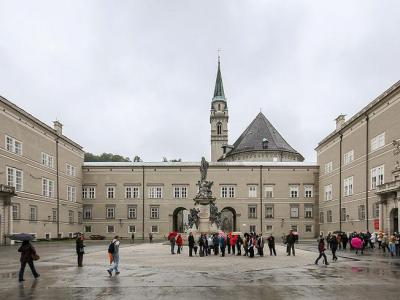
Architecturally speaking, the square is framed by three grand open arches-north, south, and west-linking the cathedral, the Salzburg Residence palace, and St. Peter’s Abbey into one impressively enclosed rectangle of piety and Baroque ambition. Domplatz stretches 101 meters long, 69 meters wide, and is surrounded by walls so tall (81 meters!) you’d swear they were trying to touch the divine.
At the center of it all stands the Immaculate Mary column, a baroque marvel sculpted in the 1760s. With marble clouds, iron angels, and a globe-worthy Virgin Mary enthroned on top, it’s not exactly subtle. The surrounding statues get theatrical, too-angels beam, wisdom goes “poof,” the devil throws a tantrum, and the Church celebrates like it's just won the Eurovision contest.
If you stand dead center in the rear arcade, from that spot you can see the Marian statue align perfectly with the cathedral façade’s own angles, as if wearing its rooftop crown. Divine optics, indeed...
Oh, and if you're on the Sound of Music trail, you’ll spot Domplatz when Maria sweeps out through the arches and again as she and the kids dash across the square during the “My Favorite Things” montage. Picnic clothes, twirls, and all that...
If you find yourself here on Christmas Eve, prepare for the Turmblasen-a centuries-old musical tradition where brass players serenade the square with chorales from above, either from the church tower or steeple. It’s like a holiday soundtrack sent straight from heaven.
Architecturally speaking, the square is framed by three grand open arches-north, south, and west-linking the cathedral, the Salzburg Residence palace, and St. Peter’s Abbey into one impressively enclosed rectangle of piety and Baroque ambition. Domplatz stretches 101 meters long, 69 meters wide, and is surrounded by walls so tall (81 meters!) you’d swear they were trying to touch the divine.
At the center of it all stands the Immaculate Mary column, a baroque marvel sculpted in the 1760s. With marble clouds, iron angels, and a globe-worthy Virgin Mary enthroned on top, it’s not exactly subtle. The surrounding statues get theatrical, too-angels beam, wisdom goes “poof,” the devil throws a tantrum, and the Church celebrates like it's just won the Eurovision contest.
If you stand dead center in the rear arcade, from that spot you can see the Marian statue align perfectly with the cathedral façade’s own angles, as if wearing its rooftop crown. Divine optics, indeed...
Oh, and if you're on the Sound of Music trail, you’ll spot Domplatz when Maria sweeps out through the arches and again as she and the kids dash across the square during the “My Favorite Things” montage. Picnic clothes, twirls, and all that...
4) Kapitelplatz (Chapter Square)
Chapter Square (Kapitelplatz), in the heart of Salzburg’s Old Town, is a spacious, diamond-shaped square surrounded by historical buildings. Bordering it on the north side is the Salzburg Cathedral. The Cathedral Provost's Office and the Archbishop's Palace are on the east side, while to its west are the novice's wing of Saint Peter's Monastery and the Cathedral Chapter's mills. The religious sites around the square serve as reminders of the powerful archdiocese that once ruled the city.
The square and the adjacent Chapter Lane (Kapitelgasse) are named after the Salzburg cathedral chapter, a set of canons that regulated worship services at the cathedral and in the city of Salzburg.
The Waldstein Canon House at Number 2, first mentioned in 1547, has served various purposes through the centuries, from housing the cathedral chapter's administration to serving as military and tax offices. It is now used by the Archdiocese of Salzburg. Nearby, the Number 4 Chapter House was rebuilt in its present form after a catastrophic fire in 1598. Today, this building houses the University of Salzburg’s rectorate and administrative offices.
The Salm-Firmian Canonical House at Numbers 5-7, initially designed as a hospital and later transformed into canon housing, is now a part of the university, hosting law libraries. Also noteworthy is the Cathedral Deanery at Number 6.
Significant too is the Cardinal Schwarzenberg House, which has transitioned from a granary to a "storehouse of knowledge," presently housing the cathedral archive and music rooms.
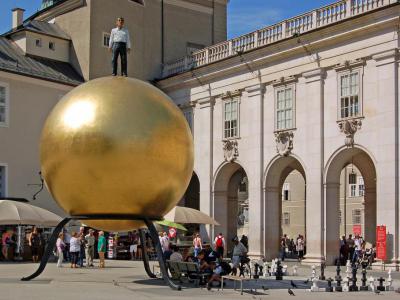
Aside from the beautiful view of High Salzburg Fortress (perfect for taking pictures), three things stand out on the square itself. These include the giant chessboard that often draws a crowd; the playful modern sculpture of the 'emotionless man' on the golden ball (called 'Sphaera') installed in 2007; and a spectacular Neptune's Fountain, built in 1732 on the site of one of the old horse ponds. Forming part of the so-called Chapter Flood (Kapitelschwemme) ensemble, the fountain shows the God of the Sea holding a trident and crown while being mounted on a seahorse spurting water. It looks a bit like a mini-version of the Fontana di Trevi in Rome, which is probably why many tourists throw coins into the shallow well.
The square and the adjacent Chapter Lane (Kapitelgasse) are named after the Salzburg cathedral chapter, a set of canons that regulated worship services at the cathedral and in the city of Salzburg.
The Waldstein Canon House at Number 2, first mentioned in 1547, has served various purposes through the centuries, from housing the cathedral chapter's administration to serving as military and tax offices. It is now used by the Archdiocese of Salzburg. Nearby, the Number 4 Chapter House was rebuilt in its present form after a catastrophic fire in 1598. Today, this building houses the University of Salzburg’s rectorate and administrative offices.
The Salm-Firmian Canonical House at Numbers 5-7, initially designed as a hospital and later transformed into canon housing, is now a part of the university, hosting law libraries. Also noteworthy is the Cathedral Deanery at Number 6.
Significant too is the Cardinal Schwarzenberg House, which has transitioned from a granary to a "storehouse of knowledge," presently housing the cathedral archive and music rooms.
Aside from the beautiful view of High Salzburg Fortress (perfect for taking pictures), three things stand out on the square itself. These include the giant chessboard that often draws a crowd; the playful modern sculpture of the 'emotionless man' on the golden ball (called 'Sphaera') installed in 2007; and a spectacular Neptune's Fountain, built in 1732 on the site of one of the old horse ponds. Forming part of the so-called Chapter Flood (Kapitelschwemme) ensemble, the fountain shows the God of the Sea holding a trident and crown while being mounted on a seahorse spurting water. It looks a bit like a mini-version of the Fontana di Trevi in Rome, which is probably why many tourists throw coins into the shallow well.
5) Residenzplatz (Residence Square) (must see)
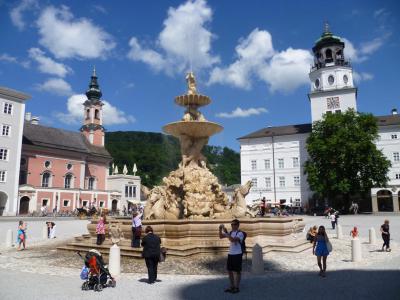
As Salzburg's center of government, the historic Residence Square (Residenzplatz) has long been at the heart of the city, set on the site of a former Roman Forum. Originally known as Main Square (Hauptplatz), it was renamed after the Old Residence (Alte Residenz) Palace, the former dwelling of the city's rulers – prince-archbishops – located to the west.
Flanking the square on the sides are several important buildings, such as the Salzburg Cathedral (to the south), and the New Residence (Neue Residenz) to the east, with its bell tower now housing the Salzburg Museum (to the west).
The square's construction began in 1587, as part of the grand project by Prince-Archbishop Wolf Dietrich von Raitenau to make Salzburg the new "Rome of the North." For that purpose, some of the surrounding medieval homes, as well as the cemetery (above the ancient Roman Forum) had to be leveled.
The square's focal point is the massive central 45-foot-tall Residence Fountain (Residenzbrunnen). Completed between 1656 and 1661 by Tommaso di Garona, it is as Italian as it can be (reportedly the largest and most beautiful Baroque fountain outside of Italy). Made from Untersberg limestone, its design features a Triton statue that propels water upwards – an over-the-top version of Bernini's famous Triton Fountain in Rome.
Notably, in the movie “The Sound Of Music”, the lead character Maria sings "I Have Confidence in Me" while crossing the square by bus on her way to the Trapp villa. She's also seen playfully splashing the fountain's spouting horses.
In the more recent past, Residence Square served as a venue for major rock concerts by the likes of Joe Cocker and Tina Turner. Presently, apart from being a historical site, it is also a vibrant cultural venue hosting various events, including an open-air cinema during summer, a fair in September, and a Christmas market during Advent.
In the 2010s, the square underwent a refurbishment which included the erection of a monument to mark the 80th anniversary of the Nazi book burning that took place here in 1938.
Tip:
Grab some lunch from the nearby bakeries or shops and sit on one of the benches near the fountain, enjoying the view.
Flanking the square on the sides are several important buildings, such as the Salzburg Cathedral (to the south), and the New Residence (Neue Residenz) to the east, with its bell tower now housing the Salzburg Museum (to the west).
The square's construction began in 1587, as part of the grand project by Prince-Archbishop Wolf Dietrich von Raitenau to make Salzburg the new "Rome of the North." For that purpose, some of the surrounding medieval homes, as well as the cemetery (above the ancient Roman Forum) had to be leveled.
The square's focal point is the massive central 45-foot-tall Residence Fountain (Residenzbrunnen). Completed between 1656 and 1661 by Tommaso di Garona, it is as Italian as it can be (reportedly the largest and most beautiful Baroque fountain outside of Italy). Made from Untersberg limestone, its design features a Triton statue that propels water upwards – an over-the-top version of Bernini's famous Triton Fountain in Rome.
Notably, in the movie “The Sound Of Music”, the lead character Maria sings "I Have Confidence in Me" while crossing the square by bus on her way to the Trapp villa. She's also seen playfully splashing the fountain's spouting horses.
In the more recent past, Residence Square served as a venue for major rock concerts by the likes of Joe Cocker and Tina Turner. Presently, apart from being a historical site, it is also a vibrant cultural venue hosting various events, including an open-air cinema during summer, a fair in September, and a Christmas market during Advent.
In the 2010s, the square underwent a refurbishment which included the erection of a monument to mark the 80th anniversary of the Nazi book burning that took place here in 1938.
Tip:
Grab some lunch from the nearby bakeries or shops and sit on one of the benches near the fountain, enjoying the view.
6) Mozartplatz (Mozart Square) (must see)
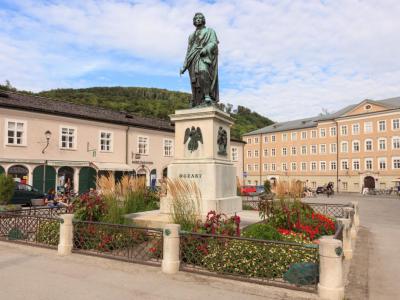
Mozart Square (Mozartplatz), in the historic Old Town of Salzburg, is named after the famous composer Wolfgang Amadeus Mozart, who was born in the city (just a few blocks away from this place, in fact) and spent most of his first 25 years here (from 1756 to 1781).
This area was redeveloped in the early 17th century by Prince-Archbishop Wolf Dietrich von Raitenau and was originally known as Michael's Square (Michaelsplatz), featuring a baroque fountain with a statue of Saint Michael. The latter was eventually replaced by the Mozart Monument (Mozartdenkmal) in 1842 to mark the 50th anniversary of the composer's death.
The monument was unveiled in the presence of Mozart's two surviving sons. The Roman mosaic found on the site during the construction is seen at the base of the statue, bearing an inscription about happiness and protection from evil. The marble pedestal of the statue was a gift from King Ludwig I of Bavaria. This monument was the first sign of public recognition the great composer had received from his hometown since his untimely passing. The music festival held that year sowed the seed for what would later become the world-renowned annual Salzburg Festival.
The square is bordered by several notable buildings. On the north side (adjacent to part of the old city wall dating back to the first half of the 1600s) is the Imhofstöckl edifice housing the city's tourist information office. The New Residence (Neue Residenz) at Number 1, which hosts the Salzburg Museum, together with several 17th-century houses with uniform facades, line the other sides of the square. Notably, one of these houses was the residence of Mozart's widow, Constanze Mozart-Nissen. The square also features the Salzburg Christmas Museum and Café Glockenspiel, sharing space at Number 2.
The on-site Resistance Memorial commemorates the transnational resistance against Bavaria's Wackersdorf reprocessing plant in the late 1980s. Inaugurated in 2000, it features a section of the original fence and a green radiation sign and honors over 420,000 objectors who influenced Austria's anti-nuclear policy.
Tip:
Those looking to buy tacky souvenirs should check out the Zum Mozart shop located at one of the corners of the square.
This area was redeveloped in the early 17th century by Prince-Archbishop Wolf Dietrich von Raitenau and was originally known as Michael's Square (Michaelsplatz), featuring a baroque fountain with a statue of Saint Michael. The latter was eventually replaced by the Mozart Monument (Mozartdenkmal) in 1842 to mark the 50th anniversary of the composer's death.
The monument was unveiled in the presence of Mozart's two surviving sons. The Roman mosaic found on the site during the construction is seen at the base of the statue, bearing an inscription about happiness and protection from evil. The marble pedestal of the statue was a gift from King Ludwig I of Bavaria. This monument was the first sign of public recognition the great composer had received from his hometown since his untimely passing. The music festival held that year sowed the seed for what would later become the world-renowned annual Salzburg Festival.
The square is bordered by several notable buildings. On the north side (adjacent to part of the old city wall dating back to the first half of the 1600s) is the Imhofstöckl edifice housing the city's tourist information office. The New Residence (Neue Residenz) at Number 1, which hosts the Salzburg Museum, together with several 17th-century houses with uniform facades, line the other sides of the square. Notably, one of these houses was the residence of Mozart's widow, Constanze Mozart-Nissen. The square also features the Salzburg Christmas Museum and Café Glockenspiel, sharing space at Number 2.
The on-site Resistance Memorial commemorates the transnational resistance against Bavaria's Wackersdorf reprocessing plant in the late 1980s. Inaugurated in 2000, it features a section of the original fence and a green radiation sign and honors over 420,000 objectors who influenced Austria's anti-nuclear policy.
Tip:
Those looking to buy tacky souvenirs should check out the Zum Mozart shop located at one of the corners of the square.

7) Goldgasse
The small and narrow Goldgasse is a curved street that runs from Old Market Square to Residence Square. It is flanked by burgher houses and shops selling jewelry antiques and souvenirs.
The houses in Goldgasse were the favorite lodgings of workmen and artisans who came to Salzburg in search of work. Its proximity to the cathedral and markets made it easy for them to search for customers and employers. They had to pay a tax called the collata to stay in the street that was at first called Collatagasse or Tax Street. Its present name comes from the goldsmiths who opened their shops here.
Notable buildings in Goldgrasse are the Reitsamerhaus where the French merchant Jean Fontaine established the first coffee house that later relocated and became the renowned Café Tomaselli. Many of the houses have religious ornamentation on their facades. At Goldgasse No: 6 is the Fragnerhaus with a head of an angel on a baroque corbel dating back to the 17th century, the house at No: 9 has a framed painting of the coronation of the Holy Virgin, and the house at No: 16 has a painting depicting the Holy Trinity with St. Florian and St. Sebastian.
The houses in Goldgasse were the favorite lodgings of workmen and artisans who came to Salzburg in search of work. Its proximity to the cathedral and markets made it easy for them to search for customers and employers. They had to pay a tax called the collata to stay in the street that was at first called Collatagasse or Tax Street. Its present name comes from the goldsmiths who opened their shops here.
Notable buildings in Goldgrasse are the Reitsamerhaus where the French merchant Jean Fontaine established the first coffee house that later relocated and became the renowned Café Tomaselli. Many of the houses have religious ornamentation on their facades. At Goldgasse No: 6 is the Fragnerhaus with a head of an angel on a baroque corbel dating back to the 17th century, the house at No: 9 has a framed painting of the coronation of the Holy Virgin, and the house at No: 16 has a painting depicting the Holy Trinity with St. Florian and St. Sebastian.
8) Alter Markt (Old Market Square) (must see)
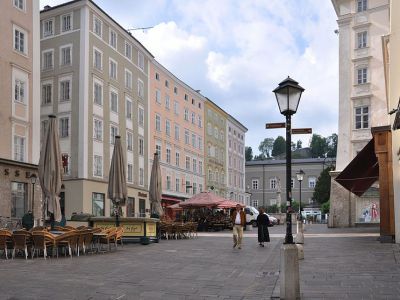
Sometimes street and square names immediately reveal what once took place within them and became defining. So is the case with Salzburg's small and cozy Old Market (Alter Markt) square. The city’s third market square, it dates back to the 13th century. Historically, it hosted weekly markets (selling dairy, vegetables, and poultry), as well as annual Lent and Autumn markets until the late 19th century. It also hosted vibrant folk events such as the Whitsun dance and the Saint John’s bonfire.
Today, the place is encircled by baroque buildings and features the ornate Floriani fountain (Florianibrunnen) at its center. The fountain's oldest component, a delicate, ornamental metal fence was made in 1583, featuring iron figures, including horseback riders and unicorns. Replacing the original medieval draw-well, this sophisticated Baroque fountain was built in several stages.
By 1687, it had acquired a new central pillar and an octagonal marble basin adorned with rosettes and acanthus leaves. The statue of Saint Florian, added in 1734, crowns the fountain and is supposed to protect buildings from fire. Historically, this fountain was central to the annual butcher's jump ritual, marking the passage of apprentices into journeymen on Ash Wednesday (the first day of Lent before Easter).
The Old Market in Salzburg is characterized by its medieval core and is flanked by a row of Baroque burgher houses, with influences from the early modern period evident in its architecture. Notably, Old Market No. 3, currently a bank, sits atop Roman foundations and features a late Baroque marble portal from a former pawnshop. Old Market No. 6 and 7 have housed the Old Court Pharmacy since the 16th century, with the latter still operating today. The pharmacy's original Rococo design and late Baroque window frames are preserved, alongside historical furnishings from the 18th century. Meanwhile, House No. 7, originally late Gothic, now sports a classicist façade and a memorial plaque for Carl Petter, a notable local pharmacist. Additionally, Café Tomaselli, at Numbers 9 and 10, is the oldest continuously operating café in Central Europe. Adjacent to it stands Salzburg's smallest house, a mere 1.42 meters wide, built between 1830 and 1860.
Tip:
Have something from the many local vendors! You can try delicious local as well as other types of (inexpensive) food here.
Today, the place is encircled by baroque buildings and features the ornate Floriani fountain (Florianibrunnen) at its center. The fountain's oldest component, a delicate, ornamental metal fence was made in 1583, featuring iron figures, including horseback riders and unicorns. Replacing the original medieval draw-well, this sophisticated Baroque fountain was built in several stages.
By 1687, it had acquired a new central pillar and an octagonal marble basin adorned with rosettes and acanthus leaves. The statue of Saint Florian, added in 1734, crowns the fountain and is supposed to protect buildings from fire. Historically, this fountain was central to the annual butcher's jump ritual, marking the passage of apprentices into journeymen on Ash Wednesday (the first day of Lent before Easter).
The Old Market in Salzburg is characterized by its medieval core and is flanked by a row of Baroque burgher houses, with influences from the early modern period evident in its architecture. Notably, Old Market No. 3, currently a bank, sits atop Roman foundations and features a late Baroque marble portal from a former pawnshop. Old Market No. 6 and 7 have housed the Old Court Pharmacy since the 16th century, with the latter still operating today. The pharmacy's original Rococo design and late Baroque window frames are preserved, alongside historical furnishings from the 18th century. Meanwhile, House No. 7, originally late Gothic, now sports a classicist façade and a memorial plaque for Carl Petter, a notable local pharmacist. Additionally, Café Tomaselli, at Numbers 9 and 10, is the oldest continuously operating café in Central Europe. Adjacent to it stands Salzburg's smallest house, a mere 1.42 meters wide, built between 1830 and 1860.
Tip:
Have something from the many local vendors! You can try delicious local as well as other types of (inexpensive) food here.
9) Kapuzinerberg
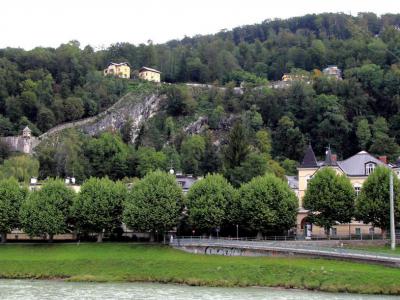
Situated on the eastern bank of the Salzach River in Salzburg, the Kapuzinerberg is a hill that rises to an elevation of 640 meters. It is also the site of a Capuchin Monastery that was built between 1599 and 1605 on the remains of a medieval fortress known as the Trompeterschlössl. The eastern slope of the mountain has been inhabited by humans since the neolithic period, with significant prehistoric settlements dating back to 1100 B.C.
Thirteen oratories with the way of the cross line the path from the Linzergasse to the monastery, and were constructed between 1736 and 1744. Other notable landmarks include a memorial for Wolfgang Amadeus Mozart, the old Paschinger Schlössl (formerly owned by Stefan Zweig), and various artillery bastions from 1629 that were built during the Thirty Years' War. On the mountain's summit, accessible by the drawbridge, stands the Franziskischlössl, now a small restaurant. Despite Adolf Hitler's desire to construct a massive fortress, stadium, and festival hall on the mountain, intensive land development has been prevented by the forested areas that make up the Kapuzinerberg.
The Capuchin Monastery was established by Bishop Wolf Dietrich von Raitenau as a stronghold against the Reformation. The friars consecrated their first church in 1602, built on the foundation of a medieval tower, and inherited a set of 15th-century wooden reliefs. Over time, the cloister expanded to its present form around 1690. Despite being independent of the local archbishop for centuries, the cloister was occupied and desecrated by French and Bavarian troops in 1800, 1809-10, and 1813. The monks were evicted again in 1938 to make way for a Nazi forum, but the project did not come to fruition. The friars returned in 1942, initially sharing the premises with refugees and prisoners.
With its wooded areas, the Kapuzinerberg serves as the green lung of Salzburg and provides visitors with delightful walking opportunities along its many hiking trails. The Basteiweg, which runs along the fortification walls in the south and east of the mountain, is particularly noteworthy, as are the various views of Salzburg's historic Altstadt.
Thirteen oratories with the way of the cross line the path from the Linzergasse to the monastery, and were constructed between 1736 and 1744. Other notable landmarks include a memorial for Wolfgang Amadeus Mozart, the old Paschinger Schlössl (formerly owned by Stefan Zweig), and various artillery bastions from 1629 that were built during the Thirty Years' War. On the mountain's summit, accessible by the drawbridge, stands the Franziskischlössl, now a small restaurant. Despite Adolf Hitler's desire to construct a massive fortress, stadium, and festival hall on the mountain, intensive land development has been prevented by the forested areas that make up the Kapuzinerberg.
The Capuchin Monastery was established by Bishop Wolf Dietrich von Raitenau as a stronghold against the Reformation. The friars consecrated their first church in 1602, built on the foundation of a medieval tower, and inherited a set of 15th-century wooden reliefs. Over time, the cloister expanded to its present form around 1690. Despite being independent of the local archbishop for centuries, the cloister was occupied and desecrated by French and Bavarian troops in 1800, 1809-10, and 1813. The monks were evicted again in 1938 to make way for a Nazi forum, but the project did not come to fruition. The friars returned in 1942, initially sharing the premises with refugees and prisoners.
With its wooded areas, the Kapuzinerberg serves as the green lung of Salzburg and provides visitors with delightful walking opportunities along its many hiking trails. The Basteiweg, which runs along the fortification walls in the south and east of the mountain, is particularly noteworthy, as are the various views of Salzburg's historic Altstadt.
10) Makartplatz
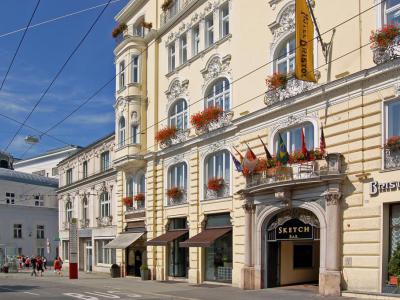
Makartplatz or Markart Square is a busy part of the city of Salzburg surrounded by some of its important buildings. The main attraction in the square today is a museum dedicated to Mozart and his works.
Makartplatz was developed by Archbishop Paris Lodron and architect Bernhard Fischer von Erlach. At the time it was called Hannibalplatz after Hannibal von Raitenau, the brother of the Prince Archbishop Wolf Dietrich. Later, it was named after Hans Makart, a celebrated 19th century Salzburg born artist and son of a chamberlain at the Mirabell Palace.
The most visited part of Makartplatz is the Tanzmeisterhaus where Mozart’s family lived when he was a young boy. The former residence was rebuilt after having been destroyed by bombs in World War II. It is located at No: 8 Makartplatz and houses the museum dedicated to the great composer. The next house to the museum is the Doppler House where eminent physicist, Christian Doppler who founded the Doppler effect of sound was born in 1803. The façade of the Church of the Holy Trinity faces the square and the Landestheater, built by Archbishop Colloredo is located here. The main entrance to the Mirabell Gardens is also located in Makartplatz.
Makartplatz was developed by Archbishop Paris Lodron and architect Bernhard Fischer von Erlach. At the time it was called Hannibalplatz after Hannibal von Raitenau, the brother of the Prince Archbishop Wolf Dietrich. Later, it was named after Hans Makart, a celebrated 19th century Salzburg born artist and son of a chamberlain at the Mirabell Palace.
The most visited part of Makartplatz is the Tanzmeisterhaus where Mozart’s family lived when he was a young boy. The former residence was rebuilt after having been destroyed by bombs in World War II. It is located at No: 8 Makartplatz and houses the museum dedicated to the great composer. The next house to the museum is the Doppler House where eminent physicist, Christian Doppler who founded the Doppler effect of sound was born in 1803. The façade of the Church of the Holy Trinity faces the square and the Landestheater, built by Archbishop Colloredo is located here. The main entrance to the Mirabell Gardens is also located in Makartplatz.
11) Mirabell Palace and Gardens (must see)
Mirabell Palace: part love story, part symphony, part surreal garden party. Here, Baroque drama meets soap opera realness and UNESCO-approved elegance. Originally constructed in 1606 by Prince-Archbishop Wolf Dietrich von Raitenau - who wasn’t just building a palace, but also a very fancy love nest for himself and his mistress - this place has always known how to turn heads.
After Wolf got the boot in 1612 (through palace intrigue), his successor renamed it Mirabell - meaning “wonderful” in Italian, which, come to think of it, is a bit more subtle than “Archbishop’s Love Shack.” The whole palace got a glitzy Baroque makeover between 1721 and 1727, and later a Neoclassical facelift - because palaces, of all properties, do need to keep up appearances...
Step inside and brace yourself for the grand staircase - or the 'staircase of thunder' if you like: with sweeping curves, angelic sculptures, and a shine so dramatic it practically sings. At the top of it is the Marble Hall. Mozart played here. You won’t. But you could get married here - if you book a few years ahead and maybe win a small lottery...
Fun fact: Hitler’s sister-in-law tied the knot here in 1944, with some disturbingly famous guests in attendance. But don’t let that kill the vibe - today, it’s more Mozart concerts and Instagram moments than fascist footnotes.
Venture further and you'll find a chapel dressed in Baroque finery, with statues so saintly they might just bless your photo.
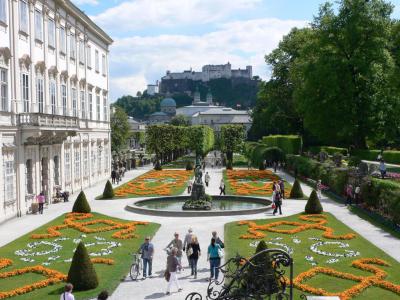
Outside, the gardens are a mythological fever dream. Statues of Hercules, Aeneas, and Pluto look on, while the flower beds explode in geometric perfection - a riot of color that makes your eyeballs do pirouettes. At the center of it is the Pegasus Fountain, a scene-stealer from The Sound of Music’s “Do Re Mi.” Yes, that very one...
Climb the steps like a Von Trapp child chasing high notes, peek into the vine tunnel and hedge maze, and finish at Dwarf Park - where a regiment of lumpy marble gnomes stares you down with all the charm of a slightly haunted chess set.
And beyond it all, the High Salzburg Fortress, sitting smugly on its hilltop, watches centuries go by.
After Wolf got the boot in 1612 (through palace intrigue), his successor renamed it Mirabell - meaning “wonderful” in Italian, which, come to think of it, is a bit more subtle than “Archbishop’s Love Shack.” The whole palace got a glitzy Baroque makeover between 1721 and 1727, and later a Neoclassical facelift - because palaces, of all properties, do need to keep up appearances...
Step inside and brace yourself for the grand staircase - or the 'staircase of thunder' if you like: with sweeping curves, angelic sculptures, and a shine so dramatic it practically sings. At the top of it is the Marble Hall. Mozart played here. You won’t. But you could get married here - if you book a few years ahead and maybe win a small lottery...
Fun fact: Hitler’s sister-in-law tied the knot here in 1944, with some disturbingly famous guests in attendance. But don’t let that kill the vibe - today, it’s more Mozart concerts and Instagram moments than fascist footnotes.
Venture further and you'll find a chapel dressed in Baroque finery, with statues so saintly they might just bless your photo.
Outside, the gardens are a mythological fever dream. Statues of Hercules, Aeneas, and Pluto look on, while the flower beds explode in geometric perfection - a riot of color that makes your eyeballs do pirouettes. At the center of it is the Pegasus Fountain, a scene-stealer from The Sound of Music’s “Do Re Mi.” Yes, that very one...
Climb the steps like a Von Trapp child chasing high notes, peek into the vine tunnel and hedge maze, and finish at Dwarf Park - where a regiment of lumpy marble gnomes stares you down with all the charm of a slightly haunted chess set.
And beyond it all, the High Salzburg Fortress, sitting smugly on its hilltop, watches centuries go by.
12) Marko-Feingold-Steg (Marko Feingold Bridge)
The Marko-Feingold-Steg, formerly known as Makartsteg and Museumssteg, is a picturesque bridge designed for pedestrians and cyclists that spans the Salzach River in the charming city of Salzburg. Built in 1904 the initial footbridge featured an Art Nouveau iron construction supported by two pillars, similar in style to the nearby Mozartsteg. It was officially opened for public use on June 18, 1905.
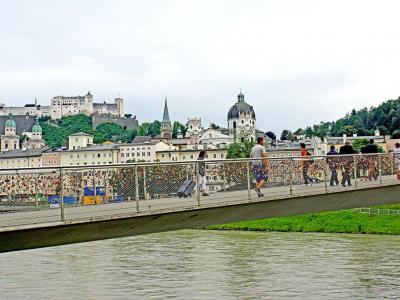
Situated amidst the captivating landscape of Salzburg, the Marko-Feingold-Steg is one of several enchanting bridges that grace the Salzach River. However, what sets this bridge apart is its endearing nickname of "Love Lock Bridge." Over the years, countless locks have been attached to its railings by both young and not-so-young lovers, creating a truly remarkable sight. While love locks can be found on footbridges throughout Europe, the sheer volume of locks on this particular bridge is truly impressive.
The bridge's railings are adorned with an abundance of these affectionate gestures, forming a breathtaking testament to the countless love stories that have unfolded in Salzburg. As visitors stroll across the Marko-Feingold-Steg, they are enveloped in a captivating display of heartfelt emotions and romantic sentiments.
In addition to its symbolic significance, the Marko-Feingold-Steg offers breathtaking views of the Salzach River and its picturesque surroundings. It stands as a testament to the city's rich history, architectural splendor, and the enduring power of love.
The current iteration of the bridge was constructed in 2001, blending modern engineering with the bridge's nostalgic charm. Today, locals and tourists alike continue to be captivated by the Marko-Feingold-Steg, not only for its practical purpose as a crossing point but also for the enchanting love story that unfolds upon its railings.
Situated amidst the captivating landscape of Salzburg, the Marko-Feingold-Steg is one of several enchanting bridges that grace the Salzach River. However, what sets this bridge apart is its endearing nickname of "Love Lock Bridge." Over the years, countless locks have been attached to its railings by both young and not-so-young lovers, creating a truly remarkable sight. While love locks can be found on footbridges throughout Europe, the sheer volume of locks on this particular bridge is truly impressive.
The bridge's railings are adorned with an abundance of these affectionate gestures, forming a breathtaking testament to the countless love stories that have unfolded in Salzburg. As visitors stroll across the Marko-Feingold-Steg, they are enveloped in a captivating display of heartfelt emotions and romantic sentiments.
In addition to its symbolic significance, the Marko-Feingold-Steg offers breathtaking views of the Salzach River and its picturesque surroundings. It stands as a testament to the city's rich history, architectural splendor, and the enduring power of love.
The current iteration of the bridge was constructed in 2001, blending modern engineering with the bridge's nostalgic charm. Today, locals and tourists alike continue to be captivated by the Marko-Feingold-Steg, not only for its practical purpose as a crossing point but also for the enchanting love story that unfolds upon its railings.
13) Getreidegasse (Grain Lane) (must see)
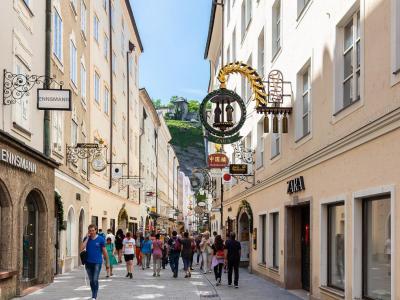
Old Salzburg's colorful main drag, Grain Lane (Getreidegasse) has been a center of trade since Roman times. Now a UNESCO World Heritage Site since 1996, this historic street is famous for being the birthplace of Wolfgang Amadeus Mozart, at No. 9, where he lived until the age of 17. The narrow lane is lined with high townhouses and is distinguished by its traditional wrought-iron guild signs advertising what is (or used to be) sold inside.
The street, originally named Trot Lane (Trabegasse), traces its beginnings to around 1150 when it served as a pathway from Salzburg's trade center to the suburb of Mülln. Over the centuries, its name evolved several times, reflecting its changing role in the city's economy. By the 14th century, the prince-archbishops granted the citizens staple rights, transforming the area into a vibrant trading zone and attracting Salzburg's patricians and officials who established their residences here.
Dating mainly from the 15th century, the buildings are tall and narrow because this was prime real estate, and there was nowhere to build but up. Space was always tight, as the town was squeezed between the river and the mountain, with lots of land set aside for the church. The architecture still looks much as it did in Mozart's day, though many of the buildings themselves are now inhabited by Austrian clothiers and international chain outlets. At Number 37 you will find the glamorous Goldener Hirsch hotel, a hotspot for stylish gatherings – so, if you're appropriately attired, you may wish to view the lobby and enjoy an aperitif in its gorgeous bar, the watering hole of chic Salzburg.
What was once the Salzburg quarter of prosperous medieval burghers (merchants) now bustles with the tourist trade. Today, Grain Lane forms part of a pedestrian zone and continues to be one of Salzburg's prime tourist attractions. Efforts have been made to preserve its authentic character amidst the conversion of historic residential houses into commercial premises.
Tip:
If planning some shopping for gifts, take a look in a couple of stores because they often carry similar products for different prices. Small alleys lead off the main street – do wander down these as lots of smaller shops and nice cafés can be found there.
The street, originally named Trot Lane (Trabegasse), traces its beginnings to around 1150 when it served as a pathway from Salzburg's trade center to the suburb of Mülln. Over the centuries, its name evolved several times, reflecting its changing role in the city's economy. By the 14th century, the prince-archbishops granted the citizens staple rights, transforming the area into a vibrant trading zone and attracting Salzburg's patricians and officials who established their residences here.
Dating mainly from the 15th century, the buildings are tall and narrow because this was prime real estate, and there was nowhere to build but up. Space was always tight, as the town was squeezed between the river and the mountain, with lots of land set aside for the church. The architecture still looks much as it did in Mozart's day, though many of the buildings themselves are now inhabited by Austrian clothiers and international chain outlets. At Number 37 you will find the glamorous Goldener Hirsch hotel, a hotspot for stylish gatherings – so, if you're appropriately attired, you may wish to view the lobby and enjoy an aperitif in its gorgeous bar, the watering hole of chic Salzburg.
What was once the Salzburg quarter of prosperous medieval burghers (merchants) now bustles with the tourist trade. Today, Grain Lane forms part of a pedestrian zone and continues to be one of Salzburg's prime tourist attractions. Efforts have been made to preserve its authentic character amidst the conversion of historic residential houses into commercial premises.
Tip:
If planning some shopping for gifts, take a look in a couple of stores because they often carry similar products for different prices. Small alleys lead off the main street – do wander down these as lots of smaller shops and nice cafés can be found there.
14) Old University
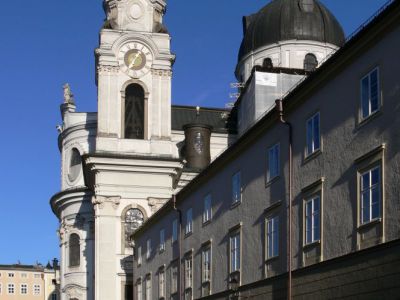
The Old University of Salzburg is housed in a complex of baroque buildings in the heart of the city. Mozart concerts are performed by the Salzburg Symphony Orchestra at the Grosse Aula or large auditorium located within its campus.
The Old University is a Benedictine University established in 1623 by Prince Archbishop Paris Londron. It occupied a former convent called the Women’s Garden. In 1627, architect Santoni Solari designed the present building. He also designed the Grand Aula which was the main ceremonial hall of the university. After the secularization caused by the Napoleonic Wars, the old University became a smaller liberal arts college. It regained its status as a university in the 1960s. Many of the buildings were extended and modernized in 2007. Well known buildings in the Old University are the old university library, the reading room and the University Church.
The Grosse Aula of the Old University is of great historical significance. It was here that Mozart appeared as a dancer in a school play at the age of five. In 1767, his first composition Apollo et Hyacinthus was performed in the auditorium. On his 250th birth anniversary in 2006, Apollo et Hyacinthus was performed again at the venue. Today, the Grosse Aula is only open for musical and other performances and events.
The Old University is a Benedictine University established in 1623 by Prince Archbishop Paris Londron. It occupied a former convent called the Women’s Garden. In 1627, architect Santoni Solari designed the present building. He also designed the Grand Aula which was the main ceremonial hall of the university. After the secularization caused by the Napoleonic Wars, the old University became a smaller liberal arts college. It regained its status as a university in the 1960s. Many of the buildings were extended and modernized in 2007. Well known buildings in the Old University are the old university library, the reading room and the University Church.
The Grosse Aula of the Old University is of great historical significance. It was here that Mozart appeared as a dancer in a school play at the age of five. In 1767, his first composition Apollo et Hyacinthus was performed in the auditorium. On his 250th birth anniversary in 2006, Apollo et Hyacinthus was performed again at the venue. Today, the Grosse Aula is only open for musical and other performances and events.
15) Horse Bath (Pferdeschwemme)
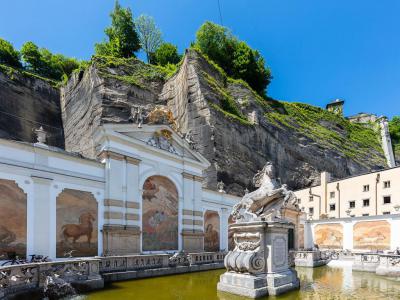
Tucked at the foot of Salzburg’s Monk’s Hill, in the city’s so-dramatic Festival District, stands what may be the world’s most flamboyant horsewash, the Horse Bath. Think of it as a 17th-century car wash, but for stallions, and with Baroque flair dialed up to eleven...
Commissioned in 1693 by Prince-Archbishop Johann Ernst von Thun - who clearly thought “washing horses” deserved the same pomp as a coronation - this stone spectacle wasn’t just for rinsing hooves. Oh no. It was a declaration: Salzburg could out-fabulous your water trough any day of the week.
Water flowed in via underground Roman-era canals, modernized in medieval times - because even plumbing, in Salzburg, has a legacy. And while there were other horse baths in the city, this one was the “Versailles” of horse tubs.
Front and center is a muscular rearing steed, held in check by its handler - a powerful marble moment sculpted by Michael Bernhard Mandl. Behind them - a technicolor riot of equine frescoes by Johann Michael Rottmayr, depicting horses in such over-the-top poses you'd think they were auditioning for an opera.
Today, the Horse Bath is a quiet gem, a stone’s throw from the Large Festival House (once the royal stables), offering a breather from Mozart-themed everything.
Film fans will also find it familiar, as the site made a brief cameo appearance in The Sound of Music. During the instrumental ending of “My Favorite Things,” Maria and the Von Trapp children pass by and splash around the fountain. Although some additional scenes filmed here didn’t make the final cut, the Horse Bath still holds a place in the movie’s visual memory.
In the end, it is both an architectural oddity and a historical gem, fully emblematic of Salzburg’s unique way of merging the everyday with the operatic. It's one part outdoor sculpture gallery, one part equine spa, and absolutely no part boring. A place where even sweaty horses got their moment in the spotlight...
Commissioned in 1693 by Prince-Archbishop Johann Ernst von Thun - who clearly thought “washing horses” deserved the same pomp as a coronation - this stone spectacle wasn’t just for rinsing hooves. Oh no. It was a declaration: Salzburg could out-fabulous your water trough any day of the week.
Water flowed in via underground Roman-era canals, modernized in medieval times - because even plumbing, in Salzburg, has a legacy. And while there were other horse baths in the city, this one was the “Versailles” of horse tubs.
Front and center is a muscular rearing steed, held in check by its handler - a powerful marble moment sculpted by Michael Bernhard Mandl. Behind them - a technicolor riot of equine frescoes by Johann Michael Rottmayr, depicting horses in such over-the-top poses you'd think they were auditioning for an opera.
Today, the Horse Bath is a quiet gem, a stone’s throw from the Large Festival House (once the royal stables), offering a breather from Mozart-themed everything.
Film fans will also find it familiar, as the site made a brief cameo appearance in The Sound of Music. During the instrumental ending of “My Favorite Things,” Maria and the Von Trapp children pass by and splash around the fountain. Although some additional scenes filmed here didn’t make the final cut, the Horse Bath still holds a place in the movie’s visual memory.
In the end, it is both an architectural oddity and a historical gem, fully emblematic of Salzburg’s unique way of merging the everyday with the operatic. It's one part outdoor sculpture gallery, one part equine spa, and absolutely no part boring. A place where even sweaty horses got their moment in the spotlight...
16) Winkler Terrace
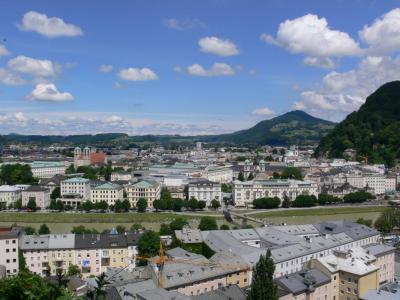
At Winkler Terrace, Salzburg spreads out beneath you like a perfectly arranged opera set, and all you’re missing is just a glass of good ol' Austrian-made Grüner Veltliner wine in hand. Perched on the southern edge of Monk's Hill, right above the sleek Museum of Modern Art, this terrace is where Baroque beauty meets modern minimalism… and where your camera roll goes to feel alive.
Back in the day, this spot was home to the swanky Hotel Winkler and its legendary café, so posh in fact, even the Alps probably felt underdressed. Demolished in the '90s, it made way for today’s M32 Café, where the view remains just as smugly spectacular and the coffee hopefully less overpriced.
And yes, film buffs, you’ve seen this view before. Maria and the Von Trapp kids hit a high note here in The Sound of Music, kicking off that toe-tapping “Do Re Mi” sequence before twirling their way down into town. It’s cinematic gold-and your Instagram doesn’t even need a filter.
Up here, Salzburg unfurls in style: domes, spires, the High Salzburg Fortress flexing on its hilltop throne, and if the skies behave, you’ll even catch the distant Alps doing their best background pose.
Regardless of whether you're climbing up like a noble mountain goat (15–20 minutes of cardio with a reward) or letting the Monk's Hill Lift whisk you up like the scenic VIP you are, Winkler Terrace delivers all the same. Quiet, photogenic, and smugly perfect at sunset-it’s Salzburg’s high point, literally and otherwise.
So, take a deep breath, sip your coffee, and bask in the moment. Maria had the right idea: the hills really are alive up here...
Back in the day, this spot was home to the swanky Hotel Winkler and its legendary café, so posh in fact, even the Alps probably felt underdressed. Demolished in the '90s, it made way for today’s M32 Café, where the view remains just as smugly spectacular and the coffee hopefully less overpriced.
And yes, film buffs, you’ve seen this view before. Maria and the Von Trapp kids hit a high note here in The Sound of Music, kicking off that toe-tapping “Do Re Mi” sequence before twirling their way down into town. It’s cinematic gold-and your Instagram doesn’t even need a filter.
Up here, Salzburg unfurls in style: domes, spires, the High Salzburg Fortress flexing on its hilltop throne, and if the skies behave, you’ll even catch the distant Alps doing their best background pose.
Regardless of whether you're climbing up like a noble mountain goat (15–20 minutes of cardio with a reward) or letting the Monk's Hill Lift whisk you up like the scenic VIP you are, Winkler Terrace delivers all the same. Quiet, photogenic, and smugly perfect at sunset-it’s Salzburg’s high point, literally and otherwise.
So, take a deep breath, sip your coffee, and bask in the moment. Maria had the right idea: the hills really are alive up here...
