Custom Walk in Sydney, Australia by jimwalery4532 created on 2025-11-02
Guide Location: Australia » Sydney
Guide Type: Custom Walk
# of Sights: 5
Tour Duration: 2 Hour(s)
Travel Distance: 4.4 Km or 2.7 Miles
Share Key: 5D5CV
Guide Type: Custom Walk
# of Sights: 5
Tour Duration: 2 Hour(s)
Travel Distance: 4.4 Km or 2.7 Miles
Share Key: 5D5CV
How It Works
Please retrieve this walk in the GPSmyCity app. Once done, the app will guide you from one tour stop to the next as if you had a personal tour guide. If you created the walk on this website or come to the page via a link, please follow the instructions below to retrieve the walk in the app.
Retrieve This Walk in App
Step 1. Download the app "GPSmyCity: Walks in 1K+ Cities" on Apple App Store or Google Play Store.



Step 2. In the GPSmyCity app, download(or launch) the guide "Sydney Map and Walking Tours".
Step 3. Tap the menu button located at upper right corner of the "Walks" screen and select "Retrieve custom walk". Enter the share key: 5D5CV
1) Sydney Opera House (must see)
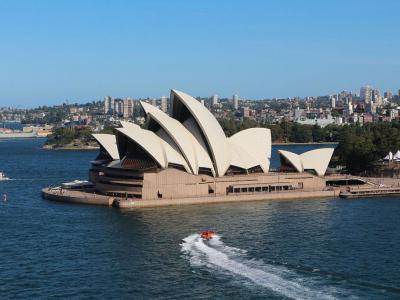
Indeed, if there’s one building in Sydney that refuses to blend quietly into the skyline, it’s the Sydney Opera House. Perched out on Bennelong Point, it looks like a fleet of giant white sails that decided to drop anchor permanently. This global icon began life in 1957, when a young Danish architect named Jørn Utzon submitted a sketch to an international competition-and stunned everyone by winning... Sixteen years, countless design challenges, and a fair amount of political drama later, the Opera House finally opened in 1973.
Its famous shell roofs-those curved concrete forms that seem ready to catch the next harbour breeze-weren’t just artistic flair. Engineers had to invent entirely new methods to make them possible, carving each segment from a shared spherical geometry. The result is a structure that feels part sculpture, part science experiment, and completely unforgettable.
Inside, the Opera House is practically a small cultural city. You’ll find the grand Concert Hall with timber ceilings that soar like the inside of an enormous instrument, along with the Joan Sutherland Theatre, the Drama Theatre, the Playhouse, and the Studio. Each room was crafted with a performance in mind, from opera to orchestral concerts to experimental theatre.
In 2007, UNESCO sealed the building’s legendary status by adding it to the World Heritage list, citing its influence on modern design. Today, millions of visitors stream through every year, and it remains home to the Sydney Symphony Orchestra, Opera Australia, and The Australian Ballet.
But you don’t need a ticket to enjoy it. The promenades wrapped around the building offer some of the best harbour views in the city. And for the curious, tours share stories of creative breakthroughs, fierce debates, and the later return to Utzon’s original design principles-proof that even an architectural superstar can have a long and rather complicated backstory...
Its famous shell roofs-those curved concrete forms that seem ready to catch the next harbour breeze-weren’t just artistic flair. Engineers had to invent entirely new methods to make them possible, carving each segment from a shared spherical geometry. The result is a structure that feels part sculpture, part science experiment, and completely unforgettable.
Inside, the Opera House is practically a small cultural city. You’ll find the grand Concert Hall with timber ceilings that soar like the inside of an enormous instrument, along with the Joan Sutherland Theatre, the Drama Theatre, the Playhouse, and the Studio. Each room was crafted with a performance in mind, from opera to orchestral concerts to experimental theatre.
In 2007, UNESCO sealed the building’s legendary status by adding it to the World Heritage list, citing its influence on modern design. Today, millions of visitors stream through every year, and it remains home to the Sydney Symphony Orchestra, Opera Australia, and The Australian Ballet.
But you don’t need a ticket to enjoy it. The promenades wrapped around the building offer some of the best harbour views in the city. And for the curious, tours share stories of creative breakthroughs, fierce debates, and the later return to Utzon’s original design principles-proof that even an architectural superstar can have a long and rather complicated backstory...
2) Mrs Macquarie's Chair
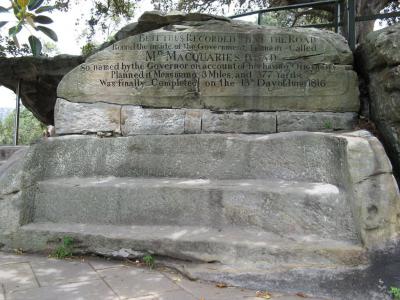
Mrs Macquarie’s Chair is a sandstone bench carved by convicts in 1810 for Elizabeth Macquarie, the wife of Governor Lachlan Macquarie, on the peninsula now known as Mrs Macquarie’s Point. Positioned within the Royal Botanic Garden Sydney, the seat was shaped directly from the rock overlooking Sydney Harbour, where Mrs Macquarie was said to sit and watch the ships arrive from England. The craftsmanship of the bench, hewn from a single sandstone ledge, reflects the early convict era and the personal history of the colonial administration.
The site offers one of the most celebrated viewpoints in Sydney, with sweeping vistas of the Harbour Bridge, Sydney Opera House, and the blue waters of Farm Cove. The peninsula’s elevated position and open lawns make it a popular spot for photography, picnics, and evening walks. The surrounding area retains the feel of early colonial landscaping, framed by native trees and the harbour’s natural contours.
A short walk from the Botanic Garden gates leads visitors along Mrs Macquarie’s Road, originally constructed by convicts as a scenic drive for the governor’s wife. Interpretive signs along the way describe the history of the site and its connection to the early European settlement of Sydney.
The site offers one of the most celebrated viewpoints in Sydney, with sweeping vistas of the Harbour Bridge, Sydney Opera House, and the blue waters of Farm Cove. The peninsula’s elevated position and open lawns make it a popular spot for photography, picnics, and evening walks. The surrounding area retains the feel of early colonial landscaping, framed by native trees and the harbour’s natural contours.
A short walk from the Botanic Garden gates leads visitors along Mrs Macquarie’s Road, originally constructed by convicts as a scenic drive for the governor’s wife. Interpretive signs along the way describe the history of the site and its connection to the early European settlement of Sydney.
3) Old Government House
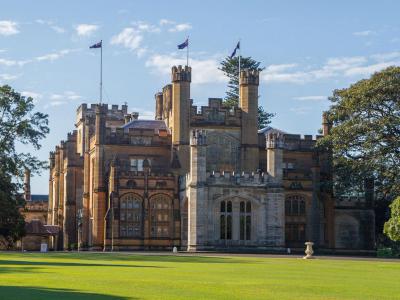
Back in the colonial days, if there was a “quiet retreat” where early governors could escape the chaos of Sydney, the Old Government House in Parramatta Park would definitely be it-a stately reminder that even in the 1800s, people liked a good “weekend place.” Sitting about 25 kilometres west of today’s Central Business District, this is Australia’s oldest surviving public building, constructed between 1799 and 1816 by convict labour armed with chisels, sandstone, and probably very little enthusiasm. The design came from John Watts, a former Royal Marine who doubled as Governor Lachlan Macquarie’s aide-de-camp and part-time architect, proving that multitasking isn’t a modern invention...
From the outside, the house delivers classic Georgian confidence, perched neatly on a ridge above the Parramatta River, as if keeping an eye on the colony’s progress. It blends British neoclassical orderliness with Australian practicality: wide verandas and airy ceilings that seem like whispering, “Yes, it gets hot here.” Inside, you’ll find rooms staged with period furniture that gently transport you into the domestic routines and official duties of the first ten governors-drawing rooms for receiving guests, studies for shaping policy, and bedrooms where history apparently needed its rest...
Originally, this estate spread across farmland and bushland that formed the Governor’s Domain, a testing ground for colonial agriculture long before the area became part of suburban Sydney. Today, the National Trust of Australia cares for the property, which proudly sits among the UNESCO World Heritage–listed Australian Convict Sites. Walking paths, gardens, and interpretive displays help you imagine Parramatta when it was still taking shape.
Keep in mind: this is Darug Country, home to the Aboriginal Burramatta people. Some nearby trees still carry scars where bark was carefully removed to make canoes-a quiet reminder of a much older story in the landscape. And for those who like their history with a side of goosebumps, the Historic Houses Trust even offers a “haunted” tour. Whether it’s ghosts or governors you’re after, Old Government House has both covered.
From the outside, the house delivers classic Georgian confidence, perched neatly on a ridge above the Parramatta River, as if keeping an eye on the colony’s progress. It blends British neoclassical orderliness with Australian practicality: wide verandas and airy ceilings that seem like whispering, “Yes, it gets hot here.” Inside, you’ll find rooms staged with period furniture that gently transport you into the domestic routines and official duties of the first ten governors-drawing rooms for receiving guests, studies for shaping policy, and bedrooms where history apparently needed its rest...
Originally, this estate spread across farmland and bushland that formed the Governor’s Domain, a testing ground for colonial agriculture long before the area became part of suburban Sydney. Today, the National Trust of Australia cares for the property, which proudly sits among the UNESCO World Heritage–listed Australian Convict Sites. Walking paths, gardens, and interpretive displays help you imagine Parramatta when it was still taking shape.
Keep in mind: this is Darug Country, home to the Aboriginal Burramatta people. Some nearby trees still carry scars where bark was carefully removed to make canoes-a quiet reminder of a much older story in the landscape. And for those who like their history with a side of goosebumps, the Historic Houses Trust even offers a “haunted” tour. Whether it’s ghosts or governors you’re after, Old Government House has both covered.
4) Royal Botanic Gardens (must see)
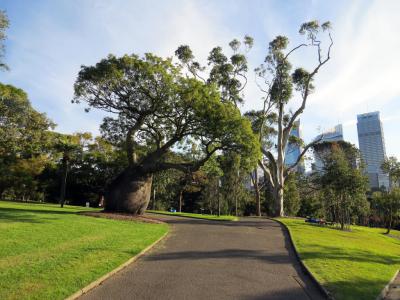
In case you're curious as to where Sydney keeps its giant outdoor living room, just wander over to the Royal Botanic Gardens. Stretching along the eastern edge of Sydney Harbour and practically brushing shoulders with the Opera House, this green expanse has been part of the city’s story since 1816-making it Australia’s oldest scientific institution and still a hardworking hub of research, conservation, and public learning.
Of course, the story begins much earlier. Long before colonisation, the Aboriginal Gadigal tribe used this shoreline as a place to gather food and materials. After the arrival of the First Fleet in 1788, the same ground became the colony’s first farm. Over time, the ploughs gave way to pathways, sandstone walls, and curated plantings, eventually blossoming into the formal gardens we stroll through these days.
Across more than 30 hectares, the gardens unfold like a botanical choose-your-own-adventure. The Palm Grove shows off specimens collected since the 19th century. The Succulent Garden brings together arid-adapted plants that thrive on sunshine and stubbornness. The Australian Rainforest Garden compresses whole ecosystems into a peaceful, leafy corner. Between them run lawns, ponds, and shady pockets perfect for picnics-or for pretending you’re in the middle of a nature documentary. The resident cast includes flying foxes, cockatoos, and waterbirds who treat the gardens as their personal lounge.
Scattered around are historic gates, fountains, and memorials, quiet reminders of two centuries of gardening trends and scientific ambition. Modern features join the mix too, most notably The Calyx-a sleek glasshouse and exhibition space where rotating displays explore everything, from biodiversity to the oddities of the plant world. Behind the scenes, the Herbarium of New South Wales holds vast preserved collections that fuel ongoing research.
Follow the waterfront, and you’ll reach Mrs Macquarie’s Chair, a favourite lookout with postcard views of the Harbour Bridge and Opera House. From here, the Farm Cove Walk slips into the wider network of harbourside paths, making the gardens not just a scenic retreat but a natural connector in Sydney’s waterfront journey...
Of course, the story begins much earlier. Long before colonisation, the Aboriginal Gadigal tribe used this shoreline as a place to gather food and materials. After the arrival of the First Fleet in 1788, the same ground became the colony’s first farm. Over time, the ploughs gave way to pathways, sandstone walls, and curated plantings, eventually blossoming into the formal gardens we stroll through these days.
Across more than 30 hectares, the gardens unfold like a botanical choose-your-own-adventure. The Palm Grove shows off specimens collected since the 19th century. The Succulent Garden brings together arid-adapted plants that thrive on sunshine and stubbornness. The Australian Rainforest Garden compresses whole ecosystems into a peaceful, leafy corner. Between them run lawns, ponds, and shady pockets perfect for picnics-or for pretending you’re in the middle of a nature documentary. The resident cast includes flying foxes, cockatoos, and waterbirds who treat the gardens as their personal lounge.
Scattered around are historic gates, fountains, and memorials, quiet reminders of two centuries of gardening trends and scientific ambition. Modern features join the mix too, most notably The Calyx-a sleek glasshouse and exhibition space where rotating displays explore everything, from biodiversity to the oddities of the plant world. Behind the scenes, the Herbarium of New South Wales holds vast preserved collections that fuel ongoing research.
Follow the waterfront, and you’ll reach Mrs Macquarie’s Chair, a favourite lookout with postcard views of the Harbour Bridge and Opera House. From here, the Farm Cove Walk slips into the wider network of harbourside paths, making the gardens not just a scenic retreat but a natural connector in Sydney’s waterfront journey...
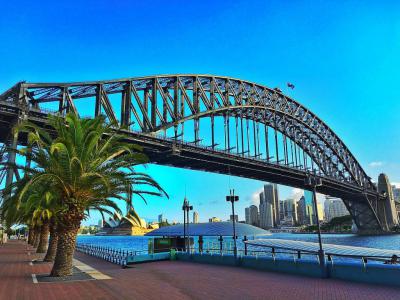
5) Sydney Harbour Bridge (must see)
The Sydney Harbour Bridge is one of Australia’s most recognisable engineering achievements, connecting the city centre with the North Shore across Sydney Harbour. Designed by Dr. J.J.C. Bradfield of the New South Wales Department of Public Works and built by Dorman Long & Co. of Middlesbrough, England, the bridge opened in 1932 after nearly a decade of construction. Spanning 503 metres between its granite-faced pylons and rising 134 metres above the water, it became a defining feature of Sydney’s skyline.
At 48.8 metres wide, it was the world’s widest long-span bridge upon completion-a record it held until Vancouver’s Port Mann Bridge opened in 2012. It also remains the world’s tallest steel arch bridge, renowned for its scale, symmetry, and strength.
The bridge’s two half-arches were built outward from each shore and met mid-span in 1930 with remarkable precision. More than six million rivets hold the structure together, its weight distributed through huge abutments rather than the pylons, which were included mainly for aesthetic balance and public reassurance. The granite used for the pylons was quarried at Moruya on the New South Wales south coast, and each of the four towers provides interior space for stairways and viewing platforms.
Carrying eight lanes of road traffic, two rail lines, a pedestrian walkway on the eastern side, and a cycleway on the western side, the bridge remains a vital transport link. The BridgeClimb, introduced in 1998, lets visitors scale the arch under guided supervision for panoramic harbour views, while the Pylon Lookout Museum exhibits models, photographs, and historical records. Painted in the distinctive “Harbour Bridge Grey,” the structure undergoes continuous maintenance, including an ongoing repainting cycle to protect against corrosion.
At 48.8 metres wide, it was the world’s widest long-span bridge upon completion-a record it held until Vancouver’s Port Mann Bridge opened in 2012. It also remains the world’s tallest steel arch bridge, renowned for its scale, symmetry, and strength.
The bridge’s two half-arches were built outward from each shore and met mid-span in 1930 with remarkable precision. More than six million rivets hold the structure together, its weight distributed through huge abutments rather than the pylons, which were included mainly for aesthetic balance and public reassurance. The granite used for the pylons was quarried at Moruya on the New South Wales south coast, and each of the four towers provides interior space for stairways and viewing platforms.
Carrying eight lanes of road traffic, two rail lines, a pedestrian walkway on the eastern side, and a cycleway on the western side, the bridge remains a vital transport link. The BridgeClimb, introduced in 1998, lets visitors scale the arch under guided supervision for panoramic harbour views, while the Pylon Lookout Museum exhibits models, photographs, and historical records. Painted in the distinctive “Harbour Bridge Grey,” the structure undergoes continuous maintenance, including an ongoing repainting cycle to protect against corrosion.
