Custom Walk in Chiang Mai, Thailand by sartatneuc_84282 created on 2025-11-03
Guide Location: Thailand » Chiang Mai
Guide Type: Custom Walk
# of Sights: 15
Tour Duration: 22 Hour(s)
Travel Distance: 62.6 Km or 38.9 Miles
Share Key: F6AKQ
Guide Type: Custom Walk
# of Sights: 15
Tour Duration: 22 Hour(s)
Travel Distance: 62.6 Km or 38.9 Miles
Share Key: F6AKQ
How It Works
Please retrieve this walk in the GPSmyCity app. Once done, the app will guide you from one tour stop to the next as if you had a personal tour guide. If you created the walk on this website or come to the page via a link, please follow the instructions below to retrieve the walk in the app.
Retrieve This Walk in App
Step 1. Download the app "GPSmyCity: Walks in 1K+ Cities" on Apple App Store or Google Play Store.



Step 2. In the GPSmyCity app, download(or launch) the guide "Chiang Mai Map and Walking Tours".
Step 3. Tap the menu button located at upper right corner of the "Walks" screen and select "Retrieve custom walk". Enter the share key: F6AKQ
1) Wat Phra Singh (must see)
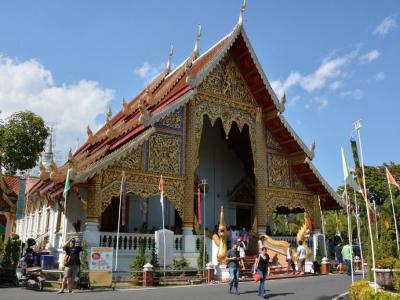
Wat Phra Singh is one of Chiang Mai’s most important temples and a major center of Buddhist devotion in Northern Thailand. Founded in the mid-14th century by King Pha Yu, it was originally built to house the ashes of his father, King Kham Fu, during the height of the Lanna Kingdom.
Its prominence grew when the Phra Buddha Sihing (commonly called Phra Singh) image arrived in 1367. The statue, considered a highly revered representation of the Buddha, gave the temple its name and continues to draw worshippers from across Thailand. During the Thai New Year, or Songkran festival, the image is paraded through the streets in a traditional procession, allowing people to pay respect by gently sprinkling water.
The temple complex showcases elegant examples of Lanna architecture. One of its most celebrated structures is the smaller Viharn Lai Kham, which houses the Phra Singh statue. The building features finely carved wooden details and interior murals illustrating Jataka tales and elements of Lanna culture. The larger Viharn Luang stands nearby with striking white pillars and a gilded Buddha image known as Phra Chao Thong Tip.
Additional structures add to the temple’s historical interest. The Ubosot, used for ordination ceremonies, displays decorative motifs inspired by Buddhist cosmology, while an ancient brick chedi dating back to 1345 offers insight into the earliest phases of the temple’s construction. A small elevated library within the grounds was designed to protect sacred manuscripts from humidity and pests.
Wat Phra Singh remains an active monastic community. Visitors may observe daily rituals or speak with monks in designated areas where they share information about Buddhist beliefs and meditation practices. Together, these features make the temple an important place for understanding both the religious and cultural traditions of Chiang Mai.
Tip:
The monks here are serious and prefer not to have pictures of the Buddha statues, believing this to be disrespectful. They also discourage the use of the Buddha as art, asking that representations be confined to shrines, whether public or private.
Its prominence grew when the Phra Buddha Sihing (commonly called Phra Singh) image arrived in 1367. The statue, considered a highly revered representation of the Buddha, gave the temple its name and continues to draw worshippers from across Thailand. During the Thai New Year, or Songkran festival, the image is paraded through the streets in a traditional procession, allowing people to pay respect by gently sprinkling water.
The temple complex showcases elegant examples of Lanna architecture. One of its most celebrated structures is the smaller Viharn Lai Kham, which houses the Phra Singh statue. The building features finely carved wooden details and interior murals illustrating Jataka tales and elements of Lanna culture. The larger Viharn Luang stands nearby with striking white pillars and a gilded Buddha image known as Phra Chao Thong Tip.
Additional structures add to the temple’s historical interest. The Ubosot, used for ordination ceremonies, displays decorative motifs inspired by Buddhist cosmology, while an ancient brick chedi dating back to 1345 offers insight into the earliest phases of the temple’s construction. A small elevated library within the grounds was designed to protect sacred manuscripts from humidity and pests.
Wat Phra Singh remains an active monastic community. Visitors may observe daily rituals or speak with monks in designated areas where they share information about Buddhist beliefs and meditation practices. Together, these features make the temple an important place for understanding both the religious and cultural traditions of Chiang Mai.
Tip:
The monks here are serious and prefer not to have pictures of the Buddha statues, believing this to be disrespectful. They also discourage the use of the Buddha as art, asking that representations be confined to shrines, whether public or private.
2) Wat Sri Suphan (Silver Temple) (must see)
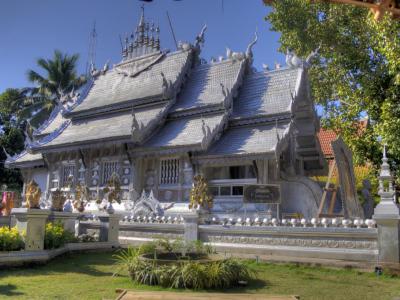
Wat Sri Suphan is known as the Silver Temple due to its ornate silver decoration. This temple was built around 1500 as a place of worship for the local silversmith village. As repairs were needed, the locals repaired the temple with silver. However, the temple wasn't completely covered in silver until 2008. The traditional Lanna architecture and design have now been completely covered in silver, nickel, and aluminum by the local silver artists.
You'll be astounded by the detailed relief plates covering the exterior. Relief plates depict rural life, cities of the world, the seven wonders of the ancient world, and zodiac animals.
While the relief plates are made with aluminum, the Buddha images are covered in silver.
The temple's interior is vibrant, with silver, mirrors, and bright colors adorning the walls and ceiling. Because this is an active ordination hall, women are not permitted inside the temple. According to Lanna tradition, the spells and amulets buried beneath the hall could cause "deterioration" to people with pure spirits, especially women.
There's an exhibition building with detailed information about the silversmith process. You can see artists working in the workshop, creating relief plates.
Monks give talks several times a day, which is an excellent way to gain further insight into the local traditions and religion. At night, the temple is illuminated with blue lights, creating another stunning scene.
You'll be astounded by the detailed relief plates covering the exterior. Relief plates depict rural life, cities of the world, the seven wonders of the ancient world, and zodiac animals.
While the relief plates are made with aluminum, the Buddha images are covered in silver.
The temple's interior is vibrant, with silver, mirrors, and bright colors adorning the walls and ceiling. Because this is an active ordination hall, women are not permitted inside the temple. According to Lanna tradition, the spells and amulets buried beneath the hall could cause "deterioration" to people with pure spirits, especially women.
There's an exhibition building with detailed information about the silversmith process. You can see artists working in the workshop, creating relief plates.
Monks give talks several times a day, which is an excellent way to gain further insight into the local traditions and religion. At night, the temple is illuminated with blue lights, creating another stunning scene.
3) Sbunnga Textile Museum
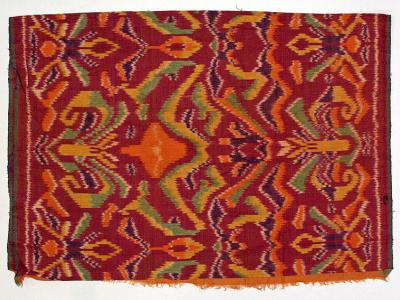
Located in Chiang Mai's Old Cultural Center, the Sbun-nga is the oldest textile museum in the whole of Thailand. It has a collection of over 6,000 rare and old textile exhibits and displays styles worn by both royalty and common local people. A special exhibit is devoted to Northern Thai textile designs. All displays include the ethnographic details of the tribes who weave the elaborate designs and also the reasons why they evolved the unique style.
Notable among the displays are textiles by the Thai Lue people who came from the Sipsong Panna in Southern China and made different parts of Thailand their home, the Lai Nam Lai or Flowing Water design by people who settled along the Mekong River, as well as the intricately worked elaborate headdress of the Lao people who emigrated to Thailand from Northern Laos in the last two hundred years (they have the finest weaving techniques among tribes in Thailand). There is also a display of formal robes worn by the Royal family including a swirling coronation dress of the Thai Prince. The silk dress is covered with metal and gemstone sequins.
Tip:
Tours are by appointment and must be made in advance (check Sbunnga Museum page of Facebook). Tours last about 1 hr and are well worth taking. A modest fee of 200 THB/person opens a remarkable experience.
Notable among the displays are textiles by the Thai Lue people who came from the Sipsong Panna in Southern China and made different parts of Thailand their home, the Lai Nam Lai or Flowing Water design by people who settled along the Mekong River, as well as the intricately worked elaborate headdress of the Lao people who emigrated to Thailand from Northern Laos in the last two hundred years (they have the finest weaving techniques among tribes in Thailand). There is also a display of formal robes worn by the Royal family including a swirling coronation dress of the Thai Prince. The silk dress is covered with metal and gemstone sequins.
Tip:
Tours are by appointment and must be made in advance (check Sbunnga Museum page of Facebook). Tours last about 1 hr and are well worth taking. A modest fee of 200 THB/person opens a remarkable experience.
4) Kuan Yin Palace
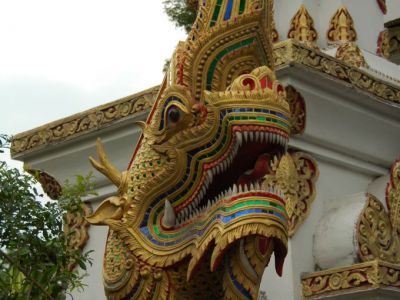
Kuan Yin Palace, also known as Kuan Yin Bodhisattavas, is a hidden gem located not far from Chiang Mai. This Chinese dragon temple impresses visitors with its playful and diverse design. As tourists approach the shrine, they are greeted by a massive and colorful 20-meter dragon standing guard at the entrance, its mouth wide open, inviting worshippers to enter.
The temple was constructed in 1991 by Abbess Bhiksuni Shi Kuang Seng, who received her ordination at Mount Pu Tuo in China. The founder's dedication to the Goddess of Mercy, Kuan Im, is evident throughout the temple. Inside, visitors walk through a dragon tunnel adorned with murals, following the customary practice of removing shoes before reaching the main worship area.
The corridor within the dragon's belly is a unique and fascinating feature of the temple. Colorful paintings and intricate decorations line the path, providing a mesmerizing journey for those who pass through it. This experience adds to the spiritual significance of the temple, attracting faithful devotees who come here to pray and pay homage to the deities.
Within the temple, two remarkable statues draw visitors' attention-the dragon and the tiger. The dragon, standing guard at the entrance, represents strength and protection. In contrast, the tiger symbolizes power and courage, with visitors passing through its body to emerge from its jaws. This symbolic journey from the dragon to the tiger signifies a spiritual transformation and renewal, leaving visitors with a profound sense of awe and wonder.
Upon reaching the main worship area, visitors encounter a small pavilion housing the statue of Kuan Im, the Goddess of Mercy. Devotees offer prayers and seek blessings from this compassionate deity, feeling a sense of peace and tranquility in her presence.
The temple was constructed in 1991 by Abbess Bhiksuni Shi Kuang Seng, who received her ordination at Mount Pu Tuo in China. The founder's dedication to the Goddess of Mercy, Kuan Im, is evident throughout the temple. Inside, visitors walk through a dragon tunnel adorned with murals, following the customary practice of removing shoes before reaching the main worship area.
The corridor within the dragon's belly is a unique and fascinating feature of the temple. Colorful paintings and intricate decorations line the path, providing a mesmerizing journey for those who pass through it. This experience adds to the spiritual significance of the temple, attracting faithful devotees who come here to pray and pay homage to the deities.
Within the temple, two remarkable statues draw visitors' attention-the dragon and the tiger. The dragon, standing guard at the entrance, represents strength and protection. In contrast, the tiger symbolizes power and courage, with visitors passing through its body to emerge from its jaws. This symbolic journey from the dragon to the tiger signifies a spiritual transformation and renewal, leaving visitors with a profound sense of awe and wonder.
Upon reaching the main worship area, visitors encounter a small pavilion housing the statue of Kuan Im, the Goddess of Mercy. Devotees offer prayers and seek blessings from this compassionate deity, feeling a sense of peace and tranquility in her presence.
5) Wat Phra That Doi Kham (must see)
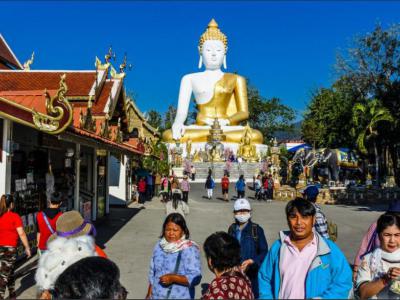
Wat Phra That Doi Kham is known for its 17-meter (55.7-foot) tall Buddha statue. There are 300 steps to reach the temple, perched high on the hillside. Magnificent serpent sculptures guard the entrance to the pagoda stairs. Warrior and white lion sculptures guard the grounds.
The ancient pagoda at the temple was built in 687. Its ornate design is spectacular.
The 17-meter tall image of Buddha dominates the grounds and can be seen from miles away, while the hillside location gives you optimal views of Chang Mai below.
The temple's courtyard features many Buddha images. Visitors can strike the many bells and gongs located in the courtyard.
The Lanna-style ubosot (ordination hall) is very ornate. In front of the ubosot, you'll find massive gold Naga serpents. The ubosot entrance is particularly beautiful. An ornate golden peacock motif adorns the entrance.
People pray to the Buddha image of success. If their wishes come true, they must return and leave an offering of jasmine flowers. The courtyard is filled with jasmine flowers, adding to the exquisite beauty of this hilltop temple.
The ancient pagoda at the temple was built in 687. Its ornate design is spectacular.
The 17-meter tall image of Buddha dominates the grounds and can be seen from miles away, while the hillside location gives you optimal views of Chang Mai below.
The temple's courtyard features many Buddha images. Visitors can strike the many bells and gongs located in the courtyard.
The Lanna-style ubosot (ordination hall) is very ornate. In front of the ubosot, you'll find massive gold Naga serpents. The ubosot entrance is particularly beautiful. An ornate golden peacock motif adorns the entrance.
People pray to the Buddha image of success. If their wishes come true, they must return and leave an offering of jasmine flowers. The courtyard is filled with jasmine flowers, adding to the exquisite beauty of this hilltop temple.
6) Wat Umong Suan Puthatham (must see)
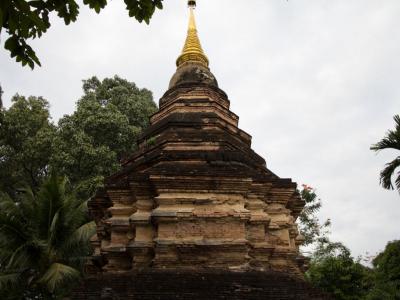
Wat Umong, also known as Wat Umong Suan Puthatham, stands as an ancient Buddhist temple nestled in the serene surroundings of Chiang Mai. With a history spanning over 700 years, this temple was founded in 1297 by King Mangrai, a prominent figure in the Lan Na dynasty. Perched against the picturesque Doi Suthep mountains, Wat Umong finds itself approximately 1 kilometer south of the main campus of Chiang Mai University.
The temple complex, covering an expansive 15 acres of wooded grounds, exudes a tranquil ambiance, making it an ideal haven for spiritual contemplation. Visitors to Wat Umong have the opportunity to explore a small open zoo located behind the temple, adding to the unique experience of this sacred place.
One notable attraction within the temple grounds is a remarkable replica of the Ashok Pillar, reminiscent of the one found in Vaishali. This intricately designed pillar showcases four majestic lions and a wheel at its base, topped by a larger wheel that acts as an umbrella for the lions. Interestingly, the four lion heads are also adopted as the National Emblem of India. The serene atmosphere is further complemented by "talking trees" which bear words of wisdom in both Thai and English.
Venturing through the ancient tunnels and large chedi at Wat Umong is an enthralling experience. These tunnels, adorned with Buddhist images, were supposedly built by the King to house a renowned but mentally deranged monk who had a habit of wandering into the wilderness for days on end. Along the footpaths leading to a serene lake, visitors can encounter signs (proverbs) in English and Thai, while feeding the fish, pigeons, and turtles that inhabit the area.
Beyond the tunnels and chedi, the temple complex boasts a plethora of captivating attractions. The Buddha field, featuring broken sculptures, adds a sense of historical intrigue. The fasting Bodhisattva and the Spiritual Theatre with paintings akin to those at Suan Mokkh further enrich the cultural and spiritual experience. Additionally, visitors can find reproductions of ancient Buddhist sculptures from India and explore the library-museum, offering a vast collection of books on Buddhism and other philosophies, as well as a display of historic objects and Buddhist art.
The temple complex, covering an expansive 15 acres of wooded grounds, exudes a tranquil ambiance, making it an ideal haven for spiritual contemplation. Visitors to Wat Umong have the opportunity to explore a small open zoo located behind the temple, adding to the unique experience of this sacred place.
One notable attraction within the temple grounds is a remarkable replica of the Ashok Pillar, reminiscent of the one found in Vaishali. This intricately designed pillar showcases four majestic lions and a wheel at its base, topped by a larger wheel that acts as an umbrella for the lions. Interestingly, the four lion heads are also adopted as the National Emblem of India. The serene atmosphere is further complemented by "talking trees" which bear words of wisdom in both Thai and English.
Venturing through the ancient tunnels and large chedi at Wat Umong is an enthralling experience. These tunnels, adorned with Buddhist images, were supposedly built by the King to house a renowned but mentally deranged monk who had a habit of wandering into the wilderness for days on end. Along the footpaths leading to a serene lake, visitors can encounter signs (proverbs) in English and Thai, while feeding the fish, pigeons, and turtles that inhabit the area.
Beyond the tunnels and chedi, the temple complex boasts a plethora of captivating attractions. The Buddha field, featuring broken sculptures, adds a sense of historical intrigue. The fasting Bodhisattva and the Spiritual Theatre with paintings akin to those at Suan Mokkh further enrich the cultural and spiritual experience. Additionally, visitors can find reproductions of ancient Buddhist sculptures from India and explore the library-museum, offering a vast collection of books on Buddhism and other philosophies, as well as a display of historic objects and Buddhist art.

7) Chiang Mai University Art Museum
The Chiang Mai University Art Museum hosts temporary art exhibitions of works of new and established modern Thai and occasionally international artists. It is run by the faculty of fine arts of the Chiang Mai University.
The Chiang Mai University faculty of fine arts with the help of the Government of Thailand established the museum to promote contemporary art and artists from Northern Thailand among the local people. It was built between 1996 and 1998. It is a small museum that has no permanent collection. Interesting themed exhibitions are held in its display halls. The museum maintains relationships with other similar facilities in Thailand and around the world and hosts a variety of changing exhibitions of art and sculpture all through the year.
Temporary exhibitions often include works by contemporary artists from other countries, local new artists and well known contemporary Thai artists. Visitors are assisted by knowledgeable art students in understanding the works displayed. The museum has a main exhibition hall and exhibition room at the back of the first floor, a gallery in front and another display hall at the back of the second floor. There is also a theater within the building. The Museum is located on Nimmanhemin Road opposite the Chiang Mai University auditorium.
The Chiang Mai University faculty of fine arts with the help of the Government of Thailand established the museum to promote contemporary art and artists from Northern Thailand among the local people. It was built between 1996 and 1998. It is a small museum that has no permanent collection. Interesting themed exhibitions are held in its display halls. The museum maintains relationships with other similar facilities in Thailand and around the world and hosts a variety of changing exhibitions of art and sculpture all through the year.
Temporary exhibitions often include works by contemporary artists from other countries, local new artists and well known contemporary Thai artists. Visitors are assisted by knowledgeable art students in understanding the works displayed. The museum has a main exhibition hall and exhibition room at the back of the first floor, a gallery in front and another display hall at the back of the second floor. There is also a theater within the building. The Museum is located on Nimmanhemin Road opposite the Chiang Mai University auditorium.
8) Wat Pha Lat (must see)
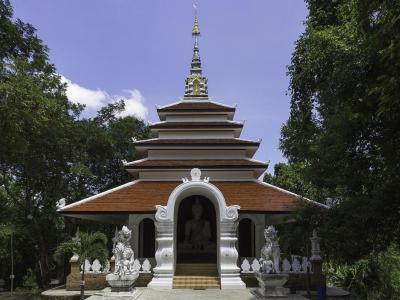
Wat Pha Lat is a beautiful, serene Buddhist temple seemingly hidden in the jungle. To get there, follow the trail ingeniously marked with orange fabric tassels wrapped around trees.
Buddhist statues mark the entrance to the temple. On the temple grounds, you'll find a peaceful waterfall flowing over sheetrock.
According to the legend, in 1355, King Kuena's white elephant stopped to rest at Wat Pha Lat's site. The elephant later died at the site of Wat Phra That Doi Suthep. The King ordered temples to be built at both sites. For centuries, the Wat Pha Lat temple was a resting stop on the way to Wat Phra That Doi Suthep. After a road was built in 1935, Wat Pha Lat became a meditation site and monk's residence.
Today's visitors will love the peace and serenity away from the hustle and noise of Chang Mai. Instead of listening to scooters and road noise, take in the sounds of nature.
On a clear day, you can see down to Chang Mai for a bird's eye view of the city.
Buddhist statues mark the entrance to the temple. On the temple grounds, you'll find a peaceful waterfall flowing over sheetrock.
According to the legend, in 1355, King Kuena's white elephant stopped to rest at Wat Pha Lat's site. The elephant later died at the site of Wat Phra That Doi Suthep. The King ordered temples to be built at both sites. For centuries, the Wat Pha Lat temple was a resting stop on the way to Wat Phra That Doi Suthep. After a road was built in 1935, Wat Pha Lat became a meditation site and monk's residence.
Today's visitors will love the peace and serenity away from the hustle and noise of Chang Mai. Instead of listening to scooters and road noise, take in the sounds of nature.
On a clear day, you can see down to Chang Mai for a bird's eye view of the city.
9) Wat Phra That Doi Suthep (must see)
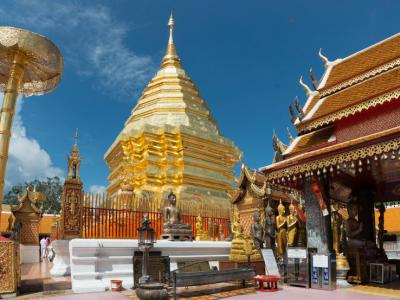
Wat Phra That Doi Suthep, situated in Chiang Mai Province, is a revered Theravada Buddhist temple commonly known as "Doi Suthep," after the mountain it rests on. For many Thai people, this place holds great spiritual significance. Positioned 15 kilometers (9.3 miles) from Chiang Mai city, the temple stands proudly at an elevation of 1,073 meters, providing breathtaking views of downtown Chiang Mai.
This sacred pilgrimage site is treasured for its relic, making it one of Thailand's most venerated destinations. Monthly, it attracts around 120,000 visitors, with even higher numbers during special occasions like Songkhan and, notably, Visakha Bucha Day. On the latter, local devotees climb the mountain and spend the night on the temple esplanade, commemorating the Buddha's birth.
Legend tells that in the Sukhothai Kingdom, a monk named Sumanathera had a divine dream directing him to find a relic in Pang Cha. He discovered a magical bone believed to be Gautama Buddha's shoulder bone. Despite presenting it to King Dhammaraja, the relic showed no unusual traits, so Sumanathera kept it.
King Nu Naone of Lan Na discovered a relic and summoned a monk to bring it to him. In 1368, the monk took the relic to Lamphun, Thailand. Upon arrival, the relic split into two pieces. One was enshrined at Wat Suan Dok, and the other was placed on a white elephant named Doi Aoy Chang. The elephant climbed Doi Suthep and trumpeted three times before passing away. This led King Nu Naone to build a temple at the site.
To visit the temple, one can reach it conveniently by road from Chiang Mai. After arriving at the temple's base car park, visitors can ascend 309 steps to reach the pagodas or opt for a tram ride. Alternatively, a scenic hike along the Monk's Trail from the city is also feasible.
Visitors in the temple grounds must wear respectful attire, remove footwear. Sacred area houses original gold-plated chedi. Site has pagodas, statues, museum, shrines, blending Buddhism and Hinduism. Notable figures include the Emerald Buddha model and Ganesh statue. Temple offers panoramic Chiang Mai views.
This sacred pilgrimage site is treasured for its relic, making it one of Thailand's most venerated destinations. Monthly, it attracts around 120,000 visitors, with even higher numbers during special occasions like Songkhan and, notably, Visakha Bucha Day. On the latter, local devotees climb the mountain and spend the night on the temple esplanade, commemorating the Buddha's birth.
Legend tells that in the Sukhothai Kingdom, a monk named Sumanathera had a divine dream directing him to find a relic in Pang Cha. He discovered a magical bone believed to be Gautama Buddha's shoulder bone. Despite presenting it to King Dhammaraja, the relic showed no unusual traits, so Sumanathera kept it.
King Nu Naone of Lan Na discovered a relic and summoned a monk to bring it to him. In 1368, the monk took the relic to Lamphun, Thailand. Upon arrival, the relic split into two pieces. One was enshrined at Wat Suan Dok, and the other was placed on a white elephant named Doi Aoy Chang. The elephant climbed Doi Suthep and trumpeted three times before passing away. This led King Nu Naone to build a temple at the site.
To visit the temple, one can reach it conveniently by road from Chiang Mai. After arriving at the temple's base car park, visitors can ascend 309 steps to reach the pagodas or opt for a tram ride. Alternatively, a scenic hike along the Monk's Trail from the city is also feasible.
Visitors in the temple grounds must wear respectful attire, remove footwear. Sacred area houses original gold-plated chedi. Site has pagodas, statues, museum, shrines, blending Buddhism and Hinduism. Notable figures include the Emerald Buddha model and Ganesh statue. Temple offers panoramic Chiang Mai views.
10) Chiang Mai National Museum
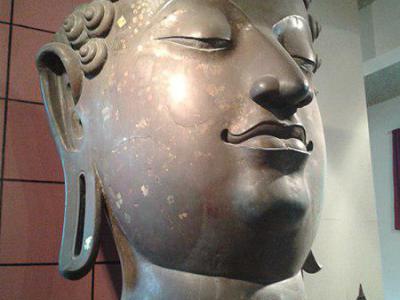
Opened to the public in 1973 under the patronage of the King and Queen of Thailand and run by Chiang Mai's Fine Arts Department, the Chiang Mai National Museum is dedicated to the history of the Kingdom of Lanna of which the city was the capital. It is housed in a building designed using the architecture of old Lanna style structures with two floors and a unique traditional roof.
The Chiang Mai National Museum has six sections that include the background of the Lanna region from prehistoric times, the history of the Lanna Kingdom, trade and economy, art, Chiang Mai as part of Siam and Chiang Mai today. There are also dioramas showing Lanna under Burmese rule and the subsequent overthrow of the Burmese and other battles that were fought during the Lanna era. There is also an impressive collection of coins, weaponry, portraits and photographs of the Lanna Royal family.
Why You Should Visit:
It's always good to learn a little about the destination that you are visiting and this small museum, spread over two floors, will enlighten you on the history and culture of Northern Thailand.
There are plenty of exhibits to peruse and they are explained in both Thai and English. The standout display is the amazing ancient Buddha's Footprint which features tiny inlaid mother of pearl work.
Tip:
The place is very clean and well organized; you do have to leave your bags in a locker, but you can take your phone or camera – just no flash photography.
The Chiang Mai National Museum has six sections that include the background of the Lanna region from prehistoric times, the history of the Lanna Kingdom, trade and economy, art, Chiang Mai as part of Siam and Chiang Mai today. There are also dioramas showing Lanna under Burmese rule and the subsequent overthrow of the Burmese and other battles that were fought during the Lanna era. There is also an impressive collection of coins, weaponry, portraits and photographs of the Lanna Royal family.
Why You Should Visit:
It's always good to learn a little about the destination that you are visiting and this small museum, spread over two floors, will enlighten you on the history and culture of Northern Thailand.
There are plenty of exhibits to peruse and they are explained in both Thai and English. The standout display is the amazing ancient Buddha's Footprint which features tiny inlaid mother of pearl work.
Tip:
The place is very clean and well organized; you do have to leave your bags in a locker, but you can take your phone or camera – just no flash photography.
11) Pung Tao Gong Temple
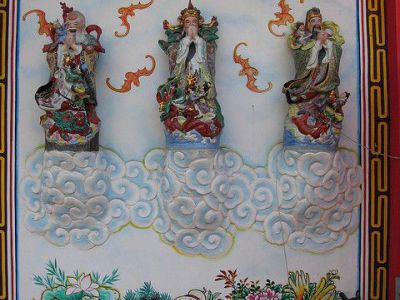
The Pung Tao Gong Temple is the oldest ancestral temple of the Chinese in Chiang Mai. The present structure replaced an ancient temple that had fallen to disrepair over the years.
Pung Tao Gong Temple was built by the Chinese residents of Chiang Mai in 1876. The date is engraved on one of its roof beams. It was rebuilt by the Chinese residents of Chiang Mai and opened for worship in 1998 to celebrate 700th anniversary of the formation of the city. The new structure strictly follows the principles of Feng Shui. Two shop buildings in front of the temple were demolished to allow the better flow of Chi or life force and to get a better view of the River Ping.
The present Pung Tao Gong Temple is built using traditional Chinese architecture. Brightly colored arches lead the way to the temple. The columns and pagodas are richly decorated. Visitors cross a small lane to reach the main temple. Here the floor is covered with tiles depicting dragons and other creatures from Chinese mythology. It is a functioning place of worship and the overpowering smell of incense permeates the air. The Pung Tao Gong Temple has a unique ambience compared to the other Thai temples in Chiang Mai.
Pung Tao Gong Temple was built by the Chinese residents of Chiang Mai in 1876. The date is engraved on one of its roof beams. It was rebuilt by the Chinese residents of Chiang Mai and opened for worship in 1998 to celebrate 700th anniversary of the formation of the city. The new structure strictly follows the principles of Feng Shui. Two shop buildings in front of the temple were demolished to allow the better flow of Chi or life force and to get a better view of the River Ping.
The present Pung Tao Gong Temple is built using traditional Chinese architecture. Brightly colored arches lead the way to the temple. The columns and pagodas are richly decorated. Visitors cross a small lane to reach the main temple. Here the floor is covered with tiles depicting dragons and other creatures from Chinese mythology. It is a functioning place of worship and the overpowering smell of incense permeates the air. The Pung Tao Gong Temple has a unique ambience compared to the other Thai temples in Chiang Mai.
12) Kesorn
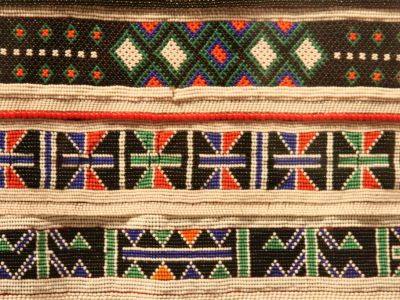
Nestled in the heart of Chiang Mai, along the bustling Tha Phae Road, lies a hidden gem for lovers of traditional arts and crafts-Kesorn Arts. For years, this charming shop has been a beacon for tourists and locals alike, showcasing the vibrant and intricate handicrafts produced by talented local ethnic groups.
Stepping into Kesorn Arts is like entering a world of colors, textures, and artistic expressions. The shop's warm ambiance immediately welcomes visitors, drawing them in to explore the vast array of treasures it holds. Displayed neatly on shelves and racks, the handmade textiles, weaving, and beads radiate the authentic beauty of Thailand's rich cultural heritage.
Kesorn Arts has become a haven for those seeking unique souvenirs that encapsulate the essence of Chiang Mai and its local communities. Each product in the store bears the hallmark of meticulous craftsmanship and a dedication to preserving traditional techniques that have been passed down through generations.
Textiles are one of the highlights at Kesorn Arts, offering an impressive selection of fabrics ranging from delicate silk creations to bold and vibrant hand-woven patterns. Visitors can run their fingers across the intricate details, marveling at the skill and expertise put into each piece. These textiles are not merely products but stories woven into cloth, representing the history and customs of the various ethnic groups that call Northern Thailand their home.
Stepping into Kesorn Arts is like entering a world of colors, textures, and artistic expressions. The shop's warm ambiance immediately welcomes visitors, drawing them in to explore the vast array of treasures it holds. Displayed neatly on shelves and racks, the handmade textiles, weaving, and beads radiate the authentic beauty of Thailand's rich cultural heritage.
Kesorn Arts has become a haven for those seeking unique souvenirs that encapsulate the essence of Chiang Mai and its local communities. Each product in the store bears the hallmark of meticulous craftsmanship and a dedication to preserving traditional techniques that have been passed down through generations.
Textiles are one of the highlights at Kesorn Arts, offering an impressive selection of fabrics ranging from delicate silk creations to bold and vibrant hand-woven patterns. Visitors can run their fingers across the intricate details, marveling at the skill and expertise put into each piece. These textiles are not merely products but stories woven into cloth, representing the history and customs of the various ethnic groups that call Northern Thailand their home.
13) Wat Buppharam
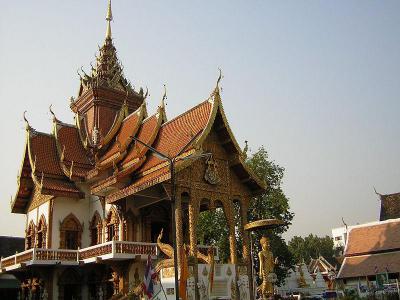
The Wat Buppharam or Suan Dok is a small Buddhist temple and historical site in Chiang Mai. It was here that 200 years of Burmese rule ended after their defeat by Chao Kawila in 1797 and Lanna rule was restored. The temple itself was built by the Lanna King, Muang Kaew, in 1497 as a place for a revered monk from Sukhothai to spend his rain retreat but was renovated several times and none of the Lanna structures remain today.
The structure of the Wat Buppharam was given a complete makeover in 1996 to celebrate the 50th anniversary of the reign of King Bhumibol Adulyadej. New doors were added to the Viharn and some of the ancient Buddhist images were replaced. A library was also built within the temple complex. Notable features of the temple are the large Ubosot or ordination hall and the Chedis with the ashes of the rulers of Chiang Mai. The temple complex also houses the Mahachulalongkorn Rajavidyalaya Buddhist University. The present Wat Buppharam has many stucco reliefs, murals and wood carvings that are fine examples of modern religious art.
Why You Should Visit:
This temple's uniqueness is derived from the fact that it’s built tall and skinny, which is very unusual for temples across Thailand.
Surrounded by gardens, an architectural gateway which leads to a 'chedi' to the right of the temple, it truly stands out from the rest.
Tip:
Climb the two flights of stairs and enter the temple to see the beautiful inside decorated in red, gold and green. You can also enjoy lunch on the grounds.
The structure of the Wat Buppharam was given a complete makeover in 1996 to celebrate the 50th anniversary of the reign of King Bhumibol Adulyadej. New doors were added to the Viharn and some of the ancient Buddhist images were replaced. A library was also built within the temple complex. Notable features of the temple are the large Ubosot or ordination hall and the Chedis with the ashes of the rulers of Chiang Mai. The temple complex also houses the Mahachulalongkorn Rajavidyalaya Buddhist University. The present Wat Buppharam has many stucco reliefs, murals and wood carvings that are fine examples of modern religious art.
Why You Should Visit:
This temple's uniqueness is derived from the fact that it’s built tall and skinny, which is very unusual for temples across Thailand.
Surrounded by gardens, an architectural gateway which leads to a 'chedi' to the right of the temple, it truly stands out from the rest.
Tip:
Climb the two flights of stairs and enter the temple to see the beautiful inside decorated in red, gold and green. You can also enjoy lunch on the grounds.
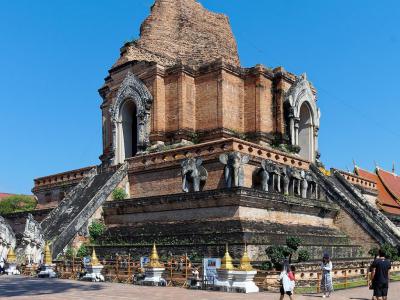
14) Wat Chedi Luang (must see)
Wat Chedi Luang is one of Chiang Mai’s most historically significant temples, located at the center of the Old City. Its name refers to the massive stupa that once dominated the skyline, originally constructed in the 14th century by King Saen Muang Ma to enshrine the ashes of his father, King Ku Na. Over the following decades, later rulers enlarged the structure, and by the mid-15th century it stood at an estimated 82 meters high, making it one of the tallest structures in the Lanna Kingdom.
For a brief period, Wat Chedi Luang also housed the revered Emerald Buddha, today kept in Bangkok’s Grand Palace. After an earthquake in the 16th century caused major damage to the chedi’s upper portion, the statue was relocated to Luang Prabang, and the temple gradually fell into partial ruin.
In the 1990s, restoration efforts supported by UNESCO and the Japanese government stabilized the structure. However, the reconstruction of the upper tiers in a Central Thai style, rather than traditional Lanna design, sparked debate among local historians and architects. The chedi remains intentionally truncated, preserving a sense of its dramatic history.
Visitors can still admire the weathered brick base, accessed by steep stairways guarded by stone nagas and elephants. The large main assembly hall, contains Phra Chao Attarot, a respected statue of the Buddha in a graceful standing posture. An ancient Dipterocarp tree grows nearby and is traditionally believed to protect the city. Adjacent to it is the city pillar, housed in a small shrine dedicated to guardian spirits that watch over Chiang Mai.
Wat Chedi Luang remains an active spiritual center. Visitors may witness monks performing daily rituals or join a Monk Chat session hosted on the grounds, where monastics share insights into Buddhist teachings and life in the temple community.
Tip:
If possible, go at (or stay until) nightfall to walk around this one. You can feel the peacefulness and the ambiance going after dark because these parts of the city are full of magic!
For a brief period, Wat Chedi Luang also housed the revered Emerald Buddha, today kept in Bangkok’s Grand Palace. After an earthquake in the 16th century caused major damage to the chedi’s upper portion, the statue was relocated to Luang Prabang, and the temple gradually fell into partial ruin.
In the 1990s, restoration efforts supported by UNESCO and the Japanese government stabilized the structure. However, the reconstruction of the upper tiers in a Central Thai style, rather than traditional Lanna design, sparked debate among local historians and architects. The chedi remains intentionally truncated, preserving a sense of its dramatic history.
Visitors can still admire the weathered brick base, accessed by steep stairways guarded by stone nagas and elephants. The large main assembly hall, contains Phra Chao Attarot, a respected statue of the Buddha in a graceful standing posture. An ancient Dipterocarp tree grows nearby and is traditionally believed to protect the city. Adjacent to it is the city pillar, housed in a small shrine dedicated to guardian spirits that watch over Chiang Mai.
Wat Chedi Luang remains an active spiritual center. Visitors may witness monks performing daily rituals or join a Monk Chat session hosted on the grounds, where monastics share insights into Buddhist teachings and life in the temple community.
Tip:
If possible, go at (or stay until) nightfall to walk around this one. You can feel the peacefulness and the ambiance going after dark because these parts of the city are full of magic!
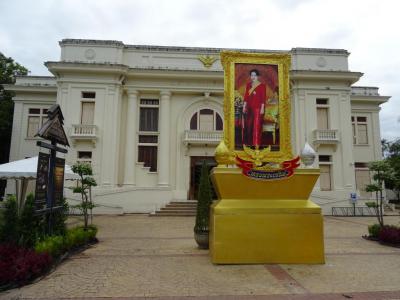
15) Lanna Folklife Museum
The Lanna Folklife Museum hosts exhibitions that share the heritage of the Lanna people of Northern Thailand. It is located in Chiang Mai’s former municipal court, a renovated white building styled with colonial architectural features.
Inside, visitors can explore 18 exhibitions depicting everyday Lanna life. These include life-sized wax figures dressed in traditional clothing, illustrating scenes such as monastic life, the importance of Buddhism, and traditional dance rituals.
The museum also features pottery, ceramics, and examples of finely woven fabrics, alongside displays explaining the tools and farming practices used by the Lanna people.
Be sure not to miss the section on symbolism in Lanna Buddhist temples. The insights you gain will help you recognize the intricate motifs and meanings found throughout Chiang Mai’s monasteries as you continue your journey.
Inside, visitors can explore 18 exhibitions depicting everyday Lanna life. These include life-sized wax figures dressed in traditional clothing, illustrating scenes such as monastic life, the importance of Buddhism, and traditional dance rituals.
The museum also features pottery, ceramics, and examples of finely woven fabrics, alongside displays explaining the tools and farming practices used by the Lanna people.
Be sure not to miss the section on symbolism in Lanna Buddhist temples. The insights you gain will help you recognize the intricate motifs and meanings found throughout Chiang Mai’s monasteries as you continue your journey.
