Custom Walk in Zagreb, Croatia by atanusaha_57287 created on 2025-12-08
Guide Location: Croatia » Zagreb
Guide Type: Custom Walk
# of Sights: 7
Tour Duration: 2 Hour(s)
Travel Distance: 3.2 Km or 2 Miles
Share Key: S3RAW
Guide Type: Custom Walk
# of Sights: 7
Tour Duration: 2 Hour(s)
Travel Distance: 3.2 Km or 2 Miles
Share Key: S3RAW
How It Works
Please retrieve this walk in the GPSmyCity app. Once done, the app will guide you from one tour stop to the next as if you had a personal tour guide. If you created the walk on this website or come to the page via a link, please follow the instructions below to retrieve the walk in the app.
Retrieve This Walk in App
Step 1. Download the app "GPSmyCity: Walks in 1K+ Cities" on Apple App Store or Google Play Store.



Step 2. In the GPSmyCity app, download(or launch) the guide "Zagreb Map and Walking Tours".
Step 3. Tap the menu button located at upper right corner of the "Walks" screen and select "Retrieve custom walk". Enter the share key: S3RAW
1) Republic of Croatia Square
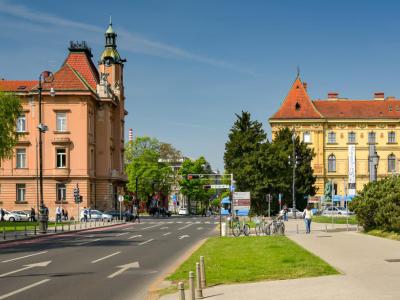
Republic of Croatia Square stands as one of the largest squares in Zagreb, situated in the Lower Town area with the Croatian National Theatre building serving as its central landmark. It is often touted as Zagreb's most exquisite square.
The square we see today took shape over a period spanning from 1856, marked by the construction of a former hospital on its northern side, to 1964, when the Ferimport building was erected on its western flank. However, the majority of the buildings that grace the square were constructed during the late 19th century, adhering to the historicist style of architecture.
Republic of Croatia Square is part of a trio of squares that together compose the western section of what is known as Lenuci's Horseshoe, a U-shaped arrangement of squares and parks. On the eastern side of this formation lie King Tomislav, Strossmayer, and Zrinski squares, while the western side is formed by Marulić, Mažuranić, and Republic of Croatia squares, with the Botanical Garden serving as the connecting element between them. Within this square, one can find several cultural and educational institutions, as well as notable sculptures that add to its character.
The square we see today took shape over a period spanning from 1856, marked by the construction of a former hospital on its northern side, to 1964, when the Ferimport building was erected on its western flank. However, the majority of the buildings that grace the square were constructed during the late 19th century, adhering to the historicist style of architecture.
Republic of Croatia Square is part of a trio of squares that together compose the western section of what is known as Lenuci's Horseshoe, a U-shaped arrangement of squares and parks. On the eastern side of this formation lie King Tomislav, Strossmayer, and Zrinski squares, while the western side is formed by Marulić, Mažuranić, and Republic of Croatia squares, with the Botanical Garden serving as the connecting element between them. Within this square, one can find several cultural and educational institutions, as well as notable sculptures that add to its character.
2) Botanical Garden
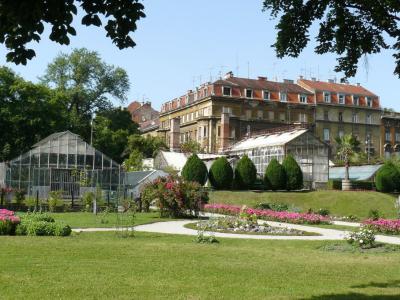
The Zagreb Botanical Garden, established in 1889 by University of Zagreb Professor Antun Heinz, is situated in the heart of Zagreb. It officially opened in 1891 and is a part of the University's Faculty of Science. Spanning approximately five hectares, the garden sits 120 meters above sea level and hosts a diverse collection of over 10,000 plant species, including 1,800 exotic varieties.
A notable feature of the garden is its arboretum, which mimics the design of traditional English landscape gardens and showcases a wide array of trees and shrubs from across the globe. The western section near the glasshouses displays a flower parterre arranged in the French style, known for its precise geometric patterns, including a variety of annuals, perennials, and roses.
The garden also focuses on the native flora of Croatia, organizing indigenous plants in a manner reflective of their natural geography, such as in rock gardens. The greenhouses, numbering 14, house tropical and subtropical plants, as well as specimens used for academic research. Additionally, the garden features man-made lakes and pools that support marsh plants, and a systematic field dedicated to educational purposes, particularly for university students and lectures.
Located centrally in Zagreb, the Botanical Garden is easily accessible, being just one tram stop from the Central Railway Station or a brief 10-minute walk from Jelacic Square. Visitors can enter through the northern side along Mihanoviceva Street, at the end of Gundulićeva Street.
Why You Should Visit:
Admission is free and there are fun things designed for kids. So if you want to rewind or entertain your little ones, this is a good place to visit.
A notable feature of the garden is its arboretum, which mimics the design of traditional English landscape gardens and showcases a wide array of trees and shrubs from across the globe. The western section near the glasshouses displays a flower parterre arranged in the French style, known for its precise geometric patterns, including a variety of annuals, perennials, and roses.
The garden also focuses on the native flora of Croatia, organizing indigenous plants in a manner reflective of their natural geography, such as in rock gardens. The greenhouses, numbering 14, house tropical and subtropical plants, as well as specimens used for academic research. Additionally, the garden features man-made lakes and pools that support marsh plants, and a systematic field dedicated to educational purposes, particularly for university students and lectures.
Located centrally in Zagreb, the Botanical Garden is easily accessible, being just one tram stop from the Central Railway Station or a brief 10-minute walk from Jelacic Square. Visitors can enter through the northern side along Mihanoviceva Street, at the end of Gundulićeva Street.
Why You Should Visit:
Admission is free and there are fun things designed for kids. So if you want to rewind or entertain your little ones, this is a good place to visit.

3) Art Pavilion
The Art Pavilion in Zagreb, established in 1898, holds the distinction of being the oldest gallery in Southeast Europe. Furthermore, it stands as the sole gallery in Zagreb that was purpose-built to house large-scale exhibitions. The initial proposal for this gallery's creation was made by Croatian painter Vlaho Bukovac in the spring of 1895.
The gallery boasts a spacious display area covering 600 square meters, yet it does not maintain a permanent collection. Instead, it specializes in hosting unique solo and group exhibitions that showcase significant artistic works and movements from various time periods and styles. These exhibitions feature the creations of both Croatian and international artists.
Over the course of its history, the gallery has organized approximately 700 exhibitions, featuring artists ranging from the Earth Group collective to prominent figures like George Grosz, Henry Moore, Auguste Rodin, Andy Warhol, Mimmo Rotella, and numerous others. Since 2005, an annual tradition has seen the publication of a CD-ROM, typically released around the anniversary of the Pavilion's founding. This CD-ROM offers a virtual tour of the exhibitions held in the preceding year.
Why You Should Visit:
It is a magnificent historical building with beautiful interiors and surrounded by lovely gardens, plus it always has some interesting exhibitions inside. Well worth the ticket price.
The gallery boasts a spacious display area covering 600 square meters, yet it does not maintain a permanent collection. Instead, it specializes in hosting unique solo and group exhibitions that showcase significant artistic works and movements from various time periods and styles. These exhibitions feature the creations of both Croatian and international artists.
Over the course of its history, the gallery has organized approximately 700 exhibitions, featuring artists ranging from the Earth Group collective to prominent figures like George Grosz, Henry Moore, Auguste Rodin, Andy Warhol, Mimmo Rotella, and numerous others. Since 2005, an annual tradition has seen the publication of a CD-ROM, typically released around the anniversary of the Pavilion's founding. This CD-ROM offers a virtual tour of the exhibitions held in the preceding year.
Why You Should Visit:
It is a magnificent historical building with beautiful interiors and surrounded by lovely gardens, plus it always has some interesting exhibitions inside. Well worth the ticket price.
4) Strossmayer's Old Masters Gallery
The Strossmayer Gallery of Old Masters is a fine art museum exhibiting the collection donated to the city by Bishop Josip Juraj Strossmayer in 1884. The Gallery exhibits the works of European painters from 14th-19th century.
The Strossmayer Gallery holding includes around 4,000 works, of which some 250 are on display, with the remainder in storage, or on display at other museums or gallery institutions in Croatia. The holdings have been classified into three major groups: Italian, French and Northern European (German, Flemish, and Dutch) works, and also some works by Croatian artists.
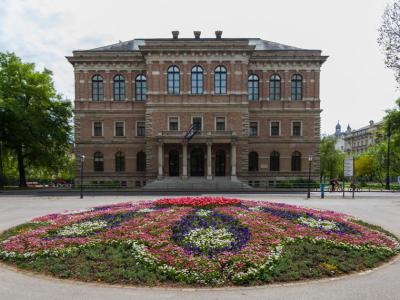
The Gallery is on the second floor of the Croatian Academy of Sciences and Arts that dates back to 1867. The building features Italian Renaissance style, and has been brought up to date technologically. The first director of the Academy was historian Franjo Racki.
The Strossmayer Gallery holding includes around 4,000 works, of which some 250 are on display, with the remainder in storage, or on display at other museums or gallery institutions in Croatia. The holdings have been classified into three major groups: Italian, French and Northern European (German, Flemish, and Dutch) works, and also some works by Croatian artists.
The Gallery is on the second floor of the Croatian Academy of Sciences and Arts that dates back to 1867. The building features Italian Renaissance style, and has been brought up to date technologically. The first director of the Academy was historian Franjo Racki.

5) Nikola Šubić Zrinski Square
Nikola Šubić Zrinski Square, commonly referred to as Zrinjevac, is a central and prominent area in Zagreb. Covering an area of about 12,540 square meters, it is surrounded by important buildings such as Croatia's Supreme Court, the Ministry of Foreign Affairs and European Integration, and the Zagreb Archaeological Museum. This square bears the name of Nikola Šubić Zrinski, who was a Croatian-Hungarian nobleman and military leader. He served as the Ban of Croatia from 1542 to 1556 and was a member of the prominent Croatian noble families Zrinski and Kurjaković. During his lifetime, the Zrinski family rose to become the most influential noble family in the Kingdom of Croatia.
Situated close to the central Ban Jelačić Square and on the way to the Main Railway Station, Nikola Šubić Zrinski Square is a key part of Zagreb's Green Horseshoe. This is a network of seven squares in the Lower Town area. The southern section of the square features busts of important Croatian figures, including Julije Klović, Andrija Medulić, Fran Krsto Frankopan, Nikola Jurišić, Ivan Kukuljević Sakcinski, and Ivan Mažuranić.
A notable feature of the square is its music pavilion, established in 1891 as a gift from Eduard Prister, a wealthy trader. The square, with its well-maintained gardens, old trees, and beautiful fountains, serves as a favorite leisure spot for locals. Visitors often enjoy leisurely walks along its tree-lined paths or relax on benches, taking in the serene environment, fountain views, and the scent of fresh flowers.
Situated close to the central Ban Jelačić Square and on the way to the Main Railway Station, Nikola Šubić Zrinski Square is a key part of Zagreb's Green Horseshoe. This is a network of seven squares in the Lower Town area. The southern section of the square features busts of important Croatian figures, including Julije Klović, Andrija Medulić, Fran Krsto Frankopan, Nikola Jurišić, Ivan Kukuljević Sakcinski, and Ivan Mažuranić.
A notable feature of the square is its music pavilion, established in 1891 as a gift from Eduard Prister, a wealthy trader. The square, with its well-maintained gardens, old trees, and beautiful fountains, serves as a favorite leisure spot for locals. Visitors often enjoy leisurely walks along its tree-lined paths or relax on benches, taking in the serene environment, fountain views, and the scent of fresh flowers.
6) Ban Jelačić Square (must see)
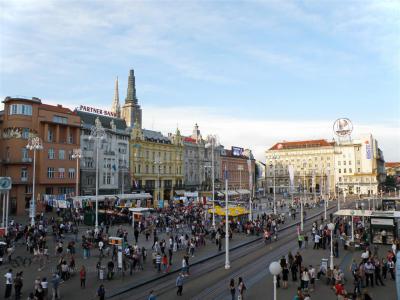
Ban Jelacic Square is named for Josip Jelacic, Ban (ruler) of Croatia and leader of Croatian independence from Austria in the 19th century. The name, locally, is Jelacic Plac. It is in the center of Zagreb's downtown pedestrian zone. It is located below the early medieval settlements of Gradec (1242) and Kaptol (1094), south of Dolac Market.
In 1641 it became necessary to create a new marketplace outside the old nucleus of Gradec and Kaptol, near the spring of Mandusevec. Initially called Mandusevec, the square's name was later changed to Harmica. The square became Ban Jelacic Plac in 1848.
A statue of Josip Jelacic on his horse, created by Austrian sculptor Anton Dominik Fernkorn, was erected by the Austrian administration. In 1947 it was removed by the Communist authorities, who renamed the place "Republic Square."
When the World University Games were held in Zagreb in 1987, the city was renovated and revitalized. The square was repaved in stone blocks and pedestrianized. The Mandusevec Fountain and the Mandusevec Spring, buried in 1898, were uncovered. In 1990 the Communists era ended, and Josip Jelacic, on his trusty steed, returned to the square.
At Christmas time, Ban Jelacic Square is adorned with trees and lights illuminate the facades of the surrounding antique Classicist, Secessionist, and Modernist buildings.
In 1641 it became necessary to create a new marketplace outside the old nucleus of Gradec and Kaptol, near the spring of Mandusevec. Initially called Mandusevec, the square's name was later changed to Harmica. The square became Ban Jelacic Plac in 1848.
A statue of Josip Jelacic on his horse, created by Austrian sculptor Anton Dominik Fernkorn, was erected by the Austrian administration. In 1947 it was removed by the Communist authorities, who renamed the place "Republic Square."
When the World University Games were held in Zagreb in 1987, the city was renovated and revitalized. The square was repaved in stone blocks and pedestrianized. The Mandusevec Fountain and the Mandusevec Spring, buried in 1898, were uncovered. In 1990 the Communists era ended, and Josip Jelacic, on his trusty steed, returned to the square.
At Christmas time, Ban Jelacic Square is adorned with trees and lights illuminate the facades of the surrounding antique Classicist, Secessionist, and Modernist buildings.
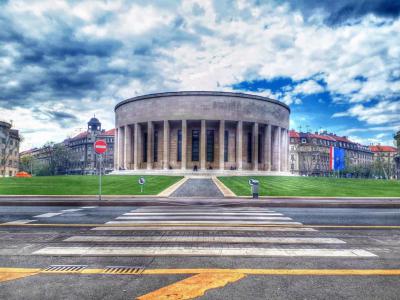
7) Fascism Victims Square and Meštrović Pavilion
Fascism Victims Square (Trg Žrtava Fašizma) holds a prominent position in Zagreb, serving as a central hub. This square is located at the crossroads of six different streets. It stands as a symbol of the intense struggle for Croatia's independence following World War II, a period marked by significant loss of life. The square retains its name in honor of the more than 16,000 Croatians who were tragically sent to concentration camps during that time.
The square's layout is defined by four distinctive residential and partially commercial buildings. Vehicle and tram traffic circulates counterclockwise, with a tram roundabout encircling the square's perimeter. At the heart of the square lies a green area, featuring a structure known as the Meštrović Pavilion. This building boasts a circular design with a colonnade surrounding its outer edge and a low dome, making it a distinctive landmark within the square.
The Meštrović Pavilion, also referred to as the Home of Croatian Artists and informally known as the Mosque, serves as a cultural venue and the official headquarters of the Croatian Society of Fine Artists (HDLU). Designed by Ivan Meštrović and constructed in 1938, it has had various roles over the years. Initially functioning as an art gallery before World War II, it was repurposed as a mosque during the Independent State of Croatia and later became the Museum of the Revolution during post-war Yugoslavia. In 1990, ownership was returned to the Croatian Association of Artists. Following extensive renovation, it has been used as a space for exhibitions and events since 2006.
The square's layout is defined by four distinctive residential and partially commercial buildings. Vehicle and tram traffic circulates counterclockwise, with a tram roundabout encircling the square's perimeter. At the heart of the square lies a green area, featuring a structure known as the Meštrović Pavilion. This building boasts a circular design with a colonnade surrounding its outer edge and a low dome, making it a distinctive landmark within the square.
The Meštrović Pavilion, also referred to as the Home of Croatian Artists and informally known as the Mosque, serves as a cultural venue and the official headquarters of the Croatian Society of Fine Artists (HDLU). Designed by Ivan Meštrović and constructed in 1938, it has had various roles over the years. Initially functioning as an art gallery before World War II, it was repurposed as a mosque during the Independent State of Croatia and later became the Museum of the Revolution during post-war Yugoslavia. In 1990, ownership was returned to the Croatian Association of Artists. Following extensive renovation, it has been used as a space for exhibitions and events since 2006.
