


Nikola Šubić Zrinski Square, Zagreb
Nikola Šubić Zrinski Square is one of the most recognizable and refined public spaces in Zagreb’s Lower Town. Covering about 12,540 square metres, it forms part of the city’s planned Green Horseshoe, a network of seven interconnected squares.
The square is named after Nikola Šubić Zrinski, a 16th-century ban of Croatia and member of the influential Zrinski family, remembered for his role in the defense of Szigetvár against the Ottoman Empire. At the northern end of the square stands the Meteorological Column, installed in 1884 as a gift from Dr. Adolf Holzer, which continues to display temperature, local time, and atmospheric pressure.
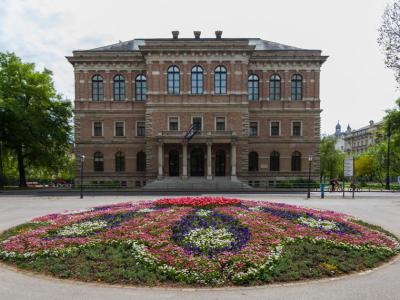
Originally designed as a landscaped park, Zrinjevac was part of a broader effort to create a balanced urban environment that combined greenery with cultural institutions. Tree-lined paths, symmetrical lawns, and carefully maintained flowerbeds define the layout, while surrounding buildings house key institutions such as the Croatian Academy of Sciences and Arts, the Supreme Court, the Ministry of Foreign Affairs, and the Zagreb Archaeological Museum.
A distinctive feature of the square is its music pavilion, established in 1891 as a gift from wealthy trader Eduard Prister, which continues to host concerts and public events. The southern section includes busts of notable Croatian figures, including a bust of Zrinski himself.
The square is named after Nikola Šubić Zrinski, a 16th-century ban of Croatia and member of the influential Zrinski family, remembered for his role in the defense of Szigetvár against the Ottoman Empire. At the northern end of the square stands the Meteorological Column, installed in 1884 as a gift from Dr. Adolf Holzer, which continues to display temperature, local time, and atmospheric pressure.
Originally designed as a landscaped park, Zrinjevac was part of a broader effort to create a balanced urban environment that combined greenery with cultural institutions. Tree-lined paths, symmetrical lawns, and carefully maintained flowerbeds define the layout, while surrounding buildings house key institutions such as the Croatian Academy of Sciences and Arts, the Supreme Court, the Ministry of Foreign Affairs, and the Zagreb Archaeological Museum.
A distinctive feature of the square is its music pavilion, established in 1891 as a gift from wealthy trader Eduard Prister, which continues to host concerts and public events. The southern section includes busts of notable Croatian figures, including a bust of Zrinski himself.
Want to visit this sight? Check out these Self-Guided Walking Tours in Zagreb. Alternatively, you can download the mobile app "GPSmyCity: Walks in 1K+ Cities" from Apple App Store or Google Play Store. The app turns your mobile device to a personal tour guide and it works offline, so no data plan is needed when traveling abroad.
Download The GPSmyCity App



Nikola Šubić Zrinski Square on Map
Sight Name: Nikola Šubić Zrinski Square
Sight Location: Zagreb, Croatia (See walking tours in Zagreb)
Sight Type: Attraction/Landmark
Guide(s) Containing This Sight:
Sight Location: Zagreb, Croatia (See walking tours in Zagreb)
Sight Type: Attraction/Landmark
Guide(s) Containing This Sight:
Nearby Sights



Walking Tours in Zagreb, Croatia

Create Your Own Walk in Zagreb
Creating your own self-guided walk in Zagreb is easy and fun. Choose the city attractions that you want to see and a walk route map will be created just for you. You can even set your hotel as the start point of the walk.
Zagreb Upper Town Walking Tour
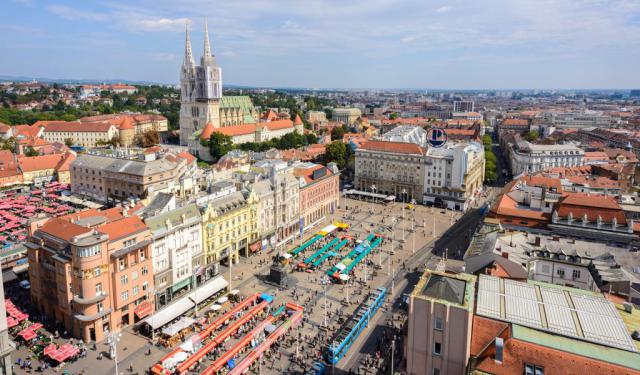
Zagreb’s Upper Town forms the historic core of the city, rising on a hill above the modern lower districts. The name reflects its elevated position, distinguishing it from Lower Town, which developed later on the plains below. The wider area, however, has much older roots: nearby stood Andautonia, a Roman settlement that points to early habitation in the region. The name “Zagreb” itself... view more
Tour Duration: 1 Hour
Travel Distance: 1.8 Km or 1.1 Miles
Tour Duration: 1 Hour
Travel Distance: 1.8 Km or 1.1 Miles
Zagreb Lower Town Walking Tour
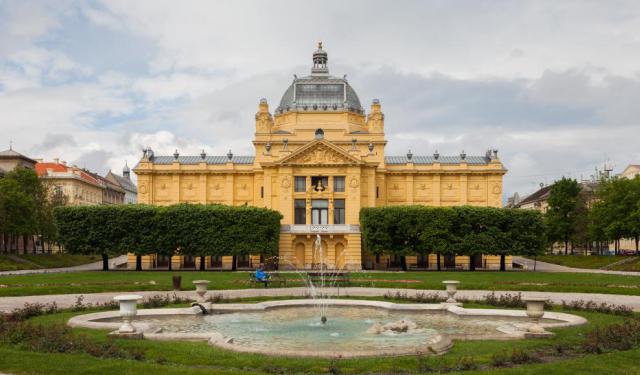
Zagreb’s Lower Town forms one of the two main districts in the historic heart of the Croatian capital, alongside the Upper Town. As its name suggests, it lies below the older hilltop settlements of Gradec and Kaptol. While those medieval centers developed organically on elevated ground, the Lower Town is the more modern of the two, shaped through deliberate urban planning during the late 19th... view more
Tour Duration: 2 Hours
Travel Distance: 2.5 Km or 1.6 Miles
Tour Duration: 2 Hours
Travel Distance: 2.5 Km or 1.6 Miles