Custom Walk in Amsterdam, Netherlands by kevinandmarvelle4293 created on 2025-12-09
Guide Location: Netherlands » Amsterdam
Guide Type: Custom Walk
# of Sights: 9
Tour Duration: 2 Hour(s)
Travel Distance: 3.5 Km or 2.2 Miles
Share Key: W3GSA
Guide Type: Custom Walk
# of Sights: 9
Tour Duration: 2 Hour(s)
Travel Distance: 3.5 Km or 2.2 Miles
Share Key: W3GSA
How It Works
Please retrieve this walk in the GPSmyCity app. Once done, the app will guide you from one tour stop to the next as if you had a personal tour guide. If you created the walk on this website or come to the page via a link, please follow the instructions below to retrieve the walk in the app.
Retrieve This Walk in App
Step 1. Download the app "GPSmyCity: Walks in 1K+ Cities" on Apple App Store or Google Play Store.



Step 2. In the GPSmyCity app, download(or launch) the guide "Amsterdam Map and Walking Tours".
Step 3. Tap the menu button located at upper right corner of the "Walks" screen and select "Retrieve custom walk". Enter the share key: W3GSA
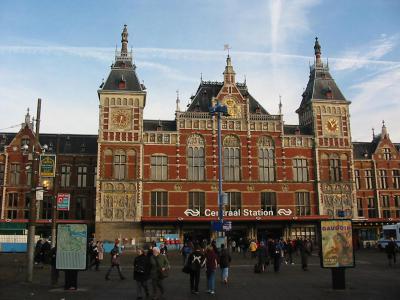
1) Centraal Station (must see)
When in Amsterdam, a visit to the Central Station is practically inevitable. Nearly every traveler to the city encounters it at least once.
Amsterdam Centraal is the largest railway station in the city and has the second longest railway platform in the country, with a length of 695 meters, and a cast-iron platform roof spanning approximately 40 meters. A major international railway hub, it is used daily by almost 200,000 passengers, making it the Netherlands' most visited national heritage object.
Amsterdam Centraal was designed by Dutch architect Pierre Cuypers, featuring a blend of Gothic and Renaissance Revival elements.
The station was constructed on three artificial islands, between 1882 and 1889. Controversially located at the city's waterfront, it took a precise total of 8,687 wooden piles to anchor such a monumental structure on the marshy ground. The station spurred significant urban redevelopment and shifted Amsterdam’s focus from a waterfront to an inland city, influencing both transportation and city planning.
Its design celebrates Dutch economic and colonial prowess through various decorative elements. Initially, the entire project seemed like a huge blunder and was swiftly criticized by numerous experts. However, the architects persevered and ultimately vindicated themselves, defying skeptics.
Through the decades, Amsterdam Centraal has undergone multiple renovations and expansions to meet modern demands. Significant developments included the creation of a pedestrian tunnel in the 1950s, expansion of metro facilities in the late 1970s, and a major overhaul in the 1980s and 1990s that introduced new signaling systems, expanded tracks, and additional roofing. Recent upgrades focus on enhancing capacity and accessibility, including extended platforms for international trains, a new bus station, and upgraded retail spaces, marking it as a central hub in Amsterdam’s urban landscape.
Tip:
Take advantage of the several free ferry trips navigating the canals, departing every 5 to 15 minutes from this location; they offer a rewarding experience. You can even cruise back to the station via boat if you wish, rounding out your visit with a picturesque waterborne journey.
Amsterdam Centraal is the largest railway station in the city and has the second longest railway platform in the country, with a length of 695 meters, and a cast-iron platform roof spanning approximately 40 meters. A major international railway hub, it is used daily by almost 200,000 passengers, making it the Netherlands' most visited national heritage object.
Amsterdam Centraal was designed by Dutch architect Pierre Cuypers, featuring a blend of Gothic and Renaissance Revival elements.
The station was constructed on three artificial islands, between 1882 and 1889. Controversially located at the city's waterfront, it took a precise total of 8,687 wooden piles to anchor such a monumental structure on the marshy ground. The station spurred significant urban redevelopment and shifted Amsterdam’s focus from a waterfront to an inland city, influencing both transportation and city planning.
Its design celebrates Dutch economic and colonial prowess through various decorative elements. Initially, the entire project seemed like a huge blunder and was swiftly criticized by numerous experts. However, the architects persevered and ultimately vindicated themselves, defying skeptics.
Through the decades, Amsterdam Centraal has undergone multiple renovations and expansions to meet modern demands. Significant developments included the creation of a pedestrian tunnel in the 1950s, expansion of metro facilities in the late 1970s, and a major overhaul in the 1980s and 1990s that introduced new signaling systems, expanded tracks, and additional roofing. Recent upgrades focus on enhancing capacity and accessibility, including extended platforms for international trains, a new bus station, and upgraded retail spaces, marking it as a central hub in Amsterdam’s urban landscape.
Tip:
Take advantage of the several free ferry trips navigating the canals, departing every 5 to 15 minutes from this location; they offer a rewarding experience. You can even cruise back to the station via boat if you wish, rounding out your visit with a picturesque waterborne journey.
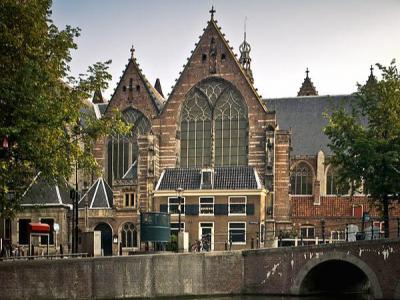
2) Oude Kerk (Old Church)
Amsterdam’s oldest building, the Old Church, boasts the largest medieval wooden vault in Europe. The initial wooden chapel on this site was built around 1213. Eventually replaced by a stone structure, in 1306, the church was dedicated to Saint Nicolas. To ensure its stability in a marshy area, the foundations were set on an artificial mound.
Throughout the centuries, the church has undergone numerous transformations. The most significant, in the 15th century, included the addition of north and south transepts, forming a cross shape, and the expansion of the aisles prompted by the necessity to recover from the destruction caused by fires in the early 1400s. Originally Roman Catholic, the church transitioned to its present Calvinist denomination in 1578, after the Dutch Revolt against Spanish rule. This transition led to the Iconoclastic Fury, with rioters destroying much of the church's art.
The Old Church boasts significant artistic and personal histories. It has ties to Rembrandt, who was a frequent visitor here for his children’s christenings. Today, this connection is honored by the annual celebration of Rembrandt’s wife, Saskia, who is buried inside. Each spring, on March 9, her tomb is illuminated by a unique play of sunlight in the morning.
The entire floor of the church is covered in gravestones. This is because it's built over a cemetery. Locals continued to be buried here until 1865. There are in total 2,500 graves, holding the remains of some 10,000 parishioners. Among them are the famed organist and composer Jan Pieterszoon Sweelinck; the revered naval hero Jacob van Heemskerck; and Frans Banning Cocq, the central character in Rembrandt's painting "The Night Watch".
Also, the interior – surprisingly spacious – contains a collection of exquisite stained glass, rare ceiling frescoes, and four pipe organs, including the renowned Vater-Müller organ built in 1724 and recognized as one of the finest Baroque organs in Europe.
As of 2012, the Old Church has been home to an art institute, the newest in town, featuring specific installations and a permanent exhibit on the history of Amsterdam.
Each year in mid-March, Catholics arrive at the Old Church to celebrate the so-called "Miracle of Amsterdam" which occurred in 1345. Legend has it that after taking communion, a dying man vomited the Sacramental bread – known as the Host – which is used in the Christian ritual of the Eucharist. When the bread was thrown into a fire, as prescribed by the tradition, it did not burn and was proclaimed a miracle. The Host was then put in a chest and displayed at the church. However, it disappeared during the Reformation period.
Tip:
Wonderful views from the tower (note the fee payable with credit/debit cards only); coffee and snacks are available in a charming garden.
Throughout the centuries, the church has undergone numerous transformations. The most significant, in the 15th century, included the addition of north and south transepts, forming a cross shape, and the expansion of the aisles prompted by the necessity to recover from the destruction caused by fires in the early 1400s. Originally Roman Catholic, the church transitioned to its present Calvinist denomination in 1578, after the Dutch Revolt against Spanish rule. This transition led to the Iconoclastic Fury, with rioters destroying much of the church's art.
The Old Church boasts significant artistic and personal histories. It has ties to Rembrandt, who was a frequent visitor here for his children’s christenings. Today, this connection is honored by the annual celebration of Rembrandt’s wife, Saskia, who is buried inside. Each spring, on March 9, her tomb is illuminated by a unique play of sunlight in the morning.
The entire floor of the church is covered in gravestones. This is because it's built over a cemetery. Locals continued to be buried here until 1865. There are in total 2,500 graves, holding the remains of some 10,000 parishioners. Among them are the famed organist and composer Jan Pieterszoon Sweelinck; the revered naval hero Jacob van Heemskerck; and Frans Banning Cocq, the central character in Rembrandt's painting "The Night Watch".
Also, the interior – surprisingly spacious – contains a collection of exquisite stained glass, rare ceiling frescoes, and four pipe organs, including the renowned Vater-Müller organ built in 1724 and recognized as one of the finest Baroque organs in Europe.
As of 2012, the Old Church has been home to an art institute, the newest in town, featuring specific installations and a permanent exhibit on the history of Amsterdam.
Each year in mid-March, Catholics arrive at the Old Church to celebrate the so-called "Miracle of Amsterdam" which occurred in 1345. Legend has it that after taking communion, a dying man vomited the Sacramental bread – known as the Host – which is used in the Christian ritual of the Eucharist. When the bread was thrown into a fire, as prescribed by the tradition, it did not burn and was proclaimed a miracle. The Host was then put in a chest and displayed at the church. However, it disappeared during the Reformation period.
Tip:
Wonderful views from the tower (note the fee payable with credit/debit cards only); coffee and snacks are available in a charming garden.
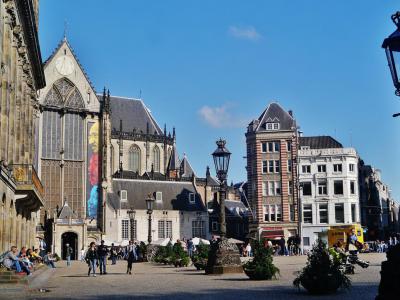
3) Dam Square (must see)
Dam Square, or the Dam, is a central town square in Amsterdam, known for its significant buildings and frequent events. Positioned in the historical heart of Amsterdam, it sits on the site of the original dam on the Amstel River. The square extends some 200 meters from west to east and 100 meters from north to south, connecting Damrak and Rokin streets that trace the Amstel's original course.
The square is also the termination point for other notable streets like New Dike, Calf Street, and Dam Street, with the main red-light district, De Wallen, just beyond its northeast corner. Prominent features on Dam Square include the neoclassical Royal Palace, the 15th-century Gothic New Church, the Madame Tussauds Wax Museum, and the National Monument which honors World War II victims, all of which collectively turn the Dam into a major tourist hub.
The name "Amsterdam" originates from a dam built on the Amstel River around 1270. This dam, integral to the city's development, included a discharge sluice and later locks to facilitate navigation and control water levels. By 1275, the settlement was significant enough to be recorded in connection with a road toll granted by the count of Holland, Floris V. Over time, the dam expanded to accommodate a town square, now known as Dam Square. Eventually, the area became a hub for commercial and governmental activities, featuring a large fish market and a town hall.
Significant changes occurred over the centuries, including the demolition of a weigh house in 1808 to clear the view for Louis Bonaparte’s Royal Palace and the infilling of Damrak Avenue in the 19th century. The square also hosted the Beurs van Zocher stock exchange until 1903. Today, the De Bijenkorf department store has been in its place since 1914. Dam Square has also been a site for national events – such as the National Memorial Day commemorations at the National Monument unveiled in 1956, and public demonstrations, – maintaining its status as a national and cultural gathering spot for the Dutch.
Tip:
For those in need of a restroom, free and well-maintained toilets are available at the De Bijenkorf shop on the 5th floor.
The square is also the termination point for other notable streets like New Dike, Calf Street, and Dam Street, with the main red-light district, De Wallen, just beyond its northeast corner. Prominent features on Dam Square include the neoclassical Royal Palace, the 15th-century Gothic New Church, the Madame Tussauds Wax Museum, and the National Monument which honors World War II victims, all of which collectively turn the Dam into a major tourist hub.
The name "Amsterdam" originates from a dam built on the Amstel River around 1270. This dam, integral to the city's development, included a discharge sluice and later locks to facilitate navigation and control water levels. By 1275, the settlement was significant enough to be recorded in connection with a road toll granted by the count of Holland, Floris V. Over time, the dam expanded to accommodate a town square, now known as Dam Square. Eventually, the area became a hub for commercial and governmental activities, featuring a large fish market and a town hall.
Significant changes occurred over the centuries, including the demolition of a weigh house in 1808 to clear the view for Louis Bonaparte’s Royal Palace and the infilling of Damrak Avenue in the 19th century. The square also hosted the Beurs van Zocher stock exchange until 1903. Today, the De Bijenkorf department store has been in its place since 1914. Dam Square has also been a site for national events – such as the National Memorial Day commemorations at the National Monument unveiled in 1956, and public demonstrations, – maintaining its status as a national and cultural gathering spot for the Dutch.
Tip:
For those in need of a restroom, free and well-maintained toilets are available at the De Bijenkorf shop on the 5th floor.
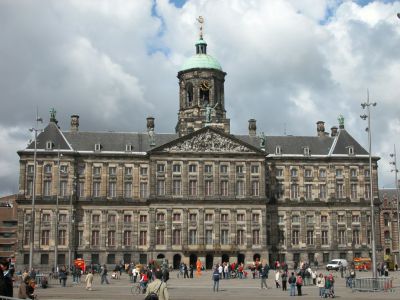
4) Koninklijk Paleis (Royal Palace of Amsterdam) (must see)
The Royal Palace of Amsterdam is a historic monument on Dam Square and is one of the four palaces in the Netherlands still left at the disposal of the Dutch Royal Family.
Its inception dates back to 1655. Back then, the city had recently thwarted William of Orange's attempts to subdue it and the city council sought a residence that would symbolize Amsterdam's municipal authority and pride. This led to a remarkably forward-thinking design-the Dutch interpretation of the classical principles revived during the Italian Renaissance. The architectural project led by Jacob van Campen implied over 13,500 wooden piles to support the building.
Initially designed as the town hall overlooking the bustling Damrak wharves, it was converted into a royal palace by King Louis I of Holland, brother of Napoleon Bonaparte, in 1806.
In 1936, the building was designated a property of the Kingdom of the Netherlands. Today, it serves a ceremonial role for the monarchy, hosting state visits, official functions, and award ceremonies. The palace also played a pivotal role during the investiture of Queen Beatrix in 1980.
The building's distinctive sandstone façade has darkened over time. Astride the rear of it is a 6-meter statue of Atlas carrying the globe.
The interior is equally opulent, notably in the Citizens' Hall, featuring an arcaded marble chamber where the enthroned figure of Amsterdam presides over the earthly and celestial realms. Three circular, inlaid marble maps, depicting the eastern and western hemispheres, as well as the northern sky, lie at her feet. Other allegorical figures include Wisdom and Strength, flanking "Amsterdam" on her left and right, while the reliefs on either side of the central group portray the principles of good governance. On the left, the god Amphion plays his lyre, persuading stones to form a wall; and on the right, Mercury seeks to lull Argos to sleep, thus emphasizing the importance of vigilance.
Tip:
Before your visit, be sure to check online for opening hours, as the palace may occasionally be closed due to royal events.
Free entry for those under 18 and discounts for seniors and students are available.
Its inception dates back to 1655. Back then, the city had recently thwarted William of Orange's attempts to subdue it and the city council sought a residence that would symbolize Amsterdam's municipal authority and pride. This led to a remarkably forward-thinking design-the Dutch interpretation of the classical principles revived during the Italian Renaissance. The architectural project led by Jacob van Campen implied over 13,500 wooden piles to support the building.
Initially designed as the town hall overlooking the bustling Damrak wharves, it was converted into a royal palace by King Louis I of Holland, brother of Napoleon Bonaparte, in 1806.
In 1936, the building was designated a property of the Kingdom of the Netherlands. Today, it serves a ceremonial role for the monarchy, hosting state visits, official functions, and award ceremonies. The palace also played a pivotal role during the investiture of Queen Beatrix in 1980.
The building's distinctive sandstone façade has darkened over time. Astride the rear of it is a 6-meter statue of Atlas carrying the globe.
The interior is equally opulent, notably in the Citizens' Hall, featuring an arcaded marble chamber where the enthroned figure of Amsterdam presides over the earthly and celestial realms. Three circular, inlaid marble maps, depicting the eastern and western hemispheres, as well as the northern sky, lie at her feet. Other allegorical figures include Wisdom and Strength, flanking "Amsterdam" on her left and right, while the reliefs on either side of the central group portray the principles of good governance. On the left, the god Amphion plays his lyre, persuading stones to form a wall; and on the right, Mercury seeks to lull Argos to sleep, thus emphasizing the importance of vigilance.
Tip:
Before your visit, be sure to check online for opening hours, as the palace may occasionally be closed due to royal events.
Free entry for those under 18 and discounts for seniors and students are available.
5) Nieuwe Kerk (New Church)
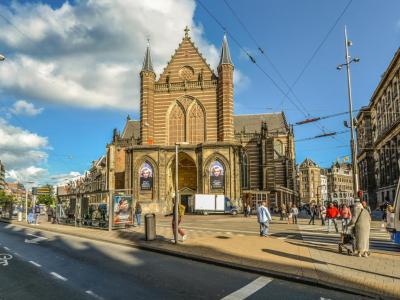
The New Church, a historical gem on Amsterdam's Dam Square, dates back to the 15th century. Originally serving as a Dutch Reformed Church parish, it is now part of the Protestant Church of the Netherlands.
The construction of this church in the late 14th century was prompted by a need for more religious space amid a growing population. It was completed in 1408 and consecrated a year later. Throughout the 15th century, the building suffered significant damage from fires and was nearly destroyed in 1645, which ultimately led to its Gothic-style reconstruction. Major renovations in the late 19th and mid-20th centuries introduced neo-Gothic and early-Renaissance elements.
The intricately adorned stained glass windows portray historical events associated with this church, such as Queen Wilhelmina's coronation in 1890. Notable features within the interior encompass an opulent, meticulously crafted mahogany pulpit (the result of fifteen years of painstaking effort), alongside a cunningly wrought copper chancel screen and a flamboyant Baroque organ case.
Historically significant, the New Church has hosted Dutch royal investiture ceremonies, including the most recent one of King Willem-Alexander, in 2013. It also has been the venue for royal weddings, such as Willem-Alexander's marriage to Máxima in 2002. Additionally, it serves as the final resting place for notable Dutch personalities like the naval hero Admiral Michiel de Ruyter and Joost van den Vondel, a Roman Catholic poet and playwright.
Although the church is still used for recitals, it no longer holds religious services but functions primarily as an exhibition space. The exhibitions held here cover diverse themes, including some rather unconventional ones. Attached to the church is a café accessible during opening hours and a museum store that offers a variety of related souvenirs like postcards, books, and gifts.
Tip:
Feel free to step inside the lobby to marvel at the beautiful giant stained glass panes.
Exhibitions can be a little overpriced but are good value with the I Amsterdam card.
The construction of this church in the late 14th century was prompted by a need for more religious space amid a growing population. It was completed in 1408 and consecrated a year later. Throughout the 15th century, the building suffered significant damage from fires and was nearly destroyed in 1645, which ultimately led to its Gothic-style reconstruction. Major renovations in the late 19th and mid-20th centuries introduced neo-Gothic and early-Renaissance elements.
The intricately adorned stained glass windows portray historical events associated with this church, such as Queen Wilhelmina's coronation in 1890. Notable features within the interior encompass an opulent, meticulously crafted mahogany pulpit (the result of fifteen years of painstaking effort), alongside a cunningly wrought copper chancel screen and a flamboyant Baroque organ case.
Historically significant, the New Church has hosted Dutch royal investiture ceremonies, including the most recent one of King Willem-Alexander, in 2013. It also has been the venue for royal weddings, such as Willem-Alexander's marriage to Máxima in 2002. Additionally, it serves as the final resting place for notable Dutch personalities like the naval hero Admiral Michiel de Ruyter and Joost van den Vondel, a Roman Catholic poet and playwright.
Although the church is still used for recitals, it no longer holds religious services but functions primarily as an exhibition space. The exhibitions held here cover diverse themes, including some rather unconventional ones. Attached to the church is a café accessible during opening hours and a museum store that offers a variety of related souvenirs like postcards, books, and gifts.
Tip:
Feel free to step inside the lobby to marvel at the beautiful giant stained glass panes.
Exhibitions can be a little overpriced but are good value with the I Amsterdam card.
6) De Negen Straatjes (Nine Little Streets)
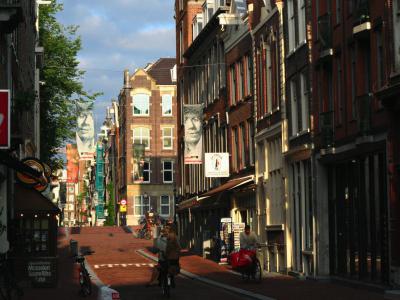
Amid the canal district of Amsterdam lies a charming enclave known as the "Nine Little Streets". This cluster of quaint byways, situated adjacent to the Prinsengracht, Keizersgracht, Herengracht, and Singel canals in the heart of Amsterdam, has borne this moniker since the 1990s. Collectively, these streets constitute a distinct micro-neighborhood nestled within the broader western Grachtengordel, or "Canal Belt", renowned for its eclectic array of small shops and eateries.
Woven with intricate brickwork lanes, the Nine Little Streets beckon with an assortment of offerings, including designer boutiques like Antonia by Yvette, Donna Fiera, and Sky Fashions, as well as inviting cafes, vintage emporiums, and specialty stores. Meandering through these charming streets can easily occupy your hours as you explore the diverse treasures they hold.
Tip:
Bij Ons Vintage, located at Reestraat #13, is a vintage boutique specializing in denim, leather, and sportswear dating from the 1950s to the 1970s. It's an excellent destination for discovering distinctive clothing and accessories that won't break the bank.
Meanwhile, at #20, the petite waxwork establishment known as Pontifex rivals Madame Tussauds with its vibrant assortment of candles in every conceivable variety. Adjacent to it, you'll find the intriguing clinic of the somewhat eerie doll doctor, Kramer.
Woven with intricate brickwork lanes, the Nine Little Streets beckon with an assortment of offerings, including designer boutiques like Antonia by Yvette, Donna Fiera, and Sky Fashions, as well as inviting cafes, vintage emporiums, and specialty stores. Meandering through these charming streets can easily occupy your hours as you explore the diverse treasures they hold.
Tip:
Bij Ons Vintage, located at Reestraat #13, is a vintage boutique specializing in denim, leather, and sportswear dating from the 1950s to the 1970s. It's an excellent destination for discovering distinctive clothing and accessories that won't break the bank.
Meanwhile, at #20, the petite waxwork establishment known as Pontifex rivals Madame Tussauds with its vibrant assortment of candles in every conceivable variety. Adjacent to it, you'll find the intriguing clinic of the somewhat eerie doll doctor, Kramer.
7) Munttoren (Mint Tower)
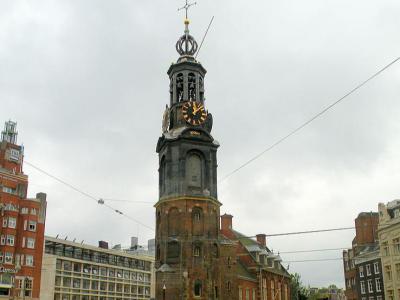
This tower served as both a boundary marker for the medieval walled city and one of its original gates. Back in the Middle Ages, the city walls were surrounded by a moat known as the Singel canal. Prior to around 1500, the area beyond this point was essentially just soggy fields and a handful of farms on reclaimed land. The steeple was actually added later, in 1620, as you can see below the clock face.
Erected during the latter part of the 15th century, the tower underwent significant renovations throughout the centuries. It managed to survive a big fire in 1618, which destroyed most of the city's walls, almost unscathed; however, it was rebuilt in the Renaissance style the following year. Hendrick de Keyser, a renowned Dutch architect and sculptor, was in charge of the reconstruction and added the elegant eight-sided top section. They also incorporated four clock faces and a set of bells, although the original bells are now on display in the Amsterdam Museum, having been replaced with newer ones. The tower chimes every quarter of an hour, and on Saturdays between 2 and 3pm, you can enjoy a live bell concerto.
The construction got its curious name in the 17th century during a time when the Dutch were in conflict with England and France. Since most of Dutch territory was occupied and there was a high risk of losing valuable resources, they needed a place to make money quickly, so they turned this tower into a makeshift mint. And that's how its uniqueness became etched into Amsterdam's rich tapestry of stories.
Erected during the latter part of the 15th century, the tower underwent significant renovations throughout the centuries. It managed to survive a big fire in 1618, which destroyed most of the city's walls, almost unscathed; however, it was rebuilt in the Renaissance style the following year. Hendrick de Keyser, a renowned Dutch architect and sculptor, was in charge of the reconstruction and added the elegant eight-sided top section. They also incorporated four clock faces and a set of bells, although the original bells are now on display in the Amsterdam Museum, having been replaced with newer ones. The tower chimes every quarter of an hour, and on Saturdays between 2 and 3pm, you can enjoy a live bell concerto.
The construction got its curious name in the 17th century during a time when the Dutch were in conflict with England and France. Since most of Dutch territory was occupied and there was a high risk of losing valuable resources, they needed a place to make money quickly, so they turned this tower into a makeshift mint. And that's how its uniqueness became etched into Amsterdam's rich tapestry of stories.
8) Bloemenmarkt (Floating Flower Market)
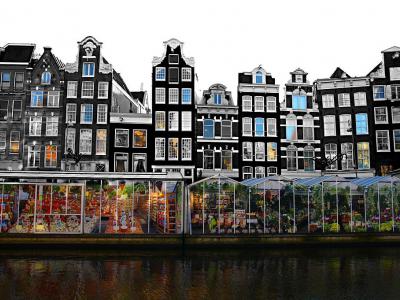
When you visit Amsterdam, especially during the springtime, you won't want to miss out on seeing some beautiful tulips. Even if they haven't fully bloomed or are past their prime, fear not – Bloemenmarkt has got you covered. This place has been around since the 1860s and is arguably the best, and still the most atmospheric, spot to discover (and buy) fresh flowers and bulbs.
As soon as you enter this little botanical wonderland situated along the canal, you'll be surrounded by all things floral (and sometimes more) – there's a dazzling array of souvenirs, and surprisingly, they're priced pretty much the same across various vendors. You can find a wide variety of bulbs for sale, including daffodils, amaryllis, crocus, narcissus, tulips, peony roots, and more. They even have some cacti and potted plants and herbs available for purchase.
Tip:
It you decide to buy tulip bulbs to take back home, be sure to get a "customs-cleared" stamp to avoid any issues with customs when upon arrival in your home country.
As soon as you enter this little botanical wonderland situated along the canal, you'll be surrounded by all things floral (and sometimes more) – there's a dazzling array of souvenirs, and surprisingly, they're priced pretty much the same across various vendors. You can find a wide variety of bulbs for sale, including daffodils, amaryllis, crocus, narcissus, tulips, peony roots, and more. They even have some cacti and potted plants and herbs available for purchase.
Tip:
It you decide to buy tulip bulbs to take back home, be sure to get a "customs-cleared" stamp to avoid any issues with customs when upon arrival in your home country.
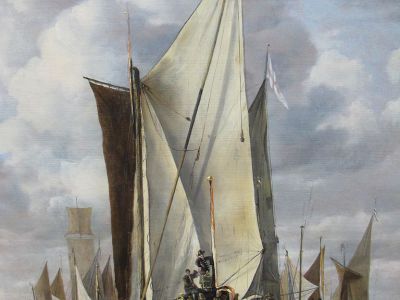
9) Kunsthandel P. de Boer
Founded in 1922 and situated within the South Canal Ring neighborhood of Amsterdam, Kunsthandel P. de Boer specializes in Dutch and Flemish Old Masters paintings. The collection encompasses masterpieces spanning the 16th to the 18th century, with a primary emphasis on 17th-century artworks.
During a visit, the owner personally guides you through the various rooms, providing insights into the gallery's layout and the paintings on display. The setting itself is within a splendid old canal house, allowing you to immerse yourself in the ambiance of canal-side living.
It's important to clarify that this establishment operates as a gallery, and most of the artworks are available for purchase. However, when you visit, you won't feel pressured or obligated to make a purchase.
If you have an appreciation for Old Master paintings and a curiosity about the inner workings of the art world, paying a visit to Kunsthandel P. de Boer is highly recommended.
During a visit, the owner personally guides you through the various rooms, providing insights into the gallery's layout and the paintings on display. The setting itself is within a splendid old canal house, allowing you to immerse yourself in the ambiance of canal-side living.
It's important to clarify that this establishment operates as a gallery, and most of the artworks are available for purchase. However, when you visit, you won't feel pressured or obligated to make a purchase.
If you have an appreciation for Old Master paintings and a curiosity about the inner workings of the art world, paying a visit to Kunsthandel P. de Boer is highly recommended.
