Custom Walk in Ohrid, North Macedonia by itarpejo_org_2a23a6 created on 2025-12-26
Guide Location: North Macedonia » Ohrid
Guide Type: Custom Walk
# of Sights: 15
Tour Duration: 2 Hour(s)
Travel Distance: 2.7 Km or 1.7 Miles
Share Key: CCH63
Guide Type: Custom Walk
# of Sights: 15
Tour Duration: 2 Hour(s)
Travel Distance: 2.7 Km or 1.7 Miles
Share Key: CCH63
How It Works
Please retrieve this walk in the GPSmyCity app. Once done, the app will guide you from one tour stop to the next as if you had a personal tour guide. If you created the walk on this website or come to the page via a link, please follow the instructions below to retrieve the walk in the app.
Retrieve This Walk in App
Step 1. Download the app "GPSmyCity: Walks in 1K+ Cities" on Apple App Store or Google Play Store.



Step 2. In the GPSmyCity app, download(or launch) the guide "Ohrid Map and Walking Tours".
Step 3. Tap the menu button located at upper right corner of the "Walks" screen and select "Retrieve custom walk". Enter the share key: CCH63

1) St. Clement Monument
The birth place of Saint Clement is not certain. He died in Ohrid, then part of the Bulgarian Empire, in 916. He was a scholar and writer and is credited with the creation of the Cyrillic alphabet. Under Boris I of Bulgaria he established Christian liturgy in Old Slavonic. Sofia University is also named "Saint Kliment Ohridski."
The monumental statue of Saint Clement in Old Town Square is larger than life. He stands on a marble plinth cradling a model of the city of Ohrid with his left arm. He is studying the model while beckons the observer to come forward and take a look. "Come here, look at this." He seems to be saying.
Saint Clement was the founder of the Ohrid Literary School. He is properly regarded as a patron of Slavic language and education in the area of Ohrid and in Macedonia. He was the first archbishop of the Bulgarian Orthodox Church and one of the Church's Seven Apostles. He is the Patron saint of North Macedonia and the city of Ohrid.
The monumental statue of Saint Clement in Old Town Square is larger than life. He stands on a marble plinth cradling a model of the city of Ohrid with his left arm. He is studying the model while beckons the observer to come forward and take a look. "Come here, look at this." He seems to be saying.
Saint Clement was the founder of the Ohrid Literary School. He is properly regarded as a patron of Slavic language and education in the area of Ohrid and in Macedonia. He was the first archbishop of the Bulgarian Orthodox Church and one of the Church's Seven Apostles. He is the Patron saint of North Macedonia and the city of Ohrid.
2) Lower Gate
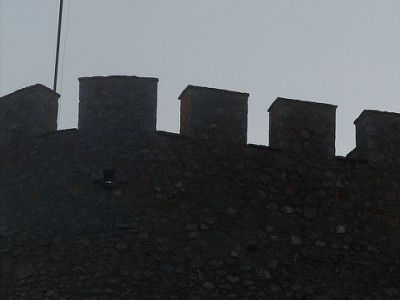
The Lower Gate of Ohrid is a historic landmark near Tsar Samoil Street and closer to the lake. The Lower Gate is an integral piece of Ohrid's medieval fortifications, dating back to the 4th century. Historically, Ohrid was encircled by city walls with limited access points including the Upper Gate, Lower Gate, Front Gate, and Water Gate. The walls remained until the Ottoman invasion in 1395, after which the town expanded beyond these boundaries.
The Lower Gate today is not fully intact; only one of its original towers survives. Over the years, its presence has become less prominent, to the extent that it can easily be overlooked, as indicated by the anecdote of someone who passed by for years without noticing it. In contrast to the Upper Gate, which is well-maintained with heavy doors and still functions as an entrance to the town, the Lower Gate has blended more seamlessly into the urban landscape.
An interesting feature at the Lower Gate is a grate at its foot, which displays the original pavement made of large stones. This pavement marks the historical entrance into Ohrid but is not immediately noticeable, often being slippery after rain and covered by the grate, requiring attentive observation to appreciate its historical significance.
In essence, the Lower Gate offers a subtle glimpse into the ancient past of Ohrid, standing as a silent testament to the city’s historical depth and the transformations it has undergone over the centuries.
The Lower Gate today is not fully intact; only one of its original towers survives. Over the years, its presence has become less prominent, to the extent that it can easily be overlooked, as indicated by the anecdote of someone who passed by for years without noticing it. In contrast to the Upper Gate, which is well-maintained with heavy doors and still functions as an entrance to the town, the Lower Gate has blended more seamlessly into the urban landscape.
An interesting feature at the Lower Gate is a grate at its foot, which displays the original pavement made of large stones. This pavement marks the historical entrance into Ohrid but is not immediately noticeable, often being slippery after rain and covered by the grate, requiring attentive observation to appreciate its historical significance.
In essence, the Lower Gate offers a subtle glimpse into the ancient past of Ohrid, standing as a silent testament to the city’s historical depth and the transformations it has undergone over the centuries.
3) The Church of St. Nicholas Bolnicki
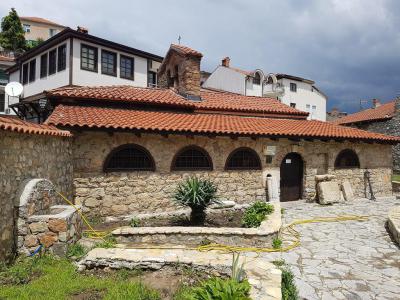
The Church of Saint Nicholas Bolnicki in Ohrid is a historical and architectural gem from the early 14th century. Built in 1313, it is located near the Lower Gate of Ohrid, close to Ohrid Port on Car Samuil Street, an area historically significant for its proximity to a hospital, hence the name "Bolnicki" derived from the Macedonian word for hospital "bolnica".
Architecturally, the church showcases a one-naval design, unique in the region of Ohrid for its simplicity and distinctiveness. It features semi-circular vaulting and a bell tower with a porch on the western side, influenced by the architectural styles of the Adriatic coast, marking it as unique within Macedonia.
The interior of the church is equally compelling, decorated with frescoes that date back to between 1336 and 1346. These artworks feature prominent historical figures such as Archbishop Nikola, Serbian King Dusan, his Queen Elena, and their sons Uros, Sava, and Simeon. Additionally, life-size representations of Saint Clement, Saint Nikola, and Saint Pantelejmon, along with the holy warriors Theodor Tiron and Stralitat, enrich the church’s cultural and religious significance. The church also houses valuable icons, including the litian icon dedicated to Saint Naum.
The Church of Saint Nicholas Bolnicki is not just a place of worship but a repository of history, bearing witness to the religious, cultural, and social transformations in Ohrid over the centuries. Its unique construction, using broken stones without bricks, and its artistic decoration with colorful paintings and icons make it a compelling destination for visitors and scholars alike. The surrounding courtyard, dotted with remnants from the Samuil Fortress that historically tumbled toward Lake Ohrid, adds to its historic charm and allure, making the church a must-visit during any tour of Ohrid’s rich ecclesiastical landscape.
Architecturally, the church showcases a one-naval design, unique in the region of Ohrid for its simplicity and distinctiveness. It features semi-circular vaulting and a bell tower with a porch on the western side, influenced by the architectural styles of the Adriatic coast, marking it as unique within Macedonia.
The interior of the church is equally compelling, decorated with frescoes that date back to between 1336 and 1346. These artworks feature prominent historical figures such as Archbishop Nikola, Serbian King Dusan, his Queen Elena, and their sons Uros, Sava, and Simeon. Additionally, life-size representations of Saint Clement, Saint Nikola, and Saint Pantelejmon, along with the holy warriors Theodor Tiron and Stralitat, enrich the church’s cultural and religious significance. The church also houses valuable icons, including the litian icon dedicated to Saint Naum.
The Church of Saint Nicholas Bolnicki is not just a place of worship but a repository of history, bearing witness to the religious, cultural, and social transformations in Ohrid over the centuries. Its unique construction, using broken stones without bricks, and its artistic decoration with colorful paintings and icons make it a compelling destination for visitors and scholars alike. The surrounding courtyard, dotted with remnants from the Samuil Fortress that historically tumbled toward Lake Ohrid, adds to its historic charm and allure, making the church a must-visit during any tour of Ohrid’s rich ecclesiastical landscape.
4) The Church of St. Bogorodica Bolnicka
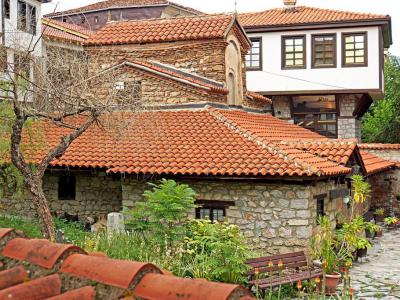
The Church of Saint Bogorodica Bolnicka, located in Ohrid, is a historical and architectural treasure with a rich yet enigmatic history. Although the exact date of its construction remains unconfirmed, architectural analysis and interior designs suggest it was built around the 14th century. Positioned near the Lower Gate of the old city, this church once served a pivotal role during outbreaks of the Black Death, acting as a quarantine station for visitors who were required to isolate for 40 days before entering the town.
The name "Bolnicka," meaning "of the hospital" in Macedonian, reflects its transformation into a hospital post the arrival of the Turks. This adaptation of the church's dormitories into medical facilities marks a significant chapter in its history, aligning with its namesake opposite Saint Mary's Hospital.
Despite numerous renovations over the centuries, Saint Bogorodica Bolnicka preserves original frescoes from the 16th century within its walls. These artistic treasures are complemented by a 19th-century iconostasis, adding layers of cultural and historical depth. The frescoes, some of which were added as recently as 1834, indicate multiple periods of artistic expression and preservation efforts.
Local folklore adds a mysterious aura to the church, with legends suggesting the presence of dark corridors beneath the structure, purportedly home to malevolent forces. Tragic events during baptisms and weddings have fueled these myths, leading to a longstanding prohibition against conducting Mass or other ceremonies within its walls, a ban documented as early as 1694.
Despite its small size, the Church of Saint Bogorodica Bolnicka stands as a testament to the medieval architectural and artistic styles prevalent during its presumed period of construction. Today, it is recognized not only for its historical significance but also as a testament to the enduring spiritual and communal life of Ohrid through the ages.
The name "Bolnicka," meaning "of the hospital" in Macedonian, reflects its transformation into a hospital post the arrival of the Turks. This adaptation of the church's dormitories into medical facilities marks a significant chapter in its history, aligning with its namesake opposite Saint Mary's Hospital.
Despite numerous renovations over the centuries, Saint Bogorodica Bolnicka preserves original frescoes from the 16th century within its walls. These artistic treasures are complemented by a 19th-century iconostasis, adding layers of cultural and historical depth. The frescoes, some of which were added as recently as 1834, indicate multiple periods of artistic expression and preservation efforts.
Local folklore adds a mysterious aura to the church, with legends suggesting the presence of dark corridors beneath the structure, purportedly home to malevolent forces. Tragic events during baptisms and weddings have fueled these myths, leading to a longstanding prohibition against conducting Mass or other ceremonies within its walls, a ban documented as early as 1694.
Despite its small size, the Church of Saint Bogorodica Bolnicka stands as a testament to the medieval architectural and artistic styles prevalent during its presumed period of construction. Today, it is recognized not only for its historical significance but also as a testament to the enduring spiritual and communal life of Ohrid through the ages.
5) Robevi House. National Museum
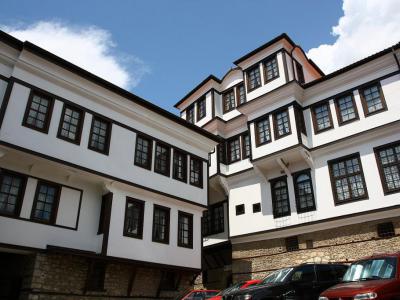
Robevi House, now a part of the National Museum in Ohrid, stands as a significant cultural and historical monument. Originally built in 1827 and later reconstructed in 1863-1864, it showcases the resilience and cultural heritage of the region. This reconstruction was necessitated after a devastating arson by Ustref Beg in 1861-1862, which destroyed the previous structure. The new building, crafted by Todor Petkov, was designed to house the Robevi family-Konstantin in the left wing and Atanas in the right.
The house is structured into three floors. On the ground floor, visitors can find epigraphical monuments from Ohrid and treasured items like the "Milokas" from the Via Egnatia, and sculptures of the goddess Isis. The second and third floors serve as exhibition spaces for archaeological artifacts from ancient and medieval periods and showcase pieces from the Ohrid Woodcarving School along with works by local artists.
Today, Robevi House is a protected cultural site under the Institute for Protection of Cultural Monuments. It is integral to the National Museum's operations, which focuses on research, preservation, and display of historical artifacts, particularly those related to Ohrid's rich historical tapestry. The museum also manages significant historical sites in Ohrid, including Tsar Samuil's Fortress, The Ancient Theatre, and Saint Clement's monastery of Saint Panteleimon at Plaosnik, ensuring their preservation and restoration.
The house is structured into three floors. On the ground floor, visitors can find epigraphical monuments from Ohrid and treasured items like the "Milokas" from the Via Egnatia, and sculptures of the goddess Isis. The second and third floors serve as exhibition spaces for archaeological artifacts from ancient and medieval periods and showcase pieces from the Ohrid Woodcarving School along with works by local artists.
Today, Robevi House is a protected cultural site under the Institute for Protection of Cultural Monuments. It is integral to the National Museum's operations, which focuses on research, preservation, and display of historical artifacts, particularly those related to Ohrid's rich historical tapestry. The museum also manages significant historical sites in Ohrid, including Tsar Samuil's Fortress, The Ancient Theatre, and Saint Clement's monastery of Saint Panteleimon at Plaosnik, ensuring their preservation and restoration.
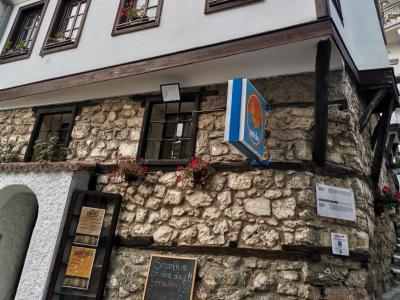
6) National Workshop for Handmade Paper
The National Workshop for Handmade Paper in Ohrid stands as a remarkable cultural heritage site, maintaining the ancient art of papermaking, a technique dating back to the 2nd century BC China. This workshop is one of only seven globally that still practices this traditional method, providing a unique link to the past through its meticulous craftsmanship. The paper produced here is made entirely by hand, involving the pressing and drying of pulp without the use of modern technology, echoing the authentic processes used for centuries.
A standout feature of the National Workshop is its replica of Johannes Gutenberg's 15th-century printing press, one of only two known replicas in the world. This press is not just a display piece but is actively used to print copies of historical documents, books, and artwork depicting local scenes, effectively bridging historical methods with contemporary appreciation.
Visitors to the workshop have the opportunity to witness these traditional techniques in action. The skilled staff conducts live demonstrations of both papermaking and printing, offering an educational and immersive experience. This educational aspect is complemented by the workshop's small museum, where handmade paper products are available for purchase, allowing visitors to take home a piece of this enduring craft.
Located in a region with a history of papermaking that dates back to the late 16th century in the Monastery of Saint Naum, the National Workshop not only revives but also celebrates the rich historical lineage of Ohrid's papermaking tradition. This workshop offers a unique chance to experience and participate in the enduring legacy of one of humanity's most significant inventions - paper.
A standout feature of the National Workshop is its replica of Johannes Gutenberg's 15th-century printing press, one of only two known replicas in the world. This press is not just a display piece but is actively used to print copies of historical documents, books, and artwork depicting local scenes, effectively bridging historical methods with contemporary appreciation.
Visitors to the workshop have the opportunity to witness these traditional techniques in action. The skilled staff conducts live demonstrations of both papermaking and printing, offering an educational and immersive experience. This educational aspect is complemented by the workshop's small museum, where handmade paper products are available for purchase, allowing visitors to take home a piece of this enduring craft.
Located in a region with a history of papermaking that dates back to the late 16th century in the Monastery of Saint Naum, the National Workshop not only revives but also celebrates the rich historical lineage of Ohrid's papermaking tradition. This workshop offers a unique chance to experience and participate in the enduring legacy of one of humanity's most significant inventions - paper.
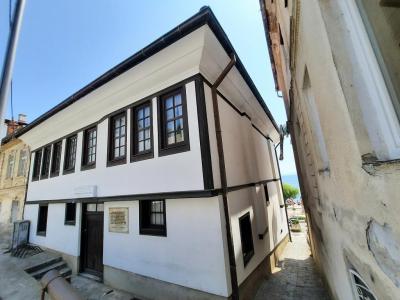
7) Memorial House of Hristo Uzunov
The Memorial House of Hristo Uzunov, located in the historic Varosha district of Ohrid, is a significant cultural site that commemorates the life and legacy of the revolutionary Hristo Uzunov. This house, originally known as the Uzunova house or Uzunova huča, dates back to the mid-19th century and is a prime example of revival architecture in the region.
Built most likely by Hristo Uzunov himself or his son Dimitar Uzunov, both prominent Renaissance educators, the house was a pivotal birthplace and residence for key figures of the Internal Macedonian-Odrina Revolutionary Organization. The house has witnessed the lives of Dimitar's sons-Andon and Hristo Uzunov-who were integral to the revolutionary movements in Ohrid. Following their deaths in the early 1900s, the house experienced several changes in ownership until it was nationalized in 1953 by the People's Committee in Ohrid.
Declared a monument of culture in 1968, and re-affirmed in 1996, the Uzunov house was extensively renovated in the late 1970s. The restoration preserved many of the original architectural features while ensuring the building's structural integrity. The house now features a basement known locally as "the dungeon," a ground floor with marble slabs, and a first floor with traditional wooden flooring. The facade retains the typical Ohrid style-painted white with a projecting bay window and richly profiled cornices.
Today, the house operates as a museum managed by the Institute for the Protection of Cultural Monuments and Museum - Ohrid. It houses a permanent exhibition called "The National Liberation Movement in Ohrid and Ohridsko," which includes documents and objects related to the revolutionary activities in the region. A specific room is dedicated to Hristo Uzunov, preserving his personal and revolutionary memorabilia. The museum also hosts temporary exhibitions and scientific events, making it a dynamic center for cultural and historical education.
The Memorial House of Hristo Uzunov not only serves as a tribute to the Uzunov family's contributions to Macedonian history but also stands as a testament to the rich cultural heritage of Ohrid, drawing visitors from across the globe to this picturesque and historically rich corner of North Macedonia.
Built most likely by Hristo Uzunov himself or his son Dimitar Uzunov, both prominent Renaissance educators, the house was a pivotal birthplace and residence for key figures of the Internal Macedonian-Odrina Revolutionary Organization. The house has witnessed the lives of Dimitar's sons-Andon and Hristo Uzunov-who were integral to the revolutionary movements in Ohrid. Following their deaths in the early 1900s, the house experienced several changes in ownership until it was nationalized in 1953 by the People's Committee in Ohrid.
Declared a monument of culture in 1968, and re-affirmed in 1996, the Uzunov house was extensively renovated in the late 1970s. The restoration preserved many of the original architectural features while ensuring the building's structural integrity. The house now features a basement known locally as "the dungeon," a ground floor with marble slabs, and a first floor with traditional wooden flooring. The facade retains the typical Ohrid style-painted white with a projecting bay window and richly profiled cornices.
Today, the house operates as a museum managed by the Institute for the Protection of Cultural Monuments and Museum - Ohrid. It houses a permanent exhibition called "The National Liberation Movement in Ohrid and Ohridsko," which includes documents and objects related to the revolutionary activities in the region. A specific room is dedicated to Hristo Uzunov, preserving his personal and revolutionary memorabilia. The museum also hosts temporary exhibitions and scientific events, making it a dynamic center for cultural and historical education.
The Memorial House of Hristo Uzunov not only serves as a tribute to the Uzunov family's contributions to Macedonian history but also stands as a testament to the rich cultural heritage of Ohrid, drawing visitors from across the globe to this picturesque and historically rich corner of North Macedonia.
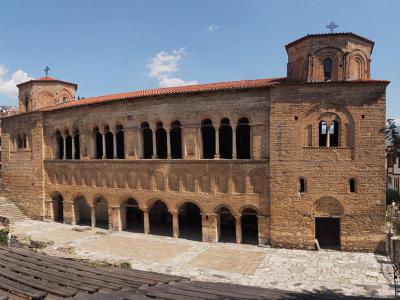
8) Church of St. Sophia (must see)
The Cathedral of Saint Sophia was built in Ohrid in the 9th century by Boris II. It was rebuilt in the 11th century and provided with a domed basilica by Archbishop Leo of Ohrid. A Great Feast mural adorns the nave.
In the recess of the apse the Virgin Enthroned holds her son in a protective mandorla. Christ prepares bread and wine below. On the walls behind the altar platform (the "bema") is a sequence of scenes from the lives of Abraham, Saint Basil the Great and Saint John Chrysostum. Above the alcove where sacerdotales are kept are scenes of martyrdoms.
The church was dedicated to Holy Wisdom ("Hagia Sofia"). It was built on the foundation of an early Christian basilica of the 5th century. In the 15th century the church was converted to a mosque. The precious frescoes were white-washed. During their regime, the Ottomans caused a lot of damage to the church.
After the Balkan Wars of 1912, Saint Sophia was returned to her role as an Orthodox Church and a conservation project was initiated. The frescoes were cleaned and rejuvenated and the church once again expressed the Byzantine world of the 11th century.
Every year the one-month Ohrid Summer Festival is opened by an operatic concert at Saint Sophia's. The first concert was in August, 1961. Inside the church, Macedonian opera star Ana Lipsha Tofovic and pianist Ladislav Peridic gave a bravura performance. It was a first for Ohrid and a first for the church.
In the recess of the apse the Virgin Enthroned holds her son in a protective mandorla. Christ prepares bread and wine below. On the walls behind the altar platform (the "bema") is a sequence of scenes from the lives of Abraham, Saint Basil the Great and Saint John Chrysostum. Above the alcove where sacerdotales are kept are scenes of martyrdoms.
The church was dedicated to Holy Wisdom ("Hagia Sofia"). It was built on the foundation of an early Christian basilica of the 5th century. In the 15th century the church was converted to a mosque. The precious frescoes were white-washed. During their regime, the Ottomans caused a lot of damage to the church.
After the Balkan Wars of 1912, Saint Sophia was returned to her role as an Orthodox Church and a conservation project was initiated. The frescoes were cleaned and rejuvenated and the church once again expressed the Byzantine world of the 11th century.
Every year the one-month Ohrid Summer Festival is opened by an operatic concert at Saint Sophia's. The first concert was in August, 1961. Inside the church, Macedonian opera star Ana Lipsha Tofovic and pianist Ladislav Peridic gave a bravura performance. It was a first for Ohrid and a first for the church.
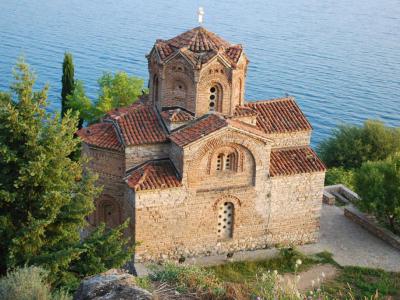
9) Church of St. John at Kaneo (must see)
The Church of Saint John the Theologian sits on a cliff overlooking Kaneo Beach and Lake Ohrid. It is really next door to the Plaosnik Archeological Site and Saint Clement's Church. The John referred to is John of Patmos, credited to be the writer of Revelations. According to some historians, he may also have been John the Apostle.
It is not known precisely when the church was built. Certain documents indicate construction was perhaps in the 13th century, well before the rise of the Ottoman Empire which eventually engulfed Macedonia.
The church is laid out in a cruciform plan on a rectangular base. Unfortunately, the architect is not yet known. The church has a single dome. The roof cornice is unusual. It is neither flat nor undulating in the normal manner. It forms angled tympanums between a doorway lintel and the arch above. This is customary in the central Balkans.
Frescoes dating from the 1200s are intact in the dome apse. The naos niche contains bits from the Passion of Christ. The altar space holds scenes of the liturgy and the Worship of the Lamb. There are portraits of Saints Clement of Ohrid, Erasmus of Lychnidos and Constantine Cabasilas, Ohrid Archbishop in the 1260s.
Christ Pancrator is featured in a fresco in the church dome. The Church of Saint John is a pleasant walk from the fortress of Tsar Samoil downhill through the pine forest. The views of Lake Ohrid and the old town are sweeping and dramatic. For weary, hungry hikers there is no dearth of friendly restaurants at the water's edge.
It is not known precisely when the church was built. Certain documents indicate construction was perhaps in the 13th century, well before the rise of the Ottoman Empire which eventually engulfed Macedonia.
The church is laid out in a cruciform plan on a rectangular base. Unfortunately, the architect is not yet known. The church has a single dome. The roof cornice is unusual. It is neither flat nor undulating in the normal manner. It forms angled tympanums between a doorway lintel and the arch above. This is customary in the central Balkans.
Frescoes dating from the 1200s are intact in the dome apse. The naos niche contains bits from the Passion of Christ. The altar space holds scenes of the liturgy and the Worship of the Lamb. There are portraits of Saints Clement of Ohrid, Erasmus of Lychnidos and Constantine Cabasilas, Ohrid Archbishop in the 1260s.
Christ Pancrator is featured in a fresco in the church dome. The Church of Saint John is a pleasant walk from the fortress of Tsar Samoil downhill through the pine forest. The views of Lake Ohrid and the old town are sweeping and dramatic. For weary, hungry hikers there is no dearth of friendly restaurants at the water's edge.
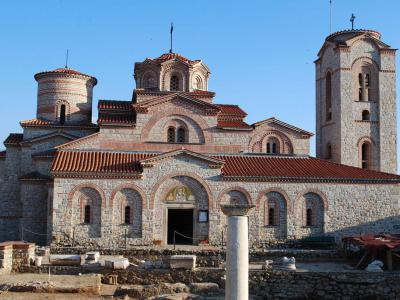
10) Church of Saints Clement and Panteleimon
The Church of Saints Clement and Panteleimon, located in Ohrid, is a significant Byzantine architectural monument and an important historical and religious site. Attributed to Saint Clement of Ohrid, a disciple of Saint Cyril and Saint Methodius, this church stands on the grounds believed to be where the first students of the Glagolitic alphabet were educated. These teachings facilitated the translation of the Bible into Old Church Slavonic during the First Bulgarian Empire.
Saint Clement arrived in Ohrid under the commission of Boris I of Bulgaria. Upon his arrival, Clement restored an existing old church. However, dissatisfied with its size, he decided to construct a new church over the old structure, dedicating it to Saint Panteleimon. This new establishment not only served as a church but also as a monastery, which Clement possibly designed himself. Alongside Naum of Preslav, another disciple of Cyril and Methodius, Clement used this monastery as a hub for teaching the Glagolitic and Cyrillic alphabets to the newly Christianized Slavs. This educational activity effectively turned the monastery into what is considered the first and oldest discontinued university in Europe.
Architecturally, the church reflects its intended purpose as a literary school, with its design emphasizing educational and monastic functions. The exterior of the monastery is noted for its intricate mosaics and features a stone baptismal font, likely used by Clement to baptize his disciples. This combination of religious and educational elements underscores the church's historical significance as a center for religious teaching and Slavic literacy during the Byzantine period.
Saint Clement arrived in Ohrid under the commission of Boris I of Bulgaria. Upon his arrival, Clement restored an existing old church. However, dissatisfied with its size, he decided to construct a new church over the old structure, dedicating it to Saint Panteleimon. This new establishment not only served as a church but also as a monastery, which Clement possibly designed himself. Alongside Naum of Preslav, another disciple of Cyril and Methodius, Clement used this monastery as a hub for teaching the Glagolitic and Cyrillic alphabets to the newly Christianized Slavs. This educational activity effectively turned the monastery into what is considered the first and oldest discontinued university in Europe.
Architecturally, the church reflects its intended purpose as a literary school, with its design emphasizing educational and monastic functions. The exterior of the monastery is noted for its intricate mosaics and features a stone baptismal font, likely used by Clement to baptize his disciples. This combination of religious and educational elements underscores the church's historical significance as a center for religious teaching and Slavic literacy during the Byzantine period.
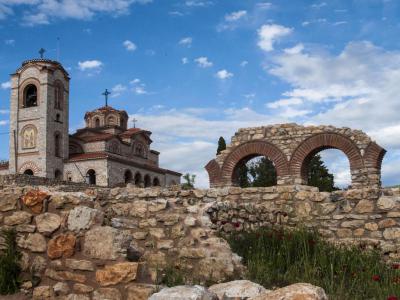
11) Plaošnik Archaeological Site (must see)
Barely 825 feet downhill from Samoil's Fortress on Ohrid hill is the Plaosnik Archeological Site, an ongoing excavation and research site of early Lychnidos, aka Ohrid. The main find on the site is the church built by Saint Clement in 893. The church was built on the foundation of an earlier Christian basilica.
The early basilica was dedicated to the legendary 4th century martyr, Saint Panteleimon, whose name means "All-merciful." The Ohrid Literary School was founded on this site by Saint Clement in the 9th century. The school became the leading center of Slavic culture. Saint Clement was buried in this church in a tomb built by himself.
Under Ottoman rule, Saint Clement's was converted into a mosque called the Imaret Mosque. The mosque was a memorial by Sinan Chelebi of the prestigious Turkish family of Ohrizade. The remains of the mosque were relocated in 2000. It had been covering the earlier Christian church and basilica.
Discoveries as of 2007 include the baptistery of the five aisled basilica. There are mosaic tiled mosaic floors dated from the 4th to 6th centuries. The mosaics show forms of fanciful animals, curvilinear geometrics, and swastikas as symbols of a nourishing sun. In 2007, 2,383 Venetian coins were discovered, linking Venice and Ohrid in trade.
The early basilica was dedicated to the legendary 4th century martyr, Saint Panteleimon, whose name means "All-merciful." The Ohrid Literary School was founded on this site by Saint Clement in the 9th century. The school became the leading center of Slavic culture. Saint Clement was buried in this church in a tomb built by himself.
Under Ottoman rule, Saint Clement's was converted into a mosque called the Imaret Mosque. The mosque was a memorial by Sinan Chelebi of the prestigious Turkish family of Ohrizade. The remains of the mosque were relocated in 2000. It had been covering the earlier Christian church and basilica.
Discoveries as of 2007 include the baptistery of the five aisled basilica. There are mosaic tiled mosaic floors dated from the 4th to 6th centuries. The mosaics show forms of fanciful animals, curvilinear geometrics, and swastikas as symbols of a nourishing sun. In 2007, 2,383 Venetian coins were discovered, linking Venice and Ohrid in trade.
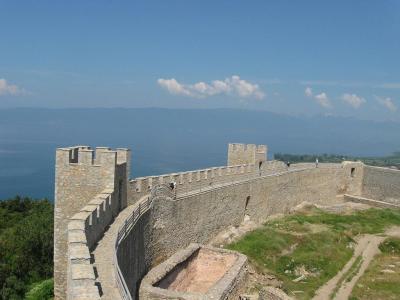
12) King Samoil Fortress (must see)
Ohrid fortress, popularly known as Tsar Samoil Fortress, is a restored medieval stronghold that occupies the top of Ohrid hill. The hill rises 328 feet above the waters of Lake Ohrid, giving the fort a commanding view over the lake, the city and surrounding countryside. The ramparts extend for two miles, varying in height from ten to 53 feet.
The fortress was built upon the ruins of an earlier fort built in the 4th century BC by none other than Philip II, King of Macedonia and father of Alexander the Great. King Samoil built his medieval style fortress on the remains of Philip's creation in the late 10th century AD.
Ohrid, known in ancient times as "Lychnidos", has been ruled by Romans, Byzantines, Slavs and Ottomans. They destroyed and rebuilt the fortress in turn several times. The fortress has served as a defensive asset and also as a residence. The citadel center is divided by a wall into two parts. The Emperor lived in one and soldiers in the other.
The wall surrounding this space has a row of towers. The main entrance is flanked by two semicircular keep-like defensive towers. The remaining part of the fort is wrapped by a defensive wall around a residential area for courtiers' families. In this second area is an ancient cemetery, the ruins of a donjon and a cistern.
Until the arrival of the Ottomans in 1395, the city was completely enclosed within the walls. Only the Upper and Lower Gates provided access to the town. After the Turkish involvement the town expanded beyond the walls. Christians were kept in the walled up hill section. The Ottoman quarter was outside on lower, more open ground.
In the year 2000 conservation and restoration efforts were started on the fort. The walls and towers of the citadel were repaired and preserved. From the archeological complex of Plaosnik there is a wooded path to the citadel. Admission is free.
The fortress was built upon the ruins of an earlier fort built in the 4th century BC by none other than Philip II, King of Macedonia and father of Alexander the Great. King Samoil built his medieval style fortress on the remains of Philip's creation in the late 10th century AD.
Ohrid, known in ancient times as "Lychnidos", has been ruled by Romans, Byzantines, Slavs and Ottomans. They destroyed and rebuilt the fortress in turn several times. The fortress has served as a defensive asset and also as a residence. The citadel center is divided by a wall into two parts. The Emperor lived in one and soldiers in the other.
The wall surrounding this space has a row of towers. The main entrance is flanked by two semicircular keep-like defensive towers. The remaining part of the fort is wrapped by a defensive wall around a residential area for courtiers' families. In this second area is an ancient cemetery, the ruins of a donjon and a cistern.
Until the arrival of the Ottomans in 1395, the city was completely enclosed within the walls. Only the Upper and Lower Gates provided access to the town. After the Turkish involvement the town expanded beyond the walls. Christians were kept in the walled up hill section. The Ottoman quarter was outside on lower, more open ground.
In the year 2000 conservation and restoration efforts were started on the fort. The walls and towers of the citadel were repaired and preserved. From the archeological complex of Plaosnik there is a wooded path to the citadel. Admission is free.
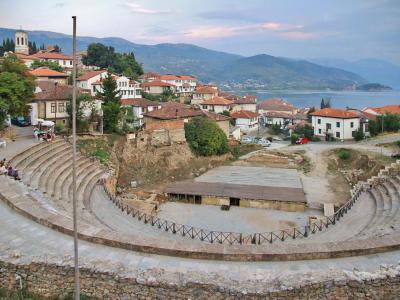
13) Ancient Theatre of Ohrid (must see)
The Ancient Theatre of Ohrid is a remarkable Hellenistic-period relic, dating back to 200 BC. It holds the distinction of being the only theater of its type in the country, contrasting with the Roman-era theaters found in Scupi, Stobi, and Heraklea Lynkestis. Originally designed to host a considerable audience, only the lower section of the theater survives today, making it difficult to ascertain its full capacity.
Strategically nestled between two hills, the theater's location is ideal, providing natural wind protection which enhances its acoustics, a feature crucial for the live performances it was built to host. During the Roman era, the theater’s purpose expanded to include gladiator fights and it also served as a venue for executing Christians, which led to its growing unpopularity among the local populace. This disfavor ultimately resulted in the theater being buried by the locals following the fall of the Roman Empire, an act which inadvertently preserved much of its structure.
The theater remained hidden until the 1980s when it was accidentally uncovered during construction activities in the area. Discoveries of large stone blocks engraved with depictions of the Greek god Dionysus and the muses suggested the presence of a significant Greek cultural site, leading to its excavation.
Revived in the late 1980s, the Ancient Theatre of Ohrid has been reintegrated into cultural life, hosting a variety of public performances including plays, concerts, operas, and ballet. It has also become a prestigious venue within the Ohrid Summer Festival, attracting international performances from renowned groups and artists like the Bolshoi and José Carreras. This historical site not only serves as a testament to the architectural and cultural achievements of ancient times but also as a vibrant center of contemporary cultural expression.
Strategically nestled between two hills, the theater's location is ideal, providing natural wind protection which enhances its acoustics, a feature crucial for the live performances it was built to host. During the Roman era, the theater’s purpose expanded to include gladiator fights and it also served as a venue for executing Christians, which led to its growing unpopularity among the local populace. This disfavor ultimately resulted in the theater being buried by the locals following the fall of the Roman Empire, an act which inadvertently preserved much of its structure.
The theater remained hidden until the 1980s when it was accidentally uncovered during construction activities in the area. Discoveries of large stone blocks engraved with depictions of the Greek god Dionysus and the muses suggested the presence of a significant Greek cultural site, leading to its excavation.
Revived in the late 1980s, the Ancient Theatre of Ohrid has been reintegrated into cultural life, hosting a variety of public performances including plays, concerts, operas, and ballet. It has also become a prestigious venue within the Ohrid Summer Festival, attracting international performances from renowned groups and artists like the Bolshoi and José Carreras. This historical site not only serves as a testament to the architectural and cultural achievements of ancient times but also as a vibrant center of contemporary cultural expression.
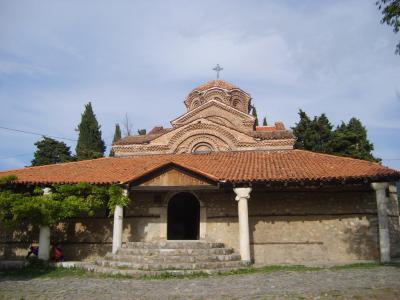
14) St. Bogorodica Perivlepta Church
Saint Bogorodica Perivlepta Church, situated in the picturesque old city of Ohrid, just inside the Gorna Porta, is a testament to Byzantine architectural and artistic mastery from the 13th century. The church, built in 1295 and dedicated to the Virgin Mary, whose title "Perivlepta" means "the Omniscient and Clairvoyant," holds significant historical and cultural value. It stands as one of the oldest churches in Ohrid and once served as the cathedral of the Archbishopric of Ohrid during a time when Saint Sophia was converted into a mosque.
The church was commissioned by Progon Zgur, the son-in-law of Byzantine Emperor Andronicus II. It is renowned for its frescoes, which were restored in 2017, and painted by the master artists Michael and Eutychius. These frescoes are noted for their vivid biblical depictions and a pioneering style that incorporated elements of Renaissance art, such as realism and dynamics, although lacking in perspective. Uniquely, the figures in these frescoes are portrayed not in the traditional Byzantine manner-thin and emotionless-but as robust, healthy young men with a lifelike appearance, complete with red cheeks.
Michael and Eutychius, celebrated for being among the first Byzantine artists to sign their works, have left their signatures in 20 hidden locations throughout the church, including on the front columns of the sword and the cloth of two holy warriors. This innovative approach marked a significant shift in Byzantine art, moving away from its earlier phases to embrace more realistic and dynamic expressions, reflecting the last phase of Byzantine culture and incorporating elements of local folk customs.
In addition to its artistic significance, Saint Bogorodica Perivlepta is also a sanctuary of deep spiritual importance. It houses the remains of Saint Clement of Ohrid, a major disciple of saints Cyril and Methodius, and is known as a site where one of the most important icons on Macedonian territory was discovered. The church also features an icon gallery that highlights the founders' artistic achievements, offering superb views of the lake and Old Town from its terrace.
The church was commissioned by Progon Zgur, the son-in-law of Byzantine Emperor Andronicus II. It is renowned for its frescoes, which were restored in 2017, and painted by the master artists Michael and Eutychius. These frescoes are noted for their vivid biblical depictions and a pioneering style that incorporated elements of Renaissance art, such as realism and dynamics, although lacking in perspective. Uniquely, the figures in these frescoes are portrayed not in the traditional Byzantine manner-thin and emotionless-but as robust, healthy young men with a lifelike appearance, complete with red cheeks.
Michael and Eutychius, celebrated for being among the first Byzantine artists to sign their works, have left their signatures in 20 hidden locations throughout the church, including on the front columns of the sword and the cloth of two holy warriors. This innovative approach marked a significant shift in Byzantine art, moving away from its earlier phases to embrace more realistic and dynamic expressions, reflecting the last phase of Byzantine culture and incorporating elements of local folk customs.
In addition to its artistic significance, Saint Bogorodica Perivlepta is also a sanctuary of deep spiritual importance. It houses the remains of Saint Clement of Ohrid, a major disciple of saints Cyril and Methodius, and is known as a site where one of the most important icons on Macedonian territory was discovered. The church also features an icon gallery that highlights the founders' artistic achievements, offering superb views of the lake and Old Town from its terrace.
15) Icon Gallery
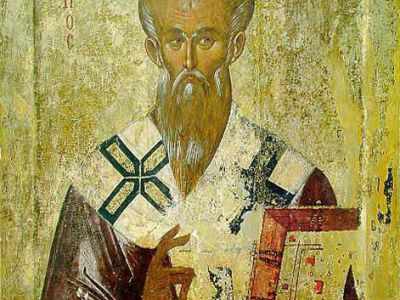
The Icon Gallery-Ohrid, nestled within the historical and architectural ensemble "Saint Clement" near the entrance of the church of the Holy Mother of God Peribleptos in Ohrid, is a prominent repository of Byzantine and Slavic icon art. Located close to other significant ecclesiastical sites such as the churches of Saint Demetrius and Saints Constantine and Helena, the gallery's building was originally constructed between 1845 and 1850 as a class school within the churchyard. It served various educational and cultural purposes through the years, evolving from a Greek educational institution in the mid-19th century to a Slavic school, a World War II-era city library, and a venue for the professional theatre of Ohrid.
Significantly revamped between 1981 and 1983, the building was transformed into a modern gallery that now houses an exceptional collection of icons, primarily from the 11th to the 19th centuries. This collection, previously displayed during the 12th Byzantologist's Congress in 1961, includes masterpieces of icon painting that rank alongside those from Mount Sinai, Mount Athos, and Russia. The icons are renowned for their artistic quality, coloristic refinement, and detailed representations of biblical scenes and figures.
Today, the Icon Gallery-Ohrid serves not only as a treasure trove of medieval art but also as an educational and cultural hub that allows visitors and experts from around the world to experience the splendor of Orthodox Christian art. Through international exhibitions, the beauty of the Ohrid icons has been showcased globally, affirming their place as one of the finest collections of religious art.
Significantly revamped between 1981 and 1983, the building was transformed into a modern gallery that now houses an exceptional collection of icons, primarily from the 11th to the 19th centuries. This collection, previously displayed during the 12th Byzantologist's Congress in 1961, includes masterpieces of icon painting that rank alongside those from Mount Sinai, Mount Athos, and Russia. The icons are renowned for their artistic quality, coloristic refinement, and detailed representations of biblical scenes and figures.
Today, the Icon Gallery-Ohrid serves not only as a treasure trove of medieval art but also as an educational and cultural hub that allows visitors and experts from around the world to experience the splendor of Orthodox Christian art. Through international exhibitions, the beauty of the Ohrid icons has been showcased globally, affirming their place as one of the finest collections of religious art.
