Custom Walk in Prague, Czech Republic by mhunt713_728583 created on 2026-01-20
Guide Location: Czech Republic » Prague
Guide Type: Custom Walk
# of Sights: 6
Tour Duration: 1 Hour(s)
Travel Distance: 0.6 Km or 0.4 Miles
Share Key: HDYHE
Guide Type: Custom Walk
# of Sights: 6
Tour Duration: 1 Hour(s)
Travel Distance: 0.6 Km or 0.4 Miles
Share Key: HDYHE
How It Works
Please retrieve this walk in the GPSmyCity app. Once done, the app will guide you from one tour stop to the next as if you had a personal tour guide. If you created the walk on this website or come to the page via a link, please follow the instructions below to retrieve the walk in the app.
Retrieve This Walk in App
Step 1. Download the app "GPSmyCity: Walks in 1K+ Cities" on Apple App Store or Google Play Store.



Step 2. In the GPSmyCity app, download(or launch) the guide "Prague Map and Walking Tours".
Step 3. Tap the menu button located at upper right corner of the "Walks" screen and select "Retrieve custom walk". Enter the share key: HDYHE
1) Parizska Street
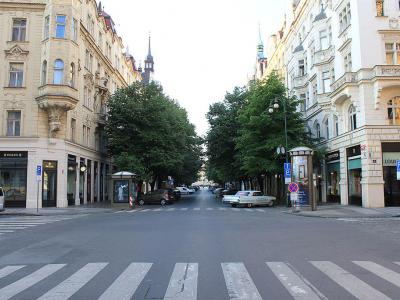
When you stroll down Pařížská Street, just a hop away from Wenceslas Square, you might do a double take and wonder if you've somehow teleported to the heart of Paris. This boulevard is the epitome of elegance – and the apex of expense – in Prague. With its chic buildings and leafy sidewalks, it could easily rival any 'haute couture' avenue in the French capital, hence the name. Sure, you might not be splurging on designer duds or crystal chandeliers, but a leisurely stroll along this lovely street is an experience in itself.
As you amble along from Old Town Square to the river, prepare to be dazzled by the world's most prestigious brands and the sight of luxurious cars like Bugattis and Bentleys parked in pristine rows. Peer into shop windows showcasing exquisite Karlovarsky porcelain and Celetná crystal, a testament to the street's penchant for opulence. Travel agencies here cater to the jet-setting elite, while the lavish 5-star hotels roll out the red carpet for their discerning guests – including the occasional sighting of A-list actors occupying their opulent suites.
But fear not if your pockets aren't as deep as the Mariana Trench – there are still plenty of reasonably priced restaurants to tempt your taste buds. Treat yourself to a feast of oysters, mussels, and other delectable seafood delights at the Belgian eatery Les Moules. And don't forget to explore the charming side streets, where hidden gems await – from quirky boutiques to cozy bookshops and even an old-fashioned general store. Who knows what treasures you'll uncover in this ancient quarter of Prague!
As you amble along from Old Town Square to the river, prepare to be dazzled by the world's most prestigious brands and the sight of luxurious cars like Bugattis and Bentleys parked in pristine rows. Peer into shop windows showcasing exquisite Karlovarsky porcelain and Celetná crystal, a testament to the street's penchant for opulence. Travel agencies here cater to the jet-setting elite, while the lavish 5-star hotels roll out the red carpet for their discerning guests – including the occasional sighting of A-list actors occupying their opulent suites.
But fear not if your pockets aren't as deep as the Mariana Trench – there are still plenty of reasonably priced restaurants to tempt your taste buds. Treat yourself to a feast of oysters, mussels, and other delectable seafood delights at the Belgian eatery Les Moules. And don't forget to explore the charming side streets, where hidden gems await – from quirky boutiques to cozy bookshops and even an old-fashioned general store. Who knows what treasures you'll uncover in this ancient quarter of Prague!
2) Spanish Synagogue (must see)
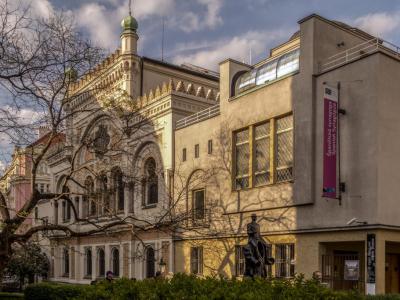
Prague is known the world over for its architecture, and even in a city filled with Gothic spires, Baroque palaces, and Art Nouveau gems, the Spanish Synagogue manages to stand out. Situated in the Jewish Quarter, this stunning Moorish Revival landmark was completed in 1868 on the site of the city's oldest synagogue. If you're starting your exploration of the area, there’s hardly a more fitting place to begin.
From the outside, the building’s design immediately draws the eye. Its façade, divided into three sections, features a taller central portion flanked by twin domed turrets. If you’ve been to Vienna, you might notice the architectural echo of the Leopoldstadt Temple, a key inspiration. But while the exterior is impressive, the real magic begins inside.
Every inch, except the floor, is covered in elicate arabesques that twist and curl across walls and ceilings-either carved, painted, or molded with astonishing precision. The effect is mesmerizing, like being inside a jewel box. Look up and you’ll spot a richly decorated dome at the center, illuminated by a striking Magen David chandelier. The ark and bimah command attention with their elegance, and tucked at the back is a beautifully restored organ-something rarely found in synagogues.
Over the course of the 20th century, the synagogue suffered neglect under both Nazi and Communist regimes. But in the late 1990s, it was restored and reopened to the public under the care of the Jewish Museum. Today, it serves as a concert venue, while the Robert Guttmann Gallery next door hosts rotating art exhibitions of Jewish art and culture.
Interestingly, the Spanish Synagogue has never served a Sephardic or Spanish-speaking community. The origin of the name remains unclear-but one thing is certain: its beauty speaks a universal language.
From the outside, the building’s design immediately draws the eye. Its façade, divided into three sections, features a taller central portion flanked by twin domed turrets. If you’ve been to Vienna, you might notice the architectural echo of the Leopoldstadt Temple, a key inspiration. But while the exterior is impressive, the real magic begins inside.
Every inch, except the floor, is covered in elicate arabesques that twist and curl across walls and ceilings-either carved, painted, or molded with astonishing precision. The effect is mesmerizing, like being inside a jewel box. Look up and you’ll spot a richly decorated dome at the center, illuminated by a striking Magen David chandelier. The ark and bimah command attention with their elegance, and tucked at the back is a beautifully restored organ-something rarely found in synagogues.
Over the course of the 20th century, the synagogue suffered neglect under both Nazi and Communist regimes. But in the late 1990s, it was restored and reopened to the public under the care of the Jewish Museum. Today, it serves as a concert venue, while the Robert Guttmann Gallery next door hosts rotating art exhibitions of Jewish art and culture.
Interestingly, the Spanish Synagogue has never served a Sephardic or Spanish-speaking community. The origin of the name remains unclear-but one thing is certain: its beauty speaks a universal language.
3) Old-New Synagogue
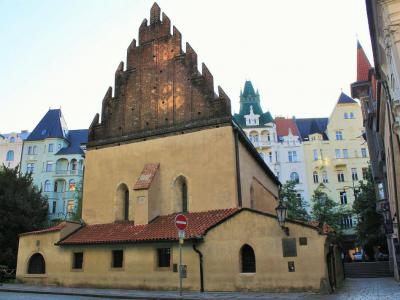
The Old-New Synagogue stands as one the most historically significant landmarks-Europe’s oldest synagogue still in regular use. When first completed in the 13th century, it was known simply as the “New” or “Great” Synagogue. The slightly ironic name “Old-New” came later, after additional synagogues were built nearby during the 16th century.
Unlike the richly adorned buildings that surround it, this synagogue embraces a striking simplicity. The high vaulted ceilings, Gothic arched windows, and unembellished ironwork create a solemn atmosphere that feels both ancient and enduring. One of the most distinctive features is the rare twin-nave layout, thought to be inspired by Christian monasteries of the same era-an architectural crossover not often seen in Jewish houses of worship.
Beyond the stone and mortar lies legend. According to local lore, the attic once housed a clay guardian-the Golem-brought to life by Rabbi Judah Löw in the late 1500s. Created to protect the Jewish community from harm, the Golem was said to obey its creator faithfully-until, like a tale out of folklore, it began to spiral out of control. To prevent further danger, the Rabbi deactivated the creature and sealed it away in the attic, where it supposedly still rests. The area remains closed to visitors, ensuring their “safety”. Other stories claim that the synagogue's survival through centuries of conflict and disaster is thanks to a divine presence-angelic wings that turned into doves to shield the building from harm.
Although the Old-New Synagogue operates independently of the Jewish Museum, visitors can still explore it using the Prague Jewish Town ticket, which provides access to several nearby historic sites. Advance booking is recommended, and tickets are available online for those hoping to secure a guaranteed visit.
Unlike the richly adorned buildings that surround it, this synagogue embraces a striking simplicity. The high vaulted ceilings, Gothic arched windows, and unembellished ironwork create a solemn atmosphere that feels both ancient and enduring. One of the most distinctive features is the rare twin-nave layout, thought to be inspired by Christian monasteries of the same era-an architectural crossover not often seen in Jewish houses of worship.
Beyond the stone and mortar lies legend. According to local lore, the attic once housed a clay guardian-the Golem-brought to life by Rabbi Judah Löw in the late 1500s. Created to protect the Jewish community from harm, the Golem was said to obey its creator faithfully-until, like a tale out of folklore, it began to spiral out of control. To prevent further danger, the Rabbi deactivated the creature and sealed it away in the attic, where it supposedly still rests. The area remains closed to visitors, ensuring their “safety”. Other stories claim that the synagogue's survival through centuries of conflict and disaster is thanks to a divine presence-angelic wings that turned into doves to shield the building from harm.
Although the Old-New Synagogue operates independently of the Jewish Museum, visitors can still explore it using the Prague Jewish Town ticket, which provides access to several nearby historic sites. Advance booking is recommended, and tickets are available online for those hoping to secure a guaranteed visit.
4) Klausen Synagogue
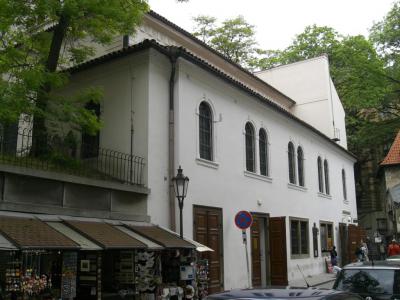
Conveniently located right at the entrance to the Old Jewish Cemetery, the Klausen Synagogue is the largest in Prague’s historic Jewish Quarter. Built at the end of the 17th century, its foundations rest on the site of three earlier structures-a small synagogue, a school, and a ritual bath-all consumed by the devastating fire that swept through the ghetto in 1689. The new building, shaped by early Baroque design, quickly became a central part of the community’s spiritual and social life.
During the Second World War, the synagogue was seized by the Nazis and used as a storage space, a grim chapter that led to the loss of much of its interior detail. In the years following the war, it became part of the Jewish Museum in Prague and has since offered visitors a meaningful window into Jewish life and ritual. The permanent exhibitions focused on everyday customs and the major Jewish holidays have long been a favorite among those interested in the cultural fabric of Czech Jewry.
Inside, visitors would normally find a spacious nave beneath a barrel-vaulted ceiling, adorned with Baroque stucco work-acanthus leaves, cascading fruit garlands, and intricate detailing that adds a sense of movement and warmth. Sunlight pours through tall arched windows, casting a golden glow across the space. One of the most cherished elements is the Torah Ark, carved from wood in 1696. Positioned at the front of the hall, it showcases the artistry and devotion that defined the period.
As of July 2024, the Klausen Synagogue is temporarily closed for major renovations, with a planned reopening set for 2028. When it reopens, a new core exhibition focused on Jewish customs and daily practices will take center stage, continuing the synagogue’s role as a bridge between past and present. For the latest updates and announcements, be sure to check the official website of the Jewish Museum in Prague.
During the Second World War, the synagogue was seized by the Nazis and used as a storage space, a grim chapter that led to the loss of much of its interior detail. In the years following the war, it became part of the Jewish Museum in Prague and has since offered visitors a meaningful window into Jewish life and ritual. The permanent exhibitions focused on everyday customs and the major Jewish holidays have long been a favorite among those interested in the cultural fabric of Czech Jewry.
Inside, visitors would normally find a spacious nave beneath a barrel-vaulted ceiling, adorned with Baroque stucco work-acanthus leaves, cascading fruit garlands, and intricate detailing that adds a sense of movement and warmth. Sunlight pours through tall arched windows, casting a golden glow across the space. One of the most cherished elements is the Torah Ark, carved from wood in 1696. Positioned at the front of the hall, it showcases the artistry and devotion that defined the period.
As of July 2024, the Klausen Synagogue is temporarily closed for major renovations, with a planned reopening set for 2028. When it reopens, a new core exhibition focused on Jewish customs and daily practices will take center stage, continuing the synagogue’s role as a bridge between past and present. For the latest updates and announcements, be sure to check the official website of the Jewish Museum in Prague.
5) Old Jewish Cemetery
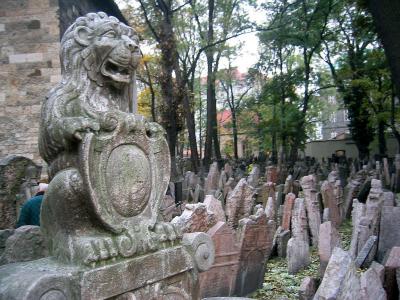
The Old Jewish Cemetery in Prague is one of the most hauntingly beautiful sites in the city-and one of the largest of its kind in Europe. For centuries, it served as the only permitted burial ground for the Jewish community, with graves dating from the early 15th century all the way to 1787. Because space within the walled ghetto was so limited, burials were layered-sometimes up to twelve deep-resulting in a sea of tombstones tilted, clustered, and rising unevenly from the earth. The 12,000 visible headstones you see today represent just a portion of those actually buried here.
In the beginning, gravestones were modest-simple markers for simple times. Over the years, however, they grew increasingly ornate. By the 17th century, headstones featured decorative flourishes like pilasters, volutes, and even carved false doorways, symbolizing the passage from one world to the next. Inscriptions are written in Hebrew and often include the deceased's name, along with the date of death or burial. From the Renaissance onward, brief eulogies were expanded to include poetic praise, while engraved symbols began to appear-clues to the person’s character, name, or profession. A pair of hands might represent a descendant of priests; a pair of scissors could point to a tailor.
Among the cemetery’s most notable graves is that of Avigdor Kara, a 15th-century poet whose original headstone now resides in the Maisel Synagogue. His is the oldest marked burial in the cemetery. Another revered figure laid to rest here is Rabbi Judah Loew ben Bezalel-better known as Rabbi Löw-the brilliant scholar and mystic behind the legend of the Golem. Even today, visitors leave tiny scraps of paper bearing prayers and wishes tucked into the cracks of his tombstone, hoping for a little intervention from the spiritual world.
In the beginning, gravestones were modest-simple markers for simple times. Over the years, however, they grew increasingly ornate. By the 17th century, headstones featured decorative flourishes like pilasters, volutes, and even carved false doorways, symbolizing the passage from one world to the next. Inscriptions are written in Hebrew and often include the deceased's name, along with the date of death or burial. From the Renaissance onward, brief eulogies were expanded to include poetic praise, while engraved symbols began to appear-clues to the person’s character, name, or profession. A pair of hands might represent a descendant of priests; a pair of scissors could point to a tailor.
Among the cemetery’s most notable graves is that of Avigdor Kara, a 15th-century poet whose original headstone now resides in the Maisel Synagogue. His is the oldest marked burial in the cemetery. Another revered figure laid to rest here is Rabbi Judah Loew ben Bezalel-better known as Rabbi Löw-the brilliant scholar and mystic behind the legend of the Golem. Even today, visitors leave tiny scraps of paper bearing prayers and wishes tucked into the cracks of his tombstone, hoping for a little intervention from the spiritual world.
6) Ceremonial Hall
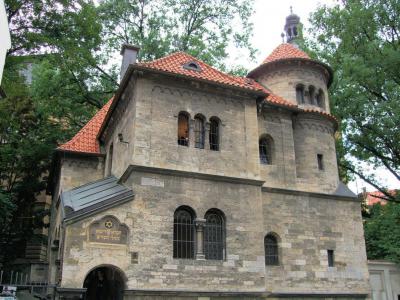
As you step out of the Old Jewish Cemetery and glance to your left, you’ll notice a building that looks like a small fortress or perhaps a nobleman’s residence from another era. That’s the Ceremonial Hall, and while it may not come with a dramatic backstory, its purpose was deeply rooted in the rituals of Jewish life and death.
Built in the early 20th century in a bold Neo-Romanesque style, the hall was commissioned by the Prague Jewish Burial Society. This was no ordinary society-it was made up of respected members entrusted with the sacred task of caring for the dead. Inside, the building was arranged with purpose: the basement was used as a morgue, the ground floor held a space for ritual purification, and the upper floor served as a meeting hall-where the Burial Society conducted business, held ceremonies, and even hosted annual banquets.
Until its closure for renovations in July 2024, the Ceremonial Hall was home to a fascinating exhibit titled “Jewish Customs and Traditions”. The display explored the full spectrum of Jewish life-from birth to death-with special focus on religious rites and communal practices. One of the highlights was an evocative 18th-century painting series illustrating burial customs, along with ceremonial objects and archival materials related to the Burial Society’s history.
The hall is currently undergoing extensive restoration, with plans to reopen by the end of 2026. When it returns, visitors can look forward to an updated core exhibition, once again dedicated to the rituals and traditions that have shaped Jewish identity for centuries. For the latest announcements, keep an eye on the official website of the Jewish Museum in Prague.
Built in the early 20th century in a bold Neo-Romanesque style, the hall was commissioned by the Prague Jewish Burial Society. This was no ordinary society-it was made up of respected members entrusted with the sacred task of caring for the dead. Inside, the building was arranged with purpose: the basement was used as a morgue, the ground floor held a space for ritual purification, and the upper floor served as a meeting hall-where the Burial Society conducted business, held ceremonies, and even hosted annual banquets.
Until its closure for renovations in July 2024, the Ceremonial Hall was home to a fascinating exhibit titled “Jewish Customs and Traditions”. The display explored the full spectrum of Jewish life-from birth to death-with special focus on religious rites and communal practices. One of the highlights was an evocative 18th-century painting series illustrating burial customs, along with ceremonial objects and archival materials related to the Burial Society’s history.
The hall is currently undergoing extensive restoration, with plans to reopen by the end of 2026. When it returns, visitors can look forward to an updated core exhibition, once again dedicated to the rituals and traditions that have shaped Jewish identity for centuries. For the latest announcements, keep an eye on the official website of the Jewish Museum in Prague.
