Custom Walk in Palma de Mallorca, Spain by callaway_yvonne8628 created on 2026-02-07
Guide Location: Spain » Palma de Mallorca
Guide Type: Custom Walk
# of Sights: 5
Tour Duration: 1 Hour(s)
Travel Distance: 2.7 Km or 1.7 Miles
Share Key: M359N
Guide Type: Custom Walk
# of Sights: 5
Tour Duration: 1 Hour(s)
Travel Distance: 2.7 Km or 1.7 Miles
Share Key: M359N
How It Works
Please retrieve this walk in the GPSmyCity app. Once done, the app will guide you from one tour stop to the next as if you had a personal tour guide. If you created the walk on this website or come to the page via a link, please follow the instructions below to retrieve the walk in the app.
Retrieve This Walk in App
Step 1. Download the app "GPSmyCity: Walks in 1K+ Cities" on Apple App Store or Google Play Store.



Step 2. In the GPSmyCity app, download(or launch) the guide "Palma de Mallorca Map and Walking Tours".
Step 3. Tap the menu button located at upper right corner of the "Walks" screen and select "Retrieve custom walk". Enter the share key: M359N
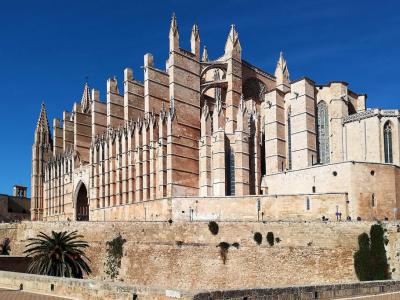
1) Palma Cathedral (must see)
James I of Aragon was in grave danger. On his way to conquer the Balearic Islands in December, 1229, his fleet of ships was overtaken by a violent storm. In peril of foundering, young James swore to God that if he survived and conquered Mallorca, he would build there a great cathedral.
God held him to it. Construction began in 1230 on the Palma Cathedral or La Seu, as it is popularly known. Building went on for 350 years. Finally the nave and the main portal, the last elements, were finished. James had really kept his promise. The dimensions of the church are vast: width, 108 feet; height, 145 feet; length, 361 feet.
The nave, last to be finished, is among the largest in Europe. A Gothic rose window dominates the eastern wall. It has a diameter of 41 feet and it is composed of around 1200 pieces of stained glass. Every sunrise the cathedral interior is flooded with sparkling reflections of colors in the morning light. But there is more to this light.
There is a game, called "Light Game of the Eight." The game occurs just twice a year, on February 2nd and November 11th. At 8am the rays of the sun shine through the rosette window on the eastern wall and project the image of the window exactly on the opposite wall below the rosette of the main facade.
But there is yet more to this light. Twenty days on each side of the winter solstice the sunrise is viewable through both enormous rosettes.
The cathedral shows a range of architectural styles. There are clearly Gothic influences in the seaward facing portal that date from the 13th century. The portal on the opposite side is late Gothic from the 16th century. The Gothic is replaced by the Renaissance. The chapels are Baroque. There is Classicism in the Baptistry.
Two kings, James II and James III, are laid to rest in the Trinity Chapel. The chapel is not open to the public. Visitors are charged a small entrance fee. The cathedral is open after 10 am.
Why You Should Visit:
Here is all uplifting spirit of Mallorca spelled out in stone and light. The great cathedral reaches for the sky as the soul might reach for heaven.
God held him to it. Construction began in 1230 on the Palma Cathedral or La Seu, as it is popularly known. Building went on for 350 years. Finally the nave and the main portal, the last elements, were finished. James had really kept his promise. The dimensions of the church are vast: width, 108 feet; height, 145 feet; length, 361 feet.
The nave, last to be finished, is among the largest in Europe. A Gothic rose window dominates the eastern wall. It has a diameter of 41 feet and it is composed of around 1200 pieces of stained glass. Every sunrise the cathedral interior is flooded with sparkling reflections of colors in the morning light. But there is more to this light.
There is a game, called "Light Game of the Eight." The game occurs just twice a year, on February 2nd and November 11th. At 8am the rays of the sun shine through the rosette window on the eastern wall and project the image of the window exactly on the opposite wall below the rosette of the main facade.
But there is yet more to this light. Twenty days on each side of the winter solstice the sunrise is viewable through both enormous rosettes.
The cathedral shows a range of architectural styles. There are clearly Gothic influences in the seaward facing portal that date from the 13th century. The portal on the opposite side is late Gothic from the 16th century. The Gothic is replaced by the Renaissance. The chapels are Baroque. There is Classicism in the Baptistry.
Two kings, James II and James III, are laid to rest in the Trinity Chapel. The chapel is not open to the public. Visitors are charged a small entrance fee. The cathedral is open after 10 am.
Why You Should Visit:
Here is all uplifting spirit of Mallorca spelled out in stone and light. The great cathedral reaches for the sky as the soul might reach for heaven.
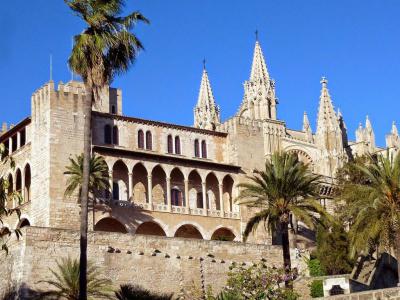
2) Royal Palace of La Almudaina (must see)
The Royal Palace of La Almudaina is an "alcazar", a fortified palace. In 1309 it was rebuilt by King James II of Majorca. The rebuilt was based on the Royal Palace of Perpignan. La Almudaina today follows a layout established in the 14th century. There are spaces for the ruling family, a chapel dedicated to Saint Anne, and the baths.
The spaces are differentiated into ways. On the ground floor a medieval ambience is maintained with art and furnishings dating from the 15th century. The upper floor is reserved for official Royal acts and it is decorated with objects and art from the 17th, 18th and 20th centuries.
The palace is the official summer residence of the Spanish Royal Family. The family also resides at the Palace of Marivent and the Zarzuela Palace in Madrid when not in Mallorca. The Palace and Palma Cathedral are next door neighbors. Both rise over palma de Mallorca harbor, providing great views of the sea.
The Palace is open Thursdays to Sundays from 10am to 6pm. Hours may be longer in the summer. There is a small admission fee.
The spaces are differentiated into ways. On the ground floor a medieval ambience is maintained with art and furnishings dating from the 15th century. The upper floor is reserved for official Royal acts and it is decorated with objects and art from the 17th, 18th and 20th centuries.
The palace is the official summer residence of the Spanish Royal Family. The family also resides at the Palace of Marivent and the Zarzuela Palace in Madrid when not in Mallorca. The Palace and Palma Cathedral are next door neighbors. Both rise over palma de Mallorca harbor, providing great views of the sea.
The Palace is open Thursdays to Sundays from 10am to 6pm. Hours may be longer in the summer. There is a small admission fee.
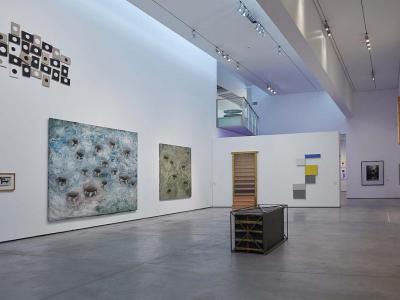
3) Es Baluard Museum of Modern & Contemporary Art
Discover Es Baluard Museum of Contemporary Art of Palma, a dynamic cultural landmark nestled within the historic Baluard de Sant Pere, a former 16th-century Renaissance bastion. Opened on 30 January 2004, the museum masterfully merges modern architectural intervention with centuries-old defensive walls, offering visitors an immersive experience that connects art, history, and panoramic views over the Bay of Palma.
Spread across approximately 5,027 square meters - with 2,500 square meters dedicated to exhibition space on three interconnected levels - the building was designed by architects Lluís and Jaume García‑Ruiz along with Vicente Tomás and Ángel Sánchez Cantalejo. Through a system of ramps, skylights, interior balconies, and courtyards, the museum creates a seamless flow between galleries and the surrounding city fabric and sea view.
Es Baluard houses a collection of over 800 works, tracing the evolution of modernism and avant‑garde movements from the late 19th century to the present. The permanent holdings include major Catalan landscape painters like Joaquim Mir and Santiago Rusinol, key figures of early 20th‑century abstraction and conceptual art-think Picasso, Miró, Wifredo Lam, and Antoni Tàpies-and contemporary voices such as Miquel Barceló, Marina Abramović, Lida Abdul, Christian Boltanski, and many others. Additionally, rotating exhibitions and educational programs enriched by collaborations with local and international artists ensure the museum remains a living, evolving space.
Beyond the galleries, visitors can explore the restored 17th-century cistern (“Aljub”) once used to supply water to the Sant Pere quarter and revived today for installations, performances, or concerts. Combined with a lovely café‑terrace overlooking the sea and walking ramps along the bastion walls, Es Baluard offers an inspiring-and Instagram‑worthy-destination for both art lovers and curious tourists alike.
Spread across approximately 5,027 square meters - with 2,500 square meters dedicated to exhibition space on three interconnected levels - the building was designed by architects Lluís and Jaume García‑Ruiz along with Vicente Tomás and Ángel Sánchez Cantalejo. Through a system of ramps, skylights, interior balconies, and courtyards, the museum creates a seamless flow between galleries and the surrounding city fabric and sea view.
Es Baluard houses a collection of over 800 works, tracing the evolution of modernism and avant‑garde movements from the late 19th century to the present. The permanent holdings include major Catalan landscape painters like Joaquim Mir and Santiago Rusinol, key figures of early 20th‑century abstraction and conceptual art-think Picasso, Miró, Wifredo Lam, and Antoni Tàpies-and contemporary voices such as Miquel Barceló, Marina Abramović, Lida Abdul, Christian Boltanski, and many others. Additionally, rotating exhibitions and educational programs enriched by collaborations with local and international artists ensure the museum remains a living, evolving space.
Beyond the galleries, visitors can explore the restored 17th-century cistern (“Aljub”) once used to supply water to the Sant Pere quarter and revived today for installations, performances, or concerts. Combined with a lovely café‑terrace overlooking the sea and walking ramps along the bastion walls, Es Baluard offers an inspiring-and Instagram‑worthy-destination for both art lovers and curious tourists alike.
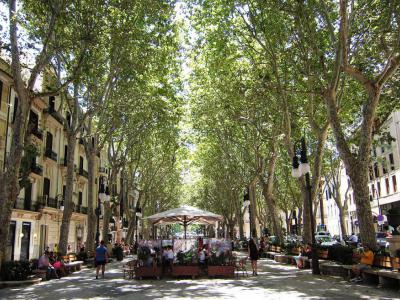
4) Passeig des Born (Born Passage) (must see)
For more than one hundred years, the tree-lined Born Passage has held feasts, demos, events and peaceful strollers. There is a wide promenade and two traffic lanes on either side of the promenade. The promenade was built over the riverbed of the Riera torrent which once divided the city.
The two traffic lanes were laid out for traffic in each direction but now one is mostly pedestrian. The old Born cinema is now a Zara store. The cinema shares space on the promenade with Casal Solleric, an exhibition space formerly a palace. The grand old houses have galleries at street level.
The promenade extends to the Queen's Square and joins the Paseo Maritimo. Jaime III Aenue leads to Juan Carlos I Square, a main commercial spot of Palma. Union Street joins the promenade with Las Ramblas.
Pretend to be stranded and spend an evening walk on the Born Passage. See the Royal Palace of La Almudaina and the Palma Cathedral at night. Then sample some vegan ice cream at a place called Dolce.
In his obsession to possess everything, Francisco Franco called the Born Passage "Paseo Franco" but everyone else preferred "Born".
The two traffic lanes were laid out for traffic in each direction but now one is mostly pedestrian. The old Born cinema is now a Zara store. The cinema shares space on the promenade with Casal Solleric, an exhibition space formerly a palace. The grand old houses have galleries at street level.
The promenade extends to the Queen's Square and joins the Paseo Maritimo. Jaime III Aenue leads to Juan Carlos I Square, a main commercial spot of Palma. Union Street joins the promenade with Las Ramblas.
Pretend to be stranded and spend an evening walk on the Born Passage. See the Royal Palace of La Almudaina and the Palma Cathedral at night. Then sample some vegan ice cream at a place called Dolce.
In his obsession to possess everything, Francisco Franco called the Born Passage "Paseo Franco" but everyone else preferred "Born".
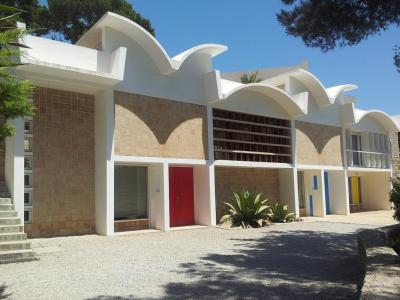
5) Museum of Spanish Contemporary Art
Juan Alberto March Ordinas was born in 1880. His family were poor pig-farming peasants. When he died in 1961, he was the seventh richest man in the world and the "Daddy Warbucks" of the Franco regime in Spain. What did he do after a long busy life of banking, smuggling, and war profiteering? He established a foundation in his hometown.
The Juan March Foundation was founded in 1955. Its mission was to support the arts, music, and social sciences. The Museum of Spanish Contemporary Art houses Colleccio March, a collection mainly of 20th century Spanish art. The Museum's home is a 17th century mansion. Originally a residence, it was redesigned as a museum in 1990.
The art in the museum is from the private collection of Juan March. There are about seventy pieces, the collection includes works by Picasso, Dali and Miro. There are paintings by more than fifty twentieth century emerging Spanish artists. In 2009 the collection was connected to a new gallery of Picasso's pieces of graphic art.
The museum is free of charge to visit. It is open from 10am to 6:30pm most days. It is closed on Sundays and bank holidays.
The Juan March Foundation was founded in 1955. Its mission was to support the arts, music, and social sciences. The Museum of Spanish Contemporary Art houses Colleccio March, a collection mainly of 20th century Spanish art. The Museum's home is a 17th century mansion. Originally a residence, it was redesigned as a museum in 1990.
The art in the museum is from the private collection of Juan March. There are about seventy pieces, the collection includes works by Picasso, Dali and Miro. There are paintings by more than fifty twentieth century emerging Spanish artists. In 2009 the collection was connected to a new gallery of Picasso's pieces of graphic art.
The museum is free of charge to visit. It is open from 10am to 6:30pm most days. It is closed on Sundays and bank holidays.
