Custom Walk in Marseille, France by pescales_3b7a7f created on 2026-02-12
Guide Location: France » Marseille
Guide Type: Custom Walk
# of Sights: 5
Tour Duration: 1 Hour(s)
Travel Distance: 1.7 Km or 1.1 Miles
Share Key: WWHL5
Guide Type: Custom Walk
# of Sights: 5
Tour Duration: 1 Hour(s)
Travel Distance: 1.7 Km or 1.1 Miles
Share Key: WWHL5
How It Works
Please retrieve this walk in the GPSmyCity app. Once done, the app will guide you from one tour stop to the next as if you had a personal tour guide. If you created the walk on this website or come to the page via a link, please follow the instructions below to retrieve the walk in the app.
Retrieve This Walk in App
Step 1. Download the app "GPSmyCity: Walks in 1K+ Cities" on Apple App Store or Google Play Store.



Step 2. In the GPSmyCity app, download(or launch) the guide "Marseille Map and Walking Tours".
Step 3. Tap the menu button located at upper right corner of the "Walks" screen and select "Retrieve custom walk". Enter the share key: WWHL5
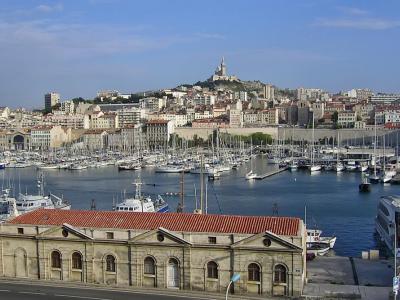
1) Vieux-Port (Old Port) (must see)
The Old Port is the city’s historic heart and one of the most evocative harbours in Europe, being a centre of maritime life for over 2,600 years. The site was first used as a trading post by the Phoenicians, long before the Greek settlers from Phocaea officially established it in 600 BCE as the port of Massalia, making it the birthplace of the city itself.
Through the centuries, the Old Port became a hub of Mediterranean commerce and naval activity. Kings Louis XII and Louis XIII expanded the shipyards in the 15th and 16th centuries, while King Louis XIV added the imposing Fort Saint John and Fort Saint Nicholas to defend the entrance of the harbour. The port reached its commercial peak in the 19th century, when up to 18,000 merchant vessels docked here annually, rivaling the activity of major ports such as Liverpool and Le Havre. However, with the arrival of large steamships that required deeper waters, Marseille shifted much of its industrial trade to the Port of La Joliette, located farther north.
The Old Port suffered immense damage during World War II, when German forces, assisted by French police, demolished much of the area to block access to Allied troops. Postwar reconstruction reshaped the district, and by the late 20th century, major urban renewal projects restored the port’s vitality. Architect Norman Foster’s redesign, featuring the The Shade Pavilion, a mirrored canopy that reflects the harbour below, marked a new era of pedestrian-friendly space and modern elegance.
Today, the Port serves as a marina for yachts, ferries, and fishing boats, as well as the site of a daily fish market that preserves centuries-old local tradition. Lined with cafés, restaurants, and open-air terraces, it remains a favourite gathering place for both locals and visitors.
Through the centuries, the Old Port became a hub of Mediterranean commerce and naval activity. Kings Louis XII and Louis XIII expanded the shipyards in the 15th and 16th centuries, while King Louis XIV added the imposing Fort Saint John and Fort Saint Nicholas to defend the entrance of the harbour. The port reached its commercial peak in the 19th century, when up to 18,000 merchant vessels docked here annually, rivaling the activity of major ports such as Liverpool and Le Havre. However, with the arrival of large steamships that required deeper waters, Marseille shifted much of its industrial trade to the Port of La Joliette, located farther north.
The Old Port suffered immense damage during World War II, when German forces, assisted by French police, demolished much of the area to block access to Allied troops. Postwar reconstruction reshaped the district, and by the late 20th century, major urban renewal projects restored the port’s vitality. Architect Norman Foster’s redesign, featuring the The Shade Pavilion, a mirrored canopy that reflects the harbour below, marked a new era of pedestrian-friendly space and modern elegance.
Today, the Port serves as a marina for yachts, ferries, and fishing boats, as well as the site of a daily fish market that preserves centuries-old local tradition. Lined with cafés, restaurants, and open-air terraces, it remains a favourite gathering place for both locals and visitors.
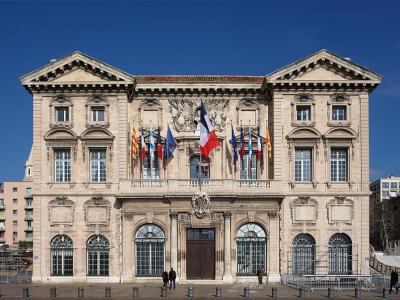
2) Hotel de Ville (City Hall)
Built in 1656, the City Hall has served as Marseille’s civic centre ever since, replacing the earlier Town Hall that had fulfilled the same role since the 13th century. Often referred to as “The Lodge”, derived from the Italian loggia for its Baroque style, it was designed by Gaspard Puget.
The pink stone building, is richly decorated with sculptures and flags, reflecting the prosperity of 17th-century Marseille, then a thriving maritime republic under French influence. Above the main entrance is the city’s seal, created by Gaspard’s brother, Pierre Puget, a favourite artist of King Louis XIV. Appropriately, a bust of the Sun King crowns the façade, gazing over the bustling harbour and boulevard below.
Though monarchs fell from power in the 18th century, the City Hall endured. It survived multiple regimes, revolutions, and even the devastation of World War II-standing as a rare witness to the city’s turbulent history. Remarkably, despite wartime bombings that destroyed much of the surrounding district in 1943, the building itself escaped major damage. Inside, several ceremonial rooms still preserve period furnishings, portraits of former mayors, and historical archives that document centuries of municipal life.
The building’s rear features a covered bridge connecting its two main levels, symbolically reuniting the upper floor-once reserved for the nobility-with the ground floor, which was occupied by merchants and tradesmen in the 18th century. The City Hall continues to house the mayor’s office and serves as a venue for civic ceremonies, making it both a working institution and a living monument to the city’s storied past.
The pink stone building, is richly decorated with sculptures and flags, reflecting the prosperity of 17th-century Marseille, then a thriving maritime republic under French influence. Above the main entrance is the city’s seal, created by Gaspard’s brother, Pierre Puget, a favourite artist of King Louis XIV. Appropriately, a bust of the Sun King crowns the façade, gazing over the bustling harbour and boulevard below.
Though monarchs fell from power in the 18th century, the City Hall endured. It survived multiple regimes, revolutions, and even the devastation of World War II-standing as a rare witness to the city’s turbulent history. Remarkably, despite wartime bombings that destroyed much of the surrounding district in 1943, the building itself escaped major damage. Inside, several ceremonial rooms still preserve period furnishings, portraits of former mayors, and historical archives that document centuries of municipal life.
The building’s rear features a covered bridge connecting its two main levels, symbolically reuniting the upper floor-once reserved for the nobility-with the ground floor, which was occupied by merchants and tradesmen in the 18th century. The City Hall continues to house the mayor’s office and serves as a venue for civic ceremonies, making it both a working institution and a living monument to the city’s storied past.
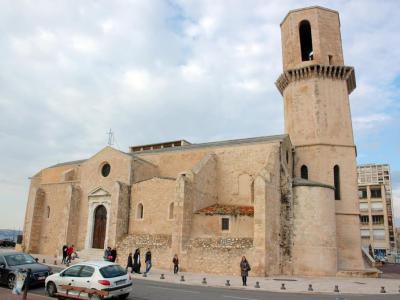
3) St. Laurent Church
The Saint-Laurent Church is one of Marseille’s finest examples of Provençal Romanesque architecture. Built in the 12th century from warm pink sandstone, it originally served as the parish church for fishermen and sailors who lived and worked along the Old Port. Tradition holds that the church was erected on the remains of an ancient temple of Apollo, a theory supported by the discovery of a sculpted capital now preserved at the Marseille History Museum.
Despite its modest appearance, the Saint-Laurent Church has endured some of the city’s most turbulent eras. It survived the Great Plague of 1720, the French Revolution, and the bombings of World War II, including the devastation caused during the Battle of Marseille in 1943. After the war, it was carefully restored, preserving its original Romanesque nave and rounded arches.
Adjoining the main structure is the Chapel of Saint Catherine, added in the 17th century and easily recognized by its Baroque façade. Inside, the church’s cool stone walls, soft lighting, and votive offerings-often small ship models-recall Marseille’s relationship with the sea.
Today, the Saint-Laurent Church is connected to Fort Saint-Jean by a pedestrian footbridge. It remains an active place of worship and has been a listed Historic Monument since 1950, valued for the quiet strength of its history and faith.
Despite its modest appearance, the Saint-Laurent Church has endured some of the city’s most turbulent eras. It survived the Great Plague of 1720, the French Revolution, and the bombings of World War II, including the devastation caused during the Battle of Marseille in 1943. After the war, it was carefully restored, preserving its original Romanesque nave and rounded arches.
Adjoining the main structure is the Chapel of Saint Catherine, added in the 17th century and easily recognized by its Baroque façade. Inside, the church’s cool stone walls, soft lighting, and votive offerings-often small ship models-recall Marseille’s relationship with the sea.
Today, the Saint-Laurent Church is connected to Fort Saint-Jean by a pedestrian footbridge. It remains an active place of worship and has been a listed Historic Monument since 1950, valued for the quiet strength of its history and faith.
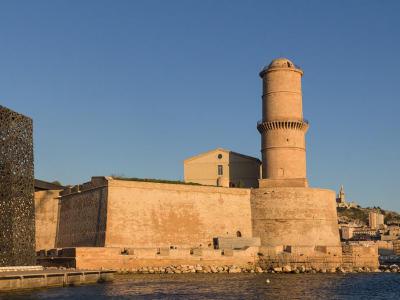
4) Fort Saint-Jean
Fort Saint-Jean, established in 1660 by king Louis XIV, is one of Marseille’s most formidable fortifications. Its construction incorporated two earlier structures: the 12th-century Commandery of the Knights Hospitaller of Saint John of Jerusalem, which once served as a monastic hospice during the Crusades, and the 15th-century tower of René I, King of Provence.
In April 1790, Fort Saint-Jean was seized by a revolutionary mob that executed the commander of the royal garrison. During the French Revolution, the fort was converted into a prison and held several prominent figures, including Louis Philippe II, Duke of Orléans, and his sons Louis-Charles, Count of Beaujolais, and Antoine Philippe, Duke of Montpensier. Following Robespierre’s downfall in 1794, around one hundred Jacobin prisoners-members of a radical political faction during the Revolution-detained in the fort were brutally massacred.
Throughout the 19th and early 20th centuries, Fort Saint-Jean remained under the control of the French Army, serving as both a barracks and a clearing station for troops bound for North Africa. During World War II, it was occupied by German forces, and in August 1944, as Marseille was liberated, a massive ammunition explosion devastated much of the fort’s historic structure.
Recognized as a Historic Monument in 1964, Fort Saint-Jean underwent extensive reconstruction between 1967 and 1971. Today, it forms part of the Museum of European and Mediterranean Civilizations complex.
In April 1790, Fort Saint-Jean was seized by a revolutionary mob that executed the commander of the royal garrison. During the French Revolution, the fort was converted into a prison and held several prominent figures, including Louis Philippe II, Duke of Orléans, and his sons Louis-Charles, Count of Beaujolais, and Antoine Philippe, Duke of Montpensier. Following Robespierre’s downfall in 1794, around one hundred Jacobin prisoners-members of a radical political faction during the Revolution-detained in the fort were brutally massacred.
Throughout the 19th and early 20th centuries, Fort Saint-Jean remained under the control of the French Army, serving as both a barracks and a clearing station for troops bound for North Africa. During World War II, it was occupied by German forces, and in August 1944, as Marseille was liberated, a massive ammunition explosion devastated much of the fort’s historic structure.
Recognized as a Historic Monument in 1964, Fort Saint-Jean underwent extensive reconstruction between 1967 and 1971. Today, it forms part of the Museum of European and Mediterranean Civilizations complex.
5) Cathédrale de la Major (Marseille Cathedral) (must see)
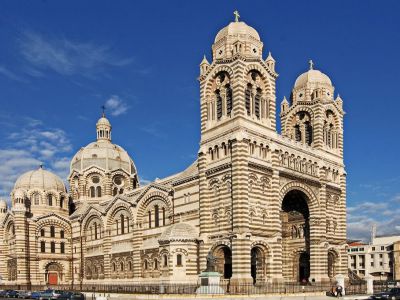
The Marseille Cathedral, also known as the Cathedral of Saint Mary Major, unites two eras of faith and architecture. The site includes both the Old Marseille Cathedral, dating to the 12th century, and the New Marseille Cathedral, constructed under Emperor Napoleon III in the late 19th century. Napoleon ordered the older Provençal Romanesque building replaced but preserved part of it-the choir and one bay of the nave-after public protests over its demolition.
The New Marseille Cathedral dominates the waterfront with its vast Romanesque-Byzantine Revival design. Stretching 469 feet in length, with a main dome reaching 231 feet in height, it can hold about 3,000 worshippers. Its façade alternates bands of white and dark stone, a combination of Florentine limestone and Ligurian green porphyry, producing a striped pattern affectionately nicknamed “the Pajamas” by locals. Inside, the cathedral reveals a rich blend of imported materials: white Carrara marble from Italy, onyx from Tunisia, and dazzling Venetian mosaics that illuminate its chapels and domes.
Beside this grand 19th-century structure lie the remains of the Old Cathedral, a humble yet evocative remnant of Marseille’s medieval heritage. The surviving chancel and apse feature smaller side chapels and a cylindrical vault crowned with octagonal and heptagonal domes. Archaeological traces beneath the site even reveal earlier Christian structures dating to the 5th century, showing that this location has been a place of worship for over fifteen centuries.
A visit to Marseille Cathedral offers not just architectural splendor but also some of the best panoramic views of the port and the Mediterranean. Rising between sea and city, the cathedral stands as both a symbol of continuity and a beacon of faith-undeniably one of Marseille’s must-see attractions.
The New Marseille Cathedral dominates the waterfront with its vast Romanesque-Byzantine Revival design. Stretching 469 feet in length, with a main dome reaching 231 feet in height, it can hold about 3,000 worshippers. Its façade alternates bands of white and dark stone, a combination of Florentine limestone and Ligurian green porphyry, producing a striped pattern affectionately nicknamed “the Pajamas” by locals. Inside, the cathedral reveals a rich blend of imported materials: white Carrara marble from Italy, onyx from Tunisia, and dazzling Venetian mosaics that illuminate its chapels and domes.
Beside this grand 19th-century structure lie the remains of the Old Cathedral, a humble yet evocative remnant of Marseille’s medieval heritage. The surviving chancel and apse feature smaller side chapels and a cylindrical vault crowned with octagonal and heptagonal domes. Archaeological traces beneath the site even reveal earlier Christian structures dating to the 5th century, showing that this location has been a place of worship for over fifteen centuries.
A visit to Marseille Cathedral offers not just architectural splendor but also some of the best panoramic views of the port and the Mediterranean. Rising between sea and city, the cathedral stands as both a symbol of continuity and a beacon of faith-undeniably one of Marseille’s must-see attractions.
