Custom Walk in Riyadh, Saudi Arabia by lfdaduran2273 created on 2026-02-18
Guide Location: Saudi Arabia » Riyadh
Guide Type: Custom Walk
# of Sights: 13
Tour Duration: 23 Hour(s)
Travel Distance: 64.6 Km or 40.1 Miles
Share Key: T3LF3
Guide Type: Custom Walk
# of Sights: 13
Tour Duration: 23 Hour(s)
Travel Distance: 64.6 Km or 40.1 Miles
Share Key: T3LF3
How It Works
Please retrieve this walk in the GPSmyCity app. Once done, the app will guide you from one tour stop to the next as if you had a personal tour guide. If you created the walk on this website or come to the page via a link, please follow the instructions below to retrieve the walk in the app.
Retrieve This Walk in App
Step 1. Download the app "GPSmyCity: Walks in 1K+ Cities" on Apple App Store or Google Play Store.



Step 2. In the GPSmyCity app, download(or launch) the guide "Riyadh Map and Walking Tours".
Step 3. Tap the menu button located at upper right corner of the "Walks" screen and select "Retrieve custom walk". Enter the share key: T3LF3
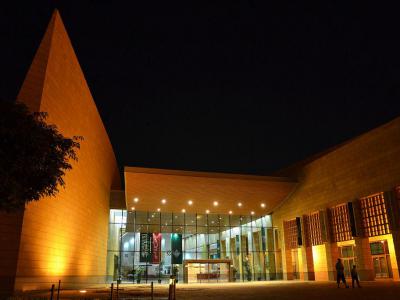
1) National Museum of Saudi Arabia (must see)
The National Museum is an iconic cultural institution that stands as a testament to the country's rich historical legacy. It is part of the King Abdulaziz Historical Center, a cultural complex dedicated to preserving and showcasing the cultural and historical heritage of Saudi Arabia.
Established in 1999, the National Museum spans a sprawling area of 28,000 square meters and is designed in a modern style that merges traditional architecture with contemporary design elements. Its eight halls are organized chronologically and thematically, covering the history and culture of the Arabian Peninsula from prehistoric times to the modern era.
Exhibits in the museum include ancient artifacts, engaging multimedia displays, rare manuscripts, and models, offering an immersive experience for visitors. Some of the museum's highlights include a large meteorite, a reconstruction of a Nabataean tomb from Madain Salih, and a vast display on the Islamic era, which includes a piece of the Kiswa that once clothed the Kaaba in Mecca.
The National Museum also houses the Al-Murabba Palace, King Abdulaziz's residence, which has been converted into a museum itself. It contains several historical documents and photographs that depict the life of the king and the formation of the Kingdom of Saudi Arabia.
With its comprehensive collections and interactive displays, the National Museum provides a deep insight into Saudi Arabia's cultural history, from the earliest civilizations that inhabited the region to the establishment of the modern Saudi state.
Established in 1999, the National Museum spans a sprawling area of 28,000 square meters and is designed in a modern style that merges traditional architecture with contemporary design elements. Its eight halls are organized chronologically and thematically, covering the history and culture of the Arabian Peninsula from prehistoric times to the modern era.
Exhibits in the museum include ancient artifacts, engaging multimedia displays, rare manuscripts, and models, offering an immersive experience for visitors. Some of the museum's highlights include a large meteorite, a reconstruction of a Nabataean tomb from Madain Salih, and a vast display on the Islamic era, which includes a piece of the Kiswa that once clothed the Kaaba in Mecca.
The National Museum also houses the Al-Murabba Palace, King Abdulaziz's residence, which has been converted into a museum itself. It contains several historical documents and photographs that depict the life of the king and the formation of the Kingdom of Saudi Arabia.
With its comprehensive collections and interactive displays, the National Museum provides a deep insight into Saudi Arabia's cultural history, from the earliest civilizations that inhabited the region to the establishment of the modern Saudi state.
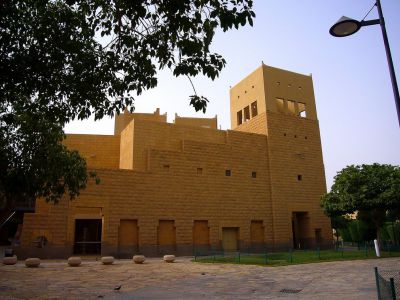
2) Murabba Palace
The Murabba Palace is an important historical site located in Riyadh. Constructed between 1936 and 1937 by King Abdulaziz, the founder of modern Saudi Arabia, the palace served as the King's official residence and the seat of his government.
The term "Murabba" translates to "square," reflecting the architectural design of the palace complex. The two-story palace was constructed in the traditional Najdi style, with thick clay walls to combat the desert heat, and is part of a larger compound that includes other buildings and facilities, such as courtyards, stables, and a mosque.
Murabba Palace was a hub for governmental and administrative affairs during King Abdulaziz's reign. It was also the site of numerous historic events and royal receptions, hosting foreign dignitaries and representatives who visited the kingdom.
In the late 1990s, as part of a project to preserve and promote the historical heritage of the nation, the palace was restored and turned into a museum. The museum showcases various exhibits that depict the life and times of King Abdulaziz, offering a rich insight into the history of Saudi Arabia. One of its most notable features is a collection of photographs documenting the development of the Kingdom.
Today, Murabba Palace is part of the King Abdulaziz Historical Center, a cultural complex that includes the National Museum. With its historical significance and well-preserved architecture, Murabba Palace provides a unique window into the history and culture of Saudi Arabia, making it a popular landmark for both locals and tourists.
The term "Murabba" translates to "square," reflecting the architectural design of the palace complex. The two-story palace was constructed in the traditional Najdi style, with thick clay walls to combat the desert heat, and is part of a larger compound that includes other buildings and facilities, such as courtyards, stables, and a mosque.
Murabba Palace was a hub for governmental and administrative affairs during King Abdulaziz's reign. It was also the site of numerous historic events and royal receptions, hosting foreign dignitaries and representatives who visited the kingdom.
In the late 1990s, as part of a project to preserve and promote the historical heritage of the nation, the palace was restored and turned into a museum. The museum showcases various exhibits that depict the life and times of King Abdulaziz, offering a rich insight into the history of Saudi Arabia. One of its most notable features is a collection of photographs documenting the development of the Kingdom.
Today, Murabba Palace is part of the King Abdulaziz Historical Center, a cultural complex that includes the National Museum. With its historical significance and well-preserved architecture, Murabba Palace provides a unique window into the history and culture of Saudi Arabia, making it a popular landmark for both locals and tourists.

3) King Abdullah Park (must see)
King Abdullah Park, formerly known as Al-Malaz Square, is a municipal park located in the Al-Malaz neighborhood of Riyadh. What was once an equestrian field has now transformed into the largest public park in the country, spanning an expansive area of 31.8 hectares (79 acres). Adjacent to Prince Faisal bin Fahd Stadium, this park offers a stunning recreational space for both residents and visitors.
In 2003, Al-Malaz Square, the former venue for horse racing, was transformed into a park. King Abdullah Park opened to the public on October 2, 2013, with a grand inauguration attended by Saudi officials and foreign diplomats. It has since become a popular destination, attracting large crowds during festive seasons and public events like Saudi National Day.
One of the park's notable features is a 12-meter-wide pedestrian corridor, providing a pleasant and safe pathway for visitors to explore and enjoy the surroundings. The park also boasts impressive 110-meter laser fountains, which create a mesmerizing display of lights and water. These fountains are a sight to behold, captivating visitors with their beauty and grandeur. Additionally, an artificial lake adds to the park's allure, offering a tranquil setting where visitors can relax and appreciate the scenic surroundings.
King Abdullah Park is renowned for its vibrant fireworks displays, particularly before midnight. These captivating spectacles light up the night sky, filling it with bursts of colors and creating a festive atmosphere for all to enjoy. The park truly comes alive during these enchanting displays, leaving a lasting impression on visitors.
Beyond its recreational and entertainment offerings, King Abdullah Park serves as a wildlife reserve, promoting ecotourism in Saudi Arabia. The park is enclosed by high walls on all sides, creating a contemporary design while still retaining some of its traditional uses. Within the park, visitors can explore a rich variety of trees, plants, and fauna, creating a serene and natural environment. The park is also a haven for numerous bird and fish species, further enhancing its ecological significance.
In 2003, Al-Malaz Square, the former venue for horse racing, was transformed into a park. King Abdullah Park opened to the public on October 2, 2013, with a grand inauguration attended by Saudi officials and foreign diplomats. It has since become a popular destination, attracting large crowds during festive seasons and public events like Saudi National Day.
One of the park's notable features is a 12-meter-wide pedestrian corridor, providing a pleasant and safe pathway for visitors to explore and enjoy the surroundings. The park also boasts impressive 110-meter laser fountains, which create a mesmerizing display of lights and water. These fountains are a sight to behold, captivating visitors with their beauty and grandeur. Additionally, an artificial lake adds to the park's allure, offering a tranquil setting where visitors can relax and appreciate the scenic surroundings.
King Abdullah Park is renowned for its vibrant fireworks displays, particularly before midnight. These captivating spectacles light up the night sky, filling it with bursts of colors and creating a festive atmosphere for all to enjoy. The park truly comes alive during these enchanting displays, leaving a lasting impression on visitors.
Beyond its recreational and entertainment offerings, King Abdullah Park serves as a wildlife reserve, promoting ecotourism in Saudi Arabia. The park is enclosed by high walls on all sides, creating a contemporary design while still retaining some of its traditional uses. Within the park, visitors can explore a rich variety of trees, plants, and fauna, creating a serene and natural environment. The park is also a haven for numerous bird and fish species, further enhancing its ecological significance.
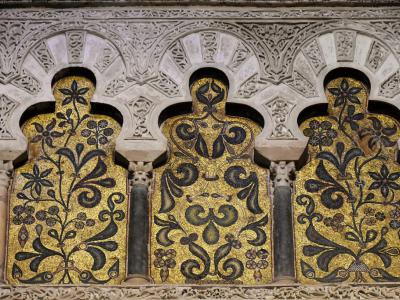
4) Al Rajhi Grand Mosque (must see)
Al Rajhi Grand Mosque is an impressive and iconic landmark of Riyadh, made possible by the generous donation of the Al Rajhi family. It is not only a place of worship for Muslims but also serves as a hub of community gatherings for social events such as Eids. As the largest mosque in Riyadh, it is considered as one of the most significant Islamic institutions in the city and an architectural marvel. However, it's important to note that only those of the Muslim faith can enter the mosque.
The mosque boasts several features, including two libraries, forensic science courses, an automated utility system, and an enormous capacity of 18,000 for men and 2,500 for women. It is also notable that Friday prayers are translated into over seven different languages and displayed on multiple LCD screens, making the service accessible for the hearing impaired. The mosque's exterior design is traditional, with classic rock-based tiles, and smart lighting creates a majestic look at night.
Al Rajhi Grand Mosque is surrounded by several other activities, historic sites, and scenic locales, including the King Abdulaziz Historic Center and Al Watan Park. It is considered by visitors to be grand, monumental, and serene in nature.
This place of worship is immaculately maintained and is a hub of activity, with street vendors selling dates, fruits, and vegetables on most days. It is a popular place to hear the Friday sermon, and during Ramadan, the night prayers are attended by large crowds. Regardless of the time of year, the Al Rajhi Grand Mosque is the perfect place to go for solitude, contemplation, and most importantly, to read before and after prayers.
The mosque boasts several features, including two libraries, forensic science courses, an automated utility system, and an enormous capacity of 18,000 for men and 2,500 for women. It is also notable that Friday prayers are translated into over seven different languages and displayed on multiple LCD screens, making the service accessible for the hearing impaired. The mosque's exterior design is traditional, with classic rock-based tiles, and smart lighting creates a majestic look at night.
Al Rajhi Grand Mosque is surrounded by several other activities, historic sites, and scenic locales, including the King Abdulaziz Historic Center and Al Watan Park. It is considered by visitors to be grand, monumental, and serene in nature.
This place of worship is immaculately maintained and is a hub of activity, with street vendors selling dates, fruits, and vegetables on most days. It is a popular place to hear the Friday sermon, and during Ramadan, the night prayers are attended by large crowds. Regardless of the time of year, the Al Rajhi Grand Mosque is the perfect place to go for solitude, contemplation, and most importantly, to read before and after prayers.
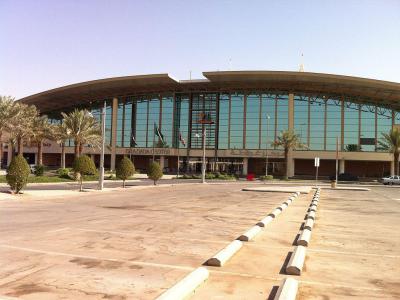
5) Granada Mall
With more than 200–340 shops spanning a covered area of approximately 150,000 m², Granada Mall stands among Riyadh’s largest and most popular shopping destinations. Its modern and airy design, with spacious walkways and daylight-filtering ceilings, creates an inviting atmosphere for shoppers and diners alike. International fashion giants like Zara, H&M, Marks & Spencer, Next, and Foot Locker share the space with local favorites and specialty boutiques.
Families and entertainment seekers will find much to enjoy here: Fun Oasis, the mall’s indoor amusement zone, offers rides, arcade games, and soft‑play areas for children of all ages. There's also a cinema showing the latest international films, complete with premium seating and concession stands.
When hunger strikes, the food court and café terrace serve up a diverse array of over 30 restaurants and nine cafés, featuring cuisines ranging from local Saudi dishes to global fast-food and gourmet fare. Additionally, shoppers will appreciate the on-site Carrefour supermarket, ATMs, a pharmacy, and prayer rooms.
Families and entertainment seekers will find much to enjoy here: Fun Oasis, the mall’s indoor amusement zone, offers rides, arcade games, and soft‑play areas for children of all ages. There's also a cinema showing the latest international films, complete with premium seating and concession stands.
When hunger strikes, the food court and café terrace serve up a diverse array of over 30 restaurants and nine cafés, featuring cuisines ranging from local Saudi dishes to global fast-food and gourmet fare. Additionally, shoppers will appreciate the on-site Carrefour supermarket, ATMs, a pharmacy, and prayer rooms.
6) Boulevard Riyadh City (must see)
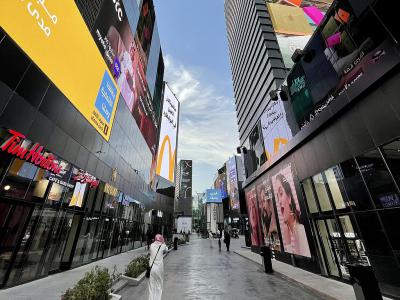
The Boulevard Riyadh City, commonly known as The Boulevard, is a sprawling recreational and commercial complex nestled in the Hittin neighborhood of Riyadh. Spanning an impressive 220 acres (89 hectares), this destination opened its doors in 2019 and has become a prominent fixture during the annual Riyadh Season entertainment festival.
Since its launch in October 2019, The Boulevard has captivated visitors with its nine distinct sub-zones, each offering a diverse range of recreational amenities. Within this expansive complex, guests can immerse themselves in a plethora of activities, including outdoor cinemas, cozy cafes, delectable restaurants, and relaxing hookah lounges. Additionally, the venue hosts a variety of sports, music, and theatrical events, ensuring there is always something exciting happening for visitors to enjoy.
One of the notable features of The Boulevard Riyadh City is its incorporation of iconic landmarks within its premises. The Square sub-zone beautifully replicates the vibrant ambiance of New York Times Square, bringing a taste of the Big Apple to Riyadh. Meanwhile, the Takenda Center and Trocadero area draw inspiration from the renowned Coventry Street in London, showcasing the cosmopolitan flair of the English capital.
The design and realization of The Boulevard were spearheaded by Saudi engineer Abdul Mohsen Al-Theyab in collaboration with Ahmed Zaidan Consulting Architects (EdgeArch). Their vision and expertise have resulted in an impressive and visually striking complex that offers a unique and immersive experience for visitors.
With its vast expanse and diverse range of recreational offerings, The Boulevard Riyadh City has become a beloved destination for residents and visitors alike. Whether you're seeking entertainment, leisure, or simply a place to relax and unwind, this dynamic complex is sure to leave a lasting impression and provide unforgettable experiences.
Since its launch in October 2019, The Boulevard has captivated visitors with its nine distinct sub-zones, each offering a diverse range of recreational amenities. Within this expansive complex, guests can immerse themselves in a plethora of activities, including outdoor cinemas, cozy cafes, delectable restaurants, and relaxing hookah lounges. Additionally, the venue hosts a variety of sports, music, and theatrical events, ensuring there is always something exciting happening for visitors to enjoy.
One of the notable features of The Boulevard Riyadh City is its incorporation of iconic landmarks within its premises. The Square sub-zone beautifully replicates the vibrant ambiance of New York Times Square, bringing a taste of the Big Apple to Riyadh. Meanwhile, the Takenda Center and Trocadero area draw inspiration from the renowned Coventry Street in London, showcasing the cosmopolitan flair of the English capital.
The design and realization of The Boulevard were spearheaded by Saudi engineer Abdul Mohsen Al-Theyab in collaboration with Ahmed Zaidan Consulting Architects (EdgeArch). Their vision and expertise have resulted in an impressive and visually striking complex that offers a unique and immersive experience for visitors.
With its vast expanse and diverse range of recreational offerings, The Boulevard Riyadh City has become a beloved destination for residents and visitors alike. Whether you're seeking entertainment, leisure, or simply a place to relax and unwind, this dynamic complex is sure to leave a lasting impression and provide unforgettable experiences.
7) Kingdom Centre Tower (must see)
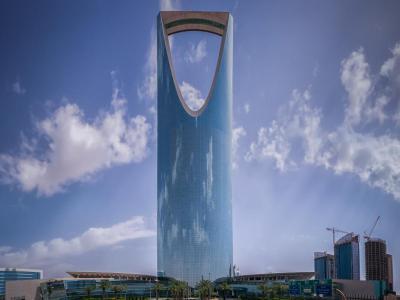
The Kingdom Centre, formerly known as Kingdom Tower, stands tall in Riyadh as a 99-story skyscraper, reaching a height of 302.3 meters (992 feet). Completed in 2002, it surpassed the Faisaliyah Tower, measuring 267 meters (876 feet), to become the tallest tower in Saudi Arabia at the time. Notably, the Kingdom Centre is the world's third-tallest building with a hole, following the Shanghai World Financial Center and Taiwan's 85 Sky Tower.
Prince Al-Waleed bin Talal led the creation of this impressive architectural marvel. The design, brought to life by Ellerbe Becket and Omrania, was chosen through an international competition. The Kingdom Centre, sprawling over 100,000 square meters, includes a range of features like the 57,000-square-meter Al-Mamlaka shopping mall, offices, the luxurious Four Seasons Hotel Riyadh, and high-end apartments. At the top of the skyscraper sits a remarkable 65-meter sky bridge.
The upper portion of the tower showcases an inverted parabolic arch, culminating in a public sky bridge. Comprising a 300-ton steel structure, the sky bridge takes the form of an enclosed corridor adorned with windows on both sides. Visitors can access this level after paying the admission fees, using two elevators to reach the sky bridge.
The podium's East wing is home to the Al-Mamlaka shopping mall, which spans three levels and houses over 150 stores. These stores are divided to cater specifically to different demographics, with the first level targeting young people, the second focusing on fashion and furnishings, and the third level exclusively reserved for women. On the other hand, the West wing of the podium hosts event and entertainment spaces.
The construction of the Kingdom Center rests upon a robust four-meter-thick, 3,100-square-meter raft foundation. Its structural composition entails two systems: reinforced concrete columns, beams, and a core for the initial 180 meters, while a tubular steel frame structure supports the remainder of the building's height.
Prince Al-Waleed bin Talal led the creation of this impressive architectural marvel. The design, brought to life by Ellerbe Becket and Omrania, was chosen through an international competition. The Kingdom Centre, sprawling over 100,000 square meters, includes a range of features like the 57,000-square-meter Al-Mamlaka shopping mall, offices, the luxurious Four Seasons Hotel Riyadh, and high-end apartments. At the top of the skyscraper sits a remarkable 65-meter sky bridge.
The upper portion of the tower showcases an inverted parabolic arch, culminating in a public sky bridge. Comprising a 300-ton steel structure, the sky bridge takes the form of an enclosed corridor adorned with windows on both sides. Visitors can access this level after paying the admission fees, using two elevators to reach the sky bridge.
The podium's East wing is home to the Al-Mamlaka shopping mall, which spans three levels and houses over 150 stores. These stores are divided to cater specifically to different demographics, with the first level targeting young people, the second focusing on fashion and furnishings, and the third level exclusively reserved for women. On the other hand, the West wing of the podium hosts event and entertainment spaces.
The construction of the Kingdom Center rests upon a robust four-meter-thick, 3,100-square-meter raft foundation. Its structural composition entails two systems: reinforced concrete columns, beams, and a core for the initial 180 meters, while a tubular steel frame structure supports the remainder of the building's height.
8) Al Faisaliyah Center (must see)
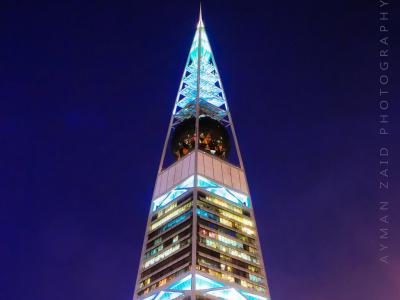
The Al Faisaliyah Tower is a mixed-use complex and commercial skyscraper situated in the al-Olaya district of Riyadh. This towering structure, reaching a height of 267 meters, serves as the centerpiece of the Foster + Partners development. Notably, it holds the distinction of being the first skyscraper ever constructed in Saudi Arabia.
The tower's lobby features a remarkable stained glass wall, designed by the artist Brian Clarke in collaboration with Norman Foster. Presently, it stands as the seventh tallest building in Saudi Arabia, following the Kingdom Centre, Burj Rafal, and Abraj Al Bait. Its global ranking places it at the 325th position among the tallest buildings in the world.
Prince Abdullah Al-Faisal commissioned the complex, and construction commenced in 1997. The expansive complex comprises the central office tower, a luxurious five-star hotel, a three-story retail mall, as well as a banquet and conference hall. The office tower spans 30 floors, and at a height of 200 meters above the ground, an observation deck offers a panoramic view of Riyadh.
Completed in May 2000, the 240,000-square-meter Centre opened to the public, including the skyscraper. Referred to as the Star Dome, the skyscraper boasts a renowned restaurant called "The Globe." Situated within the sphere above the observation deck, it provides diners with a 360-degree view of the city.
The tower's lobby features a remarkable stained glass wall, designed by the artist Brian Clarke in collaboration with Norman Foster. Presently, it stands as the seventh tallest building in Saudi Arabia, following the Kingdom Centre, Burj Rafal, and Abraj Al Bait. Its global ranking places it at the 325th position among the tallest buildings in the world.
Prince Abdullah Al-Faisal commissioned the complex, and construction commenced in 1997. The expansive complex comprises the central office tower, a luxurious five-star hotel, a three-story retail mall, as well as a banquet and conference hall. The office tower spans 30 floors, and at a height of 200 meters above the ground, an observation deck offers a panoramic view of Riyadh.
Completed in May 2000, the 240,000-square-meter Centre opened to the public, including the skyscraper. Referred to as the Star Dome, the skyscraper boasts a renowned restaurant called "The Globe." Situated within the sphere above the observation deck, it provides diners with a 360-degree view of the city.
9) Almaigliah Souq
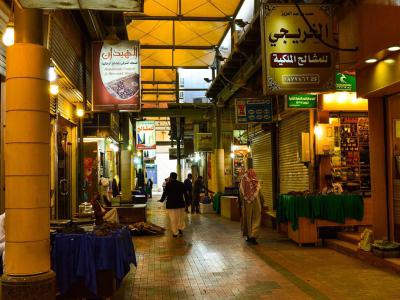
Almaigliah Souq, also known as Souq Al Zal and Al Zal Market, is one of the oldest and most traditional markets in Riyadh. Located in the heart of the city, this bustling market is renowned for its wide variety of goods and its representation of authentic Arabian culture.
As you walk through the narrow alleyways of Almaigliah Souq, you are transported back in time. The souq retains a distinctly traditional ambiance, with vendors selling a vast array of items ranging from antique artifacts, traditional garments, and jewelry to aromatic spices, perfumes, and local handicrafts.
A standout feature of the market is the array of traditional Saudi Arabian items, particularly the Najdi daggers (Janbiya), which are ornamental daggers historically worn by men in Saudi Arabia. Additionally, the souq is well known for its offerings of traditional Arabian carpets, silverware, and local artisan crafts.
Visiting Almaigliah Souq is more than a shopping experience; it's an opportunity to immerse yourself in Saudi culture and traditions. The souq is a vibrant, bustling hub where locals and tourists alike can observe the traditional way of life, haggle over goods, and savor the rich flavors and fragrances that permeate the market.
As you walk through the narrow alleyways of Almaigliah Souq, you are transported back in time. The souq retains a distinctly traditional ambiance, with vendors selling a vast array of items ranging from antique artifacts, traditional garments, and jewelry to aromatic spices, perfumes, and local handicrafts.
A standout feature of the market is the array of traditional Saudi Arabian items, particularly the Najdi daggers (Janbiya), which are ornamental daggers historically worn by men in Saudi Arabia. Additionally, the souq is well known for its offerings of traditional Arabian carpets, silverware, and local artisan crafts.
Visiting Almaigliah Souq is more than a shopping experience; it's an opportunity to immerse yourself in Saudi culture and traditions. The souq is a vibrant, bustling hub where locals and tourists alike can observe the traditional way of life, haggle over goods, and savor the rich flavors and fragrances that permeate the market.
10) Imam Turki bin Abdullah Mosque
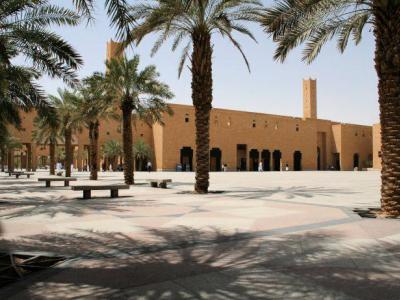
Imam Turki bin Abdullah Mosque is a prominent and historic religious site in Riyadh. Named after Turki bin Abdullah bin Muhammad, the founder of the Second Saudi State, this grand mosque holds a significant place in the heart of Riyadh's cultural and religious life.
The mosque is renowned for its stunning Islamic architecture, featuring a blend of traditional and modern design elements. Its most recognizable features include tall, elegant minarets, a large central dome, and a spacious interior that can accommodate thousands of worshippers. The mosque is known for its intricately designed prayer hall, with beautiful carpeting, ornate chandeliers, and walls adorned with verses from the Quran.
Situated in the old quarter of Riyadh, near the bustling Deira Souk, the mosque stands as a serene sanctuary amidst the bustling city life. Its strategic location and impressive size make it a focal point in the cityscape and a popular gathering place for the faithful, especially during the holy month of Ramadan and Friday prayers.
Beyond its role as a center of worship, the Imam Turki bin Abdullah Mosque also serves as a hub for Islamic learning and community events. It hosts a variety of religious, educational, and social activities, contributing to the cultural richness of Riyadh.
The mosque is renowned for its stunning Islamic architecture, featuring a blend of traditional and modern design elements. Its most recognizable features include tall, elegant minarets, a large central dome, and a spacious interior that can accommodate thousands of worshippers. The mosque is known for its intricately designed prayer hall, with beautiful carpeting, ornate chandeliers, and walls adorned with verses from the Quran.
Situated in the old quarter of Riyadh, near the bustling Deira Souk, the mosque stands as a serene sanctuary amidst the bustling city life. Its strategic location and impressive size make it a focal point in the cityscape and a popular gathering place for the faithful, especially during the holy month of Ramadan and Friday prayers.
Beyond its role as a center of worship, the Imam Turki bin Abdullah Mosque also serves as a hub for Islamic learning and community events. It hosts a variety of religious, educational, and social activities, contributing to the cultural richness of Riyadh.
11) Masmak Fort (must see)
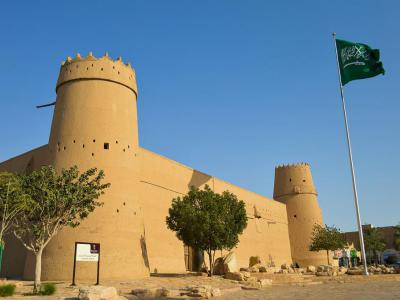
The Masmak Fort is a significant historical landmark located in the heart of Riyadh. Built around 1865, the fort holds a central place in Saudi Arabia's history, symbolizing the birth of the Kingdom and serving as a constant reminder of the country's roots and its transformation.
The Masmak Fort is notable for its role in the recapture of Riyadh by Abdulaziz Ibn Saud, the founder of modern Saudi Arabia, in 1902. This event marked the beginning of the reunification campaign that eventually led to the establishment of the Kingdom of Saudi Arabia in 1932.
Constructed primarily from clay and mud-brick, the fortress exhibits traditional Arabian architecture, with thick walls, four watchtowers, and a large gate made of palm tree wood. Inside, the fortress is a maze of rooms and corridors, with exhibits showcasing photographs, maps, old weapons, agricultural artifacts, and other historical items that depict life in the region during the time of its construction.
Today, the Masmak Fort serves as a museum that offers an immersive journey through Saudi Arabia's history. The museum uses multimedia presentations, dioramas, display cabinets, and interactive exhibits to bring the country's past to life, from the daring capture of the fort to the unification of the Kingdom.
The Masmak Fort is notable for its role in the recapture of Riyadh by Abdulaziz Ibn Saud, the founder of modern Saudi Arabia, in 1902. This event marked the beginning of the reunification campaign that eventually led to the establishment of the Kingdom of Saudi Arabia in 1932.
Constructed primarily from clay and mud-brick, the fortress exhibits traditional Arabian architecture, with thick walls, four watchtowers, and a large gate made of palm tree wood. Inside, the fortress is a maze of rooms and corridors, with exhibits showcasing photographs, maps, old weapons, agricultural artifacts, and other historical items that depict life in the region during the time of its construction.
Today, the Masmak Fort serves as a museum that offers an immersive journey through Saudi Arabia's history. The museum uses multimedia presentations, dioramas, display cabinets, and interactive exhibits to bring the country's past to life, from the daring capture of the fort to the unification of the Kingdom.
12) Deera Square
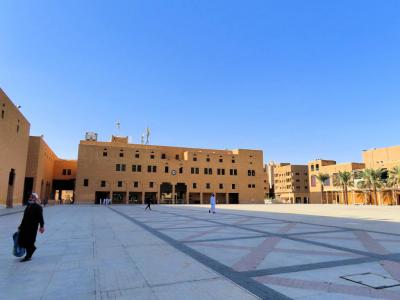
The Deera Square, also known as Justice Square, or more somberly, “Chop‑Chop Square”, is located in the historic ad‑Dirah neighborhood, adjacent to key landmarks such as Al‑Hukm Palace and the imposing Imam Turki bin Abdullah Grand Mosque. Deera Square carries a heavy history as the former site of public executions, specifically beheadings that were held at unannounced times in view of the public-events that earned it the nickname “Chop‑Chop Square” among Western residents and visitors.
In recent years, public executions have ceased at the site: Saudi Arabia has shifted to carrying out such sentences privately, and there have been no recorded public beheadings since 2022. Today, the square serves a new role as a gathering place, where locals and visitors move between markets, shops, and eateries.
The square is often lively, particularly in late afternoons and early evenings when nearby shops, cafés begin to buzz with activity and shoppers. Visitors can admire the architectural elegance of the sandstone and marble Imam Turki bin Abdullah Mosque, which holds up to 17,000 worshippers and is illuminated beautifully at night.
For tourists, Deera Square offers a space where Riyadh’s dramatic past meets its dynamic present. Modest dress and respectful conduct are advised, especially given the square's proximity to religious and judicial institutions.
In recent years, public executions have ceased at the site: Saudi Arabia has shifted to carrying out such sentences privately, and there have been no recorded public beheadings since 2022. Today, the square serves a new role as a gathering place, where locals and visitors move between markets, shops, and eateries.
The square is often lively, particularly in late afternoons and early evenings when nearby shops, cafés begin to buzz with activity and shoppers. Visitors can admire the architectural elegance of the sandstone and marble Imam Turki bin Abdullah Mosque, which holds up to 17,000 worshippers and is illuminated beautifully at night.
For tourists, Deera Square offers a space where Riyadh’s dramatic past meets its dynamic present. Modest dress and respectful conduct are advised, especially given the square's proximity to religious and judicial institutions.
13) Riyadh Water Tower
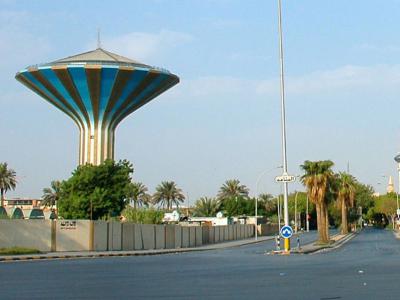
Built in 1971, the Riyadh Water Tower-known locally as “Reservoir Tower”-is a 61-meter-tall structure designed by Swedish architect Sune Lindström. It was modeled after the Svampen water tower in Örebro, Sweden. When it opened, it was the tallest structure in Saudi Arabia. Today, its inverted conical silhouette atop a cylindrical base remains one of the city's most interesting architectural statements.
The tower was a key part of Riyadh’s first modern water-supply system, capable of holding up to 12,000 cubic meters of water in its main tank, with an auxiliary emergency reservoir beneath. Its construction marked a turning point for the city during the rapid urban growth of the 1960s and 70s, offering much‑needed infrastructure in newly expanding neighborhoods.
Today, it sits within al-Watan Park, a leafy public space encircling the tower as part of the King Abdulaziz Historical Centre. Visitors can ascend to the top of the tower for panoramic views of Riyadh’s sweeping urban landscape. The circular observation deck-and a rooftop café-offer perfect sunset vistas and cityscapes.
The tower was a key part of Riyadh’s first modern water-supply system, capable of holding up to 12,000 cubic meters of water in its main tank, with an auxiliary emergency reservoir beneath. Its construction marked a turning point for the city during the rapid urban growth of the 1960s and 70s, offering much‑needed infrastructure in newly expanding neighborhoods.
Today, it sits within al-Watan Park, a leafy public space encircling the tower as part of the King Abdulaziz Historical Centre. Visitors can ascend to the top of the tower for panoramic views of Riyadh’s sweeping urban landscape. The circular observation deck-and a rooftop café-offer perfect sunset vistas and cityscapes.
