Custom Walk in Basel, Switzerland by miriam_cartmell_8e29e created on 2026-02-23
Guide Location: Switzerland » Basel
Guide Type: Custom Walk
# of Sights: 11
Tour Duration: 5 Hour(s)
Travel Distance: 12.5 Km or 7.8 Miles
Share Key: V4PQD
Guide Type: Custom Walk
# of Sights: 11
Tour Duration: 5 Hour(s)
Travel Distance: 12.5 Km or 7.8 Miles
Share Key: V4PQD
How It Works
Please retrieve this walk in the GPSmyCity app. Once done, the app will guide you from one tour stop to the next as if you had a personal tour guide. If you created the walk on this website or come to the page via a link, please follow the instructions below to retrieve the walk in the app.
Retrieve This Walk in App
Step 1. Download the app "GPSmyCity: Walks in 1K+ Cities" on Apple App Store or Google Play Store.



Step 2. In the GPSmyCity app, download(or launch) the guide "Basel Map and Walking Tours".
Step 3. Tap the menu button located at upper right corner of the "Walks" screen and select "Retrieve custom walk". Enter the share key: V4PQD
1) Basel Central Railway Station (must see)
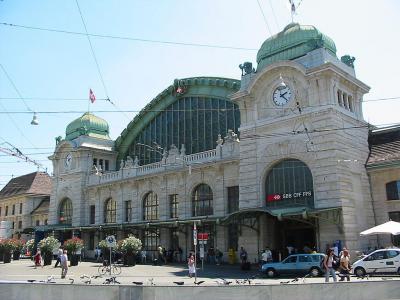
Basel SBB Railway Station is the main hub of train travel in Basel and one of Europe’s busiest international border stations. Originally opened in 1854 and fully reconstructed in the early 1900s, the neo-Baroque building was inaugurated on June 24, 1907, marking one of the Swiss Federal Railways (SBB CFF FFS) first major architectural projects. Designed by Emil Faesch and Emmanuel La Roche, its grand structure boasts clock towers, curved domes, and a large Tudor-arched window on the Central Train Square (Centralbahnplatz)-facing facade, setting the station as a heritage site of national significance.
The station connects Basel to Switzerland, Italy, Germany, and France through a complex network of SBB CFF FFS trains, Deutsche Bahn ICE trains, and SNCF TGVs. The western side of the building houses Basel SNCF, which includes customs facilities for French-bound travelers. As a city landmark, Basel SBB is well-integrated with the city’s tramway network and offers direct bus access to the EuroAirport.
Inside, the station showcases a spacious, high-ceilinged ticket hall with timber-lined steel arches and murals from the 1920s, depicting scenic Swiss destinations. Over the years, the station has adapted to modern travel needs: a Passerelle walkway, added in 2003, connects platforms with the Gundeldingen district and provides shopping options under the RailCity concept. This 185-meter-long corridor replaced an older underpass, now reserved for logistics.
Recent renovations included constructing a striking signal box by famed architects Herzog & de Meuron, reflecting Basel SBB’s blend of historical significance and contemporary design. The station's expansions-new tracks, customer service areas, and commercial spaces-continue to enhance its capacity, making it a vital transit and cultural landmark in Switzerland.
The station connects Basel to Switzerland, Italy, Germany, and France through a complex network of SBB CFF FFS trains, Deutsche Bahn ICE trains, and SNCF TGVs. The western side of the building houses Basel SNCF, which includes customs facilities for French-bound travelers. As a city landmark, Basel SBB is well-integrated with the city’s tramway network and offers direct bus access to the EuroAirport.
Inside, the station showcases a spacious, high-ceilinged ticket hall with timber-lined steel arches and murals from the 1920s, depicting scenic Swiss destinations. Over the years, the station has adapted to modern travel needs: a Passerelle walkway, added in 2003, connects platforms with the Gundeldingen district and provides shopping options under the RailCity concept. This 185-meter-long corridor replaced an older underpass, now reserved for logistics.
Recent renovations included constructing a striking signal box by famed architects Herzog & de Meuron, reflecting Basel SBB’s blend of historical significance and contemporary design. The station's expansions-new tracks, customer service areas, and commercial spaces-continue to enhance its capacity, making it a vital transit and cultural landmark in Switzerland.
2) Paper Mill Museum (must see)
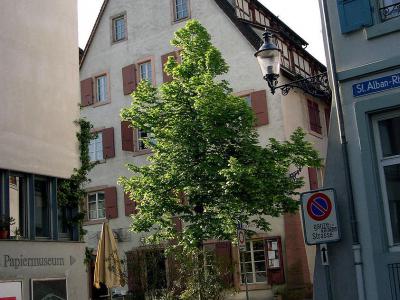
The Basel Paper Mill Museum, officially known as the Swiss Museum for Paper, Writing, and Printing, is a captivating destination located on the historic Saint Alban pond in Basel. Dedicated to the history and techniques of papermaking, book printing, and writing, the museum offers an immersive experience of these artisanal crafts, providing visitors with hands-on activities such as dipping paper, printing on presses, and exploring traditional calligraphy in the Scriptorium.
The museum is housed in the Gallizian Mill, a building that originated as a corn mill for Klingental Abbey in 1428. Converted into a paper mill by Anton Gallizian in 1453, the site remained a hub of production until 1521. Over the centuries, the mill saw ownership changes and structural expansions, including a significant addition by publisher Johann Christoph Imhof-Burckhardt in 1788. Later repurposed as a tobacco factory and warehouse, the building was faithfully restored for the museum's opening in 1980 by the Christoph Merian Foundation.
The museum spans 1,200 square meters across three connected mills: the Gallizian Mill houses workshops and event space; the Stegreif Mill serves as a café and ticket office; and the Rych Mill includes a shop, additional workshops, and displays such as a 1964 Fourdrinier paper machine. A highlight of the museum is the fully functional waterwheel, renovated in 2022 with a 300-year-old oak transmission.
The museum owes much to chemist Walter F. Tschudin, whose extensive research and collection of artifacts on Basel’s papermaking history laid the foundation for the museum. Established in 1971, the Basler Papiermühle Foundation, supported by figures like Eduard Hoffmann-Feer, ensured the preservation and promotion of this craft.
With approximately 40,000 annual visitors, the museum offers a vibrant mix of interactive exhibits and guided tours. Visitors can create handmade paper, try marbling techniques, or print with vintage presses, all while learning the finer points of bookbinding. The museum's commitment to inclusivity ensures participation for all, including those with disabilities.
The museum is housed in the Gallizian Mill, a building that originated as a corn mill for Klingental Abbey in 1428. Converted into a paper mill by Anton Gallizian in 1453, the site remained a hub of production until 1521. Over the centuries, the mill saw ownership changes and structural expansions, including a significant addition by publisher Johann Christoph Imhof-Burckhardt in 1788. Later repurposed as a tobacco factory and warehouse, the building was faithfully restored for the museum's opening in 1980 by the Christoph Merian Foundation.
The museum spans 1,200 square meters across three connected mills: the Gallizian Mill houses workshops and event space; the Stegreif Mill serves as a café and ticket office; and the Rych Mill includes a shop, additional workshops, and displays such as a 1964 Fourdrinier paper machine. A highlight of the museum is the fully functional waterwheel, renovated in 2022 with a 300-year-old oak transmission.
The museum owes much to chemist Walter F. Tschudin, whose extensive research and collection of artifacts on Basel’s papermaking history laid the foundation for the museum. Established in 1971, the Basler Papiermühle Foundation, supported by figures like Eduard Hoffmann-Feer, ensured the preservation and promotion of this craft.
With approximately 40,000 annual visitors, the museum offers a vibrant mix of interactive exhibits and guided tours. Visitors can create handmade paper, try marbling techniques, or print with vintage presses, all while learning the finer points of bookbinding. The museum's commitment to inclusivity ensures participation for all, including those with disabilities.
3) Basel Münster (Basel Minster) (must see)
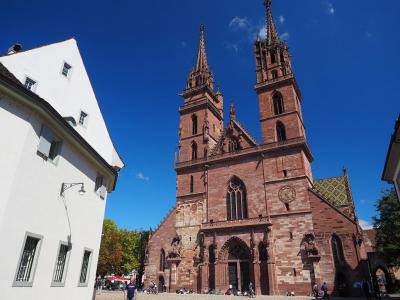
Basel Minster, one of Basel's most prominent landmarks, boasts striking red sandstone walls and vibrant roof tiles that have stood as a testament to the city's architectural heritage since the 11th century. This cathedral, completed and modified over nearly five centuries between 1019 and 1500, remains among the oldest structures in Basel, with roots that stretch back even further. Beneath the current cathedral, excavations have uncovered remnants from the Celtic period, including ancient walls, gates, and streets, revealing the hill’s long-standing significance.
The first cathedral in Basel was built in the ninth century by Bishop Haito, with a more substantial building consecrated in 1019 in the presence of Henry II, the Holy Roman Emperor, lending the church its nickname, the Heinrich Munster. This Romanesque structure, however, did not remain untouched by time or disaster. In the 13th century, the Minster underwent reconstruction, only to suffer extensive damage in the 1356 earthquake. Rebuilt in the Gothic style, the church was re-consecrated in 1363, marking a new chapter in its architectural evolution.
Two impressive towers define the Minster's skyline: the Georgsturm, built in 1429, and the Martinsturm, completed in 1500. These towers, named after the knightly saints George and Martin, feature notable medieval artwork, including a 1372 depiction of Saint George confronting a small dragon. Visitors who ascend the 242 steps of either tower are rewarded with sweeping views of Basel’s historic cityscape.
Basel Minster also played a unique role in history when, in 1440, it hosted the election of Felix V, recognized as an antipope, during a period of religious schism. Later, during the Reformation in the 1500s, Basel saw significant change, as the bishop was expelled, the monastery dissolved, and many religious artworks were destroyed. One such casualty was a statue of the Virgin Mary, which once adorned the central porch, now left empty. However, the scenes of prophets and kings on the main porch remain intact, as do statues of Emperor Henry II and Empress Kunigunde, preserving a glimpse of the Minster’s storied past.
Why You Should Visit:
The Basel Minster is an architecturally stunning cathedral with a long and storied history. The stained glass windows, arched ceiling, and organ are beautiful.
Tips:
Don't miss climbing one of the towers and enjoying dramatic views over Basel.
The first cathedral in Basel was built in the ninth century by Bishop Haito, with a more substantial building consecrated in 1019 in the presence of Henry II, the Holy Roman Emperor, lending the church its nickname, the Heinrich Munster. This Romanesque structure, however, did not remain untouched by time or disaster. In the 13th century, the Minster underwent reconstruction, only to suffer extensive damage in the 1356 earthquake. Rebuilt in the Gothic style, the church was re-consecrated in 1363, marking a new chapter in its architectural evolution.
Two impressive towers define the Minster's skyline: the Georgsturm, built in 1429, and the Martinsturm, completed in 1500. These towers, named after the knightly saints George and Martin, feature notable medieval artwork, including a 1372 depiction of Saint George confronting a small dragon. Visitors who ascend the 242 steps of either tower are rewarded with sweeping views of Basel’s historic cityscape.
Basel Minster also played a unique role in history when, in 1440, it hosted the election of Felix V, recognized as an antipope, during a period of religious schism. Later, during the Reformation in the 1500s, Basel saw significant change, as the bishop was expelled, the monastery dissolved, and many religious artworks were destroyed. One such casualty was a statue of the Virgin Mary, which once adorned the central porch, now left empty. However, the scenes of prophets and kings on the main porch remain intact, as do statues of Emperor Henry II and Empress Kunigunde, preserving a glimpse of the Minster’s storied past.
Why You Should Visit:
The Basel Minster is an architecturally stunning cathedral with a long and storied history. The stained glass windows, arched ceiling, and organ are beautiful.
Tips:
Don't miss climbing one of the towers and enjoying dramatic views over Basel.
4) Rathaus (Town Hall) (must see)
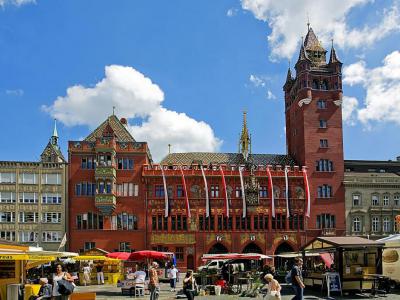
Town Hall is home to the Basel government and parliament. This dramatic red brick building with its imposing tower is one of Basel's most attractive landmarks.
The current Town Hall was built between 1504 and 1513 to celebrate Basel's joining the Swiss Confederation. It replaced an older, less grand structure. While the building has undergone many renovations over the centuries, the three iconic arched entrances are from the initial construction.
Artist Hans Holbein decorated the Town Hall's Assembly Hall in 1521. Hans Holbein would later rise to fame as King Henry VIII's court painter.
The Gothic-style Front Chambers were added in the 1600s. The tower was added in the 1800s. At the time, its imposing height was controversial, and a public vote was called before construction was approved.
The exterior facade features depictions of historical and legendary figures. On the balcony, an inscription reminds visitors Here begins Swiss land. The crenellations are decorated with Basel's coats of arms.
The interior is richly decorated. The courtyard features a Roman statue representing Julius Caesar's contemporary Lucius Munatuis Plancus. Plancus founded Augusta Raurica, the nearby Roman city.
Many paintings depict a law and order theme. For example, the Roman goddess of Justice, Justitia, is depicted in a scene over the Front Chambers.
The Cantonal Parliament debates twice a month in the assembly hall. The Cantonal Government meets in Town Hall every Tuesday. The Chancellery and the Department of Presidental Affairs are also located in the Town Hall.
Guided tours in English are available every Saturday at 4:30 p.m.
The current Town Hall was built between 1504 and 1513 to celebrate Basel's joining the Swiss Confederation. It replaced an older, less grand structure. While the building has undergone many renovations over the centuries, the three iconic arched entrances are from the initial construction.
Artist Hans Holbein decorated the Town Hall's Assembly Hall in 1521. Hans Holbein would later rise to fame as King Henry VIII's court painter.
The Gothic-style Front Chambers were added in the 1600s. The tower was added in the 1800s. At the time, its imposing height was controversial, and a public vote was called before construction was approved.
The exterior facade features depictions of historical and legendary figures. On the balcony, an inscription reminds visitors Here begins Swiss land. The crenellations are decorated with Basel's coats of arms.
The interior is richly decorated. The courtyard features a Roman statue representing Julius Caesar's contemporary Lucius Munatuis Plancus. Plancus founded Augusta Raurica, the nearby Roman city.
Many paintings depict a law and order theme. For example, the Roman goddess of Justice, Justitia, is depicted in a scene over the Front Chambers.
The Cantonal Parliament debates twice a month in the assembly hall. The Cantonal Government meets in Town Hall every Tuesday. The Chancellery and the Department of Presidental Affairs are also located in the Town Hall.
Guided tours in English are available every Saturday at 4:30 p.m.
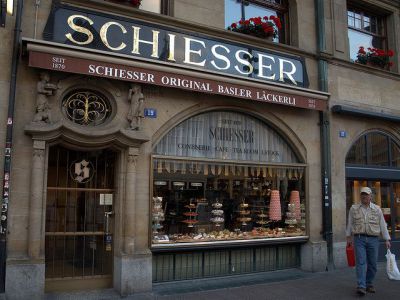
5) Confiserie Schiesser
Step into history at Confiserie Schiesser, Basel’s crown jewel of confectionery and the oldest coffee house in Switzerland. Established in 1870 by Rudolf Schiesser, a visionary and co-founder of the Conditoren Association, this storied institution has been crafting chocolates, cakes, and pastries for over 150 years. Today, the Schiesser family’s 5th generation continues the legacy, blending traditional craftsmanship with a warm, welcoming touch.
Located on the bustling Marktplatz, Confiserie Schiesser offers more than just sweets. Its tea room on the first floor provides a perfect perch to observe the lively market square below, where politicians, citizens, and shoppers mingle amidst colorful stalls. Imagine savoring a cup of their homemade hot chocolate and a buttery croissant while soaking in the vibrant scene or indulging in leisurely conversation with friends.
Inside, the café’s elegant interiors transport visitors to a bygone era, combining historical charm with modern hospitality. Maître Confiseur Stephan Schiesser works his magic in the bakery, crafting exquisite cakes, while Rosalba Schiesser oversees the tea room, terrace, and shop, ensuring every guest feels at home.
Confiserie Schiesser is also a proud member of Switzerland’s cultural heritage, recognized for its dedication to traditional craftsmanship. Whether you’re drawn to the fine chocolates, artisan pastries, or simply the ambiance of Basel’s oldest café, this is a place to pause, savor, and celebrate.
Located on the bustling Marktplatz, Confiserie Schiesser offers more than just sweets. Its tea room on the first floor provides a perfect perch to observe the lively market square below, where politicians, citizens, and shoppers mingle amidst colorful stalls. Imagine savoring a cup of their homemade hot chocolate and a buttery croissant while soaking in the vibrant scene or indulging in leisurely conversation with friends.
Inside, the café’s elegant interiors transport visitors to a bygone era, combining historical charm with modern hospitality. Maître Confiseur Stephan Schiesser works his magic in the bakery, crafting exquisite cakes, while Rosalba Schiesser oversees the tea room, terrace, and shop, ensuring every guest feels at home.
Confiserie Schiesser is also a proud member of Switzerland’s cultural heritage, recognized for its dedication to traditional craftsmanship. Whether you’re drawn to the fine chocolates, artisan pastries, or simply the ambiance of Basel’s oldest café, this is a place to pause, savor, and celebrate.
6) Marktplatz (Market Square)
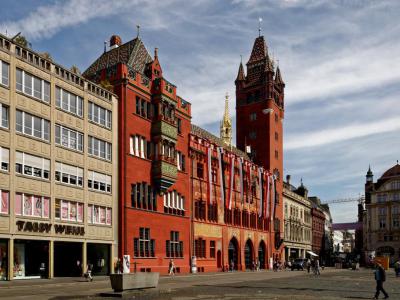
The vibrant red town hall dominates Market Square. Market Square hosts a daily market that features local produce and regional and Swiss specialties. In addition, visitors can stock up on flowers, coffee, honey, crafts, and wine.
The square dates back to at least the year 1091. Back then, the square was bisected by Birsig Creek. There was a grain market where the citizens met and handled business. In 1290, the first town hall was built and that became the center of the town's political life.
In addition to the town hall, the square was home to the court. In front of the courthouse was a flat stone used for executions and public announcements. The accused often were brought here to face the ridicule of the population.
In the early days, the square was surrounded by wooden shops and houses with fold-down shutters. Through the open windows, owners would sell their goods that included meats, sausages, tripe, herring, birds, and gingerbread.
The houses were destroyed in 1891 to expand Market Square. Over the years, large commercial buildings have taken over. The square was further modified in 1908 when it was leveled out. Today, it is one of the most important tram junctions in the city, with seven lines passing through this one spot.
Market Square is delightful over the Christmas holidays. Visitors can do holiday shopping while enjoying hot chocolate and festive holiday lights. But any time of year is a great time to visit, thanks to the many charming cafes, restaurants, shops, and boutiques.
The square dates back to at least the year 1091. Back then, the square was bisected by Birsig Creek. There was a grain market where the citizens met and handled business. In 1290, the first town hall was built and that became the center of the town's political life.
In addition to the town hall, the square was home to the court. In front of the courthouse was a flat stone used for executions and public announcements. The accused often were brought here to face the ridicule of the population.
In the early days, the square was surrounded by wooden shops and houses with fold-down shutters. Through the open windows, owners would sell their goods that included meats, sausages, tripe, herring, birds, and gingerbread.
The houses were destroyed in 1891 to expand Market Square. Over the years, large commercial buildings have taken over. The square was further modified in 1908 when it was leveled out. Today, it is one of the most important tram junctions in the city, with seven lines passing through this one spot.
Market Square is delightful over the Christmas holidays. Visitors can do holiday shopping while enjoying hot chocolate and festive holiday lights. But any time of year is a great time to visit, thanks to the many charming cafes, restaurants, shops, and boutiques.
7) Basel Market
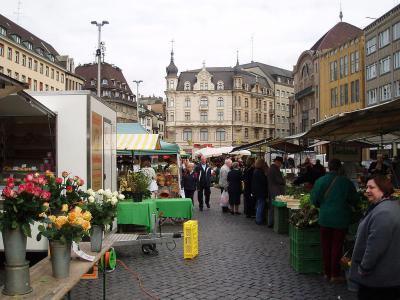
Nestled in the heart of Basel, the Basel Market is the city's largest and most traditional fresh produce market. Situated right in front of the historic City Hall (Rathaus), it serves as a bustling hub for locals and tourists alike, offering a vibrant array of fresh fruits, vegetables, flowers, sausages, cheeses, and even sweet treats. Almost 90% of the fruits and vegetables sold here are sourced from the surrounding Basel region, ensuring that goods are not only fresh and seasonal but also sustainably transported over short distances.
For those passionate about healthy and organic living, Basel Market champions these values by promoting organic produce. The market also offers a selection of unique regional delicacies and gourmet items, accompanied by personal advice from friendly marketeers. Shoppers can relax with a cup of coffee or enjoy a delicious meal in cozy seating areas, making it more than just a place to shop-it's an experience.
During the festive season, the Basel Market transforms into the enchanting Basel Christmas Market, a magical winter attraction renowned as one of Switzerland's most beautiful. Rustic wooden chalets, adorned with delightful decorations, line the streets, creating an idyllic scene that perfectly complements the charm of Advent in Basel.
The Christmas market offers an irresistible array of seasonal delights: raclette, Swiss fondue, grilled sausages, mulled wine, and gingerbread, all embodying the flavors of Swiss holiday traditions. Shoppers will find a variety of Christmas-themed gifts, decorations, and unique items, making it an ideal spot to pick up holiday treasures.
Basel Market, with its lively atmosphere and commitment to quality, stands as a testament to the city's rich traditions and dedication to regional craftsmanship-whether you're visiting in the vibrant summer months or during the magical Christmas season.
For those passionate about healthy and organic living, Basel Market champions these values by promoting organic produce. The market also offers a selection of unique regional delicacies and gourmet items, accompanied by personal advice from friendly marketeers. Shoppers can relax with a cup of coffee or enjoy a delicious meal in cozy seating areas, making it more than just a place to shop-it's an experience.
During the festive season, the Basel Market transforms into the enchanting Basel Christmas Market, a magical winter attraction renowned as one of Switzerland's most beautiful. Rustic wooden chalets, adorned with delightful decorations, line the streets, creating an idyllic scene that perfectly complements the charm of Advent in Basel.
The Christmas market offers an irresistible array of seasonal delights: raclette, Swiss fondue, grilled sausages, mulled wine, and gingerbread, all embodying the flavors of Swiss holiday traditions. Shoppers will find a variety of Christmas-themed gifts, decorations, and unique items, making it an ideal spot to pick up holiday treasures.
Basel Market, with its lively atmosphere and commitment to quality, stands as a testament to the city's rich traditions and dedication to regional craftsmanship-whether you're visiting in the vibrant summer months or during the magical Christmas season.
8) Middle Bridge
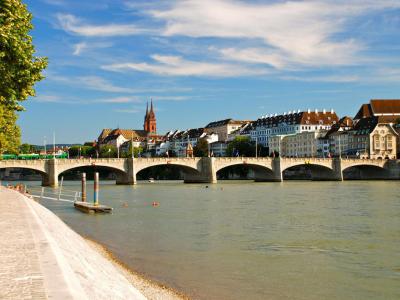
The Middle Bridge was originally built sometime in the 13th century. This bridge played an essential part in Basel's success as it allowed easy access for merchants and locals. Originally, money lenders charged those crossing with mules, horses, and goods a toll of 30 silver marks until the construction was paid off.
The Middle Bridge was rebuilt from stone between 1903 and 1905. The rebuilt bridge is 192 meters (630 feet) long and has seven arches. Six arches stretch over the Rhine River, and one covers the riverside footpath.
Today, private motor vehicles are prohibited in order to keep the city center car-free.
Visitors will find several sculptures on the bridge. Carl Burckhardt's last sculpture, The Amazon, is located on the bridgehead. The bronze sculpture shows an Amazon leading a horse. Burckhardt completed the plaster model but died before the sculpture was cast. Burckhardt's workshop completed the sculpture after his death.
Bettina Eichin's sculpture Hevetia auf der Reise sits on the bridgehead wall. The sculpture depicts a woman looking across the Rhine with her suitcase beside her.
The artist Ludwig Stocker donated the Lagerstätte sculpture to celebrate Basel's 600 year unification celebration in 1992. The sculpture represents the emblems of the three local guilds. This sculpture is partially submerged in the Rhine and is sometimes completely covered by water.
The Middle Bridge was rebuilt from stone between 1903 and 1905. The rebuilt bridge is 192 meters (630 feet) long and has seven arches. Six arches stretch over the Rhine River, and one covers the riverside footpath.
Today, private motor vehicles are prohibited in order to keep the city center car-free.
Visitors will find several sculptures on the bridge. Carl Burckhardt's last sculpture, The Amazon, is located on the bridgehead. The bronze sculpture shows an Amazon leading a horse. Burckhardt completed the plaster model but died before the sculpture was cast. Burckhardt's workshop completed the sculpture after his death.
Bettina Eichin's sculpture Hevetia auf der Reise sits on the bridgehead wall. The sculpture depicts a woman looking across the Rhine with her suitcase beside her.
The artist Ludwig Stocker donated the Lagerstätte sculpture to celebrate Basel's 600 year unification celebration in 1992. The sculpture represents the emblems of the three local guilds. This sculpture is partially submerged in the Rhine and is sometimes completely covered by water.
9) Dreilandereck (Border Triangle)
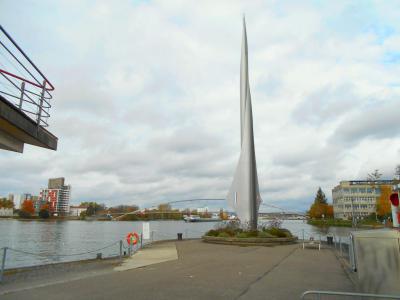
The Border Triangle (Dreiländereck) in Basel is a unique monument marking the convergence of the French, German, and Swiss borders. Located in Swiss territory about 150 meters southeast of the actual tripoint, which lies midstream in the Rhine, the monument highlights the seamless blend of three cultures, languages, and histories. The Border Triangle monument, resembling a futuristic rocket with flags of each country adorning its wings, symbolizes the openness and unity shared by these bordering nations, free from passport or visa requirements.
This area isn't just a symbolic landmark; it also serves as a hub for transport, facilitating the delivery of raw materials into Switzerland. Nearby, the striking building that complements the monument was crafted through a collaborative competition in 1990, with architects from each country contributing to its unique design. Inside, visitors can enjoy a bar, event space, and terrace overlooking the Rhine, where boats set out toward the North Sea. In summer, the ground floor transforms into a "sand oasis" with a beach vibe, complete with sand, palm trees, and a cocktail bar.
To explore the area fully, visitors can take a harbor tour with Basel Passenger shipping (Personenschifffahrt) or hop onto a "Rhytaxi" water taxi to experience Basel and its surroundings from the river. For those who can’t reach the exact tripoint, the monument and the vibrant scene around it offer an ideal way to experience the spirit of three interconnected countries.
This area isn't just a symbolic landmark; it also serves as a hub for transport, facilitating the delivery of raw materials into Switzerland. Nearby, the striking building that complements the monument was crafted through a collaborative competition in 1990, with architects from each country contributing to its unique design. Inside, visitors can enjoy a bar, event space, and terrace overlooking the Rhine, where boats set out toward the North Sea. In summer, the ground floor transforms into a "sand oasis" with a beach vibe, complete with sand, palm trees, and a cocktail bar.
To explore the area fully, visitors can take a harbor tour with Basel Passenger shipping (Personenschifffahrt) or hop onto a "Rhytaxi" water taxi to experience Basel and its surroundings from the river. For those who can’t reach the exact tripoint, the monument and the vibrant scene around it offer an ideal way to experience the spirit of three interconnected countries.
10) Spalentor (Gate of Spalen)
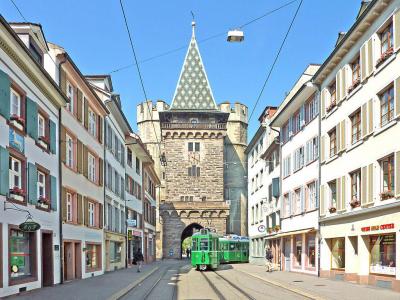
The Gate of Spalen (Spalentor), often regarded as one of the most beautiful gates in Switzerland, is a prominent remnant of Basel's medieval fortifications. Built in 1356, this imposing structure originally served as a protective barrier, part of a defensive ring wall constructed after Basel's expansion. The gate is one of three surviving entries from the city's once-extensive fortifications, which included over 40 towers and six gates.
Spalentor’s architecture features a square central tower flanked by two cylindrical round towers. Its impressive outward-facing façade, visible from afar, is adorned with 15th-century figures: a Madonna and two prophets. This decorative detail highlights its dual role as both a defensive structure and a symbol of the city’s importance.
The gate played a vital role in Basel’s history, serving as a key entry point for supplies and provisions arriving from Alsace. From this vantage point, visitors today can enjoy panoramic views of Basel's old town rooftops, the Jura Hills, the Black Forest, and the Vosges Mountains.
While the original city walls were largely demolished in the 19th century, Spalentor stands as a well-preserved testament to Basel’s medieval past, celebrated as one of Switzerland’s most magnificent city gates.
Spalentor’s architecture features a square central tower flanked by two cylindrical round towers. Its impressive outward-facing façade, visible from afar, is adorned with 15th-century figures: a Madonna and two prophets. This decorative detail highlights its dual role as both a defensive structure and a symbol of the city’s importance.
The gate played a vital role in Basel’s history, serving as a key entry point for supplies and provisions arriving from Alsace. From this vantage point, visitors today can enjoy panoramic views of Basel's old town rooftops, the Jura Hills, the Black Forest, and the Vosges Mountains.
While the original city walls were largely demolished in the 19th century, Spalentor stands as a well-preserved testament to Basel’s medieval past, celebrated as one of Switzerland’s most magnificent city gates.
11) Tinguely Brunnen Fountain (must see)
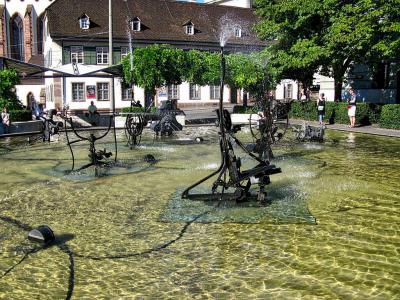
Swiss artist Jean Tinguely created this magnificent fountain in 1977. The fountain stands where the city theatre company's stage once stood.
Tinguely created mechanical iron figures. The figures were crafted with scraps of metal and plastic from the dismantled theater.
Tinguely placed the figures in a shallow basin and added the water feature. The ten figures are powered by a low-voltage current and seem to be constantly talking and interacting with each other. The water jets splash back and forth between the figures. This motion and interaction represents the actors, dancers, and mime artists who performed on the theater's stage.
The fountain is lit at night and offers a different perspective on this fascinating fountain. In the winter, the water freezes in motion for yet another artistic display.
The Tinguely Brunnen Fountain is one of Tinguely's most well-known works. Tingley referred to the fountain as Composition of the Six Elements.
Tinguely created mechanical iron figures. The figures were crafted with scraps of metal and plastic from the dismantled theater.
Tinguely placed the figures in a shallow basin and added the water feature. The ten figures are powered by a low-voltage current and seem to be constantly talking and interacting with each other. The water jets splash back and forth between the figures. This motion and interaction represents the actors, dancers, and mime artists who performed on the theater's stage.
The fountain is lit at night and offers a different perspective on this fascinating fountain. In the winter, the water freezes in motion for yet another artistic display.
The Tinguely Brunnen Fountain is one of Tinguely's most well-known works. Tingley referred to the fountain as Composition of the Six Elements.
