Custom Walk in Frankfurt, Germany by feidelman2012_63c958 created on 2026-02-26
Guide Location: Germany » Frankfurt
Guide Type: Custom Walk
# of Sights: 7
Tour Duration: 2 Hour(s)
Travel Distance: 5.2 Km or 3.2 Miles
Share Key: 4VUCR
Guide Type: Custom Walk
# of Sights: 7
Tour Duration: 2 Hour(s)
Travel Distance: 5.2 Km or 3.2 Miles
Share Key: 4VUCR
How It Works
Please retrieve this walk in the GPSmyCity app. Once done, the app will guide you from one tour stop to the next as if you had a personal tour guide. If you created the walk on this website or come to the page via a link, please follow the instructions below to retrieve the walk in the app.
Retrieve This Walk in App
Step 1. Download the app "GPSmyCity: Walks in 1K+ Cities" on Apple App Store or Google Play Store.



Step 2. In the GPSmyCity app, download(or launch) the guide "Frankfurt Map and Walking Tours".
Step 3. Tap the menu button located at upper right corner of the "Walks" screen and select "Retrieve custom walk". Enter the share key: 4VUCR
1) Frankfurt (Main) Hauptbahnhof (must see)
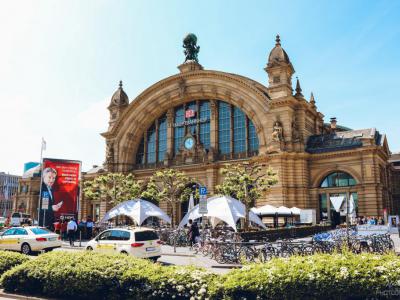
Frankfurt (Main) Hauptbahnhof, commonly known as Frankfurt Central Station or Frankfurt Main Station, stands as Germany's busiest and most significant railway hub.
This pivotal transportation hub came into existence on August 18, 1888, with a mere five-year construction period. Over the subsequent years, the surrounding district to the east of the station's entrance building developed and reached full maturity by around 1900. Frankfurt Hauptbahnhof retained its status as Europe's largest railway station until Leipzig Hauptbahnhof was constructed in 1915.
The above-ground portion of Frankfurt Central Station comprises two main sections: the entrance building and the train shed. The entrance building faces eastward, welcoming travelers into the terminal station and connecting to the Bahnhofsviertel (station district). The original building's facade, situated in front of the three central train sheds, boasts a Renaissance Revival design. Meanwhile, the extensions made to the entrance building in 1924, located in front of the two outer halls, adopt a neoclassical architectural style.
The width of the building spans an impressive 270 meters. At the heart of the entrance building lies the primary reception hall, featuring three doorways separated by two grand pillars at its street-side entrance. Above the center of this hall, a meticulously adorned clock showcases allegorical representations of day and night, alongside the Deutsche Bahn logo bearing the word "Hauptbahnhof." This three-part division continues in the roof area, where expansive glass surfaces permit the ingress of natural daylight.
A pair of towers graces each side of the facade, and crowning the roof is a 6.3-meter-high bronze sculpture group created by the Braunschweig sculptor Gustav Herold. This artwork portrays Atlas, who carries the globe on his shoulders, flanked by symbolic figures representing steam and electricity. Additionally, figures symbolizing trade, agriculture, the iron industry, and shipping contribute to the station's decorative and historical significance.
This pivotal transportation hub came into existence on August 18, 1888, with a mere five-year construction period. Over the subsequent years, the surrounding district to the east of the station's entrance building developed and reached full maturity by around 1900. Frankfurt Hauptbahnhof retained its status as Europe's largest railway station until Leipzig Hauptbahnhof was constructed in 1915.
The above-ground portion of Frankfurt Central Station comprises two main sections: the entrance building and the train shed. The entrance building faces eastward, welcoming travelers into the terminal station and connecting to the Bahnhofsviertel (station district). The original building's facade, situated in front of the three central train sheds, boasts a Renaissance Revival design. Meanwhile, the extensions made to the entrance building in 1924, located in front of the two outer halls, adopt a neoclassical architectural style.
The width of the building spans an impressive 270 meters. At the heart of the entrance building lies the primary reception hall, featuring three doorways separated by two grand pillars at its street-side entrance. Above the center of this hall, a meticulously adorned clock showcases allegorical representations of day and night, alongside the Deutsche Bahn logo bearing the word "Hauptbahnhof." This three-part division continues in the roof area, where expansive glass surfaces permit the ingress of natural daylight.
A pair of towers graces each side of the facade, and crowning the roof is a 6.3-meter-high bronze sculpture group created by the Braunschweig sculptor Gustav Herold. This artwork portrays Atlas, who carries the globe on his shoulders, flanked by symbolic figures representing steam and electricity. Additionally, figures symbolizing trade, agriculture, the iron industry, and shipping contribute to the station's decorative and historical significance.
2) Old Opera House (Alte Oper) (must see)
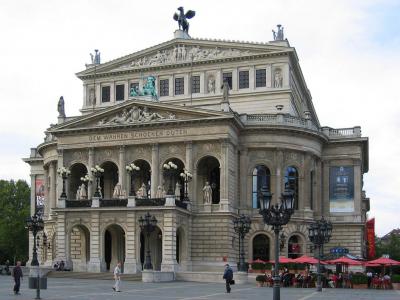
Perched above a picturesque square adorned with a graceful fountain lies the Opera House, sporting a Renaissance-style façade. This historic edifice, known by the moniker "Alte Oper," or "the Old Opera House," stands in place of a predecessor that graced the location from 1880 to 1944.
The inaugural Frankfurt Opera House, conceived by the Berlin-based architect Richard Lucae, made its debut in 1880, with Kaiser Wilhelm I presiding over the grand opening. The architectural design exuded the opulence expected of a venue patronized by royalty, showcasing Renaissance aesthetics. Tragically, during World War II, the structure suffered complete devastation. Following extensive deliberations among Frankfurt's residents, a new building arose, echoing the design of its predecessor. While the lobby and façade maintained their Renaissance architectural charm, the remainder of the structure underwent a transformation into a versatile modern complex, housing banquet halls, concert venues, and a convention center. This Opera House now fulfills the dual role of a cultural hub and a gathering place for Frankfurt's denizens.
At the Alte Oper, visitors can relish classical and popular music concerts. The edifice takes on an enchanting allure in the evening, its exterior adorned with splendid statues of Goethe and Mozart, who preside over the square below.
Why You Should Visit:
Great location to spend time in Frankfurt – beautifully restored theatre in a beautifully designed square.
Tip:
Both the café and the restaurant are generally busy in the evening, so try and reserve a spot in advance.
During a nice warm day, try and grab a seat outside, enjoy a cup of coffee/glass of wine and people watch.
The inaugural Frankfurt Opera House, conceived by the Berlin-based architect Richard Lucae, made its debut in 1880, with Kaiser Wilhelm I presiding over the grand opening. The architectural design exuded the opulence expected of a venue patronized by royalty, showcasing Renaissance aesthetics. Tragically, during World War II, the structure suffered complete devastation. Following extensive deliberations among Frankfurt's residents, a new building arose, echoing the design of its predecessor. While the lobby and façade maintained their Renaissance architectural charm, the remainder of the structure underwent a transformation into a versatile modern complex, housing banquet halls, concert venues, and a convention center. This Opera House now fulfills the dual role of a cultural hub and a gathering place for Frankfurt's denizens.
At the Alte Oper, visitors can relish classical and popular music concerts. The edifice takes on an enchanting allure in the evening, its exterior adorned with splendid statues of Goethe and Mozart, who preside over the square below.
Why You Should Visit:
Great location to spend time in Frankfurt – beautifully restored theatre in a beautifully designed square.
Tip:
Both the café and the restaurant are generally busy in the evening, so try and reserve a spot in advance.
During a nice warm day, try and grab a seat outside, enjoy a cup of coffee/glass of wine and people watch.
3) Goethe-Haus (must see)
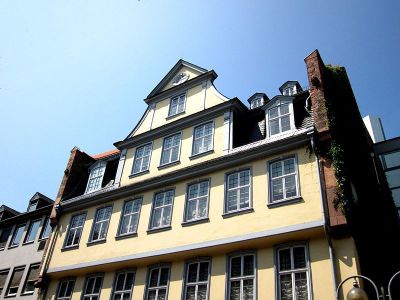
Grosser Hirschgraben 23 in Frankfurt is the place where philosopher-writer Johann Wolfgang Von Goethe was born and raised, and where he wrote his famous works: Götz von Berlichingen, Faust, and The Sorrows of Young Werther. The house was destroyed during World War II but was reconstructed with loving care to its 17th-century splendor, in memory of Frankfurt’s best-known son, by the local citizens.
The museum opened to the public in 1863 and has since remained a shrine for Goethe enthusiasts from all over the world. Decorated with period furniture and paintings, it provides an authentic environment in which Goethe spent his youth, reflecting the lifestyle enjoyed by affluent 17th-century Germans, featuring various Baroque, Neoclassical, and Rococo elements. Among the rooms painstakingly restored after the war are the library where Wolfgang Goethe’s father worked and looked out for the return of his son, and the portrayal of an authentic 17th-century German Kitchen.
The puppet theater that Goethe treasured enough to make the focal point of his novel 'Wilhelm Meister's Apprenticeship' is also on view. One of the treasures within the house is a large classic clock on the 2nd floor that tells the time, date, the lunar and solar year. The building houses Goethe’s father’s vast collection of art, including paintings by well-known Frankfurt artists. The adjacent Frankfurter Goethe Museum contains books, works of art, and manuscripts all related, in some way or other, to Goethe.
Goethe House is open through the week and is free for children under 6. Visitors can request the help of volunteers to understand the significance of every Goethe-related object on display.
Why You Should Visit:
More than you'd normally expect; apart from the house itself (completely nice to see), you can visit a gallery (up the staircase) that is no smaller than some art museums you'd want to pay much to visit. Great value!
Tip:
Good to either take an audio guide or make sure to grab a pamphlet at the entrance in the relevant language.
The museum opened to the public in 1863 and has since remained a shrine for Goethe enthusiasts from all over the world. Decorated with period furniture and paintings, it provides an authentic environment in which Goethe spent his youth, reflecting the lifestyle enjoyed by affluent 17th-century Germans, featuring various Baroque, Neoclassical, and Rococo elements. Among the rooms painstakingly restored after the war are the library where Wolfgang Goethe’s father worked and looked out for the return of his son, and the portrayal of an authentic 17th-century German Kitchen.
The puppet theater that Goethe treasured enough to make the focal point of his novel 'Wilhelm Meister's Apprenticeship' is also on view. One of the treasures within the house is a large classic clock on the 2nd floor that tells the time, date, the lunar and solar year. The building houses Goethe’s father’s vast collection of art, including paintings by well-known Frankfurt artists. The adjacent Frankfurter Goethe Museum contains books, works of art, and manuscripts all related, in some way or other, to Goethe.
Goethe House is open through the week and is free for children under 6. Visitors can request the help of volunteers to understand the significance of every Goethe-related object on display.
Why You Should Visit:
More than you'd normally expect; apart from the house itself (completely nice to see), you can visit a gallery (up the staircase) that is no smaller than some art museums you'd want to pay much to visit. Great value!
Tip:
Good to either take an audio guide or make sure to grab a pamphlet at the entrance in the relevant language.
4) Römer (City Hall) (must see)
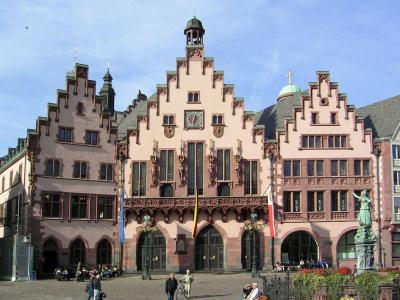
The Römer ("Roman") is the Rathaus (City Hall) of Frankfurt and one of the main local historic landmarks. This medieval building has been in service for over 600 years and still houses offices of the local government.
In 1405, the Römer family of the wealthy Frankfurt merchants sold their house, along with the adjacent Goldener Schwan (Golden Swan) building, to the city council. Since then the property has continuously accommodated different civic offices until the present. Over the years, the complex has been expanded by the addition and purchase of nearby buildings, so today it represents a labyrinth of several structures connected by streets. A bridge, jokingly referred to as the “Bridge of Sighs” (after its famous counterpart in Venice), connects the Römer to the offices across the street. Two towers were added to the complex in the early 20th century. One of them is dubbed Langer Franz (Tall Franz) in homage to the city's tall mayor, and the other, smaller one, Kleiner Cohen (Small Cohen), after a popular song of the time.
Römerhalle and Schwanenhalle are the oldest rooms within the complex and are virtually unchanged after 600 years. They are found on the ground floor of the Römer and Goldener Schwan houses and can be entered directly from the main entrance in Römerberg.
Still, the main attraction of the Römer, perhaps, is the Kaisersaal (Emperor Hall) where coronation banquets of German Kings and Emperors of the Holy Roman Empire took place. The hall contains 52 portraits by famous artists of all the German Kings and Emperors, starting from Freidrich Barbarossa in 1152 to Franz II who was forced to abdicate by Napoleon in 1806. There is also an ornate balcony from where the rulers used to greet the crowds down below. The annual Christmas fair held in the square outside the City Hall is a regular attraction in its own right, drawing thousands of visitors from all over the world.
Why You Should Visit:
Truly an eye-catcher, even more interesting in the run-up to Christmas than during the rest of the year.
German history and culture are perfectly preserved in this Gingerbread part of town.
Tip:
Make sure you walk to the river to catch the Frankfurt cityscape which is only a few hundred meters away!
In 1405, the Römer family of the wealthy Frankfurt merchants sold their house, along with the adjacent Goldener Schwan (Golden Swan) building, to the city council. Since then the property has continuously accommodated different civic offices until the present. Over the years, the complex has been expanded by the addition and purchase of nearby buildings, so today it represents a labyrinth of several structures connected by streets. A bridge, jokingly referred to as the “Bridge of Sighs” (after its famous counterpart in Venice), connects the Römer to the offices across the street. Two towers were added to the complex in the early 20th century. One of them is dubbed Langer Franz (Tall Franz) in homage to the city's tall mayor, and the other, smaller one, Kleiner Cohen (Small Cohen), after a popular song of the time.
Römerhalle and Schwanenhalle are the oldest rooms within the complex and are virtually unchanged after 600 years. They are found on the ground floor of the Römer and Goldener Schwan houses and can be entered directly from the main entrance in Römerberg.
Still, the main attraction of the Römer, perhaps, is the Kaisersaal (Emperor Hall) where coronation banquets of German Kings and Emperors of the Holy Roman Empire took place. The hall contains 52 portraits by famous artists of all the German Kings and Emperors, starting from Freidrich Barbarossa in 1152 to Franz II who was forced to abdicate by Napoleon in 1806. There is also an ornate balcony from where the rulers used to greet the crowds down below. The annual Christmas fair held in the square outside the City Hall is a regular attraction in its own right, drawing thousands of visitors from all over the world.
Why You Should Visit:
Truly an eye-catcher, even more interesting in the run-up to Christmas than during the rest of the year.
German history and culture are perfectly preserved in this Gingerbread part of town.
Tip:
Make sure you walk to the river to catch the Frankfurt cityscape which is only a few hundred meters away!
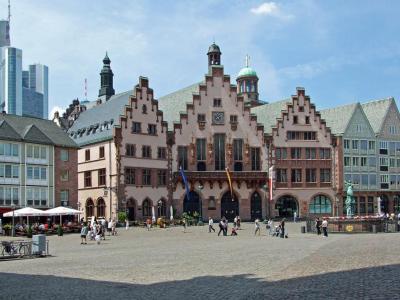
5) Römerberg (Square) (must see)
Römerberg ("Roman Mountain") is the town hall square lying in front of (and subsequently named after) the Römer complex, the seat of the Frankfurt city administration since the 15th century. As the site of numerous imperial coronations, trade fairs, and Christmas markets, this square marks the historic heart of the medieval Altstadt (Old Town) and is a popular tourist destination. In the 20th century, Römerberg was the scene of many major events, both joyful and not so. On May 10, 1933, the infamous book burning organized by the Nazi German Student Union took place here. Between 1932 and 1939, the internationally renowned Römerberg Festival had been held here every summer, with nearly 350 open-air theater shows performed during the period.
Much of Römerberg's historical heritage, consisting of partly Gothic and partly Baroque architecture, was destroyed by Allied air raids in 1944. Today's square is the result of externally true to the original reconstructions and new buildings raised in the 1950s-1980s. The eastern part of Römerberg, also known as Samstagsberg (Saturday Mountain), represents a row of historical half-timbered houses, namely: Großer and Kleiner Engel, Goldener Greif, Wilder Mann, Kleiner Dachsberg, Großer Laubenberg, Kleiner Laubenberg, and Schwarzer Stern, built between 1981 and 1984. The name “Saturday Mountain” possibly comes from an open-air court that was held here every Saturday during the Carolingian era, when the Königspfalz Frankfurt lay east of the square. The Frankfurt Jews were only allowed to enter Römerberg during the fair, otherwise, they had to go to the Saturday market.
To the north, there are four new buildings featuring Neo-Gothic, Neo-Renaissance, and Neo-Baroque styles, replacing the six old houses demolished in 1906. In the south, Römerberg is presided over by the early Gothic Alte Nikolaikirche (Old Saint Nicholas Church). The new building of the Historical Museum, also located on the south side of the square, at the entrance to Saalgasse, was opened in October 2017.
The Fountain of Justice has been in Römerberg since 1543.
Much of Römerberg's historical heritage, consisting of partly Gothic and partly Baroque architecture, was destroyed by Allied air raids in 1944. Today's square is the result of externally true to the original reconstructions and new buildings raised in the 1950s-1980s. The eastern part of Römerberg, also known as Samstagsberg (Saturday Mountain), represents a row of historical half-timbered houses, namely: Großer and Kleiner Engel, Goldener Greif, Wilder Mann, Kleiner Dachsberg, Großer Laubenberg, Kleiner Laubenberg, and Schwarzer Stern, built between 1981 and 1984. The name “Saturday Mountain” possibly comes from an open-air court that was held here every Saturday during the Carolingian era, when the Königspfalz Frankfurt lay east of the square. The Frankfurt Jews were only allowed to enter Römerberg during the fair, otherwise, they had to go to the Saturday market.
To the north, there are four new buildings featuring Neo-Gothic, Neo-Renaissance, and Neo-Baroque styles, replacing the six old houses demolished in 1906. In the south, Römerberg is presided over by the early Gothic Alte Nikolaikirche (Old Saint Nicholas Church). The new building of the Historical Museum, also located on the south side of the square, at the entrance to Saalgasse, was opened in October 2017.
The Fountain of Justice has been in Römerberg since 1543.
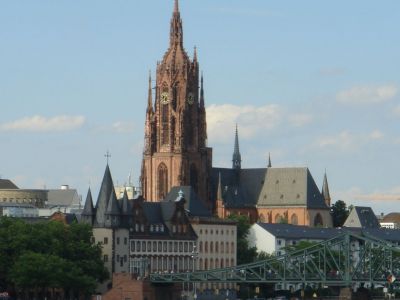
6) Frankfurt Cathedral (Cathedral of St. Bartholomew) (must see)
Frankfurt Cathedral is a Gothic-style Roman Catholic temple dedicated to Saint Bartholomew. This is the main and by far the largest religious site in Frankfurt – the height of its spire reaches 95 meters. Despite the name – Kaiserdom (Imperial Cathedral), or simply the Dom, – it has never been a cathedral in the true sense of the word but is only called so for its importance as a former coronation church of the Holy Roman Empire.
The present building on the site is the third one. The very first church (Merovingian chapel) was built here in the 7th century, which was then replaced, by a grander temple, in 1250. In 1356, Charles IV, Holy Roman Emperor issued the Golden Bull whereby all emperors of the Holy Roman Empire were to be elected in this collegiate church as kings of Germany; from 1562 to 1792, all emperors-elect were crowned here.
In 1867, Saint Bartholomew's was destroyed by fire and rebuilt in its present style. During WWII, between October 1943 and March 1944, the Old Town of Frankfurt was devastated by the Allied Forces' air bombardments. The cathedral also suffered severe damage; its interior burned out completely and was reconstructed only in the 1950s.
Saint Bartholomew's houses many splendid works of art, including a unique high altar and the Maria Schlaf altar found in Saint Mary’s chapel. Also, there is an Anthony Van Dyke painting, ‘The Lamentation’, and a museum with many historic pieces including objects discovered in a grave of a Merovingian girl.
Why You Should Visit:
Admission is free and, if lucky, you may enjoy some impressive organ music, too, or take in panoramic views of Frankfurt from atop the cathedral's tower (for a small fee).
Tip:
Try and go on a weekday to avoid the weekend crowd; make sure to bring a bottle of water if you decide to climb the tower.
The present building on the site is the third one. The very first church (Merovingian chapel) was built here in the 7th century, which was then replaced, by a grander temple, in 1250. In 1356, Charles IV, Holy Roman Emperor issued the Golden Bull whereby all emperors of the Holy Roman Empire were to be elected in this collegiate church as kings of Germany; from 1562 to 1792, all emperors-elect were crowned here.
In 1867, Saint Bartholomew's was destroyed by fire and rebuilt in its present style. During WWII, between October 1943 and March 1944, the Old Town of Frankfurt was devastated by the Allied Forces' air bombardments. The cathedral also suffered severe damage; its interior burned out completely and was reconstructed only in the 1950s.
Saint Bartholomew's houses many splendid works of art, including a unique high altar and the Maria Schlaf altar found in Saint Mary’s chapel. Also, there is an Anthony Van Dyke painting, ‘The Lamentation’, and a museum with many historic pieces including objects discovered in a grave of a Merovingian girl.
Why You Should Visit:
Admission is free and, if lucky, you may enjoy some impressive organ music, too, or take in panoramic views of Frankfurt from atop the cathedral's tower (for a small fee).
Tip:
Try and go on a weekday to avoid the weekend crowd; make sure to bring a bottle of water if you decide to climb the tower.
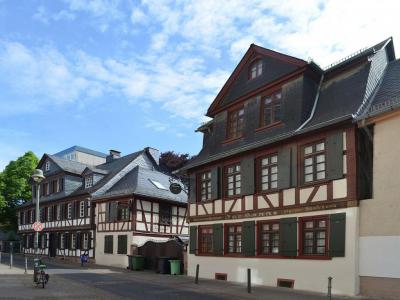
7) Berger Straße (must see)
Berger Straße stands as Frankfurt's lengthiest shopping avenue, spanning a distance of 2.9 kilometers. This road serves as a vital link connecting Frankfurt's city center to the Seckbach district, traversing through the Nordend and Bornheim districts.
The name "Berger Straße" traces its origins to the town of Bergen, which became part of the Frankfurt district of Bergen-Enkheim in 1977. This appellation has remained unchanged since 1862. Notably, it traverses the location formerly occupied by the Bornheimer Heide until the late 19th century, where Germany's inaugural hot air balloon flight took place in 1785.
The lower part of Berger Straße, extending from Friedberger Anlagen to Höhenstraße, plays host to the annual Bergerstraße festival during the summer. Furthermore, the Bornheim weekly market convenes on Wednesdays and Saturdays near the clock tower, situated close to the Bornheim Mitte subway station. The upper Berger Straße is a venue for both the Bornheim wine festival and the annual Bernemer Kerb (Bornheimer Kirmes).
Beginning at the Friedberger Anlagen, Berger Straße runs northeastward, offering a diverse streetscape. Toward the city center, the lower Berger Straße is characterized by a mix of fashionable bars, boutique shops, and specialty stores. A notable attraction in this section is Bethmann Park, which houses the Garden of Heavenly Peace, named by Tom Koenigs and one of the few Chinese gardens in Germany. Between Merianplatz and Höhenstraße, Berger Straße retains its distinctive charm, with a variety of shops and eateries managed by individual entrepreneurs.
Why You Should Visit:
To wander down when you're in need of interesting, vintage, independent shopping, plus bars, "best wurst in town", or basically anything out of the ordinary.
It's also a fabulous place to sit and people watch, which you can do for hours and get a real feel of this vibrant part of Frankfurt.
Tip:
Try "Rucola" down the street for good Italian food at one edge, and the special cinema at the other edge.
The name "Berger Straße" traces its origins to the town of Bergen, which became part of the Frankfurt district of Bergen-Enkheim in 1977. This appellation has remained unchanged since 1862. Notably, it traverses the location formerly occupied by the Bornheimer Heide until the late 19th century, where Germany's inaugural hot air balloon flight took place in 1785.
The lower part of Berger Straße, extending from Friedberger Anlagen to Höhenstraße, plays host to the annual Bergerstraße festival during the summer. Furthermore, the Bornheim weekly market convenes on Wednesdays and Saturdays near the clock tower, situated close to the Bornheim Mitte subway station. The upper Berger Straße is a venue for both the Bornheim wine festival and the annual Bernemer Kerb (Bornheimer Kirmes).
Beginning at the Friedberger Anlagen, Berger Straße runs northeastward, offering a diverse streetscape. Toward the city center, the lower Berger Straße is characterized by a mix of fashionable bars, boutique shops, and specialty stores. A notable attraction in this section is Bethmann Park, which houses the Garden of Heavenly Peace, named by Tom Koenigs and one of the few Chinese gardens in Germany. Between Merianplatz and Höhenstraße, Berger Straße retains its distinctive charm, with a variety of shops and eateries managed by individual entrepreneurs.
Why You Should Visit:
To wander down when you're in need of interesting, vintage, independent shopping, plus bars, "best wurst in town", or basically anything out of the ordinary.
It's also a fabulous place to sit and people watch, which you can do for hours and get a real feel of this vibrant part of Frankfurt.
Tip:
Try "Rucola" down the street for good Italian food at one edge, and the special cinema at the other edge.
