Custom Walk in Amsterdam, Netherlands by chenrossen_ab859 created on 2026-03-04
Guide Location: Netherlands » Amsterdam
Guide Type: Custom Walk
# of Sights: 8
Tour Duration: 3 Hour(s)
Travel Distance: 7.3 Km or 4.5 Miles
Share Key: C32TQ
Guide Type: Custom Walk
# of Sights: 8
Tour Duration: 3 Hour(s)
Travel Distance: 7.3 Km or 4.5 Miles
Share Key: C32TQ
How It Works
Please retrieve this walk in the GPSmyCity app. Once done, the app will guide you from one tour stop to the next as if you had a personal tour guide. If you created the walk on this website or come to the page via a link, please follow the instructions below to retrieve the walk in the app.
Retrieve This Walk in App
Step 1. Download the app "GPSmyCity: Walks in 1K+ Cities" on Apple App Store or Google Play Store.



Step 2. In the GPSmyCity app, download(or launch) the guide "Amsterdam Map and Walking Tours".
Step 3. Tap the menu button located at upper right corner of the "Walks" screen and select "Retrieve custom walk". Enter the share key: C32TQ
1) Centraal Station (must see)
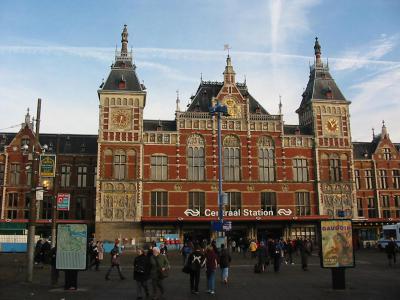
When in Amsterdam, a visit to the Central Station is practically inevitable. Nearly every traveler to the city encounters it at least once.
Amsterdam Centraal is the largest railway station in the city and has the second longest railway platform in the country, with a length of 695 meters, and a cast-iron platform roof spanning approximately 40 meters. A major international railway hub, it is used daily by almost 200,000 passengers, making it the Netherlands' most visited national heritage object.
Amsterdam Centraal was designed by Dutch architect Pierre Cuypers, featuring a blend of Gothic and Renaissance Revival elements.
The station was constructed on three artificial islands, between 1882 and 1889. Controversially located at the city's waterfront, it took a precise total of 8,687 wooden piles to anchor such a monumental structure on the marshy ground. The station spurred significant urban redevelopment and shifted Amsterdam’s focus from a waterfront to an inland city, influencing both transportation and city planning.
Its design celebrates Dutch economic and colonial prowess through various decorative elements. Initially, the entire project seemed like a huge blunder and was swiftly criticized by numerous experts. However, the architects persevered and ultimately vindicated themselves, defying skeptics.
Through the decades, Amsterdam Centraal has undergone multiple renovations and expansions to meet modern demands. Significant developments included the creation of a pedestrian tunnel in the 1950s, expansion of metro facilities in the late 1970s, and a major overhaul in the 1980s and 1990s that introduced new signaling systems, expanded tracks, and additional roofing. Recent upgrades focus on enhancing capacity and accessibility, including extended platforms for international trains, a new bus station, and upgraded retail spaces, marking it as a central hub in Amsterdam’s urban landscape.
Tip:
Take advantage of the several free ferry trips navigating the canals, departing every 5 to 15 minutes from this location; they offer a rewarding experience. You can even cruise back to the station via boat if you wish, rounding out your visit with a picturesque waterborne journey.
Amsterdam Centraal is the largest railway station in the city and has the second longest railway platform in the country, with a length of 695 meters, and a cast-iron platform roof spanning approximately 40 meters. A major international railway hub, it is used daily by almost 200,000 passengers, making it the Netherlands' most visited national heritage object.
Amsterdam Centraal was designed by Dutch architect Pierre Cuypers, featuring a blend of Gothic and Renaissance Revival elements.
The station was constructed on three artificial islands, between 1882 and 1889. Controversially located at the city's waterfront, it took a precise total of 8,687 wooden piles to anchor such a monumental structure on the marshy ground. The station spurred significant urban redevelopment and shifted Amsterdam’s focus from a waterfront to an inland city, influencing both transportation and city planning.
Its design celebrates Dutch economic and colonial prowess through various decorative elements. Initially, the entire project seemed like a huge blunder and was swiftly criticized by numerous experts. However, the architects persevered and ultimately vindicated themselves, defying skeptics.
Through the decades, Amsterdam Centraal has undergone multiple renovations and expansions to meet modern demands. Significant developments included the creation of a pedestrian tunnel in the 1950s, expansion of metro facilities in the late 1970s, and a major overhaul in the 1980s and 1990s that introduced new signaling systems, expanded tracks, and additional roofing. Recent upgrades focus on enhancing capacity and accessibility, including extended platforms for international trains, a new bus station, and upgraded retail spaces, marking it as a central hub in Amsterdam’s urban landscape.
Tip:
Take advantage of the several free ferry trips navigating the canals, departing every 5 to 15 minutes from this location; they offer a rewarding experience. You can even cruise back to the station via boat if you wish, rounding out your visit with a picturesque waterborne journey.
2) Dam Square (must see)
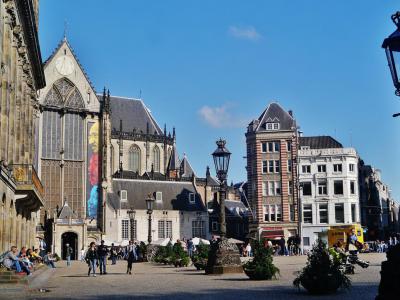
Dam Square, or the Dam, is a central town square in Amsterdam, known for its significant buildings and frequent events. Positioned in the historical heart of Amsterdam, it sits on the site of the original dam on the Amstel River. The square extends some 200 meters from west to east and 100 meters from north to south, connecting Damrak and Rokin streets that trace the Amstel's original course.
The square is also the termination point for other notable streets like New Dike, Calf Street, and Dam Street, with the main red-light district, De Wallen, just beyond its northeast corner. Prominent features on Dam Square include the neoclassical Royal Palace, the 15th-century Gothic New Church, the Madame Tussauds Wax Museum, and the National Monument which honors World War II victims, all of which collectively turn the Dam into a major tourist hub.
The name "Amsterdam" originates from a dam built on the Amstel River around 1270. This dam, integral to the city's development, included a discharge sluice and later locks to facilitate navigation and control water levels. By 1275, the settlement was significant enough to be recorded in connection with a road toll granted by the count of Holland, Floris V. Over time, the dam expanded to accommodate a town square, now known as Dam Square. Eventually, the area became a hub for commercial and governmental activities, featuring a large fish market and a town hall.
Significant changes occurred over the centuries, including the demolition of a weigh house in 1808 to clear the view for Louis Bonaparte’s Royal Palace and the infilling of Damrak Avenue in the 19th century. The square also hosted the Beurs van Zocher stock exchange until 1903. Today, the De Bijenkorf department store has been in its place since 1914. Dam Square has also been a site for national events – such as the National Memorial Day commemorations at the National Monument unveiled in 1956, and public demonstrations, – maintaining its status as a national and cultural gathering spot for the Dutch.
Tip:
For those in need of a restroom, free and well-maintained toilets are available at the De Bijenkorf shop on the 5th floor.
The square is also the termination point for other notable streets like New Dike, Calf Street, and Dam Street, with the main red-light district, De Wallen, just beyond its northeast corner. Prominent features on Dam Square include the neoclassical Royal Palace, the 15th-century Gothic New Church, the Madame Tussauds Wax Museum, and the National Monument which honors World War II victims, all of which collectively turn the Dam into a major tourist hub.
The name "Amsterdam" originates from a dam built on the Amstel River around 1270. This dam, integral to the city's development, included a discharge sluice and later locks to facilitate navigation and control water levels. By 1275, the settlement was significant enough to be recorded in connection with a road toll granted by the count of Holland, Floris V. Over time, the dam expanded to accommodate a town square, now known as Dam Square. Eventually, the area became a hub for commercial and governmental activities, featuring a large fish market and a town hall.
Significant changes occurred over the centuries, including the demolition of a weigh house in 1808 to clear the view for Louis Bonaparte’s Royal Palace and the infilling of Damrak Avenue in the 19th century. The square also hosted the Beurs van Zocher stock exchange until 1903. Today, the De Bijenkorf department store has been in its place since 1914. Dam Square has also been a site for national events – such as the National Memorial Day commemorations at the National Monument unveiled in 1956, and public demonstrations, – maintaining its status as a national and cultural gathering spot for the Dutch.
Tip:
For those in need of a restroom, free and well-maintained toilets are available at the De Bijenkorf shop on the 5th floor.
3) Anne Frank House (must see)
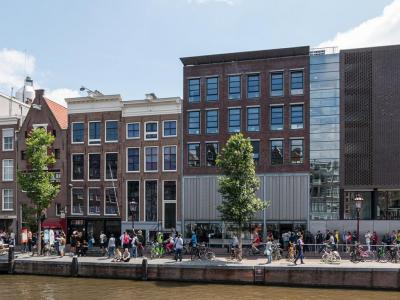
Anne Frank once found comfort in the gentle chimes of the Western Church’s bells-a reassuring hint of life outside her secret refuge-until those very bells were melted down for the German war effort. The church’s 85-meter-tall tower still stands as Amsterdam’s most dazzling spire. Rising gracefully above the city, it offers balconies with stunning panoramic views of the center and a carillon that strikes every quarter-hour, plus occasional full musical interludes. At its tip, you’ll find Emperor Maximilian’s crown, a proud emblem of Amsterdam and a glittering highlight of this Protestant landmark. Built by Hendrick de Keyser and completed in 1631, a decade after his passing, the church was a vital piece of the city’s early expansion.
Outwardly, the Western Church projects an air of restrained elegance; inside, however, it embraces Calvinist simplicity. Apart from the ample plain-glass windows that flood the space with natural light, the main attractions are the grand Baroque organ and the ornate wooden pulpit, topped by an oversized sounding board that once lent authority to lengthy sermons. While the Protestant elite shunned opulent decorations, they did indulge in a little exclusivity: boxed-in benches at the base of the nave’s stone columns, rented out by the well-to-do to signal their status.
Feeling adventurous? From April to October, you can climb the tower for a firsthand look at the bells and unbeatable views from a platform near the top. The stairs are steep enough to be interesting, but not so tough as to keep you from reaching one of the best vantage points in Amsterdam.
Outwardly, the Western Church projects an air of restrained elegance; inside, however, it embraces Calvinist simplicity. Apart from the ample plain-glass windows that flood the space with natural light, the main attractions are the grand Baroque organ and the ornate wooden pulpit, topped by an oversized sounding board that once lent authority to lengthy sermons. While the Protestant elite shunned opulent decorations, they did indulge in a little exclusivity: boxed-in benches at the base of the nave’s stone columns, rented out by the well-to-do to signal their status.
Feeling adventurous? From April to October, you can climb the tower for a firsthand look at the bells and unbeatable views from a platform near the top. The stairs are steep enough to be interesting, but not so tough as to keep you from reaching one of the best vantage points in Amsterdam.
4) De Negen Straatjes (Nine Little Streets)
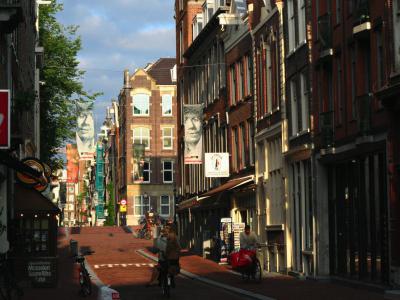
Amid the canal district of Amsterdam lies a charming enclave known as the "Nine Little Streets". This cluster of quaint byways, situated adjacent to the Prinsengracht, Keizersgracht, Herengracht, and Singel canals in the heart of Amsterdam, has borne this moniker since the 1990s. Collectively, these streets constitute a distinct micro-neighborhood nestled within the broader western Grachtengordel, or "Canal Belt", renowned for its eclectic array of small shops and eateries.
Woven with intricate brickwork lanes, the Nine Little Streets beckon with an assortment of offerings, including designer boutiques like Antonia by Yvette, Donna Fiera, and Sky Fashions, as well as inviting cafes, vintage emporiums, and specialty stores. Meandering through these charming streets can easily occupy your hours as you explore the diverse treasures they hold.
Tip:
Bij Ons Vintage, located at Reestraat #13, is a vintage boutique specializing in denim, leather, and sportswear dating from the 1950s to the 1970s. It's an excellent destination for discovering distinctive clothing and accessories that won't break the bank.
Meanwhile, at #20, the petite waxwork establishment known as Pontifex rivals Madame Tussauds with its vibrant assortment of candles in every conceivable variety. Adjacent to it, you'll find the intriguing clinic of the somewhat eerie doll doctor, Kramer.
Woven with intricate brickwork lanes, the Nine Little Streets beckon with an assortment of offerings, including designer boutiques like Antonia by Yvette, Donna Fiera, and Sky Fashions, as well as inviting cafes, vintage emporiums, and specialty stores. Meandering through these charming streets can easily occupy your hours as you explore the diverse treasures they hold.
Tip:
Bij Ons Vintage, located at Reestraat #13, is a vintage boutique specializing in denim, leather, and sportswear dating from the 1950s to the 1970s. It's an excellent destination for discovering distinctive clothing and accessories that won't break the bank.
Meanwhile, at #20, the petite waxwork establishment known as Pontifex rivals Madame Tussauds with its vibrant assortment of candles in every conceivable variety. Adjacent to it, you'll find the intriguing clinic of the somewhat eerie doll doctor, Kramer.
5) Van Gogh Museum (must see)
Vincent van Gogh (1853–90) undeniably ranks as one of the most renowned, widely reproduced, and frequently discussed modern artists. Consequently, it comes as no surprise that this museum, housing an exceptional collection of his works, stands as one of Amsterdam's premier attractions.
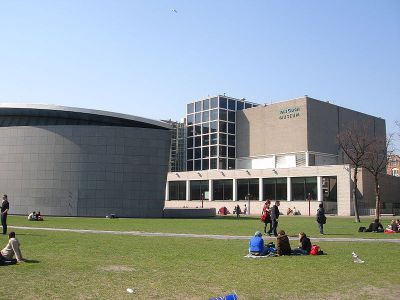
The institution is situated within two contemporary structures positioned on the northern periphery of Museum Square, also known as "Museumplein". The core collection of van Gogh's masterpieces is housed in an angular building designed by the eminent figure of the De Stijl movement, Gerrit Rietveld (1888–1964). This section, spanning four modestly sized floors, serves as an introductory journey into the life and artistry of the painter, primarily featuring paintings that were primarily inherited from Vincent's brother and art dealer, Theo. Complementing these works, you'll often find small supporting exhibitions that contextualize van Gogh's artistic contributions alongside those of his friends and contemporaries. The museum boasts a notable collection of paintings by luminaries such as Toulouse-Lautrec, Cézanne, Gauguin, Pissarro, and Monet.
Towards the rear of Rietveld's architectural masterpiece, a ground-floor escalator connects to the ultramodern 1998 extension. Although somewhat aesthetically controversial, this structure serves as a venue for temporary exhibitions, which typically delve into various facets of van Gogh's art and draw extensively from the permanent collection. Consequently, the paintings on display within the older building undergo regular rotation. The two edifices are seamlessly linked by a striking glass entrance hall, an addition implemented in 2015.
As one might expect, the museum tends to attract substantial crowds, often leading to lengthy queues. To circumvent the congestion, it is advisable to arrive early or consider booking tickets online in advance.
Why You Should Visit:
The main museum for all things Van Gogh, and absolutely the most popular museum in Amsterdam.
Tip:
Proceed directly to the third floor and navigate your visit in a descending manner. This strategic approach will afford you the opportunity to experience a quieter viewing experience on two to three floors.
When purchasing your ticket, make sure to include the audioguide. With this addition, allocating approximately 1.5 to 2 hours should enable you to thoroughly explore all the artworks, rather than limiting your focus solely to the highlights.
The institution is situated within two contemporary structures positioned on the northern periphery of Museum Square, also known as "Museumplein". The core collection of van Gogh's masterpieces is housed in an angular building designed by the eminent figure of the De Stijl movement, Gerrit Rietveld (1888–1964). This section, spanning four modestly sized floors, serves as an introductory journey into the life and artistry of the painter, primarily featuring paintings that were primarily inherited from Vincent's brother and art dealer, Theo. Complementing these works, you'll often find small supporting exhibitions that contextualize van Gogh's artistic contributions alongside those of his friends and contemporaries. The museum boasts a notable collection of paintings by luminaries such as Toulouse-Lautrec, Cézanne, Gauguin, Pissarro, and Monet.
Towards the rear of Rietveld's architectural masterpiece, a ground-floor escalator connects to the ultramodern 1998 extension. Although somewhat aesthetically controversial, this structure serves as a venue for temporary exhibitions, which typically delve into various facets of van Gogh's art and draw extensively from the permanent collection. Consequently, the paintings on display within the older building undergo regular rotation. The two edifices are seamlessly linked by a striking glass entrance hall, an addition implemented in 2015.
As one might expect, the museum tends to attract substantial crowds, often leading to lengthy queues. To circumvent the congestion, it is advisable to arrive early or consider booking tickets online in advance.
Why You Should Visit:
The main museum for all things Van Gogh, and absolutely the most popular museum in Amsterdam.
Tip:
Proceed directly to the third floor and navigate your visit in a descending manner. This strategic approach will afford you the opportunity to experience a quieter viewing experience on two to three floors.
When purchasing your ticket, make sure to include the audioguide. With this addition, allocating approximately 1.5 to 2 hours should enable you to thoroughly explore all the artworks, rather than limiting your focus solely to the highlights.
6) Rijksmuseum (must see)
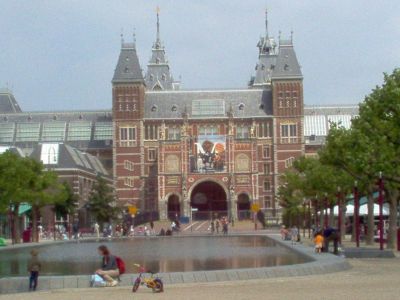
The Netherlands' magnificent national museum is the most frequently visited museum in Amsterdam, boasting an astounding collection of nearly one million Dutch works of art, though only a fraction of this vast treasure is on public display. Its origins trace back to 1808 when King Louis Napoleon established it within the Royal Palace on the Dam, later relocating to its current site near the Vondelpark in 1885.
Architect Pierre Cuypers contributed to the museum's distinctive blend of Gothic and Renaissance architecture, resulting in a structure that not only exudes architectural grandeur but also offers an extensive interior space. This expansion was undertaken with the sole purpose of accommodating the entire collection transported from The Hague.
In recent years, the Rijksmuseum has undergone extensive renovations, featuring a remarkable new entrance area. However, the heightened structure has altered the original floor plan, making navigation between sections somewhat challenging. The ground floor, designated as Floor 0, houses a diverse range of exhibits, including early Flemish paintings (1100–1600) on one side and collections encompassing items like delftware, armaments, and ship models on the other. Floor 1 showcases Dutch art from the 18th and 19th centuries, with notable works by artists such as Van Gogh and representatives of the Hague School of landscape artists. Moving upward, Floor 3 provides an overview of 20th-century art and applied art, featuring Dutch luminaries like Karel Appel and Gerrit Rietveld. In the midst of these levels, Floor 2 houses the heart of the collection: the Golden Age paintings, which understandably draw the most attention from visitors, with key works prominently displayed in the expansive Gallery of Honour. Temporary exhibitions are hosted in a separate wing.
When visiting, be sure to pick up a complimentary map at the reception desk. Keep in mind that the Rijksmuseum is exceptionally popular, so it's advisable to arrive early in the day, especially during major temporary exhibitions. Additionally, you can significantly reduce wait times by possessing an I amsterdam card, a Museumkaart, or by booking your visit online.
Why You Should Pay a Visit:
It's the place where the art you've encountered in your art classes and books comes to life.
Tip:
Browse until you've had your fill, then take a break from the art and artifacts at the excellent atrium café before exploring another section.
Architect Pierre Cuypers contributed to the museum's distinctive blend of Gothic and Renaissance architecture, resulting in a structure that not only exudes architectural grandeur but also offers an extensive interior space. This expansion was undertaken with the sole purpose of accommodating the entire collection transported from The Hague.
In recent years, the Rijksmuseum has undergone extensive renovations, featuring a remarkable new entrance area. However, the heightened structure has altered the original floor plan, making navigation between sections somewhat challenging. The ground floor, designated as Floor 0, houses a diverse range of exhibits, including early Flemish paintings (1100–1600) on one side and collections encompassing items like delftware, armaments, and ship models on the other. Floor 1 showcases Dutch art from the 18th and 19th centuries, with notable works by artists such as Van Gogh and representatives of the Hague School of landscape artists. Moving upward, Floor 3 provides an overview of 20th-century art and applied art, featuring Dutch luminaries like Karel Appel and Gerrit Rietveld. In the midst of these levels, Floor 2 houses the heart of the collection: the Golden Age paintings, which understandably draw the most attention from visitors, with key works prominently displayed in the expansive Gallery of Honour. Temporary exhibitions are hosted in a separate wing.
When visiting, be sure to pick up a complimentary map at the reception desk. Keep in mind that the Rijksmuseum is exceptionally popular, so it's advisable to arrive early in the day, especially during major temporary exhibitions. Additionally, you can significantly reduce wait times by possessing an I amsterdam card, a Museumkaart, or by booking your visit online.
Why You Should Pay a Visit:
It's the place where the art you've encountered in your art classes and books comes to life.
Tip:
Browse until you've had your fill, then take a break from the art and artifacts at the excellent atrium café before exploring another section.
7) Kalverstraat (Calf Street)
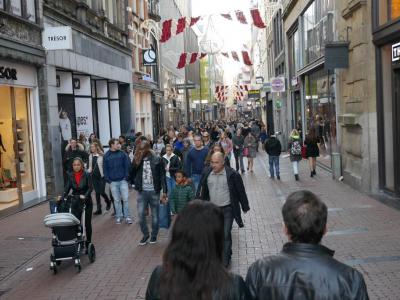
Calf Street is a pedestrian zone and a major shopping street, running for about 750 meters from Dam Square to Muntplein Square. Alongside are a number of notable locations such as the former Orphanage building (now housing the Amsterdam Museum), the Saints Peter and Paul church, and the Orphanage Gate.
The street traces its roots back to the 14th century when it was known as The Lane and served as the western dike of the Amstel River. Later, it came to be known as Calf Street after the cattle market that existed there from 1486 until 1629.
On 16 March 1345, a Eucharistic miracle (known as the Miracle of Amsterdam or the Miracle of the Host) occurred in the area. Upon receiving the Holy Sacrament and last rites, a dying man vomited The Host (or the Sacramental bread used in the Christian ritual of the Eucharist). According to liturgical regulations, The Host was then put into fire but miraculously “survived” and was retrieved from the ashes intact the following day. This miracle was quickly acknowledged and, eventually, a large pilgrim chapel, called the "Holy Site", was built on the spot where it occurred. Presently, this miracle is commemorated annually with a Silent Procession through Calf Street.
By the late 19th century, Calf Street was the first street in Amsterdam to be paved, fitted with electricity, and hosted the first public film screening by the Lumière brothers (in 1896). The V&D branch on Calf Street, opened in 1912, was the Netherlands' first real department store and the first to feature elevators and escalators.
Today, Calf Street is the most expensive shopping street in the Netherlands, with rent prices reaching up to 3,000 euros per square meter. It has approximately 150 shops including several department stores, such as Bijenkorf (Amsterdam's premier option), Peek & Cloppenburg, and Maison de Bonneterie. The five-story Kalvertoren shopping center adds about 40+ stores to the area. At Number 212, you'll encounter the ever-present and budget-friendly HEMA, established in 1926, offering affordable designer goods, practical clothing, stationery, kitchenware, and food items.
Calf Street also features a branch of the Waterstone's bookshop chain, at Number 152. On Rokin, is one of the standout shops – the PGC Hajenius tobacconist, at Number 96. If you have a penchant for Havanas from a well-maintained humidor or seek a traditional clay pipe as a souvenir, this establishment is sure to delight you.
Introduced in 1995, the Shopping Sunday regulation, allowing local shops to work on Sundays, has been drawing additional crowds to the area ever since.
The street traces its roots back to the 14th century when it was known as The Lane and served as the western dike of the Amstel River. Later, it came to be known as Calf Street after the cattle market that existed there from 1486 until 1629.
On 16 March 1345, a Eucharistic miracle (known as the Miracle of Amsterdam or the Miracle of the Host) occurred in the area. Upon receiving the Holy Sacrament and last rites, a dying man vomited The Host (or the Sacramental bread used in the Christian ritual of the Eucharist). According to liturgical regulations, The Host was then put into fire but miraculously “survived” and was retrieved from the ashes intact the following day. This miracle was quickly acknowledged and, eventually, a large pilgrim chapel, called the "Holy Site", was built on the spot where it occurred. Presently, this miracle is commemorated annually with a Silent Procession through Calf Street.
By the late 19th century, Calf Street was the first street in Amsterdam to be paved, fitted with electricity, and hosted the first public film screening by the Lumière brothers (in 1896). The V&D branch on Calf Street, opened in 1912, was the Netherlands' first real department store and the first to feature elevators and escalators.
Today, Calf Street is the most expensive shopping street in the Netherlands, with rent prices reaching up to 3,000 euros per square meter. It has approximately 150 shops including several department stores, such as Bijenkorf (Amsterdam's premier option), Peek & Cloppenburg, and Maison de Bonneterie. The five-story Kalvertoren shopping center adds about 40+ stores to the area. At Number 212, you'll encounter the ever-present and budget-friendly HEMA, established in 1926, offering affordable designer goods, practical clothing, stationery, kitchenware, and food items.
Calf Street also features a branch of the Waterstone's bookshop chain, at Number 152. On Rokin, is one of the standout shops – the PGC Hajenius tobacconist, at Number 96. If you have a penchant for Havanas from a well-maintained humidor or seek a traditional clay pipe as a souvenir, this establishment is sure to delight you.
Introduced in 1995, the Shopping Sunday regulation, allowing local shops to work on Sundays, has been drawing additional crowds to the area ever since.
8) De Waag (Weigh House)
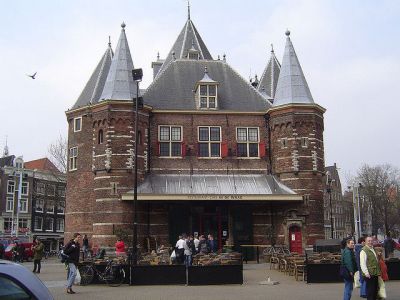
The Weigh House, a medieval trading hub dating back to 1488, began as a customs house, where goldsmiths and silversmiths worked their magic on the upper floors. Today, it’s home to a lively bar and restaurant, but inside you can still marvel at the hefty timber beams and what’s left of the old weighing scales.
Originally, this building was taller, but the 16th-century city planners had other ideas. When Amsterdam’s defensive walls came down, the gatehouse lost its fortification and its height. The surrounding moat was filled in, creating a bustling market square, and the ground level was raised, leaving the Weigh House looking quite different than it did in its heyday.
Even so, the building remained at the heart of Amsterdam’s cultural life. It was here that Rembrandt van Rijn painted “The Anatomy Lesson of Dr. Nicolas Tulp,” the work that launched his legendary career. Over the centuries, the Weighing House served many roles, hosting museums, city institutions, and even a fire brigade. In 1996, it found new purpose under the care of the Waag (“Weigh House”) Society, ensuring its historic charm endures for generations to come.
Originally, this building was taller, but the 16th-century city planners had other ideas. When Amsterdam’s defensive walls came down, the gatehouse lost its fortification and its height. The surrounding moat was filled in, creating a bustling market square, and the ground level was raised, leaving the Weigh House looking quite different than it did in its heyday.
Even so, the building remained at the heart of Amsterdam’s cultural life. It was here that Rembrandt van Rijn painted “The Anatomy Lesson of Dr. Nicolas Tulp,” the work that launched his legendary career. Over the centuries, the Weighing House served many roles, hosting museums, city institutions, and even a fire brigade. In 1996, it found new purpose under the care of the Waag (“Weigh House”) Society, ensuring its historic charm endures for generations to come.
