Custom Walk in Copenhagen, Denmark by craigsukmail_46932b created on 2026-03-08
Guide Location: Denmark » Copenhagen
Guide Type: Custom Walk
# of Sights: 15
Tour Duration: 3 Hour(s)
Travel Distance: 4.2 Km or 2.6 Miles
Share Key: 6XU77
Guide Type: Custom Walk
# of Sights: 15
Tour Duration: 3 Hour(s)
Travel Distance: 4.2 Km or 2.6 Miles
Share Key: 6XU77
How It Works
Please retrieve this walk in the GPSmyCity app. Once done, the app will guide you from one tour stop to the next as if you had a personal tour guide. If you created the walk on this website or come to the page via a link, please follow the instructions below to retrieve the walk in the app.
Retrieve This Walk in App
Step 1. Download the app "GPSmyCity: Walks in 1K+ Cities" on Apple App Store or Google Play Store.



Step 2. In the GPSmyCity app, download(or launch) the guide "Copenhagen Map and Walking Tours".
Step 3. Tap the menu button located at upper right corner of the "Walks" screen and select "Retrieve custom walk". Enter the share key: 6XU77
1) King's New Square (Kongens Nytorv)
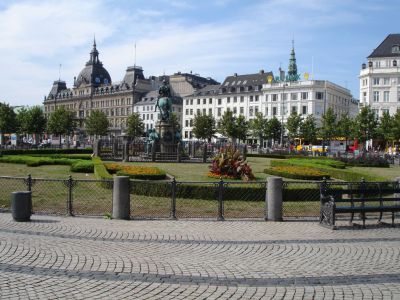
King's New Square is a central hub in Copenhagen, noted for its significant size and historical prominence. Established in 1670 by King Christian V, the square was part of an extensive urban development aimed at expanding and fortifying the city.
Originally a chaotic site with muddy terrain outside the city's fortifications, the area was transformed into a planned, cobblestoned space inspired by royal squares in Paris. It served both military and social functions – first, as a military alarm square and then as a venue for royal ceremonies and public gatherings.
Dominating the square, at its center, is the equestrian statue of King Christian V. The oldest of its kind in Scandinavia, first crafted in 1688 and recast in bronze in 1939, it exudes a historical aura.
Surrounding the square are prominent buildings such as the Royal Danish Theater, Charlottenborg Palace (now housing the Royal Danish Academy of Fine Arts), the Thott Palace (currently the French Embassy), and notable commercial establishments like the Hotel D'Angleterre and the Magasin du Nord department store.
Also, check out an old kiosk and telephone stand from 1913. Built in Baroque Revival style and featuring a copper-clad roof and hand-carved ornamentation, it once hosted Copenhagen's first public telephone service and now serves as a café with outdoor seating.
Today, the square is not only a historical site but also a vibrant public space that hosts outdoor exhibitions and ice skating in winter and is a traditional spot for high school graduation celebrations.
Originally a chaotic site with muddy terrain outside the city's fortifications, the area was transformed into a planned, cobblestoned space inspired by royal squares in Paris. It served both military and social functions – first, as a military alarm square and then as a venue for royal ceremonies and public gatherings.
Dominating the square, at its center, is the equestrian statue of King Christian V. The oldest of its kind in Scandinavia, first crafted in 1688 and recast in bronze in 1939, it exudes a historical aura.
Surrounding the square are prominent buildings such as the Royal Danish Theater, Charlottenborg Palace (now housing the Royal Danish Academy of Fine Arts), the Thott Palace (currently the French Embassy), and notable commercial establishments like the Hotel D'Angleterre and the Magasin du Nord department store.
Also, check out an old kiosk and telephone stand from 1913. Built in Baroque Revival style and featuring a copper-clad roof and hand-carved ornamentation, it once hosted Copenhagen's first public telephone service and now serves as a café with outdoor seating.
Today, the square is not only a historical site but also a vibrant public space that hosts outdoor exhibitions and ice skating in winter and is a traditional spot for high school graduation celebrations.
2) Holmens Kirke
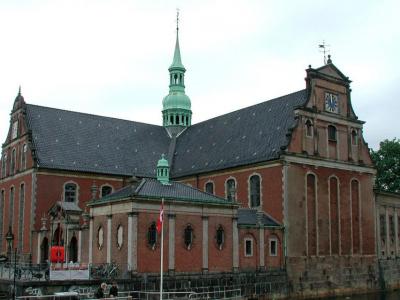
Holmens Kirke is located close to the harbour in Copenhagen. This 17th century Renaissance church was originally constructed by Peter de Duncker, a Dutch builder in 1563 to serve as an anchor forge.
In 1619, under the orders of King Christian IV, the forge was converted to a navy church. In 1870s, the church was renovated. As a part of the renovation, a sepulchral chapel was designed and constructed to the right of Holmens Kirke by Johan Conrad Ernst, the court architect.
Since its extension in 1640, the church has been restored and painted a few times. The walls were built in red cement in 1872 and the interior was decorated in baroque style popular at that time. The galleries, running around the church, were built during the 1872 restoration.
You will find a votive ship hanging in the nave. Inspired by a drawing of Admiral Niels Juel’s 1697 flagship, the model of this ship was made in 1904. Votive ships are a common feature in most of the Danish churches.
Abel Schroder built the altar and pulpit in 1661. You will find biblical scenes with apostles on either side on the pulpit. Flanked by evangelists, scenes of the last supper, resurrection and last judgment are painted on the altarpiece.
In 1619, under the orders of King Christian IV, the forge was converted to a navy church. In 1870s, the church was renovated. As a part of the renovation, a sepulchral chapel was designed and constructed to the right of Holmens Kirke by Johan Conrad Ernst, the court architect.
Since its extension in 1640, the church has been restored and painted a few times. The walls were built in red cement in 1872 and the interior was decorated in baroque style popular at that time. The galleries, running around the church, were built during the 1872 restoration.
You will find a votive ship hanging in the nave. Inspired by a drawing of Admiral Niels Juel’s 1697 flagship, the model of this ship was made in 1904. Votive ships are a common feature in most of the Danish churches.
Abel Schroder built the altar and pulpit in 1661. You will find biblical scenes with apostles on either side on the pulpit. Flanked by evangelists, scenes of the last supper, resurrection and last judgment are painted on the altarpiece.
3) Old Stock Exchange (Borsen)
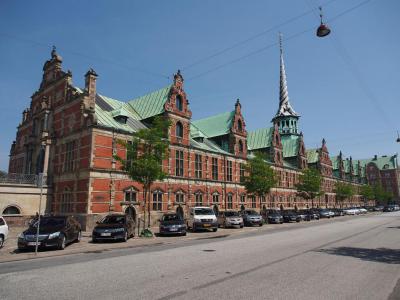
Once known as "the commodity bourse"-because "stock exchange" didn’t sound quite grand enough in the 17th century-this building was constructed between 1619 and 1640 by two Flemish-Danish architects who clearly wanted to show off a bit. In essence, this red-brick beauty was King Christian IV’s way of saying, “Hey, Europe, Copenhagen means business.”
Its long waterfront façade was basically a fancy welcome mat for merchants sailing in from afar. Styled in the Dutch Renaissance fashion-with all its ornate gables and scrolls-it quickly became a symbol of the city’s ambition to be the trading capital of Northern Europe.
But what really turned their heads was that wild Dragon Spire! Imagine the tails of four dragons braided together, topped with crowns like a scaly Scandinavian power move. This symbolism was a nod to the union of Denmark, Norway, and Sweden… and maybe a subtle hint that Copenhagen wouldn’t mind being the emperor of trade in the north.
The spire originally went up in 1625 but was swapped out in 1775 for a sturdier version. According to legend, it kept the building safe from fire and enemies-like a very pointy good luck charm. And for centuries, it worked. Even as neighboring buildings were reduced to ashes, the Bourse stood tall… until April 16, 2024.
On that day, during renovation works, flames got the better of it. Half the building was lost, and the iconic spire came crashing down. Denmark mourned, comparisons to Notre Dame flew, and officials quickly vowed, “We’ll rebuild it!”
And while that phoenix moment is still ahead, you can check out the spires over in Christian's Harbor-Copenhagen’s own “Little Amsterdam.” They’ve got flair of their own.
Tip:
If you want the perfect photo of the Bourse (or what's left of it), take the elevator in Christiansborg Palace across the street. It’s got a killer view. And if you're itching to see inside the Bourse, mark your calendar for Culture Night in October. But brace yourself-the lines are long because, apparently, exclusive historical architecture is still very much in.
Its long waterfront façade was basically a fancy welcome mat for merchants sailing in from afar. Styled in the Dutch Renaissance fashion-with all its ornate gables and scrolls-it quickly became a symbol of the city’s ambition to be the trading capital of Northern Europe.
But what really turned their heads was that wild Dragon Spire! Imagine the tails of four dragons braided together, topped with crowns like a scaly Scandinavian power move. This symbolism was a nod to the union of Denmark, Norway, and Sweden… and maybe a subtle hint that Copenhagen wouldn’t mind being the emperor of trade in the north.
The spire originally went up in 1625 but was swapped out in 1775 for a sturdier version. According to legend, it kept the building safe from fire and enemies-like a very pointy good luck charm. And for centuries, it worked. Even as neighboring buildings were reduced to ashes, the Bourse stood tall… until April 16, 2024.
On that day, during renovation works, flames got the better of it. Half the building was lost, and the iconic spire came crashing down. Denmark mourned, comparisons to Notre Dame flew, and officials quickly vowed, “We’ll rebuild it!”
And while that phoenix moment is still ahead, you can check out the spires over in Christian's Harbor-Copenhagen’s own “Little Amsterdam.” They’ve got flair of their own.
Tip:
If you want the perfect photo of the Bourse (or what's left of it), take the elevator in Christiansborg Palace across the street. It’s got a killer view. And if you're itching to see inside the Bourse, mark your calendar for Culture Night in October. But brace yourself-the lines are long because, apparently, exclusive historical architecture is still very much in.
4) Christiansborg Palace (must see)
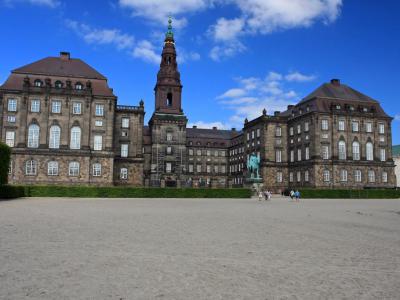
Christiansborg Palace is where Danish democracy, royal pomp, and a bit of architectural resilience come together. This place isn’t just a palace but the unicorn of government buildings. It’s the only structure in the world that houses all three branches of government: the Parliament, the Prime Minister’s Office, and the Supreme Court. Talk about multitasking...
The current palace is the third on this site. The original castle built by the city's founder, Bishop Absalon, stood here since 1167. Its remains, along with those of its successor – Copenhagen Castle – have been excavated and are now visible in the subterranean section at Christiansborg. After suffering two major fires, in 1794 and 1884, the palace was rebuilt in a historicist Neo-baroque style by 1928.
Often called "the Castle of the Realm" or simply "the Castle", Christiansborg is also used by the Danish monarchy, hosting dignitaries in its lavish Royal Reception Rooms, holding ceremonies in the Palace Chapel, and presumably waving regally at horses in the Royal Stables.
Speaking of horses-here’s a bit of drama. King Christian IX's equestrian statue at the Riding Ground Complex, unveiled in 1927, caused controversy. The horse model for it was sourced from Hanover, Germany, thus causing discontent among Danish breeders.
Owned by the Danish Government, parts of Christiansborg are open to the public. If you have a Copenhagen Card for tourists, admission to the royal reception rooms (as well as the stables, kitchen, and underground ruins) is free. Highlights of the experience include the Queen's china collection, her ornate ceremonial library, and the Great Hall, adorned with tapestries chronicling Denmark's history.
But even if you don't have the card, no problem. You can still wander the courtyard and head up the Tower-Copenhagen’s tallest. The views are impeccable. The elevator-tiny but mighty. And the security check is mildly official.
Tip:
Always look out for the free English one-hour tours included in your ticket (they run at 3 pm each day but also at different times during weekends: 12 pm or 2pm). That is of course unless you'd rather wander the rooms on your own, reading the descriptions.
The current palace is the third on this site. The original castle built by the city's founder, Bishop Absalon, stood here since 1167. Its remains, along with those of its successor – Copenhagen Castle – have been excavated and are now visible in the subterranean section at Christiansborg. After suffering two major fires, in 1794 and 1884, the palace was rebuilt in a historicist Neo-baroque style by 1928.
Often called "the Castle of the Realm" or simply "the Castle", Christiansborg is also used by the Danish monarchy, hosting dignitaries in its lavish Royal Reception Rooms, holding ceremonies in the Palace Chapel, and presumably waving regally at horses in the Royal Stables.
Speaking of horses-here’s a bit of drama. King Christian IX's equestrian statue at the Riding Ground Complex, unveiled in 1927, caused controversy. The horse model for it was sourced from Hanover, Germany, thus causing discontent among Danish breeders.
Owned by the Danish Government, parts of Christiansborg are open to the public. If you have a Copenhagen Card for tourists, admission to the royal reception rooms (as well as the stables, kitchen, and underground ruins) is free. Highlights of the experience include the Queen's china collection, her ornate ceremonial library, and the Great Hall, adorned with tapestries chronicling Denmark's history.
But even if you don't have the card, no problem. You can still wander the courtyard and head up the Tower-Copenhagen’s tallest. The views are impeccable. The elevator-tiny but mighty. And the security check is mildly official.
Tip:
Always look out for the free English one-hour tours included in your ticket (they run at 3 pm each day but also at different times during weekends: 12 pm or 2pm). That is of course unless you'd rather wander the rooms on your own, reading the descriptions.
5) Royal Library (Kongelige Bibliotek)
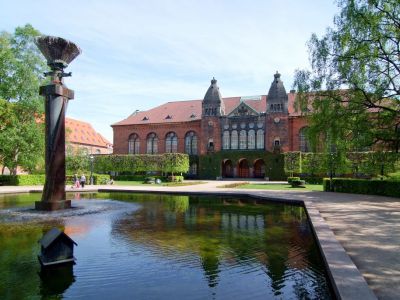
The Royal Library in Copenhagen is Denmark’s answer to the question: How many books is too many? (They haven’t found the limit yet.)
This literary leviathan is both the national library of Denmark and the library for the University of Copenhagen. It is also one of the largest libraries in the world and easily the biggest in the Nordics.
It all began in 1648, when King Frederik III decided he really liked books-so much so, he started a library and filled it with Europe’s finest. By 1793, the place was open to the public, making it officially the most cultured hangout in the city.
A few centuries later-and after several mergers-the Royal Library absorbed just about every major library in sight: the University Library, the Danish National Library for Science and Medicine, the Danish Folklore Archive, and finally, in 2017, it joined forces with the State and University Library in Aarhus. Now, it reigns supreme as the Royal Danish Library, operating out of both Copenhagen and Aarhus, like a literary superhero with two lairs.
Inside are as many as 37 million physical items, over 2.4 million e-titles, manuscripts, music scores, maps, photos, rare prints, and four annual digital snapshots of the entire Danish internet. Yes, Denmark backs up its memes...
You can enter this bookish empire through the sleek and shiny modern wing known as the Black Diamond. Hop on the escalator inside-it’ll whisk you up into the old section, which is worth the detour just for its majestic interiors. Every Saturday at 3 pm, they offer public tours of the Black Diamond (for a fee, but hey-knowledge always comes at a price).
There’s also a cafe that serves up coffee with a side of river views, outdoor seating when the sun’s feeling generous, and a restaurant called Søren K. Don’t forget the gift shop-you might just find the perfect bookmark to go with your existential crisis there.
So, go ahead, wander in, and don’t expect to leave without having learned something...
This literary leviathan is both the national library of Denmark and the library for the University of Copenhagen. It is also one of the largest libraries in the world and easily the biggest in the Nordics.
It all began in 1648, when King Frederik III decided he really liked books-so much so, he started a library and filled it with Europe’s finest. By 1793, the place was open to the public, making it officially the most cultured hangout in the city.
A few centuries later-and after several mergers-the Royal Library absorbed just about every major library in sight: the University Library, the Danish National Library for Science and Medicine, the Danish Folklore Archive, and finally, in 2017, it joined forces with the State and University Library in Aarhus. Now, it reigns supreme as the Royal Danish Library, operating out of both Copenhagen and Aarhus, like a literary superhero with two lairs.
Inside are as many as 37 million physical items, over 2.4 million e-titles, manuscripts, music scores, maps, photos, rare prints, and four annual digital snapshots of the entire Danish internet. Yes, Denmark backs up its memes...
You can enter this bookish empire through the sleek and shiny modern wing known as the Black Diamond. Hop on the escalator inside-it’ll whisk you up into the old section, which is worth the detour just for its majestic interiors. Every Saturday at 3 pm, they offer public tours of the Black Diamond (for a fee, but hey-knowledge always comes at a price).
There’s also a cafe that serves up coffee with a side of river views, outdoor seating when the sun’s feeling generous, and a restaurant called Søren K. Don’t forget the gift shop-you might just find the perfect bookmark to go with your existential crisis there.
So, go ahead, wander in, and don’t expect to leave without having learned something...
6) Danish War Museum (Krigsmuseet)
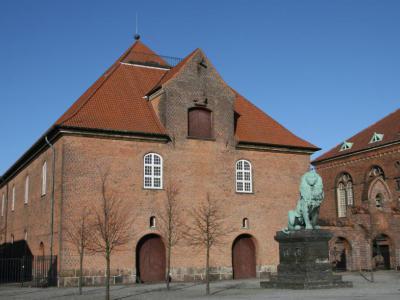
Now here’s a fun twist in Danish history: one of the very few buildings in Denmark still doing exactly what it was built for-minus the explosions. Welcome to the old Arsenal, one of King Christian IV’s many ambitious pet projects. Back in the day, it was a cozy little home for hand weapons and cannons. Today, it is still all about the bang-but with more context and zero casualties. Say hello to the Danish War Museum!
Tucked inside this Renaissance power statement is a treasure trove of military history. Think shiny old swords, grumpy-looking cannons, and a full-scale walk-in diorama of a NATO station in Afghanistan-because who doesn’t want to time travel through global conflict while safely avoiding sand in their shoes?
The building itself is a bit of a show-off. It's a monument to how the Renaissance established itself in Copenhagen and gave royal authority a stylish stone-clad makeover. Step into the grand Arsenal Hall-stretching a jaw-dropping 156 meters long, making it the largest arched Renaissance hall in Europe. Basically a catwalk for antique weaponry, here, you can feast your eyes on more Danish cannons than you can count without getting dizzy.
Elsewhere, you can trace the dramatic glow-up of edged weapons and firearms over the past 500 years. From ornate princely pistols to tough-as-nails war trophies, the collection delivers style and firepower in equal measure.
Oh, and don’t skip the 19th-century military fashion section. We’re talking about banners, uniforms, armor, and saddles that could make even the grumpiest general look fabulous.
So, if you're into history, heavy metal (literally), or just enjoy buildings that know how to age gracefully-this one’s not to be missed.
Tucked inside this Renaissance power statement is a treasure trove of military history. Think shiny old swords, grumpy-looking cannons, and a full-scale walk-in diorama of a NATO station in Afghanistan-because who doesn’t want to time travel through global conflict while safely avoiding sand in their shoes?
The building itself is a bit of a show-off. It's a monument to how the Renaissance established itself in Copenhagen and gave royal authority a stylish stone-clad makeover. Step into the grand Arsenal Hall-stretching a jaw-dropping 156 meters long, making it the largest arched Renaissance hall in Europe. Basically a catwalk for antique weaponry, here, you can feast your eyes on more Danish cannons than you can count without getting dizzy.
Elsewhere, you can trace the dramatic glow-up of edged weapons and firearms over the past 500 years. From ornate princely pistols to tough-as-nails war trophies, the collection delivers style and firepower in equal measure.
Oh, and don’t skip the 19th-century military fashion section. We’re talking about banners, uniforms, armor, and saddles that could make even the grumpiest general look fabulous.
So, if you're into history, heavy metal (literally), or just enjoy buildings that know how to age gracefully-this one’s not to be missed.

7) National Museum of Denmark (Nationalmuseet) (must see)
The National Museum of Denmark (Nationalmuseet) is the largest institution dedicated to the country's cultural history. Its main building showcases a diverse range of exhibits spanning from Greenland to South America, emphasizing both Danish and international cultures.
Recounting 14,000 years of history, the museum presents a detailed narrative of Denmark's past from the Ice Age reindeer hunters to the Vikings, and further into the religiously influential Middle Ages. The museum explores the identity and evolution of the Danish people through various exhibits that detail daily life, national events, and the broader societal changes in Denmark from 1560 to 2000.
A prominent feature within the museum is The Greenland Research Center dedicated to archaeological and anthropological studies of the island. Also notable is the major Vikings exhibition, opened by Queen Margrethe II in 2013, which was featured internationally, including at the British Museum in London.
The museum's numismatic collection includes Danish coins from the Viking era to modern times, as well as ancient Roman and Greek coins, showcasing a broad perspective on historical currencies.
Additionally, the museum boasts a wealth of ancient artifacts from Greece, Italy, the Near East, and Egypt, highlighted by items from the 1957 Danish excavation of Tell Shemshara in Iraq.
Outside its core responsibilities, such as archaeology, ethnology, numismatics, ethnography, natural science, and conservation, the museum also plays a key role in managing the National Treasures (Danefæ) and overseeing antiquarian efforts related to Denmark's churches.
Tip:
After paying your entry fee, be sure to find out when a free one-hour tour of the museum's 'greatest hits' is available in your language.
Recounting 14,000 years of history, the museum presents a detailed narrative of Denmark's past from the Ice Age reindeer hunters to the Vikings, and further into the religiously influential Middle Ages. The museum explores the identity and evolution of the Danish people through various exhibits that detail daily life, national events, and the broader societal changes in Denmark from 1560 to 2000.
A prominent feature within the museum is The Greenland Research Center dedicated to archaeological and anthropological studies of the island. Also notable is the major Vikings exhibition, opened by Queen Margrethe II in 2013, which was featured internationally, including at the British Museum in London.
The museum's numismatic collection includes Danish coins from the Viking era to modern times, as well as ancient Roman and Greek coins, showcasing a broad perspective on historical currencies.
Additionally, the museum boasts a wealth of ancient artifacts from Greece, Italy, the Near East, and Egypt, highlighted by items from the 1957 Danish excavation of Tell Shemshara in Iraq.
Outside its core responsibilities, such as archaeology, ethnology, numismatics, ethnography, natural science, and conservation, the museum also plays a key role in managing the National Treasures (Danefæ) and overseeing antiquarian efforts related to Denmark's churches.
Tip:
After paying your entry fee, be sure to find out when a free one-hour tour of the museum's 'greatest hits' is available in your language.
8) Ny Carlsberg Glyptotek – Art Museum (must see)
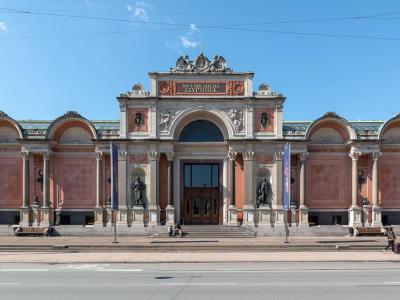
The New Carlsberg Glyptotheque (Ny Carlsberg Glyptotek), commonly known simply as The Glyptotheque (Glyptoteket), is the sculpture museum that features the private art collection of Carl Jacobsen (1842–1914), the son of the founder of the Carlsberg Breweries.
The museum contains over 10,000 artworks spanning ancient Mediterranean cultures and modern European art, including the largest collection of Auguste Rodin's sculptures outside France. It also boasts numerous paintings by French Impressionists and Post-Impressionists (such as Monet, Manet, Degas, Cézanne, Van Gogh, Picasso, Renoir, Toulouse-Lautrec, etc.), as well as Danish Golden Age artists, complete with the extensive collections of Greek, Roman, Etruscan, and Egyptian antiquities.
Carl Jacobsen, a dedicated art collector, amassed a wealth of antique, French, and Danish sculptures during his life, which were initially displayed in his private villa's winter garden in 1882. As the collection outgrew its space, in 1888, Jacobsen donated all of it to the Danish State and the City of Copenhagen, contingent on them providing a suitable exhibition facility. A new location was chosen near Tivoli Gardens and opened on May 1, 1897.
Celebrated for its architectural elegance, the building harmoniously blends art with its structure. Featuring the historicist Dahlerup Wing with its Venetian Renaissance style and the neo-classical Kampmann Wing, it also includes a connecting Winter Garden and the minimalist Henning Larsen Wing, used for prestigious events.
What is more, the museum's wings are built around a very soothing, Victorian-style garden, rich with greenery and sculpture, under a translucent glass dome. If you can afford some extra time, it's always a nice place to relax for a while and enjoy coffee or lunch – especially in the winter, as you can be in nature and enjoy the warmth.
The Glyptotek Auditorium regularly hosts classical concerts featuring notable artists, as well as other cultural events including poetry readings and debates. Known for its excellent acoustics, the venue also accommodates rehearsals and performances by musical ensembles.
Why You Should Visit:
To enjoy a surprisingly good collection in a gorgeously modified setting (the open rooftop affords great views of the city!), plus the magnificent palm garden with many benches, ponds, a delicious café, and some horticultural wonders.
Tip:
Pick up a floor plan as you enter to help navigate the somewhat confusing layout. Take breaks to go through one wing at a time. You will need breaks, as the place is huge in an unexpected way.
Keep in mind that Tuesdays are free, so perhaps you could go multiple times to make sure you see it all.
The on-site classical music concerts are frequently free too, so try to catch one.
The museum contains over 10,000 artworks spanning ancient Mediterranean cultures and modern European art, including the largest collection of Auguste Rodin's sculptures outside France. It also boasts numerous paintings by French Impressionists and Post-Impressionists (such as Monet, Manet, Degas, Cézanne, Van Gogh, Picasso, Renoir, Toulouse-Lautrec, etc.), as well as Danish Golden Age artists, complete with the extensive collections of Greek, Roman, Etruscan, and Egyptian antiquities.
Carl Jacobsen, a dedicated art collector, amassed a wealth of antique, French, and Danish sculptures during his life, which were initially displayed in his private villa's winter garden in 1882. As the collection outgrew its space, in 1888, Jacobsen donated all of it to the Danish State and the City of Copenhagen, contingent on them providing a suitable exhibition facility. A new location was chosen near Tivoli Gardens and opened on May 1, 1897.
Celebrated for its architectural elegance, the building harmoniously blends art with its structure. Featuring the historicist Dahlerup Wing with its Venetian Renaissance style and the neo-classical Kampmann Wing, it also includes a connecting Winter Garden and the minimalist Henning Larsen Wing, used for prestigious events.
What is more, the museum's wings are built around a very soothing, Victorian-style garden, rich with greenery and sculpture, under a translucent glass dome. If you can afford some extra time, it's always a nice place to relax for a while and enjoy coffee or lunch – especially in the winter, as you can be in nature and enjoy the warmth.
The Glyptotek Auditorium regularly hosts classical concerts featuring notable artists, as well as other cultural events including poetry readings and debates. Known for its excellent acoustics, the venue also accommodates rehearsals and performances by musical ensembles.
Why You Should Visit:
To enjoy a surprisingly good collection in a gorgeously modified setting (the open rooftop affords great views of the city!), plus the magnificent palm garden with many benches, ponds, a delicious café, and some horticultural wonders.
Tip:
Pick up a floor plan as you enter to help navigate the somewhat confusing layout. Take breaks to go through one wing at a time. You will need breaks, as the place is huge in an unexpected way.
Keep in mind that Tuesdays are free, so perhaps you could go multiple times to make sure you see it all.
The on-site classical music concerts are frequently free too, so try to catch one.
9) Tivoli Gardens (must see)
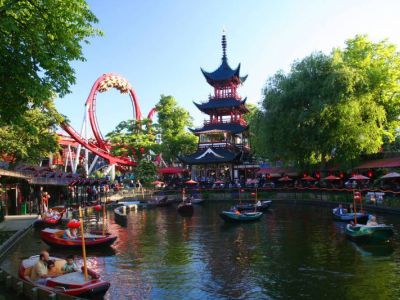
Conveniently located in central Copenhagen, very close to the train station (for those traveling into town), Tivoli Gardens is the original inspiration for Walt Disney World – and it shows. The lovingly tended grounds – a wonderland of rides, games, restaurants, marching bands, funny mirrors, and roulette wheels – are picturesque and equally friendly for both kids and adults.
Tivoli is actually the second oldest, still operational amusement park in the world; the oldest one is also in Denmark. The wooden "Mountain" Roller Coaster (Bjergbanen or Rutschebanen) was built in 1914; its operator actually controls the ride by braking, so that it does not gain too much speed while descending the hills! Another roller coaster, The Demon (Dæmonen), features an “Immelmann” vertical loop and a zero-gravity roll – all in one ride that lasts one minute and 46 seconds. Also of note is The Star Flyer swing ride, opened in 2006, offering panoramic views of the city from an 80-meter (260-foot) elevation.
Apart from these exciting rides and a few thrilling towers, Tivoli is a venue for performing arts, counting among the major cultural hubs in Copenhagen. So even if you are not interested in the rides, there is plenty of space just to walk around, admire the prodigious flowers and large fountains, catch a free concert, or try a wide range of different foods: Mexican, Asian, Japanese, Italian, French, Danish, or regular street food like sandwiches/burgers, etc.
Tickets are both "pay as you go" and "pay once for all", which is affordable for every budget and worth it just to see the Danes – both young and old – at play. In the summer months they have fireworks displays every Saturday at 11:45 pm and if you don't want to stay all day, just have your hand stamped so you can re-enter at a later time.
Why You Should Visit:
Supposedly, this was the template that inspired Walt Disney to create his theme parks!
Fun to walk around in even if you don't go on any rides – a lovely way to spend time with friends.
Tip:
Great to come a bit before sunset, so you can see the place both in daylight and illuminated in the evening.
You can also take your own food and drink in a bag (they don't check them), as it's rather expensive inside.
Tivoli is actually the second oldest, still operational amusement park in the world; the oldest one is also in Denmark. The wooden "Mountain" Roller Coaster (Bjergbanen or Rutschebanen) was built in 1914; its operator actually controls the ride by braking, so that it does not gain too much speed while descending the hills! Another roller coaster, The Demon (Dæmonen), features an “Immelmann” vertical loop and a zero-gravity roll – all in one ride that lasts one minute and 46 seconds. Also of note is The Star Flyer swing ride, opened in 2006, offering panoramic views of the city from an 80-meter (260-foot) elevation.
Apart from these exciting rides and a few thrilling towers, Tivoli is a venue for performing arts, counting among the major cultural hubs in Copenhagen. So even if you are not interested in the rides, there is plenty of space just to walk around, admire the prodigious flowers and large fountains, catch a free concert, or try a wide range of different foods: Mexican, Asian, Japanese, Italian, French, Danish, or regular street food like sandwiches/burgers, etc.
Tickets are both "pay as you go" and "pay once for all", which is affordable for every budget and worth it just to see the Danes – both young and old – at play. In the summer months they have fireworks displays every Saturday at 11:45 pm and if you don't want to stay all day, just have your hand stamped so you can re-enter at a later time.
Why You Should Visit:
Supposedly, this was the template that inspired Walt Disney to create his theme parks!
Fun to walk around in even if you don't go on any rides – a lovely way to spend time with friends.
Tip:
Great to come a bit before sunset, so you can see the place both in daylight and illuminated in the evening.
You can also take your own food and drink in a bag (they don't check them), as it's rather expensive inside.
10) Hans Christian Andersen Statue
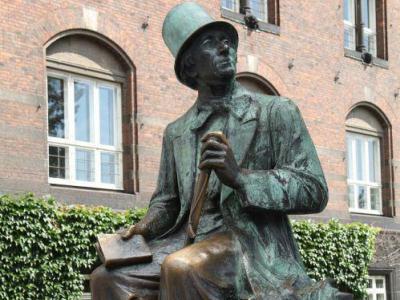
Right in the beating heart of Copenhagen, perched like a literary lighthouse in City Hall Square, sits Hans Christian Andersen. Sculpted in bronze in 1965 by Henry Luckow-Nielsen, this statue isn’t just casually hanging out-it’s strategically facing H.C. Andersens Boulevard.
The placement of the statue is symbolic, with Andersen casting a wistful gaze toward Tivoli Gardens, the whimsical amusement park that may or may not have inspired some of his magical stories.
The statue itself is a full-on cultural power move. Andersen’s pose-book in his lap-is casual, sure, but also deeply photogenic, making him perhaps the most approachable celebrity in Denmark. So many enthusiastic people have climbed up him over the years to take a photo that the poor guy’s knee is now smooth-polished shinier than a new krone.
And because this is Denmark, land of design and digital-savvy thinkers, there's even a QR code at the base, allowing visitors to engage further. Scan it and-voilà!-you're transported into Andersen’s interactive world through a short video exploring the life and works of Denmark's most celebrated son.
So, ultimately, it's more than just bronze-but legacy cast in metal, humor, and heart.
The placement of the statue is symbolic, with Andersen casting a wistful gaze toward Tivoli Gardens, the whimsical amusement park that may or may not have inspired some of his magical stories.
The statue itself is a full-on cultural power move. Andersen’s pose-book in his lap-is casual, sure, but also deeply photogenic, making him perhaps the most approachable celebrity in Denmark. So many enthusiastic people have climbed up him over the years to take a photo that the poor guy’s knee is now smooth-polished shinier than a new krone.
And because this is Denmark, land of design and digital-savvy thinkers, there's even a QR code at the base, allowing visitors to engage further. Scan it and-voilà!-you're transported into Andersen’s interactive world through a short video exploring the life and works of Denmark's most celebrated son.
So, ultimately, it's more than just bronze-but legacy cast in metal, humor, and heart.
11) H. C. Andersen Fairy-Tale House
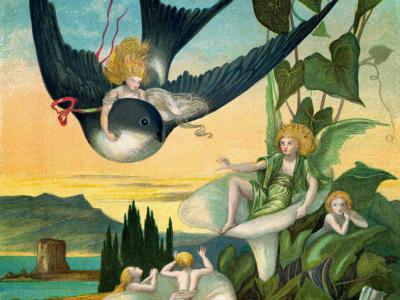
Just a skip away from Copenhagen’s City Hall Square and the ever-whimsical Tivoli Gardens, step right up to the Hans Christian Andersen Fairy-Tale House. This is where cobblestones meet fairy dust, and the world's most beloved storyteller gets his time in the spotlight-with just a dash of Ripley’s “Believe It or Not!” weirdness for flavor.
Think of this place as a time machine dressed as a storybook structured in two main parts. The first part focuses on Andersen’s real life. It details his upbringing and modest beginnings in Odense, followed by a move to Copenhagen, and his globe-trotting adventures with all the drama in between (rejections, fame, a few heartbreaks, rinse and repeat). This section spills the tea on the man behind the magic, contextualizing the origins of his inspirations and providing insight into his character and experiences.
Then-the second part-plunges you into the fairy tales themselves. "The Little Mermaid," "Thumbelina," "The Ugly Duckling," "The Steadfast Tin Soldier"-they're all here, brought to life with lights, sounds, and even smells. (Yes, your nose is now part of the experience, too.) Push a button, and storytime becomes showtime, complete with multilingual narration on oversized story cards and theatrical displays that would make even Andersen raise an eyebrow.
You can also check out the rare Andersen autograph manuscript. And to further enhance the experience, there are engaging live storytelling sessions. If you prefer something Instagrammable, snap a pic with the man himself-or at least his eerily lifelike model.
So, if you’ve ever wanted to walk straight into a fairy tale and maybe walk out with a selfie next to a literary legend, this is your spot. End of tale. Or is it just the beginning?
Tip:
If you want more bang for your krone, combo tickets are available for Ripley's, Guinness World Records, and The Mystic Exploratorium on Strøget-just a 15-minute stroll away. Even better, Copenhagen Card holders can get in free (you clever duckling, you!).
Think of this place as a time machine dressed as a storybook structured in two main parts. The first part focuses on Andersen’s real life. It details his upbringing and modest beginnings in Odense, followed by a move to Copenhagen, and his globe-trotting adventures with all the drama in between (rejections, fame, a few heartbreaks, rinse and repeat). This section spills the tea on the man behind the magic, contextualizing the origins of his inspirations and providing insight into his character and experiences.
Then-the second part-plunges you into the fairy tales themselves. "The Little Mermaid," "Thumbelina," "The Ugly Duckling," "The Steadfast Tin Soldier"-they're all here, brought to life with lights, sounds, and even smells. (Yes, your nose is now part of the experience, too.) Push a button, and storytime becomes showtime, complete with multilingual narration on oversized story cards and theatrical displays that would make even Andersen raise an eyebrow.
You can also check out the rare Andersen autograph manuscript. And to further enhance the experience, there are engaging live storytelling sessions. If you prefer something Instagrammable, snap a pic with the man himself-or at least his eerily lifelike model.
So, if you’ve ever wanted to walk straight into a fairy tale and maybe walk out with a selfie next to a literary legend, this is your spot. End of tale. Or is it just the beginning?
Tip:
If you want more bang for your krone, combo tickets are available for Ripley's, Guinness World Records, and The Mystic Exploratorium on Strøget-just a 15-minute stroll away. Even better, Copenhagen Card holders can get in free (you clever duckling, you!).

12) City Hall (Radhus) (must see)
Copenhagen City Hall, designed by famous architect Martin Nyrop and inspired by Siena's Town Hall in Italy, stands prominently on City Hall Square. The hall was inaugurated in 1905, showcasing the pinnacle of national romanticism in Denmark.
The building is marked by a striking facade decorated in rich ornamental style, featuring among other elements the roof statues of polar bears symbolizing the giant Danish protectorate of Greenland. A golden statue of Bishop Absalon, the city's founder, presides over the central balcony, while the clock tower, reaching 105.6 meters, marks one of Copenhagen's tallest structures. The tower clock, a notable feature, chimes daily at noon and during New Year's Eve at midnight.
The City Hall's architectural complex comprises three aligned buildings connected by longitudinal structures. The hall is linked via tunnels to the nearby buildings, ensuring a blend of historical elegance and modern functionality.
The interior layout includes meeting rooms, a wedding hall, and a banquet hall used by the municipality. At its heart lies the Town Hall Garden, open to the public during summer months and accessible from Hans Christian Andersen Boulevard. The front entrance boasts a glass mosaic depicting Copenhagen's coat of arms, commemorating the city's historical privileges and the City Hall's inauguration.
Inside the building, looking down on the inner grand hall (which is open to the public) are the marble busts of four celebrated locals: fairy-tale writer Hans Christian Andersen, sculptor Bertel Thorvaldsen, physicist Niels Bohr, and the building's architect Martin Nyrop. Downstairs are the national archives dating back to the 1270s.
As you leave, check out the amazing World Clock (opposite the info desk), the supreme mechanical astronomical chronometer in terms of function and precision. Built between 1943 and 1955, its displays include lunar and solar eclipses, positions of the stellar bodies, and a perpetual calendar, in addition to the time across the world's time zones. The clock's fastest gear completes a revolution every ten seconds, while the slowest – every 25,753 years!
Tip:
The main hall is free to enter, whereas to go up the tower you'll have to pay a small fee.
They escort you in groups at 11 am / 12:30 pm and 2 pm on weekdays and noon on Saturdays. You can join a guided English tour at 1 pm (on weekdays) and 10 am (on Saturdays).
As the building is central, the views are great and the viewing platform is square and large.
The building is marked by a striking facade decorated in rich ornamental style, featuring among other elements the roof statues of polar bears symbolizing the giant Danish protectorate of Greenland. A golden statue of Bishop Absalon, the city's founder, presides over the central balcony, while the clock tower, reaching 105.6 meters, marks one of Copenhagen's tallest structures. The tower clock, a notable feature, chimes daily at noon and during New Year's Eve at midnight.
The City Hall's architectural complex comprises three aligned buildings connected by longitudinal structures. The hall is linked via tunnels to the nearby buildings, ensuring a blend of historical elegance and modern functionality.
The interior layout includes meeting rooms, a wedding hall, and a banquet hall used by the municipality. At its heart lies the Town Hall Garden, open to the public during summer months and accessible from Hans Christian Andersen Boulevard. The front entrance boasts a glass mosaic depicting Copenhagen's coat of arms, commemorating the city's historical privileges and the City Hall's inauguration.
Inside the building, looking down on the inner grand hall (which is open to the public) are the marble busts of four celebrated locals: fairy-tale writer Hans Christian Andersen, sculptor Bertel Thorvaldsen, physicist Niels Bohr, and the building's architect Martin Nyrop. Downstairs are the national archives dating back to the 1270s.
As you leave, check out the amazing World Clock (opposite the info desk), the supreme mechanical astronomical chronometer in terms of function and precision. Built between 1943 and 1955, its displays include lunar and solar eclipses, positions of the stellar bodies, and a perpetual calendar, in addition to the time across the world's time zones. The clock's fastest gear completes a revolution every ten seconds, while the slowest – every 25,753 years!
Tip:
The main hall is free to enter, whereas to go up the tower you'll have to pay a small fee.
They escort you in groups at 11 am / 12:30 pm and 2 pm on weekdays and noon on Saturdays. You can join a guided English tour at 1 pm (on weekdays) and 10 am (on Saturdays).
As the building is central, the views are great and the viewing platform is square and large.
13) LEGO
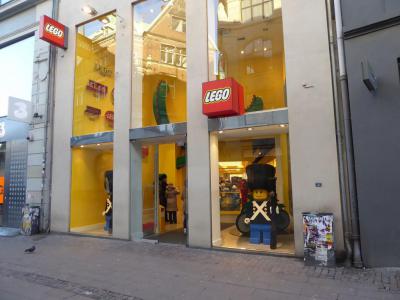
Who has not at some point played with LEGO toy building bricks as a child? The popular Danish plastic toy was introduced in 1947 by founder Ole Kirk Christiansen. The name LEGO comes from the Danish words leg godt, meaning play well.
The original toy building bricks were just the start. Later, in 1969, came Duplo building bricks, a series of simple blocks twice as big as the original and aimed at young children. LEGO also produces plastic figures, merchandise and themed sets often with a macho theme, like Star Wars, Indiana Jones, Toy Story, Batman, Cars, Pirates of the Caribbean, Avatar, Spider Man and so on.
LEGO has a massive following and subculture of movies, games, magazines, clothing line and of course theme parks. The original LEGOLAND is located in the town of Billund in Denmark. LEGO toys come in many variations with a starting price as little as $5. If you are Copenhagen, you should not miss the opportunity to visit the world of LEGO in its brand new flagship store.
The original toy building bricks were just the start. Later, in 1969, came Duplo building bricks, a series of simple blocks twice as big as the original and aimed at young children. LEGO also produces plastic figures, merchandise and themed sets often with a macho theme, like Star Wars, Indiana Jones, Toy Story, Batman, Cars, Pirates of the Caribbean, Avatar, Spider Man and so on.
LEGO has a massive following and subculture of movies, games, magazines, clothing line and of course theme parks. The original LEGOLAND is located in the town of Billund in Denmark. LEGO toys come in many variations with a starting price as little as $5. If you are Copenhagen, you should not miss the opportunity to visit the world of LEGO in its brand new flagship store.
14) Helligaandskirken (Church of the Holy Ghost)
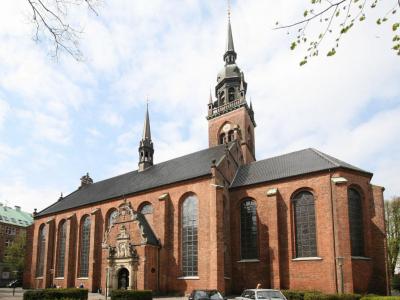
A trip to Copenhagen is indeed incomplete without a visit to this famous 18th-century church that is in existence since it was founded by the Holy Ghost Abbey and continues to serve the city as an ancient place of worship.
Helligaandskirken, the church of the Holy Ghost, was once a monastic church. It was reconstructed in 1732 after being destroyed by a fire in 1728. The new Helligaandskirken was originally used as a workroom and hostel serving traveling monks. This monastery has since seen numerous expansions and continues to be a part of the city’s central life for over 250 years.
As you enter this building, you will find a large exhibition room facing Strøget. This hall formerly served as a hospital and today exhibits modern art. In the Church’s choir, you can find a font by eminent sculptor Thorvaldsen.
Tourists from across the world throng this church that has the only completely preserved medieval building in the city. Helligaandskirken is used for Record Fair and is the only surviving building from those bygone times.
Tip:
There are music recitals held here – check the chalkboard outside for details.
A dedicated festival runs from July to end of August and usually starts about 4pm.
Helligaandskirken, the church of the Holy Ghost, was once a monastic church. It was reconstructed in 1732 after being destroyed by a fire in 1728. The new Helligaandskirken was originally used as a workroom and hostel serving traveling monks. This monastery has since seen numerous expansions and continues to be a part of the city’s central life for over 250 years.
As you enter this building, you will find a large exhibition room facing Strøget. This hall formerly served as a hospital and today exhibits modern art. In the Church’s choir, you can find a font by eminent sculptor Thorvaldsen.
Tourists from across the world throng this church that has the only completely preserved medieval building in the city. Helligaandskirken is used for Record Fair and is the only surviving building from those bygone times.
Tip:
There are music recitals held here – check the chalkboard outside for details.
A dedicated festival runs from July to end of August and usually starts about 4pm.
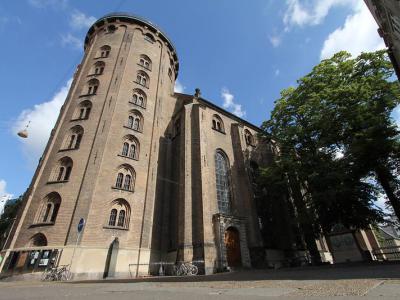
15) Round Tower (Rundetarn) (must see)
The Round Tower – Copenhagen’s answer to the question: “What if we made a giant architectural cinnamon roll… but for science?” This 17th-century spiral of brick in the heart of the Danish capital was “cooked up” by King Christian IV as part of his grand architectural project, originally intended as an observatory for the astronomer genius Tycho Brahe.
Back in the 1600s, Europe was getting really into astronomy. The Round Tower came with its own academic library, the Trinitatis Church, and a university chapel. The spiral ramp was so strong and wide that one could easily ride a horse or even drive a carriage up and down it. Apparently, some kings did actually, including Russian Tsar Peter the Great. Because stairs are for the common folk...
Now, if you're a fan of Hans Christian Andersen, you're gonna love this. The Round Tower pops up in “The Tinderbox.” That’s the one where a soldier meets a witch, climbs into a hollow tree, and finds three coin-filled vaults guarded by increasingly horrifying dogs. The biggest of which has eyes “the size of the Round Tower.” Subtle product placement, Hans...
Today, tourists from all corners of the Earth climb its 7.5-turn helical corridor just to snap that perfect panoramic selfie of the city. Because it’s not just a tower but a slow-motion ascent into Danish history, science, and surprisingly chic art installations.
As you wind your way up, your first pitstop is a gallery space featuring contemporary art that occasionally makes you question your understanding of gravity. Then it’s on to the bell loft – because what's a tower without a good ol’ bell room? And finally, the key attraction: the observatory itself, complete with a 360-degree view of Copenhagen. There’s even a thick glass platform near the top – for the brave souls who enjoy standing on transparent floors and peering into the abyss.
Tip:
There’s a cozy café nearby for a crowd-free coffee break, a blessedly clean toilet halfway up, and a souvenir shop with actual quality stuff – not your usual tourist tat. So take your time, bring your curiosity, and maybe leave the horse at home...
Back in the 1600s, Europe was getting really into astronomy. The Round Tower came with its own academic library, the Trinitatis Church, and a university chapel. The spiral ramp was so strong and wide that one could easily ride a horse or even drive a carriage up and down it. Apparently, some kings did actually, including Russian Tsar Peter the Great. Because stairs are for the common folk...
Now, if you're a fan of Hans Christian Andersen, you're gonna love this. The Round Tower pops up in “The Tinderbox.” That’s the one where a soldier meets a witch, climbs into a hollow tree, and finds three coin-filled vaults guarded by increasingly horrifying dogs. The biggest of which has eyes “the size of the Round Tower.” Subtle product placement, Hans...
Today, tourists from all corners of the Earth climb its 7.5-turn helical corridor just to snap that perfect panoramic selfie of the city. Because it’s not just a tower but a slow-motion ascent into Danish history, science, and surprisingly chic art installations.
As you wind your way up, your first pitstop is a gallery space featuring contemporary art that occasionally makes you question your understanding of gravity. Then it’s on to the bell loft – because what's a tower without a good ol’ bell room? And finally, the key attraction: the observatory itself, complete with a 360-degree view of Copenhagen. There’s even a thick glass platform near the top – for the brave souls who enjoy standing on transparent floors and peering into the abyss.
Tip:
There’s a cozy café nearby for a crowd-free coffee break, a blessedly clean toilet halfway up, and a souvenir shop with actual quality stuff – not your usual tourist tat. So take your time, bring your curiosity, and maybe leave the horse at home...
