Custom Walk in Rotterdam, Netherlands by dianasigheartau_858ac created on 2026-03-13
Guide Location: Netherlands » Rotterdam
Guide Type: Custom Walk
# of Sights: 12
Tour Duration: 3 Hour(s)
Travel Distance: 6.5 Km or 4 Miles
Share Key: TVMBE
Guide Type: Custom Walk
# of Sights: 12
Tour Duration: 3 Hour(s)
Travel Distance: 6.5 Km or 4 Miles
Share Key: TVMBE
How It Works
Please retrieve this walk in the GPSmyCity app. Once done, the app will guide you from one tour stop to the next as if you had a personal tour guide. If you created the walk on this website or come to the page via a link, please follow the instructions below to retrieve the walk in the app.
Retrieve This Walk in App
Step 1. Download the app "GPSmyCity: Walks in 1K+ Cities" on Apple App Store or Google Play Store.



Step 2. In the GPSmyCity app, download(or launch) the guide "Rotterdam Map and Walking Tours".
Step 3. Tap the menu button located at upper right corner of the "Walks" screen and select "Retrieve custom walk". Enter the share key: TVMBE
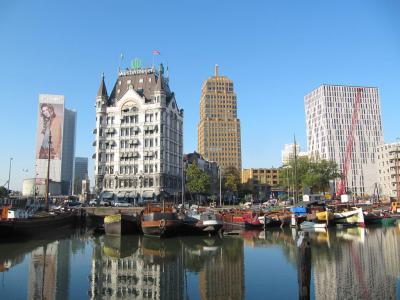
1) Oude Haven (Old Harbor)
The Old Harbor is one of Rotterdam's oldest port areas, with its origins dating back to the early 14th century. The first jetty was constructed around 1350, marking the beginning of the city’s development as a major maritime hub. Over the centuries, the harbor played a vital role in Rotterdam’s growth, facilitating trade and commerce. However, the devastation of World War II heavily damaged much of the area, leaving only a few historical structures standing.
The Old Harbor is one of Rotterdam's oldest areas, now the city's entertainment hub. With its cafés and restaurants lining the water, the area offers a perfect mix of historic charm and modern appeal. Many of the establishments feature outdoor terraces, allowing visitors to relax and watch the boats. As night falls, Old Harbor comes alive with a nightlife scene popular for the ones looking to enjoy a drink or dance along the water.
The harbor’s rich history is still visible today through the traditional sailing boats moored along the docks. One of the most prominent landmarks in Old Harbor is the White House-standing at 43 meters tall, it was once Europe’s tallest skyscraper when it was completed in 1898. The White House, one of the few buildings to survive the bombings of World War II, can be admired for its distinctive Art Nouveau architecture.
The Old Harbor is one of Rotterdam's oldest areas, now the city's entertainment hub. With its cafés and restaurants lining the water, the area offers a perfect mix of historic charm and modern appeal. Many of the establishments feature outdoor terraces, allowing visitors to relax and watch the boats. As night falls, Old Harbor comes alive with a nightlife scene popular for the ones looking to enjoy a drink or dance along the water.
The harbor’s rich history is still visible today through the traditional sailing boats moored along the docks. One of the most prominent landmarks in Old Harbor is the White House-standing at 43 meters tall, it was once Europe’s tallest skyscraper when it was completed in 1898. The White House, one of the few buildings to survive the bombings of World War II, can be admired for its distinctive Art Nouveau architecture.
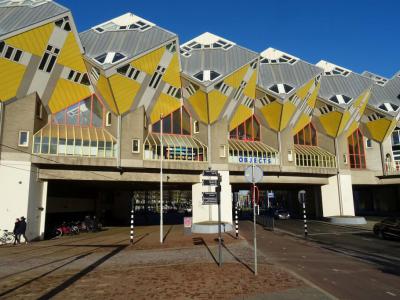
2) Kubuswoningen (Cube Houses)
Few buildings capture Rotterdam’s spirit of creativity quite like the Cube Houses, the city’s most playful architectural experiment. Designed by Dutch architect Piet Blom, these yellow cubes seem to balance on their tips, tilted 45 degrees as if defying gravity. Blom’s goal was to create an “urban forest”, where each cube represents a tree and together they form a sculptural canopy above the streets below.
Built in the 1980s as part of a larger urban renewal project, the Cube Houses were conceived in collaboration with city planners who wanted to bring life and imagination back to Rotterdam. Each Cube House rises three stories high. The lower level contains a kitchen and living room, the middle floor holds two bedrooms and a bathroom, and the top level often serves as a small garden, workspace, or viewing area.
The complex also functions as a pedestrian bridge across a busy intersection, maintaining a car-free environment. Around the cubes, visitors will find a lively community of cafés, restaurants, small offices, studios, and even a playground.
Those curious about what life is like inside one of these tilted wonders can visit the Show Cube Museum, which offers a peek into their design and history. And for the truly adventurous, a few of the cubes have been converted into overnight accommodations-perfect for anyone eager to experience Rotterdam from a slightly different angle.
Built in the 1980s as part of a larger urban renewal project, the Cube Houses were conceived in collaboration with city planners who wanted to bring life and imagination back to Rotterdam. Each Cube House rises three stories high. The lower level contains a kitchen and living room, the middle floor holds two bedrooms and a bathroom, and the top level often serves as a small garden, workspace, or viewing area.
The complex also functions as a pedestrian bridge across a busy intersection, maintaining a car-free environment. Around the cubes, visitors will find a lively community of cafés, restaurants, small offices, studios, and even a playground.
Those curious about what life is like inside one of these tilted wonders can visit the Show Cube Museum, which offers a peek into their design and history. And for the truly adventurous, a few of the cubes have been converted into overnight accommodations-perfect for anyone eager to experience Rotterdam from a slightly different angle.
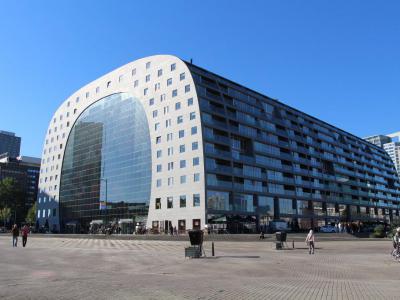
3) Markthal (Market Hall) (must see)
The Market Hall is a multi-use complex that combines apartments, offices, retail spaces, and one of Rotterdam’s most popular markets, all under a single monumental arch. Opened in 2014, the building is celebrated for its dramatic horseshoe-shaped arch and its massive glass facades composed of smaller window panels. A 34-metre high steel cable structure supports these glass walls, making it Europe’s largest cable-supported glass façade. Beneath it lies an extensive underground parking garage that adds to its functional design.
Inside, visitors are greeted by a space of vivid artwork covering the interior arch. Created by Dutch artists Arno Coenen and Iris Roskam, Horn of Plenty depicts giant fruits, vegetables, fish, flowers, and insects in dazzling colour. The digital artwork was so enormous that the artists had to borrow computing power from Pixar Studios. This spectacular mural has earned the Market Hall nicknames such as “The Largest Artwork in the World” and “The Sistine Chapel of Rotterdam”.
During the building’s construction, archaeologists unearthed the remains of a 10th-century farmstead, including a house with two stoves and several fireplaces. A small exhibition beside the central staircases displays these finds, offering visitors a glimpse of Rotterdam’s early settlement history.
Today, the Market Hall stands as the largest indoor market in the Netherlands. It hosts more than 100 produce stalls, 15 food shops, and eight restaurants. Shoppers can browse local cheeses, fresh fish, fruit and vegetables, poultry, flowers, and plants. For those eager to sample their purchases, plenty of indoor seating areas are available-making the Market Hall both a culinary destination and a modern architectural icon.
Inside, visitors are greeted by a space of vivid artwork covering the interior arch. Created by Dutch artists Arno Coenen and Iris Roskam, Horn of Plenty depicts giant fruits, vegetables, fish, flowers, and insects in dazzling colour. The digital artwork was so enormous that the artists had to borrow computing power from Pixar Studios. This spectacular mural has earned the Market Hall nicknames such as “The Largest Artwork in the World” and “The Sistine Chapel of Rotterdam”.
During the building’s construction, archaeologists unearthed the remains of a 10th-century farmstead, including a house with two stoves and several fireplaces. A small exhibition beside the central staircases displays these finds, offering visitors a glimpse of Rotterdam’s early settlement history.
Today, the Market Hall stands as the largest indoor market in the Netherlands. It hosts more than 100 produce stalls, 15 food shops, and eight restaurants. Shoppers can browse local cheeses, fresh fish, fruit and vegetables, poultry, flowers, and plants. For those eager to sample their purchases, plenty of indoor seating areas are available-making the Market Hall both a culinary destination and a modern architectural icon.
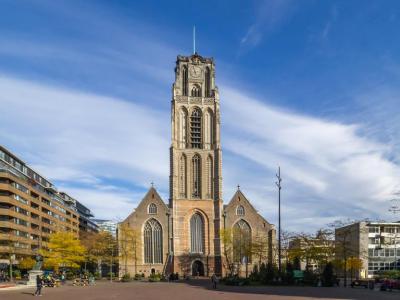
4) St. Laurenskerk (St. Lawrence Church)
Saint Lawrence Church is Rotterdam’s only remaining medieval building. Construction began in 1449 and was completed in 1525. It was also the city’s first all-stone structure. The tower, originally added in 1621, has been rebuilt several times over the centuries.
When the Reformation reached Rotterdam in 1572, the church was converted from Catholic to Protestant worship. During the Second World War, the building suffered severe damage in the Rotterdam Blitz-only the tower and outer walls remained standing. For years, citizens debated whether to restore or demolish it, but restoration began in 1952 and was completed in 1968. The present church blends preserved medieval masonry with postwar reconstruction.
Among its notable features is the copper choir fence dating from 1713. Inside, visitors can see memorials to Dutch naval heroes such as admirals Kortenaar, Witte de With, and officer Van Brakel. The bronze doors, designed by Italian sculptor Giacomo Manzù, depict themes of war and peace and mark one of the church’s most admired details. In front of the church stands a statue of Desiderius Erasmus, the famous Rotterdam-born humanist and theologian, who remains one of the city’s most celebrated historical figures. The statue, installed in 1622, miraculously survived the World War II bombing that destroyed the surrounding area.
Religious services resumed in 1971 with the founding of the Laurenspastoraat community. Today, Saint Lawrence Church continues to serve as a place of worship for both the Laurenspastoraat and the Open Grenzen congregations. The church also houses a permanent exhibition dedicated to Rotterdam’s history. Spread across 20 side chapels, the displays combine artifacts, photographs, and audiovisual installations that trace the city’s medieval beginnings, the devastation of World War II, and its subsequent rebirth.
When the Reformation reached Rotterdam in 1572, the church was converted from Catholic to Protestant worship. During the Second World War, the building suffered severe damage in the Rotterdam Blitz-only the tower and outer walls remained standing. For years, citizens debated whether to restore or demolish it, but restoration began in 1952 and was completed in 1968. The present church blends preserved medieval masonry with postwar reconstruction.
Among its notable features is the copper choir fence dating from 1713. Inside, visitors can see memorials to Dutch naval heroes such as admirals Kortenaar, Witte de With, and officer Van Brakel. The bronze doors, designed by Italian sculptor Giacomo Manzù, depict themes of war and peace and mark one of the church’s most admired details. In front of the church stands a statue of Desiderius Erasmus, the famous Rotterdam-born humanist and theologian, who remains one of the city’s most celebrated historical figures. The statue, installed in 1622, miraculously survived the World War II bombing that destroyed the surrounding area.
Religious services resumed in 1971 with the founding of the Laurenspastoraat community. Today, Saint Lawrence Church continues to serve as a place of worship for both the Laurenspastoraat and the Open Grenzen congregations. The church also houses a permanent exhibition dedicated to Rotterdam’s history. Spread across 20 side chapels, the displays combine artifacts, photographs, and audiovisual installations that trace the city’s medieval beginnings, the devastation of World War II, and its subsequent rebirth.
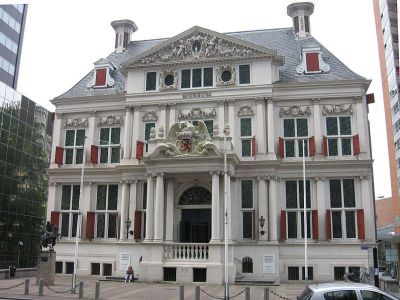
5) Het Schielandshuis
The Schielandshuis, a 17th-century edifice, graces the heart of Rotterdam on Korte Hoogstraat. Erected between 1662 and 1665 by decree of the Schieland Water Board, it underwent extensive restoration before finally unveiling as a museum in 1986. Once a domicile and a venue for gatherings, the building's regal presence was reminiscent of a city palace.
For nearly 150 years, this architectural marvel served as the abode of the Polder Council. Crafted by Pieter Post, a luminary of Dutch classicism, the same mind behind Maastricht's city hall, Leiden's Waag, and Gouda's Waag, among other notable structures. Collaborating with Jacob van Campen, Post also lent his genius to the design of Mauritshuis and Huis ten Bosch.
In October 1811, Napoleon I and Marie Louise occupied Schielandshuis, even removing the gate for their carriages. Later, Tsar Alexander I refused to enter Napoleon's room. In 1841, Rotterdam acquired the building, intending a museum. Collector F.J.O. Boijmans' pledge led to Museum Boijmans' founding in 1849. In 1938, the museum moved to its current location as Museum Boijmans Van Beuningen.
In 1978, the City Council endorsed a 17th-century-style restoration of the Schielandshuis. In 1986, the museum's grand reopening took place. Over time, towering neighbors joined the building's surroundings. In 2011, the museum adopted the moniker Museum Rotterdam, signifying its focus on the city's essence rather than solely its history. The transition to Timmerhuis in 2016 led to new occupants: Rotterdam Partners, Rotterdam Tourist Information, the Rotterdam Council for Art and Culture, and NAi Publishers.
For nearly 150 years, this architectural marvel served as the abode of the Polder Council. Crafted by Pieter Post, a luminary of Dutch classicism, the same mind behind Maastricht's city hall, Leiden's Waag, and Gouda's Waag, among other notable structures. Collaborating with Jacob van Campen, Post also lent his genius to the design of Mauritshuis and Huis ten Bosch.
In October 1811, Napoleon I and Marie Louise occupied Schielandshuis, even removing the gate for their carriages. Later, Tsar Alexander I refused to enter Napoleon's room. In 1841, Rotterdam acquired the building, intending a museum. Collector F.J.O. Boijmans' pledge led to Museum Boijmans' founding in 1849. In 1938, the museum moved to its current location as Museum Boijmans Van Beuningen.
In 1978, the City Council endorsed a 17th-century-style restoration of the Schielandshuis. In 1986, the museum's grand reopening took place. Over time, towering neighbors joined the building's surroundings. In 2011, the museum adopted the moniker Museum Rotterdam, signifying its focus on the city's essence rather than solely its history. The transition to Timmerhuis in 2016 led to new occupants: Rotterdam Partners, Rotterdam Tourist Information, the Rotterdam Council for Art and Culture, and NAi Publishers.
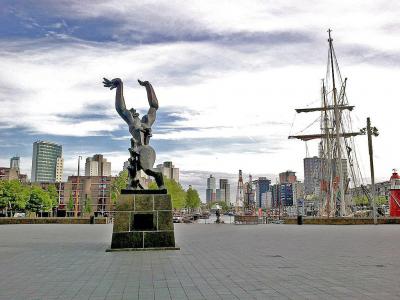
6) The Destroyed City
The Destroyed City is a bronze memorial sculpture in Rotterdam. It commemorates the German bombing of Rotterdam on 14 May 1940, which destroyed the medieval center of the city. Unveiled in 1953, it was designated as a Dutch National Monument in 2010. It is the largest sculpture by the Russian-born French sculptor Ossip Zadkine, his best-known work.
The 6.5 meters (21 feet) tall sculpture portrays a human figure by a tree stump. The figure raises its hands, head thrown back as if crying in grief, with a hole in its chest. This absence of a heart symbolizes Rotterdam's center destruction. Zadkine called it "A cry against tyranny's brutality". It's likened to Picasso's Guernica art. The sculpture stands on a 2 meters (6.5 feet) high granite plinth.
Created from 1951-1953 in Paris by Susse Frères foundry, the bronze sculpture was a gift to the city with its location chosen by Zadkine. The donor's identity was revealed in 1978. The modern piece sparked controversy, notably with Jan Tillema, Rotterdam's Director of Public Works, branding it a "demonic scourge." Despite objections, the gift was accepted, and Tillema designed the plinth. The statue's installation, including the plinth, incurred a cost of 24,500 guilders.
On May 15, 1953, Gerard van Walsum, the mayor of Rotterdam, unveiled it on Plein 1940, where it remains by the Maritime Museum Rotterdam. It was shifted 60 meters (200 feet) in 1975 and restored in 2007 after temporary removal for construction in 2005.
The 6.5 meters (21 feet) tall sculpture portrays a human figure by a tree stump. The figure raises its hands, head thrown back as if crying in grief, with a hole in its chest. This absence of a heart symbolizes Rotterdam's center destruction. Zadkine called it "A cry against tyranny's brutality". It's likened to Picasso's Guernica art. The sculpture stands on a 2 meters (6.5 feet) high granite plinth.
Created from 1951-1953 in Paris by Susse Frères foundry, the bronze sculpture was a gift to the city with its location chosen by Zadkine. The donor's identity was revealed in 1978. The modern piece sparked controversy, notably with Jan Tillema, Rotterdam's Director of Public Works, branding it a "demonic scourge." Despite objections, the gift was accepted, and Tillema designed the plinth. The statue's installation, including the plinth, incurred a cost of 24,500 guilders.
On May 15, 1953, Gerard van Walsum, the mayor of Rotterdam, unveiled it on Plein 1940, where it remains by the Maritime Museum Rotterdam. It was shifted 60 meters (200 feet) in 1975 and restored in 2007 after temporary removal for construction in 2005.
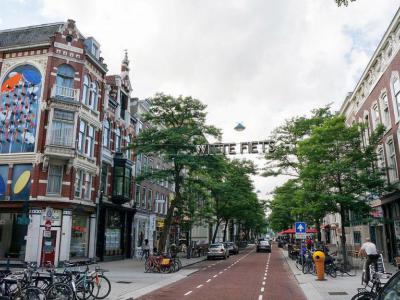
7) Witte de Withstraat Street (must see)
Witte de Withstraat Street, spanning approximately 320 meters, was named after Witte Cornelisz de With, a 17th-century Dutch naval officer. During the 1990s, its transformation into an "Art Axis" - a designated cultural and artistic district linking the Park Museum and the Maritime Museum - helped reshape its identity as one of the city’s cultural and nightlife centres.
Here, you'll find Rotterdam Bazar, a lively restaurant offering international dishes; Vivu, which serves delicious Vietnamese cuisine; and Oliva, known for its Italian fare. For a casual bite, Bagel Bakery is the perfect stop for a bagel and a quick coffee. The highly regarded burger spot Ter Marsch & Co serves some of the Netherlands’ best hamburgers. For a different vibe, the Nieuw Rotterdams Café, housed in a grand former newspaper building, offers a stylish setting for cocktails or dinner.
The shopping scene is as diverse as the food offerings. You'll discover independent boutiques like Betsy Palmer, a well-known shoe shop, and RSI The Attraction, which specializes in adventure gear such as skateboards, snowboards, and kites.
Artists and gallery-goers will feel right at home here, too. Kunstinstituut Melly hosts international exhibitions and educational programs. Other galleries in the area include Ecce Gallery and van Eijk Gallery, which features modern art, ceramics, and sculpture. Around the side streets, you’ll also encounter murals and street-art installations.
In earlier decades, the street had a rougher reputation, once home to less savory cafés and illegal gambling houses in the 1970s. However, its revival has helped shape Witte de Withstraat Street into a hub for art, design, and nightlife energy.
Here, you'll find Rotterdam Bazar, a lively restaurant offering international dishes; Vivu, which serves delicious Vietnamese cuisine; and Oliva, known for its Italian fare. For a casual bite, Bagel Bakery is the perfect stop for a bagel and a quick coffee. The highly regarded burger spot Ter Marsch & Co serves some of the Netherlands’ best hamburgers. For a different vibe, the Nieuw Rotterdams Café, housed in a grand former newspaper building, offers a stylish setting for cocktails or dinner.
The shopping scene is as diverse as the food offerings. You'll discover independent boutiques like Betsy Palmer, a well-known shoe shop, and RSI The Attraction, which specializes in adventure gear such as skateboards, snowboards, and kites.
Artists and gallery-goers will feel right at home here, too. Kunstinstituut Melly hosts international exhibitions and educational programs. Other galleries in the area include Ecce Gallery and van Eijk Gallery, which features modern art, ceramics, and sculpture. Around the side streets, you’ll also encounter murals and street-art installations.
In earlier decades, the street had a rougher reputation, once home to less savory cafés and illegal gambling houses in the 1970s. However, its revival has helped shape Witte de Withstraat Street into a hub for art, design, and nightlife energy.
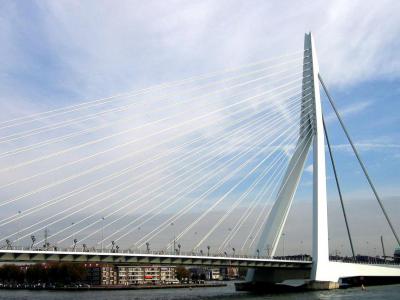
8) Erasmusbrug (Erasmus Bridge) (must see)
Erasmus Bridge crosses the Nieuwe Mass River. This combination cable-stayed and bascule bridge was completed in 1996. The modern bridge was named after Desiderius Erasmus, a Renaissance humanist and Catholic priest. Erasmus was born in Rotterdam in 1446 and is considered one of the greatest scholars of the northern Renaissance.
Erasmus Bridge is Rotterdam's most iconic landmark and is featured in the city's logo. The bridge is 802 meters (2,631 feet) long. The cable-stayed portion has a 139-meter (456-foot) asymmetrical bent pylon with an eye-catching horizontal base. This striking feature has earned it "The Swan" nickname.
The south portion of the bridge has an 89-meter (292-foot) long bascule bridge to allow large ships to pass under the bridge.
The bridge has been featured in films and events. It was in Jackie Chan's 1998 film Who Am I?. Several planes dramatically flew under the bridge during the 2005 Red Bull Air Race.
Erasmus Bridge is Rotterdam's most iconic landmark and is featured in the city's logo. The bridge is 802 meters (2,631 feet) long. The cable-stayed portion has a 139-meter (456-foot) asymmetrical bent pylon with an eye-catching horizontal base. This striking feature has earned it "The Swan" nickname.
The south portion of the bridge has an 89-meter (292-foot) long bascule bridge to allow large ships to pass under the bridge.
The bridge has been featured in films and events. It was in Jackie Chan's 1998 film Who Am I?. Several planes dramatically flew under the bridge during the 2005 Red Bull Air Race.
9) Koningin Emmaplein
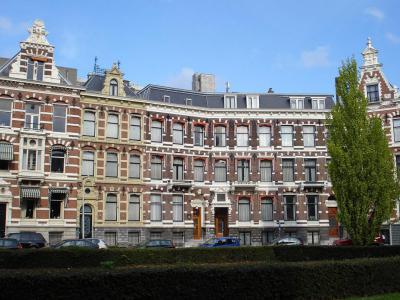
Koningin Emmaplein (Queen Emma Square) graces the Scheepvaartkwartier (Shipping Quarter) district in Rotterdam. Nestled alongside the Westzeedijk, it stands in direct opposition to the Museum Park.
Originating between 1888 and 1891, the Koningin Emmaplein was conceived under the architectural guidance of J.C. from the local vicinity. This square boasts a symmetrical arrangement of 15 opulent mansions, crafted in the exquisite Neo-Renaissance style. These grand structures offer vistas of Schoonoord Park at their rear and the then-undeveloped expanse of Land van Hoboken at their front. These mansions were inhabited by esteemed members of the Rotterdam business elite, a fact that combined with the somewhat sheltered positioning, earned the square the affectionate moniker "Rijkeluishofje" (Rich People's Courtyard).
Adorning the square, a monumental red beech tree (Fagus sylvatica Atropuni) stands tall, accompanied by an ornate vase from 1890, artistically conceived by Berlage. In 1956, when Rotterdam was established as an independent diocese, Koningin Emmaplein became the residence and office of the bishop. Adjacent to this edifice stood the Saint Laurentius and Ignatius Cathedral, serving as the primary church of the diocese.
Recognized as a national treasure, the Koningin Emmaplein holds the status of a protected cityscape within the broader framework of the Scheepvaartkwartier (Shipping Quarter).
Originating between 1888 and 1891, the Koningin Emmaplein was conceived under the architectural guidance of J.C. from the local vicinity. This square boasts a symmetrical arrangement of 15 opulent mansions, crafted in the exquisite Neo-Renaissance style. These grand structures offer vistas of Schoonoord Park at their rear and the then-undeveloped expanse of Land van Hoboken at their front. These mansions were inhabited by esteemed members of the Rotterdam business elite, a fact that combined with the somewhat sheltered positioning, earned the square the affectionate moniker "Rijkeluishofje" (Rich People's Courtyard).
Adorning the square, a monumental red beech tree (Fagus sylvatica Atropuni) stands tall, accompanied by an ornate vase from 1890, artistically conceived by Berlage. In 1956, when Rotterdam was established as an independent diocese, Koningin Emmaplein became the residence and office of the bishop. Adjacent to this edifice stood the Saint Laurentius and Ignatius Cathedral, serving as the primary church of the diocese.
Recognized as a national treasure, the Koningin Emmaplein holds the status of a protected cityscape within the broader framework of the Scheepvaartkwartier (Shipping Quarter).
10) Euromast Tower (must see)
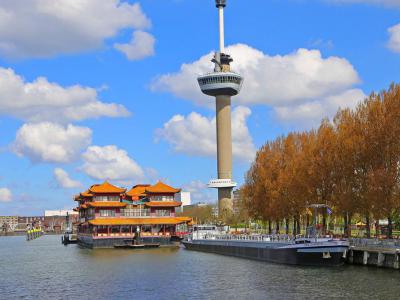
Euromast is an observation tower that was built for the 1960 Floriade International Garden Festival. The imposing structure was originally 101-meters (331-feet) tall and was Rotterdam's tallest building. In 1970, the Space Tower antennae was added, and the building is now 185-meters (606-feet) tall.
The tower is built on an underground 4,200,000-pound concrete block for stability. The crow's nest observation platform is 96 meters (315 feet) tall. The observation platform is home to a restaurant that serves brunch, lunch, and dinner.
Visitors can take an elevator to the Euroscoop at the top of the 185-meter-tall (606-foot-tall) tower. Adventurous travelers can even spend the night in the Euromast. There are several luxury suites.
Thrill-seekers can abseil or cable glide down the Euromast. Abseiling will allow you to walk down the outside wall in a climbing harness. Cable gliding is much more exciting. Guests hang from a cable track while zooming down at speeds up to 100 kilometers per hour (62 miles per hour).
The tower is built on an underground 4,200,000-pound concrete block for stability. The crow's nest observation platform is 96 meters (315 feet) tall. The observation platform is home to a restaurant that serves brunch, lunch, and dinner.
Visitors can take an elevator to the Euroscoop at the top of the 185-meter-tall (606-foot-tall) tower. Adventurous travelers can even spend the night in the Euromast. There are several luxury suites.
Thrill-seekers can abseil or cable glide down the Euromast. Abseiling will allow you to walk down the outside wall in a climbing harness. Cable gliding is much more exciting. Guests hang from a cable track while zooming down at speeds up to 100 kilometers per hour (62 miles per hour).
11) Aelbrechtskolk (Aelbrecht Waterway)
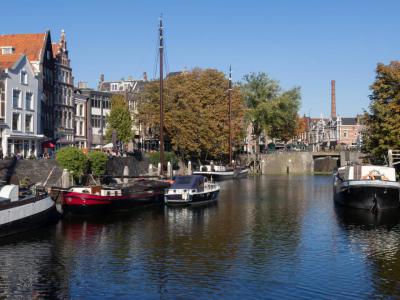
The now picturesque part of Rotterdam, popular for its delightful residential and commercial properties, the Aelbrechtskolk area in the historic Delfshaven district is a former canal-lock. It was built in the early 15th century after Aelbrecht van Beieren, Count of Holland and Zeeland, had granted Delft the right to dig its own schie (waterway) to the Maas river in 1389.
The result was that the Delfshavense Schie, discharged into the river between the ports of Schiedam and Rotterdam, allowed Delft to benefit solely from the hefty port dues. The canal opening in the dyke, which could be closed at high water by a sturdy lock, was made around 1400.
The original sluis (lock ) in Aelbrechtskolk was located where today's Café De Oude Sluis is. In 1594 it was replaced and moved. Many other local buildings also had to go eventually, to make way for the new Schiedamseweg, which was extended to the Binnenweg around 1910 to create a direct link between Schiedam and Rotterdam.
Most of the buildings around the Aelbrechtskolk are historically important and listed as the National Heritage. Among them is the Oude- or Pelgrimvaderskerk, the old church where the Pilgrim Fathers (a group of English Puritans) had spent a night praying before embarking on their perilous journey across the Atlantic to America in 1620.
The result was that the Delfshavense Schie, discharged into the river between the ports of Schiedam and Rotterdam, allowed Delft to benefit solely from the hefty port dues. The canal opening in the dyke, which could be closed at high water by a sturdy lock, was made around 1400.
The original sluis (lock ) in Aelbrechtskolk was located where today's Café De Oude Sluis is. In 1594 it was replaced and moved. Many other local buildings also had to go eventually, to make way for the new Schiedamseweg, which was extended to the Binnenweg around 1910 to create a direct link between Schiedam and Rotterdam.
Most of the buildings around the Aelbrechtskolk are historically important and listed as the National Heritage. Among them is the Oude- or Pelgrimvaderskerk, the old church where the Pilgrim Fathers (a group of English Puritans) had spent a night praying before embarking on their perilous journey across the Atlantic to America in 1620.
12) Schiedamseweg Shopping Street
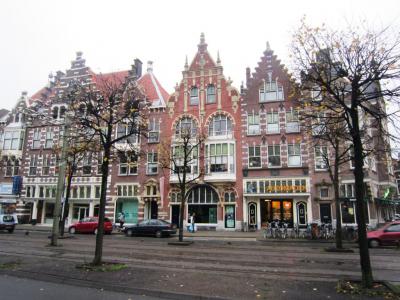
The Schiedamseweg stands as a renowned shopping boulevard located within the Delfshaven district of Rotterdam. Stretching from the historic Aelbrechtskolk in Delfshaven to the bustling Marconiplein, the Schiedamseweg is a significant part of the Schielands Hoge Zeedijk, encompassing its course from Marconiplein up to the municipal border of Schiedam, affectionately referred to as Rotterdamsedijk.
Built in 1910, the Schiedamseweg connected Delfshaven and Schiedam, replacing the narrow Mathenesserdijk route. This broad boulevard was carefully planned as the main axis in the Bospolder/Tussendijken area. Structures on the east side feature Neo-Renaissance style, while those past Spanjaardstraat on the west have a simpler design. The Schiedamseweg's development was completed by the late 1920s.
Tragedy struck Rotterdam-West on March 31, 1943, when the area fell victim to the Rotterdam-West bombing. This catastrophic event led to the devastation of the western portion of the Schiedamseweg. The aftermath of the bombing resulted in a staggering loss of approximately 400 lives and rendered 16,000 individuals homeless. However, the neighborhood experienced a rebirth during the 1950s, with reconstruction efforts taking place. Even in 2007, the remnants of the fire boundary at Wattierstraat remained distinctly visible.
In the 1980s, a significant development unfolded beneath the Schiedamseweg: the construction of the Calandlijn tunnel, connecting Coolhaven and Marconiplein. This endeavor led to the closure of the Schiedamseweg for an extended period due to the tunnel's construction. The method employed for this project involved a shell tunnel design, with the tunnel floor being assembled on-site while tunnel roof segments were prefabricated and transported from elsewhere.
Built in 1910, the Schiedamseweg connected Delfshaven and Schiedam, replacing the narrow Mathenesserdijk route. This broad boulevard was carefully planned as the main axis in the Bospolder/Tussendijken area. Structures on the east side feature Neo-Renaissance style, while those past Spanjaardstraat on the west have a simpler design. The Schiedamseweg's development was completed by the late 1920s.
Tragedy struck Rotterdam-West on March 31, 1943, when the area fell victim to the Rotterdam-West bombing. This catastrophic event led to the devastation of the western portion of the Schiedamseweg. The aftermath of the bombing resulted in a staggering loss of approximately 400 lives and rendered 16,000 individuals homeless. However, the neighborhood experienced a rebirth during the 1950s, with reconstruction efforts taking place. Even in 2007, the remnants of the fire boundary at Wattierstraat remained distinctly visible.
In the 1980s, a significant development unfolded beneath the Schiedamseweg: the construction of the Calandlijn tunnel, connecting Coolhaven and Marconiplein. This endeavor led to the closure of the Schiedamseweg for an extended period due to the tunnel's construction. The method employed for this project involved a shell tunnel design, with the tunnel floor being assembled on-site while tunnel roof segments were prefabricated and transported from elsewhere.
