Custom Walk in Santiago, Chile by scraneconsulting2352 created on 2026-03-15
Guide Location: Chile » Santiago
Guide Type: Custom Walk
# of Sights: 8
Tour Duration: 6 Hour(s)
Travel Distance: 16 Km or 9.9 Miles
Share Key: JMBDQ
Guide Type: Custom Walk
# of Sights: 8
Tour Duration: 6 Hour(s)
Travel Distance: 16 Km or 9.9 Miles
Share Key: JMBDQ
How It Works
Please retrieve this walk in the GPSmyCity app. Once done, the app will guide you from one tour stop to the next as if you had a personal tour guide. If you created the walk on this website or come to the page via a link, please follow the instructions below to retrieve the walk in the app.
Retrieve This Walk in App
Step 1. Download the app "GPSmyCity: Walks in 1K+ Cities" on Apple App Store or Google Play Store.



Step 2. In the GPSmyCity app, download(or launch) the guide "Santiago Map and Walking Tours".
Step 3. Tap the menu button located at upper right corner of the "Walks" screen and select "Retrieve custom walk". Enter the share key: JMBDQ
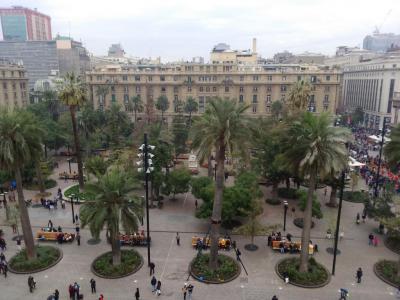
1) Plaza de Armas (Arms Square) (must see)
The Arms Square was founded along with Santiago in 1541. During the time of the Spanish colonization, it was customary to leave a city block empty and surround it with government buildings and a cathedral. If an attack happened, the city's residents could gather in the square and be defended.
Most of the buildings surrounding the Arms Square were completed in the 1800s. The beautiful Metropolitan Cathedral dominates the square. Other notable buildings in the square include the Royal Palace and the Central Post Office. A glorious fountain celebrating liberator Simón Bolívar stands in the center of the square. Over 100 palm trees shade the fountain.
There are several indoor malls with entrances from Arms Square. You'll find handcrafted goods, cafes, and fascinating corridors. The Chess Club of Santiago meets on the outdoor stage regularly. Just walk up and ask for a game.
On the weekends, you'll find musicians, painters, entertainers, and food vendors in the busy square. Dancers join together to dance the Cueca, a traditional Chilean dance.
Most of the buildings surrounding the Arms Square were completed in the 1800s. The beautiful Metropolitan Cathedral dominates the square. Other notable buildings in the square include the Royal Palace and the Central Post Office. A glorious fountain celebrating liberator Simón Bolívar stands in the center of the square. Over 100 palm trees shade the fountain.
There are several indoor malls with entrances from Arms Square. You'll find handcrafted goods, cafes, and fascinating corridors. The Chess Club of Santiago meets on the outdoor stage regularly. Just walk up and ask for a game.
On the weekends, you'll find musicians, painters, entertainers, and food vendors in the busy square. Dancers join together to dance the Cueca, a traditional Chilean dance.
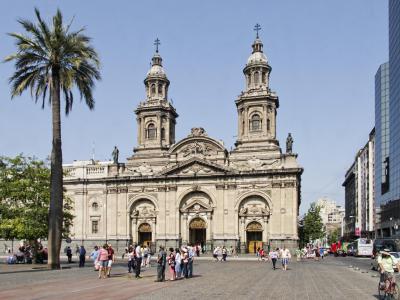
2) Catedral Metropolitana (Metropolitan Cathedral) (must see)
The Catedral Metropolitana was built between 1748 and 1800. This neoclassical cathedral has baroque features, including gilded columns and gorgeous, inspiring frescos. There has been a church standing on the site since the city was founded in the 1500s. The previous churches were all damaged by fire and earthquakes. Even the current cathedral has had structural damage and repairs made due to earthquakes.
Italian architect Joaquín Toesca was responsible for the gorgeous architecture of this important cathedral. The interior is stunning. The central nave is full of statues on the walls. The altar is magnificently ornate with marble and deep blue lapis lazuli. The stained glass is intricate and beautiful. Artist Ignazio Cremonesi painted the ceiling in 1906.
The seats and pulpits are meticulously carved from wood. The floor is decorated with thousands of tiny tiles in an intricate black and white pattern. The crypt houses the remains of Chilean archbishops. The lost tomb of Diego Portales, one of Chile's founding fathers, was discovered under the altar in 2005 and moved into the crypt.
Visitors will also find a museum adjoining the church. The Museum of Sacred Arts is home to many interesting religious artifacts. Silver craftsmanship by Jesuit priests includes a silver tabernacle and silver lectern. The museum also has a lovely courtyard.
Don't miss the Sacred Chapel, designed in 1846 by Eusebio Chelli.
Tips:
Arrive early in the day as the church gets quite busy. An information board at the entrance to the cathedral outlines important statues and interesting features.
Italian architect Joaquín Toesca was responsible for the gorgeous architecture of this important cathedral. The interior is stunning. The central nave is full of statues on the walls. The altar is magnificently ornate with marble and deep blue lapis lazuli. The stained glass is intricate and beautiful. Artist Ignazio Cremonesi painted the ceiling in 1906.
The seats and pulpits are meticulously carved from wood. The floor is decorated with thousands of tiny tiles in an intricate black and white pattern. The crypt houses the remains of Chilean archbishops. The lost tomb of Diego Portales, one of Chile's founding fathers, was discovered under the altar in 2005 and moved into the crypt.
Visitors will also find a museum adjoining the church. The Museum of Sacred Arts is home to many interesting religious artifacts. Silver craftsmanship by Jesuit priests includes a silver tabernacle and silver lectern. The museum also has a lovely courtyard.
Don't miss the Sacred Chapel, designed in 1846 by Eusebio Chelli.
Tips:
Arrive early in the day as the church gets quite busy. An information board at the entrance to the cathedral outlines important statues and interesting features.
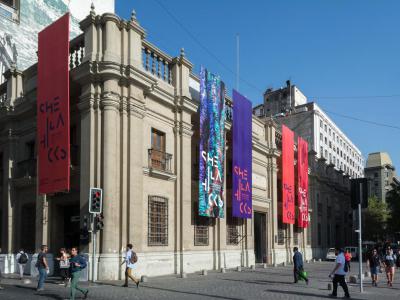
3) Pre-Columbian Art Museum (must see)
The Pre-Columbian Art Museum is one of the world's top museums and a highlight of Latin American museums. Visitors will gain an important historical look at the wonderful culture of the Pre-Columbian Americas. The museum is located in the Old Royal Customs House, built in 1807.
Inside, the museum’s permanent collection includes thousands of artifacts representing more than 100 indigenous cultures. Among the exhibits are finely crafted ceramics, intricate textiles, gold and silver ornaments, and stone carvings. Each piece reveals details about the daily life, beliefs, and artistic expression of societies such as the Maya, Aztec, Inca, and Mapuche.
One of the most remarkable sections is the Andean Hall, which explores the civilizations that flourished along the Andes Mountains. Visitors can see elaborately woven fabrics that have survived for centuries thanks to the region’s dry climate, as well as ceremonial masks and musical instruments.
The Chile Before Chile exhibit is fabulous and gives visitors a real insight into the lives of the original inhabitants of this land before colonization. The Chinchorro people mummified their dead before the more well-known Egyptian culture began mummifying their dead. The museum has a Chinchorro mummy on display, dating back to 1,900 BCE.
Visitors will also learn about the Anconcágua culture, which survived for 9,000 years hunting animals that are now extinct. Other unique pieces include Mapuche totem poles which were each carved from a single tree. Visitors will be impressed by the Rapa Nui wooden statues.
The displays are labeled in Spanish and English.
Tip:
Try to arrive before lunchtime, as it is usually packed.
Inside, the museum’s permanent collection includes thousands of artifacts representing more than 100 indigenous cultures. Among the exhibits are finely crafted ceramics, intricate textiles, gold and silver ornaments, and stone carvings. Each piece reveals details about the daily life, beliefs, and artistic expression of societies such as the Maya, Aztec, Inca, and Mapuche.
One of the most remarkable sections is the Andean Hall, which explores the civilizations that flourished along the Andes Mountains. Visitors can see elaborately woven fabrics that have survived for centuries thanks to the region’s dry climate, as well as ceremonial masks and musical instruments.
The Chile Before Chile exhibit is fabulous and gives visitors a real insight into the lives of the original inhabitants of this land before colonization. The Chinchorro people mummified their dead before the more well-known Egyptian culture began mummifying their dead. The museum has a Chinchorro mummy on display, dating back to 1,900 BCE.
Visitors will also learn about the Anconcágua culture, which survived for 9,000 years hunting animals that are now extinct. Other unique pieces include Mapuche totem poles which were each carved from a single tree. Visitors will be impressed by the Rapa Nui wooden statues.
The displays are labeled in Spanish and English.
Tip:
Try to arrive before lunchtime, as it is usually packed.
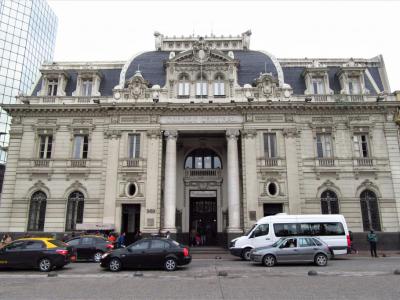
4) Central Post Office Building
Overlooking Santiago’s Arms Square, the Central Post Office Building is one of the city’s most notable landmarks. It was originally designed by Ricardo Brown and completed in 1881, then remodeled in 1908 by architect Ramón Fehrman, who added the neoclassical façade, a third floor, and the glass cupola that still tops the building today. Its pastel-pink Renaissance style and balanced design fit well with the surrounding historic architecture.
The building is still a working post office, so visitors can step inside to mail a postcard from this historic location. The interior, with high ceilings and period details, offers a look at how communication worked long before modern technology.
The Postal Museum inside adds another layer of interest. It displays thousands of stamps from around the world, including the famous Penny Black, the first postage stamp ever issued in England. It’s a great stop for anyone interested in history, art, or the enduring charm of a handwritten letter.
The building is still a working post office, so visitors can step inside to mail a postcard from this historic location. The interior, with high ceilings and period details, offers a look at how communication worked long before modern technology.
The Postal Museum inside adds another layer of interest. It displays thousands of stamps from around the world, including the famous Penny Black, the first postage stamp ever issued in England. It’s a great stop for anyone interested in history, art, or the enduring charm of a handwritten letter.
5) Mercado Central (Central Market) (must see)
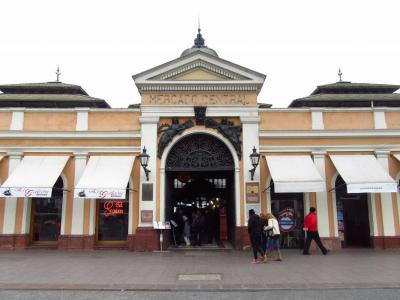
The pulsating heart of Santiago is definitely the Central Market, which showcases the richness of Chile through its fresh food, vegetables, and fruits. Right in the middle of the market stands an iron statue, adding an artistic touch to the vibrant space.
The market is a testament to the country’s abundance, offering visitors a wide range of options, from local produce to handicrafts. Like any lively marketplace, it can be noisy and crowded, but for those who don’t mind, it promises an entertaining and memorable experience.
The best time to visit is around lunch hour, when the market is at its liveliest and visitors can sample some of its delicious offerings, such as fish marinades, ceviche, or stuffed zucchini. Mariachis perform in various corners, their sweet music cutting through the bustle and serenading both locals and tourists.
The market’s metal structure was originally made in England and moved to Chile in 1872, where it was assembled to host the National Exposition before being transformed into a market. Today, it stands as a symbol of art and life in Santiago and is open every day, except on election days.
Tips: Here you can grab a bite and shop for authentic Chilean souvenirs, such as textiles or alpaca scarves, often at very reasonable prices.
The market is a testament to the country’s abundance, offering visitors a wide range of options, from local produce to handicrafts. Like any lively marketplace, it can be noisy and crowded, but for those who don’t mind, it promises an entertaining and memorable experience.
The best time to visit is around lunch hour, when the market is at its liveliest and visitors can sample some of its delicious offerings, such as fish marinades, ceviche, or stuffed zucchini. Mariachis perform in various corners, their sweet music cutting through the bustle and serenading both locals and tourists.
The market’s metal structure was originally made in England and moved to Chile in 1872, where it was assembled to host the National Exposition before being transformed into a market. Today, it stands as a symbol of art and life in Santiago and is open every day, except on election days.
Tips: Here you can grab a bite and shop for authentic Chilean souvenirs, such as textiles or alpaca scarves, often at very reasonable prices.
6) Santa Lucía Hill (must see)
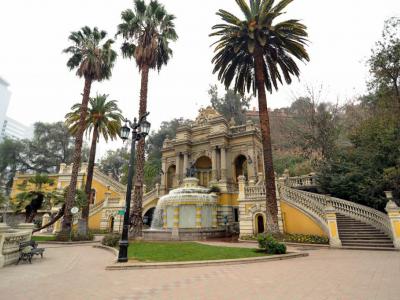
Santa Lucia Hill is 629 meters (or 2,064 feet) above sea level and 69 meters (or 226 feet) above the local area. This unique hill is the remainder of a 15 million-year-old volcano.
The hill was originally called Huelén in pre-colonial times. In 1541, Spanish conquierer Pedro de Valdivia claimed the hill for the Spanish and named the hill Santa Lucia. Pedro de Valdivia founded Santiago from Santa Lucia, making this hill an important historical site. During Santiago's early days, missionaries used the hill to pray and worship.
In the early 1800s, Manuel Olaguer Feliú, a Spanish military engineer, built two forts on the hill. Hidalgo Castle was built in 1820, and the fort is open to the public. Today, the site is home to an enormous park. A series of stone steps lead visitors to the top for an incredible view. The climb may be challenging, especially on a hot day.
The steep steps twist their way past terraces, trees, statues, fountains, and gardens that have been erected over the centuries. Each terrace allows visitors to rest before continuing. Don't miss the beautiful Neptune Fountain.
In 1849, United States Naval Officer James Melville Gilliss founded an American observatory on the hill. Gilliss sought to measure the solar parallax precisely. Chile purchased the equipment and formed Chile's first National Astronomical Observatory on the site.
Traditionally, an 1824 cannon is fired every day to mark the noon hour.
Tips:
Visit on a clear weekend day. On the weekends, there is less traffic, and the air is often clearer with less smog. The clearer the air, the better your view of the mountains.
The hill was originally called Huelén in pre-colonial times. In 1541, Spanish conquierer Pedro de Valdivia claimed the hill for the Spanish and named the hill Santa Lucia. Pedro de Valdivia founded Santiago from Santa Lucia, making this hill an important historical site. During Santiago's early days, missionaries used the hill to pray and worship.
In the early 1800s, Manuel Olaguer Feliú, a Spanish military engineer, built two forts on the hill. Hidalgo Castle was built in 1820, and the fort is open to the public. Today, the site is home to an enormous park. A series of stone steps lead visitors to the top for an incredible view. The climb may be challenging, especially on a hot day.
The steep steps twist their way past terraces, trees, statues, fountains, and gardens that have been erected over the centuries. Each terrace allows visitors to rest before continuing. Don't miss the beautiful Neptune Fountain.
In 1849, United States Naval Officer James Melville Gilliss founded an American observatory on the hill. Gilliss sought to measure the solar parallax precisely. Chile purchased the equipment and formed Chile's first National Astronomical Observatory on the site.
Traditionally, an 1824 cannon is fired every day to mark the noon hour.
Tips:
Visit on a clear weekend day. On the weekends, there is less traffic, and the air is often clearer with less smog. The clearer the air, the better your view of the mountains.
7) Cerro San Cristobal (San Cristóbal Hill) (must see)
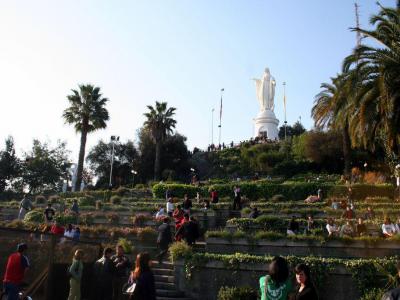
Those who seek the best view of picturesque Santiago de Chile should make their way to the majestic San Cristóbal Hill in the northern part of the city. The hill rises to about 880 meters, which is approximately 300 meters higher than most of the sites in Santiago. It is the second highest spot in the city, and the view it affords is quite spectacular.
At the very top of the hill stands the statue of Virgin Mary, inaugurated in 1908. There is also a church which became well known after Pope John Paul II served a mass there in 1987. The largest park in Santiago, a vast urban expanse of green space with varied landscapes and roads for vehicles, is also found on the hill.
If you go there on a sunny summer day shortly after it is rained and the smog cleared off, you can see virtually everything from the high-rising towers of Santiago to the Andes mountains far beyond.
Why You Should Visit:
The "must-see" big hill in Santiago, hands down. Many things to do in the park, like hiking its many trails, cycling, going to the pool in the summer, riding the funicular and the recently renovated cable car, visiting different corners (Japanese Garden and/or different playgrounds), etc.
Tip:
Make sure you get Mote con Huesillo at the peak! Most refreshing (made with a dried peach, husked wheat and sugar syrup) traditional drink plus an 'empanada de pino'!
At the very top of the hill stands the statue of Virgin Mary, inaugurated in 1908. There is also a church which became well known after Pope John Paul II served a mass there in 1987. The largest park in Santiago, a vast urban expanse of green space with varied landscapes and roads for vehicles, is also found on the hill.
If you go there on a sunny summer day shortly after it is rained and the smog cleared off, you can see virtually everything from the high-rising towers of Santiago to the Andes mountains far beyond.
Why You Should Visit:
The "must-see" big hill in Santiago, hands down. Many things to do in the park, like hiking its many trails, cycling, going to the pool in the summer, riding the funicular and the recently renovated cable car, visiting different corners (Japanese Garden and/or different playgrounds), etc.
Tip:
Make sure you get Mote con Huesillo at the peak! Most refreshing (made with a dried peach, husked wheat and sugar syrup) traditional drink plus an 'empanada de pino'!
8) General Cemetery of Santiago
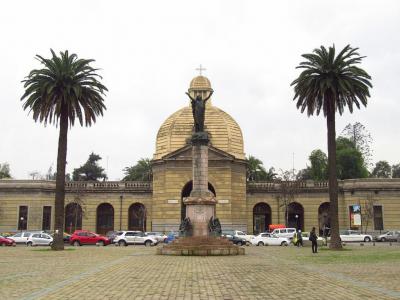
This eighty-five hectare expanse is a final resting place for all but two Chilean presidents as well as many notable Chilean citizens, including political leaders and poets. The area abounds in spectacular mausoleums and tombs, some of which were crafted by the greatest sculptors in Chile, and is surrounded by gardens, lanes, leafy trees and beautiful sculptures. The monument to a suffering sculptor, by Carrier Belleuse, is found at the entrance to the cemetery, with more elaborate tombs lying further afield. Victims of the 1863 Iglesia de la Compania (Church of Companion) are buried here.
A memorial to the late president Salvador Allende makes this cemetery one of the top visited sites in the country. Reportedly, Allende committed suicide during the coup of 1973 staged by General Augusto Pinochet. The coup led to the establishment of Junta regime. After Chile returned to democracy in the 1990s, the remains of Salvador Allende were exhumed from the Santa Ines Cemetery and placed at the General Cemetery of Santiago. Also, there is a memorial to those who disappeared during Pinochet's rule.
The land on which the cemetery is laid out was set aside by Chilean independence leader and founding father Bernardo O'Higgins in 1819, after the country proclaimed independence. To date, there are over two million burials on the ground, making it the one of the largest burial sites in Latin America.
A memorial to the late president Salvador Allende makes this cemetery one of the top visited sites in the country. Reportedly, Allende committed suicide during the coup of 1973 staged by General Augusto Pinochet. The coup led to the establishment of Junta regime. After Chile returned to democracy in the 1990s, the remains of Salvador Allende were exhumed from the Santa Ines Cemetery and placed at the General Cemetery of Santiago. Also, there is a memorial to those who disappeared during Pinochet's rule.
The land on which the cemetery is laid out was set aside by Chilean independence leader and founding father Bernardo O'Higgins in 1819, after the country proclaimed independence. To date, there are over two million burials on the ground, making it the one of the largest burial sites in Latin America.
