Custom Walk in Dubrovnik, Croatia by michael1941robinson_95ba5a created on 2026-03-25
Guide Location: Croatia » Dubrovnik
Guide Type: Custom Walk
# of Sights: 6
Tour Duration: 1 Hour(s)
Travel Distance: 1.9 Km or 1.2 Miles
Share Key: NG7BM
Guide Type: Custom Walk
# of Sights: 6
Tour Duration: 1 Hour(s)
Travel Distance: 1.9 Km or 1.2 Miles
Share Key: NG7BM
How It Works
Please retrieve this walk in the GPSmyCity app. Once done, the app will guide you from one tour stop to the next as if you had a personal tour guide. If you created the walk on this website or come to the page via a link, please follow the instructions below to retrieve the walk in the app.
Retrieve This Walk in App
Step 1. Download the app "GPSmyCity: Walks in 1K+ Cities" on Apple App Store or Google Play Store.



Step 2. In the GPSmyCity app, download(or launch) the guide "Dubrovnik Map and Walking Tours".
Step 3. Tap the menu button located at upper right corner of the "Walks" screen and select "Retrieve custom walk". Enter the share key: NG7BM
1) Pile Gate (must see)
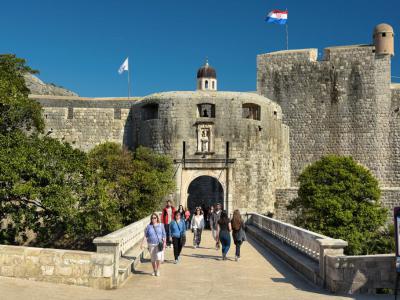
"Kill them, kill them all!" King Joffrey is under attack by an angry mob when he returns to Red Keep. Dramatic scene, plenty of shouting… except there's a thing or two missing. There's no King Joffrey here, and definitely no Red Keep. What you’re seeing is Pile Gate. Television magic simply turned this Croatian gateway into one of the most famous locations in “Game of Thrones,” particularly in Season 2, Episode 6, when Joffrey discovers that ruling a kingdom does not always guarantee popularity.
The name Pile comes from the Greek word pylaj, meaning “gate,” which is quite fitting for what has been Dubrovnik’s main doorway for centuries. Most visitors begin their walk through the Old City right here. The gate sits on the western side of the city walls and leads directly onto Stradun Street, Dubrovnik’s main promenade.
But Pile Gate is not just one gate—it is actually two. The inner gate was built in 1460, while the outer gate was added in 1537. Together, they formed part of a carefully designed defensive system. Protecting the approach was the cylindrical Fort Bokar, along with a deep moat that once surrounded the outer wall. Today, the moat is dry and has been transformed into a green strip of landscaped parkland between the walls.
To reach the gate, visitors cross a stone bridge with elegant Gothic arches. Designed in 1471, this bridge connected to a wooden drawbridge over the moat. Each night, the drawbridge was raised, sealing the entrance and keeping the city secure.
Above the gateway arch stands a statue of Saint Blaise, the patron saint of Dubrovnik. He holds a small model of the city in his hand, as if quietly keeping watch over the place he protects.
Beyond the gate lies one of the most impressive defensive systems in Europe. Dubrovnik’s city walls stretch for nearly two kilometers and in some sections rise as high as 82 feet. The land-facing side is reinforced with ten circular bastions and a powerful fortress. The two main entrances to the city are Pile Gate in the west and Ploče Gate in the east.
So, as you walk through Pile Gate, remember: you’re not entering King’s Landing, but stepping into one of the best-preserved medieval cities in the world. And thankfully, today the only crowds waiting here are tourists—not angry mobs...
The name Pile comes from the Greek word pylaj, meaning “gate,” which is quite fitting for what has been Dubrovnik’s main doorway for centuries. Most visitors begin their walk through the Old City right here. The gate sits on the western side of the city walls and leads directly onto Stradun Street, Dubrovnik’s main promenade.
But Pile Gate is not just one gate—it is actually two. The inner gate was built in 1460, while the outer gate was added in 1537. Together, they formed part of a carefully designed defensive system. Protecting the approach was the cylindrical Fort Bokar, along with a deep moat that once surrounded the outer wall. Today, the moat is dry and has been transformed into a green strip of landscaped parkland between the walls.
To reach the gate, visitors cross a stone bridge with elegant Gothic arches. Designed in 1471, this bridge connected to a wooden drawbridge over the moat. Each night, the drawbridge was raised, sealing the entrance and keeping the city secure.
Above the gateway arch stands a statue of Saint Blaise, the patron saint of Dubrovnik. He holds a small model of the city in his hand, as if quietly keeping watch over the place he protects.
Beyond the gate lies one of the most impressive defensive systems in Europe. Dubrovnik’s city walls stretch for nearly two kilometers and in some sections rise as high as 82 feet. The land-facing side is reinforced with ten circular bastions and a powerful fortress. The two main entrances to the city are Pile Gate in the west and Ploče Gate in the east.
So, as you walk through Pile Gate, remember: you’re not entering King’s Landing, but stepping into one of the best-preserved medieval cities in the world. And thankfully, today the only crowds waiting here are tourists—not angry mobs...
2) Stradun Street (must see)
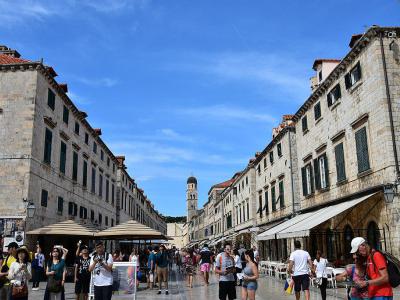
Imagine a street that has been the city’s living room for centuries. That is Stradun, also known as Placa, an elegant promenade and the heart of Dubrovnik’s historic center.
Running about 1,000 feet through the Old Town, it stretches neatly from the Pile Gate in the west to Luža Square in the east and further beyond the Ploče Gate. Near the Pile Gate stand the Large Onofrio’s Fountain and the Franciscan Monastery. At the opposite end, near Ploče Gate, you will find the Small Onofrio’s Fountain and the Dubrovnik Bell Tower, close to lively Luža Square.
Today, this polished limestone boulevard forms the central axis of Dubrovnik, but its origin was far less glamorous. Back in the 13th century, it was nothing more than a swampy channel. The street’s current appearance dates mostly after the devastating 1667 earthquake, which ruined much of the city and forced Dubrovnik to rebuild.
The rebuilding came with strict rules. After the disaster, the Republic introduced regulations for construction along Stradun, which explains the remarkable uniformity of local buildings. Before the quake, houses had arcades and elaborate decoration, most of which was lost to the fire that followed.
The new buildings were designed with shop spaces on the ground floor beneath semicircular arches. The first floor served as the main living area, while the upper floors contained extra rooms and a small kitchen loft.
Since then, Stradun has also become Dubrovnik’s favorite stage. Festivals, celebrations, and processions pass through here regularly. These include the Feast of Saint Blaise, Dubrovnik’s patron saint, on February 3rd.
The best way to experience Stradun is an unhurried stroll. Stop at a café, have a drink, and watch the steady flow of people. The steps of Saint Blaise’s Church offer a great viewpoint.
Nearby stands Orlando’s Column, erected in 1418, showing the knight Orlando with a sword and shield. Legend claims that he once defeated Saracen pirates along this very coast. True or not, Orlando has long stood as a symbol of Dubrovnik’s freedom—and he still watches over the city’s most famous street.
Running about 1,000 feet through the Old Town, it stretches neatly from the Pile Gate in the west to Luža Square in the east and further beyond the Ploče Gate. Near the Pile Gate stand the Large Onofrio’s Fountain and the Franciscan Monastery. At the opposite end, near Ploče Gate, you will find the Small Onofrio’s Fountain and the Dubrovnik Bell Tower, close to lively Luža Square.
Today, this polished limestone boulevard forms the central axis of Dubrovnik, but its origin was far less glamorous. Back in the 13th century, it was nothing more than a swampy channel. The street’s current appearance dates mostly after the devastating 1667 earthquake, which ruined much of the city and forced Dubrovnik to rebuild.
The rebuilding came with strict rules. After the disaster, the Republic introduced regulations for construction along Stradun, which explains the remarkable uniformity of local buildings. Before the quake, houses had arcades and elaborate decoration, most of which was lost to the fire that followed.
The new buildings were designed with shop spaces on the ground floor beneath semicircular arches. The first floor served as the main living area, while the upper floors contained extra rooms and a small kitchen loft.
Since then, Stradun has also become Dubrovnik’s favorite stage. Festivals, celebrations, and processions pass through here regularly. These include the Feast of Saint Blaise, Dubrovnik’s patron saint, on February 3rd.
The best way to experience Stradun is an unhurried stroll. Stop at a café, have a drink, and watch the steady flow of people. The steps of Saint Blaise’s Church offer a great viewpoint.
Nearby stands Orlando’s Column, erected in 1418, showing the knight Orlando with a sword and shield. Legend claims that he once defeated Saracen pirates along this very coast. True or not, Orlando has long stood as a symbol of Dubrovnik’s freedom—and he still watches over the city’s most famous street.
3) Sponza Palace
At the entrance arch of Sponza Palace, a message greets visitors with admirable confidence: “Our weights do not allow cheating. When I measure goods, God measures with me.” In other words—no funny business at the customs office...
Indeed, this palace was built in the early 16th century and served as the city’s customs house, which explains its nickname Divona, meaning “customs.” The name Sponza likely comes from “spongia”, the Latin word for sponge, referring to a rainwater collection site that once existed here.
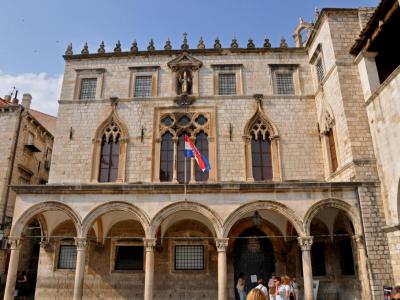
The building itself is a graceful blend of Gothic and Renaissance styles and was constructed between 1516 and 1522. Facing Luža Square, the ground floor features a Renaissance portico with five elegant arches resting on slender Corinthian columns decorated with floral capitals.
Look up, and you’ll notice how the architectural story unfolds floor by floor. The Renaissance arcade anchors the ground level, while the upper floor displays Gothic triforium windows. Above them are Renaissance-style windows again, creating a carefully balanced composition. Tucked into a small niche stands a statue of Saint Blaise, Dubrovnik’s beloved patron saint, quietly watching over the square.
Remarkably, Sponza Palace survived the destructive earthquake of 1667 without major damage—no small achievement in a city where many buildings were razed to the ground. Over the centuries, this edifice has worn many hats, including customs house, mint, treasury, armory, and even a bank.
Today, the rooms surrounding its peaceful atrium hold part of the Dubrovnik State Archives, preserving documents from as far back as the 11th century. One chamber, known as the Memorial Room of the Defenders, honors those who lost their lives during the wars of the 1990s—reminding visitors that this elegant palace has witnessed both the prosperity and the struggles of the city it has served for centuries...
Indeed, this palace was built in the early 16th century and served as the city’s customs house, which explains its nickname Divona, meaning “customs.” The name Sponza likely comes from “spongia”, the Latin word for sponge, referring to a rainwater collection site that once existed here.
The building itself is a graceful blend of Gothic and Renaissance styles and was constructed between 1516 and 1522. Facing Luža Square, the ground floor features a Renaissance portico with five elegant arches resting on slender Corinthian columns decorated with floral capitals.
Look up, and you’ll notice how the architectural story unfolds floor by floor. The Renaissance arcade anchors the ground level, while the upper floor displays Gothic triforium windows. Above them are Renaissance-style windows again, creating a carefully balanced composition. Tucked into a small niche stands a statue of Saint Blaise, Dubrovnik’s beloved patron saint, quietly watching over the square.
Remarkably, Sponza Palace survived the destructive earthquake of 1667 without major damage—no small achievement in a city where many buildings were razed to the ground. Over the centuries, this edifice has worn many hats, including customs house, mint, treasury, armory, and even a bank.
Today, the rooms surrounding its peaceful atrium hold part of the Dubrovnik State Archives, preserving documents from as far back as the 11th century. One chamber, known as the Memorial Room of the Defenders, honors those who lost their lives during the wars of the 1990s—reminding visitors that this elegant palace has witnessed both the prosperity and the struggles of the city it has served for centuries...
4) Dubrovnik Ethnographic Museum (Rupe)
Let’s step away from battlements and royal intrigue for a moment and duck into a place that tells a quieter story of Dubrovnik. The Dubrovnik Ethnographic Museum—better known simply as Rupe—offers a glimpse into everyday life from centuries past.
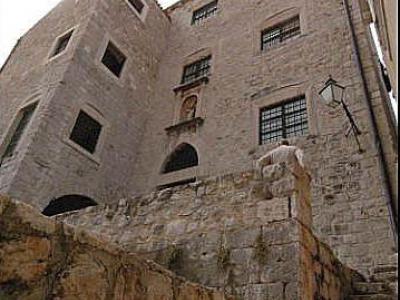
The museum occupies a sturdy stone building that began its life in the late 16th century as the city’s granary. Dubrovnik took food storage seriously, especially in times of siege, so the floor was carved with deep pits in the rock—called rupe, which means “holes.” These silos once held precious grain reserves that could keep the city alive during war or famine. Remarkably, the pits are still visible today, giving visitors a sense of just how carefully the Republic guarded its supplies.
Inside, the focus shifts from survival to tradition. The museum’s exhibits explore the cultural life of Dubrovnik and the surrounding countryside through objects people used every day. Traditional costumes are among the highlights, decorated with delicate embroidery and subtle regional patterns that once signaled where someone came from.
You’ll also see tools, household items, and farming equipment that hint at how families worked the land, fished the sea, and managed life in a rugged coastal environment. Recreated interiors—kitchens, workshops, and small domestic spaces—help bring those centuries-old routines into focus. Lacework, pottery, jewelry, and textiles add another layer to the story, revealing how practical objects could also carry beauty and craftsmanship.
And now for a twist worthy of Westeros. Fans of Game of Thrones may recognize this old granary for a very different reason. In Season 4, Episode 1—titled “Two Swords”—the building appears as Littlefinger’s brothel in King’s Landing. It’s the setting where Tyrion Lannister meets the fiery Prince Oberyn Martell, who has arrived in the capital with vengeance very much on his mind. Quite a transformation for a place that once stored grain to feed an entire city...
The museum occupies a sturdy stone building that began its life in the late 16th century as the city’s granary. Dubrovnik took food storage seriously, especially in times of siege, so the floor was carved with deep pits in the rock—called rupe, which means “holes.” These silos once held precious grain reserves that could keep the city alive during war or famine. Remarkably, the pits are still visible today, giving visitors a sense of just how carefully the Republic guarded its supplies.
Inside, the focus shifts from survival to tradition. The museum’s exhibits explore the cultural life of Dubrovnik and the surrounding countryside through objects people used every day. Traditional costumes are among the highlights, decorated with delicate embroidery and subtle regional patterns that once signaled where someone came from.
You’ll also see tools, household items, and farming equipment that hint at how families worked the land, fished the sea, and managed life in a rugged coastal environment. Recreated interiors—kitchens, workshops, and small domestic spaces—help bring those centuries-old routines into focus. Lacework, pottery, jewelry, and textiles add another layer to the story, revealing how practical objects could also carry beauty and craftsmanship.
And now for a twist worthy of Westeros. Fans of Game of Thrones may recognize this old granary for a very different reason. In Season 4, Episode 1—titled “Two Swords”—the building appears as Littlefinger’s brothel in King’s Landing. It’s the setting where Tyrion Lannister meets the fiery Prince Oberyn Martell, who has arrived in the capital with vengeance very much on his mind. Quite a transformation for a place that once stored grain to feed an entire city...
5) Gradac Park
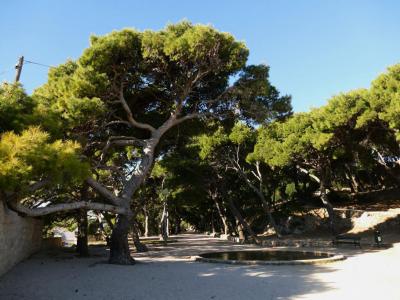
Gradac Park, sitting just beyond Dubrovnik’s mighty stone walls and high above the Adriatic, is one of the city’s most pleasant green hideaways. Created in 1898, it’s among Dubrovnik’s oldest public parks—though you might not guess it from the way many visitors rush straight past it on their way through the Old Town. Those who do wander in are rewarded with winding paths, fragrant Mediterranean plants, and plenty of shade beneath tall pine trees. On a warm Dubrovnik afternoon, it feels less like a sightseeing stop and more like the city quietly offering you a breather.
Follow the park’s gently curving paths, and you’ll notice how the scenery keeps changing. Some trails run along the cliff edge, while others pass through leafy avenues where the sea breeze rustles the branches overhead. Eventually, you’ll reach the western terrace near the fountain, where the view opens wide: the terracotta rooftops of the Old Town spread below, the rugged outline of Fort Lovrijenac rises dramatically nearby, and the Adriatic stretches out in shimmering shades of blue. It’s the kind of view that practically asks for a photo—several, in fact...
Below the park lies the rocky Danče Beach, reached by a narrow path that winds down from the cliffs. Just above the beach stands the Church of Saint Mary, part of a Gothic-Renaissance complex dating to the 15th century. Together, the park, the beach, and this historic church form a layered corner of Dubrovnik where nature and history quietly share the same stage.
Lately, Gradac Park has undergone a well-deserved refresh—its first major renovation in more than a century. The project included restoring paths, improving lighting, and adding new features such as a playground and an outdoor amphitheater.
And yes, fans of Game of Thrones might also recognize the setting. Gradac Park appeared in Season 4 during the unforgettable “Purple Wedding,” where King Joffrey’s lavish feast takes a deadly turn. In the following episode, the same park becomes the stage for Sansa Stark’s dramatic escape from King’s Landing. It turns out, even in a quiet Dubrovnik park, history—and television—can get a little dramatic...
Follow the park’s gently curving paths, and you’ll notice how the scenery keeps changing. Some trails run along the cliff edge, while others pass through leafy avenues where the sea breeze rustles the branches overhead. Eventually, you’ll reach the western terrace near the fountain, where the view opens wide: the terracotta rooftops of the Old Town spread below, the rugged outline of Fort Lovrijenac rises dramatically nearby, and the Adriatic stretches out in shimmering shades of blue. It’s the kind of view that practically asks for a photo—several, in fact...
Below the park lies the rocky Danče Beach, reached by a narrow path that winds down from the cliffs. Just above the beach stands the Church of Saint Mary, part of a Gothic-Renaissance complex dating to the 15th century. Together, the park, the beach, and this historic church form a layered corner of Dubrovnik where nature and history quietly share the same stage.
Lately, Gradac Park has undergone a well-deserved refresh—its first major renovation in more than a century. The project included restoring paths, improving lighting, and adding new features such as a playground and an outdoor amphitheater.
And yes, fans of Game of Thrones might also recognize the setting. Gradac Park appeared in Season 4 during the unforgettable “Purple Wedding,” where King Joffrey’s lavish feast takes a deadly turn. In the following episode, the same park becomes the stage for Sansa Stark’s dramatic escape from King’s Landing. It turns out, even in a quiet Dubrovnik park, history—and television—can get a little dramatic...
6) Dubrovnik West Harbour and Pier
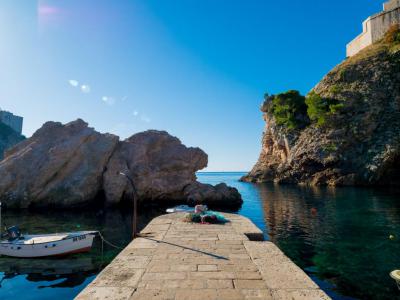
Dubrovnik’s West Harbour and Pier, known locally as Kolorina, is one of those places where history and scenery casually share the same stage. Tucked beneath the imposing Fort Lovrijenac and just a short stroll from Pile Gate, this small harbor once served as the main maritime entrance to the walled city. For centuries, fishermen and merchant boats slipped into these calm waters, tying up along sturdy stone quays before heading into Dubrovnik’s bustling streets. Even today, Kolorina remains a working mooring spot, though the atmosphere is far more relaxed—gentle waves, a few boats bobbing in the water, and visitors pausing to admire the view...
Then came television fame. When producers of the HBO hit Game of Thrones arrived in Dubrovnik, Kolorina stepped effortlessly into the role of Blackwater Bay, the harbor of King’s Landing. Suddenly, this quiet waterfront found itself hosting epic drama. Fans may recognize the location from the explosive Battle of Blackwater Bay in Season 2, when wildfire lit up the harbor and chaos ruled the screen.
But Kolorina also played host to quieter, more suspenseful moments—Sansa and Shae watching the ships, Littlefinger sharing one of his carefully measured conversations, and Myrcella Baratheon departing for Dorne. Even a deleted scene featuring Tywin Lannister and Pycelle was filmed here, proving the harbor was practically a regular cast member...
Of course, Kolorina doesn’t need television to impress. From the pier, the view is hard to beat: the fortress walls rising dramatically overhead, Dubrovnik’s western defenses stretching along the coast, and the Adriatic shimmering beyond. It’s a favorite gathering place for photographers chasing the perfect shot, kayakers paddling along the shoreline, and visitors who simply want to sit for a moment and watch the sea. Quiet, scenic, and layered with stories both real and fictional, Kolorina captures Dubrovnik’s long relationship with the Adriatic—and, apparently, its unexpected talent for playing a starring role on screen.
Then came television fame. When producers of the HBO hit Game of Thrones arrived in Dubrovnik, Kolorina stepped effortlessly into the role of Blackwater Bay, the harbor of King’s Landing. Suddenly, this quiet waterfront found itself hosting epic drama. Fans may recognize the location from the explosive Battle of Blackwater Bay in Season 2, when wildfire lit up the harbor and chaos ruled the screen.
But Kolorina also played host to quieter, more suspenseful moments—Sansa and Shae watching the ships, Littlefinger sharing one of his carefully measured conversations, and Myrcella Baratheon departing for Dorne. Even a deleted scene featuring Tywin Lannister and Pycelle was filmed here, proving the harbor was practically a regular cast member...
Of course, Kolorina doesn’t need television to impress. From the pier, the view is hard to beat: the fortress walls rising dramatically overhead, Dubrovnik’s western defenses stretching along the coast, and the Adriatic shimmering beyond. It’s a favorite gathering place for photographers chasing the perfect shot, kayakers paddling along the shoreline, and visitors who simply want to sit for a moment and watch the sea. Quiet, scenic, and layered with stories both real and fictional, Kolorina captures Dubrovnik’s long relationship with the Adriatic—and, apparently, its unexpected talent for playing a starring role on screen.
