Custom Walk in Madrid, Spain by bhaskarun_595f6 created on 2026-03-27
Guide Location: Spain » Madrid
Guide Type: Custom Walk
# of Sights: 15
Tour Duration: 6 Hour(s)
Travel Distance: 13.4 Km or 8.3 Miles
Share Key: 777Z9
Guide Type: Custom Walk
# of Sights: 15
Tour Duration: 6 Hour(s)
Travel Distance: 13.4 Km or 8.3 Miles
Share Key: 777Z9
How It Works
Please retrieve this walk in the GPSmyCity app. Once done, the app will guide you from one tour stop to the next as if you had a personal tour guide. If you created the walk on this website or come to the page via a link, please follow the instructions below to retrieve the walk in the app.
Retrieve This Walk in App
Step 1. Download the app "GPSmyCity: Walks in 1K+ Cities" on Apple App Store or Google Play Store.



Step 2. In the GPSmyCity app, download(or launch) the guide "Madrid Map and Walking Tours".
Step 3. Tap the menu button located at upper right corner of the "Walks" screen and select "Retrieve custom walk". Enter the share key: 777Z9
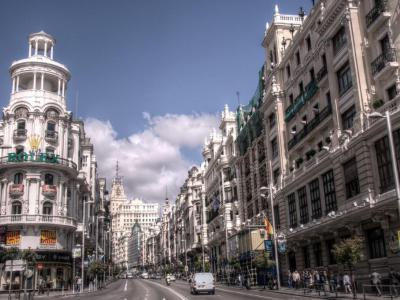
1) Gran Via (Great Way) (must see)
The Gran Vía, or “Great Way,” represents Madrid’s leap into modernity at the turn of the 20th century. Built in stages during an era of economic prosperity, thanks in part to Spain’s neutrality in World War I, it became the city’s commercial lifeline, separating the historic southern neighborhoods from the newer districts to the north. Today, this boulevard is alive with traffic, shopping, and a dazzling mix of architectural styles-from sleek Modernist designs to ornate Neo-Rococo facades. Along the way, you’ll encounter grand banks, imposing office buildings, and even a handful of museums and churches to enrich the experience.
The most eye-catching section is the earliest, completed between 1910 and 1924. Stretching from Calle Alcalá to the Telefónica skyscraper, this segment is home to landmarks like the Metrópolis Building, renowned for its cylindrical design, intricate white stone sculptures, and dazzling golden garlands. The Telefónica skyscraper, reaching 81 meters, was Spain’s first true high-rise. During the Civil War, it served as a reference point for Franco's forces to carry out bombings in the area.
As you venture down toward Callao Square, the street buzzes with energy, lined with shops, cafes, and cinemas. The square itself leads into Calle Preciados, a shopper’s paradise. Positioned on the corner is the iconic Art Deco Capitol Building, adorned with eye-catching neon signs. Further along, as you head towards Spain Square (“Plaza de España”), the view expands upward to reveal statues and ornate details crowning the rooftops, giving Gran Vía an unmistakable and picturesque skyline.
Tip:
If you’re visiting in the summer, an early evening stroll is ideal. The heat fades, and the street lights begin to glow, creating a magical setting for your walk.
The most eye-catching section is the earliest, completed between 1910 and 1924. Stretching from Calle Alcalá to the Telefónica skyscraper, this segment is home to landmarks like the Metrópolis Building, renowned for its cylindrical design, intricate white stone sculptures, and dazzling golden garlands. The Telefónica skyscraper, reaching 81 meters, was Spain’s first true high-rise. During the Civil War, it served as a reference point for Franco's forces to carry out bombings in the area.
As you venture down toward Callao Square, the street buzzes with energy, lined with shops, cafes, and cinemas. The square itself leads into Calle Preciados, a shopper’s paradise. Positioned on the corner is the iconic Art Deco Capitol Building, adorned with eye-catching neon signs. Further along, as you head towards Spain Square (“Plaza de España”), the view expands upward to reveal statues and ornate details crowning the rooftops, giving Gran Vía an unmistakable and picturesque skyline.
Tip:
If you’re visiting in the summer, an early evening stroll is ideal. The heat fades, and the street lights begin to glow, creating a magical setting for your walk.
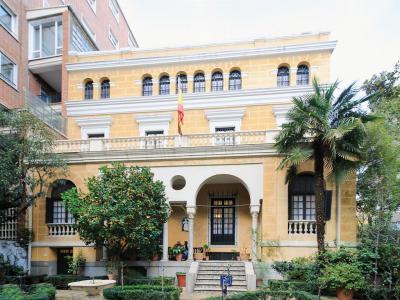
2) Museo Sorolla (Sorolla Museum) (must see)
This hidden gem in Madrid is a unique blend of museum and art gallery, dedicated to honoring the life and artistic journey of Valencian impressionist painter Joaquín Sorolla. Nestled within his former studio-mansion, constructed in 1910, the museum offers a serene and tranquil escape from the bustling city. Step into the cool and shaded Andalusian-style courtyard and gardens designed by Sorolla himself, adorned with statues, fountains, lush greenery, and fragrant fruit trees.
While Sorolla is renowned for his brilliant Mediterranean beach scenes, this museum showcases the full range of his artistic evolution. Explore his tender portraiture and immerse yourself in a series of captivating works capturing the essence of people from diverse regions of Spain.
The ground floor has been meticulously preserved, providing an authentic glimpse into the artist's living and working spaces during his lifetime until his passing in 1923. Upstairs, the former sleeping quarters have been transformed into a gallery space. Here, you'll be captivated by Sorolla's impressionistic paintings that vividly depict sunlight, sea, vibrant colors, and the beauty of women and children.
Why You Should Visit:
Taking a trip through an artist's house and former studio can be a much more fulfilling experience than in a traditional museum.
You also get a glimpse of the passions of the family, through the objects they collected (most notably the pottery and sculptures).
Tip:
Take a moment to appreciate the very detailed gardens, a testament to Sorolla's artistic vision in collaboration with a landscape designer. You can enjoy the beauty of the gardens without even entering the museum itself.
Enhance your visit with the 'SOROLLA MUSEUM AR' app, an augmented reality experience that brings the artwork to life. Make sure to download it before your visit, especially if you have an iPhone.
While Sorolla is renowned for his brilliant Mediterranean beach scenes, this museum showcases the full range of his artistic evolution. Explore his tender portraiture and immerse yourself in a series of captivating works capturing the essence of people from diverse regions of Spain.
The ground floor has been meticulously preserved, providing an authentic glimpse into the artist's living and working spaces during his lifetime until his passing in 1923. Upstairs, the former sleeping quarters have been transformed into a gallery space. Here, you'll be captivated by Sorolla's impressionistic paintings that vividly depict sunlight, sea, vibrant colors, and the beauty of women and children.
Why You Should Visit:
Taking a trip through an artist's house and former studio can be a much more fulfilling experience than in a traditional museum.
You also get a glimpse of the passions of the family, through the objects they collected (most notably the pottery and sculptures).
Tip:
Take a moment to appreciate the very detailed gardens, a testament to Sorolla's artistic vision in collaboration with a landscape designer. You can enjoy the beauty of the gardens without even entering the museum itself.
Enhance your visit with the 'SOROLLA MUSEUM AR' app, an augmented reality experience that brings the artwork to life. Make sure to download it before your visit, especially if you have an iPhone.
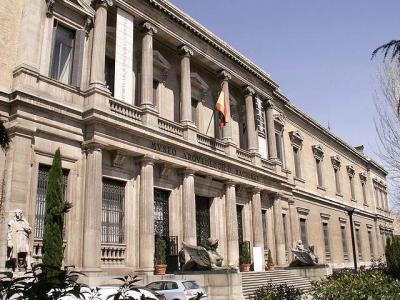
3) Museo Arqueologico Nacional (National Archaeological Museum) (must see)
Established by Queen Isabel II in 1867, Madrid's impressive Archaeological Museum houses a vast collection of artifacts discovered during excavations throughout Spain, as well as pieces from ancient Egypt, Greece, and the Etruscan civilization.
Among the highlights are exhibitions on the ancient civilization of El Argar in Andalucía and a display of jewelry unearthed at the Roman settlement of Numantia, near Soria. The museum also showcases 7th-century AD gold votive crowns from Toledo province, Greek and Carthaginian coins, remarkable Roman mosaics including one from the 3rd century AD, and exquisite Islamic pottery. Keep an eye out for the Romanesque "Madonna and Child" from Sahagún, hailed as a Spanish art masterpiece.
In the museum gardens, visitors can descend a short flight of steps to encounter a faithful replica of the Cave of Altamira, famous for its Upper Paleolithic paintings gracing the walls and ceiling.
Why You Should Visit:
Following an extensive renovation, the museum's collections have been beautifully set out around a naturally illuminated central atrium. The labeling and video explanations, available in English and Spanish, provide valuable context for the exhibits. Grabbing a quick lunch in the downstairs cafeteria is convenient, and your ticket allows for re-entry at your leisure. The admission fee is reasonable, and the museum is usually quiet. Lockers are available for €1 each, ensuring you don't have to carry around heavy belongings.
Tip:
You can easily spend half a day here, but if you have limited time, get a leaflet showcasing the top 10 items and try to locate them. On Sunday mornings, admission is free (expect crowds), and children always enter for free.
Among the highlights are exhibitions on the ancient civilization of El Argar in Andalucía and a display of jewelry unearthed at the Roman settlement of Numantia, near Soria. The museum also showcases 7th-century AD gold votive crowns from Toledo province, Greek and Carthaginian coins, remarkable Roman mosaics including one from the 3rd century AD, and exquisite Islamic pottery. Keep an eye out for the Romanesque "Madonna and Child" from Sahagún, hailed as a Spanish art masterpiece.
In the museum gardens, visitors can descend a short flight of steps to encounter a faithful replica of the Cave of Altamira, famous for its Upper Paleolithic paintings gracing the walls and ceiling.
Why You Should Visit:
Following an extensive renovation, the museum's collections have been beautifully set out around a naturally illuminated central atrium. The labeling and video explanations, available in English and Spanish, provide valuable context for the exhibits. Grabbing a quick lunch in the downstairs cafeteria is convenient, and your ticket allows for re-entry at your leisure. The admission fee is reasonable, and the museum is usually quiet. Lockers are available for €1 each, ensuring you don't have to carry around heavy belongings.
Tip:
You can easily spend half a day here, but if you have limited time, get a leaflet showcasing the top 10 items and try to locate them. On Sunday mornings, admission is free (expect crowds), and children always enter for free.
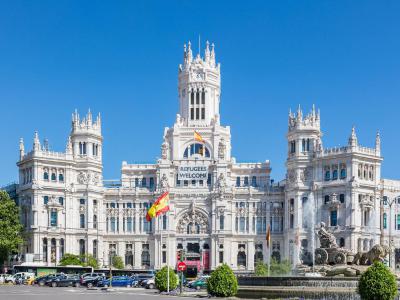
4) Palacio de Cibeles (Cibeles Palace) (must see)
Originally conceived as a headquarters for Spain’s postal and telegraph service, this grand building is a masterpiece of neo-Gothic and neo-Plateresque design. With its intricate white facade and towering pinnacles, it’s no wonder people often compare it to a towering wedding cake. In 2011, the addition of a shimmering glass dome to the central courtyard took its elegance to the next level. And let’s not forget the backdrop: the palace overlooks its namesake square and the world-famous fountain at its center-truly one of Madrid’s most recognizable symbols.
Just outside the main entrance, you can still spot a set of traditional brass letterboxes in the wall, each labeled with the names of various Spanish cities and provinces. While the building now serves as home to Madrid’s mayor and City Council, it’s much more than a seat of government. Thanks to its transformation into the CentroCentro cultural hub, visitors can immerse themselves in a revolving roster of exhibitions, concerts, and events that highlight contemporary art, cutting-edge design, and urban innovation. Inside, the palace is a visual feast, with intricately carved details, soaring ceilings, and expansive halls that showcase the artistic excellence of its era.
One of the main draws is the Mirador Madrid, a rooftop observation deck that offers an outstanding panorama of the city. From up here, you can soak in the sights of Gran Vía, Retiro Park, and historic neighborhoods stretching out to the horizon. By night, the illuminated tower turns into a beacon that adds a magical glow to the skyline.
For a perfect way to end your visit, head to the sixth-floor café-restaurant. Whether you’re craving a quick coffee or a hearty meal, you can savor the scenery alongside your refreshments.
Just outside the main entrance, you can still spot a set of traditional brass letterboxes in the wall, each labeled with the names of various Spanish cities and provinces. While the building now serves as home to Madrid’s mayor and City Council, it’s much more than a seat of government. Thanks to its transformation into the CentroCentro cultural hub, visitors can immerse themselves in a revolving roster of exhibitions, concerts, and events that highlight contemporary art, cutting-edge design, and urban innovation. Inside, the palace is a visual feast, with intricately carved details, soaring ceilings, and expansive halls that showcase the artistic excellence of its era.
One of the main draws is the Mirador Madrid, a rooftop observation deck that offers an outstanding panorama of the city. From up here, you can soak in the sights of Gran Vía, Retiro Park, and historic neighborhoods stretching out to the horizon. By night, the illuminated tower turns into a beacon that adds a magical glow to the skyline.
For a perfect way to end your visit, head to the sixth-floor café-restaurant. Whether you’re craving a quick coffee or a hearty meal, you can savor the scenery alongside your refreshments.
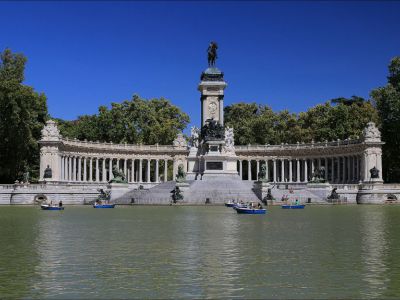
5) Parque del Retiro (Retiro Park) (must see)
Born in the mind of King Felipe IV in the early 1600s, this place began not as a park, but a royal escape hatch: the Buen Retiro, or “Pleasant Retreat.” A palace, gardens, and a hush from the noise of court life-French in style, Spanish in soul. While the original buildings are mostly gone now, the old ballroom and the Hall of Realms still remain, alongside 15,000 trees standing like green sentinels around a picturesque lake.
Retiro’s sprawling 330-acre dreamscape invites you to do anything but rush. Jog, rollerblade, cycle, row. Let a stranger read your fortune. Most importantly: walk-and keep walking. On Sundays, half of Madrid seems to drift here, as if pulled by an invisible thread, pacing the promenade in ritual procession.
Beside leisurely walks, there’s always something happening. Music pavilions echo with concerts. Panpipes flutter near the lake like Andean ghosts, while puppet shows unravel near the Alcalá Gate entrance during summer weekends.
And then there’s the Velázquez Palace, elegantly hosting art exhibitions that never charge a cent. The Crystal Palace, a glass cathedral glowing with quiet intensity. Casa de Vacas-the Cow House-pulses with plays and performances, mooing culture to anyone who’ll listen.
The grandiose statue of King Alfonso XII on horseback stares down the lake like he’s seen something you haven’t. Further south, the Fallen Angel himself sits in coiled ecstasy, reportedly the only public statue of Lucifer on Earth. It makes you wonder what else Madrid is hiding. Nearby, the Grove of the Absent whispers through 192 olive and cypress trees, planted in memory of those lost in the Atocha train bombings. Grief in rows, peace in shade.
Tip: Pack a picnic and smuggle in your own paradise. While the park offers dining options, they tend to be on the expensive side. Fortunately, there are plenty of quiet corners where you can settle in and enjoy your meal in peace.
Retiro’s sprawling 330-acre dreamscape invites you to do anything but rush. Jog, rollerblade, cycle, row. Let a stranger read your fortune. Most importantly: walk-and keep walking. On Sundays, half of Madrid seems to drift here, as if pulled by an invisible thread, pacing the promenade in ritual procession.
Beside leisurely walks, there’s always something happening. Music pavilions echo with concerts. Panpipes flutter near the lake like Andean ghosts, while puppet shows unravel near the Alcalá Gate entrance during summer weekends.
And then there’s the Velázquez Palace, elegantly hosting art exhibitions that never charge a cent. The Crystal Palace, a glass cathedral glowing with quiet intensity. Casa de Vacas-the Cow House-pulses with plays and performances, mooing culture to anyone who’ll listen.
The grandiose statue of King Alfonso XII on horseback stares down the lake like he’s seen something you haven’t. Further south, the Fallen Angel himself sits in coiled ecstasy, reportedly the only public statue of Lucifer on Earth. It makes you wonder what else Madrid is hiding. Nearby, the Grove of the Absent whispers through 192 olive and cypress trees, planted in memory of those lost in the Atocha train bombings. Grief in rows, peace in shade.
Tip: Pack a picnic and smuggle in your own paradise. While the park offers dining options, they tend to be on the expensive side. Fortunately, there are plenty of quiet corners where you can settle in and enjoy your meal in peace.
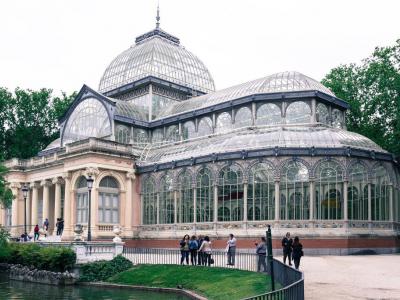
6) Palacio de Cristal (Crystal Palace) (must see)
Right by a quiet, man-made lake and surrounded by the towering chestnut trees of Retiro Park, you’ll find the Crystal Palace-one of Madrid’s most remarkable examples of iron-and-glass architecture. Initially built in 1887 as a giant greenhouse for the Philippine Islands Flora Exhibition, it was closely modeled on London’s famous Crystal Palace in Hyde Park.
With its wide glass panels and slender iron columns, the building feels light, almost dreamlike. Sunlight floods in from every angle, bouncing off the glass and casting reflections that shift throughout the day. Cast iron columns support the structure, creating a grand and elegant interior. A full restoration in 1975 helped bring it back to its former glory.
These days, the Crystal Palace isn’t home to tropical plants-but to art, regularly hosting temporary exhibits and installations that make creative use of the open, light-filled space. Admission is free, so you’re welcome to step inside and take it all in-whether you're there for the art or simply to soak in the atmosphere. And if you catch it at sunset, when the lights come on, the whole place seems to take on another life again.
Tip: If you’re after that perfect photo, aim for sunrise. The early light reflecting off the lake and catching the glass panels gives the whole place a magical glow.
With its wide glass panels and slender iron columns, the building feels light, almost dreamlike. Sunlight floods in from every angle, bouncing off the glass and casting reflections that shift throughout the day. Cast iron columns support the structure, creating a grand and elegant interior. A full restoration in 1975 helped bring it back to its former glory.
These days, the Crystal Palace isn’t home to tropical plants-but to art, regularly hosting temporary exhibits and installations that make creative use of the open, light-filled space. Admission is free, so you’re welcome to step inside and take it all in-whether you're there for the art or simply to soak in the atmosphere. And if you catch it at sunset, when the lights come on, the whole place seems to take on another life again.
Tip: If you’re after that perfect photo, aim for sunrise. The early light reflecting off the lake and catching the glass panels gives the whole place a magical glow.
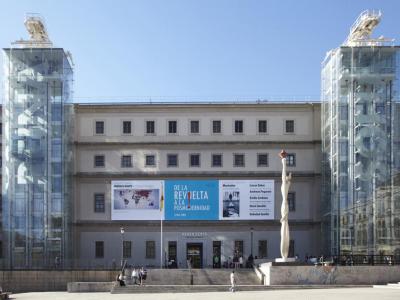
7) Museo Nacional Centro de Arte Reina Sofia (Queen Sofia National Museum Art Centre) (must see)
A must-visit destination on the Madrid art scene is the Queen Sofía (Reina Sofía) Museum, an expansive exhibition space that serves as the permanent home for the Spanish collection of modern and contemporary art, including the renowned Miró and Picasso legacies. In addition to its impressive collection of 20th-century art, the museum features a theater, cinema, excellent bookshops, a print, music and photographic library, a restaurant, bar, and café located in the basement, as well as a tranquil inner courtyard garden. Informative guidebooks that delve into key works are available for purchase at the shops, although they can be quite expensive. For first-time visitors, audioguides in English can be found at the entrance, providing insightful commentaries.
The museum's permanent collection starts on the second floor, exploring the origins of modern Spanish art, primarily focusing on the artistic movements that emerged in Catalonia and the Basque Country at the end of the 19th century. Moving through Collection 1, the highlight of the Reina Sofía is Picasso's iconic "Guernica", a powerful piece that has always elicited strong reactions. The exhibition also includes notable sections on Cubism, with Picasso being well-represented, as well as the Paris School. Dalí and Miró also make significant contributions in the Surrealism section, showcasing the development of their works and their diverse techniques. The floor is completed with impressive works from Cubist artist Juan Gris and a captivating collection of Spanish sculpture.
On the fourth floor, Collection 2 continues the narrative, covering Spain's post-war years up to 1968 and featuring examples of abstract and avant-garde movements such as Pop Art, Constructivism, and Minimalism. Highlights include Francis Bacon's "Figura Tumbada" (Reclining Figure). Noteworthy sections to explore are the photography during Franco's dictatorship and the works by British artists Henry Moore and Graham Sutherland. Visitors will also find striking pieces by Basque abstract sculptor Chillida and Catalan Surrealist painter Antoni Tàpies.
The state-of-the-art extension known as the Area Nouvel, designed by Jean Nouvel at a cost of 79 million euros, encompasses the third part of the collection, which spans the period 1962-1982. This section focuses on experimental, revolutionary, and feminist art, exploring themes from the final years of the Franco dictatorship to the present day. The new wing also houses temporary exhibition spaces, an auditorium, library, bookshop, and café-restaurant.
Why You Should Visit:
If 20th-century art is your thing, this is an exceptional museum not to be missed; if not, the museum's impressive collection still offers something worthwhile. The inner garden is a pleasant cool oasis, while the top floor has a view deck of Madrid.
Tips:
if you encounter long queues at the main entrance, you can find an alternative entrance at the extension on Ronda de Atocha.
Consider getting an online Paseo del Arte combined ticket, which grants you access to the main three museums and helps save both time and money. If you're looking to visit for free, note that between 7pm and 9pm, Monday through Saturday (except Tuesday), entry is free for visitors who don't fall into the age or student categories eligible for free admission.
The museum's permanent collection starts on the second floor, exploring the origins of modern Spanish art, primarily focusing on the artistic movements that emerged in Catalonia and the Basque Country at the end of the 19th century. Moving through Collection 1, the highlight of the Reina Sofía is Picasso's iconic "Guernica", a powerful piece that has always elicited strong reactions. The exhibition also includes notable sections on Cubism, with Picasso being well-represented, as well as the Paris School. Dalí and Miró also make significant contributions in the Surrealism section, showcasing the development of their works and their diverse techniques. The floor is completed with impressive works from Cubist artist Juan Gris and a captivating collection of Spanish sculpture.
On the fourth floor, Collection 2 continues the narrative, covering Spain's post-war years up to 1968 and featuring examples of abstract and avant-garde movements such as Pop Art, Constructivism, and Minimalism. Highlights include Francis Bacon's "Figura Tumbada" (Reclining Figure). Noteworthy sections to explore are the photography during Franco's dictatorship and the works by British artists Henry Moore and Graham Sutherland. Visitors will also find striking pieces by Basque abstract sculptor Chillida and Catalan Surrealist painter Antoni Tàpies.
The state-of-the-art extension known as the Area Nouvel, designed by Jean Nouvel at a cost of 79 million euros, encompasses the third part of the collection, which spans the period 1962-1982. This section focuses on experimental, revolutionary, and feminist art, exploring themes from the final years of the Franco dictatorship to the present day. The new wing also houses temporary exhibition spaces, an auditorium, library, bookshop, and café-restaurant.
Why You Should Visit:
If 20th-century art is your thing, this is an exceptional museum not to be missed; if not, the museum's impressive collection still offers something worthwhile. The inner garden is a pleasant cool oasis, while the top floor has a view deck of Madrid.
Tips:
if you encounter long queues at the main entrance, you can find an alternative entrance at the extension on Ronda de Atocha.
Consider getting an online Paseo del Arte combined ticket, which grants you access to the main three museums and helps save both time and money. If you're looking to visit for free, note that between 7pm and 9pm, Monday through Saturday (except Tuesday), entry is free for visitors who don't fall into the age or student categories eligible for free admission.
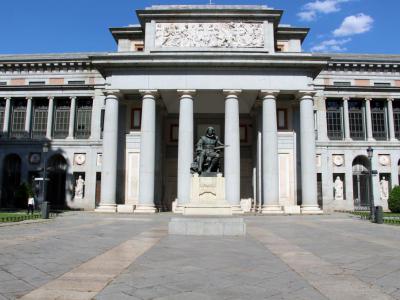
8) Museo Nacional del Prado (Prado National Museum) (must see)
The Prado National Museum stands as Madrid's top tourist attraction, renowned for its rich art collection that spans centuries and was predominantly acquired by the Spanish royal family over the past 200 years. The institution is organized by national schools and received a significant rejuvenation with the controversial €152 million extension designed by Rafael Moneo. Upon entering, follow the suggested route by bearing right into the central hallway, known as the Hall of the Muses ("Sala de las Musas"). From there, you will be guided through the collections on the ground floor before proceeding upstairs.
The collection of Spanish paintings is truly remarkable, starting with stunning 12th-century Romanesque frescoes and encompassing works by nearly every influential Spanish painter: from the renowned El Greco, who hailed from Crete but worked in Toledo during the 1570s, to the outstanding Francisco de Goya, known for his masterpieces depicting 18th-century Bourbon Spain. Don't miss the collection of works by Diego Velázquez, including his renowned masterpiece, "Las Meninas", either.
Meanwhile, the Italian painting collection boasts the most comprehensive assembly of painters from the Venice School within a single museum, including Titian's magnificent equestrian portrait, "Emperor Carlos V at Mühlberg". Notable works by Raphael, Tintoretto, Veronese, and Caravaggio can also be found. The early Flemish works are equally impressive, featuring Hieronymus Bosch's renowned triptych, the mesmerizing "Garden of Earthly Delights". Keep an eye out for Pieter Bruegel the Elder's "Triumph of Death", one of the most chilling canvases ever painted, as well as Rogier van der Weyden's "Descent from the Cross" and the extensive Rubens collection.
While German and French paintings have a lesser representation, they are still worth exploring, especially the works by Dürer, Cranach, and Poussin. Downstairs in the basement, you'll encounter a dazzling display of jewels that once belonged to the Grand Dauphin Louis, son of Louis XIV and father of Felipe V, Spain's first Bourbon king.
The new wing of the museum houses temporary exhibition spaces, restoration workshops, a sculpture gallery, as well as a restaurant, café, and shops, providing visitors with a comprehensive experience.
***HEMINGWAY'S MADRID***
Although Ernest Hemingway was not a usual lover of museums, Prado was an exception for him. He recognized this cultural site as a treasure, with its exhibited works by Picasso, Velazquez, Goya, El Greco and many other international artists. The writer was especially fascinated by Goya, whom he considered a genius.
Tip:
To enter, tickets can be purchased at the Puerta de Goya, opposite the Hotel Ritz on Calle Felipe IV, while the actual entrance is located at the Puerta de los Jerónimos at the back, leading into the museum's new extension. To avoid the lengthy queues, it is advisable to buy tickets in advance from the museum's website.
You have the option of enjoying a free visit during the last two hours of the day, which is a great way to save on your travel expenses while still being able to experience the museum. However, if you intend to spend an entire day here, you can have your ticket and audio guide stamped, allowing you to temporarily exit the museum for lunch and then return to continue exploring.
The collection of Spanish paintings is truly remarkable, starting with stunning 12th-century Romanesque frescoes and encompassing works by nearly every influential Spanish painter: from the renowned El Greco, who hailed from Crete but worked in Toledo during the 1570s, to the outstanding Francisco de Goya, known for his masterpieces depicting 18th-century Bourbon Spain. Don't miss the collection of works by Diego Velázquez, including his renowned masterpiece, "Las Meninas", either.
Meanwhile, the Italian painting collection boasts the most comprehensive assembly of painters from the Venice School within a single museum, including Titian's magnificent equestrian portrait, "Emperor Carlos V at Mühlberg". Notable works by Raphael, Tintoretto, Veronese, and Caravaggio can also be found. The early Flemish works are equally impressive, featuring Hieronymus Bosch's renowned triptych, the mesmerizing "Garden of Earthly Delights". Keep an eye out for Pieter Bruegel the Elder's "Triumph of Death", one of the most chilling canvases ever painted, as well as Rogier van der Weyden's "Descent from the Cross" and the extensive Rubens collection.
While German and French paintings have a lesser representation, they are still worth exploring, especially the works by Dürer, Cranach, and Poussin. Downstairs in the basement, you'll encounter a dazzling display of jewels that once belonged to the Grand Dauphin Louis, son of Louis XIV and father of Felipe V, Spain's first Bourbon king.
The new wing of the museum houses temporary exhibition spaces, restoration workshops, a sculpture gallery, as well as a restaurant, café, and shops, providing visitors with a comprehensive experience.
***HEMINGWAY'S MADRID***
Although Ernest Hemingway was not a usual lover of museums, Prado was an exception for him. He recognized this cultural site as a treasure, with its exhibited works by Picasso, Velazquez, Goya, El Greco and many other international artists. The writer was especially fascinated by Goya, whom he considered a genius.
Tip:
To enter, tickets can be purchased at the Puerta de Goya, opposite the Hotel Ritz on Calle Felipe IV, while the actual entrance is located at the Puerta de los Jerónimos at the back, leading into the museum's new extension. To avoid the lengthy queues, it is advisable to buy tickets in advance from the museum's website.
You have the option of enjoying a free visit during the last two hours of the day, which is a great way to save on your travel expenses while still being able to experience the museum. However, if you intend to spend an entire day here, you can have your ticket and audio guide stamped, allowing you to temporarily exit the museum for lunch and then return to continue exploring.
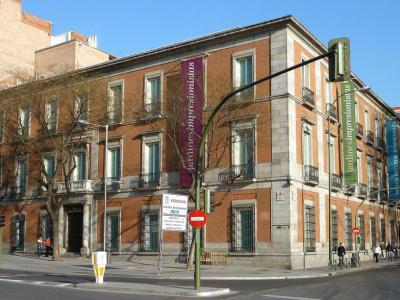
9) Museo Thyssen-Bornemisza (Thyssen-Bornemisza Museum) (must see)
This extraordinary private collection, curated by Baron Heinrich Thyssen-Bornemisza, his son Hans Heinrich, and his former wife Carmen, is a treasure trove of art spanning centuries. Since its opening in 1993, the museum has showcased masterpieces by renowned Western artists from the 14th century onwards. An extension, seamlessly integrated into the original museum layout, now hosts temporary exhibitions and Carmen's remarkable collection, which features a strong emphasis on 19th-century landscapes, North American art, Impressionism, and Post-Impressionism.
To explore the collection in chronological order, begin on the second floor, where you'll encounter pre-Renaissance artwork from the 14th century. Renaissance portraits by renowned artists such as Ghirlandaio, Raphael, and Holbein adorn the walls, including Holbein's captivating portrayal of Henry VIII. Moving forward, you'll discover equally impressive works by Titian, Tintoretto, El Greco, Caravaggio, and Canaletto. The new galleries house a superb collection of landscapes and serene Impressionist pieces by Pissarro, Monet, Renoir, Degas, and Sisley.
Continuing to the first floor, you'll encounter an exceptional selection of works by Gauguin and the Post-Impressionists. The vivid expressionism of Kandinsky, Nolde, and Kirchner is also well represented. Further displays include a comprehensive array of Dutch paintings from the 17th century, spanning various genres, as well as splendid 19th-century American landscapes. Van Gogh's contributions are particularly striking, including his captivating and final work, "Les Vessenots". The expressionist movement is further showcased with George Grosz's apocalyptic masterpiece, "Metropolis".
On the ground floor, the collection encompasses art from the early 20th century. Noteworthy works from the Cubist movement by Picasso, Braque, and Mondrian can be found within the "experimental avant-garde" section. Miró, Pollock, and Chagall are also featured, capturing the viewer's attention. Surrealism is well represented by Dalí, while the final galleries showcase captivating pieces by Bacon, Lichtenstein, and Freud.
Why You Should Visit:
A very cozy, relaxing, interesting and well-organized gallery, with all great pieces commented by an outstanding audio guide.
You can get close and examine the techniques used, take photos of your favourite works, or just admire them.
The artwork is more varied than in the Prado – there are more artists/styles represented, and something to suit all tastes.
Good cafe/restaurant for either coffee, snack or lunch – you can either sit inside or outside in the courtyard.
Tip:
On Mondays, be sure to prioritize the temporary exhibitions located on the top floors, as they close at 1pm. Otherwise, you can choose to begin your visit on the top floor and make your way down or vice versa if contemporary art is more to your liking. Don't forget to bring your earphones along so you can enjoy the audio guide and immerse yourself in the artwork.
To explore the collection in chronological order, begin on the second floor, where you'll encounter pre-Renaissance artwork from the 14th century. Renaissance portraits by renowned artists such as Ghirlandaio, Raphael, and Holbein adorn the walls, including Holbein's captivating portrayal of Henry VIII. Moving forward, you'll discover equally impressive works by Titian, Tintoretto, El Greco, Caravaggio, and Canaletto. The new galleries house a superb collection of landscapes and serene Impressionist pieces by Pissarro, Monet, Renoir, Degas, and Sisley.
Continuing to the first floor, you'll encounter an exceptional selection of works by Gauguin and the Post-Impressionists. The vivid expressionism of Kandinsky, Nolde, and Kirchner is also well represented. Further displays include a comprehensive array of Dutch paintings from the 17th century, spanning various genres, as well as splendid 19th-century American landscapes. Van Gogh's contributions are particularly striking, including his captivating and final work, "Les Vessenots". The expressionist movement is further showcased with George Grosz's apocalyptic masterpiece, "Metropolis".
On the ground floor, the collection encompasses art from the early 20th century. Noteworthy works from the Cubist movement by Picasso, Braque, and Mondrian can be found within the "experimental avant-garde" section. Miró, Pollock, and Chagall are also featured, capturing the viewer's attention. Surrealism is well represented by Dalí, while the final galleries showcase captivating pieces by Bacon, Lichtenstein, and Freud.
Why You Should Visit:
A very cozy, relaxing, interesting and well-organized gallery, with all great pieces commented by an outstanding audio guide.
You can get close and examine the techniques used, take photos of your favourite works, or just admire them.
The artwork is more varied than in the Prado – there are more artists/styles represented, and something to suit all tastes.
Good cafe/restaurant for either coffee, snack or lunch – you can either sit inside or outside in the courtyard.
Tip:
On Mondays, be sure to prioritize the temporary exhibitions located on the top floors, as they close at 1pm. Otherwise, you can choose to begin your visit on the top floor and make your way down or vice versa if contemporary art is more to your liking. Don't forget to bring your earphones along so you can enjoy the audio guide and immerse yourself in the artwork.
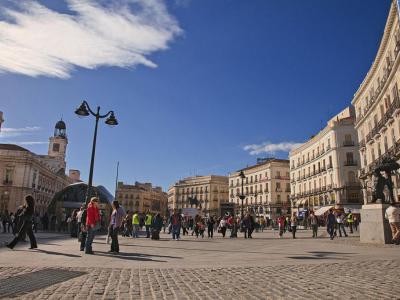
10) Puerta del Sol (Gate of the Sun) (must see)
One of Madrid’s most popular gathering places, the Gate of the Sun is always buzzing with life. Historically, it marked the city’s original eastern entrance, where a gatehouse and castle once stood. Over the centuries, these structures gave way to churches, and in the late 19th century, the area transformed into the square we know today, becoming a hub of café culture and social activity.
Shaped like a half-moon, the area features a modern glass train station facing the statue of Carlos III on horseback at its center. Opposite, a red-brick government building, originally a post office from the reign of Carlos III, now houses the regional government. Later repurposed as the Ministry of the Interior, it gained its distinctive clocktower in 1866. This building, however, has a darker past-during the Franco regime, its basement cells were notorious for human rights abuses.
The Gate of the Sun itself has witnessed significant historical drama. On May 2, 1808, the Spanish uprising against French occupation began here, though the rebellion was ultimately quashed. In 1912, Prime Minister José Canalejas was assassinated in the square, and in 1931, the proclamation of the Second Republic was made from the Ministry’s balcony.
Today, it remains a focal point for festive events, bringing together locals and visitors alike. Nearby side streets offer a treasure trove of nightlife, with bars and clubs opening their doors late, creating a vibrant after-hours scene.
While here, you can also have a chance to eat like a local in a number of family-run restaurants, authentic taverns and tapas bars tucked away from the usual tourist paths. One such hidden gem is La Mallorquina, famed for its “napolitanas” and ring-shaped pastries, which can be enjoyed in an upstairs salon overlooking the square.
Shaped like a half-moon, the area features a modern glass train station facing the statue of Carlos III on horseback at its center. Opposite, a red-brick government building, originally a post office from the reign of Carlos III, now houses the regional government. Later repurposed as the Ministry of the Interior, it gained its distinctive clocktower in 1866. This building, however, has a darker past-during the Franco regime, its basement cells were notorious for human rights abuses.
The Gate of the Sun itself has witnessed significant historical drama. On May 2, 1808, the Spanish uprising against French occupation began here, though the rebellion was ultimately quashed. In 1912, Prime Minister José Canalejas was assassinated in the square, and in 1931, the proclamation of the Second Republic was made from the Ministry’s balcony.
Today, it remains a focal point for festive events, bringing together locals and visitors alike. Nearby side streets offer a treasure trove of nightlife, with bars and clubs opening their doors late, creating a vibrant after-hours scene.
While here, you can also have a chance to eat like a local in a number of family-run restaurants, authentic taverns and tapas bars tucked away from the usual tourist paths. One such hidden gem is La Mallorquina, famed for its “napolitanas” and ring-shaped pastries, which can be enjoyed in an upstairs salon overlooking the square.
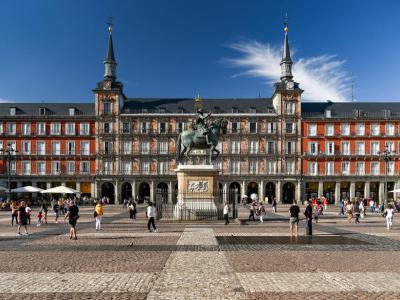
11) Plaza Mayor (Town Square) (must see)
Madrid’s grand and dramatic Town Square was initially dreamed up by King Felipe II, who, in the late 16th century, envisioned a more prestigious focal point for his new capital. The oldest building here, known as the Bakery House, dates back to 1590, though extensive rebuilding occurred after devastating fires in the 17th and 18th centuries. Interestingly, its eye-catching frescoes are relatively new, added as recently as 1992. Today, this building hosts the city’s tourist information center, welcoming visitors from morning until late into the evening. At the square’s center, you’ll spot a bronze equestrian statue of Felipe III, which has stood there since 1616.
Historically, this vast plaza-with a capacity of 50,000 people-hosted a wide range of events: royal coronations, religious ceremonies, theatrical productions, bullfights, and even public trials of heretics that ended dramatically with executions. Nowadays, the square remains a lively social hub, bustling with outdoor cafés, upscale restaurants, and plenty of tourists. Still, it hasn’t lost its old-world grandeur, continuing to host seasonal events like outdoor concerts, theatrical performances, festive Christmas markets, and a popular Sunday stamp and coin fair.
While many restaurants lining the plaza can be somewhat pricey and tourist-oriented, the square’s delightful atmosphere makes it an ideal setting for relaxing with a glass of Spanish wine and a delicious tapa. One culinary treat you shouldn’t miss here is Madrid’s signature calamari sandwich-crispy battered squid served fresh in a bun-best enjoyed with a refreshing cold beer.
Among the square’s standout eateries, Los Galayos is especially noteworthy. Established back in 1894, this historic restaurant is open every day until late, featuring multiple dining rooms and two inviting outdoor terraces. For a more casual experience, tucked in a charming alley just south of the square, you'll discover Casa Revuelta, an authentic local bar renowned for its “bacalao frito”-crispy, golden fried cod, simply irresistible.
Finally, just steps away on nearby Calle de Cuchilleros, sits Sobrino de Botín. Established in 1725, it proudly holds the Guinness World Record as the oldest continuously operating restaurant in the world.
Historically, this vast plaza-with a capacity of 50,000 people-hosted a wide range of events: royal coronations, religious ceremonies, theatrical productions, bullfights, and even public trials of heretics that ended dramatically with executions. Nowadays, the square remains a lively social hub, bustling with outdoor cafés, upscale restaurants, and plenty of tourists. Still, it hasn’t lost its old-world grandeur, continuing to host seasonal events like outdoor concerts, theatrical performances, festive Christmas markets, and a popular Sunday stamp and coin fair.
While many restaurants lining the plaza can be somewhat pricey and tourist-oriented, the square’s delightful atmosphere makes it an ideal setting for relaxing with a glass of Spanish wine and a delicious tapa. One culinary treat you shouldn’t miss here is Madrid’s signature calamari sandwich-crispy battered squid served fresh in a bun-best enjoyed with a refreshing cold beer.
Among the square’s standout eateries, Los Galayos is especially noteworthy. Established back in 1894, this historic restaurant is open every day until late, featuring multiple dining rooms and two inviting outdoor terraces. For a more casual experience, tucked in a charming alley just south of the square, you'll discover Casa Revuelta, an authentic local bar renowned for its “bacalao frito”-crispy, golden fried cod, simply irresistible.
Finally, just steps away on nearby Calle de Cuchilleros, sits Sobrino de Botín. Established in 1725, it proudly holds the Guinness World Record as the oldest continuously operating restaurant in the world.
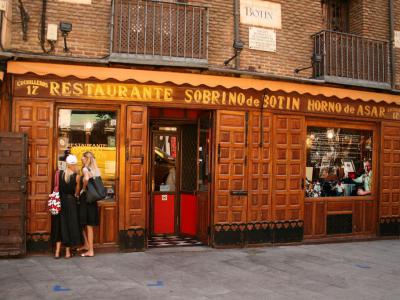
12) Sobrino de Botin (Europe's Oldest Restaurant) (must see)
Dating all the way back to 1725, Sobrino de Botín holds the title of Europe’s oldest continuously operating restaurant-as recognized by the Guinness Book of Records. Originally called Casa Botín, it was founded by a Frenchman named Jean Botín and his wife. In the beginning, it functioned more like a tavern than a restaurant. But after Mrs. Botín passed away, her nephew took over, and the name changed to Sobrino de Botín-which means “Botín’s Nephew” in Spanish.
Step inside, and you'll find yourself in a maze of cozy, rustic dining rooms, where centuries of history seem to linger in the air. Botín is especially famous for two signature dishes: “cochinillo”, or roast suckling pig, and “cordero lechal”, tender roast lamb. The recipes haven’t changed over the years, and believe it or not, the wood-fired oven has never gone cold-it’s been burning continuously for three centuries.
The restaurant has also seen its fair share of famous faces. The legendary Spanish painter Francisco de Goya is said to have worked here as a young waiter while waiting to get into the Royal Academy of Fine Arts. And Ernest Hemingway was a loyal fan-he even gave the place a nod in the final pages of “The Sun Also Rises”, writing, “We lunched upstairs at Botín's. It is one of the best restaurants in the world. We had roast young suckling pig and drank rioja alta.”
If you’re thinking of visiting, be sure to book ahead. Tables fill up fast, and once you step through those doors, it’s easy to see why.
Step inside, and you'll find yourself in a maze of cozy, rustic dining rooms, where centuries of history seem to linger in the air. Botín is especially famous for two signature dishes: “cochinillo”, or roast suckling pig, and “cordero lechal”, tender roast lamb. The recipes haven’t changed over the years, and believe it or not, the wood-fired oven has never gone cold-it’s been burning continuously for three centuries.
The restaurant has also seen its fair share of famous faces. The legendary Spanish painter Francisco de Goya is said to have worked here as a young waiter while waiting to get into the Royal Academy of Fine Arts. And Ernest Hemingway was a loyal fan-he even gave the place a nod in the final pages of “The Sun Also Rises”, writing, “We lunched upstairs at Botín's. It is one of the best restaurants in the world. We had roast young suckling pig and drank rioja alta.”
If you’re thinking of visiting, be sure to book ahead. Tables fill up fast, and once you step through those doors, it’s easy to see why.
13) Mercado de San Miguel (Saint Michael's Market) (must see)
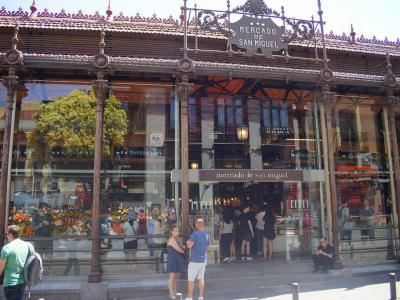
Saint Michael’s Market may not be Madrid’s largest, but it holds a unique place in the city’s history as the last surviving iron marketplace. Originally built in 1915, this striking single-level structure, encased in glass, served as a traditional neighborhood market for nearly a century. After an ambitious transformation in 2009, it emerged as a celebrated gastronomic destination, inspiring the rise of gourmet markets not just in Madrid, but across Spain.
Situated on the site of a former church-demolished in 1810 during the rule of Joseph Bonaparte-San Miguel now houses an impressive variety of food stalls. Here, you can savor freshly prepared dishes representing Spain’s diverse culinary traditions. If you’re unsure what to try, don’t hesitate to ask for a sample and find your new favorite flavor.
Beyond its tempting food offerings, the market features a wine bar, a vermouth bar, and even a flamenco venue. Live music performances add to the lively ambiance, making it much more than just a place to eat.
Tip: Before stepping inside, glance up at the fallen angel statue-“Accidente Aereo”-above the main entrance. While not as famous as the one in Retiro Park, it’s no less spectacular. And when nature calls, keep a receipt from one of your purchases handy; it might save you a restroom fee.
Situated on the site of a former church-demolished in 1810 during the rule of Joseph Bonaparte-San Miguel now houses an impressive variety of food stalls. Here, you can savor freshly prepared dishes representing Spain’s diverse culinary traditions. If you’re unsure what to try, don’t hesitate to ask for a sample and find your new favorite flavor.
Beyond its tempting food offerings, the market features a wine bar, a vermouth bar, and even a flamenco venue. Live music performances add to the lively ambiance, making it much more than just a place to eat.
Tip: Before stepping inside, glance up at the fallen angel statue-“Accidente Aereo”-above the main entrance. While not as famous as the one in Retiro Park, it’s no less spectacular. And when nature calls, keep a receipt from one of your purchases handy; it might save you a restroom fee.
14) Palacio Real (Royal Palace of Madrid) (must see)
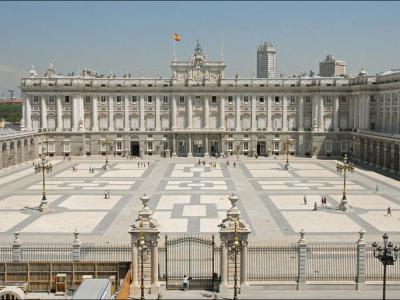
Touring this palace feels like wandering through one of the world’s most exquisite art galleries. You’ll discover a stunning array of masterpieces, from paintings and frescoes to porcelain, ornate furniture, silverware, and other historically significant treasures. Among the standout features is the only complete set of Stradivarius string quintet instruments-a true musical marvel.
The palace we see today was commissioned by Felipe V after the 9th-century wooden Moorish Alcázar fortress was lost to a devastating fire in 1734. Drawing inspiration from the lavish splendor of Versailles, where Felipe had been raised, the Bourbon king envisioned a magnificent French-Italian-style structure built from stone and granite. Although Felipe didn’t live to see its completion, the palace was finally ready for use during the reign of Carlos III in 1764. What the exterior lacks in flamboyance, the interior more than makes up for: lavish marble floors, celestial frescoes, and golden furnishings tell a story of wealth and power, standing in stark contrast to Spain’s declining status at the time.
Don’t miss the awe-inspiring Throne Room, with its ceiling by Tiepolo illustrating the Majesty of Spain, or the Gasparini Room, whose silver silk-embroidered walls and intricate marble mosaic floor offer a mesmerizing display. The Porcelain Room, with its dazzling gold, green, and white porcelain decor, is another showstopper.
Beyond the main palace, you can explore the renowned Royal Armory, home to one of the world’s finest collections of historic weapons and armor. There is also an 18th-century pharmacy resembling a laboratory and the Painting Gallery, with works by Caravaggio, Velázquez, and Goya.
Tips:
If you’re planning a visit, set aside a few hours to take it all in. To beat the crowds and save time, consider booking your tickets online in advance.
The palace we see today was commissioned by Felipe V after the 9th-century wooden Moorish Alcázar fortress was lost to a devastating fire in 1734. Drawing inspiration from the lavish splendor of Versailles, where Felipe had been raised, the Bourbon king envisioned a magnificent French-Italian-style structure built from stone and granite. Although Felipe didn’t live to see its completion, the palace was finally ready for use during the reign of Carlos III in 1764. What the exterior lacks in flamboyance, the interior more than makes up for: lavish marble floors, celestial frescoes, and golden furnishings tell a story of wealth and power, standing in stark contrast to Spain’s declining status at the time.
Don’t miss the awe-inspiring Throne Room, with its ceiling by Tiepolo illustrating the Majesty of Spain, or the Gasparini Room, whose silver silk-embroidered walls and intricate marble mosaic floor offer a mesmerizing display. The Porcelain Room, with its dazzling gold, green, and white porcelain decor, is another showstopper.
Beyond the main palace, you can explore the renowned Royal Armory, home to one of the world’s finest collections of historic weapons and armor. There is also an 18th-century pharmacy resembling a laboratory and the Painting Gallery, with works by Caravaggio, Velázquez, and Goya.
Tips:
If you’re planning a visit, set aside a few hours to take it all in. To beat the crowds and save time, consider booking your tickets online in advance.
15) Templo de Debod (Temple of Debod) (must see)
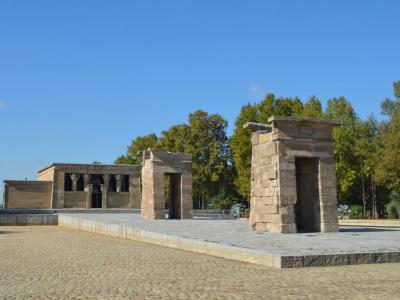
A somewhat unexpected sight in the heart of Madrid is the Egyptian temple dating back to the 4th century BC. Apparently, it was brought to Spain as a gesture of gratitude from the Egyptian government for Spanish assistance in preserving ancient monuments during the construction of the Aswan Dam on the Nile River.
More than 2,000 years old, the temple was carefully dismantled, transported, and reconstructed stone by stone in its original East-West orientation. The process took place in two phases, with the first phase including the establishment of the surrounding gardens from October to December 1970. The second phase involved the reconstruction of the temple's missing parts, including the entrance hall. It was officially opened to the public in 1972.
The temple aligns with two of its original three gateways, offering panoramic views that extend all the way to the Guadarrama mountains. Its carvings depict Amun, an Egyptian god with a ram's head, symbolizing life and fertility, to whom it is dedicated. While the interior is no longer accessible, visitors can explore the platforms.
Tips:
Do bring a mini-picnic with you, so you can laze about like the locals.
Also, try arriving 30 minutes before sunset to see the place transform with the change of lighting.
More than 2,000 years old, the temple was carefully dismantled, transported, and reconstructed stone by stone in its original East-West orientation. The process took place in two phases, with the first phase including the establishment of the surrounding gardens from October to December 1970. The second phase involved the reconstruction of the temple's missing parts, including the entrance hall. It was officially opened to the public in 1972.
The temple aligns with two of its original three gateways, offering panoramic views that extend all the way to the Guadarrama mountains. Its carvings depict Amun, an Egyptian god with a ram's head, symbolizing life and fertility, to whom it is dedicated. While the interior is no longer accessible, visitors can explore the platforms.
Tips:
Do bring a mini-picnic with you, so you can laze about like the locals.
Also, try arriving 30 minutes before sunset to see the place transform with the change of lighting.
