Custom Walk in Brussels, Belgium by araadw0921_9b52f2 created on 2026-03-31
Guide Location: Belgium » Brussels
Guide Type: Custom Walk
# of Sights: 16
Tour Duration: 5 Hour(s)
Travel Distance: 9.9 Km or 6.2 Miles
Share Key: W9CP2
Guide Type: Custom Walk
# of Sights: 16
Tour Duration: 5 Hour(s)
Travel Distance: 9.9 Km or 6.2 Miles
Share Key: W9CP2
How It Works
Please retrieve this walk in the GPSmyCity app. Once done, the app will guide you from one tour stop to the next as if you had a personal tour guide. If you created the walk on this website or come to the page via a link, please follow the instructions below to retrieve the walk in the app.
Retrieve This Walk in App
Step 1. Download the app "GPSmyCity: Walks in 1K+ Cities" on Apple App Store or Google Play Store.



Step 2. In the GPSmyCity app, download(or launch) the guide "Brussels Map and Walking Tours".
Step 3. Tap the menu button located at upper right corner of the "Walks" screen and select "Retrieve custom walk". Enter the share key: W9CP2
1) Grand Place (Grand Square) (must see)
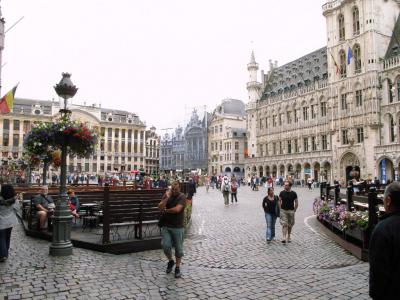
Grand Square-Brussels’ pride and joy-is the biggest show-off move of the Belgian capital. Some say it's the most beautiful square in Europe. Others say the world. Either way, it’s hard to argue when you’re standing there, dwarfed by a 15th-century Gothic Town Hall that looks like it got dressed for the Met Gala... and the neo-Gothic King's House-also charmingly called the Bread House (because apparently even royal buildings get carb cravings).
This cobblestoned stunner has been in the spotlight since the 11th century. Back then, it was a humble marketplace. A few hundred years later, it had a front-row seat to history-picture Inquisition bonfires and a couple of unfortunate noble executions (some sort of “light afternoon entertainment” for the medieval crowd)...
As Brussels bloomed, so did the square’s bling. Surrounding it are guildhalls that practically scream, “We have money and good taste!” Each one was built by a different trade-from haberdashers to bakers to brewers-and while the jobs have changed, the beauty hasn’t. Take Number 10, for example-once a brewers’ headquarters, now home to the Brewers Museum, so yes, beer still lives there. Circle of life.
Now, not everything has been smooth sailing here. In 1695, the French decided Brussels needed a “makeover.” So they bombarded the square for 36 hours straight. Miraculously, several buildings were rebuilt after that even better. Like Number 3, once run by tallow merchants, and Number 5, home of the archers’ guild, proudly rocking a phoenix on its façade-a little "burn me once" statement piece.
Today, in addition to being a history lesson with a stunning backdrop, the Grand Square is a vibe. Alleyways nearby are filled with centuries-old bars serving the holy trinity: Belgian beer, chocolate, and gossip. Butchers Street is your go-to for mussels and souvenirs and maybe some stretchy pants.
And if you time it right, you’ll catch the square in full party mode. There’s the biennial Flower Carpet-a psychedelic begonia explosion, the medieval cosplay of Ommegang, Christmas lights that would make the North Pole jealous, and concerts that echo through time.
Tip:
Visit in daylight to admire every gold-leafed flourish, and come back after dark for the light show. Around 10:20 PM, this square doesn’t just sparkle-it sings.
This cobblestoned stunner has been in the spotlight since the 11th century. Back then, it was a humble marketplace. A few hundred years later, it had a front-row seat to history-picture Inquisition bonfires and a couple of unfortunate noble executions (some sort of “light afternoon entertainment” for the medieval crowd)...
As Brussels bloomed, so did the square’s bling. Surrounding it are guildhalls that practically scream, “We have money and good taste!” Each one was built by a different trade-from haberdashers to bakers to brewers-and while the jobs have changed, the beauty hasn’t. Take Number 10, for example-once a brewers’ headquarters, now home to the Brewers Museum, so yes, beer still lives there. Circle of life.
Now, not everything has been smooth sailing here. In 1695, the French decided Brussels needed a “makeover.” So they bombarded the square for 36 hours straight. Miraculously, several buildings were rebuilt after that even better. Like Number 3, once run by tallow merchants, and Number 5, home of the archers’ guild, proudly rocking a phoenix on its façade-a little "burn me once" statement piece.
Today, in addition to being a history lesson with a stunning backdrop, the Grand Square is a vibe. Alleyways nearby are filled with centuries-old bars serving the holy trinity: Belgian beer, chocolate, and gossip. Butchers Street is your go-to for mussels and souvenirs and maybe some stretchy pants.
And if you time it right, you’ll catch the square in full party mode. There’s the biennial Flower Carpet-a psychedelic begonia explosion, the medieval cosplay of Ommegang, Christmas lights that would make the North Pole jealous, and concerts that echo through time.
Tip:
Visit in daylight to admire every gold-leafed flourish, and come back after dark for the light show. Around 10:20 PM, this square doesn’t just sparkle-it sings.
2) King's House / Brussels City Museum
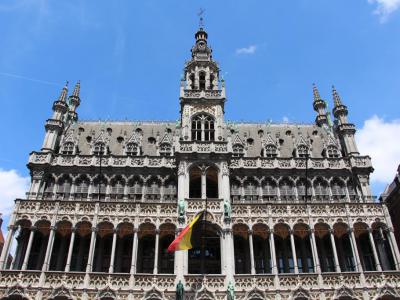
The King's House, also known as the Bread House or Bread Hall in Dutch, has a long, layered history. "Why bread?" you ask. Because before it became all regal and museum-y, this spot was literally the place to get your carbs. Back in the 12th century, it was a humble, wooden bread market. But by the 15th century, it had a glow-up into a stone building, moonlighting as the admin center for the Duke of Brabant.
At some point in history, the Duke leveled up and became King of Spain, and so The Bread House got an upgrade in name too: King’s House. Fancy, huh?
Then, in the 16th century, along came Emperor Charles V, who decided the building needed a bit of Gothic drama. So he added a few pointy arches, some flair, and got himself a serious statement piece.
Unfortunately, the French dropped by in 1695… with cannons. The building took a hit and went through various touch-ups over the years, including a neoclassical facelift in 1767. But it wasn't until Victor Jamaer came strutting in between 1874 and 1896 that the King’s House got its full neo-Gothic glam back. Jamaer put in towers, galleries, statues galore, and even a neo-Renaissance rear wing-because why not?
Since 1887, this eye candy of a building has housed the Brussels City Museum. It’s basically a treasure chest of over 7,000 objects: town hall sculptures, old city maps, silverware, tapestries, and some serious art featuring the likes of Bruegel the Elder and Rubens.
Now, for the crowd favorite: head to the top floor and meet the Manneken Pis. Yep, the original cheeky little statue himself, along with a sample of his international fashion collection. Most of his wardrobe lives in the Garderobe MannekenPis, just a short walk away-because yes, he has his own museum.
Oh, and if you're planning a visit? The museum is open daily-except Mondays-from 10 a.m. to 5 p.m.
Tip:
It’s free on the first Sunday of each month.
Want the full experience without fumbling through French? Grab the audio guide. Your ears will thank you.
At some point in history, the Duke leveled up and became King of Spain, and so The Bread House got an upgrade in name too: King’s House. Fancy, huh?
Then, in the 16th century, along came Emperor Charles V, who decided the building needed a bit of Gothic drama. So he added a few pointy arches, some flair, and got himself a serious statement piece.
Unfortunately, the French dropped by in 1695… with cannons. The building took a hit and went through various touch-ups over the years, including a neoclassical facelift in 1767. But it wasn't until Victor Jamaer came strutting in between 1874 and 1896 that the King’s House got its full neo-Gothic glam back. Jamaer put in towers, galleries, statues galore, and even a neo-Renaissance rear wing-because why not?
Since 1887, this eye candy of a building has housed the Brussels City Museum. It’s basically a treasure chest of over 7,000 objects: town hall sculptures, old city maps, silverware, tapestries, and some serious art featuring the likes of Bruegel the Elder and Rubens.
Now, for the crowd favorite: head to the top floor and meet the Manneken Pis. Yep, the original cheeky little statue himself, along with a sample of his international fashion collection. Most of his wardrobe lives in the Garderobe MannekenPis, just a short walk away-because yes, he has his own museum.
Oh, and if you're planning a visit? The museum is open daily-except Mondays-from 10 a.m. to 5 p.m.
Tip:
It’s free on the first Sunday of each month.
Want the full experience without fumbling through French? Grab the audio guide. Your ears will thank you.
3) Pierre Marcolini (chocolate artisan)
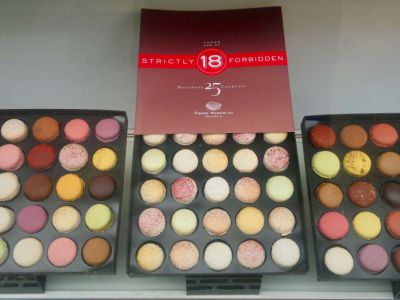
Bringing back Belgian chocolate is a common choice these days, but if you're looking for something extraordinary, consider a visit to Pierre Marcolini, often hailed as the world's top chocolatier. With multiple locations in Brussels, Marcolini approaches his confections with a modern design sensibility that goes beyond just the chocolate itself.
A visit to his store in the heart of the artsy Sablon district might remind you of a decadent ice cream parlor, where chocolates are showcased like luxury cars in a showroom. Alternatively, if you can't make it to the Sablon district, the boutique in the Royal Gallery of Saint Hubert is a great alternative. Here, you can discover exquisite chocolates crafted from raw ingredients, including delightful spice- and tea-infused chocolates that will tantalize your taste buds.
Pierre Marcolini is known not just for the exceptional quality of his chocolates but also the classy service and exquisite packaging. And if you're a fan of chocolate cakes, you're in for a treat because they are simply to die for.
Be prepared to invest a bit more in these delectable creations, but the quality and experience are well worth it!
A visit to his store in the heart of the artsy Sablon district might remind you of a decadent ice cream parlor, where chocolates are showcased like luxury cars in a showroom. Alternatively, if you can't make it to the Sablon district, the boutique in the Royal Gallery of Saint Hubert is a great alternative. Here, you can discover exquisite chocolates crafted from raw ingredients, including delightful spice- and tea-infused chocolates that will tantalize your taste buds.
Pierre Marcolini is known not just for the exceptional quality of his chocolates but also the classy service and exquisite packaging. And if you're a fan of chocolate cakes, you're in for a treat because they are simply to die for.
Be prepared to invest a bit more in these delectable creations, but the quality and experience are well worth it!
4) Galeries Royales Saint-Hubert (Royal Saint-Hubert Galleries) (must see)
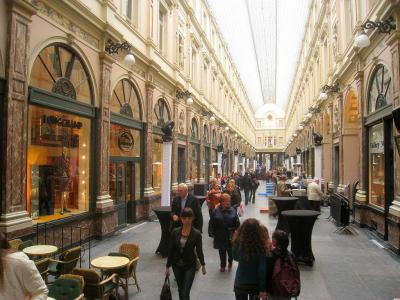
Often credited as Europe's first "mall", the stately Royal Saint-Hubert Galleries in Brussels is a remarkable example of a 19th-century covered shopping arcade. The concept of a shopping gallery originated in Paris during the 1780s when King Louis XIV leased parts of his garden to shopkeepers. Their outlets turned the space into a social and commercial hub that later developed into covered galleries for the affluent.
Brussels saw the creation of seven such galleries during the 1820s and 1830s, yet the Saint-Hubert Galleries – designed by architect Jean-Pierre Cluysenaar – is among the fortunate three that have endured the test of time. Officially inaugurated in 1847 by King Leopold I, the galleries quickly became a beloved haunt of the rich, offering a luxurious shopping and café experience regardless of weather. As such, they were precursors to other 19th-century European shopping venues like Milan's Galleria Vittorio Emanuele II and the Passage in Saint Petersburg, Russia.
Characterized by their Italianate Cinquecento style, the galleries feature glazed-arched shopfronts separated by pilasters beneath a glass-paneled roof with cast-iron framework. A deliberate bend in the galleries adds visual interest to the otherwise long, repetitive perspective. The covered structure is made up of two main sections, known as the King's Gallery and the Queen's Gallery, each measuring 8 meters (or 26 feet) in width and 213 meters (or 700 feet) in length, and a smaller side segment dubbed the Prince's Gallery.
In the past, the site hosted significant cultural developments like the first public showing of the Lumière brothers' moving pictures in 1896, and today houses among other attractions the Museum of Letters and Manuscripts and the Royal Theatre of the Galleries (inside The King's Gallery). The Queen's Gallery is best known for shops like Delvaux, specializing in leather goods, and Neuhaus, the pharmacy-turned-chocolatier renowned for creating the praline, which first opened its doors in 1857. It also houses the popular Passage Tavern restaurant. The Prince's Gallery, in turn, is home to the exquisite Tropismes bookstore.
The Galleries were designated a historic monument in 1986 while also being considered for World Heritage status by UNESCO.
Tip:
Climb to the top floor of the Le Pain Quotidien restaurant (whose name translates to 'The Daily Bread') for an elevated perspective and a unique view from the upper part of the galleries.
Brussels saw the creation of seven such galleries during the 1820s and 1830s, yet the Saint-Hubert Galleries – designed by architect Jean-Pierre Cluysenaar – is among the fortunate three that have endured the test of time. Officially inaugurated in 1847 by King Leopold I, the galleries quickly became a beloved haunt of the rich, offering a luxurious shopping and café experience regardless of weather. As such, they were precursors to other 19th-century European shopping venues like Milan's Galleria Vittorio Emanuele II and the Passage in Saint Petersburg, Russia.
Characterized by their Italianate Cinquecento style, the galleries feature glazed-arched shopfronts separated by pilasters beneath a glass-paneled roof with cast-iron framework. A deliberate bend in the galleries adds visual interest to the otherwise long, repetitive perspective. The covered structure is made up of two main sections, known as the King's Gallery and the Queen's Gallery, each measuring 8 meters (or 26 feet) in width and 213 meters (or 700 feet) in length, and a smaller side segment dubbed the Prince's Gallery.
In the past, the site hosted significant cultural developments like the first public showing of the Lumière brothers' moving pictures in 1896, and today houses among other attractions the Museum of Letters and Manuscripts and the Royal Theatre of the Galleries (inside The King's Gallery). The Queen's Gallery is best known for shops like Delvaux, specializing in leather goods, and Neuhaus, the pharmacy-turned-chocolatier renowned for creating the praline, which first opened its doors in 1857. It also houses the popular Passage Tavern restaurant. The Prince's Gallery, in turn, is home to the exquisite Tropismes bookstore.
The Galleries were designated a historic monument in 1986 while also being considered for World Heritage status by UNESCO.
Tip:
Climb to the top floor of the Le Pain Quotidien restaurant (whose name translates to 'The Daily Bread') for an elevated perspective and a unique view from the upper part of the galleries.
5) Boutique Tintin
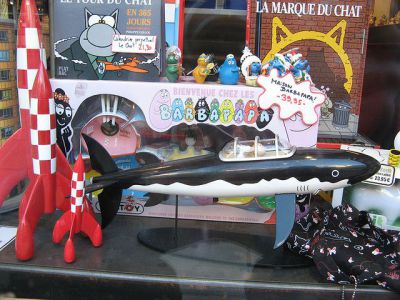
Created by the Belgian cartoonist Georges Remi, renowned by his pen name Hergé, "The Adventures of Tintin" emerged as one of the most beloved European comic series during the 20th century. It achieved global acclaim, being published in over 70 languages and subsequently adapted for radio, television, theater, and cinema. Today, the Tintin series is as much part of Belgian heritage as Victor Horta's architectural marvels or the famous paintings of René Magritte.
For those fond of comics and the Tintin series in particular, a visit to the dedicated boutique in the Grand Square is an absolute must. Situated just a short distance from the square, it's conveniently accessible and offers a treasure trove of Tintin-related merchandise. You'll find an extensive collection of the famous comic publications in dozens of languages, a variety of prints, bags, t-shirts, rugs, watches, magnets, figurines and more, along with Hergé's other cartoon creations, such as Quick & Flupke. A lovely little store, filled with delightful and increasingly rare items, it will sure bring joy to both children and adults, evoking fond memories of their childhood.
Tip:
Devotees of Tintin may also consider visiting the Hergé Museum and the Comics Art Museum for a deeper immersion into the world of comics and Hergé's creations.
For those fond of comics and the Tintin series in particular, a visit to the dedicated boutique in the Grand Square is an absolute must. Situated just a short distance from the square, it's conveniently accessible and offers a treasure trove of Tintin-related merchandise. You'll find an extensive collection of the famous comic publications in dozens of languages, a variety of prints, bags, t-shirts, rugs, watches, magnets, figurines and more, along with Hergé's other cartoon creations, such as Quick & Flupke. A lovely little store, filled with delightful and increasingly rare items, it will sure bring joy to both children and adults, evoking fond memories of their childhood.
Tip:
Devotees of Tintin may also consider visiting the Hergé Museum and the Comics Art Museum for a deeper immersion into the world of comics and Hergé's creations.
6) Planete Chocolat
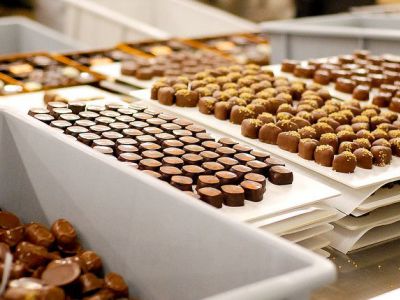
If you are keen on chocolate and are in Brussels, then missing a visit to Planète Chocolat would be a crime! And even more so, given its central location at Rue du Lombard 24 – just a stone's throw from the Grand Place and Manneken-Pis. This place is unique in the sense that, apart from buying delicious handmade (of 100% cocoa butter) artisan Belgian chocolate in its variety (pralines with different ganaches, gayettes, mendiants, truffles, biscuits, and hot chocolate, as well as chocolate cosmetics and sugar-free chocolate), here you can also see for yourself the entire process of chocolate-making and taste the chocolate prepared before your very eyes.
Planète Chocolat was founded as a company and opened its store in downtown Brussels in 1991, having since become a true ambassador of Belgian chocolate worldwide. It is currently placed by GoEuro among the top 11 chocolate shops in Europe, and TripAdvisor ranks Planète Chocolat #3 for shopping in Brussels. The store is decorated with chocolate sculptures, including that of the Manneken Pis, the City Hall, and the Atomium – the landmark of Expo 58, Brussels World's Fair.
Planète Chocolat has elevated chocolate-making to the rank of an art, and today it plays a regular host to various events related to chocolate, such as demonstrations and artisanal workshops, during which the staff generously share their knowledge of the craft with those interested, seeing annually more than 50,000 visitors. With a mission to inform public about the origin and delights of chocolate, the Planète Chocolat museum retraces the history of cocoa. Also, each year the chocolaterie co-hosts a tasting session at the luxury hotel Breidenbacher Hof in Düsseldorf.
Planète Chocolat was founded as a company and opened its store in downtown Brussels in 1991, having since become a true ambassador of Belgian chocolate worldwide. It is currently placed by GoEuro among the top 11 chocolate shops in Europe, and TripAdvisor ranks Planète Chocolat #3 for shopping in Brussels. The store is decorated with chocolate sculptures, including that of the Manneken Pis, the City Hall, and the Atomium – the landmark of Expo 58, Brussels World's Fair.
Planète Chocolat has elevated chocolate-making to the rank of an art, and today it plays a regular host to various events related to chocolate, such as demonstrations and artisanal workshops, during which the staff generously share their knowledge of the craft with those interested, seeing annually more than 50,000 visitors. With a mission to inform public about the origin and delights of chocolate, the Planète Chocolat museum retraces the history of cocoa. Also, each year the chocolaterie co-hosts a tasting session at the luxury hotel Breidenbacher Hof in Düsseldorf.
7) Manneken Pis (Little Boy Peeing) (must see)
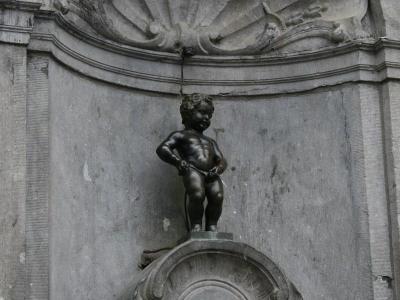
The small bronze statue of a little boy faithfully relieving himself atop a fountain has paradoxically emerged as an unexpected symbol of Brussels.
The site has been a water fountain since the 13th century, but the statue in its current baroque form was crafted in 1619 to replace an earlier version. Throughout history, the Little Boy Peeing has been stolen and thrown into the canal multiple times. What we see today is a copy made in 1965. The original statue is safeguarded in the Brussels City Museum to protect it from any further mishaps.
This enduring sculpture exemplifies the typical Brussels sense of humor and its capacity to poke fun at its own image. Apart from its humor, however, the statue is renowned for various legends associated with it.
One story claims that it commemorates a brave young boy who urinated on a burning fuse, preventing an explosive charge from detonating and potentially destroying the city's fortification walls. In another account, a wealthy merchant, after an extensive citywide search for his missing son, who was eventually found joyfully urinating in a garden, presented the statue, as a token of his appreciation, to the townspeople who aided in the search. Yet another version of the tale suggests that a young boy woke up to find a fire in the king's castle and promptly used his urine to douse the flames, thus preventing it from burning to the ground.
For about one-third of the year, the statue is dressed up in various costumes by an official dresser who has been appointed by the city since 1755. The current dresser, Nicolas Edelman, is the 13th since the 18th century. In 2014, he volunteered for the job which implies dressing up the statue for about 130 events annually. The role demands flexibility, requiring early mornings or late evenings, regardless of weather or day.
The costumes, donated by various entities, must meet quality standards and not serve political, commercial, or religious agendas. To date, the peeing boy has donned over 500 different outfits, ranging from the earliest-known attire, a Louis XV-provided ensemble portraying him as an elegant 17th-century gentleman, to a samurai robe celebrating the friendship between Belgium and Japan.
Little Boy Peeing has two companion statues: Little Girl Peeing (depicting a urinating girl, installed in 1987 in an alleyway near the Grand Square) and Little Dog Peeing (portraying a urinating dog, erected in 1998 in Dansaert, modeled after a real dog owned by the sculptor). Both of them are located approximately 550 meters away from the Little Boy Peeing but in different directions.
The site has been a water fountain since the 13th century, but the statue in its current baroque form was crafted in 1619 to replace an earlier version. Throughout history, the Little Boy Peeing has been stolen and thrown into the canal multiple times. What we see today is a copy made in 1965. The original statue is safeguarded in the Brussels City Museum to protect it from any further mishaps.
This enduring sculpture exemplifies the typical Brussels sense of humor and its capacity to poke fun at its own image. Apart from its humor, however, the statue is renowned for various legends associated with it.
One story claims that it commemorates a brave young boy who urinated on a burning fuse, preventing an explosive charge from detonating and potentially destroying the city's fortification walls. In another account, a wealthy merchant, after an extensive citywide search for his missing son, who was eventually found joyfully urinating in a garden, presented the statue, as a token of his appreciation, to the townspeople who aided in the search. Yet another version of the tale suggests that a young boy woke up to find a fire in the king's castle and promptly used his urine to douse the flames, thus preventing it from burning to the ground.
For about one-third of the year, the statue is dressed up in various costumes by an official dresser who has been appointed by the city since 1755. The current dresser, Nicolas Edelman, is the 13th since the 18th century. In 2014, he volunteered for the job which implies dressing up the statue for about 130 events annually. The role demands flexibility, requiring early mornings or late evenings, regardless of weather or day.
The costumes, donated by various entities, must meet quality standards and not serve political, commercial, or religious agendas. To date, the peeing boy has donned over 500 different outfits, ranging from the earliest-known attire, a Louis XV-provided ensemble portraying him as an elegant 17th-century gentleman, to a samurai robe celebrating the friendship between Belgium and Japan.
Little Boy Peeing has two companion statues: Little Girl Peeing (depicting a urinating girl, installed in 1987 in an alleyway near the Grand Square) and Little Dog Peeing (portraying a urinating dog, erected in 1998 in Dansaert, modeled after a real dog owned by the sculptor). Both of them are located approximately 550 meters away from the Little Boy Peeing but in different directions.
8) Statue of Queen Elisabeth I
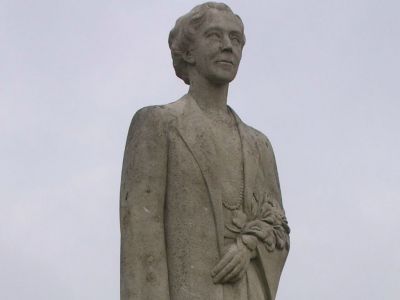
This statue depicts Queen Elisabeth I, also known as Elisabeth of Bavaria. Elisabeth was married to Prince Albert, who later became the King of the Belgians and served as such from 1909 to 1934. The statue was designed by René Cliquet and was completed in 1980. Elisabeth’s statue faces the equestrian statue of her husband, Albert I. During World War I, the Queen made visits to the front lines and also sponsored a nursing unit. This endeared her to many people in both Belgium and in other European countries. In her later years, she became a significant patron of the arts. In 1937 she established an international music competition as a place for young virtuosi to showcase their musical talent. The competition continues to this day, with the challenge being held every three years.
In the early 1940s, during the German occupation of Belgium, she used her German connections and influence to assist in the rescue of hundreds of Jewish children who were facing deportation by the Nazis. After the war, her efforts were recognized by the Israel government and she was awarded the title of Righteous Among the Nations. This award recognizes non-Jews who risked their lives to save Jews during the Holocaust. Elisabeth died in 1965 at the age of 89. She is interred at the Church of Our Lady of Laeken in Brussels.
In the early 1940s, during the German occupation of Belgium, she used her German connections and influence to assist in the rescue of hundreds of Jewish children who were facing deportation by the Nazis. After the war, her efforts were recognized by the Israel government and she was awarded the title of Righteous Among the Nations. This award recognizes non-Jews who risked their lives to save Jews during the Holocaust. Elisabeth died in 1965 at the age of 89. She is interred at the Church of Our Lady of Laeken in Brussels.
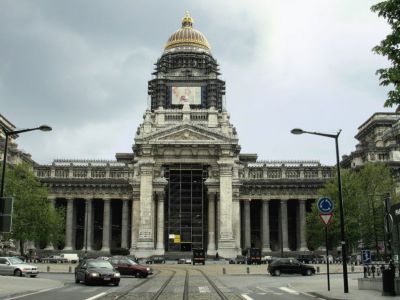
9) Palais de Justice (Palace of Justice)
Place Poelaert is named after the architect who designed the monumental Palace of Justice, which dominates the square and its surroundings. This colossal building, constructed over a 20-year period and inaugurated in 1883, is a true architectural giant, representing the largest secular construction of the 19th century. Adorned with an eclectic blend of Greek, Roman, Egyptian, and Assyrian motifs, it is crowned by an enormous 24,000-ton golden dome, which has recently undergone extensive restoration at a considerable cost.
Visitors have the opportunity to explore the main hall of the building, a solemn space with small audience tables where lawyers confer with their clients; however, the sheer size of the palace is the most awe-inspiring aspect. During the construction of this imposing structure, several thousand residents were forcibly displaced to create the necessary space, making Poelaert one of the most despised figures in the city's history. In fact, when he descended into madness and passed away in 1879, many believed that a "steekes" (witch) from the Marolles district had been using effigies to harm him. The Marolliens took more direct revenge: on the day after its inauguration, the palace was opened to the public, who defiled it by urinating in various corners and vandalizing the seats. During World War II, as fleeing Nazis planted explosives in the basement and set fire to the building, extensive damage ensued, including the collapse of the dome, necessitating significant restoration work.
Why You Should Visit:
A unique opportunity to step into a piece of history that is still in use today, and entry is free for tourists.
The interior feels like a journey back in time, reminiscent of an era from the past.
Tip:
Don't miss the chance to enjoy great views of Brussels from the square in front of the palace!
Visitors have the opportunity to explore the main hall of the building, a solemn space with small audience tables where lawyers confer with their clients; however, the sheer size of the palace is the most awe-inspiring aspect. During the construction of this imposing structure, several thousand residents were forcibly displaced to create the necessary space, making Poelaert one of the most despised figures in the city's history. In fact, when he descended into madness and passed away in 1879, many believed that a "steekes" (witch) from the Marolles district had been using effigies to harm him. The Marolliens took more direct revenge: on the day after its inauguration, the palace was opened to the public, who defiled it by urinating in various corners and vandalizing the seats. During World War II, as fleeing Nazis planted explosives in the basement and set fire to the building, extensive damage ensued, including the collapse of the dome, necessitating significant restoration work.
Why You Should Visit:
A unique opportunity to step into a piece of history that is still in use today, and entry is free for tourists.
The interior feels like a journey back in time, reminiscent of an era from the past.
Tip:
Don't miss the chance to enjoy great views of Brussels from the square in front of the palace!
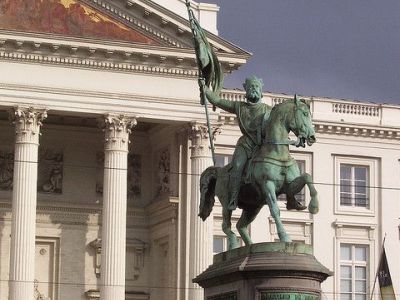
10) Godfrey of Bouillon Statue
This imposing statue was erected in the Royal Square in 1843. It depicts Godfrey of Bouillon on a horse and was designed by Eugène Simonis. Known for being one of the leaders of the First Crusade, Bouillon was a Frankish knight born in the Brabant region of France (which is now part of Belgium). The First Crusade was called by Pope Urban II in 1096 and was meant to liberate Jerusalem and aid the Byzantine Empire. Both of these places were under attack from Muslim forces.
Godfrey felt compelled to participate in the Crusade and wanted to pull together a group of knights to fight in the Holy Land. By taking out loans or selling his land outright, he was able to gather thousands of knights. He died in Jerusalem in 1100. There are differing reports of the cause of his death, from getting shot with an arrow, to contracting an illness, to getting poisoned. Godfrey of Bouillon’s legacy continues on through his appearance in classic written texts. For example he was named the hero on Tasso’s Gerusalemme Liberata. In The Divine Comedy the spirit of Godfrey is seen by Dante in the Heavens of Mars. Mark Twain gives a mention of Godfrey’s sword in “Innocents Abroad.”
Godfrey felt compelled to participate in the Crusade and wanted to pull together a group of knights to fight in the Holy Land. By taking out loans or selling his land outright, he was able to gather thousands of knights. He died in Jerusalem in 1100. There are differing reports of the cause of his death, from getting shot with an arrow, to contracting an illness, to getting poisoned. Godfrey of Bouillon’s legacy continues on through his appearance in classic written texts. For example he was named the hero on Tasso’s Gerusalemme Liberata. In The Divine Comedy the spirit of Godfrey is seen by Dante in the Heavens of Mars. Mark Twain gives a mention of Godfrey’s sword in “Innocents Abroad.”
Sight description based on Wikipedia.
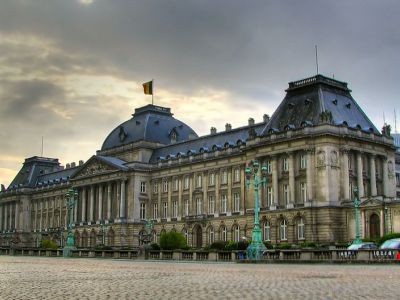
11) Palais Royal (Royal Palace) (must see)
Just around the corner from the Royal Square stands the grand and somewhat unwieldy Royal Palace, a rather solemn conversion of late 18th-century townhouses from the 19th century. The extensive project was initiated by King William I, who ruled both Belgium and the Netherlands from 1815 to 1830. However, the Belgian rebellion of 1830 marked the end of the joint kingdom, and since then, the kings of independent Belgium have spent little time in this palace. In fact, while it remains their official residence, the royal family resides at the Royal Castle of Laeken, just outside Brussels.
Each year, during the summer months (usually from late July to early September), the Royal Palace opens its doors to the public. Visitors can tour several of the palace's rooms and learn about the history of the Belgian monarchy.
A visit here can be worthwhile for a few reasons: the tapestries designed by Goya; the magnificent chandeliers in the Throne Room; and the captivating "Heaven of Delight" ceiling fresco, in the Mirror Room, composed of over a million jewel scarab beetles in radiating green and blue colors.
An even more intriguing option is to explore one of the mansions within the Royal Palace complex, the Hôtel Bellevue, at the corner of Palace Square and Royal Street. This mansion has been transformed into the BELvue Museum, which delves into the brief history of independent Belgium, with corridor displays focusing on the country's kings and rooms dedicated to Belgium as a whole.
The building's location is historically significant, as it was from here that rebellious Belgians fired upon the Dutch army as it attempted to cross Brussels Park in 1830. Original artifacts such as photographs, documents, and letters are on display.
Each year, during the summer months (usually from late July to early September), the Royal Palace opens its doors to the public. Visitors can tour several of the palace's rooms and learn about the history of the Belgian monarchy.
A visit here can be worthwhile for a few reasons: the tapestries designed by Goya; the magnificent chandeliers in the Throne Room; and the captivating "Heaven of Delight" ceiling fresco, in the Mirror Room, composed of over a million jewel scarab beetles in radiating green and blue colors.
An even more intriguing option is to explore one of the mansions within the Royal Palace complex, the Hôtel Bellevue, at the corner of Palace Square and Royal Street. This mansion has been transformed into the BELvue Museum, which delves into the brief history of independent Belgium, with corridor displays focusing on the country's kings and rooms dedicated to Belgium as a whole.
The building's location is historically significant, as it was from here that rebellious Belgians fired upon the Dutch army as it attempted to cross Brussels Park in 1830. Original artifacts such as photographs, documents, and letters are on display.
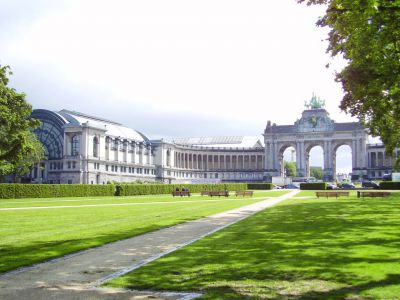
12) Parc du Cinquantenaire (Jubilee Park) (must see)
The Jubilee Park features expansive, leafy lawns that slope upward to a colossal triumphal arch crowned with a massive bronze sculpture called "Brabant Raising the National Flag". This arch, along with the two substantial stone buildings it connects, makes up Le Cinquantenaire ("Fiftieth Anniversary"), established by King Léopold II to commemorate the golden jubilee of the Belgian state in 1880. The exhibition at the time showcased products from Belgium and its colonies and was a great success. Today, the park continues to host various shows and trade fairs, while the buildings house extensive collections of art and applied art, weapons, and cars, displayed across three separate museums.
One notable attraction within the park itself is the Pavillon Horta, tucked away in the northwest corner. This Neoclassical structure, covered in graffiti, is known as the "pavilion of human passions" due to the controversial sculpture inside, created by Jef Lambeaux in 1886, which depicts writhing naked figures overseen by a shrouded Death. The pavilion was specifically designed to house this provocative work and was architect Victor Horta's first public commission, quite different from the later organic decorative style for which he became renowned. Interestingly, the building was closed just three days after opening due to the controversy generated by the bold artwork.
Next to the pavilion is a large cream-colored building, which houses Brussels' main mosque. This modern Arabic-style mosque was built in 1978 by a Tunisian architect, serving as a replacement for an earlier structure dating back to 1897.
Why You Should Visit:
A great place to relax, jog, enjoy picturesque views, and explore the diverse range of museums.
It's also a perfect spot for picnicking, especially on weekends when people and dog watching are popular activities.
Tip:
Visitors to the Royal Military Museum can take an elevator to the top of the Arch to enjoy wonderful views of Brussels, and this access is free of charge.
One notable attraction within the park itself is the Pavillon Horta, tucked away in the northwest corner. This Neoclassical structure, covered in graffiti, is known as the "pavilion of human passions" due to the controversial sculpture inside, created by Jef Lambeaux in 1886, which depicts writhing naked figures overseen by a shrouded Death. The pavilion was specifically designed to house this provocative work and was architect Victor Horta's first public commission, quite different from the later organic decorative style for which he became renowned. Interestingly, the building was closed just three days after opening due to the controversy generated by the bold artwork.
Next to the pavilion is a large cream-colored building, which houses Brussels' main mosque. This modern Arabic-style mosque was built in 1978 by a Tunisian architect, serving as a replacement for an earlier structure dating back to 1897.
Why You Should Visit:
A great place to relax, jog, enjoy picturesque views, and explore the diverse range of museums.
It's also a perfect spot for picnicking, especially on weekends when people and dog watching are popular activities.
Tip:
Visitors to the Royal Military Museum can take an elevator to the top of the Arch to enjoy wonderful views of Brussels, and this access is free of charge.
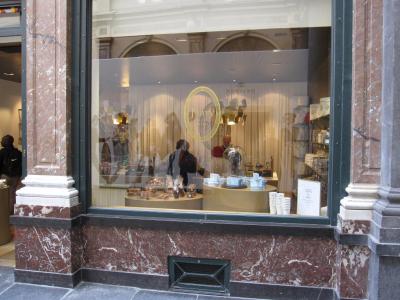
13) Mary Chocolatier
Amid the staggering number of chocolate shops available in Brussels, there is one that you absolutely must visit if you're a chocolate fan. Mary Chocolatier shop on Rue Royale has been open since 1919. Today, this Art Deco-style salon, so much popular among lovers of chocolate “bonbons,” offers more than 70 types of 100% natural delightful handmade pralines with a variety of fillings that is fit to amaze anyone. A step into the Mary store is the experience of refinement taken to the extreme.
Mary Chocolatier has been a Belgian Royal Warrant Holder since 1942, seamlessly blending tradition and modernity, with their reintroduced, glamorous iconic boxes nestled among delicate draperies. Their delectable chocolate is truly some of the best you may have ever had.
The shop is open Monday through Saturday from 10 am to 6 pm.
Mary Chocolatier has been a Belgian Royal Warrant Holder since 1942, seamlessly blending tradition and modernity, with their reintroduced, glamorous iconic boxes nestled among delicate draperies. Their delectable chocolate is truly some of the best you may have ever had.
The shop is open Monday through Saturday from 10 am to 6 pm.
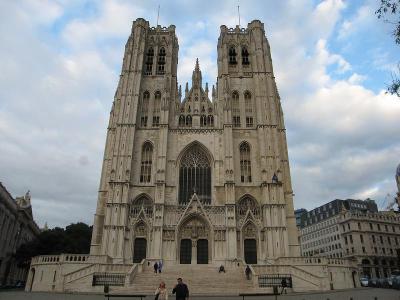
14) Cathedrale des Saints Michel et Gudule (St. Michael and St. Gudula Cathedral) (must see)
The Cathedral of Saint Michael and Saint Gudula on Treurenberg Hill, Brussels, traces its origins to a 9th-century chapel dedicated to Saint Michael. In 1047, Lambert II, the Duke of Brabant, brought the relics of Saint Gudula to this location, for which purpose a Romanesque-style church was built. Over the course of 300+ years, it had transformed into the striking Brabantine Gothic edifice seen today.
Recognized as Belgium's national church, this cathedral plays a pivotal role in the country's ceremonial life, hosting royal weddings and state funerals, as well as the Te Deum celebration during Belgian National Day. A historic monument since 1936, it underwent multiple restorations, including, most recently, in December 1999, just in time for the wedding of Belgian Crown Prince Philippe to Princess Mathilda. These efforts not only preserved but also uncovered parts of the original 11th-century church which are now visible through strategically placed viewing glass spots on the floor.
Architecturally, the cathedral showcases a French Gothic façade with distinctive twin towers standing 64 meters tall. Unlike traditional designs that feature a rose window, this cathedral’s façade is marked by a large ogival window, enhancing its Brabantine Gothic distinction. The robust structure is supported by double-span flying buttresses adorned with pinnacles and gargoyles.
Approaching the cathedral through a grand staircase, visitors are welcomed into the interior dominated by twelve cylindrical pillars and an array of statues crafted by renowned 17th-century sculptors. The Baroque pulpit, featuring 'Adam and Eve Banished from Paradise' by Flemish sculptor Hendrik Frans Verbruggen, dates back to 1699. The cathedral also contains intricate stained glass windows that chronicle biblical and royal narratives from the 16th to the 19th centuries. In the evening, the window at the nave's base, depicting The Last Judgment, is illuminated from within, creating a captivating spectacle.
Adding to its historic ambiance, the cathedral is also a hub for music, housing two significant pipe organs and a 49-bell carillon in the south tower, along with the bourdon bell named Salvator in the north tower. In recent years, it has also become a conservation site for peregrine falcons which made their nests in its towers. This was further highlighted by the "Falcons for everyone" project featuring live-streaming for public viewing, thus marrying natural history with cultural heritage.
Tips:
Upon entering, be sure to pick up a leaflet providing information about the cathedral's history and details. Access is free, but a small fee is charged if you want to see the archaeological site beneath the existing floors inside the building.
Recognized as Belgium's national church, this cathedral plays a pivotal role in the country's ceremonial life, hosting royal weddings and state funerals, as well as the Te Deum celebration during Belgian National Day. A historic monument since 1936, it underwent multiple restorations, including, most recently, in December 1999, just in time for the wedding of Belgian Crown Prince Philippe to Princess Mathilda. These efforts not only preserved but also uncovered parts of the original 11th-century church which are now visible through strategically placed viewing glass spots on the floor.
Architecturally, the cathedral showcases a French Gothic façade with distinctive twin towers standing 64 meters tall. Unlike traditional designs that feature a rose window, this cathedral’s façade is marked by a large ogival window, enhancing its Brabantine Gothic distinction. The robust structure is supported by double-span flying buttresses adorned with pinnacles and gargoyles.
Approaching the cathedral through a grand staircase, visitors are welcomed into the interior dominated by twelve cylindrical pillars and an array of statues crafted by renowned 17th-century sculptors. The Baroque pulpit, featuring 'Adam and Eve Banished from Paradise' by Flemish sculptor Hendrik Frans Verbruggen, dates back to 1699. The cathedral also contains intricate stained glass windows that chronicle biblical and royal narratives from the 16th to the 19th centuries. In the evening, the window at the nave's base, depicting The Last Judgment, is illuminated from within, creating a captivating spectacle.
Adding to its historic ambiance, the cathedral is also a hub for music, housing two significant pipe organs and a 49-bell carillon in the south tower, along with the bourdon bell named Salvator in the north tower. In recent years, it has also become a conservation site for peregrine falcons which made their nests in its towers. This was further highlighted by the "Falcons for everyone" project featuring live-streaming for public viewing, thus marrying natural history with cultural heritage.
Tips:
Upon entering, be sure to pick up a leaflet providing information about the cathedral's history and details. Access is free, but a small fee is charged if you want to see the archaeological site beneath the existing floors inside the building.
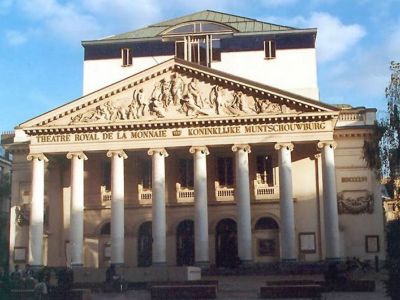
15) Theatre Royal de la Monnaie (Royal Theatre of La Monnaie)
At the end of the Saint-Hubert Galleries, you'll encounter Monnaie Square, somewhat overshadowed by the massive Centre Monnaie building, which houses offices, shops, and the main post office. Within this square, the Royal Theatre, also known as Brussels' opera house, stands as the sole architectural gem. This Neoclassical structure was erected in 1819 and received an interior addition in 1856, courtesy of Poelaert, the renowned architect behind the Palace of Justice and numerous other notable landmarks in Brussels. In the 1980s, the opera house underwent a rejuvenation, with American Expressionist artist Sam Francis contributing ceiling paintings to the foyer and Sol Lewitt designing the striking black-and-white floor.
While the company at this opera house is acclaimed for its commitment to quality and innovation, the building itself is historically significant for its role as the epicenter of the 1830 revolution against Dutch rule. During a performance of Auber's "The Mute Girl of Portici", a nationalistic libretto incited the audience, leading them to spill into the streets and hoist the Brabant flag, igniting the rebellion. The opera narrated an Italian uprising against the Spanish, and its resonant lines like "To my country I owe my life, To me it will owe its liberty" should have forewarned the numerous Dutch censors. King William I was left incensed as the revolution took root.
Although opera tickets here can be on the higher side, the quality of performances justifies the cost. Even if you're not a devoted opera enthusiast, you can still peek inside to admire the lobby's grandeur.
Travel:
Beyond the Centre Monnaie, you'll encounter Boulevard Anspach, often congested with traffic. This boulevard fans out and widens at Place de Brouckère, a major intersection designed in the 19th-century French style, reminiscent of certain areas in Paris. Notable in this vicinity is the Hôtel Métropole, which dates back to 1895 and boasts a lavishly ornate lobby and bar that were frequented by notable figures such as Sarah Bernhardt.
While the company at this opera house is acclaimed for its commitment to quality and innovation, the building itself is historically significant for its role as the epicenter of the 1830 revolution against Dutch rule. During a performance of Auber's "The Mute Girl of Portici", a nationalistic libretto incited the audience, leading them to spill into the streets and hoist the Brabant flag, igniting the rebellion. The opera narrated an Italian uprising against the Spanish, and its resonant lines like "To my country I owe my life, To me it will owe its liberty" should have forewarned the numerous Dutch censors. King William I was left incensed as the revolution took root.
Although opera tickets here can be on the higher side, the quality of performances justifies the cost. Even if you're not a devoted opera enthusiast, you can still peek inside to admire the lobby's grandeur.
Travel:
Beyond the Centre Monnaie, you'll encounter Boulevard Anspach, often congested with traffic. This boulevard fans out and widens at Place de Brouckère, a major intersection designed in the 19th-century French style, reminiscent of certain areas in Paris. Notable in this vicinity is the Hôtel Métropole, which dates back to 1895 and boasts a lavishly ornate lobby and bar that were frequented by notable figures such as Sarah Bernhardt.
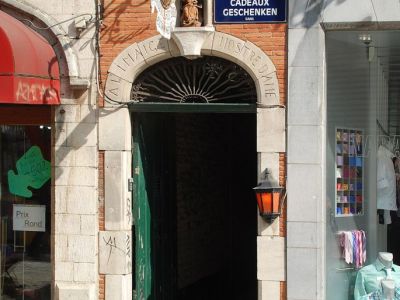
16) A l'Imaige Nostre-Dame
À l’Imaige Nostre-Dame is one of Brussels’ most historic estaminets. The tavern officially opened in 1884, though it occupies a building dating back to 1682—one of the rare structures in the area that survived the devastating bombardment of Brussels in 1695. Hidden behind a small arched doorway at the end of the alley, the establishment preserves the atmosphere of old Brussels, with rustic wooden furnishings and a traditional bar serving Belgian beers and simple regional dishes.
The building’s history stretches far beyond its role as a tavern. According to long-standing local lore, the cellars once served as detention cells for prisoners awaiting execution on the nearby Grand Place. Over time, this somber chapter gave way to a more convivial purpose as the premises evolved into a gathering place for drinkers, artists, and writers. In the early 20th century, it became especially popular with literary and artistic circles, including members of the Brussels cultural scene who met there for conversation and inspiration.
Today, À l’Imaige Nostre-Dame remains a distinctive reminder of the city’s café culture. Its setting—reached through an alley marked by a niche containing a statue of the Virgin and Child—recalls a time when pictorial signs helped guide residents through Brussels’ unnumbered streets. Visitors come not only for the beers and traditional snacks, but also for the sense of stepping into a place where centuries of urban life have left their traces, turning a once-hidden corner of the city into a living piece of Brussels’ heritage.
The building’s history stretches far beyond its role as a tavern. According to long-standing local lore, the cellars once served as detention cells for prisoners awaiting execution on the nearby Grand Place. Over time, this somber chapter gave way to a more convivial purpose as the premises evolved into a gathering place for drinkers, artists, and writers. In the early 20th century, it became especially popular with literary and artistic circles, including members of the Brussels cultural scene who met there for conversation and inspiration.
Today, À l’Imaige Nostre-Dame remains a distinctive reminder of the city’s café culture. Its setting—reached through an alley marked by a niche containing a statue of the Virgin and Child—recalls a time when pictorial signs helped guide residents through Brussels’ unnumbered streets. Visitors come not only for the beers and traditional snacks, but also for the sense of stepping into a place where centuries of urban life have left their traces, turning a once-hidden corner of the city into a living piece of Brussels’ heritage.
