Custom Walk in London, England by mysticalmom5747_557abb created on 2026-04-04
Guide Location: England » London
Guide Type: Custom Walk
# of Sights: 7
Tour Duration: 2 Hour(s)
Travel Distance: 4 Km or 2.5 Miles
Share Key: 68DXE
Guide Type: Custom Walk
# of Sights: 7
Tour Duration: 2 Hour(s)
Travel Distance: 4 Km or 2.5 Miles
Share Key: 68DXE
How It Works
Please retrieve this walk in the GPSmyCity app. Once done, the app will guide you from one tour stop to the next as if you had a personal tour guide. If you created the walk on this website or come to the page via a link, please follow the instructions below to retrieve the walk in the app.
Retrieve This Walk in App
Step 1. Download the app "GPSmyCity: Walks in 1K+ Cities" on Apple App Store or Google Play Store.



Step 2. In the GPSmyCity app, download(or launch) the guide "London Map and Walking Tours".
Step 3. Tap the menu button located at upper right corner of the "Walks" screen and select "Retrieve custom walk". Enter the share key: 68DXE
1) London Eye (must see)
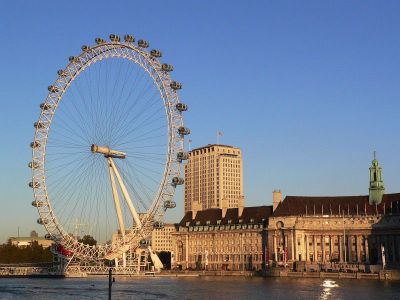
Say hello to the London Eye - or, if you’re feeling fancy, the Millennium Wheel. Built to welcome the year 2000 in style, it had its soft launch in late 1999 and officially opened in March 2000. Designed by architects David Marks and Julia Barfield, it was supposed to be temporary... but Londoners loved it so much, they basically said, “Nope, it’s staying.”
At 135 meters (that’s 443 feet if you’re still thinking imperial), the Eye was once the tallest observation wheel on the planet - and it still holds the crown in Europe. The ride - a slow, elegant spin takes about 30 minutes, offering jaw-dropping, 360-degree views stretching up to 40 kilometers on a clear day. From Big Ben to Buckingham Palace - and if you squint, even Windsor Castle - London is laid out before you like a pop-up storybook.
Each of the 32 sleek glass capsules (one for each London borough) can carry up to 28 people. Great for selfies, great for proposals, and perfect if you just want to stare out and feel dramatically reflective.
Want to dial up the experience? Your ticket comes with a 4D cinema show, or you can upgrade to private pods or champagne flights if you're feeling extra. Plus, the Eye sits right on the South Bank - a hop away from the SEA LIFE Aquarium, the London Dungeon, and the laid-back Jubilee Gardens.
Fun fact: The Eye’s giant bicycle-wheel design is a true European team effort - with British steel, Dutch engineering, and a smattering of German, French, Czech, and Italian parts.
Bottom line: Whether you're new in town or just want to fall in love with London all over again, the London Eye is a must-spin.
Tip:
Book online to save cash and skip the long lines. Your Instagram will thank you.
At 135 meters (that’s 443 feet if you’re still thinking imperial), the Eye was once the tallest observation wheel on the planet - and it still holds the crown in Europe. The ride - a slow, elegant spin takes about 30 minutes, offering jaw-dropping, 360-degree views stretching up to 40 kilometers on a clear day. From Big Ben to Buckingham Palace - and if you squint, even Windsor Castle - London is laid out before you like a pop-up storybook.
Each of the 32 sleek glass capsules (one for each London borough) can carry up to 28 people. Great for selfies, great for proposals, and perfect if you just want to stare out and feel dramatically reflective.
Want to dial up the experience? Your ticket comes with a 4D cinema show, or you can upgrade to private pods or champagne flights if you're feeling extra. Plus, the Eye sits right on the South Bank - a hop away from the SEA LIFE Aquarium, the London Dungeon, and the laid-back Jubilee Gardens.
Fun fact: The Eye’s giant bicycle-wheel design is a true European team effort - with British steel, Dutch engineering, and a smattering of German, French, Czech, and Italian parts.
Bottom line: Whether you're new in town or just want to fall in love with London all over again, the London Eye is a must-spin.
Tip:
Book online to save cash and skip the long lines. Your Instagram will thank you.
2) Big Ben & Houses of Parliament (must see)
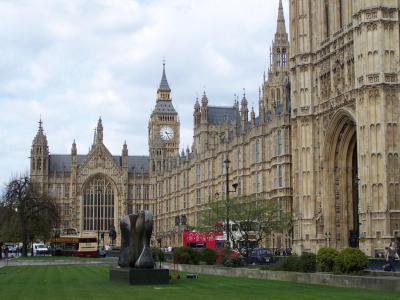
Ah yes, Big Ben-London’s most famous timekeeper! Often mistaken for the entire tower, technically, it's just the bell inside. The tower itself, once modestly named the Clock Tower, got a royal upgrade in 2012 and is now known as the Elizabeth Tower, in honor of Queen Elizabeth II’s Diamond Jubilee.
As for Big Ben-the bell-it weighs a jaw-dropping 15 tonnes. That’s about the weight of three adult elephants. It chimes every hour with a deep, resonant bong that echoes across the city, while four smaller bells handle the quarter-hour duties like loyal timekeeping sidekicks.
As for the name “Big Ben”, theories abound. Some say it was named after Benjamin Hall, the rather large man in charge of installing the bell. Others swear it honors Benjamin Caunt, a Victorian heavyweight boxer. Either way, it’s clear: you didn’t get to be “Big Ben” by being discreet.
Just next door, you'll find the Palace of Westminster, home of the Houses of Parliament-that’s the House of Commons and the House of Lords for those keeping score. After a fire in 1834 burned the old palace to a crisp, King William IV generously offered up Buckingham Palace as a backup. The MPs politely declined, presumably because having tea in the Throne Room seemed a bit too much.
These days, the House of Commons is often in the headlines, especially during the theatrical Wednesdays known as Prime Minister’s Questions. Yes, it’s as lively as it sounds. The public can watch the action live, either by scoring a free ticket through their MP or simply queuing up outside (bonus points if it’s raining-very British).
In terms of security, expect the full “airport-lite” treatment. Bags scanned, belts off, shoes inspected-but thankfully, no need to explain your carry-on liquids.
Now, if the idea of parliamentary debates doesn’t tickle your fancy and you’re more into aesthetic admiration, simply head over to Westminster Bridge-some 500 yards away. From there, you’ll get the postcard shot of Big Ben and the Parliament buildings, no queuing or shoe removal required. Just you, the view, and a thousand other camera-happy tourists. Smile for history!
As for Big Ben-the bell-it weighs a jaw-dropping 15 tonnes. That’s about the weight of three adult elephants. It chimes every hour with a deep, resonant bong that echoes across the city, while four smaller bells handle the quarter-hour duties like loyal timekeeping sidekicks.
As for the name “Big Ben”, theories abound. Some say it was named after Benjamin Hall, the rather large man in charge of installing the bell. Others swear it honors Benjamin Caunt, a Victorian heavyweight boxer. Either way, it’s clear: you didn’t get to be “Big Ben” by being discreet.
Just next door, you'll find the Palace of Westminster, home of the Houses of Parliament-that’s the House of Commons and the House of Lords for those keeping score. After a fire in 1834 burned the old palace to a crisp, King William IV generously offered up Buckingham Palace as a backup. The MPs politely declined, presumably because having tea in the Throne Room seemed a bit too much.
These days, the House of Commons is often in the headlines, especially during the theatrical Wednesdays known as Prime Minister’s Questions. Yes, it’s as lively as it sounds. The public can watch the action live, either by scoring a free ticket through their MP or simply queuing up outside (bonus points if it’s raining-very British).
In terms of security, expect the full “airport-lite” treatment. Bags scanned, belts off, shoes inspected-but thankfully, no need to explain your carry-on liquids.
Now, if the idea of parliamentary debates doesn’t tickle your fancy and you’re more into aesthetic admiration, simply head over to Westminster Bridge-some 500 yards away. From there, you’ll get the postcard shot of Big Ben and the Parliament buildings, no queuing or shoe removal required. Just you, the view, and a thousand other camera-happy tourists. Smile for history!
3) Buckingham Palace (must see)
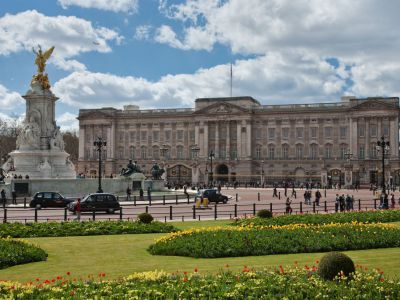
The postcard-perfect face of the British monarchy, Buckingham Palace is possibly the world’s fanciest “office.” What began in 1703 as a cozy townhouse for the Duke of Buckingham (hence the name) ended up becoming royal property in 1761 when King George III bought it for his wife, Queen Charlotte. By 1837, Queen Victoria had officially moved in, setting up camp and turning it into the headquarters of royal business and the heart of Britain's ceremonial life ever since.
Today, the palace packs a whopping 775 rooms, including 52 royal and guest bedrooms, 78 bathrooms (because clearly, you never know when you’ll need a backup loo), and countless other rooms fit for everything from crown-polishing to state banquets. While most of these royal spaces are strictly off-limits, commoners-like us, the curious public-can sneak a peek during special visiting seasons, mainly August and September, plus select days in winter and spring.
Step inside the palace’s 19 State Rooms and prepare to have your jaw royally dropped. Here, we’re talking chandeliers that could double as UFOs, lavish gold trim, and masterpieces by Rembrandt and Rubens just casually hanging around. You’ll stroll through the Throne Room (cue the imaginary fanfare), the Ballroom where knighthoods are handed out like royal gold stars, the Grand Staircase, and a variety of drawing rooms, each with its own personality-from the Blue Drawing Room’s stately charm to the Music Room’s lapis columns and the gleaming White Drawing Room. Don’t skip the State Dining Room either-this is where the portraits watch you more than you watch them.
Outside, the Changing of the Guard steals the show with its precision marching, bearskin hats, and musical flair. It’s essentially a military ballet, free of charge-but do arrive early for the best view, as everyone and their selfie stick wants in.
Right next door, the Queen’s Gallery serves up rotating exhibits from the Royal Collection, including priceless paintings, sparkling jewels, and historic treasures galore. A few steps away, the Royal Mews stables show off the royal horses and carriages, because royalty of all people needs a stylish ride.
Tip:
Snag a timed-entry ticket (they’re released in 15-minute waves), and if you’ve got time, tack on a garden tour for some fresh air and manicured perfection. Give yourself two hours-minimum-because once you step into Buckingham Palace, you’ll want to soak up every royal second.
Today, the palace packs a whopping 775 rooms, including 52 royal and guest bedrooms, 78 bathrooms (because clearly, you never know when you’ll need a backup loo), and countless other rooms fit for everything from crown-polishing to state banquets. While most of these royal spaces are strictly off-limits, commoners-like us, the curious public-can sneak a peek during special visiting seasons, mainly August and September, plus select days in winter and spring.
Step inside the palace’s 19 State Rooms and prepare to have your jaw royally dropped. Here, we’re talking chandeliers that could double as UFOs, lavish gold trim, and masterpieces by Rembrandt and Rubens just casually hanging around. You’ll stroll through the Throne Room (cue the imaginary fanfare), the Ballroom where knighthoods are handed out like royal gold stars, the Grand Staircase, and a variety of drawing rooms, each with its own personality-from the Blue Drawing Room’s stately charm to the Music Room’s lapis columns and the gleaming White Drawing Room. Don’t skip the State Dining Room either-this is where the portraits watch you more than you watch them.
Outside, the Changing of the Guard steals the show with its precision marching, bearskin hats, and musical flair. It’s essentially a military ballet, free of charge-but do arrive early for the best view, as everyone and their selfie stick wants in.
Right next door, the Queen’s Gallery serves up rotating exhibits from the Royal Collection, including priceless paintings, sparkling jewels, and historic treasures galore. A few steps away, the Royal Mews stables show off the royal horses and carriages, because royalty of all people needs a stylish ride.
Tip:
Snag a timed-entry ticket (they’re released in 15-minute waves), and if you’ve got time, tack on a garden tour for some fresh air and manicured perfection. Give yourself two hours-minimum-because once you step into Buckingham Palace, you’ll want to soak up every royal second.
4) St. James's Park (must see)
Once upon a royal time, a queen casually asked her courtier how much it would cost to kick the public out of St. James’s Park. The courtier, with nerves of steel and a flair for drama, replied, “Only your crown, ma’am.” And that pretty much sums up the importance of this place-mess with the people’s park, and you’re one coronation short of a monarchy.
Wedged gracefully between three heavy-hitters-Buckingham Palace, St. James’s Palace, and the political power zone of Westminster-St. James’s Park is London’s oldest and arguably most charming green retreat. Back in 1532, Henry VIII thought this marsh was in great need of deer, so he snapped it up for his very own deer nursery. Later, during the reign of James I, the land was drained, and an aviary was installed (giving rise to the name Birdcage Walk), along with a zoo that featured exotic species like crocodiles, camels, and even an elephant.
Then came Charles II, freshly returned from exile in France with some serious garden envy after ogling Versailles. He rolled up his sleeves and transformed the park into a regal playground with neat avenues, fruit trees, a canal, and a whole zoo of goats, sheep, and deer casually grazing the lawns. By the 1700s, the park had taken a turn for the scandalous, becoming a preferred hunting ground for the affluent individuals seeking... nighttime companions.
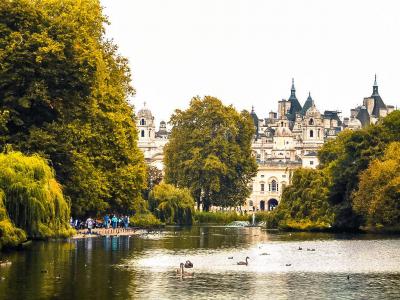
In the 19th century, the romantic stylings of John Nash (one of the foremost British architects of the Georgian and Regency eras) gave the park its current look-a picturesque escape with winding paths and dreamy views. Peer down the lake toward Buckingham Palace, and you can easily imagine having wandered onto a countryside estate-until a pelican flaps by.
Speaking of birds, Duck Island at the lake’s eastern tip is a feathery haven for pelicans, swans (King-owned, naturally), geese, and ducks. From March to October, deck chairs appear like sun-seeking mushrooms-perfect for office lunch breaks or tuning into a bandstand performance at midday.
Evenings are a delight here too, as the lake reflects the glowing silhouettes of Westminster Abbey and the Parliament buildings. It’s part fairy tale, part postcard, and entirely worth a visit. Lush lawns, birds with better titles than you, and the occasional live performance. Basically, it’s where London goes to exhale...
Wedged gracefully between three heavy-hitters-Buckingham Palace, St. James’s Palace, and the political power zone of Westminster-St. James’s Park is London’s oldest and arguably most charming green retreat. Back in 1532, Henry VIII thought this marsh was in great need of deer, so he snapped it up for his very own deer nursery. Later, during the reign of James I, the land was drained, and an aviary was installed (giving rise to the name Birdcage Walk), along with a zoo that featured exotic species like crocodiles, camels, and even an elephant.
Then came Charles II, freshly returned from exile in France with some serious garden envy after ogling Versailles. He rolled up his sleeves and transformed the park into a regal playground with neat avenues, fruit trees, a canal, and a whole zoo of goats, sheep, and deer casually grazing the lawns. By the 1700s, the park had taken a turn for the scandalous, becoming a preferred hunting ground for the affluent individuals seeking... nighttime companions.
In the 19th century, the romantic stylings of John Nash (one of the foremost British architects of the Georgian and Regency eras) gave the park its current look-a picturesque escape with winding paths and dreamy views. Peer down the lake toward Buckingham Palace, and you can easily imagine having wandered onto a countryside estate-until a pelican flaps by.
Speaking of birds, Duck Island at the lake’s eastern tip is a feathery haven for pelicans, swans (King-owned, naturally), geese, and ducks. From March to October, deck chairs appear like sun-seeking mushrooms-perfect for office lunch breaks or tuning into a bandstand performance at midday.
Evenings are a delight here too, as the lake reflects the glowing silhouettes of Westminster Abbey and the Parliament buildings. It’s part fairy tale, part postcard, and entirely worth a visit. Lush lawns, birds with better titles than you, and the occasional live performance. Basically, it’s where London goes to exhale...
5) Piccadilly Circus
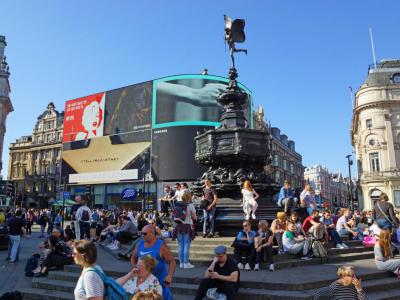
Now, Piccadilly Circus is not a literal circus, though with the crowds, neon lights, and eccentric street performers, you’d be forgiven for thinking you’d stumbled into one.
The origins of the name Piccadilly trace back to a 17th-century guy, Robert Baker-not a baker himself, mind you, but a tailor who made a fortune selling "piccadills"-fancy ruffled collars. Baker did so well peddling these neck braces that he built himself a swanky mansion in the area. The aristocrats, clearly not fans of upstart tailors living large, mockingly dubbed it “Piccadilly Hall.” The joke’s on them-the name stuck, and now it’s on the map.
At the center of the circus (once actually circular until 1886), stands a statue famously misidentified as Eros. In truth, it’s Anteros, Eros’s lesser-known brother-the Greek god of requited love (less wild romance, more emotionally mature affection). Because apparently, even gods have to deal with (and occasionally get tired of) complicated relationships...
Just behind him, look up, and you’ll see the legendary wall of illuminated billboards lighting up the north side. The first glowing ad appeared there in 1908, promoting Perrier mineral water like it was the elixir of life. For a perfect “I’m in London” kind of photo, stand at the corner of Regent Street and get those lights framed behind the Tube sign.
Now, take a peek underground. Hidden beneath the chaos, you’ll find two gems. The Criterion Theatre-built in 1873, and mostly below street level-was once ventilated with pumped-in fresh air to counter gaslight fumes. Next door, Piccadilly Circus Station is one of the few fully subterranean Tube stops in the network.
Over on the western side, history buffs can spot a rare relic: a 1935 police call box-one of the last of its kind. And if you're really sharp-eyed, look for one of the Seven Noses of Soho, a quirky sculptural series. Word has it, if you find all seven, unimaginable wealth awaits you. So, go for it!
In Harry Potter and the Deathly Hallows – Part 1, Piccadilly Circus becomes the chaotic landing spot for Harry, Ron, and Hermione after the Death Eaters crash Bill and Fleur’s wedding. It’s all running, panicking, and nearly becoming roadkill via double-decker bus. The scene was shot right in front of the Gap store, just off the main circle-quite the fashion-forward place to dodge dark wizards. In the book, they land at Tottenham Court Road, but the filmmakers clearly wanted a little more drama and dazzle.
Well, aside from possible magical encounters and spontaneous nose hunts, it’s the heart of London’s West End. Basically, it’s where London throws on its glitter, grabs a coffee, and says, “Let’s go!”
The origins of the name Piccadilly trace back to a 17th-century guy, Robert Baker-not a baker himself, mind you, but a tailor who made a fortune selling "piccadills"-fancy ruffled collars. Baker did so well peddling these neck braces that he built himself a swanky mansion in the area. The aristocrats, clearly not fans of upstart tailors living large, mockingly dubbed it “Piccadilly Hall.” The joke’s on them-the name stuck, and now it’s on the map.
At the center of the circus (once actually circular until 1886), stands a statue famously misidentified as Eros. In truth, it’s Anteros, Eros’s lesser-known brother-the Greek god of requited love (less wild romance, more emotionally mature affection). Because apparently, even gods have to deal with (and occasionally get tired of) complicated relationships...
Just behind him, look up, and you’ll see the legendary wall of illuminated billboards lighting up the north side. The first glowing ad appeared there in 1908, promoting Perrier mineral water like it was the elixir of life. For a perfect “I’m in London” kind of photo, stand at the corner of Regent Street and get those lights framed behind the Tube sign.
Now, take a peek underground. Hidden beneath the chaos, you’ll find two gems. The Criterion Theatre-built in 1873, and mostly below street level-was once ventilated with pumped-in fresh air to counter gaslight fumes. Next door, Piccadilly Circus Station is one of the few fully subterranean Tube stops in the network.
Over on the western side, history buffs can spot a rare relic: a 1935 police call box-one of the last of its kind. And if you're really sharp-eyed, look for one of the Seven Noses of Soho, a quirky sculptural series. Word has it, if you find all seven, unimaginable wealth awaits you. So, go for it!
In Harry Potter and the Deathly Hallows – Part 1, Piccadilly Circus becomes the chaotic landing spot for Harry, Ron, and Hermione after the Death Eaters crash Bill and Fleur’s wedding. It’s all running, panicking, and nearly becoming roadkill via double-decker bus. The scene was shot right in front of the Gap store, just off the main circle-quite the fashion-forward place to dodge dark wizards. In the book, they land at Tottenham Court Road, but the filmmakers clearly wanted a little more drama and dazzle.
Well, aside from possible magical encounters and spontaneous nose hunts, it’s the heart of London’s West End. Basically, it’s where London throws on its glitter, grabs a coffee, and says, “Let’s go!”
6) Carnaby Street
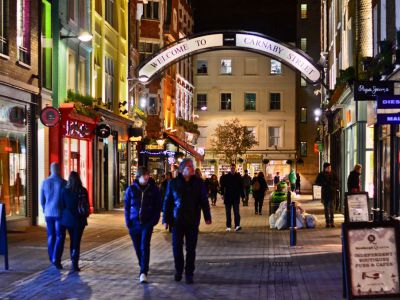
Until the 1950s, Carnaby was a quiet street on the western edge of Soho, mainly inhabited by sweatshop tailors who crafted suits for the nearby Savile Row in Mayfair. However, in 1954, Bill Green opened a shop in the neighboring Newburgh Street, where he sold bold and unconventional clothing to the gay community frequenting the local baths. Soon after, John Stephen, the son of a grocer from Glasgow, launched "His Clothes" on Beak Street. In 1960, Stephen relocated his business to Carnaby and swiftly established a chain of stylish boutiques that catered to the growing demand for flamboyant men's fashion, including the iconic "I Was Lord Kitchener's Valet" store. By 1964, Carnaby had become a magnet for Mods, Jamaican Rude Boys, and other fashion-forward individuals, as noted by the Daily Telegraph. It was also the year when Mary Quant introduced her first miniskirt to the area, solidifying Carnaby as the epicenter of London's vibrant "Swinging Sixties" scene, with its street sign being the most popular postcard in the city.
However, Carnaby Street's excessive hype eventually led to its downfall, as it transformed into a street filled with overpriced and low-quality merchandise. Today, it has been transformed into a pedestrianized and fashionable area once more, but it is predominantly occupied by chain stores. To experience the latest in contemporary London fashion, one must explore nearby areas such as Fouberts Place, Newburgh Street, and Kingly Court or venture to the east of London. The pedestrianization of parallel Kingly Street has injected a vibrant nightlife into this corner of Soho, with patrons spilling out from the restaurants and bars that now occupy its eastern side, including one of London's longest-running blues bars ("Ain't Nothin But The Blues Bar") at #20.
However, Carnaby Street's excessive hype eventually led to its downfall, as it transformed into a street filled with overpriced and low-quality merchandise. Today, it has been transformed into a pedestrianized and fashionable area once more, but it is predominantly occupied by chain stores. To experience the latest in contemporary London fashion, one must explore nearby areas such as Fouberts Place, Newburgh Street, and Kingly Court or venture to the east of London. The pedestrianization of parallel Kingly Street has injected a vibrant nightlife into this corner of Soho, with patrons spilling out from the restaurants and bars that now occupy its eastern side, including one of London's longest-running blues bars ("Ain't Nothin But The Blues Bar") at #20.
7) Liberty London
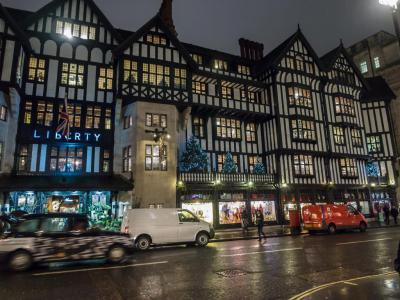
With a striking black-and-white Tudor-style frontage crafted from the timber of two Royal Navy men-o’-war ships, this department store pays homage to its origins in the late Victorian Arts and Crafts movement. Favored by the writer Oscar Wilde, who fondly referred to it as "the chosen resort of the artistic shopper", the store was designed to provide an inviting atmosphere for affluent customers. Eminent designers were enlisted to create the enduring Liberty silk prints that remain a hallmark of the brand, adorning a wide array of items, from cushions and kimonos to photo albums and stationery.
The interior of Liberty resembles a castle, featuring wood-paneled chambers brimming with a meticulously curated selection of goods. These offerings span niche beauty products, perfumes, footwear, and housewares lines like Soho Home, which showcases furniture and textiles inspired by the membership club. The store also features a clothing section for both men and women, focusing on premium quality and high fashion, with renowned labels such as Rixo and Roland Mouret.
Liberty continually collaborates with contemporary designers to create fresh prints, which are available by the yard alongside their classic patterns. If sewing isn't your forte, the store offers an interior design service to craft soft furnishings to your specifications. In addition to its retail offerings, Liberty houses a variety of amenities, including a florist, a hair salon, a men's barber, beauty treatment rooms, a brow bar, a foot spa, and a body piercing studio.
The interior of Liberty resembles a castle, featuring wood-paneled chambers brimming with a meticulously curated selection of goods. These offerings span niche beauty products, perfumes, footwear, and housewares lines like Soho Home, which showcases furniture and textiles inspired by the membership club. The store also features a clothing section for both men and women, focusing on premium quality and high fashion, with renowned labels such as Rixo and Roland Mouret.
Liberty continually collaborates with contemporary designers to create fresh prints, which are available by the yard alongside their classic patterns. If sewing isn't your forte, the store offers an interior design service to craft soft furnishings to your specifications. In addition to its retail offerings, Liberty houses a variety of amenities, including a florist, a hair salon, a men's barber, beauty treatment rooms, a brow bar, a foot spa, and a body piercing studio.
