Custom Walk in Porto, Portugal by nbtokarz_3a656 created on 2026-04-04
Guide Location: Portugal » Porto
Guide Type: Custom Walk
# of Sights: 5
Tour Duration: 1 Hour(s)
Travel Distance: 2.5 Km or 1.6 Miles
Share Key: 7JRZE
Guide Type: Custom Walk
# of Sights: 5
Tour Duration: 1 Hour(s)
Travel Distance: 2.5 Km or 1.6 Miles
Share Key: 7JRZE
How It Works
Please retrieve this walk in the GPSmyCity app. Once done, the app will guide you from one tour stop to the next as if you had a personal tour guide. If you created the walk on this website or come to the page via a link, please follow the instructions below to retrieve the walk in the app.
Retrieve This Walk in App
Step 1. Download the app "GPSmyCity: Walks in 1K+ Cities" on Apple App Store or Google Play Store.



Step 2. In the GPSmyCity app, download(or launch) the guide "Porto Map and Walking Tours".
Step 3. Tap the menu button located at upper right corner of the "Walks" screen and select "Retrieve custom walk". Enter the share key: 7JRZE
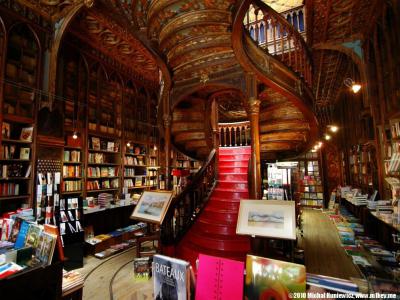
1) Livraria Lello (Lello Bookstore)
The Livraria Lello is considered to be one of the most beautiful bookstores in the world. It is located in the heart of Porto on the historic Rua dos Clerics. Full of Art Deco elements, visitors to the metropolis will want to spend time exploring this famous structure. The store has been managed by the same company, Lugan & Geneliousx Sucessores, throughout its history.
The Art Deco style is known for its linear and symmetrical elements which drew inspiration from ancient Egypt. The building was first opened in 1906 and contains a fabulous stained glass ceiling, vivid wooden staircase and lavish embellishments. Designed by architect and engineer, Xavier Esteves, the bookstore has been built to withstand the wear and tear of time. The façade of the construction is a combination of Art Nouveau elements and Gothic Revival features. The wooden features, including the shelves are well worth the time to examine.
The shelves reach from floor to ceiling and are covered in phenomenally carved wood. The wooden staircase is filled with the same beautifully carved details. The glass ceiling provides and interesting element and casts warm diffused lighting throughout the entire building.
The Art Deco style is known for its linear and symmetrical elements which drew inspiration from ancient Egypt. The building was first opened in 1906 and contains a fabulous stained glass ceiling, vivid wooden staircase and lavish embellishments. Designed by architect and engineer, Xavier Esteves, the bookstore has been built to withstand the wear and tear of time. The façade of the construction is a combination of Art Nouveau elements and Gothic Revival features. The wooden features, including the shelves are well worth the time to examine.
The shelves reach from floor to ceiling and are covered in phenomenally carved wood. The wooden staircase is filled with the same beautifully carved details. The glass ceiling provides and interesting element and casts warm diffused lighting throughout the entire building.
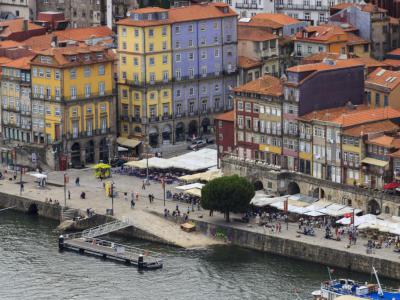
2) Cais da Ribeira (Ribeira Waterfront) (must see)
The origins of the settlement along the Ribeira is not really known. A riverside settlement developed near the confluence of the Vila River and the Douro River. Some Roman mosaics from the fourth century have been found in the area. The Ribeira grew along with Porto in the 13th century. Especially by the river and Penaventosa hill.
Two settlements arose. One on the escarpment of Penaventosa by Porto Cathedral. The other appeared below in Ribiera on the banks of the Douro River. Until the last decade of the 14th century the settlements were connected by a web of narrow, constricting streets difficult to move around in. A new street was needed to pierce the labyrinth.
On the initiative of John I a new street was opened. In fact, it was called "New Street" (Rua Nova). It was a perfect contrast to the tangled web of passageways of Porto. It was straight, and wide for its time. It became a prestigious address for the bourgeoisie, clergy and business.
The Ribeira district lures the visitor on. It is a captivating place of medieval streets and alleys ending in a busy waterfront square, the Ribeira Square. The remains of the 14th century wall run next to the Ribeira Wharf. Beyond this point are the steep twisted ways of the Barredo.
In the evenings clubs on the Ribeira Wharf promise a stimulating nightlife to romantic strollers. In days gone by the district alongside the Douro River was a center of lively commerce and business.
The Ribeira Square has many shops and cafes. At the northern part of the square is a huge fountain. The Ribeira Wharf starts on the west side of the Luis I Bridge and it follows the riverside to Ribeira Square.
There is an upper walkway where there are more shops and cafes. The walkway is what is left of the old city walls, once patrolled by medieval soldiers on watch. Sit down, have a drink and watch the river with them. Time glides by like the river.
Two settlements arose. One on the escarpment of Penaventosa by Porto Cathedral. The other appeared below in Ribiera on the banks of the Douro River. Until the last decade of the 14th century the settlements were connected by a web of narrow, constricting streets difficult to move around in. A new street was needed to pierce the labyrinth.
On the initiative of John I a new street was opened. In fact, it was called "New Street" (Rua Nova). It was a perfect contrast to the tangled web of passageways of Porto. It was straight, and wide for its time. It became a prestigious address for the bourgeoisie, clergy and business.
The Ribeira district lures the visitor on. It is a captivating place of medieval streets and alleys ending in a busy waterfront square, the Ribeira Square. The remains of the 14th century wall run next to the Ribeira Wharf. Beyond this point are the steep twisted ways of the Barredo.
In the evenings clubs on the Ribeira Wharf promise a stimulating nightlife to romantic strollers. In days gone by the district alongside the Douro River was a center of lively commerce and business.
The Ribeira Square has many shops and cafes. At the northern part of the square is a huge fountain. The Ribeira Wharf starts on the west side of the Luis I Bridge and it follows the riverside to Ribeira Square.
There is an upper walkway where there are more shops and cafes. The walkway is what is left of the old city walls, once patrolled by medieval soldiers on watch. Sit down, have a drink and watch the river with them. Time glides by like the river.
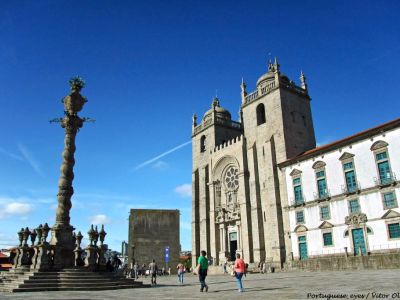
3) Sé Catedral do Porto (Porto Cathedral) (must see)
In 868, Vimara Peres, an Asturias nobleman born in 820, conquered Moorish held lands north of the river Douro. One of the towns he took went by the name Portus Cale. Portus Cale became Portucale, the county he would rule. The town became Porto. Penaventosa, the highest hill in Portus Cale, became the site of Porto Cathedral.
The hill was once the location of a Suebian Church. Work began on the Cathedral in the 12th century. There were fits and starts over the years, but the building was finally considered complete in 1737. It is the most impressive Romanesque style edifice in Porto. On top of Penaventosa it sits, fortress-like, overlooking the town.
The cathedral is flanked by twin square towers. Each tower is buttressed and topped with a cupola. The western façade has 15th century Gothic ornamentation. There is also an impressive Gothic cloister installed in 1736 by Nicolau Nasoni, an architect from Tuscany who settled in Portugal.
On the northern side of the cathedral is a baroque porch and a Romanesque rose window under a crenelated arch. The crenellations reinforce the impression of a fortress. The nave is not wide. It is covered with a barrel vault.
The baroque apse is decorated with paintings by Nasoni. The altarpiece of the chapel was designed by Santos Pacheco. The south transept is decorated with blue azulejo tiles.
Mass is celebrated every day at 11am.
Why You Should Visit:
You wouldn't want to miss the city's oldest and most visited monument! The square also offers impressive views over the city, the Douro River and the wine cellars on the waterfront.
Tip:
While admission to the Porto Cathedral is free, there's a small fee to get into the Sacred Art Museum and the magnificent Gothic cloisters attached to the church. If you're feeling fit you can also climb the tower (steps are steep and numerous!) for amazing views, including at the bits of the cathedral you can't see from further down.
The hill was once the location of a Suebian Church. Work began on the Cathedral in the 12th century. There were fits and starts over the years, but the building was finally considered complete in 1737. It is the most impressive Romanesque style edifice in Porto. On top of Penaventosa it sits, fortress-like, overlooking the town.
The cathedral is flanked by twin square towers. Each tower is buttressed and topped with a cupola. The western façade has 15th century Gothic ornamentation. There is also an impressive Gothic cloister installed in 1736 by Nicolau Nasoni, an architect from Tuscany who settled in Portugal.
On the northern side of the cathedral is a baroque porch and a Romanesque rose window under a crenelated arch. The crenellations reinforce the impression of a fortress. The nave is not wide. It is covered with a barrel vault.
The baroque apse is decorated with paintings by Nasoni. The altarpiece of the chapel was designed by Santos Pacheco. The south transept is decorated with blue azulejo tiles.
Mass is celebrated every day at 11am.
Why You Should Visit:
You wouldn't want to miss the city's oldest and most visited monument! The square also offers impressive views over the city, the Douro River and the wine cellars on the waterfront.
Tip:
While admission to the Porto Cathedral is free, there's a small fee to get into the Sacred Art Museum and the magnificent Gothic cloisters attached to the church. If you're feeling fit you can also climb the tower (steps are steep and numerous!) for amazing views, including at the bits of the cathedral you can't see from further down.
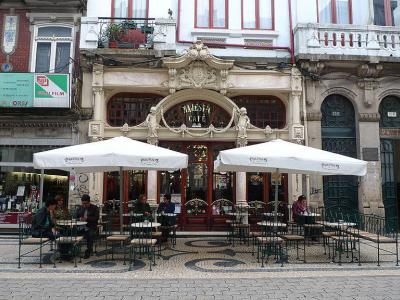
4) Café Majestic
It was 1921. Aviator Gago Coutinho had just flown in from the island of Madeira. He dropped in for a drink at the new Art Nouveau Cafe "Elite." He found himself in a chic crowd of artists and celebrities. They were observing the grand opening of the cafe. He became enchanted at the lavish splendor of the decor.
Later, the name of the cafe was changed to "Majestic." Everyone approved. The Majestic became a haunt for students and teachers from the Porto School of Fine Arts. Gago was impressed by gatherings that included the sculptor Jose Rodrigues, the philosopher Leonardo Coimbra, the painters Armando Alves, Angelo de Sousa and Jorge Pinheiro.
More recently, the Majestic book of honor has been signed by others, among them Mario Soares, Jorge Sampaio, Jaques Chirac and Cavaco Silva. Today the cafe continues on with poetry readings, concerts, exhibitions and performances. It is said author J.K. Rowling spent afternoons at the Majestic writing Harry Potter and the Philosopher's Stone.
Outside, the marble facade, decked out with twisting floral shapes and three graceful columns, invites travelers to enter. Inside, curved wooden frames and decorations capture attention. Stucco faces and nude figures emphasize sensuality.
Later, the name of the cafe was changed to "Majestic." Everyone approved. The Majestic became a haunt for students and teachers from the Porto School of Fine Arts. Gago was impressed by gatherings that included the sculptor Jose Rodrigues, the philosopher Leonardo Coimbra, the painters Armando Alves, Angelo de Sousa and Jorge Pinheiro.
More recently, the Majestic book of honor has been signed by others, among them Mario Soares, Jorge Sampaio, Jaques Chirac and Cavaco Silva. Today the cafe continues on with poetry readings, concerts, exhibitions and performances. It is said author J.K. Rowling spent afternoons at the Majestic writing Harry Potter and the Philosopher's Stone.
Outside, the marble facade, decked out with twisting floral shapes and three graceful columns, invites travelers to enter. Inside, curved wooden frames and decorations capture attention. Stucco faces and nude figures emphasize sensuality.
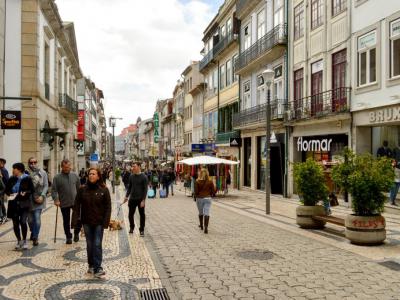
5) Rua Santa Catarina (St. Catherine Street) (must see)
Saint Catherine Street is Porto's main shopping thoroughfare. It is totally pedestrianized and it extends from Marques de Pombal Park in the north to Batalha Park in the south. It runs between buildings with Art Deco facades. It is named for the Chapel of Souls and Saint Catherine of Alexandria.
Shop on Marques de Pombal for clothing, haberdashery goods, and shoes. The Via Catarina shopping center, many street vendors, and cafes make for a busy day for visitors.
Landmarks encountered are the Latina New Art Bookstore at Batalha Park and Palladium Gallery at the intersection of Passos Manuel Street. The Cafe Majestic, since 1921 a watering hole for Porto's intelligencia, is next to the Imperiel Tea Room, also a historic landmark.
The prestigious Porto Grand Hotel is next, since 1880 a haven for the famous. It was a place to die in 1889 for Teresa Cristina, Empress of Brazil. Prime Minister Afonso Costa was held prisoner here in 1917 during a coup d'etat.
At last, there is the Chapel of Santa Catarina also known as Chapel of Souls on the corner of Fernandes Tomas Street.
Shop on Marques de Pombal for clothing, haberdashery goods, and shoes. The Via Catarina shopping center, many street vendors, and cafes make for a busy day for visitors.
Landmarks encountered are the Latina New Art Bookstore at Batalha Park and Palladium Gallery at the intersection of Passos Manuel Street. The Cafe Majestic, since 1921 a watering hole for Porto's intelligencia, is next to the Imperiel Tea Room, also a historic landmark.
The prestigious Porto Grand Hotel is next, since 1880 a haven for the famous. It was a place to die in 1889 for Teresa Cristina, Empress of Brazil. Prime Minister Afonso Costa was held prisoner here in 1917 during a coup d'etat.
At last, there is the Chapel of Santa Catarina also known as Chapel of Souls on the corner of Fernandes Tomas Street.
