Custom Walk in Copenhagen, Denmark by johnfuller301_f2c37 created on 2026-04-06
Guide Location: Denmark » Copenhagen
Guide Type: Custom Walk
# of Sights: 13
Tour Duration: 6 Hour(s)
Travel Distance: 13 Km or 8.1 Miles
Share Key: 37FDA
Guide Type: Custom Walk
# of Sights: 13
Tour Duration: 6 Hour(s)
Travel Distance: 13 Km or 8.1 Miles
Share Key: 37FDA
How It Works
Please retrieve this walk in the GPSmyCity app. Once done, the app will guide you from one tour stop to the next as if you had a personal tour guide. If you created the walk on this website or come to the page via a link, please follow the instructions below to retrieve the walk in the app.
Retrieve This Walk in App
Step 1. Download the app "GPSmyCity: Walks in 1K+ Cities" on Apple App Store or Google Play Store.



Step 2. In the GPSmyCity app, download(or launch) the guide "Copenhagen Map and Walking Tours".
Step 3. Tap the menu button located at upper right corner of the "Walks" screen and select "Retrieve custom walk". Enter the share key: 37FDA
1) Tivoli Gardens (must see)
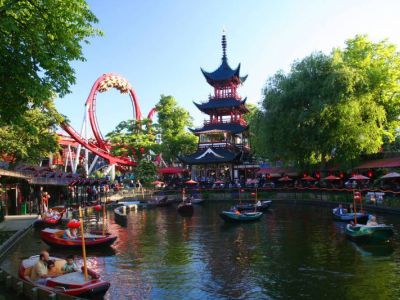
Conveniently located in central Copenhagen, very close to the train station (for those traveling into town), Tivoli Gardens is the original inspiration for Walt Disney World – and it shows. The lovingly tended grounds – a wonderland of rides, games, restaurants, marching bands, funny mirrors, and roulette wheels – are picturesque and equally friendly for both kids and adults.
Tivoli is actually the second oldest, still operational amusement park in the world; the oldest one is also in Denmark. The wooden "Mountain" Roller Coaster (Bjergbanen or Rutschebanen) was built in 1914; its operator actually controls the ride by braking, so that it does not gain too much speed while descending the hills! Another roller coaster, The Demon (Dæmonen), features an “Immelmann” vertical loop and a zero-gravity roll – all in one ride that lasts one minute and 46 seconds. Also of note is The Star Flyer swing ride, opened in 2006, offering panoramic views of the city from an 80-meter (260-foot) elevation.
Apart from these exciting rides and a few thrilling towers, Tivoli is a venue for performing arts, counting among the major cultural hubs in Copenhagen. So even if you are not interested in the rides, there is plenty of space just to walk around, admire the prodigious flowers and large fountains, catch a free concert, or try a wide range of different foods: Mexican, Asian, Japanese, Italian, French, Danish, or regular street food like sandwiches/burgers, etc.
Tickets are both "pay as you go" and "pay once for all", which is affordable for every budget and worth it just to see the Danes – both young and old – at play. In the summer months they have fireworks displays every Saturday at 11:45 pm and if you don't want to stay all day, just have your hand stamped so you can re-enter at a later time.
Why You Should Visit:
Supposedly, this was the template that inspired Walt Disney to create his theme parks!
Fun to walk around in even if you don't go on any rides – a lovely way to spend time with friends.
Tip:
Great to come a bit before sunset, so you can see the place both in daylight and illuminated in the evening.
You can also take your own food and drink in a bag (they don't check them), as it's rather expensive inside.
Tivoli is actually the second oldest, still operational amusement park in the world; the oldest one is also in Denmark. The wooden "Mountain" Roller Coaster (Bjergbanen or Rutschebanen) was built in 1914; its operator actually controls the ride by braking, so that it does not gain too much speed while descending the hills! Another roller coaster, The Demon (Dæmonen), features an “Immelmann” vertical loop and a zero-gravity roll – all in one ride that lasts one minute and 46 seconds. Also of note is The Star Flyer swing ride, opened in 2006, offering panoramic views of the city from an 80-meter (260-foot) elevation.
Apart from these exciting rides and a few thrilling towers, Tivoli is a venue for performing arts, counting among the major cultural hubs in Copenhagen. So even if you are not interested in the rides, there is plenty of space just to walk around, admire the prodigious flowers and large fountains, catch a free concert, or try a wide range of different foods: Mexican, Asian, Japanese, Italian, French, Danish, or regular street food like sandwiches/burgers, etc.
Tickets are both "pay as you go" and "pay once for all", which is affordable for every budget and worth it just to see the Danes – both young and old – at play. In the summer months they have fireworks displays every Saturday at 11:45 pm and if you don't want to stay all day, just have your hand stamped so you can re-enter at a later time.
Why You Should Visit:
Supposedly, this was the template that inspired Walt Disney to create his theme parks!
Fun to walk around in even if you don't go on any rides – a lovely way to spend time with friends.
Tip:
Great to come a bit before sunset, so you can see the place both in daylight and illuminated in the evening.
You can also take your own food and drink in a bag (they don't check them), as it's rather expensive inside.
2) H. C. Andersen Fairy-Tale House
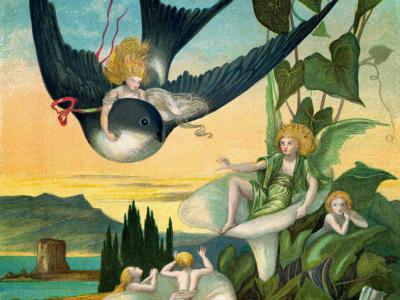
Just a skip away from Copenhagen’s City Hall Square and the ever-whimsical Tivoli Gardens, step right up to the Hans Christian Andersen Fairy-Tale House. This is where cobblestones meet fairy dust, and the world's most beloved storyteller gets his time in the spotlight-with just a dash of Ripley’s “Believe It or Not!” weirdness for flavor.
Think of this place as a time machine dressed as a storybook structured in two main parts. The first part focuses on Andersen’s real life. It details his upbringing and modest beginnings in Odense, followed by a move to Copenhagen, and his globe-trotting adventures with all the drama in between (rejections, fame, a few heartbreaks, rinse and repeat). This section spills the tea on the man behind the magic, contextualizing the origins of his inspirations and providing insight into his character and experiences.
Then-the second part-plunges you into the fairy tales themselves. "The Little Mermaid," "Thumbelina," "The Ugly Duckling," "The Steadfast Tin Soldier"-they're all here, brought to life with lights, sounds, and even smells. (Yes, your nose is now part of the experience, too.) Push a button, and storytime becomes showtime, complete with multilingual narration on oversized story cards and theatrical displays that would make even Andersen raise an eyebrow.
You can also check out the rare Andersen autograph manuscript. And to further enhance the experience, there are engaging live storytelling sessions. If you prefer something Instagrammable, snap a pic with the man himself-or at least his eerily lifelike model.
So, if you’ve ever wanted to walk straight into a fairy tale and maybe walk out with a selfie next to a literary legend, this is your spot. End of tale. Or is it just the beginning?
Tip:
If you want more bang for your krone, combo tickets are available for Ripley's, Guinness World Records, and The Mystic Exploratorium on Strøget-just a 15-minute stroll away. Even better, Copenhagen Card holders can get in free (you clever duckling, you!).
Think of this place as a time machine dressed as a storybook structured in two main parts. The first part focuses on Andersen’s real life. It details his upbringing and modest beginnings in Odense, followed by a move to Copenhagen, and his globe-trotting adventures with all the drama in between (rejections, fame, a few heartbreaks, rinse and repeat). This section spills the tea on the man behind the magic, contextualizing the origins of his inspirations and providing insight into his character and experiences.
Then-the second part-plunges you into the fairy tales themselves. "The Little Mermaid," "Thumbelina," "The Ugly Duckling," "The Steadfast Tin Soldier"-they're all here, brought to life with lights, sounds, and even smells. (Yes, your nose is now part of the experience, too.) Push a button, and storytime becomes showtime, complete with multilingual narration on oversized story cards and theatrical displays that would make even Andersen raise an eyebrow.
You can also check out the rare Andersen autograph manuscript. And to further enhance the experience, there are engaging live storytelling sessions. If you prefer something Instagrammable, snap a pic with the man himself-or at least his eerily lifelike model.
So, if you’ve ever wanted to walk straight into a fairy tale and maybe walk out with a selfie next to a literary legend, this is your spot. End of tale. Or is it just the beginning?
Tip:
If you want more bang for your krone, combo tickets are available for Ripley's, Guinness World Records, and The Mystic Exploratorium on Strøget-just a 15-minute stroll away. Even better, Copenhagen Card holders can get in free (you clever duckling, you!).
3) Mads Norgaard Copenhagen
What to buy here: Designer Knitwear.
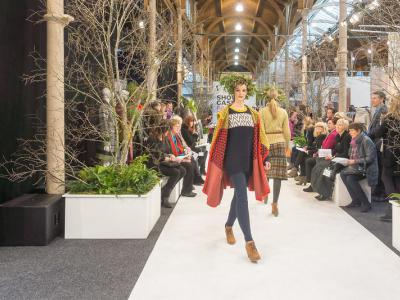
Knitwear is an ongoing element in a lot of Danish fashion collections. And like so many other branches in Copenhagen, the fashion industry likes to mix old and new. Home to Copenhagen Fashion Week twice a year, the Danish capital has bred a lot of Danish fashion designers. Clothing designers like Mads Nørgaard, Denmark’s rebel designer Henrik Vibskov, as well as Malene Birger and Vigga Svensson have earned an international reputation. Each designer has his or her unique trademark and style, but in general fashion on the streets of Copenhagen tends to be a little bohemian and rock and roll chic during the day, while classic and elegant at night.
Mads Nørgaard Copenhagen has men’s, women’s and children’s clothing collections and build the collections around the core of fashionable classics. In 2008 Mads Nørgaard also presented a 100% organic underwear line for men.
The demand for organic clothing is growing rapidly in Copenhagen and elsewhere, and designers like Vigga Svensson, the woman behind the Katvig children’s clothes, is a forerunner in this field. She has managed to produce fashionable clothes while protecting the environment. The children’s clothes are made of recycled organic cotton and recycled polyester, made out of plastic bottles, thus protecting nature, the people making the clothes and the kids wearing it. Even the transport and packaging is environmentally friendly.
Denmark’s leading fashion lady Malene Birger designs in her own words “affordable luxury”. Her women’s collection is elegant and gives an artistic spin on modern classics.
Denmark’s fashion rebel Henrik Vibskov is more than just a designer. He is also an artist and musician – known for bringing it all together in his fashion shows. His style is fun, alternative and controversial. His collections include men’s, women’s and also children’s wear. Since 2003 he has been the only Scandinavian designer on the official show schedule of the Paris Men’s Fashion Week.
Knitwear is an ongoing element in a lot of Danish fashion collections. And like so many other branches in Copenhagen, the fashion industry likes to mix old and new. Home to Copenhagen Fashion Week twice a year, the Danish capital has bred a lot of Danish fashion designers. Clothing designers like Mads Nørgaard, Denmark’s rebel designer Henrik Vibskov, as well as Malene Birger and Vigga Svensson have earned an international reputation. Each designer has his or her unique trademark and style, but in general fashion on the streets of Copenhagen tends to be a little bohemian and rock and roll chic during the day, while classic and elegant at night.
Mads Nørgaard Copenhagen has men’s, women’s and children’s clothing collections and build the collections around the core of fashionable classics. In 2008 Mads Nørgaard also presented a 100% organic underwear line for men.
The demand for organic clothing is growing rapidly in Copenhagen and elsewhere, and designers like Vigga Svensson, the woman behind the Katvig children’s clothes, is a forerunner in this field. She has managed to produce fashionable clothes while protecting the environment. The children’s clothes are made of recycled organic cotton and recycled polyester, made out of plastic bottles, thus protecting nature, the people making the clothes and the kids wearing it. Even the transport and packaging is environmentally friendly.
Denmark’s leading fashion lady Malene Birger designs in her own words “affordable luxury”. Her women’s collection is elegant and gives an artistic spin on modern classics.
Denmark’s fashion rebel Henrik Vibskov is more than just a designer. He is also an artist and musician – known for bringing it all together in his fashion shows. His style is fun, alternative and controversial. His collections include men’s, women’s and also children’s wear. Since 2003 he has been the only Scandinavian designer on the official show schedule of the Paris Men’s Fashion Week.
4) Stork Fountain
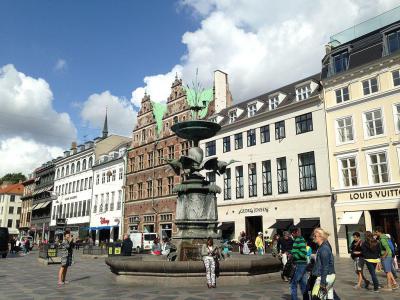
Copenhagen has no shortage of statues, but when it comes to fountains, it isn’t exactly “drowning” in them. This is why the Stork Fountain on Amager Square stands out like a bird in a bathhouse.
This eye-catching splash zone is set in stone-Italian granite, to be exact-surrounded by dignified old buildings, one of which has been standing there quietly since as far back as the year 1600.
Now, the fountain wasn’t just plopped there randomly. It was a silvery little gift to Crown Prince Frederik and Crown Princess Louise for their 25th wedding anniversary. Unveiled in 1894, it is basically the royal equivalent of a really, really fancy anniversary card. With plumbing...
The design features three storks caught mid-flap, as if about to deliver... babies, if you believe Hans Christian Andersen’s iconic tale from 1838. Around their feet: decorative aquatic plants and cheeky bronze frogs perched on dock leaves, doing their best impression of water cannons.
For years, locals whispered that the birds might be, in fact, herons-scandal! But in 2008, the Danish Ornithological Society set the record straight: definitely storks. Case closed.
Another peculiar fact associated with this place is the midwife dance. Yes, that’s the thing. Since 1950, newly-minted Danish midwives have been celebrating their graduation by dancing, wading, and sometimes full-on splashing in the fountain. If you want to see it with your own eyes, show up in mid-summer, claim a table at a nearby café with a good view, and prepare for a delightfully soggy spectacle. Champagne optional.
This eye-catching splash zone is set in stone-Italian granite, to be exact-surrounded by dignified old buildings, one of which has been standing there quietly since as far back as the year 1600.
Now, the fountain wasn’t just plopped there randomly. It was a silvery little gift to Crown Prince Frederik and Crown Princess Louise for their 25th wedding anniversary. Unveiled in 1894, it is basically the royal equivalent of a really, really fancy anniversary card. With plumbing...
The design features three storks caught mid-flap, as if about to deliver... babies, if you believe Hans Christian Andersen’s iconic tale from 1838. Around their feet: decorative aquatic plants and cheeky bronze frogs perched on dock leaves, doing their best impression of water cannons.
For years, locals whispered that the birds might be, in fact, herons-scandal! But in 2008, the Danish Ornithological Society set the record straight: definitely storks. Case closed.
Another peculiar fact associated with this place is the midwife dance. Yes, that’s the thing. Since 1950, newly-minted Danish midwives have been celebrating their graduation by dancing, wading, and sometimes full-on splashing in the fountain. If you want to see it with your own eyes, show up in mid-summer, claim a table at a nearby café with a good view, and prepare for a delightfully soggy spectacle. Champagne optional.
5) Stroget Pedestrian Street (must see)
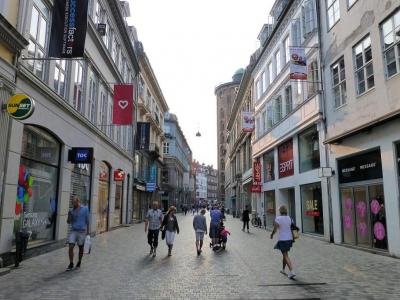
Stroget, a pedestrian thoroughfare in the heart of Copenhagen, is renowned as one of Europe's longest shopping streets, extending over 1.1 kilometers. Initially known as Ruten until the late 19th century, the street has been a fashionable hub in the Danish capital since its layout was established in 1728 following a major fire. The architecture along Stroget mainly dates from the late 19th and early 20th centuries, with the oldest building erected in 1616.
Stroget is renowned for its extensive shopping opportunities. It hosts a wide range of shops, from international brands to local boutiques, offering fashion, design, jewelry, and more. It's a shopper's paradise and attracts both locals and tourists alike.
Throughout the day, especially during weekends and holidays, Stroget comes alive with street performers, musicians, and entertainers. This adds to the lively atmosphere and creates a festive mood.
Numerous cafés, restaurants, and bars line Stroget, offering a variety of cuisines and refreshments. It's a great place to stop for a meal or a coffee break while soaking in the bustling ambiance.
Stroget is renowned for its extensive shopping opportunities. It hosts a wide range of shops, from international brands to local boutiques, offering fashion, design, jewelry, and more. It's a shopper's paradise and attracts both locals and tourists alike.
Throughout the day, especially during weekends and holidays, Stroget comes alive with street performers, musicians, and entertainers. This adds to the lively atmosphere and creates a festive mood.
Numerous cafés, restaurants, and bars line Stroget, offering a variety of cuisines and refreshments. It's a great place to stop for a meal or a coffee break while soaking in the bustling ambiance.
6) New Harbor (Nyhavn) (must see)
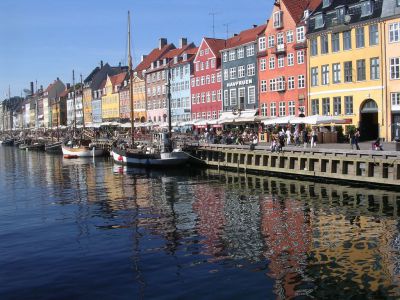
New Harbor-with all its bright colors, wooden ships, and a dash of nautical nostalgia-is by far Copenhagen’s most photogenic waterfront. Here, 17th-century Danish townhouses line up like they’re auditioning for a postcard.
Built between 1670 and 1675 under the direction of King Christian V-using a workforce of Danish soldiers and captured Swedish war prisoners-New Harbor was designed to boost trade with the Dutch. In reality, however, it quickly became Copenhagen’s go-to district for beer, brawls, and brothels. Trade and trouble? Why not both?
In his turn, the famed Danish author Hans Christian Andersen also called New Harbor home for a whopping 18 years. He first moved into Number 20, the red house, in 1834. Then, he shuffled over to Number 18 and eventually spent his longest stretch lounging around Number 67 from 1848 to 1865. Basically, he was living that prime canal-side real estate life before it was cool.
After World War II, the harbor’s hustle slowed to a crawl, and the area nearly faded into obscurity. But the 1960s gave it a second act. In 1977, the Veteran Ship and Museum Harbor dropped anchor, and by 1980, the quay was pedestrianized-aka, turned into the selfie paradise and café haven we know today.
Take a stroll now, and you’ll spot all sorts of restored museum ships moored along the canal-each one with enough maritime drama to fill a Netflix series. At the far end of the harbor sits the Memorial Anchor, quietly honoring Danish sailors lost in World War II.
Wander a bit further south, and things take a modern turn. Jazz clubs, tattoo parlors, trendy cafés, and enough open-faced sandwiches to keep your Instagram busy for hours.
Tip:
If you're on a tight budget or just pretending to be Danish, skip the overpriced bar scene. Grab a beer or coffee from a convenience store, plop yourself down at the quayside, and soak in the view. For something classier, head to the Royal Playhouse at the far end-great drinks, decent prices, and panoramic views that will make your camera weep with joy.
And hey, if your feet are screaming for mercy, you can always hop on a boat tour right at the harbor entrance. One hour of effortless sightseeing and zero walking required.
Built between 1670 and 1675 under the direction of King Christian V-using a workforce of Danish soldiers and captured Swedish war prisoners-New Harbor was designed to boost trade with the Dutch. In reality, however, it quickly became Copenhagen’s go-to district for beer, brawls, and brothels. Trade and trouble? Why not both?
In his turn, the famed Danish author Hans Christian Andersen also called New Harbor home for a whopping 18 years. He first moved into Number 20, the red house, in 1834. Then, he shuffled over to Number 18 and eventually spent his longest stretch lounging around Number 67 from 1848 to 1865. Basically, he was living that prime canal-side real estate life before it was cool.
After World War II, the harbor’s hustle slowed to a crawl, and the area nearly faded into obscurity. But the 1960s gave it a second act. In 1977, the Veteran Ship and Museum Harbor dropped anchor, and by 1980, the quay was pedestrianized-aka, turned into the selfie paradise and café haven we know today.
Take a stroll now, and you’ll spot all sorts of restored museum ships moored along the canal-each one with enough maritime drama to fill a Netflix series. At the far end of the harbor sits the Memorial Anchor, quietly honoring Danish sailors lost in World War II.
Wander a bit further south, and things take a modern turn. Jazz clubs, tattoo parlors, trendy cafés, and enough open-faced sandwiches to keep your Instagram busy for hours.
Tip:
If you're on a tight budget or just pretending to be Danish, skip the overpriced bar scene. Grab a beer or coffee from a convenience store, plop yourself down at the quayside, and soak in the view. For something classier, head to the Royal Playhouse at the far end-great drinks, decent prices, and panoramic views that will make your camera weep with joy.
And hey, if your feet are screaming for mercy, you can always hop on a boat tour right at the harbor entrance. One hour of effortless sightseeing and zero walking required.
7) House of Amber
House of Amber is a prestigious Danish company, established in 1933 by Einer Fehrn, which has developed into one of the world’s foremost suppliers of amber jewelry. This well-regarded entity has been producing and dealing in amber, often referred to as the "gold of the North," for several generations.
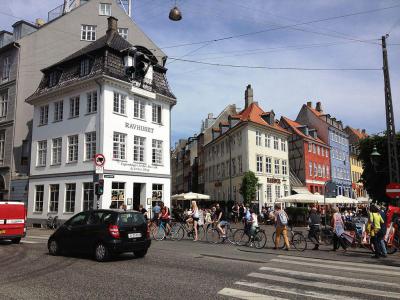
Strategically positioned in Copenhagen, House of Amber operates its retail outlets in historical and tourist-friendly locations. These include the old Kanneworffs House at Nyhavn, Vesterbrogade near Tivoli, and along the bustling main pedestrian street in the city center. The company is renowned for having the largest selection of amber jewelry, intricately combined with gold, silver, and diamonds, offering a plethora of designs that cater to various tastes. Their product range extends from pendants, bracelets, and brooches to earrings, necklaces, and various artistic objects crafted from amber.
With over 78 years of experience in selecting and crafting amber for jewelry, House of Amber exemplifies skill and expertise in the jewelry industry. The company ensures the highest quality of each piece, an assurance further bolstered by the presence of the Copenhagen Amber Museum located in the same historic building in Nyhavn. This museum not only serves as a testament to the quality but also enriches the visitor's experience by connecting them with the historical and geological context of amber.
House of Amber operates under the motto, "Designed by nature - Refined by us," reflecting their deep respect for the natural origins and beauty of amber, which dates back 20 to 50 million years. Amber's use in jewelry can be traced back to 10,000 BC, making it one of the earliest materials used by humans for ornamental purposes. House of Amber not only continues this ancient tradition but elevates it by integrating modern design with timeless natural beauty.
Strategically positioned in Copenhagen, House of Amber operates its retail outlets in historical and tourist-friendly locations. These include the old Kanneworffs House at Nyhavn, Vesterbrogade near Tivoli, and along the bustling main pedestrian street in the city center. The company is renowned for having the largest selection of amber jewelry, intricately combined with gold, silver, and diamonds, offering a plethora of designs that cater to various tastes. Their product range extends from pendants, bracelets, and brooches to earrings, necklaces, and various artistic objects crafted from amber.
With over 78 years of experience in selecting and crafting amber for jewelry, House of Amber exemplifies skill and expertise in the jewelry industry. The company ensures the highest quality of each piece, an assurance further bolstered by the presence of the Copenhagen Amber Museum located in the same historic building in Nyhavn. This museum not only serves as a testament to the quality but also enriches the visitor's experience by connecting them with the historical and geological context of amber.
House of Amber operates under the motto, "Designed by nature - Refined by us," reflecting their deep respect for the natural origins and beauty of amber, which dates back 20 to 50 million years. Amber's use in jewelry can be traced back to 10,000 BC, making it one of the earliest materials used by humans for ornamental purposes. House of Amber not only continues this ancient tradition but elevates it by integrating modern design with timeless natural beauty.
8) Kastellet (must see)
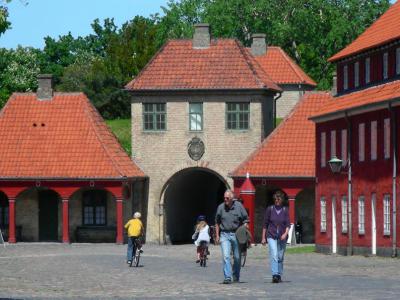
One of the most impressive and well-preserved fortifications in Northern Europe, Kastellet, as it is called, has bastions at the corners and is designed in the form of a pentagram. As you enter its grounds, you will find a number of buildings including a windmill and a church. This historic site which also serves as a public park is frequented by locals and tourists alike.
It was in 1626 that King Christian IV started construction of Kastellet. Economic constraints forced him to drop his grand plans of building a large castle here. King Frederik III, his successor continued with the construction which was later extended by Henrik Ruse, the Dutch engineer after the Swedish siege between 1658 and 1660.
Kastellet was built as an effort by Copenhagen to defend itself against England in the 1807 Battle of Copenhagen. A.P. Moller and Chastine McKinney Mollers General Fund made possible a complete renovation of Kastellet between 1989 and 1999. Currently, it is owned by the Danish Defence Ministry and the area is used by Defence Intelligence, Danish Home Guard, Chief of Staff, Royal Garrison’s Library and the Defence Judge Advocate Corps.
Locals visit Kastellet to enjoy a pleasant walk on a sunny day. Tourists visit this fortification for its rich heritage and children love to play around with the birds and animals here.
Why You Should Visit:
The high walls of the fortress offer a lovely view of the harbor, and the fact that half of it is still a working base means it's kept in tip top shape.
Very pleasant area to take a quiet stroll or run, and with a charming windmill to boot!
Tip:
Can get windy on a cold day so do cover up.
It was in 1626 that King Christian IV started construction of Kastellet. Economic constraints forced him to drop his grand plans of building a large castle here. King Frederik III, his successor continued with the construction which was later extended by Henrik Ruse, the Dutch engineer after the Swedish siege between 1658 and 1660.
Kastellet was built as an effort by Copenhagen to defend itself against England in the 1807 Battle of Copenhagen. A.P. Moller and Chastine McKinney Mollers General Fund made possible a complete renovation of Kastellet between 1989 and 1999. Currently, it is owned by the Danish Defence Ministry and the area is used by Defence Intelligence, Danish Home Guard, Chief of Staff, Royal Garrison’s Library and the Defence Judge Advocate Corps.
Locals visit Kastellet to enjoy a pleasant walk on a sunny day. Tourists visit this fortification for its rich heritage and children love to play around with the birds and animals here.
Why You Should Visit:
The high walls of the fortress offer a lovely view of the harbor, and the fact that half of it is still a working base means it's kept in tip top shape.
Very pleasant area to take a quiet stroll or run, and with a charming windmill to boot!
Tip:
Can get windy on a cold day so do cover up.
9) Copenhagen Botanical Garden (must see)
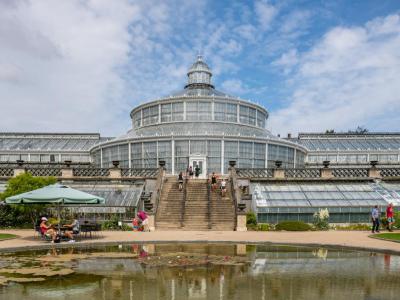
If you like plants and wish to know all about their diversity, you must visit the Copenhagen Botanical Garden on your trip to the city. This garden teaches you all about the fungal kingdoms and even about how to conserve nature on a national and global basis. It covers an area of 10 hectares and is particularly noted for its extensive complex of historical glasshouses dating from 1874.
Enter the garden and you will find the area divided into three distinct parts namely the Botanic Garden, Botanical Library and the Botanical Museum. The garden is arranged in different sections including Danish plants (600 species), perennial plants (1,100 species), annual plants (1,100 species), rock gardens with plants from mountainous areas in Central and Southern Europe and Conifer Hill which is planted with coniferous trees.
At the Botanical Museum, you will find a range of fungi and dried plant collections, while Denmark’s botanical literature collection is housed at the Botanical Library (admission by appointment only). The garden, as well as the museum, help develop and maintain scientific collections of dried and living fungi and plants in keeping with international conventions and practice.
Why You Should Visit:
Plenty of open space, trees, water features, and, in the summer, scented flowers and (hopefully) sunshine.
Great place to relax or walk quietly. There's also a café where you can order refreshments.
Tip:
Take a picnic and allow for lots of time. If you're a keen gardener you'll also need a notebook!
Enter the garden and you will find the area divided into three distinct parts namely the Botanic Garden, Botanical Library and the Botanical Museum. The garden is arranged in different sections including Danish plants (600 species), perennial plants (1,100 species), annual plants (1,100 species), rock gardens with plants from mountainous areas in Central and Southern Europe and Conifer Hill which is planted with coniferous trees.
At the Botanical Museum, you will find a range of fungi and dried plant collections, while Denmark’s botanical literature collection is housed at the Botanical Library (admission by appointment only). The garden, as well as the museum, help develop and maintain scientific collections of dried and living fungi and plants in keeping with international conventions and practice.
Why You Should Visit:
Plenty of open space, trees, water features, and, in the summer, scented flowers and (hopefully) sunshine.
Great place to relax or walk quietly. There's also a café where you can order refreshments.
Tip:
Take a picnic and allow for lots of time. If you're a keen gardener you'll also need a notebook!
10) Kultorvet Square
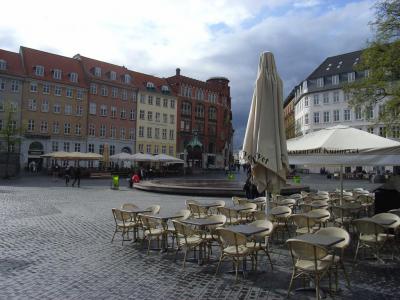
Kultorvet Square, nestled in the Old Town of Copenhagen, stands as a vibrant public space rich in history and culture. The name, which translates to "The Coal Market," evolved from its initial role as a hub for trading charcoal, firewood, and peat, strategically positioned near the Northern City Gate. This location was convenient for colliers, peat gatherers, and farmers from North Zealand.
Over the years, the square expanded from its original, smaller footprint through successive demolitions and new constructions. Its architecture reflects a timeline of rebuilding and stylistic changes, with surviving buildings like No. 14 on the corner with Sankt Gertruds Stræde marking its early post-fire reconstruction from the 1730s. Other notable structures include the 1810 buildings designed by Christian Frederik Hansen, and the Historicist Kultorvet Pharmacy built in 1895 by Valdemar Ingemann, noted for its dismantled spire.
Today, Kultorvet is a pedestrian-friendly zone that stretches from Nørreport station to Amagertorv along Strøget. It is a lively area lined with cafés and shops, renowned for hosting outdoor concerts during the summer. A standout feature is the 2013 renovation that introduced a circular water feature, serving both as a decorative element and a functional bandstand for events. Another point of interest is one of Copenhagen’s old telephone kiosks, adding a touch of historical quaintness to the area.
Art also plays a role in defining the square's character, exemplified by Hanne Varming's bronze statue "The Elder Mother" (Hyldemor), inspired by Hans Christian Andersen's tale and Varming's great grandparents. This statue depicts an elderly couple in contemplation, enriching the square with a sense of history and personal memory.
Over the years, the square expanded from its original, smaller footprint through successive demolitions and new constructions. Its architecture reflects a timeline of rebuilding and stylistic changes, with surviving buildings like No. 14 on the corner with Sankt Gertruds Stræde marking its early post-fire reconstruction from the 1730s. Other notable structures include the 1810 buildings designed by Christian Frederik Hansen, and the Historicist Kultorvet Pharmacy built in 1895 by Valdemar Ingemann, noted for its dismantled spire.
Today, Kultorvet is a pedestrian-friendly zone that stretches from Nørreport station to Amagertorv along Strøget. It is a lively area lined with cafés and shops, renowned for hosting outdoor concerts during the summer. A standout feature is the 2013 renovation that introduced a circular water feature, serving both as a decorative element and a functional bandstand for events. Another point of interest is one of Copenhagen’s old telephone kiosks, adding a touch of historical quaintness to the area.
Art also plays a role in defining the square's character, exemplified by Hanne Varming's bronze statue "The Elder Mother" (Hyldemor), inspired by Hans Christian Andersen's tale and Varming's great grandparents. This statue depicts an elderly couple in contemplation, enriching the square with a sense of history and personal memory.
11) Paludan's Bog & Cafe
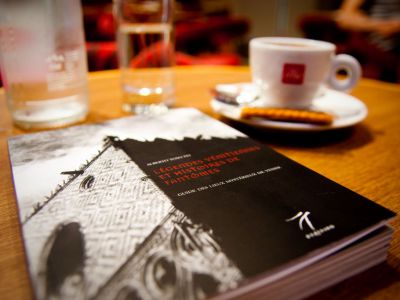
If you want a really filling breakfast/brunch without breaking the bank, stop by this restful place. Located in the Latin Quarter just across from the University Library, Paludan is Denmark's oldest book café. As per their website, "The café’s clear objective is to combine the traditional bookstore with a functioning eatery, where service is top notch in both places."
Paludan's sells both used and new books and has a wide selection of fiction/non-fiction books in English, Danish and other languages. Food-wise, there are options for everybody: meat-based or vegetarian, seafood, Asian, very simple dishes, non-dairy, gluten-free, low calories, etc. For those first timers, go to the left as you walk in and order at the counter. There are menus in English as well, making it easy to pick whatever it is you want. After placing the order, find a place to sit and they will bring the food out to you. Either eat inside and be surrounded by bookshelves or sit outside and enjoy the street views. Service is quick, and you get very good value for the price. Can't ask for much more!
Paludan's sells both used and new books and has a wide selection of fiction/non-fiction books in English, Danish and other languages. Food-wise, there are options for everybody: meat-based or vegetarian, seafood, Asian, very simple dishes, non-dairy, gluten-free, low calories, etc. For those first timers, go to the left as you walk in and order at the counter. There are menus in English as well, making it easy to pick whatever it is you want. After placing the order, find a place to sit and they will bring the food out to you. Either eat inside and be surrounded by bookshelves or sit outside and enjoy the street views. Service is quick, and you get very good value for the price. Can't ask for much more!
12) Frederiksberg Gardens
Frederiksberg Gardens, located in Copenhagen, stands out as one of the city's largest and most picturesque green spaces. This 64-hectare park, connected to the adjacent Søndermarken, is situated on the western edge of Inner Copenhagen and exemplifies the romantic landscape garden in the English style.
The gardens originated in the late 1690s under King Frederik IV, who envisioned Frederiksberg Palace as his summer residence. Inspired by the gardens he had seen in Italy and France during his travels, Frederik IV initiated the project on Valby Hill's elevated terrain. The initial design included a parterre and a complex cascade system, designed by the eminent Swedish architect Nicodemus Tessin and further developed by Hans Heinrich Scheel, a captain in the Corps of Royal Engineers.
By the 1790s, the garden's style transformed into that of an English landscape garden, influenced by the prevailing trends of the time. P. Petersen's redesign in 1795 introduced winding paths, lawns, lakes, canals, and various garden features such as grottos, temples, and summerhouses, possibly inspired by Johann Ludwig Mansa's book on English-style gardening. This transformation reflected the romantic aesthetics that emphasized natural beauty and scenic compositions.
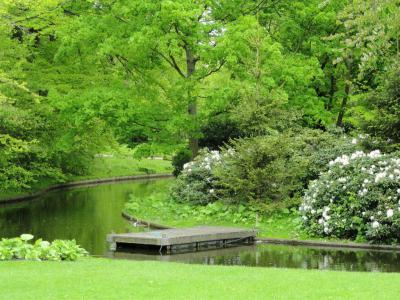
Today, Frederiksberg Gardens is cherished for its serene landscape, featuring canals, lakes, and small islands surrounded by lush greenery. It hosts a diverse array of plant species and birdlife, including mute swans, greylag geese, mallards, grey herons, and Canada geese. The park's romantic allure is further enhanced by its follies, waterfalls, and grottos. Smørrebrød Lawn, near the corner of Roskildevej and Pile Allé, has become a favored picnic spot, marking the park as a significant cultural and recreational asset in Copenhagen.
The gardens originated in the late 1690s under King Frederik IV, who envisioned Frederiksberg Palace as his summer residence. Inspired by the gardens he had seen in Italy and France during his travels, Frederik IV initiated the project on Valby Hill's elevated terrain. The initial design included a parterre and a complex cascade system, designed by the eminent Swedish architect Nicodemus Tessin and further developed by Hans Heinrich Scheel, a captain in the Corps of Royal Engineers.
By the 1790s, the garden's style transformed into that of an English landscape garden, influenced by the prevailing trends of the time. P. Petersen's redesign in 1795 introduced winding paths, lawns, lakes, canals, and various garden features such as grottos, temples, and summerhouses, possibly inspired by Johann Ludwig Mansa's book on English-style gardening. This transformation reflected the romantic aesthetics that emphasized natural beauty and scenic compositions.
Today, Frederiksberg Gardens is cherished for its serene landscape, featuring canals, lakes, and small islands surrounded by lush greenery. It hosts a diverse array of plant species and birdlife, including mute swans, greylag geese, mallards, grey herons, and Canada geese. The park's romantic allure is further enhanced by its follies, waterfalls, and grottos. Smørrebrød Lawn, near the corner of Roskildevej and Pile Allé, has become a favored picnic spot, marking the park as a significant cultural and recreational asset in Copenhagen.
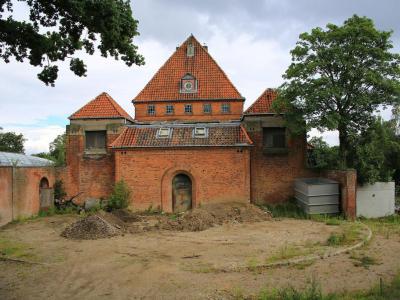
13) Copenhagen Zoo (must see)
Copenhagen Zoo, nestled in the heart of Denmark's capital, is not only one of the oldest zoological gardens in Europe, having been founded in 1859, but also one of its most progressive. Located on 11 hectares within the municipality of Frederiksberg, the zoo is uniquely positioned between Frederiksberg Gardens and Søndermarken, attracting over 1.57 million visitors annually, making it the most visited zoo and a leading tourist attraction in Denmark.
The zoo was originally established by ornithologist Niels Kjærbølling with a modest collection of animals in "Princess Vilhelmines Have," a garden area donated by Copenhagen's chief directorate. From eagles and chickens to more exotic inhabitants like a seal in a bathtub and a turtle in a bucket, the zoo has dramatically evolved from showcasing a wide variety of animals to focusing on enhanced animal welfare and spacious enclosures.
A significant part of this evolution is evident in its architectural innovation, notably the Elephant House designed by the renowned British architect Sir Norman Foster. This structure is part of a broader movement within the zoo, started in the early 1980s, to replace traditional cages with enclosures that mimic natural habitats, thereby improving the quality of life for the animals and the authenticity of the visitor experience. The 1.5-hectare Savanna area and the underwater viewing features at the Hippopotamus House are prime examples of these efforts.
Copenhagen Zoo has also made strides in conservation, participating actively in European breeding programs to help preserve endangered species. Furthermore, the zoo has preserved several of its historical buildings which add a rich historical texture to the visitor experience. For example, the oldest building still in use dates back to 1872-a stable that now houses Bactrian camels-and a Herbivore House from 1875 still accommodating tapirs.
A standout feature of the zoo is its wooden observation tower, standing 43.5 meters high, which was built in 1905. This tower offers panoramic views of the surrounding parks and cityscape, resembling the architectural style of the Eiffel Tower. This is just one of the many features that make Copenhagen Zoo a unique blend of historical charm and modern zoological practice.
The zoo was originally established by ornithologist Niels Kjærbølling with a modest collection of animals in "Princess Vilhelmines Have," a garden area donated by Copenhagen's chief directorate. From eagles and chickens to more exotic inhabitants like a seal in a bathtub and a turtle in a bucket, the zoo has dramatically evolved from showcasing a wide variety of animals to focusing on enhanced animal welfare and spacious enclosures.
A significant part of this evolution is evident in its architectural innovation, notably the Elephant House designed by the renowned British architect Sir Norman Foster. This structure is part of a broader movement within the zoo, started in the early 1980s, to replace traditional cages with enclosures that mimic natural habitats, thereby improving the quality of life for the animals and the authenticity of the visitor experience. The 1.5-hectare Savanna area and the underwater viewing features at the Hippopotamus House are prime examples of these efforts.
Copenhagen Zoo has also made strides in conservation, participating actively in European breeding programs to help preserve endangered species. Furthermore, the zoo has preserved several of its historical buildings which add a rich historical texture to the visitor experience. For example, the oldest building still in use dates back to 1872-a stable that now houses Bactrian camels-and a Herbivore House from 1875 still accommodating tapirs.
A standout feature of the zoo is its wooden observation tower, standing 43.5 meters high, which was built in 1905. This tower offers panoramic views of the surrounding parks and cityscape, resembling the architectural style of the Eiffel Tower. This is just one of the many features that make Copenhagen Zoo a unique blend of historical charm and modern zoological practice.
