Custom Walk in Sydney, Australia by ferserrano2009_2c8e99 created on 2026-04-10
Guide Location: Australia » Sydney
Guide Type: Custom Walk
# of Sights: 10
Tour Duration: 3 Hour(s)
Travel Distance: 6.2 Km or 3.9 Miles
Share Key: QFNN5
Guide Type: Custom Walk
# of Sights: 10
Tour Duration: 3 Hour(s)
Travel Distance: 6.2 Km or 3.9 Miles
Share Key: QFNN5
How It Works
Please retrieve this walk in the GPSmyCity app. Once done, the app will guide you from one tour stop to the next as if you had a personal tour guide. If you created the walk on this website or come to the page via a link, please follow the instructions below to retrieve the walk in the app.
Retrieve This Walk in App
Step 1. Download the app "GPSmyCity: Walks in 1K+ Cities" on Apple App Store or Google Play Store.



Step 2. In the GPSmyCity app, download(or launch) the guide "Sydney Map and Walking Tours".
Step 3. Tap the menu button located at upper right corner of the "Walks" screen and select "Retrieve custom walk". Enter the share key: QFNN5
1) Hyde Park
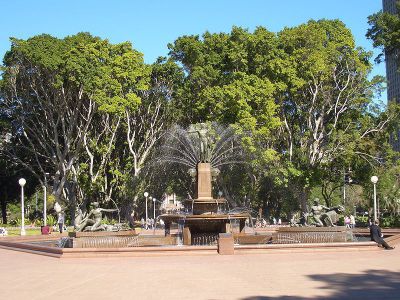
Hyde Park is where Sydney takes a deep breath. Stretching from St James Station down to Liverpool Street, it’s the city’s oldest public park-and the moment you step under its canopy of towering fig trees, you understand why generations have treated it as downtown’s unofficial living room. Back in 1810, this was grazing land and a makeshift parade ground, until someone decided Sydney deserved a dash of London and named it Hyde Park. The formal landscaping arrived in the 1920s, bringing neat avenues, sweeping lawns, and fountains that still cool the midday rush.
At the park’s northern end, the Archibald Fountain steals the show. Unveiled in 1932 and sculpted by French artist François-Léon Sicard, it throws Greek mythology into the Australian sunlight with surprising confidence-bronze figures, sparkling water, and just enough drama to stop even the most hurried commuter. Nearby statues of Captain Cook and James Martin serve as reminders that Sydney has never been shy about putting its history on a pedestal.
Down at the southern end, the mood shifts. Here stand the ANZAC War Memorial and the Pool of Reflection, a calm, solemn space framed by quiet pathways and still water. From this point, paths fan out toward lawns filled with office workers on lunch break, tourists plotting their next stop, and locals doing their best to make “a quick sit-down” last far longer than planned.
Between concerts, festivals, ceremonies, and the constant hum of people moving through, Hyde Park works double duty: part city shortcut, part sanctuary. It’s the rare place where you can admire cathedral spires, sip a takeaway coffee, and listen to the trees all at once-proof that even in the middle of Sydney’s urban bustle, a little calm is never far away...
At the park’s northern end, the Archibald Fountain steals the show. Unveiled in 1932 and sculpted by French artist François-Léon Sicard, it throws Greek mythology into the Australian sunlight with surprising confidence-bronze figures, sparkling water, and just enough drama to stop even the most hurried commuter. Nearby statues of Captain Cook and James Martin serve as reminders that Sydney has never been shy about putting its history on a pedestal.
Down at the southern end, the mood shifts. Here stand the ANZAC War Memorial and the Pool of Reflection, a calm, solemn space framed by quiet pathways and still water. From this point, paths fan out toward lawns filled with office workers on lunch break, tourists plotting their next stop, and locals doing their best to make “a quick sit-down” last far longer than planned.
Between concerts, festivals, ceremonies, and the constant hum of people moving through, Hyde Park works double duty: part city shortcut, part sanctuary. It’s the rare place where you can admire cathedral spires, sip a takeaway coffee, and listen to the trees all at once-proof that even in the middle of Sydney’s urban bustle, a little calm is never far away...
2) Museum of Sydney
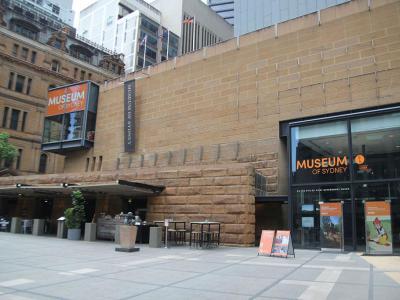
The Museum of Sydney stands on the site of Australia’s first Government House, built in 1788 for Governor Arthur Phillip. Located at the corner of Bridge and Phillip Streets, the museum explores the layered history of Sydney-from its beginnings as a colonial outpost to its evolution as a modern city. Opened in 1995 and designed by Richard Johnson of Denton Corker Marshall, the building combines glass, steel, and sandstone in a design that preserves the footprint of the original Government House foundations, visible through inlaid outlines in the museum’s forecourt.
Inside, the museum presents exhibitions that blend archaeology, social history, and contemporary storytelling. Artefacts from the early colony, maps, and models reveal how Sydney developed around this very site. The Edge of the Trees installation by artists Fiona Foley and Janet Laurence, positioned at the entrance, serves as both sculpture and memorial-its timber and sandstone poles engraved with Indigenous names and materials, evoking the pre-colonial landscape that once existed here.
The museum’s galleries showcase rotating exhibitions about Sydney’s people, architecture, and transformation, alongside permanent displays that examine encounters between First Nations communities and European settlers. Multimedia installations, photographs, and objects connect the city’s past to its present identity. As part of the Sydney Living Museums network, the Museum of Sydney acts as both an archaeological site and a storytelling space, grounding visitors in the origins of the city at the very spot where it was first governed.
Inside, the museum presents exhibitions that blend archaeology, social history, and contemporary storytelling. Artefacts from the early colony, maps, and models reveal how Sydney developed around this very site. The Edge of the Trees installation by artists Fiona Foley and Janet Laurence, positioned at the entrance, serves as both sculpture and memorial-its timber and sandstone poles engraved with Indigenous names and materials, evoking the pre-colonial landscape that once existed here.
The museum’s galleries showcase rotating exhibitions about Sydney’s people, architecture, and transformation, alongside permanent displays that examine encounters between First Nations communities and European settlers. Multimedia installations, photographs, and objects connect the city’s past to its present identity. As part of the Sydney Living Museums network, the Museum of Sydney acts as both an archaeological site and a storytelling space, grounding visitors in the origins of the city at the very spot where it was first governed.
3) Sydney Harbour Bridge (must see)
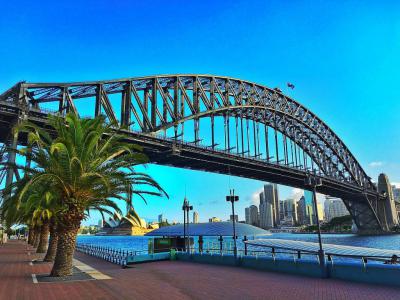
The Sydney Harbour Bridge is one of Australia’s most recognisable engineering achievements, connecting the city centre with the North Shore across Sydney Harbour. Designed by Dr. J.J.C. Bradfield of the New South Wales Department of Public Works and built by Dorman Long & Co. of Middlesbrough, England, the bridge opened in 1932 after nearly a decade of construction. Spanning 503 metres between its granite-faced pylons and rising 134 metres above the water, it became a defining feature of Sydney’s skyline.
At 48.8 metres wide, it was the world’s widest long-span bridge upon completion-a record it held until Vancouver’s Port Mann Bridge opened in 2012. It also remains the world’s tallest steel arch bridge, renowned for its scale, symmetry, and strength.
The bridge’s two half-arches were built outward from each shore and met mid-span in 1930 with remarkable precision. More than six million rivets hold the structure together, its weight distributed through huge abutments rather than the pylons, which were included mainly for aesthetic balance and public reassurance. The granite used for the pylons was quarried at Moruya on the New South Wales south coast, and each of the four towers provides interior space for stairways and viewing platforms.
Carrying eight lanes of road traffic, two rail lines, a pedestrian walkway on the eastern side, and a cycleway on the western side, the bridge remains a vital transport link. The BridgeClimb, introduced in 1998, lets visitors scale the arch under guided supervision for panoramic harbour views, while the Pylon Lookout Museum exhibits models, photographs, and historical records. Painted in the distinctive “Harbour Bridge Grey,” the structure undergoes continuous maintenance, including an ongoing repainting cycle to protect against corrosion.
At 48.8 metres wide, it was the world’s widest long-span bridge upon completion-a record it held until Vancouver’s Port Mann Bridge opened in 2012. It also remains the world’s tallest steel arch bridge, renowned for its scale, symmetry, and strength.
The bridge’s two half-arches were built outward from each shore and met mid-span in 1930 with remarkable precision. More than six million rivets hold the structure together, its weight distributed through huge abutments rather than the pylons, which were included mainly for aesthetic balance and public reassurance. The granite used for the pylons was quarried at Moruya on the New South Wales south coast, and each of the four towers provides interior space for stairways and viewing platforms.
Carrying eight lanes of road traffic, two rail lines, a pedestrian walkway on the eastern side, and a cycleway on the western side, the bridge remains a vital transport link. The BridgeClimb, introduced in 1998, lets visitors scale the arch under guided supervision for panoramic harbour views, while the Pylon Lookout Museum exhibits models, photographs, and historical records. Painted in the distinctive “Harbour Bridge Grey,” the structure undergoes continuous maintenance, including an ongoing repainting cycle to protect against corrosion.
4) The Rocks Discovery Museum
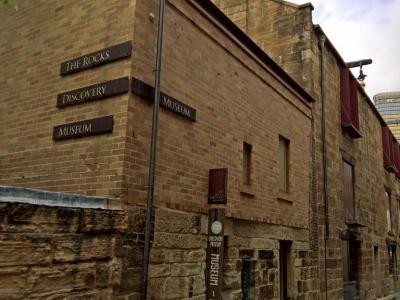
Set inside a solid sandstone warehouse from the 1850s, The Rocks Discovery Museum feels less like a museum you enter and more like one you’ve stepped into mid-conversation with history. This former port-side storehouse once played a role in Sydney’s mercantile hustle-back when ships, cargo, and ambition crowded the shoreline. Reopened in 2005 as a museum, it now uses its own bones-thick walls, timber beams, and timeworn stone-to frame the story of The Rocks, from its Aboriginal roots to its days as a convict quarter and a thriving colonial port.
The exhibitions unfold across four clear chapters, namely: Before Contact; Colony and Convicts; Port and Progress; and Transformation. Together, they track how this small stretch of land kept reinventing itself. Touchscreens, maps, and hands-on displays sit alongside artefacts recovered from archaeological digs-ceramics, tools, and everyday objects that once belonged to the people who lived and worked here. These fragments turn broad history into something personal, grounding big events in daily routines along Sydney Cove.
Admission is free, which makes lingering easy, and the interactive approach works just as well for curious adults as it does for younger visitors. The building itself pulls its weight as an exhibit, quietly demonstrating how history isn’t only told through labels and screens, but built into the structure around you. Managed by Placemaking New South Wales, the museum keeps things clear, approachable, and well-paced-an ideal primer before heading back out into the lanes of The Rocks, where the rest of the story continues underfoot...
The exhibitions unfold across four clear chapters, namely: Before Contact; Colony and Convicts; Port and Progress; and Transformation. Together, they track how this small stretch of land kept reinventing itself. Touchscreens, maps, and hands-on displays sit alongside artefacts recovered from archaeological digs-ceramics, tools, and everyday objects that once belonged to the people who lived and worked here. These fragments turn broad history into something personal, grounding big events in daily routines along Sydney Cove.
Admission is free, which makes lingering easy, and the interactive approach works just as well for curious adults as it does for younger visitors. The building itself pulls its weight as an exhibit, quietly demonstrating how history isn’t only told through labels and screens, but built into the structure around you. Managed by Placemaking New South Wales, the museum keeps things clear, approachable, and well-paced-an ideal primer before heading back out into the lanes of The Rocks, where the rest of the story continues underfoot...
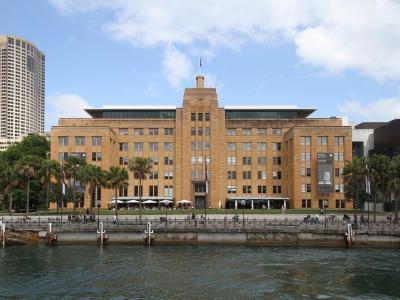
5) Museum of Contemporary Art
The Museum of Contemporary Art Australia stands on the edge of Circular Quay at the site of Sydney’s former Maritime Services Board Building, facing the Sydney Opera House across the harbour. Opened in 1991, the museum is dedicated to exhibiting, collecting, and interpreting contemporary art from Australia and around the world. The building’s Art Deco sandstone façade, completed in 1952, was later expanded in 2012 with a striking white geometric extension designed by Architects Sam Marshall and the NSW Government Architect’s Office, creating a bold dialogue between heritage and modernity.
Inside, the MCA features a mix of permanent and rotating exhibitions, with a strong focus on Australian and First Nations artists. The galleries present works across diverse media-painting, sculpture, video, performance, and installation-reflecting current debates and cultural perspectives. Highlights often include immersive large-scale installations and pieces from the museum’s extensive collection, which includes leading figures in contemporary Australian art such as Tracey Moffatt, Brook Andrew, and Emily Kame Kngwarreye.
The museum’s top-floor Café MCA offers panoramic views of Sydney Harbour, while the building’s open atrium and glass staircases frame glimpses of the water and city skyline. Public programs, artist talks, and interactive workshops make the space accessible and engaging for a wide audience. Positioned between The Rocks and the harbour foreshore, the MCA serves as both a cultural landmark and a vibrant meeting point where Sydney’s urban life intersects with the energy of contemporary artistic expression.
good, try taking the tour, as it might help to change your mind.
Inside, the MCA features a mix of permanent and rotating exhibitions, with a strong focus on Australian and First Nations artists. The galleries present works across diverse media-painting, sculpture, video, performance, and installation-reflecting current debates and cultural perspectives. Highlights often include immersive large-scale installations and pieces from the museum’s extensive collection, which includes leading figures in contemporary Australian art such as Tracey Moffatt, Brook Andrew, and Emily Kame Kngwarreye.
The museum’s top-floor Café MCA offers panoramic views of Sydney Harbour, while the building’s open atrium and glass staircases frame glimpses of the water and city skyline. Public programs, artist talks, and interactive workshops make the space accessible and engaging for a wide audience. Positioned between The Rocks and the harbour foreshore, the MCA serves as both a cultural landmark and a vibrant meeting point where Sydney’s urban life intersects with the energy of contemporary artistic expression.
good, try taking the tour, as it might help to change your mind.
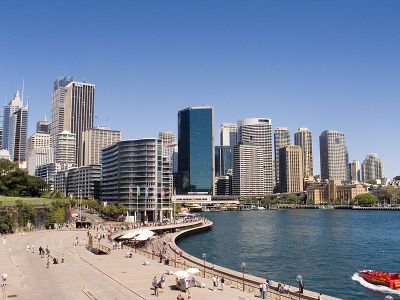
6) Circular Quay
Circular Quay is Sydney’s front door to the harbour, wedged neatly between the Opera House and The Rocks, and always in motion. Ferries glide in and out, trains rumble below, buses arrive curbside, and all of it happens right at the water’s edge. What began as the colony’s original shoreline has shifted roles over time, trading cargo and cranes for promenades, cafés, and constant foot traffic. From dawn commuters to sunset strollers, this is one of the city’s most familiar rendezvous points, with harbour views that never need improving.
Its distinctive curve didn’t come naturally. During the 19th century, land reclamation and wharf building reshaped Sydney Cove-the very spot where the First Fleet came ashore in 1788-into the semicircular quay we see today. The result is both practical and theatrical: a transport hub that doubles as a public stage. At the eastern end stands Customs House, completed in 1845 and now repurposed, but still anchoring the area with its colonial presence. Along the western edge, former warehouses sit comfortably beside modern buildings, while street performers, ferry queues, and café tables keep the promenade in steady movement.
Circular Quay also works as a connector. Walk east, and you’re quickly at the Royal Botanic Garden and the Opera House forecourt, where the harbour opens wide. Head west, and the scene shifts to The Rocks, with its narrow lanes, sandstone façades, and historic pubs. Out on the water, ferries fan across the harbour to Manly, Taronga Zoo, Watsons Bay, and beyond, turning the quay into a launch point for exploring Sydney by sea.
Part transport interchange, part public living room, Circular Quay is where Sydney gathers, passes through, and pauses-sometimes all at once-against a backdrop that defines the city worldwide.
Its distinctive curve didn’t come naturally. During the 19th century, land reclamation and wharf building reshaped Sydney Cove-the very spot where the First Fleet came ashore in 1788-into the semicircular quay we see today. The result is both practical and theatrical: a transport hub that doubles as a public stage. At the eastern end stands Customs House, completed in 1845 and now repurposed, but still anchoring the area with its colonial presence. Along the western edge, former warehouses sit comfortably beside modern buildings, while street performers, ferry queues, and café tables keep the promenade in steady movement.
Circular Quay also works as a connector. Walk east, and you’re quickly at the Royal Botanic Garden and the Opera House forecourt, where the harbour opens wide. Head west, and the scene shifts to The Rocks, with its narrow lanes, sandstone façades, and historic pubs. Out on the water, ferries fan across the harbour to Manly, Taronga Zoo, Watsons Bay, and beyond, turning the quay into a launch point for exploring Sydney by sea.
Part transport interchange, part public living room, Circular Quay is where Sydney gathers, passes through, and pauses-sometimes all at once-against a backdrop that defines the city worldwide.
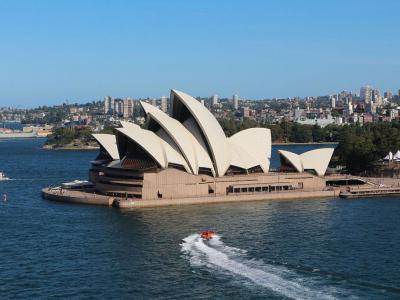
7) Sydney Opera House (must see)
Indeed, if there’s one building in Sydney that refuses to blend quietly into the skyline, it’s the Sydney Opera House. Perched out on Bennelong Point, it looks like a fleet of giant white sails that decided to drop anchor permanently. This global icon began life in 1957, when a young Danish architect named Jørn Utzon submitted a sketch to an international competition-and stunned everyone by winning... Sixteen years, countless design challenges, and a fair amount of political drama later, the Opera House finally opened in 1973.
Its famous shell roofs-those curved concrete forms that seem ready to catch the next harbour breeze-weren’t just artistic flair. Engineers had to invent entirely new methods to make them possible, carving each segment from a shared spherical geometry. The result is a structure that feels part sculpture, part science experiment, and completely unforgettable.
Inside, the Opera House is practically a small cultural city. You’ll find the grand Concert Hall with timber ceilings that soar like the inside of an enormous instrument, along with the Joan Sutherland Theatre, the Drama Theatre, the Playhouse, and the Studio. Each room was crafted with a performance in mind, from opera to orchestral concerts to experimental theatre.
In 2007, UNESCO sealed the building’s legendary status by adding it to the World Heritage list, citing its influence on modern design. Today, millions of visitors stream through every year, and it remains home to the Sydney Symphony Orchestra, Opera Australia, and The Australian Ballet.
But you don’t need a ticket to enjoy it. The promenades wrapped around the building offer some of the best harbour views in the city. And for the curious, tours share stories of creative breakthroughs, fierce debates, and the later return to Utzon’s original design principles-proof that even an architectural superstar can have a long and rather complicated backstory...
Its famous shell roofs-those curved concrete forms that seem ready to catch the next harbour breeze-weren’t just artistic flair. Engineers had to invent entirely new methods to make them possible, carving each segment from a shared spherical geometry. The result is a structure that feels part sculpture, part science experiment, and completely unforgettable.
Inside, the Opera House is practically a small cultural city. You’ll find the grand Concert Hall with timber ceilings that soar like the inside of an enormous instrument, along with the Joan Sutherland Theatre, the Drama Theatre, the Playhouse, and the Studio. Each room was crafted with a performance in mind, from opera to orchestral concerts to experimental theatre.
In 2007, UNESCO sealed the building’s legendary status by adding it to the World Heritage list, citing its influence on modern design. Today, millions of visitors stream through every year, and it remains home to the Sydney Symphony Orchestra, Opera Australia, and The Australian Ballet.
But you don’t need a ticket to enjoy it. The promenades wrapped around the building offer some of the best harbour views in the city. And for the curious, tours share stories of creative breakthroughs, fierce debates, and the later return to Utzon’s original design principles-proof that even an architectural superstar can have a long and rather complicated backstory...
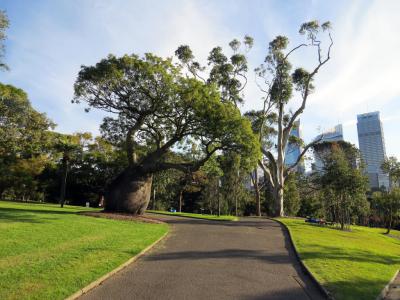
8) Royal Botanic Gardens (must see)
In case you're curious as to where Sydney keeps its giant outdoor living room, just wander over to the Royal Botanic Gardens. Stretching along the eastern edge of Sydney Harbour and practically brushing shoulders with the Opera House, this green expanse has been part of the city’s story since 1816-making it Australia’s oldest scientific institution and still a hardworking hub of research, conservation, and public learning.
Of course, the story begins much earlier. Long before colonisation, the Aboriginal Gadigal tribe used this shoreline as a place to gather food and materials. After the arrival of the First Fleet in 1788, the same ground became the colony’s first farm. Over time, the ploughs gave way to pathways, sandstone walls, and curated plantings, eventually blossoming into the formal gardens we stroll through these days.
Across more than 30 hectares, the gardens unfold like a botanical choose-your-own-adventure. The Palm Grove shows off specimens collected since the 19th century. The Succulent Garden brings together arid-adapted plants that thrive on sunshine and stubbornness. The Australian Rainforest Garden compresses whole ecosystems into a peaceful, leafy corner. Between them run lawns, ponds, and shady pockets perfect for picnics-or for pretending you’re in the middle of a nature documentary. The resident cast includes flying foxes, cockatoos, and waterbirds who treat the gardens as their personal lounge.
Scattered around are historic gates, fountains, and memorials, quiet reminders of two centuries of gardening trends and scientific ambition. Modern features join the mix too, most notably The Calyx-a sleek glasshouse and exhibition space where rotating displays explore everything, from biodiversity to the oddities of the plant world. Behind the scenes, the Herbarium of New South Wales holds vast preserved collections that fuel ongoing research.
Follow the waterfront, and you’ll reach Mrs Macquarie’s Chair, a favourite lookout with postcard views of the Harbour Bridge and Opera House. From here, the Farm Cove Walk slips into the wider network of harbourside paths, making the gardens not just a scenic retreat but a natural connector in Sydney’s waterfront journey...
Of course, the story begins much earlier. Long before colonisation, the Aboriginal Gadigal tribe used this shoreline as a place to gather food and materials. After the arrival of the First Fleet in 1788, the same ground became the colony’s first farm. Over time, the ploughs gave way to pathways, sandstone walls, and curated plantings, eventually blossoming into the formal gardens we stroll through these days.
Across more than 30 hectares, the gardens unfold like a botanical choose-your-own-adventure. The Palm Grove shows off specimens collected since the 19th century. The Succulent Garden brings together arid-adapted plants that thrive on sunshine and stubbornness. The Australian Rainforest Garden compresses whole ecosystems into a peaceful, leafy corner. Between them run lawns, ponds, and shady pockets perfect for picnics-or for pretending you’re in the middle of a nature documentary. The resident cast includes flying foxes, cockatoos, and waterbirds who treat the gardens as their personal lounge.
Scattered around are historic gates, fountains, and memorials, quiet reminders of two centuries of gardening trends and scientific ambition. Modern features join the mix too, most notably The Calyx-a sleek glasshouse and exhibition space where rotating displays explore everything, from biodiversity to the oddities of the plant world. Behind the scenes, the Herbarium of New South Wales holds vast preserved collections that fuel ongoing research.
Follow the waterfront, and you’ll reach Mrs Macquarie’s Chair, a favourite lookout with postcard views of the Harbour Bridge and Opera House. From here, the Farm Cove Walk slips into the wider network of harbourside paths, making the gardens not just a scenic retreat but a natural connector in Sydney’s waterfront journey...
9) Art Gallery of New South Wales (must see)
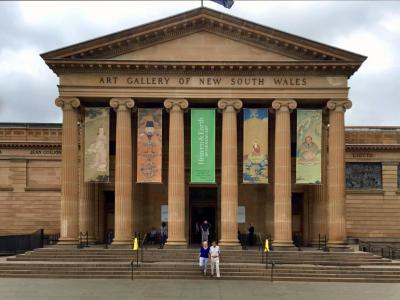
The Art Gallery of New South Wales stands as one of Australia’s foremost public art museums, located on the edge of The Domain overlooking Woolloomooloo Bay. Established in 1871, it began as a modest venue for colonial art and evolved into a major cultural institution that reflects both the breadth of Australian creativity and its global connections.
The gallery’s main building, with its neoclassical sandstone façade completed in 1909, embodies the civic ideals of the early 20th century-elevating art as a shared public experience. Behind its formal exterior, the interior spaces unfold into high-ceilinged galleries illuminated by natural light, designed to balance solemnity with openness.
The collection encompasses more than a century of Australian art, from early colonial landscapes to bold expressions of modern and contemporary practice. A defining feature is its substantial Aboriginal and Torres Strait Islander art collection, which includes traditional works, bark paintings, and contemporary pieces that engage with identity, memory, and Country.
Alongside this are European paintings and sculptures from the Renaissance to Impressionism, and an extensive Asian art collection that reflects cross-cultural exchange-featuring Japanese screens, Chinese ceramics, and Indian miniatures. Together, these collections reveal the gallery’s long-standing commitment to representing diverse artistic traditions.
In 2022, the opening of the Sydney Modern Project marked a transformative moment in the gallery’s history. Designed by the Japanese architectural firm SANAA, the expansion added a series of glass and concrete pavilions that step down the landscape toward the harbour. These new spaces showcase contemporary and large-scale installations, while a repurposed World War II oil tank provides a dramatic subterranean gallery. The project integrates outdoor terraces and sculpture gardens, extending the experience beyond the walls of the museum.
The gallery’s main building, with its neoclassical sandstone façade completed in 1909, embodies the civic ideals of the early 20th century-elevating art as a shared public experience. Behind its formal exterior, the interior spaces unfold into high-ceilinged galleries illuminated by natural light, designed to balance solemnity with openness.
The collection encompasses more than a century of Australian art, from early colonial landscapes to bold expressions of modern and contemporary practice. A defining feature is its substantial Aboriginal and Torres Strait Islander art collection, which includes traditional works, bark paintings, and contemporary pieces that engage with identity, memory, and Country.
Alongside this are European paintings and sculptures from the Renaissance to Impressionism, and an extensive Asian art collection that reflects cross-cultural exchange-featuring Japanese screens, Chinese ceramics, and Indian miniatures. Together, these collections reveal the gallery’s long-standing commitment to representing diverse artistic traditions.
In 2022, the opening of the Sydney Modern Project marked a transformative moment in the gallery’s history. Designed by the Japanese architectural firm SANAA, the expansion added a series of glass and concrete pavilions that step down the landscape toward the harbour. These new spaces showcase contemporary and large-scale installations, while a repurposed World War II oil tank provides a dramatic subterranean gallery. The project integrates outdoor terraces and sculpture gardens, extending the experience beyond the walls of the museum.
10) Saint Mary's Cathedral (must see)
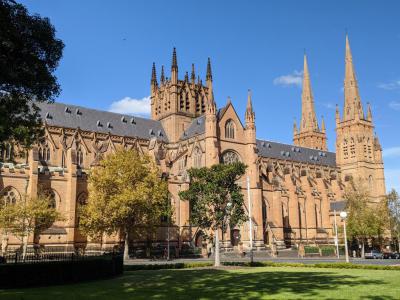
Follow College Street for a moment, and those sandstone spires, quietly asserting themselves above the treetops, will tip you off-you’ve reached Saint Mary’s Cathedral. This is the Catholic Archdiocese’s main stage, set right beside Hyde Park, on the very ground where the colony’s first Catholic chapel went up back in 1821. The version standing here today owes its existence to architect William Wardell, who began work on it in 1868.
Saint Mary’s is built from Pyrmont sandstone-the architectural equivalent of a warm sepia filter-and shaped in full Gothic Revival style, featuring pointed arches, flying buttresses, and enough vertical ambition to make medieval Europe nod in approval. The twin spires, finished only in the year 2000, give the cathedral its now-iconic silhouette, perfectly positioned for anyone aiming a camera even vaguely upward.
Step inside and the tone changes instantly. Stone columns rise like they’re trying to join the choir, stained-glass windows paint the light in jewel tones, and the vaulted ceiling creates the kind of acoustics that make even a hum feel profound. The rose window above the western entrance steals the show with shifting patterns of colour, while the reredos, carved choir stalls, and marble altar showcase the hands-on craftsmanship of the 19th century.
Beneath all this sits the crypt-a cool, quiet chamber decorated with mosaics of Australian plants and animals, housing the tombs of the city’s early bishops, including Cardinal Norman Gilroy, Australia’s first homegrown cardinal.
Outside, the cathedral opens onto gardens and Cathedral Square, creating a graceful link to Hyde Park and offering space for gatherings, ceremonies, or simply catching your breath. Set between green lawns and city towers, Saint Mary’s Cathedral stands as a long-running conversation between old-world design and modern Sydney life...
Saint Mary’s is built from Pyrmont sandstone-the architectural equivalent of a warm sepia filter-and shaped in full Gothic Revival style, featuring pointed arches, flying buttresses, and enough vertical ambition to make medieval Europe nod in approval. The twin spires, finished only in the year 2000, give the cathedral its now-iconic silhouette, perfectly positioned for anyone aiming a camera even vaguely upward.
Step inside and the tone changes instantly. Stone columns rise like they’re trying to join the choir, stained-glass windows paint the light in jewel tones, and the vaulted ceiling creates the kind of acoustics that make even a hum feel profound. The rose window above the western entrance steals the show with shifting patterns of colour, while the reredos, carved choir stalls, and marble altar showcase the hands-on craftsmanship of the 19th century.
Beneath all this sits the crypt-a cool, quiet chamber decorated with mosaics of Australian plants and animals, housing the tombs of the city’s early bishops, including Cardinal Norman Gilroy, Australia’s first homegrown cardinal.
Outside, the cathedral opens onto gardens and Cathedral Square, creating a graceful link to Hyde Park and offering space for gatherings, ceremonies, or simply catching your breath. Set between green lawns and city towers, Saint Mary’s Cathedral stands as a long-running conversation between old-world design and modern Sydney life...
