Custom Walk in Bath, England by carolynmbishop_8f7ee created on 2026-04-11
Guide Location: England » Bath
Guide Type: Custom Walk
# of Sights: 5
Tour Duration: 1 Hour(s)
Travel Distance: 1.2 Km or 0.7 Miles
Share Key: E2PZP
Guide Type: Custom Walk
# of Sights: 5
Tour Duration: 1 Hour(s)
Travel Distance: 1.2 Km or 0.7 Miles
Share Key: E2PZP
How It Works
Please retrieve this walk in the GPSmyCity app. Once done, the app will guide you from one tour stop to the next as if you had a personal tour guide. If you created the walk on this website or come to the page via a link, please follow the instructions below to retrieve the walk in the app.
Retrieve This Walk in App
Step 1. Download the app "GPSmyCity: Walks in 1K+ Cities" on Apple App Store or Google Play Store.



Step 2. In the GPSmyCity app, download(or launch) the guide "Bath Map and Walking Tours".
Step 3. Tap the menu button located at upper right corner of the "Walks" screen and select "Retrieve custom walk". Enter the share key: E2PZP
1) Sydney Gardens
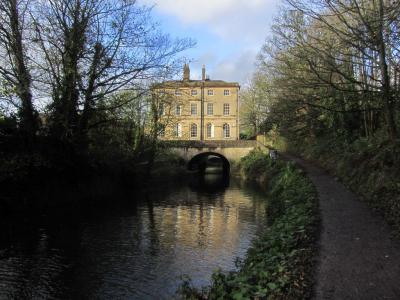
Sydney Gardens, originally named Bath Vauxhall Gardens, is a significant public open space located at the end of Great Pulteney Street in Bath. Esteemed for being the only remaining eighteenth-century pleasure gardens in the country, these gardens hold a prestigious Grade II listing on the Register of Historic Parks and Gardens of special historic interest in England.
The gardens were initially laid out in the 1790s, based on the designs of Thomas Baldwin, which were later completed by Charles Harcourt Masters. They were designed as gardens with attractions like a maze, grotto, sham castle, and animated rural scenes. These gardens were a hub for social events like promenades, public breakfasts, and were frequented by notable figures such as Jane Austen. Jane Austen, seeking solace from city life, found refuge in the natural beauty of the gardens, where she could indulge in flower gardens, breakfasts, picnics, and outdoor concerts. She even mentioned in a letter how the fireworks and illuminations in Sydney Gardens exceeded her expectations.
Throughout history, the layout of Sydney Gardens has been influenced by the construction of the Kennet & Avon Canal in 1810 and the Great Western Railway in 1840, both of which pass through the park. Despite a period of decline, the gardens were purchased by the local council in 1908 and reopened as a public park. Since 2015, efforts have been made to enhance the park's environment and offer additional attractions to visitors.
One of the central features of Sydney Gardens was the Sydney Hotel, now the Holburne Museum, which served as the focal point for entertainment. Other historical structures include walls and bridges associated with the canal and railway, small buildings now referred to as the pavilion and Minerva's temple, and the public conveniences, all of which are listed buildings.
The gardens were initially laid out in the 1790s, based on the designs of Thomas Baldwin, which were later completed by Charles Harcourt Masters. They were designed as gardens with attractions like a maze, grotto, sham castle, and animated rural scenes. These gardens were a hub for social events like promenades, public breakfasts, and were frequented by notable figures such as Jane Austen. Jane Austen, seeking solace from city life, found refuge in the natural beauty of the gardens, where she could indulge in flower gardens, breakfasts, picnics, and outdoor concerts. She even mentioned in a letter how the fireworks and illuminations in Sydney Gardens exceeded her expectations.
Throughout history, the layout of Sydney Gardens has been influenced by the construction of the Kennet & Avon Canal in 1810 and the Great Western Railway in 1840, both of which pass through the park. Despite a period of decline, the gardens were purchased by the local council in 1908 and reopened as a public park. Since 2015, efforts have been made to enhance the park's environment and offer additional attractions to visitors.
One of the central features of Sydney Gardens was the Sydney Hotel, now the Holburne Museum, which served as the focal point for entertainment. Other historical structures include walls and bridges associated with the canal and railway, small buildings now referred to as the pavilion and Minerva's temple, and the public conveniences, all of which are listed buildings.
2) Great Pulteney Street
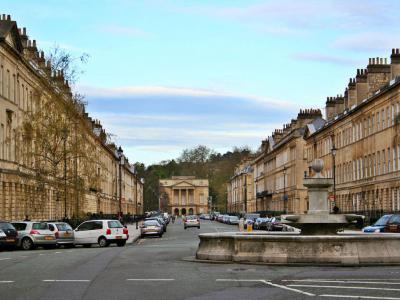
At 1,000 feet long and 100 feet wide, the Great Pulteney Street is the most impressive in Bath. The houses along the street were commissioned by Sir William Pulteney and designed by Thomas Baldwin. Mr. Baldwin designed the exterior facade to be unifying. However, the houses and hotels behind the facades are all unique.
Great Pulteney Street would have been very familiar to Jane Austen. From her residence at Sydney Place, she would have walked Great Pulteney Street to reach the center of town. In Northanger Abbey, Catherine Morland's aunt and uncle the Allen's had lodgings in Great Pulteney Street, and it was here that Catherine stayed during her time in Bath. The Allen's house was considered enormous and very fashionable.
Don't miss Laura Place, connected to Great Pulteney Street. In Persuasion, the Elliot's wealthy cousins, the Dowager Viscountess Dalrymple and the Honourable Miss Carteret, resided at the very prestigious and fashionable Laura Place.
Great Pulteney Street would have been very familiar to Jane Austen. From her residence at Sydney Place, she would have walked Great Pulteney Street to reach the center of town. In Northanger Abbey, Catherine Morland's aunt and uncle the Allen's had lodgings in Great Pulteney Street, and it was here that Catherine stayed during her time in Bath. The Allen's house was considered enormous and very fashionable.
Don't miss Laura Place, connected to Great Pulteney Street. In Persuasion, the Elliot's wealthy cousins, the Dowager Viscountess Dalrymple and the Honourable Miss Carteret, resided at the very prestigious and fashionable Laura Place.
3) Beazer Garden Maze
The eastern edge of Bath city centre can be a distracting place. Around Pulteney Bridge, the bustle of the indoor market meets the swirl of traffic heading into town. The River Avon which surrounds the city centre passes over a weir, creating a low roar that draws visitors to the banks of the river. This is a lively area of town, with large hotels, traditional pubs and restaurants lining the route down to Bath Spa station. It can be hard to find a quiet family friendly spot, unless you cross over Pulteney Bridge into the more relaxed district of Bathwick.
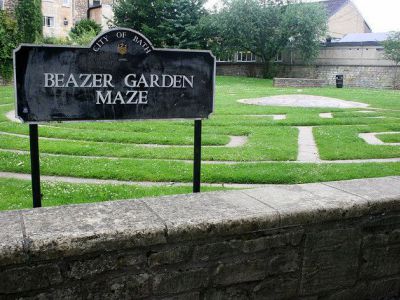
On the opposite side of the river, follow steps down from the bridge to reach Beazer Gardens. A small municipal park right on the river bank, Beazer Gardens is remarkably tranquil in comparison to the streets above. The centre piece of the Gardens is an elaborate, open air stone maze, with a Roman themed mosaic at the centre. The maze and gardens make a great diversion from exploring the city centre. Other attractions in Bathwick include the Recreation Ground, home of Bath’s successful rugby union team, and the start of the Kennet & Avon Canal, a Victorian canal system that links the Avon with the River Thames.
On the opposite side of the river, follow steps down from the bridge to reach Beazer Gardens. A small municipal park right on the river bank, Beazer Gardens is remarkably tranquil in comparison to the streets above. The centre piece of the Gardens is an elaborate, open air stone maze, with a Roman themed mosaic at the centre. The maze and gardens make a great diversion from exploring the city centre. Other attractions in Bathwick include the Recreation Ground, home of Bath’s successful rugby union team, and the start of the Kennet & Avon Canal, a Victorian canal system that links the Avon with the River Thames.
4) Pulteney Bridge (must see)
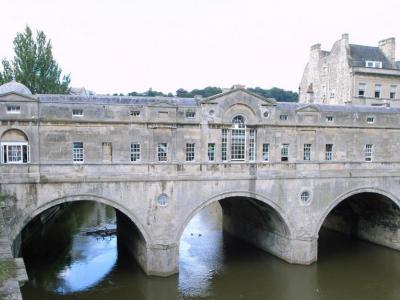
Bath is a city of unique landmarks, and none are more recognizable than the Pulteney Bridge. Depending on who you trust, there are only one, two, or three other bridges in the world that are lined with shops. Whatever the exact number is, there certainly aren't many others like it.
The bridge opened in 1774 and was designed by Robert Adam. The bridge was the brainchild of William Johnstone Pulteney, who named it after his wife, Frances. His vision was to create a new town nearby, but he needed a grand bridge to connect it to Bath. Adam's design was drafted in the Palladian style, harking back to the 16th-century Venetian architect Andrea Palladio.
The Pulteney Bridge is a World Heritage Site and an English Grade I Listed Building. You will find restaurants of various cuisines, independent shops, and Bath Rugby Club's official store along the bridge. The roadway is a busy thoroughfare through Bath to this day.
The best views of the bridge are actually from the south side, either from the Parade Gardens or the Beazer Garden Maze.
To the south, the River Avon flows over the crescent weir. The shops on the north side were heavily altered and expanded by these owners in the 18th and 19th centuries. Their cantilevered floorplans show in stark contrast to the beautiful Georgian stone bridge as viewed from the south.
The bridge opened in 1774 and was designed by Robert Adam. The bridge was the brainchild of William Johnstone Pulteney, who named it after his wife, Frances. His vision was to create a new town nearby, but he needed a grand bridge to connect it to Bath. Adam's design was drafted in the Palladian style, harking back to the 16th-century Venetian architect Andrea Palladio.
The Pulteney Bridge is a World Heritage Site and an English Grade I Listed Building. You will find restaurants of various cuisines, independent shops, and Bath Rugby Club's official store along the bridge. The roadway is a busy thoroughfare through Bath to this day.
The best views of the bridge are actually from the south side, either from the Parade Gardens or the Beazer Garden Maze.
To the south, the River Avon flows over the crescent weir. The shops on the north side were heavily altered and expanded by these owners in the 18th and 19th centuries. Their cantilevered floorplans show in stark contrast to the beautiful Georgian stone bridge as viewed from the south.
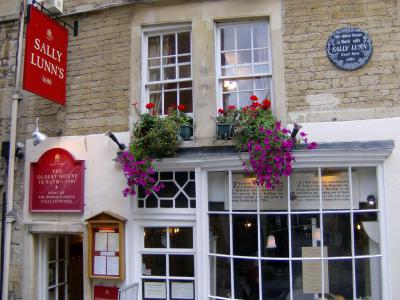
5) Sally Lunn's Historic Eating House
Inside one of the oldest houses in Bath, you will find some delectable treats. As the story goes, Sally Lunn was a French immigrant who arrived in Bath in 1680 and established this bakery. The house was built around 1482, but the masonry oven and other elements on the ground floor date from around 1137.
The lower level of the home hosts a museum where you can tour the original kitchen. The house still serves food based on their trademark recipe, the "Sally Lunn Bunn." In the evening, they serve fine English food, including some spectacular pies.
But all is not as it seems at Sally Lunn's Historic Eating House. While the food is excellent, and the house is very old indeed, there is little historical evidence of one Sally Lunn, or Solange Lyon, as the story goes. The building was purchased in the 1930s by the enterprising Marie Byng-Johnson, who opened a tearoom and claimed to subsequently discover an "ancient document" that told Madamoiselle Lunn's story. The "Sally Lunn Bunn" moniker had already long been used to describe the sweet teacake throughout Britain.
Regardless of the details, Sally Lunn Bunns are an iconic Bath original. There's no better place in town to take tea, and there's no better accompaniment than the original teacake. Savory or sweet, with tea or coffee, you can't go wrong. Just don't forget the clotted cream.
The lower level of the home hosts a museum where you can tour the original kitchen. The house still serves food based on their trademark recipe, the "Sally Lunn Bunn." In the evening, they serve fine English food, including some spectacular pies.
But all is not as it seems at Sally Lunn's Historic Eating House. While the food is excellent, and the house is very old indeed, there is little historical evidence of one Sally Lunn, or Solange Lyon, as the story goes. The building was purchased in the 1930s by the enterprising Marie Byng-Johnson, who opened a tearoom and claimed to subsequently discover an "ancient document" that told Madamoiselle Lunn's story. The "Sally Lunn Bunn" moniker had already long been used to describe the sweet teacake throughout Britain.
Regardless of the details, Sally Lunn Bunns are an iconic Bath original. There's no better place in town to take tea, and there's no better accompaniment than the original teacake. Savory or sweet, with tea or coffee, you can't go wrong. Just don't forget the clotted cream.
