Custom Walk in Madrid, Spain by chowsim99_d4f953 created on 2026-04-12
Guide Location: Spain » Madrid
Guide Type: Custom Walk
# of Sights: 9
Tour Duration: 2 Hour(s)
Travel Distance: 3.8 Km or 2.4 Miles
Share Key: WWMZ2
Guide Type: Custom Walk
# of Sights: 9
Tour Duration: 2 Hour(s)
Travel Distance: 3.8 Km or 2.4 Miles
Share Key: WWMZ2
How It Works
Please retrieve this walk in the GPSmyCity app. Once done, the app will guide you from one tour stop to the next as if you had a personal tour guide. If you created the walk on this website or come to the page via a link, please follow the instructions below to retrieve the walk in the app.
Retrieve This Walk in App
Step 1. Download the app "GPSmyCity: Walks in 1K+ Cities" on Apple App Store or Google Play Store.



Step 2. In the GPSmyCity app, download(or launch) the guide "Madrid Map and Walking Tours".
Step 3. Tap the menu button located at upper right corner of the "Walks" screen and select "Retrieve custom walk". Enter the share key: WWMZ2
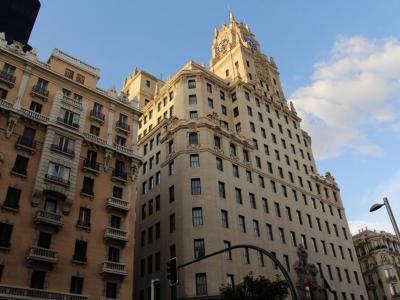
1) Edificio Telefonica (Telefonica Building)
Designed by Spanish architect Ignacio de Cárdenas and inspired by the work of American architect Lewis Weeks, this 90-meter tall, 14-story tower was Madrid’s first true skyscraper. Though American in style, it’s dressed in a Spanish Baroque facade, complete with beautifully sculpted details. When it opened in 1929, it was the tallest building in Europe-and instantly became a symbol of modern Madrid. Its clock, perched high above Gran Vía, still stands as a familiar landmark on what locals call the “Madrilenian Broadway.”
One fascinating chapter in the building’s history came during the Spanish Civil War, when it served as the headquarters for the foreign press, attracting journalists from all over the world. One of them was Ernest Hemingway, who, during the late 1930s, reported from the heart of the action. It was here that he found inspiration for “For Whom the Bell Tolls”, as he watched the conflict unfold between the Nationalists and Republicans. The building’s height, while impressive, also made it a target for Franco’s bombing raids.
These days, Telefónica’s role is far more peaceful. On the ground floor, you’ll find a calm café and a shop with the latest in communication gear. Upstairs, several floors are dedicated to the Museum of Telecommunications, the Technology Museum, and rotating art exhibitions. There's always something new to discover, and the best part? Admission is completely free.
One fascinating chapter in the building’s history came during the Spanish Civil War, when it served as the headquarters for the foreign press, attracting journalists from all over the world. One of them was Ernest Hemingway, who, during the late 1930s, reported from the heart of the action. It was here that he found inspiration for “For Whom the Bell Tolls”, as he watched the conflict unfold between the Nationalists and Republicans. The building’s height, while impressive, also made it a target for Franco’s bombing raids.
These days, Telefónica’s role is far more peaceful. On the ground floor, you’ll find a calm café and a shop with the latest in communication gear. Upstairs, several floors are dedicated to the Museum of Telecommunications, the Technology Museum, and rotating art exhibitions. There's always something new to discover, and the best part? Admission is completely free.
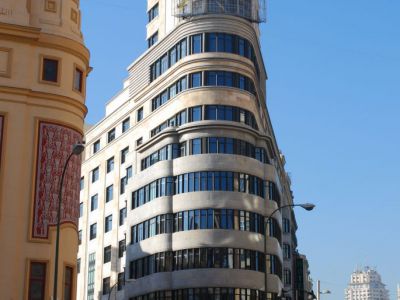
2) Edificio Capitol (Capitol Building)
Callao Square ("Plaza del Callao"), which derives its name from a naval battle off the coast of Callao, Peru, in 1866, was once the thriving hub of cinema in Madrid, catering to the city's ardent film enthusiasts. However, today, only two cinemas remain standing as a testament to its cinematic legacy: the Art Deco Cine Callao, completed in 1927, and the Capitol, famously known as the Edificio Carrión. Many of the other movie theaters that once lined the Gran Vía have undergone transformations, now serving as musical theaters or retail establishments.
The Capitol cinema, located within the Capitol building, emerged as a prominent icon not only of the Gran Vía but also of the entire city. Erected in 1933, this magnificent structure stands as an impressive example of Art Deco architecture, reaching a height of 54 meters (177 feet). The building boasts notable features such as a covered entrance and a spacious, box-like interior that stretches 35 meters (115 feet) wide. Its design showcases an elegant fusion of sleek lines and graceful curves. The Capitol building's striking façade has been immortalized in numerous artistic works and even served as a prominent backdrop in the 1995 film "The Day of the Beast" ("El día de la bestia").
The Capitol cinema, located within the Capitol building, emerged as a prominent icon not only of the Gran Vía but also of the entire city. Erected in 1933, this magnificent structure stands as an impressive example of Art Deco architecture, reaching a height of 54 meters (177 feet). The building boasts notable features such as a covered entrance and a spacious, box-like interior that stretches 35 meters (115 feet) wide. Its design showcases an elegant fusion of sleek lines and graceful curves. The Capitol building's striking façade has been immortalized in numerous artistic works and even served as a prominent backdrop in the 1995 film "The Day of the Beast" ("El día de la bestia").
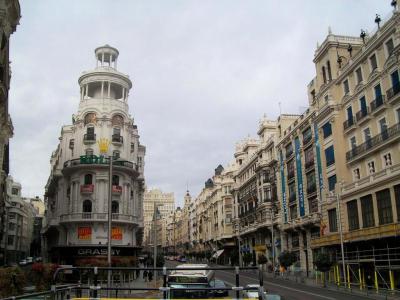
3) Edificio Grassy (Grassy Building)
Created by Eladio Laredo on a narrow strip of land nestled between Gran Vía and Calle de Caballero de Gracia, the Grassy Building showcases a distinct circular end-tower reminiscent of its neighboring structure, the Metropolis Building ("Edificio Metrópolis"). This was a deliberate architectural choice by Laredo in order to establish a visual connection between the two structures.
Crowned by a captivating round, two-tiered colonnade, the striking edifice was constructed in 1917 and later came to be known as the Grassy Building in the 1950s, after the renowned jewelry shop that has occupied its ground floor since then. This jewelry establishment, established in 1923, now specializes in exquisite watches, while the basement houses the Museo de Reloj Grassy, featuring a collection of 500 timepieces dating from the 16th to the 19th century, including rare clocks that once belonged to European royalty.
Tip:
To ensure your visit to the museum, it is recommended to make a reservation in advance.
Crowned by a captivating round, two-tiered colonnade, the striking edifice was constructed in 1917 and later came to be known as the Grassy Building in the 1950s, after the renowned jewelry shop that has occupied its ground floor since then. This jewelry establishment, established in 1923, now specializes in exquisite watches, while the basement houses the Museo de Reloj Grassy, featuring a collection of 500 timepieces dating from the 16th to the 19th century, including rare clocks that once belonged to European royalty.
Tip:
To ensure your visit to the museum, it is recommended to make a reservation in advance.
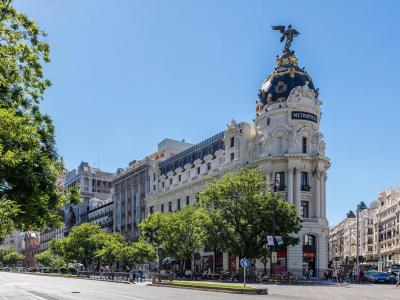
4) Edificio Metropolis (Metropolis Building)
Easily recognized for its French-inspired architecture, the Metrópolis Building stands at the junction of Calle Alcalá and Gran Vía, anchoring this important Madrid intersection with its elegant presence. Completed in 1911, the structure was originally commissioned by the Union and Fenix insurance company and designed by French architects Jules and Raymond Février.
At ground level, the building presents a restrained facade that gradually ascends into richly decorated upper floors, framed by colonnades. Each pair of columns serve as pedestals for allegorical statues symbolizing Commerce, Mining, Industry, and Agriculture. At the rounded corner of the structure, a tower rises, topped by a double-layered dome made of dark slate accented with gilded ornaments.
Initially, the dome supported a bronze statue of a mythical Phoenix, with the figure of Ganymede riding atop it-a symbol of the Union and Fenix brand. When the company sold the building in the 1970s, the statue was moved to their new headquarters on Castellana Boulevard. In its place now stands a statue of Winged Victory, while the original Phoenix statue rests in the garden of the Union and Fenix building.
Tip: For a small fee, you can enjoy great views of the Metrópolis Building from the rooftop of the nearby Circle of Fine Arts just across the street.
At ground level, the building presents a restrained facade that gradually ascends into richly decorated upper floors, framed by colonnades. Each pair of columns serve as pedestals for allegorical statues symbolizing Commerce, Mining, Industry, and Agriculture. At the rounded corner of the structure, a tower rises, topped by a double-layered dome made of dark slate accented with gilded ornaments.
Initially, the dome supported a bronze statue of a mythical Phoenix, with the figure of Ganymede riding atop it-a symbol of the Union and Fenix brand. When the company sold the building in the 1970s, the statue was moved to their new headquarters on Castellana Boulevard. In its place now stands a statue of Winged Victory, while the original Phoenix statue rests in the garden of the Union and Fenix building.
Tip: For a small fee, you can enjoy great views of the Metrópolis Building from the rooftop of the nearby Circle of Fine Arts just across the street.
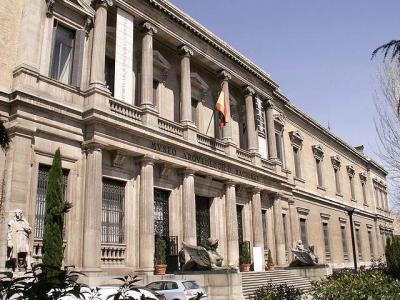
5) Museo Arqueologico Nacional (National Archaeological Museum) (must see)
Established by Queen Isabel II in 1867, Madrid's impressive Archaeological Museum houses a vast collection of artifacts discovered during excavations throughout Spain, as well as pieces from ancient Egypt, Greece, and the Etruscan civilization.
Among the highlights are exhibitions on the ancient civilization of El Argar in Andalucía and a display of jewelry unearthed at the Roman settlement of Numantia, near Soria. The museum also showcases 7th-century AD gold votive crowns from Toledo province, Greek and Carthaginian coins, remarkable Roman mosaics including one from the 3rd century AD, and exquisite Islamic pottery. Keep an eye out for the Romanesque "Madonna and Child" from Sahagún, hailed as a Spanish art masterpiece.
In the museum gardens, visitors can descend a short flight of steps to encounter a faithful replica of the Cave of Altamira, famous for its Upper Paleolithic paintings gracing the walls and ceiling.
Why You Should Visit:
Following an extensive renovation, the museum's collections have been beautifully set out around a naturally illuminated central atrium. The labeling and video explanations, available in English and Spanish, provide valuable context for the exhibits. Grabbing a quick lunch in the downstairs cafeteria is convenient, and your ticket allows for re-entry at your leisure. The admission fee is reasonable, and the museum is usually quiet. Lockers are available for €1 each, ensuring you don't have to carry around heavy belongings.
Tip:
You can easily spend half a day here, but if you have limited time, get a leaflet showcasing the top 10 items and try to locate them. On Sunday mornings, admission is free (expect crowds), and children always enter for free.
Among the highlights are exhibitions on the ancient civilization of El Argar in Andalucía and a display of jewelry unearthed at the Roman settlement of Numantia, near Soria. The museum also showcases 7th-century AD gold votive crowns from Toledo province, Greek and Carthaginian coins, remarkable Roman mosaics including one from the 3rd century AD, and exquisite Islamic pottery. Keep an eye out for the Romanesque "Madonna and Child" from Sahagún, hailed as a Spanish art masterpiece.
In the museum gardens, visitors can descend a short flight of steps to encounter a faithful replica of the Cave of Altamira, famous for its Upper Paleolithic paintings gracing the walls and ceiling.
Why You Should Visit:
Following an extensive renovation, the museum's collections have been beautifully set out around a naturally illuminated central atrium. The labeling and video explanations, available in English and Spanish, provide valuable context for the exhibits. Grabbing a quick lunch in the downstairs cafeteria is convenient, and your ticket allows for re-entry at your leisure. The admission fee is reasonable, and the museum is usually quiet. Lockers are available for €1 each, ensuring you don't have to carry around heavy belongings.
Tip:
You can easily spend half a day here, but if you have limited time, get a leaflet showcasing the top 10 items and try to locate them. On Sunday mornings, admission is free (expect crowds), and children always enter for free.
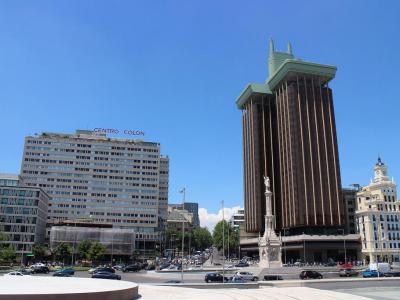
6) Plaza de Colon (Columbus Square)
Columbus Square presents an intriguing paradox, as it is located near bustling intersections yet offers a serene environment for relaxation. This lovely square is certainly worth exploring, whether strolling through its Discovery Gardens or simply sitting on a bench, basking in the sun while observing children riding skateboards and mountain bikes.
Originally named after Saint James, the square was renamed in 1893 to honor Christopher Columbus, whose monument, featuring a 17-meter column crafted from white Italian marble, now stands in the center. At its pinnacle, the figure of the renowned explorer extends one arm outward, symbolizing the allure of distant lands awaiting exploration. The monument's Neo-Gothic base rests within a stone fountain adorned with a grand cascade, flanked by staircases leading to the Cultural Center of Madrid ("Centro Cultural de la Villa"). The sound of the cascading water is so powerful that holding a conversation in a normal voice becomes impossible.
Another notable monument in the square, created by Joaquin Vaquero-Turcios, is a massive concrete structure engraved with sayings from various philosophers and Spanish leaders. Depending on the viewing angle, it resembles either a fish tail or an anchor.
Why You Should Visit:
There is a mix of contrasting architecture all around, with both modern and old buildings to be found, making it a captivating subject for avid photographers seeking extraordinary shots.
Tip:
Don't miss the immense Spanish flag, the world's biggest (valued at €400,000) and one of the most eye-catching features of this square. Additionally, adjacent to the square on Goya Street, you'll find Platea Food Hall, a newly established gastronomic market boasting around 20 outlets serving a variety of tapas and other delectable delicacies.
Originally named after Saint James, the square was renamed in 1893 to honor Christopher Columbus, whose monument, featuring a 17-meter column crafted from white Italian marble, now stands in the center. At its pinnacle, the figure of the renowned explorer extends one arm outward, symbolizing the allure of distant lands awaiting exploration. The monument's Neo-Gothic base rests within a stone fountain adorned with a grand cascade, flanked by staircases leading to the Cultural Center of Madrid ("Centro Cultural de la Villa"). The sound of the cascading water is so powerful that holding a conversation in a normal voice becomes impossible.
Another notable monument in the square, created by Joaquin Vaquero-Turcios, is a massive concrete structure engraved with sayings from various philosophers and Spanish leaders. Depending on the viewing angle, it resembles either a fish tail or an anchor.
Why You Should Visit:
There is a mix of contrasting architecture all around, with both modern and old buildings to be found, making it a captivating subject for avid photographers seeking extraordinary shots.
Tip:
Don't miss the immense Spanish flag, the world's biggest (valued at €400,000) and one of the most eye-catching features of this square. Additionally, adjacent to the square on Goya Street, you'll find Platea Food Hall, a newly established gastronomic market boasting around 20 outlets serving a variety of tapas and other delectable delicacies.
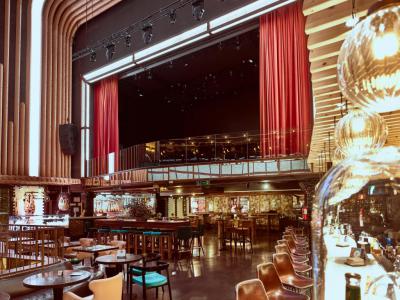
7) Platea Food Hall
If you're in the Salamanca district and need a break from your shopping spree, look no further than Platea. Situated near Columbus Square ("Plaza de Colón"), this place offers a one-of-a-kind gastronomic experience. Nestled in Madrid's Golden Mile, the food hall spans nearly 6,000 square meters across two floors and three boxes. Inside, you'll discover a diverse array of offerings, including upscale tapas
bars, gourmet food stores, a patisserie, a cocktail bar, and a restaurant.
In the bar area, you can indulge in tapas, skewers, and an abundance of other small dishes, perfect for enjoying with a vermouth as a light afternoon snack or a post-work treat with a refreshing beer. For those seeking a heartier meal, a world of cuisines is brought under one roof, featuring Mediterranean, Japanese, Italian, Mexican, Peruvian, and Michelin-starred options. Truly a place that caters to every palate!
But Platea isn't just about food-it's also a spectacle. With live performances ranging from aerobatics to flamenco, the venue offers a dynamic and entertaining atmosphere. Coupled with excellent acoustics and top-notch DJs, it's a destination that provides both culinary delights and lively entertainment. Whether you're seeking a fun outing with family and friends or simply looking for a refuge from the summer heat or winter cold, Platea is the perfect place to visit time and time again.
bars, gourmet food stores, a patisserie, a cocktail bar, and a restaurant.
In the bar area, you can indulge in tapas, skewers, and an abundance of other small dishes, perfect for enjoying with a vermouth as a light afternoon snack or a post-work treat with a refreshing beer. For those seeking a heartier meal, a world of cuisines is brought under one roof, featuring Mediterranean, Japanese, Italian, Mexican, Peruvian, and Michelin-starred options. Truly a place that caters to every palate!
But Platea isn't just about food-it's also a spectacle. With live performances ranging from aerobatics to flamenco, the venue offers a dynamic and entertaining atmosphere. Coupled with excellent acoustics and top-notch DJs, it's a destination that provides both culinary delights and lively entertainment. Whether you're seeking a fun outing with family and friends or simply looking for a refuge from the summer heat or winter cold, Platea is the perfect place to visit time and time again.
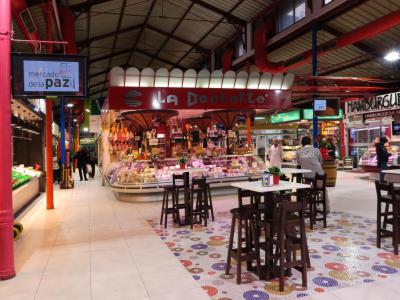
8) Mercado de la Paz (Peace Market)
Despite its high-end location in Salamanca District, the Peace Market is rather moderate in terms of prices. Housed in a building designed in the late 19th century by none other than Gustave Eiffel, known for his iconic Parisian tower, this market has been serving the community since 1943.
As you step inside, the enticing aroma of freshly baked bread fills the air, tempting your taste buds and making it nearly impossible to resist the array of delectable pastries and breads on display. And once you've indulged in bread, you'll find it hard to resist accompanying it with the market's extensive selection of over 100 cheeses, generous cuts of ham, flavorful pâtés, and smoked fish. The abundance continues with fresh fruits, vegetables, olive oil, and an array of mouthwatering tapas. You may even find yourself wishing for a larger basket to hold all the culinary delights, prompting you to rearrange your plans in Madrid to make room for another visit to this wonderful place.
Additionally, the Peace Market boasts two excellent restaurants that specialize in Spanish cuisine. Why not stay for a meal and savor local specialties such as chorizo, smoked with paprika and red chili peppers, or empanadas-similar to Cornish pasties-filled with tuna or sardines, tomatoes, and garlic? For the adventurous, you can even try criadillas-bull's testicles-a unique Spanish delicacy!
As you step inside, the enticing aroma of freshly baked bread fills the air, tempting your taste buds and making it nearly impossible to resist the array of delectable pastries and breads on display. And once you've indulged in bread, you'll find it hard to resist accompanying it with the market's extensive selection of over 100 cheeses, generous cuts of ham, flavorful pâtés, and smoked fish. The abundance continues with fresh fruits, vegetables, olive oil, and an array of mouthwatering tapas. You may even find yourself wishing for a larger basket to hold all the culinary delights, prompting you to rearrange your plans in Madrid to make room for another visit to this wonderful place.
Additionally, the Peace Market boasts two excellent restaurants that specialize in Spanish cuisine. Why not stay for a meal and savor local specialties such as chorizo, smoked with paprika and red chili peppers, or empanadas-similar to Cornish pasties-filled with tuna or sardines, tomatoes, and garlic? For the adventurous, you can even try criadillas-bull's testicles-a unique Spanish delicacy!
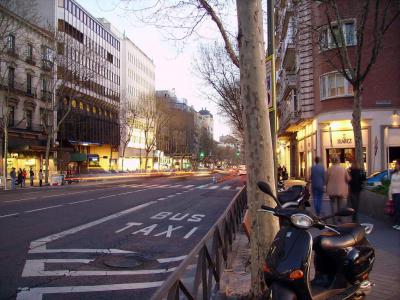
9) Calle de Serrano (Serrano Street)
City-chic fashion and shoes, luxury watches and exquisite jewelry... Everything money can buy is within reach inside the fancy shops of Salamanca – if you have deep pockets, that is. Even if you don't plan on making a purchase, window shopping is no crime and a nice excuse to wander around Calle de Serrano, known as Madrid's Golden Mile, home to every luxury brand you can possibly think of.
From Cartier, Chopard, and Bulgari to Tommy Hilfiger, Carolina Herrera, Prada, Gucci, and more, as well as Spain's largest department store chain El Corte Inglés, you'll find a treasure trove of renowned names along this prestigious thoroughfare. Originally named after military leader and politician Francisco Serrano, who resided here in 1868, Serrano Street is Madrid's equivalent of New York's 5th Avenue, Paris' Champs Elysees, or London's Bond Street. As such, it deserves to be high on the must-visit list of every genuine shopaholic.
Whether you're in Madrid for a quick day trip, a leisurely long weekend, or an extended holiday, exploring the local boutiques along Serrano Street is sure to yield the perfect souvenir. Otherwise, you can simply enjoy walking and soaking up the atmosphere without fear of getting hungry, as there are plenty of cute restaurants dotted throughout the area.
From Cartier, Chopard, and Bulgari to Tommy Hilfiger, Carolina Herrera, Prada, Gucci, and more, as well as Spain's largest department store chain El Corte Inglés, you'll find a treasure trove of renowned names along this prestigious thoroughfare. Originally named after military leader and politician Francisco Serrano, who resided here in 1868, Serrano Street is Madrid's equivalent of New York's 5th Avenue, Paris' Champs Elysees, or London's Bond Street. As such, it deserves to be high on the must-visit list of every genuine shopaholic.
Whether you're in Madrid for a quick day trip, a leisurely long weekend, or an extended holiday, exploring the local boutiques along Serrano Street is sure to yield the perfect souvenir. Otherwise, you can simply enjoy walking and soaking up the atmosphere without fear of getting hungry, as there are plenty of cute restaurants dotted throughout the area.
