Custom Walk in New Haven, Connecticut by iskifa_2dfa2a created on 2026-04-16
Guide Location: USA » New Haven
Guide Type: Custom Walk
# of Sights: 9
Tour Duration: 2 Hour(s)
Travel Distance: 2.3 Km or 1.4 Miles
Share Key: CSK5S
Guide Type: Custom Walk
# of Sights: 9
Tour Duration: 2 Hour(s)
Travel Distance: 2.3 Km or 1.4 Miles
Share Key: CSK5S
How It Works
Please retrieve this walk in the GPSmyCity app. Once done, the app will guide you from one tour stop to the next as if you had a personal tour guide. If you created the walk on this website or come to the page via a link, please follow the instructions below to retrieve the walk in the app.
Retrieve This Walk in App
Step 1. Download the app "GPSmyCity: Walks in 1K+ Cities" on Apple App Store or Google Play Store.



Step 2. In the GPSmyCity app, download(or launch) the guide "New Haven Map and Walking Tours".
Step 3. Tap the menu button located at upper right corner of the "Walks" screen and select "Retrieve custom walk". Enter the share key: CSK5S
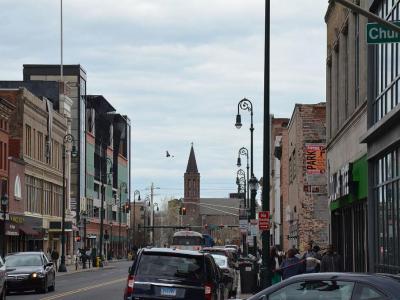
1) Chapel Street
The Chapel Street historic district is 23 acres of history in the center of downtown New Haven. It is bordered by the Dwight Street historic district to the west and Yale University to the north.
The historic district includes buildings that date as far back as 1817. Some of these historic buildings include Warner Hall, built in 1892; Townsend Block, constructed in 1832; Trinity Church, built in 1868 and 1911's Taft Hotel.
Chapel Street is dotted with dining establishments, boutiques and unique spots to stop and enjoy. Walk through a park, find a new favorite musician at a music venues or even get a tattoo. Nearly every university town convenience and anomaly can be found on Chapel Street.
Chapel Street is a good place for a leisurely stroll in New Haven. Visitors can walk along Chapel Street to reach their next destination while also enjoying the historic district itself.
The historic district includes buildings that date as far back as 1817. Some of these historic buildings include Warner Hall, built in 1892; Townsend Block, constructed in 1832; Trinity Church, built in 1868 and 1911's Taft Hotel.
Chapel Street is dotted with dining establishments, boutiques and unique spots to stop and enjoy. Walk through a park, find a new favorite musician at a music venues or even get a tattoo. Nearly every university town convenience and anomaly can be found on Chapel Street.
Chapel Street is a good place for a leisurely stroll in New Haven. Visitors can walk along Chapel Street to reach their next destination while also enjoying the historic district itself.
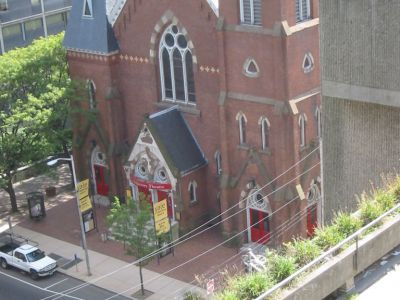
2) Yale Repertory Theatre
Founded in 1966 by Robert Brustein, then dean of the Yale School of Drama, the Yale Repertory Theatre-often simply called the Rep-is one of the earliest and most influential regional theatres in the United States. Situated on the edge of Yale University's main downtown New Haven campus, the theatre occupies the historic Calvary Baptist Church, a Gothic Revival structure built in 1846 on land originally owned by Richard Platt, one of New Haven’s founders.
Brustein’s vision was to create a dynamic partnership between professional theatre artists and Yale’s drama students. During his tenure (1966–1979), the Rep became a breeding ground for new plays and fresh talent. Notable dramatists like Christopher Durang got their start here, and many productions transferred successfully to commercial theatres. The Rep’s first literary manager was Michael Feingold.
Leadership of the theatre has remained closely tied to the Yale School of Drama-now known as the David Geffen School of Drama-with its deans serving as artistic directors. Among them were Lloyd Richards (1979–1991), who famously fostered the career of playwright August Wilson, Stan Wojewodski, Jr. (1991–2002), and James Bundy, who has held the position since 2002. Managing directors have included Benjamin Mordecai, Victoria Nolan, and currently, Florie Seery.
Throughout its history, Yale Rep has been a powerhouse of new work. It has produced more than 90 world premieres, with four Pulitzer Prize winners and ten Tony Award-winning productions that made their way to Broadway. The theatre’s accolades include a Tony Award for Outstanding Regional Theatre (1991), a Drama Desk Special Award (1988), and the Connecticut Governor’s Arts Award (2002).
Brustein’s vision was to create a dynamic partnership between professional theatre artists and Yale’s drama students. During his tenure (1966–1979), the Rep became a breeding ground for new plays and fresh talent. Notable dramatists like Christopher Durang got their start here, and many productions transferred successfully to commercial theatres. The Rep’s first literary manager was Michael Feingold.
Leadership of the theatre has remained closely tied to the Yale School of Drama-now known as the David Geffen School of Drama-with its deans serving as artistic directors. Among them were Lloyd Richards (1979–1991), who famously fostered the career of playwright August Wilson, Stan Wojewodski, Jr. (1991–2002), and James Bundy, who has held the position since 2002. Managing directors have included Benjamin Mordecai, Victoria Nolan, and currently, Florie Seery.
Throughout its history, Yale Rep has been a powerhouse of new work. It has produced more than 90 world premieres, with four Pulitzer Prize winners and ten Tony Award-winning productions that made their way to Broadway. The theatre’s accolades include a Tony Award for Outstanding Regional Theatre (1991), a Drama Desk Special Award (1988), and the Connecticut Governor’s Arts Award (2002).
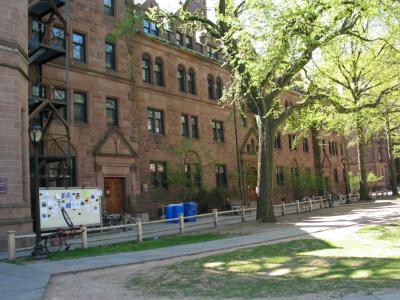
3) Welch Hall
Welch Hall is a freshman dormitory at Yale University, prominently situated on the university's historic Old Campus in New Haven. The building was gifted to Yale in 1891 by Pierce N. Welch (Yale Class of 1862), along with Mrs. Cora Van Milligan and Mrs. Grace M. Davies, in honor of their father, Harmanus M. Welch, who served as mayor of New Haven from 1860 to 1863.
Designed by noted architect Bruce Price, Welch Hall reflects a Victorian English Collegiate style, constructed from Longmeadow freestone. Its architectural charm is visible on both its College Street-facing façade-overlooking the New Haven Green-and the internal courtyard of Old Campus. The inscription “AD 1891” is carved above the first-floor windows at each end of the College Street side, marking its year of completion.
Throughout its history, Welch Hall has undergone several renovations. In 1938, its first floor was converted for use by the Office of Admissions and the Freshman Year. By the early 1960s, these spaces were restored to dormitory use. A major renovation in 1976, led by architect Herbert S. Newman and funded by Yale alumnus John Hay Whitney (Class of 1926), further modernized the building.
Today, Welch Hall houses freshmen affiliated with Davenport College and is widely considered one of the most desirable freshman residences at Yale. It features a high number of single bedrooms, expansive common rooms, and an internal layout that allows easy access between sections of the building. Among its highlights are the “10-pack” and “12-pack” suites on the first floor-two of the largest freshman living spaces on campus-and the “Princess Suites” on the top floors, known for their skylights, two-story common areas, and generous bedrooms.
Designed by noted architect Bruce Price, Welch Hall reflects a Victorian English Collegiate style, constructed from Longmeadow freestone. Its architectural charm is visible on both its College Street-facing façade-overlooking the New Haven Green-and the internal courtyard of Old Campus. The inscription “AD 1891” is carved above the first-floor windows at each end of the College Street side, marking its year of completion.
Throughout its history, Welch Hall has undergone several renovations. In 1938, its first floor was converted for use by the Office of Admissions and the Freshman Year. By the early 1960s, these spaces were restored to dormitory use. A major renovation in 1976, led by architect Herbert S. Newman and funded by Yale alumnus John Hay Whitney (Class of 1926), further modernized the building.
Today, Welch Hall houses freshmen affiliated with Davenport College and is widely considered one of the most desirable freshman residences at Yale. It features a high number of single bedrooms, expansive common rooms, and an internal layout that allows easy access between sections of the building. Among its highlights are the “10-pack” and “12-pack” suites on the first floor-two of the largest freshman living spaces on campus-and the “Princess Suites” on the top floors, known for their skylights, two-story common areas, and generous bedrooms.
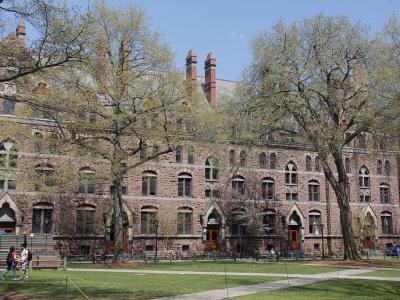
4) Durfee Hall
Durfee Hall is a historic freshman dormitory located on Yale University’s Old Campus in New Haven. Completed in 1871, it is the second oldest residential building at Yale, following Farnam Hall. Today, Durfee houses first-year students from Morse College, who reside there during their freshman year before transitioning to Morse College proper.
Designed by architect Russell Sturgis, Jr., Durfee Hall was funded through the generosity of Bradford M. C. Durfee of Fall River, Massachusetts. It forms part of a trio of buildings by Sturgis, along with Farnam Hall and Battell Chapel. At its completion, Durfee was described as “large and costly,” but quickly earned recognition for its architectural impact, even being called “the centre of wealth at Yale” by The New York Times and praised as one of the finest dormitories in the country.
Architecturally, Durfee is a standout example of Victorian Gothic style, featuring a façade of sandstone and bluestone, complete with gables, turrets, and towering brick chimneys. Its original roofline and chimneys were lauded for their quiet dignity by American Architect and Building News, and the building’s exterior was recently restored by Wiss, Janney, Elstner Associates Inc. A major interior renovation also took place in 2016.
Inside, Durfee Hall features communal suites for 6–9 students, arranged around five stairwells with a walk-through layout. About 80% of the rooms are singles-the highest among Yale's freshman housing. Suites have 12-foot ceilings, wood-paneled walls, fireplaces, and views of Old or Cross Campus. The fifth floor, lit by skylights, includes four large connected suites. Most singles have walk-in closets, and like other Old Campus dorms, there are no overhead lights.
Durfee Hall is more than just a place to sleep-it also houses the beloved Durfee Sweet Shop, Yale’s go-to late-night snack store, and the Yale Women’s Center, both located in the basement.
Designed by architect Russell Sturgis, Jr., Durfee Hall was funded through the generosity of Bradford M. C. Durfee of Fall River, Massachusetts. It forms part of a trio of buildings by Sturgis, along with Farnam Hall and Battell Chapel. At its completion, Durfee was described as “large and costly,” but quickly earned recognition for its architectural impact, even being called “the centre of wealth at Yale” by The New York Times and praised as one of the finest dormitories in the country.
Architecturally, Durfee is a standout example of Victorian Gothic style, featuring a façade of sandstone and bluestone, complete with gables, turrets, and towering brick chimneys. Its original roofline and chimneys were lauded for their quiet dignity by American Architect and Building News, and the building’s exterior was recently restored by Wiss, Janney, Elstner Associates Inc. A major interior renovation also took place in 2016.
Inside, Durfee Hall features communal suites for 6–9 students, arranged around five stairwells with a walk-through layout. About 80% of the rooms are singles-the highest among Yale's freshman housing. Suites have 12-foot ceilings, wood-paneled walls, fireplaces, and views of Old or Cross Campus. The fifth floor, lit by skylights, includes four large connected suites. Most singles have walk-in closets, and like other Old Campus dorms, there are no overhead lights.
Durfee Hall is more than just a place to sleep-it also houses the beloved Durfee Sweet Shop, Yale’s go-to late-night snack store, and the Yale Women’s Center, both located in the basement.
5) Harkness Tower (must see)
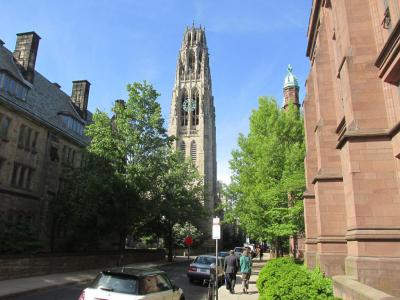
Harkness Tower is a prominent masonry structure located at Yale University in New Haven. Completed in 1922 as part of the Collegiate Gothic Memorial Quadrangle, the tower stands as a tribute to Charles William Harkness, a Yale graduate from the Class of 1883 and the brother of Edward S. Harkness, one of Yale’s most generous benefactors. It was donated by their mother, Anna M. Harkness, in memory of Charles.
Designed by architect James Gamble Rogers, a Yale College classmate of Edward Harkness, the tower was built between 1917 and 1921. It marked the first modern construction of a couronne ("crown") tower in the English Perpendicular Gothic style. Rogers drew inspiration from England’s 15th-century Boston Stump and the tower of Saint Giles' Church in Wrexham, Wales-the latter notably housing the tomb of Elihu Yale, the university's namesake.
Standing at 216 feet (66 meters), the tower was intentionally built with one foot every year since Yale’s founding at the time of construction. Its design includes a square base rising through multiple stages to an octagonal crown adorned with stone finials. It contains 284 steps from the ground to the rooftop.
Harkness Tower became part of Branford College when Yale’s residential college system launched in 1933. A major renovation took place between 2009 and 2010 to restore the tower’s masonry and architectural details.
Midway up Harkness Tower, four copper clockfaces mark the time, with the Yale Memorial Carillon bells ringing behind them. Below, the tower houses the carillon console, practice instruments, office space for the Yale Guild of Carillonneurs, a disused water tank, a historic chimes console, and a memorial chapel. Now an iconic Yale symbol, the tower even features on The Yale Herald masthead and inspired the Cathedral of Christ the King in Hamilton, Ontario.
Designed by architect James Gamble Rogers, a Yale College classmate of Edward Harkness, the tower was built between 1917 and 1921. It marked the first modern construction of a couronne ("crown") tower in the English Perpendicular Gothic style. Rogers drew inspiration from England’s 15th-century Boston Stump and the tower of Saint Giles' Church in Wrexham, Wales-the latter notably housing the tomb of Elihu Yale, the university's namesake.
Standing at 216 feet (66 meters), the tower was intentionally built with one foot every year since Yale’s founding at the time of construction. Its design includes a square base rising through multiple stages to an octagonal crown adorned with stone finials. It contains 284 steps from the ground to the rooftop.
Harkness Tower became part of Branford College when Yale’s residential college system launched in 1933. A major renovation took place between 2009 and 2010 to restore the tower’s masonry and architectural details.
Midway up Harkness Tower, four copper clockfaces mark the time, with the Yale Memorial Carillon bells ringing behind them. Below, the tower houses the carillon console, practice instruments, office space for the Yale Guild of Carillonneurs, a disused water tank, a historic chimes console, and a memorial chapel. Now an iconic Yale symbol, the tower even features on The Yale Herald masthead and inspired the Cathedral of Christ the King in Hamilton, Ontario.
6) Sterling Memorial Library
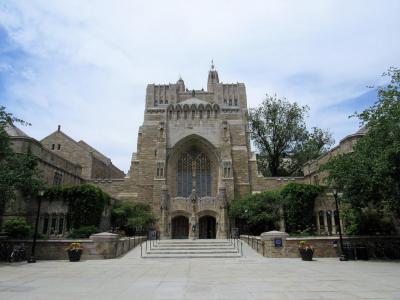
Sterling Memorial Library stands as the architectural and intellectual heart of Yale University in New Haven. Housing over 4 million volumes, it is not only the largest library on campus but also a stunning example of Gothic Revival architecture. Designed by James Gamble Rogers, the building's majestic style includes 3,300 hand-decorated stained glass windows-the work of artist G. Owen Bonawit-which depict everything from literary scenes to insects painted with such precision that they appear lifelike.
The library rises through 15 levels, each home to a distinct category of books. While Bertram Goodhue initially envisioned a structure resembling the Nebraska State Capitol, Rogers took the reins and gave the building its now-iconic Gothic form.
Adding to its grandeur, the main entrance is framed with intricate carvings in ancient languages, a collaboration between Lee Lawrie and Rene Paul Chambellan, the latter of whom also designed and executed the library's many gargoyles, interior panels, and ornamental details. Inside, the Nave features marble reliefs that narrate the founding of Yale and the early history of New Haven and Connecticut.
In 1971, Yale expanded its library system underground with the creation of the Cross Campus Library, which was renovated and renamed the Bass Library in 2007. Connected to Sterling by a tunnel, Bass adds another 150,000 volumes to Yale's literary wealth.
Though it’s easy to get lost in its collection, what truly sets Sterling apart is the artistry embedded in every corner-most notably its thousands of stained glass windows, which were the subject of a dedicated book by a former librarian in 2000. Sterling Memorial Library isn't just a place to study-it's a monument to knowledge and craftsmanship.
The library rises through 15 levels, each home to a distinct category of books. While Bertram Goodhue initially envisioned a structure resembling the Nebraska State Capitol, Rogers took the reins and gave the building its now-iconic Gothic form.
Adding to its grandeur, the main entrance is framed with intricate carvings in ancient languages, a collaboration between Lee Lawrie and Rene Paul Chambellan, the latter of whom also designed and executed the library's many gargoyles, interior panels, and ornamental details. Inside, the Nave features marble reliefs that narrate the founding of Yale and the early history of New Haven and Connecticut.
In 1971, Yale expanded its library system underground with the creation of the Cross Campus Library, which was renovated and renamed the Bass Library in 2007. Connected to Sterling by a tunnel, Bass adds another 150,000 volumes to Yale's literary wealth.
Though it’s easy to get lost in its collection, what truly sets Sterling apart is the artistry embedded in every corner-most notably its thousands of stained glass windows, which were the subject of a dedicated book by a former librarian in 2000. Sterling Memorial Library isn't just a place to study-it's a monument to knowledge and craftsmanship.
7) Sterling Law Building
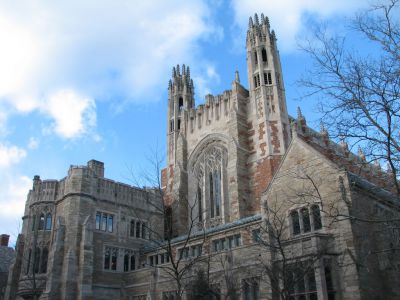
The Sterling Law Building, home to Yale Law School, stands prominently on Wall Street in New Haven, right in the heart of the Yale University campus. Built between 1930 and 1931, the building was designed by architect James Gamble Rogers in the collegiate Gothic style, modeled after the traditional English Inns of Court. It occupies an entire city block, bordered by the Hall of Graduate Studies, Beinecke Library, Sterling Memorial Library, and Grove Street Cemetery.
Named after Yale alumnus and generous benefactor John William Sterling, a founding partner of Shearman & Sterling, the building is clad in brick, granite, and limestone, and surrounds a network of courtyards. It houses classrooms, administrative offices, the Lillian Goldman Law Library, a dining hall, a daycare center, and additional communal spaces.
The Sterling Law Building has been the focus of several restoration projects aimed at preserving its distinctive architectural elements and addressing issues of material deterioration and water leakage. In 2015, DBVW Architects, who had previously worked on adjacent Yale buildings, were brought in to continue ongoing repair efforts. SGH, another key contributor, investigated the condition of the structure's enclosure systems-brick and stone masonry, slate and copper roofs, and leaded-glass steel-framed windows. Their restoration work on the building’s iconic windows later became the standard for Yale's wider efforts to preserve its early 20th-century Gothic architecture.
Today, the Sterling Law Building remains a functional and symbolic centerpiece of Yale Law School, seamlessly blending historical design with the evolving needs of a modern academic institution.
Named after Yale alumnus and generous benefactor John William Sterling, a founding partner of Shearman & Sterling, the building is clad in brick, granite, and limestone, and surrounds a network of courtyards. It houses classrooms, administrative offices, the Lillian Goldman Law Library, a dining hall, a daycare center, and additional communal spaces.
The Sterling Law Building has been the focus of several restoration projects aimed at preserving its distinctive architectural elements and addressing issues of material deterioration and water leakage. In 2015, DBVW Architects, who had previously worked on adjacent Yale buildings, were brought in to continue ongoing repair efforts. SGH, another key contributor, investigated the condition of the structure's enclosure systems-brick and stone masonry, slate and copper roofs, and leaded-glass steel-framed windows. Their restoration work on the building’s iconic windows later became the standard for Yale's wider efforts to preserve its early 20th-century Gothic architecture.
Today, the Sterling Law Building remains a functional and symbolic centerpiece of Yale Law School, seamlessly blending historical design with the evolving needs of a modern academic institution.
8) Grace Hopper College
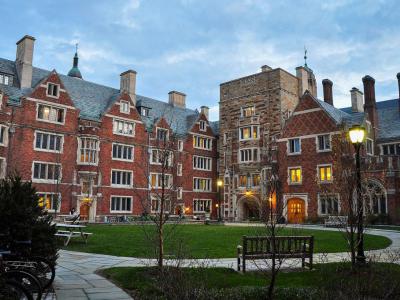
Grace Hopper College is one of Yale University’s residential colleges, originally established in 1933 as part of a transformative plan to reshape undergraduate life. It was one of eight colleges funded by philanthropist Edward Harkness. Located at the corner of College and Elm Streets, it stands on land that has seen many transformations-from a 17th-century farm to a Revolutionary War-era inn, and later the home of the Yale Divinity School until 1931.
Initially named Calhoun College after U.S. Vice President John C. Calhoun, in 2017, Yale renamed the college in honor of Grace Murray Hopper, a trailblazing computer scientist and Navy rear admiral.
Grace Hopper College, designed by John Russell Pope, opened with formal dining and 24-hour guard service. Initially unpopular due to noisy trolleys nearby, its image improved under Master Charles Schroeder, who celebrated the trolleys' removal in 1949 by starting the now-beloved "Trolley Night" tradition.
The college originally featured a distinctive coat of arms that blended Yale’s own with Calhoun's, and its colors were black, navy blue, and gold. In earlier decades, the college had a reputation for attracting athletic, upper-class students, a trend that faded with changes to Yale's housing policy in the late 1950s.
Students in Grace Hopper College enjoy a vibrant residential life coordinated by the College Council, which plans events such as study breaks, dances, and the ever-popular Trolley Night. Among the more light-hearted historical anecdotes is the tale of the courtyard tire swing-removed in 1990 by a newly appointed master but promptly reinstalled overnight by students, a testament to the community’s sense of identity and tradition.
Today, Grace Hopper College stands as both a tribute to one of computing’s great pioneers and a living space rich in tradition, resilience, and student-driven spirit.
Initially named Calhoun College after U.S. Vice President John C. Calhoun, in 2017, Yale renamed the college in honor of Grace Murray Hopper, a trailblazing computer scientist and Navy rear admiral.
Grace Hopper College, designed by John Russell Pope, opened with formal dining and 24-hour guard service. Initially unpopular due to noisy trolleys nearby, its image improved under Master Charles Schroeder, who celebrated the trolleys' removal in 1949 by starting the now-beloved "Trolley Night" tradition.
The college originally featured a distinctive coat of arms that blended Yale’s own with Calhoun's, and its colors were black, navy blue, and gold. In earlier decades, the college had a reputation for attracting athletic, upper-class students, a trend that faded with changes to Yale's housing policy in the late 1950s.
Students in Grace Hopper College enjoy a vibrant residential life coordinated by the College Council, which plans events such as study breaks, dances, and the ever-popular Trolley Night. Among the more light-hearted historical anecdotes is the tale of the courtyard tire swing-removed in 1990 by a newly appointed master but promptly reinstalled overnight by students, a testament to the community’s sense of identity and tradition.
Today, Grace Hopper College stands as both a tribute to one of computing’s great pioneers and a living space rich in tradition, resilience, and student-driven spirit.
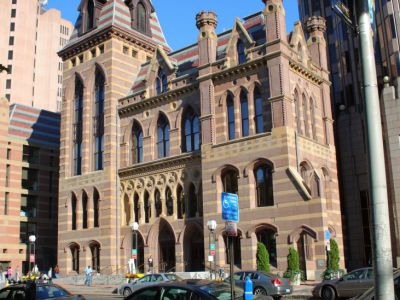
9) New Haven City Hall
The New Haven City Hall and County Courthouse is located on Church Street off of the New Haven Green. Though the pair of buildings are often spoken of together, it is the City Hall that is the older of the two by a full decade.
Architect Henry Austin designed the New Haven City hall in 1861. The High Victorian Gothic architectural style is evidenced by the clock tower, arched windows and turrets. The clock tower that adorns the city hall is not original but was rebuilt in 1975 after having been taken down.
Visitors are welcome to view the City Hall during regular office hours. They can explore the building's exterior at any time. Of particular note is the Amistad Memorial, which is directly in front of the City Hall. This memorial was erected in 1992 as the City Hall housed the prison that held the Africans who were involved in the Amistad Incident.
Architect Henry Austin designed the New Haven City hall in 1861. The High Victorian Gothic architectural style is evidenced by the clock tower, arched windows and turrets. The clock tower that adorns the city hall is not original but was rebuilt in 1975 after having been taken down.
Visitors are welcome to view the City Hall during regular office hours. They can explore the building's exterior at any time. Of particular note is the Amistad Memorial, which is directly in front of the City Hall. This memorial was erected in 1992 as the City Hall housed the prison that held the Africans who were involved in the Amistad Incident.
