Custom Walk in Panama City, Panama by mfiorella_223236 created on 2026-04-17
Guide Location: Panama » Panama City
Guide Type: Custom Walk
# of Sights: 15
Tour Duration: 4 Hour(s)
Travel Distance: 8 Km or 5 Miles
Share Key: GCWAE
Guide Type: Custom Walk
# of Sights: 15
Tour Duration: 4 Hour(s)
Travel Distance: 8 Km or 5 Miles
Share Key: GCWAE
How It Works
Please retrieve this walk in the GPSmyCity app. Once done, the app will guide you from one tour stop to the next as if you had a personal tour guide. If you created the walk on this website or come to the page via a link, please follow the instructions below to retrieve the walk in the app.
Retrieve This Walk in App
Step 1. Download the app "GPSmyCity: Walks in 1K+ Cities" on Apple App Store or Google Play Store.



Step 2. In the GPSmyCity app, download(or launch) the guide "Panama City Map and Walking Tours".
Step 3. Tap the menu button located at upper right corner of the "Walks" screen and select "Retrieve custom walk". Enter the share key: GCWAE
1) Trump Ocean Club
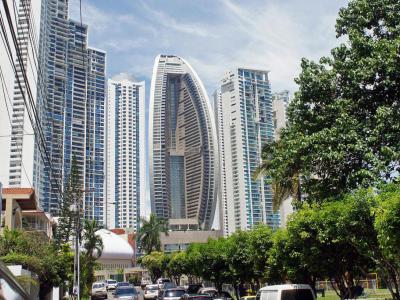
Are you bored with your daily routine? Tired of working and searching for a place to relax? Then here is your perfect weekend gateway, a new world, ideally combining natural beauty with world-class amenities. Round the clock services, exclusive accommodations and food to satiate most exquisite appetite will make your stay here an everlasting sweet memory. Built on Punta Peninsula, Trump Ocean Club offers a picturesque beach view of the Pacific Ocean and Panama Bay, complete with the spa for pampering your senses, well-equipped meeting facilities and culinary delicacies in addition to many other great services provided. This beautifully splash hotel is a joint venture of K Group & Trump Organization
Talking about Panama's nightlife, this is one of the most happening places. People of Panama are known for being fun-loving and this is the reason behind the number of discos and casinos found in the city. Also, if you are in Panama, make sure to go shopping, for shopping is a religion here and the variety of souvenirs and handicrafts on offer will leave you mesmerized. Knowing this, you must stay at Trump Ocean Club at least once in your lifetime and enjoy Panama City as a wonderful vacation destination and a true “home away from home”.
Talking about Panama's nightlife, this is one of the most happening places. People of Panama are known for being fun-loving and this is the reason behind the number of discos and casinos found in the city. Also, if you are in Panama, make sure to go shopping, for shopping is a religion here and the variety of souvenirs and handicrafts on offer will leave you mesmerized. Knowing this, you must stay at Trump Ocean Club at least once in your lifetime and enjoy Panama City as a wonderful vacation destination and a true “home away from home”.
2) Torres las Américas (Towers of the Americas)
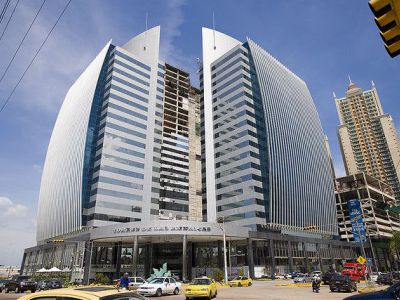
Towers of the Americas (Torres de las Américas) is an iconic office complex located in the Punta Pacifica sector of Panama City. This complex comprises three high-rise buildings, with Tower C standing as the tallest at 142 meters. Tower A and Tower B, each 74.36 meters high, consist of 22 floors. The development of these towers spanned from 2002 to 2009, making them a notable architectural addition to the city's skyline.
The complex is strategically positioned between the South Corridor, Vía Brasil, Vía Israel, and 50th Street, making it easily accessible from different parts of the city. Towers of the Americas is not just a workplace but a multifunctional hub, featuring a commercial area and an expansive 1,100 square meter atrium. This central core serves as an integrative space that houses a shopping plaza, and a convention center and provides access to the office towers.
Recognized for its architectural excellence and strategic location, the complex has earned prestigious accolades, including the Magno Excelsa Best Work Award in 2007 from the SPIA and the ACOBIR Real Estate Master Award in 2014 for Best Office Building.
Towers of the Americas is highly sought after by prestigious companies looking for a business center that offers high standards in architecture, technology, security, comfort, and personalized services, making it one of the premier office locations in Panama.
The complex is strategically positioned between the South Corridor, Vía Brasil, Vía Israel, and 50th Street, making it easily accessible from different parts of the city. Towers of the Americas is not just a workplace but a multifunctional hub, featuring a commercial area and an expansive 1,100 square meter atrium. This central core serves as an integrative space that houses a shopping plaza, and a convention center and provides access to the office towers.
Recognized for its architectural excellence and strategic location, the complex has earned prestigious accolades, including the Magno Excelsa Best Work Award in 2007 from the SPIA and the ACOBIR Real Estate Master Award in 2014 for Best Office Building.
Towers of the Americas is highly sought after by prestigious companies looking for a business center that offers high standards in architecture, technology, security, comfort, and personalized services, making it one of the premier office locations in Panama.
3) Cinta Costera (must see)
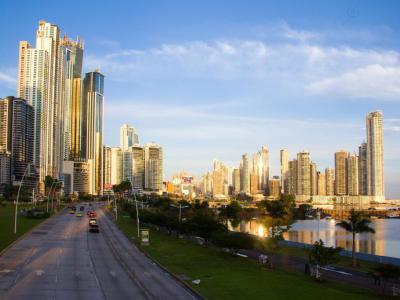
The Cinta Costera, or Coastal Beltway, is the result of a massive land reclamation project. This public oceanfront space is a beautiful addition to downtown Panama City. Tourists and locals alike enjoy the 64 acres of green space.
Visitors will find The Cinta Costera a great place to get some exercise on the bike lanes and running trails. Free workout sessions are offered along The Cinta Costera. Join a Zumba class, yoga session, or try your hand at AeroBox. Join in a game of tennis, volleyball, or basketball and make new friends.
After you've jogged the trails, relax with a picnic in the open space and enjoy views of the city and the bay. Public parties and festivals are often celebrated here. You might join in the Carnival festival or encounter the Pride Parade.
Check out the Seafood Market for the freshest seafood in the city. Watch local fisherman unload their catch and sample different vendor's ceviche.
Cinta Costera is a vibrant location to get some exercise and enjoy the local culture.
Visitors will find The Cinta Costera a great place to get some exercise on the bike lanes and running trails. Free workout sessions are offered along The Cinta Costera. Join a Zumba class, yoga session, or try your hand at AeroBox. Join in a game of tennis, volleyball, or basketball and make new friends.
After you've jogged the trails, relax with a picnic in the open space and enjoy views of the city and the bay. Public parties and festivals are often celebrated here. You might join in the Carnival festival or encounter the Pride Parade.
Check out the Seafood Market for the freshest seafood in the city. Watch local fisherman unload their catch and sample different vendor's ceviche.
Cinta Costera is a vibrant location to get some exercise and enjoy the local culture.
4) Avenida B
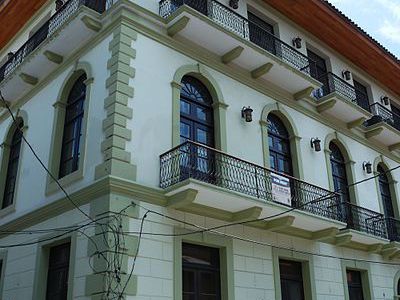
Avenida B in Panama City stands out as a distinctive enclave where the city's historical charm meets modern vibrancy. This unique street serves as the border between the old city town and the Santa Ana neighborhood, featuring a blend of old and renovated buildings lining brick roads. The architecture here is notably colorful, and the area is filled with a variety of establishments all within walking distance, including stores, hotels, hostels, cafes, restaurants, plazas, and churches.
The street is a hub of daily activity, offering visitors a true taste of Panamanian culture. Markets along Avenida B buzz with the energy of local vendors selling handcrafted items and products that are unique to Panama, providing an authentic shopping experience. The presence of numerous local stores invites tourists and residents alike to discover artisanal treasures that can't be found anywhere else.
Moreover, the lively atmosphere of Avenida B is enhanced by its colorful old buildings, which not only add to the aesthetic appeal of the area but also tell the story of the city's rich history. Whether you're enjoying a meal at one of the local restaurants, sipping coffee in a quaint cafe, or simply strolling through the bustling streets, Avenida B offers a vivid glimpse into the everyday life and vibrant spirit of Panama City. It's a place where the past and present of Panamanian culture converge, making it a must-visit for anyone looking to immerse themselves in the local scene.
The street is a hub of daily activity, offering visitors a true taste of Panamanian culture. Markets along Avenida B buzz with the energy of local vendors selling handcrafted items and products that are unique to Panama, providing an authentic shopping experience. The presence of numerous local stores invites tourists and residents alike to discover artisanal treasures that can't be found anywhere else.
Moreover, the lively atmosphere of Avenida B is enhanced by its colorful old buildings, which not only add to the aesthetic appeal of the area but also tell the story of the city's rich history. Whether you're enjoying a meal at one of the local restaurants, sipping coffee in a quaint cafe, or simply strolling through the bustling streets, Avenida B offers a vivid glimpse into the everyday life and vibrant spirit of Panama City. It's a place where the past and present of Panamanian culture converge, making it a must-visit for anyone looking to immerse themselves in the local scene.
5) Avenida Central
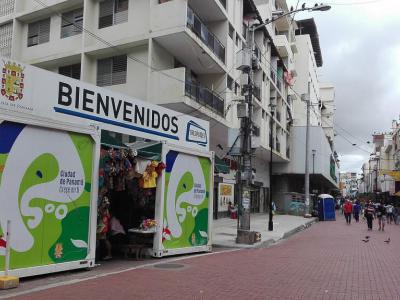
One of Panama City’s main avenues, Avenida Central originates in Casco Viejo, between Plaza Santa Ana and Plaza Cinco de Mayo, and runs right up to the banking district. Although this part of the city is not a definite “must see” for most tourists, and furthermore, some guidebooks even suggest to avoid it, a little stroll down to the Central will bring you to the pedestrian mall that is well worth checking out.
Don't expect to find here the habitual sterile clean and scrubbed supermarket feel. What you get is a live bustling market on the avenue that is lined with small shops on both sides. You will find real people going about their daily lives, checking out the stuff on sale, haggling for bargains. The shops have on offer anything from bird feed to candy to electronics and clothing. If you come from the city and want to find some stuff at a reasonable price, this is the place. A simple stroll down here would be just as entertaining even if you don't buy anything. Agreed that it is not a picture perfect, but it definitely is the place really interesting and full of energy and life.
From dirt cheap to prohibitively expensive and everything that lies in between you will find here. If you have time in hand and wish to downshift and unwind to small town ways, this is the place to be. Get a snow cone or stop and feed the pigeons. Get a bit adventurous and explore the place, you never know what kind of a surprise is in store here for you.
Don't expect to find here the habitual sterile clean and scrubbed supermarket feel. What you get is a live bustling market on the avenue that is lined with small shops on both sides. You will find real people going about their daily lives, checking out the stuff on sale, haggling for bargains. The shops have on offer anything from bird feed to candy to electronics and clothing. If you come from the city and want to find some stuff at a reasonable price, this is the place. A simple stroll down here would be just as entertaining even if you don't buy anything. Agreed that it is not a picture perfect, but it definitely is the place really interesting and full of energy and life.
From dirt cheap to prohibitively expensive and everything that lies in between you will find here. If you have time in hand and wish to downshift and unwind to small town ways, this is the place to be. Get a snow cone or stop and feed the pigeons. Get a bit adventurous and explore the place, you never know what kind of a surprise is in store here for you.
6) Iglesia San Jose (Church of San Jose)
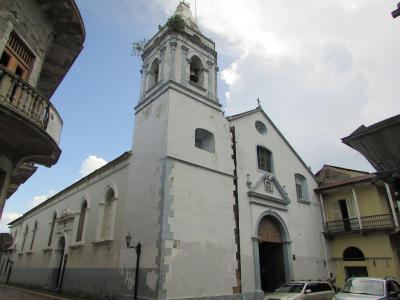
One of the most magnificent places to visit in Panama City is the Church of San Jose, located at Avenida A, near Plaza Herrera, Casco Viejo. The main attraction of this church is the seventeenth century Baroque style Golden Altar, Altar de Oro. The altar was originally located in a temple by the similar name, San Jose. After the pirates had burned down the Old Panama city, the altar was relocated to the new place and entirely renovated in 1915. Carved in mahogany, the altar is covered in golden leaf.
There is an interesting story behind the altar which says that when Henry Morgan, the infamous pirate, attacked Panama Viejo, the priest of the church concealed the golden altar by coloring it black. This was done in order to save this valuable object from being looted by the pirate gang. It also seems that the priest had told Henry Morgan that the altar had been stolen by another pirate and even managed to convince Henry to give a handsome donation to replace the supposedly stolen golden artifact.
When you go to the city of Casco Viejo, you must visit the Church of San Jose, to admire the magnificent golden altar.
There is an interesting story behind the altar which says that when Henry Morgan, the infamous pirate, attacked Panama Viejo, the priest of the church concealed the golden altar by coloring it black. This was done in order to save this valuable object from being looted by the pirate gang. It also seems that the priest had told Henry Morgan that the altar had been stolen by another pirate and even managed to convince Henry to give a handsome donation to replace the supposedly stolen golden artifact.
When you go to the city of Casco Viejo, you must visit the Church of San Jose, to admire the magnificent golden altar.
7) Metropolitan Cathedral
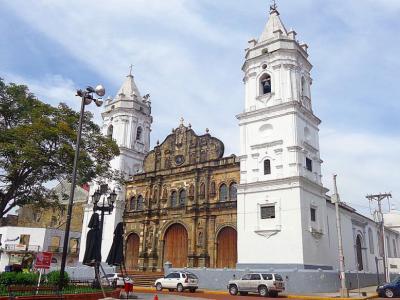
No visit to Panama City’s Old Town feels complete without stopping at the Metropolitan Cathedral of Panama. Construction began in 1688 and stretched over more than a century, with the cathedral finally completed and consecrated in 1796. Over the centuries, the cathedral has endured earthquakes, fires, and periods of decline that affected much of the surrounding city. While neighboring buildings were damaged or replaced during the nineteenth century, the cathedral itself remained standing.
Architecturally, the cathedral is defined by contrast rather than ornament. The central facade, constructed using stone reused from the ruins of Old Panama, appears darker and more subdued. This section is flanked by two lighter-colored bell towers, creating a visual balance. Rather than following a single architectural plan, the cathedral combines elements shaped by different periods of colonial design.
Set into niches on the exterior are wooden statues of saints, including a prominent figure of the Virgin Mary associated with Santa María la Antigua, the patroness of Panama. These figures are later additions and are often mistaken for stone due to their weathered appearance.
Inside, the cathedral reveals a more elaborate interior. The main altarpiece, dating largely to the late nineteenth century, is composed of multiple types of marble combined with gold leaf. It was restored between 2018 and 2019, when the altar was reconsecrated and blessed by Pope Francis during his visit to Panama. Stained-glass windows filter light into the nave, adding color to a space that has witnessed centuries of religious, political, and civic life.
Architecturally, the cathedral is defined by contrast rather than ornament. The central facade, constructed using stone reused from the ruins of Old Panama, appears darker and more subdued. This section is flanked by two lighter-colored bell towers, creating a visual balance. Rather than following a single architectural plan, the cathedral combines elements shaped by different periods of colonial design.
Set into niches on the exterior are wooden statues of saints, including a prominent figure of the Virgin Mary associated with Santa María la Antigua, the patroness of Panama. These figures are later additions and are often mistaken for stone due to their weathered appearance.
Inside, the cathedral reveals a more elaborate interior. The main altarpiece, dating largely to the late nineteenth century, is composed of multiple types of marble combined with gold leaf. It was restored between 2018 and 2019, when the altar was reconsecrated and blessed by Pope Francis during his visit to Panama. Stained-glass windows filter light into the nave, adding color to a space that has witnessed centuries of religious, political, and civic life.
8) Panama History Museum
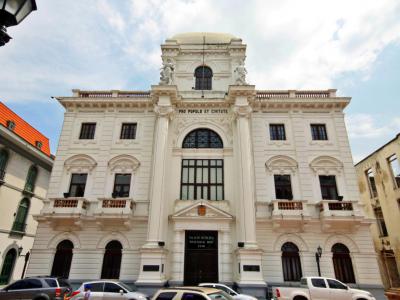
The Panama History Museum is located on the ground floor of the Municipal Palace of Panama City, a neoclassical building completed in 1910 that continues to serve civic functions. The museum presents a broad overview of Panama’s past, with exhibits organized into three main rooms, each corresponding to a major historical period.
The Colonial History Room covers the era from 1501 to 1821, when Panama formed part of the Spanish Empire. Displays include route maps illustrating early trans-isthmian trade, European and Indigenous weapons, and reproductions of historic engravings that document colonial life and exploration.
The Departmental History Room focuses on the period from 1821 to 1903, when Panama was part of the Republic of Colombia as a department. This section examines political life, trade, and daily conditions during the nineteenth century, using copies of historical photographs and documents to illustrate the era.
The Republican History Room covers the period from 1903 to the present, beginning with Panama’s separation from Colombia. Among its highlights are a replica of the first Panamanian flag, designed by María Ossa de Amador, the wife of Manuel Amador Guerrero, Panama’s first president. The original design of the Panamanian Coat of Arms is also displayed, along with a draft of a telegram dated 3 November 1903, announcing Panama’s independence.
The Colonial History Room covers the era from 1501 to 1821, when Panama formed part of the Spanish Empire. Displays include route maps illustrating early trans-isthmian trade, European and Indigenous weapons, and reproductions of historic engravings that document colonial life and exploration.
The Departmental History Room focuses on the period from 1821 to 1903, when Panama was part of the Republic of Colombia as a department. This section examines political life, trade, and daily conditions during the nineteenth century, using copies of historical photographs and documents to illustrate the era.
The Republican History Room covers the period from 1903 to the present, beginning with Panama’s separation from Colombia. Among its highlights are a replica of the first Panamanian flag, designed by María Ossa de Amador, the wife of Manuel Amador Guerrero, Panama’s first president. The original design of the Panamanian Coat of Arms is also displayed, along with a draft of a telegram dated 3 November 1903, announcing Panama’s independence.
9) Plaza de la Independencia (Independence Square)
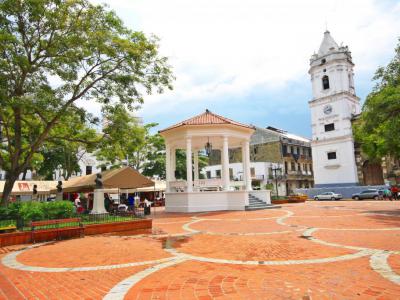
Panama declared its independence from Colombia on 3 November 1903 in what is now known as Independence Square, also called Plaza Mayor or Cathedral Plaza. This space has long functioned as the civic, religious, and symbolic center of the Old Town. As you move across the square today, cafes, small shops, and artisan stalls line the edges.
Along the western side of the square stands the Metropolitan Cathedral of Panama, its white twin bell towers rising above the plaza and forming its most dominant visual landmark. On the northern side, two major museums sit side by side. To the left, the Panama Canal Museum occupies a grand former hotel building. Immediately beside it, to the right, the Panama History Museum offers a broader narrative of the country’s past.
The southern side of the plaza is enclosed by additional colonial-era buildings that once served residential and administrative purposes. Scattered within the plaza are several statues and commemorative monuments, including figures associated with independence and national memory. These sculptures add another layer to the space, reminding visitors that Independence Square is not only defined by the buildings around it, but also by the events and people it continues to honor.
Along the western side of the square stands the Metropolitan Cathedral of Panama, its white twin bell towers rising above the plaza and forming its most dominant visual landmark. On the northern side, two major museums sit side by side. To the left, the Panama Canal Museum occupies a grand former hotel building. Immediately beside it, to the right, the Panama History Museum offers a broader narrative of the country’s past.
The southern side of the plaza is enclosed by additional colonial-era buildings that once served residential and administrative purposes. Scattered within the plaza are several statues and commemorative monuments, including figures associated with independence and national memory. These sculptures add another layer to the space, reminding visitors that Independence Square is not only defined by the buildings around it, but also by the events and people it continues to honor.
10) Herons' Palace (Presidential Palace)
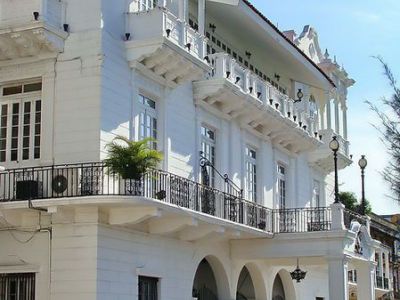
The Herons' Palace occupies one of the most historically significant sites, the original structure dating to 1673, when it was built as a residence for a Spanish colonial judge. Over the following centuries, the building adapted repeatedly to the city’s changing needs, serving at various times as a customs house, warehouse, school, and bank, before gradually evolving into the seat of executive power.
The appearance of the palace today is largely the result of extensive renovations carried out in the early twentieth century, particularly during the presidency of Belisario Porras. These works transformed the building into the official presidential residence and introduced a carefully curated blend of Spanish colonial and Spanish-Moorish architectural elements.
This influence is most clearly visible in the central courtyard, which functions as the architectural and symbolic heart of the palace. Arcaded galleries surround the space, while fountains and shaded walkways reflect Andalusian and Moorish traditions adapted to the tropical climate. The palace takes its popular name from the white herons that move freely through the courtyard. Introduced in 1922 as a gift to President Porras from Panama’s Darién region, the birds have become a living emblem of the building.
Modern additions reflect the palace’s continued use as a working residence. In 1934, an elevator was installed in preparation for the visit of U.S. President Franklin D. Roosevelt, whose mobility required easier access within the building. Today, the palace remains an active center of government. Public access is restricted, but guided visits to selected areas are occasionally offered.
The appearance of the palace today is largely the result of extensive renovations carried out in the early twentieth century, particularly during the presidency of Belisario Porras. These works transformed the building into the official presidential residence and introduced a carefully curated blend of Spanish colonial and Spanish-Moorish architectural elements.
This influence is most clearly visible in the central courtyard, which functions as the architectural and symbolic heart of the palace. Arcaded galleries surround the space, while fountains and shaded walkways reflect Andalusian and Moorish traditions adapted to the tropical climate. The palace takes its popular name from the white herons that move freely through the courtyard. Introduced in 1922 as a gift to President Porras from Panama’s Darién region, the birds have become a living emblem of the building.
Modern additions reflect the palace’s continued use as a working residence. In 1934, an elevator was installed in preparation for the visit of U.S. President Franklin D. Roosevelt, whose mobility required easier access within the building. Today, the palace remains an active center of government. Public access is restricted, but guided visits to selected areas are occasionally offered.
11) Parque Bolivar (Bolivar Park)
In 1826, Simón Bolívar, widely respected as a Latin American hero for his role in the region’s independence movements, convened the Amphictyonic Congress of Panama in the chapter house of the former Convent of San Francisco. There he urged newly independent Latin American republics to consider unity and cooperation in the face of lingering Spanish influence, even proposing a league of nations.
Although the plan for a unified state did not come to fruition, Bolívar’s military leadership helped secure independence for Venezuela, Colombia, Ecuador, Peru, and Bolivia. In 1756, a fire destroyed the houses on this site, leaving an open space that was later named Bolívar Square in 1883 in honor of Bolívar’s legacy. Today, this space functions as a park.
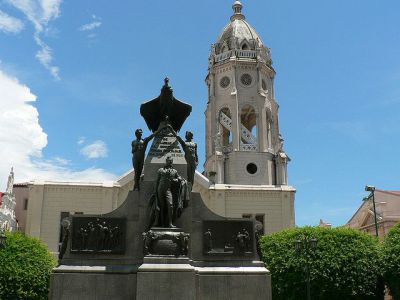
At the center of the park stands a monument to Simón Bolívar, unveiled in 1926 to coincide with the 100th anniversary of the Amphictyonic Congress. The sculpture uses decorative friezes to evoke moments from Bolívar’s life and is topped by an Andean condor, a symbol of independence and liberty.
Along the northern side of the park is the Simón Bolívar School, a building traditionally associated with Bolívar’s time in Panama and the park’s educational heritage, though the actual Congress took place in the Bolívar Hall within the former Franciscan complex.
The park’s eastern edge is defined by two prominent historic buildings. On the left, the Bolívar Palace, which today houses Panama’s Ministry of Foreign Relations and contains the preserved Bolívar Hall where the Amphictyonic Congress was held. Immediately beside it, on the right, stands the Church of Saint Francis of Assisi, the surviving element of the former Franciscan convent complex.
Bolívar Park remains an integral part of daily life in Panama City. Mango and palm trees shade benches where people gather, children play, and residents chat, giving the space a relaxed atmosphere that blends its historic significance with everyday urban life.
Although the plan for a unified state did not come to fruition, Bolívar’s military leadership helped secure independence for Venezuela, Colombia, Ecuador, Peru, and Bolivia. In 1756, a fire destroyed the houses on this site, leaving an open space that was later named Bolívar Square in 1883 in honor of Bolívar’s legacy. Today, this space functions as a park.
At the center of the park stands a monument to Simón Bolívar, unveiled in 1926 to coincide with the 100th anniversary of the Amphictyonic Congress. The sculpture uses decorative friezes to evoke moments from Bolívar’s life and is topped by an Andean condor, a symbol of independence and liberty.
Along the northern side of the park is the Simón Bolívar School, a building traditionally associated with Bolívar’s time in Panama and the park’s educational heritage, though the actual Congress took place in the Bolívar Hall within the former Franciscan complex.
The park’s eastern edge is defined by two prominent historic buildings. On the left, the Bolívar Palace, which today houses Panama’s Ministry of Foreign Relations and contains the preserved Bolívar Hall where the Amphictyonic Congress was held. Immediately beside it, on the right, stands the Church of Saint Francis of Assisi, the surviving element of the former Franciscan convent complex.
Bolívar Park remains an integral part of daily life in Panama City. Mango and palm trees shade benches where people gather, children play, and residents chat, giving the space a relaxed atmosphere that blends its historic significance with everyday urban life.
12) Church of Saint Francis of Assisi
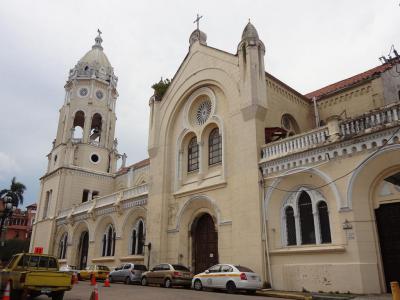
The Church of Saint Francis of Assisi is a Roman Catholic church, holding an important place in the religious and architectural history of the Old Town. The church stands on land that once formed part of the Franciscan convent complex, closely linked to the intellectual and religious life of colonial Panama. The original structures on this site suffered repeated damage, notably during fires in 1737 and 1756, which affected much of the surrounding area. Over time, the church was rebuilt and altered, with major restoration work completed in 1998, giving it the appearance seen today.
Architecturally, the church is characterized by a solid stone structure typical of early colonial religious buildings. Its interior preserves a strong Baroque influence, particularly in the carved wooden altars. These were produced with the involvement of local Indigenous artisans, working under the supervision of Franciscan monks, reflecting the blending of European religious design with regional craftsmanship.
The main altar, composed of finely carved and painted tropical hardwood elements, stands out as one of the church’s most notable features and an important example of colonial religious art in Panama. While restrained on the exterior, the interior reveals a level of decorative detail that rewards closer attention.
Architecturally, the church is characterized by a solid stone structure typical of early colonial religious buildings. Its interior preserves a strong Baroque influence, particularly in the carved wooden altars. These were produced with the involvement of local Indigenous artisans, working under the supervision of Franciscan monks, reflecting the blending of European religious design with regional craftsmanship.
The main altar, composed of finely carved and painted tropical hardwood elements, stands out as one of the church’s most notable features and an important example of colonial religious art in Panama. While restrained on the exterior, the interior reveals a level of decorative detail that rewards closer attention.
13) Teatro Nacional (National Theater)
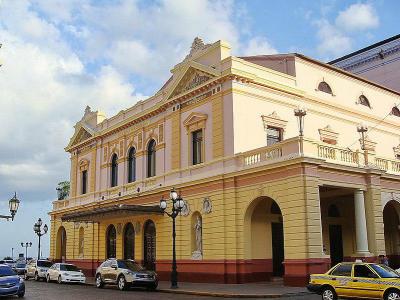
The National Theater of Panama opened in 1908 and was built on the site of a former colonial religious complex, reflecting the practice of repurposing ecclesiastical land for civic use in the early republican period.
Over the course of the twentieth century, the building experienced periods of decline and adaptation. At various times, it functioned as a cinema and even as a social venue for elite gatherings, before its cultural role was gradually restored. Major conservation efforts were carried out in two phases: an initial restoration in the 1970s, followed by a more comprehensive program in the early 2000s, leading to the theater’s reopening in 2004.
The interior is richly decorated, featuring ornate balconies highlighted with gold detailing, large chandeliers, and a carefully restored auditorium. In the foyer and public spaces, busts of prominent literary figures underscore the theater’s connection to the performing arts and literary tradition. One of the theater’s most distinctive features is its ceiling frescoes, painted by Roberto Lewis, one of Panama’s most important early twentieth-century artists. These murals present scenes from Panamanian history framed through allegorical and classical imagery, drawing on the visual language of Greek mythology to convey national themes.
Today, the National Theater remains one of Panama’s principal cultural institutions, hosting theater productions, concerts, opera, and ballet, and serving as a key venue for the country’s artistic life.
Over the course of the twentieth century, the building experienced periods of decline and adaptation. At various times, it functioned as a cinema and even as a social venue for elite gatherings, before its cultural role was gradually restored. Major conservation efforts were carried out in two phases: an initial restoration in the 1970s, followed by a more comprehensive program in the early 2000s, leading to the theater’s reopening in 2004.
The interior is richly decorated, featuring ornate balconies highlighted with gold detailing, large chandeliers, and a carefully restored auditorium. In the foyer and public spaces, busts of prominent literary figures underscore the theater’s connection to the performing arts and literary tradition. One of the theater’s most distinctive features is its ceiling frescoes, painted by Roberto Lewis, one of Panama’s most important early twentieth-century artists. These murals present scenes from Panamanian history framed through allegorical and classical imagery, drawing on the visual language of Greek mythology to convey national themes.
Today, the National Theater remains one of Panama’s principal cultural institutions, hosting theater productions, concerts, opera, and ballet, and serving as a key venue for the country’s artistic life.
14) Plaza de Francia (France Square)
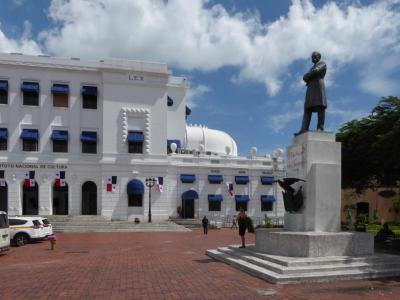
France Square commemorates the French effort to build the Panama Canal in the late 19th century and features statues, plaques, and large stone tablets that recount this ambitious but ultimately unsuccessful undertaking.
At the center of the square, rising from a circular platform, stands a monument honoring the thousands of workers who died during the French canal attempt, including the ones from Martinique and Guadeloupe islands. Most fatalities were caused by yellow fever and malaria, diseases that devastated the workforce and contributed significantly to the project’s collapse. The commonly cited figure of around 20,000 deaths reflects historical estimates rather than an exact count.
Another prominent feature, along the seaward edge of the square, directly facing the Pacific Ocean, is the monument to Dr. Carlos J. Finlay, the Cuban physician who identified mosquitoes as the vector for yellow fever transmission. Although his discovery was not immediately accepted, it later became central to disease-control measures implemented during the American canal effort. These advances dramatically reduced mortality rates in Panama and played a key role in making the canal’s completion possible.
Running along the eastern side of the square, built into the old city walls below the promenade level, is the The Vaults Promenade, a series of 18th-century stone vaults built into the old city walls. Originally constructed by the Spanish for storage and military purposes, some vaults were later used as prison cells. Today, the arched chambers house shops, galleries, and cafes, while much of the original masonry remains visible.
At the center of the square, rising from a circular platform, stands a monument honoring the thousands of workers who died during the French canal attempt, including the ones from Martinique and Guadeloupe islands. Most fatalities were caused by yellow fever and malaria, diseases that devastated the workforce and contributed significantly to the project’s collapse. The commonly cited figure of around 20,000 deaths reflects historical estimates rather than an exact count.
Another prominent feature, along the seaward edge of the square, directly facing the Pacific Ocean, is the monument to Dr. Carlos J. Finlay, the Cuban physician who identified mosquitoes as the vector for yellow fever transmission. Although his discovery was not immediately accepted, it later became central to disease-control measures implemented during the American canal effort. These advances dramatically reduced mortality rates in Panama and played a key role in making the canal’s completion possible.
Running along the eastern side of the square, built into the old city walls below the promenade level, is the The Vaults Promenade, a series of 18th-century stone vaults built into the old city walls. Originally constructed by the Spanish for storage and military purposes, some vaults were later used as prison cells. Today, the arched chambers house shops, galleries, and cafes, while much of the original masonry remains visible.
15) Las Bovedas
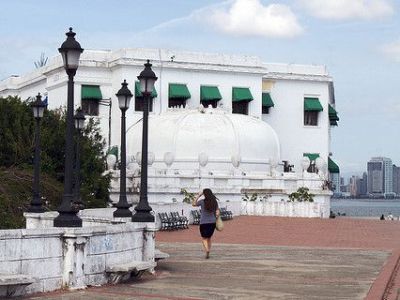
Las Bóvedas, nestled in the historic heart of Panama City at Plaza de Francia, offers a unique blend of history, culture, and contemporary dining. Originating in the 17th century, this site began as part of the city's fortifications, specifically built in 1672 when Panama City relocated to what is now known as Old Town (Casco Viejo). Over the centuries, the structure served various purposes, including use as storage chambers, battlements, and most notably, dungeons.
After being abandoned for many years, the Panama Tourist Board spearheaded a renovation project in the 1980s, transforming the space while preserving its historic essence. Today, Las Bóvedas operates as an elegant, fine-dining European restaurant. It occupies three of the old cells, offering an atmospheric setting that retains the archaic charm with its arched chambers and inviting decor.
The restaurant is renowned for its flavorful European cuisine and has become a fashionable destination for both locals and tourists. Guests can enjoy live music on selected evenings, making it a prime venue for a romantic night out. Additionally, its location allows for alfresco dining on the plaza, ideal for afternoon drinks or people-watching during a leisurely lunch.
Las Bóvedas is more than just a dining spot; it is a place where history and modernity meet, offering a memorable experience for those celebrating special occasions, enjoying a quiet dinner, or simply exploring the rich past of Panama City.
After being abandoned for many years, the Panama Tourist Board spearheaded a renovation project in the 1980s, transforming the space while preserving its historic essence. Today, Las Bóvedas operates as an elegant, fine-dining European restaurant. It occupies three of the old cells, offering an atmospheric setting that retains the archaic charm with its arched chambers and inviting decor.
The restaurant is renowned for its flavorful European cuisine and has become a fashionable destination for both locals and tourists. Guests can enjoy live music on selected evenings, making it a prime venue for a romantic night out. Additionally, its location allows for alfresco dining on the plaza, ideal for afternoon drinks or people-watching during a leisurely lunch.
Las Bóvedas is more than just a dining spot; it is a place where history and modernity meet, offering a memorable experience for those celebrating special occasions, enjoying a quiet dinner, or simply exploring the rich past of Panama City.
