Custom Walk in London, England by woodlodge33_4a9f95 created on 2026-04-23
Guide Location: England » London
Guide Type: Custom Walk
# of Sights: 8
Tour Duration: 7 Hour(s)
Travel Distance: 17.6 Km or 10.9 Miles
Share Key: JF8RQ
Guide Type: Custom Walk
# of Sights: 8
Tour Duration: 7 Hour(s)
Travel Distance: 17.6 Km or 10.9 Miles
Share Key: JF8RQ
How It Works
Please retrieve this walk in the GPSmyCity app. Once done, the app will guide you from one tour stop to the next as if you had a personal tour guide. If you created the walk on this website or come to the page via a link, please follow the instructions below to retrieve the walk in the app.
Retrieve This Walk in App
Step 1. Download the app "GPSmyCity: Walks in 1K+ Cities" on Apple App Store or Google Play Store.



Step 2. In the GPSmyCity app, download(or launch) the guide "London Map and Walking Tours".
Step 3. Tap the menu button located at upper right corner of the "Walks" screen and select "Retrieve custom walk". Enter the share key: JF8RQ
1) Covent Garden Piazza (must see)
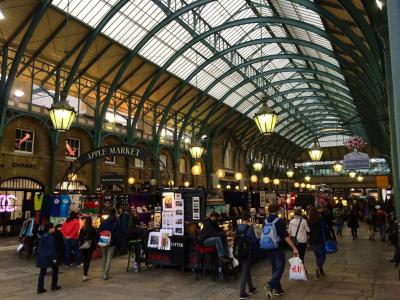
The transformation of Covent Garden from a utilitarian fruit and vegetable market in the 1670s into a trendy district was one of the most comprehensive and enduring developments of the 1980s. Unlike its neighbor Soho, Covent Garden is more mainstream and commercially oriented but also significantly more popular. Its appeal is greatly enhanced by the presence of street performers, buskers, and living statues, creating a vibrant atmosphere in the traffic-free Covent Garden Piazza.
This historically renowned piazza now encompasses three distinct market areas: the Apple Market, the East Colonnade Market, and the Jubilee Market. Within the Apple Market, located in the main covered area originally designed by Inigo Jones, you can find 40 stalls offering handcrafted jewelry, prints, clothing, ceramics, and various crafts from Tuesday to Sunday (Mondays are dedicated to antiques, curiosities, and collectibles). The East Colonnade Market features stalls primarily showcasing handmade specialty items such as soaps and jewelry, as well as housewares, accessories, and magic tricks. The Jubilee Market offers kitschy T-shirts and budget-friendly household goods from Tuesday to Friday, but on Mondays and weekends, you can explore vintage antiques, collectibles, and handcrafted goods.
Traditionally catering to tourists, Covent Garden Market has evolved and now presents a more sophisticated image, accompanied by higher price points. This transformation is evident through the introduction of upscale restaurants and well-known chains in the surrounding arcades. Notable establishments include a sizable Apple Store, beauty boutiques like Chanel and MAC, as well as exclusive boutiques for renowned brands such as N.Peal and Mulberry.
Throughout the day, Covent Garden is teeming with tourists, and in the evening, it becomes a favorite haunt for theater enthusiasts either heading to or returning from the Royal Opera House. If you happen to be touring London during the holiday season, this place is a genuine delight. Every building seems to be adorned with festive decorations and twinkling lights, creating a truly magical atmosphere.
Why You Should Visit:
While some locals may dismiss Covent Garden Market as a tourist hotspot, it remains a worthwhile destination for anyone. Historically, this market was a place where people of all social classes in London gathered with a shared purpose: shopping. Today, that original spirit of the market endures, as Londoners continue to converge here to indulge in a uniquely British shopping experience. It's a bustling, vibrant place that encapsulates the essence of authentic London at its finest.
This historically renowned piazza now encompasses three distinct market areas: the Apple Market, the East Colonnade Market, and the Jubilee Market. Within the Apple Market, located in the main covered area originally designed by Inigo Jones, you can find 40 stalls offering handcrafted jewelry, prints, clothing, ceramics, and various crafts from Tuesday to Sunday (Mondays are dedicated to antiques, curiosities, and collectibles). The East Colonnade Market features stalls primarily showcasing handmade specialty items such as soaps and jewelry, as well as housewares, accessories, and magic tricks. The Jubilee Market offers kitschy T-shirts and budget-friendly household goods from Tuesday to Friday, but on Mondays and weekends, you can explore vintage antiques, collectibles, and handcrafted goods.
Traditionally catering to tourists, Covent Garden Market has evolved and now presents a more sophisticated image, accompanied by higher price points. This transformation is evident through the introduction of upscale restaurants and well-known chains in the surrounding arcades. Notable establishments include a sizable Apple Store, beauty boutiques like Chanel and MAC, as well as exclusive boutiques for renowned brands such as N.Peal and Mulberry.
Throughout the day, Covent Garden is teeming with tourists, and in the evening, it becomes a favorite haunt for theater enthusiasts either heading to or returning from the Royal Opera House. If you happen to be touring London during the holiday season, this place is a genuine delight. Every building seems to be adorned with festive decorations and twinkling lights, creating a truly magical atmosphere.
Why You Should Visit:
While some locals may dismiss Covent Garden Market as a tourist hotspot, it remains a worthwhile destination for anyone. Historically, this market was a place where people of all social classes in London gathered with a shared purpose: shopping. Today, that original spirit of the market endures, as Londoners continue to converge here to indulge in a uniquely British shopping experience. It's a bustling, vibrant place that encapsulates the essence of authentic London at its finest.
2) Tate Modern (must see)
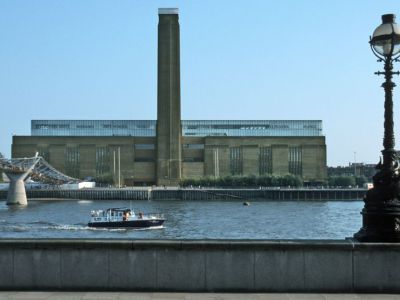
Once upon a smokestack, this mid-20th-century power station went from fueling machines to fueling imaginations - and today, this is one of the most-visited modern art museums on the planet: the Tate Modern.
Inside, the art doesn’t march along a tidy timeline. Instead, it sprawls across eight thematically curated zones, mixing heavy-hitters like Matisse with up-to-the-minute works by contemporary rebels. The temporary exhibitions here also feature big names and bold ideas. Think Gauguin, Modigliani, Picasso, O’Keeffe… and entire showcases exploring Soviet art between the Revolution and Stalin’s iron curtain call.
Step into the Turbine Hall - Tate’s dramatic entrance that could probably house a small airport - and you’ll be greeted by gravity-defying installations like Olafur Eliasson’s indoor sun, Ai Weiwei’s sea of porcelain sunflower seeds, or Carsten Höller’s towering steel slides that turn art appreciation into a full-body experience.
Dive underground and you’ll hit The Tanks: not for oil anymore, but for experimental art. We're talking performance pieces, soundscapes, and moving images that make your brain do backflips. Climb skyward to the rooftop terrace for a killer panoramic view of London’s skyline (and if you’re lucky, some weather to match).
In between, there are three expansive exhibition levels featuring everything from global contemporary art to interactive displays and full-room installations. Level 2 is home to the Start Display, where color takes center stage in a global conversation between cultures and eras.
Tip:
If your feet get tired or your brain starts spinning, grab a seat and a snack. There’s a restaurant with skyline views on Level 9, a relaxed café on Level 1, and a cozy espresso bar on Level 3. Don’t miss the balcony on Level 3 either - the view of St. Paul’s from there is pure poetry. Oh, and don’t leave without trying the Tate Draw. Sketch, swipe, and project your masterpiece onto the wall like the digital da Vinci you are.
Inside, the art doesn’t march along a tidy timeline. Instead, it sprawls across eight thematically curated zones, mixing heavy-hitters like Matisse with up-to-the-minute works by contemporary rebels. The temporary exhibitions here also feature big names and bold ideas. Think Gauguin, Modigliani, Picasso, O’Keeffe… and entire showcases exploring Soviet art between the Revolution and Stalin’s iron curtain call.
Step into the Turbine Hall - Tate’s dramatic entrance that could probably house a small airport - and you’ll be greeted by gravity-defying installations like Olafur Eliasson’s indoor sun, Ai Weiwei’s sea of porcelain sunflower seeds, or Carsten Höller’s towering steel slides that turn art appreciation into a full-body experience.
Dive underground and you’ll hit The Tanks: not for oil anymore, but for experimental art. We're talking performance pieces, soundscapes, and moving images that make your brain do backflips. Climb skyward to the rooftop terrace for a killer panoramic view of London’s skyline (and if you’re lucky, some weather to match).
In between, there are three expansive exhibition levels featuring everything from global contemporary art to interactive displays and full-room installations. Level 2 is home to the Start Display, where color takes center stage in a global conversation between cultures and eras.
Tip:
If your feet get tired or your brain starts spinning, grab a seat and a snack. There’s a restaurant with skyline views on Level 9, a relaxed café on Level 1, and a cozy espresso bar on Level 3. Don’t miss the balcony on Level 3 either - the view of St. Paul’s from there is pure poetry. Oh, and don’t leave without trying the Tate Draw. Sketch, swipe, and project your masterpiece onto the wall like the digital da Vinci you are.
3) Bank of England Museum
Undoubtedly, the thick walls of this storied institution could tell you a lot about money, power, and its peculiar nickname “The Old Lady of Threadneedle Street.” That’s the enduring moniker for the Bank of England, a title born from a satirical cartoon but now firmly lodged in financial folklore.
Founded in 1694, the Bank was originally tasked with propping up a cash-strapped government. These days, it’s doing quite a bit more than just keeping the royal purse tidy. Think currency printing, interest rate setting, foreign exchange watching, and gold-hoarding-all in a day’s work. Since 1997, it’s even been the U.K.’s answer to the U.S. Federal Reserve, steering monetary policy and tweaking interest rates while economists squint at inflation charts.
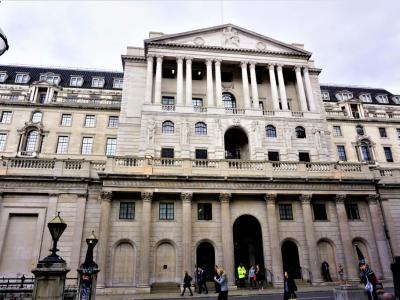
Now, about that grand structure on Threadneedle Street-it spans a solid three acres and is wrapped in a stern, windowless Neoclassical curtain wall designed by Sir John Soane back in 1828. While the original bank building was bulldozed in the 1920s, this dramatic outer wall still stands like a fortress of finance, guarding centuries of secrets and, let’s be honest, a fair bit of gold...
Speaking of gold: just around the corner, on Bartholomew Lane, the Bank of England Museum offers a deep dive into the bank’s fascinating past. Here you’ll find everything from the original Royal Charter to high-tech interactive displays-yes, you can actually simulate taming inflation, and it’s more fun than it sounds.
But the star of the show is a real gold bar, gleaming in a glass case, just waiting for visitors to try lifting it. Note: it’s heavier than it looks-and no, you can’t sneak it out in your backpack. The security knows all your tricks.
So, whether you're into economics or just gold-digging history, this Old Lady is full of surprises.
Founded in 1694, the Bank was originally tasked with propping up a cash-strapped government. These days, it’s doing quite a bit more than just keeping the royal purse tidy. Think currency printing, interest rate setting, foreign exchange watching, and gold-hoarding-all in a day’s work. Since 1997, it’s even been the U.K.’s answer to the U.S. Federal Reserve, steering monetary policy and tweaking interest rates while economists squint at inflation charts.
Now, about that grand structure on Threadneedle Street-it spans a solid three acres and is wrapped in a stern, windowless Neoclassical curtain wall designed by Sir John Soane back in 1828. While the original bank building was bulldozed in the 1920s, this dramatic outer wall still stands like a fortress of finance, guarding centuries of secrets and, let’s be honest, a fair bit of gold...
Speaking of gold: just around the corner, on Bartholomew Lane, the Bank of England Museum offers a deep dive into the bank’s fascinating past. Here you’ll find everything from the original Royal Charter to high-tech interactive displays-yes, you can actually simulate taming inflation, and it’s more fun than it sounds.
But the star of the show is a real gold bar, gleaming in a glass case, just waiting for visitors to try lifting it. Note: it’s heavier than it looks-and no, you can’t sneak it out in your backpack. The security knows all your tricks.
So, whether you're into economics or just gold-digging history, this Old Lady is full of surprises.
4) Sky Garden
Designed by Uruguayan architect Rafael Viñoly, 20 Fenchurch Street is better known by its catchier nickname-the “Walkie-Talkie.” Why? Well, because it looks exactly like one, just supersized and stuck smack in the London skyline. Not everyone is a fan of its chunky silhouette, but love it or mock it, the building makes quite the statement-and unlike most skyscrapers, it actually lets the public in for free.
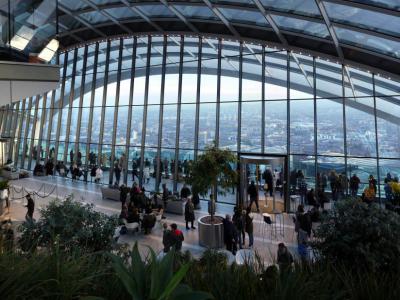
At the top sits the Sky Garden, a three-story glass crown perched on the 35th, 36th, and 37th floors. To get in, you’ll need to be quick on the click-free tickets drop every Monday, and they vanish faster than a London cab on a rainy night. Once you’ve secured your spot, you’ll be treated to one of the best panoramic views in the city, complete with a side of wine or dinner if you book a table. Yes, the bars and restaurants stay open late for those who like their skyline with a cocktail.
From this lofty perch, the view is a who’s who of London’s architectural elite: look south for the jagged elegance of The Shard, or north for a full lineup of nicknamed giants-Tower 42, the Gherkin, the Cheesegrater, the Scalpel, and the tall-and-polished 22 Bishopsgate.
As for the “garden” part of Sky Garden, it’s not just a name. You’ll find a leafy collection of semitropical trees, succulents, and flowering showstoppers like African lilies, Red Hot Pokers, and Birds of Paradise, all bordered by wafts of French lavender. It’s basically a high-rise greenhouse with views, drinks, and a better Instagram ratio than most city parks.
Bottom line: whether you’re a lover of lush greenery, skyline spotting, or just in it for the gram-the Walkie-Talkie talks back.
At the top sits the Sky Garden, a three-story glass crown perched on the 35th, 36th, and 37th floors. To get in, you’ll need to be quick on the click-free tickets drop every Monday, and they vanish faster than a London cab on a rainy night. Once you’ve secured your spot, you’ll be treated to one of the best panoramic views in the city, complete with a side of wine or dinner if you book a table. Yes, the bars and restaurants stay open late for those who like their skyline with a cocktail.
From this lofty perch, the view is a who’s who of London’s architectural elite: look south for the jagged elegance of The Shard, or north for a full lineup of nicknamed giants-Tower 42, the Gherkin, the Cheesegrater, the Scalpel, and the tall-and-polished 22 Bishopsgate.
As for the “garden” part of Sky Garden, it’s not just a name. You’ll find a leafy collection of semitropical trees, succulents, and flowering showstoppers like African lilies, Red Hot Pokers, and Birds of Paradise, all bordered by wafts of French lavender. It’s basically a high-rise greenhouse with views, drinks, and a better Instagram ratio than most city parks.
Bottom line: whether you’re a lover of lush greenery, skyline spotting, or just in it for the gram-the Walkie-Talkie talks back.
5) Abbey Road Studios and Crosswalk
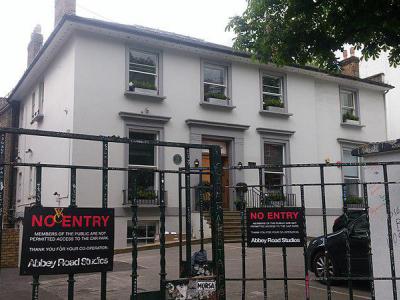
The studios where most of The Beatles' recording magic happened were initially established in 1931 by the Gramophone Company, a forerunner of the British music company EMI. They were still called 'EMI Studios' in November of 1966, when The Beatles embarked on their recording journey for what would be called "Sgt. Pepper's Lonely Hearts Club Band" and were officially renamed 'Abbey Road Studios' in 1970 after The Beatles' LP of the same name, from the previous year.
The famous photograph featured on the cover of "Abbey Road", depicting the band members walking across the road, was captured just outside these very studios. It is the band's only cover art that portrays a recognizable location, creating a connection with fans, especially in the UK. Moreover, it carries a significant emotional impact when one realizes that this was the last album The Beatles recorded together, serving as a heartfelt tribute to the studio that had been their creative home for so many years. Nearly all of their albums and singles dating from 1962 to 1970 were recorded at Abbey Road.
Abbey Road Studios continue to operate as a functional facility, and as a result, they are not accessible for public tours (those wishing to gain entry would need to secure audio or session work bookings). Nevertheless, the zebra crossing outside the studio remains an immensely popular destination for Beatles enthusiasts, serving as a notable spot for photographs. Just be very careful with the cars – they may not like stopping for all the photo-taking junkies out there!
The famous photograph featured on the cover of "Abbey Road", depicting the band members walking across the road, was captured just outside these very studios. It is the band's only cover art that portrays a recognizable location, creating a connection with fans, especially in the UK. Moreover, it carries a significant emotional impact when one realizes that this was the last album The Beatles recorded together, serving as a heartfelt tribute to the studio that had been their creative home for so many years. Nearly all of their albums and singles dating from 1962 to 1970 were recorded at Abbey Road.
Abbey Road Studios continue to operate as a functional facility, and as a result, they are not accessible for public tours (those wishing to gain entry would need to secure audio or session work bookings). Nevertheless, the zebra crossing outside the studio remains an immensely popular destination for Beatles enthusiasts, serving as a notable spot for photographs. Just be very careful with the cars – they may not like stopping for all the photo-taking junkies out there!
6) Carnaby Street
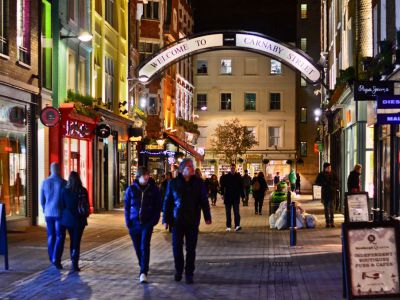
Until the 1950s, Carnaby was a quiet street on the western edge of Soho, mainly inhabited by sweatshop tailors who crafted suits for the nearby Savile Row in Mayfair. However, in 1954, Bill Green opened a shop in the neighboring Newburgh Street, where he sold bold and unconventional clothing to the gay community frequenting the local baths. Soon after, John Stephen, the son of a grocer from Glasgow, launched "His Clothes" on Beak Street. In 1960, Stephen relocated his business to Carnaby and swiftly established a chain of stylish boutiques that catered to the growing demand for flamboyant men's fashion, including the iconic "I Was Lord Kitchener's Valet" store. By 1964, Carnaby had become a magnet for Mods, Jamaican Rude Boys, and other fashion-forward individuals, as noted by the Daily Telegraph. It was also the year when Mary Quant introduced her first miniskirt to the area, solidifying Carnaby as the epicenter of London's vibrant "Swinging Sixties" scene, with its street sign being the most popular postcard in the city.
However, Carnaby Street's excessive hype eventually led to its downfall, as it transformed into a street filled with overpriced and low-quality merchandise. Today, it has been transformed into a pedestrianized and fashionable area once more, but it is predominantly occupied by chain stores. To experience the latest in contemporary London fashion, one must explore nearby areas such as Fouberts Place, Newburgh Street, and Kingly Court or venture to the east of London. The pedestrianization of parallel Kingly Street has injected a vibrant nightlife into this corner of Soho, with patrons spilling out from the restaurants and bars that now occupy its eastern side, including one of London's longest-running blues bars ("Ain't Nothin But The Blues Bar") at #20.
However, Carnaby Street's excessive hype eventually led to its downfall, as it transformed into a street filled with overpriced and low-quality merchandise. Today, it has been transformed into a pedestrianized and fashionable area once more, but it is predominantly occupied by chain stores. To experience the latest in contemporary London fashion, one must explore nearby areas such as Fouberts Place, Newburgh Street, and Kingly Court or venture to the east of London. The pedestrianization of parallel Kingly Street has injected a vibrant nightlife into this corner of Soho, with patrons spilling out from the restaurants and bars that now occupy its eastern side, including one of London's longest-running blues bars ("Ain't Nothin But The Blues Bar") at #20.
7) Seven Dials
Situated between Covent Garden and Soho, you'll find Seven Dials, a quaint cobblestone area that beckons fashion enthusiasts with its vintage clothing and accessory boutiques, streetwear specialists, and cosmetics shops. It's a fantastic destination for shopping without the hefty London price tags, and it also offers a glimpse into the history of the UK's capital city.
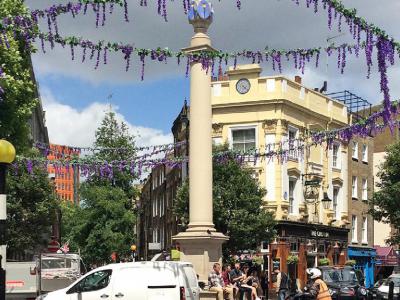
Comprising seven interconnected streets and courtyards, this area was once part of the Saint Giles Rookery, a destitute neighborhood frequented by the impoverished, prostitutes, and petty thieves. Thanks to its seven escape routes, pickpockets frequently eluded capture. However, in 1690, Thomas Neale envisioned a transformation of this locale into an upper-middle-class district. His original plan centered on a square where six streets converged, featuring a pillar adorned with six sundials. Just before the project's completion, a seventh street was added, and while the name Seven Dials persisted, a seventh sundial was never affixed to the pillar. Nevertheless, the central spike was often interpreted as such.
In 1773, the Town Council removed the column, ostensibly for repairs but primarily to disperse the "undesirable elements" congregating at the central square. This move didn't significantly reduce crime, but it became a topic of local discussion. Over time, the "undesirable elements" lost interest and relocated to more lucrative areas, leading this spot to evolve into a favored gathering place for students.
Pubs and shops were either refurbished or newly opened around the pillar, which was replaced by a replica of the original in 1988. Today, Seven Dials draws millions of tourists annually who come to meander through its charming cobbled streets and discover hidden courtyards brimming with unique shops, boutiques, high-end cosmetics stores, bars, and restaurants.
Comprising seven interconnected streets and courtyards, this area was once part of the Saint Giles Rookery, a destitute neighborhood frequented by the impoverished, prostitutes, and petty thieves. Thanks to its seven escape routes, pickpockets frequently eluded capture. However, in 1690, Thomas Neale envisioned a transformation of this locale into an upper-middle-class district. His original plan centered on a square where six streets converged, featuring a pillar adorned with six sundials. Just before the project's completion, a seventh street was added, and while the name Seven Dials persisted, a seventh sundial was never affixed to the pillar. Nevertheless, the central spike was often interpreted as such.
In 1773, the Town Council removed the column, ostensibly for repairs but primarily to disperse the "undesirable elements" congregating at the central square. This move didn't significantly reduce crime, but it became a topic of local discussion. Over time, the "undesirable elements" lost interest and relocated to more lucrative areas, leading this spot to evolve into a favored gathering place for students.
Pubs and shops were either refurbished or newly opened around the pillar, which was replaced by a replica of the original in 1988. Today, Seven Dials draws millions of tourists annually who come to meander through its charming cobbled streets and discover hidden courtyards brimming with unique shops, boutiques, high-end cosmetics stores, bars, and restaurants.
8) Neal's Yard
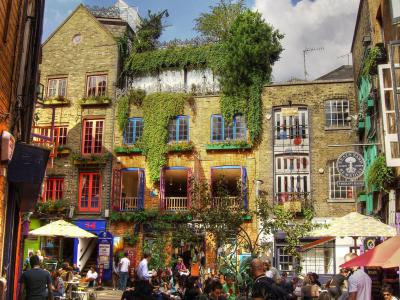
On the picturesque Neal Street, you can spot former warehouses dating back to the 19th century, recognizable by the high hoisting mechanisms on their exterior walls. Most of these structures have been transformed into shops and dining establishments. Just off Neal Street, discreetly tucked away from view, you'll discover Neal's Yard, a vibrant and cheerful courtyard housing independent restaurants and shops. Many of these establishments feature brightly painted facades, and the area is adorned with trees and hanging flower baskets.
Named after the 17th-century developer Thomas Neale, it's remarkable to think that not too long ago, this corner of London was a neglected area filled with bins and quite possibly even rats. Fortunately, in 1976, Nicholas Saunders, an alternative activist with entrepreneurial vision, undertook the space's transformation into the thriving hub it is today. He began by purchasing a rundown warehouse for the nearby Covent Garden fruit and vegetable market. This success led to the establishment of various other ventures in nearby buildings, including a coffee house, a bakery, and an apothecary.
Today, this cozy enclave hosts a variety of health-conscious cafes and retailers, with each business dedicated to sustainable and ethical practices. Whether your palate yearns for a massive 20-inch pizza courtesy of Homeslice or the irresistible delights of pastries and doughnuts from St. John's Bakery, you'll find your cravings satisfied. Neal's Yard Remedies presents an assortment of elixirs and creams, while Neal's Yard Dairy stands as one of London's premier destinations for cheese enthusiasts.
Whenever you're in pursuit of the perfect idyllic moment or simply wish to savor a sunny day while relishing an outdoor drink, Neal's Yard emerges as the ultimate destination.
Named after the 17th-century developer Thomas Neale, it's remarkable to think that not too long ago, this corner of London was a neglected area filled with bins and quite possibly even rats. Fortunately, in 1976, Nicholas Saunders, an alternative activist with entrepreneurial vision, undertook the space's transformation into the thriving hub it is today. He began by purchasing a rundown warehouse for the nearby Covent Garden fruit and vegetable market. This success led to the establishment of various other ventures in nearby buildings, including a coffee house, a bakery, and an apothecary.
Today, this cozy enclave hosts a variety of health-conscious cafes and retailers, with each business dedicated to sustainable and ethical practices. Whether your palate yearns for a massive 20-inch pizza courtesy of Homeslice or the irresistible delights of pastries and doughnuts from St. John's Bakery, you'll find your cravings satisfied. Neal's Yard Remedies presents an assortment of elixirs and creams, while Neal's Yard Dairy stands as one of London's premier destinations for cheese enthusiasts.
Whenever you're in pursuit of the perfect idyllic moment or simply wish to savor a sunny day while relishing an outdoor drink, Neal's Yard emerges as the ultimate destination.
