Custom Walk in Bratislava, Slovakia by mauritaleechandler_2c629a created on 2026-05-07
Guide Location: Slovakia » Bratislava
Guide Type: Custom Walk
# of Sights: 7
Tour Duration: 2 Hour(s)
Travel Distance: 4 Km or 2.5 Miles
Share Key: 4USZH
Guide Type: Custom Walk
# of Sights: 7
Tour Duration: 2 Hour(s)
Travel Distance: 4 Km or 2.5 Miles
Share Key: 4USZH
How It Works
Please retrieve this walk in the GPSmyCity app. Once done, the app will guide you from one tour stop to the next as if you had a personal tour guide. If you created the walk on this website or come to the page via a link, please follow the instructions below to retrieve the walk in the app.
Retrieve This Walk in App
Step 1. Download the app "GPSmyCity: Walks in 1K+ Cities" on Apple App Store or Google Play Store.



Step 2. In the GPSmyCity app, download(or launch) the guide "Bratislava Map and Walking Tours".
Step 3. Tap the menu button located at upper right corner of the "Walks" screen and select "Retrieve custom walk". Enter the share key: 4USZH
1) Blue Church (must see)
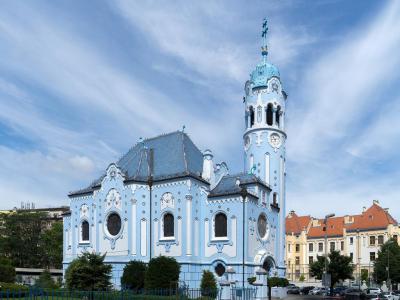
The Hungarian Secessionist Catholic Church, known as the Church of Saint Elisabeth or the Blue Church, is located in Old Town Bratislava. The construction was consecrated to Elisabeth of Hungary, who was a princess and, later, became a Roman Catholic saint. She was widowed young and surrendered her wealth for a life devoted to the poor and indigent. After her death at the age of 24, many miracles of healing were accredited to her. She was canonized by Pope Gregory IX in 1235.
Built in 1908, the structure was designed by Odon Lechner, a recognized Hungarian architect. He was known to embellish his constructions with Zsolnay tile patterns. Zsolnay tiles were manufactured by a Hungarian company known for its intricate porcelain, tiles, stoneware and pottery. The tiles on the church’s roof were generated using the pyrogranite process, which involves firing ceramic under exceptionally high temperatures, producing resilient materials which are resistant to acid and frost. The structure has attained its name because of the blue color of the mosaics, which decorate its roof and walls.
The building features a cylindrical tower and bell dome common to the Hungarian Art Nouveau and the Romanesque movement in art and architecture. The single nave church contains vaulted ceilings along with hints of barrel vaults. Romanesque double pillars encompass the entrances and the windows.
Built in 1908, the structure was designed by Odon Lechner, a recognized Hungarian architect. He was known to embellish his constructions with Zsolnay tile patterns. Zsolnay tiles were manufactured by a Hungarian company known for its intricate porcelain, tiles, stoneware and pottery. The tiles on the church’s roof were generated using the pyrogranite process, which involves firing ceramic under exceptionally high temperatures, producing resilient materials which are resistant to acid and frost. The structure has attained its name because of the blue color of the mosaics, which decorate its roof and walls.
The building features a cylindrical tower and bell dome common to the Hungarian Art Nouveau and the Romanesque movement in art and architecture. The single nave church contains vaulted ceilings along with hints of barrel vaults. Romanesque double pillars encompass the entrances and the windows.
2) Cumil Statue (must see)
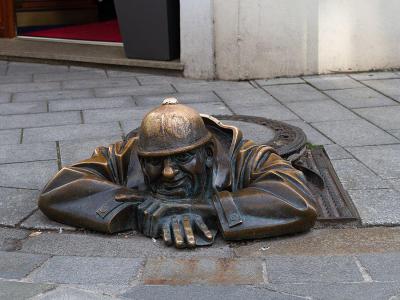
The Čumil Statue in Bratislava is a quirky bronze sculpture crafted by Viktor Hulík. Located at the crossroads of Panská and Rybárska Brána streets near the Main Square, this statue doesn’t depict any real person but comes from Hulík’s creative vision. It shows Čumil, a figure taking a break and peeking out from a manhole, watching people go by and seemingly enjoying the view of young women.
Kids particularly love this statue because they get to touch Čumil’s head and sit on the statue, making it more engaging. Yet, its placement has caused several accidents with passing vehicles bumping into it. To address this, a sign reading "Man at Work" has been placed beside the statue to alert drivers and add a touch of humor for tourists taking pictures.
Čumil is a popular spot for photos in Bratislava, drawing many tourists. Locals have come up with various fun and symbolic stories about why Čumil is there, ranging from jokes about him being nosy to deeper meanings depicting him as a typical Slovak worker. These stories and the statue’s playful nature spark lively conversations among visitors and locals alike.
Even though Čumil is now protected from traffic by a sign, he still faces the wear and tear of being a beloved interactive landmark. There’s even a light-hearted warning for women about mythical risks involving storks. More than just a piece of art, Čumil helps weave the rich cultural stories and legends of Bratislava.
Kids particularly love this statue because they get to touch Čumil’s head and sit on the statue, making it more engaging. Yet, its placement has caused several accidents with passing vehicles bumping into it. To address this, a sign reading "Man at Work" has been placed beside the statue to alert drivers and add a touch of humor for tourists taking pictures.
Čumil is a popular spot for photos in Bratislava, drawing many tourists. Locals have come up with various fun and symbolic stories about why Čumil is there, ranging from jokes about him being nosy to deeper meanings depicting him as a typical Slovak worker. These stories and the statue’s playful nature spark lively conversations among visitors and locals alike.
Even though Čumil is now protected from traffic by a sign, he still faces the wear and tear of being a beloved interactive landmark. There’s even a light-hearted warning for women about mythical risks involving storks. More than just a piece of art, Čumil helps weave the rich cultural stories and legends of Bratislava.
3) Napoleon's Army Soldier Statue
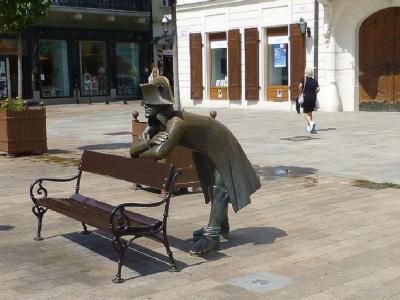
The city of Bratislava is filled with unique bronze statues which pop out from the public areas to surprise the masses. Tourists on holiday to the city will want to plan some relaxing time exploring the metropolis and seeking out these fabulous little surprises. The statue of Napoleon’s Army Soldier is located on the main square leaning over a park bench. Visitors enjoy spending time having their pictures taken with the statue. In fact, this is one of the most popular photographic moments in Bratislava. The sculptor, Juraj Meliš, created a figure to commemorate the two occasions when Napoleon’s army entered the city during the 1800s.
The statue earned its name because of its pose. His crossed arms and French Napoleonic hat are reminiscent of Napoleon himself. Some of the other figures, which can be found around the city, are Cumil, Paparazzi and Schone Naci. These whimsical bronze statues are a result of a collaboration among local sculptors who were asked by the town government to add features which would help the city move away from its once austere and communistic appearance. After the first couple statues were installed, more followed, due to their popularity with the locals and tourists.
The statue earned its name because of its pose. His crossed arms and French Napoleonic hat are reminiscent of Napoleon himself. Some of the other figures, which can be found around the city, are Cumil, Paparazzi and Schone Naci. These whimsical bronze statues are a result of a collaboration among local sculptors who were asked by the town government to add features which would help the city move away from its once austere and communistic appearance. After the first couple statues were installed, more followed, due to their popularity with the locals and tourists.
4) Kapitulska Street
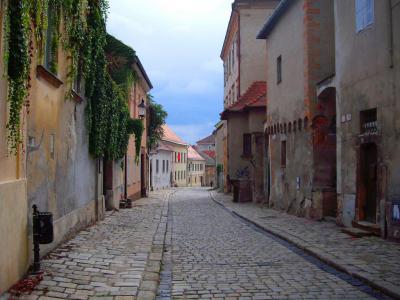
Kapitulska Street in Bratislava stands as one of the oldest and most historically rich streets in the city, particularly known for its preserved medieval architecture and tranquil ambiance.
Situated in the Old Town, a stroll along Kapitulska Street is akin to a journey through time, with its stone paving, ancient houses, and serene narrow courtyards that evoke scenes from a period film. The architecture here remains largely untouched by modern development, owing partly to the fact that nearly the entire street is owned by the Catholic Church. This ownership has helped preserve the original structures, including detailed doorways and windows, despite some of the buildings showing signs of decay.
Historically, the street was a strategic alley known as a cvingra, with archaeological findings in the area indicating settlements from the Late Stone Age and Celtic periods. Today, Kapitulska Street is notably quiet, with no shops and only a few permanent residents, including priests and seminarians from the nearby cathedral. The atmosphere is notably reflective, with the occasional sight of clergy walking the street in their long robes, adding to its timeless aura.
Kapitulska is particularly cherished for its unspoiled character. The lack of development during Communist times, while leading to some disrepair, ironically helped to retain much of the original medieval architecture, including minor but historically significant details like original door handles.
The street also hosts a biannual open-door event, inviting visitors to explore the hidden courtyards and secret gardens typically concealed behind its gates, including features like an underground chapel. This event offers a rare glimpse into the secluded historical treasures of one of Bratislava’s most authentic locations, making Kapitulska Street a must-visit for those looking to experience the city’s historical depth firsthand.
Situated in the Old Town, a stroll along Kapitulska Street is akin to a journey through time, with its stone paving, ancient houses, and serene narrow courtyards that evoke scenes from a period film. The architecture here remains largely untouched by modern development, owing partly to the fact that nearly the entire street is owned by the Catholic Church. This ownership has helped preserve the original structures, including detailed doorways and windows, despite some of the buildings showing signs of decay.
Historically, the street was a strategic alley known as a cvingra, with archaeological findings in the area indicating settlements from the Late Stone Age and Celtic periods. Today, Kapitulska Street is notably quiet, with no shops and only a few permanent residents, including priests and seminarians from the nearby cathedral. The atmosphere is notably reflective, with the occasional sight of clergy walking the street in their long robes, adding to its timeless aura.
Kapitulska is particularly cherished for its unspoiled character. The lack of development during Communist times, while leading to some disrepair, ironically helped to retain much of the original medieval architecture, including minor but historically significant details like original door handles.
The street also hosts a biannual open-door event, inviting visitors to explore the hidden courtyards and secret gardens typically concealed behind its gates, including features like an underground chapel. This event offers a rare glimpse into the secluded historical treasures of one of Bratislava’s most authentic locations, making Kapitulska Street a must-visit for those looking to experience the city’s historical depth firsthand.
5) Church of St. Nicholas
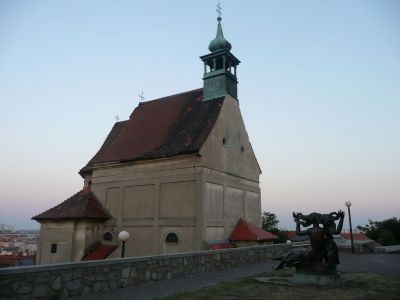
Built in 1661, the Church of Saint Nicholas was erected by Countess Frances Khuen, the widow of Count Paul Pálffy. Located next to world renowned Bratislava Castle, the structure is built in the early Baroque architectural style with a hint of Gothic bravura. The Baroque style was supported by the Jesuit order of the Roman Catholic Church during the 17th century. Common to this type of architecture, the church has expansive naves and vivid lighting. Visitors to the building are greeted by a stone statue of Saint Nicholas, the patron saint of fishermen and sailors of the Roman Catholic Church, who is located in the stone niche above the entrance of the building.
Just like the municipality where it is located, the church has been influenced by the people of diverse nations and religions like the Austrians, Germans, Hungarians, Slovaks and the Czechs. Up until the 1900s, Saint Nicholas’ Church was administered by the Roman Catholic Church. Presently, the facility serves the Orthodox Church. The extravagant altar is recognized throughout the community of academic experts of Baroque architecture as one of the best examples of this time period. The incredible angels at the top of the altar were created by the renowned artist Paul of Levoca.
Just like the municipality where it is located, the church has been influenced by the people of diverse nations and religions like the Austrians, Germans, Hungarians, Slovaks and the Czechs. Up until the 1900s, Saint Nicholas’ Church was administered by the Roman Catholic Church. Presently, the facility serves the Orthodox Church. The extravagant altar is recognized throughout the community of academic experts of Baroque architecture as one of the best examples of this time period. The incredible angels at the top of the altar were created by the renowned artist Paul of Levoca.
6) Bratislava Castle (must see)
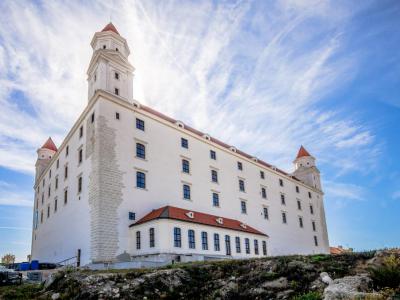
The imposing Bratislava Castle is the most conspicuous landmark in the town of Bratislava. It stands on an isolated rocky hill above the town, and had been built and rebuilt continuously throughout the 9th-18th centuries.
The site of the castle has been of strategic importance for most of the area's history. It is located roughly in the center of Europe. Still, more importantly, it is along the route between the Carpathians and the Alps at a convenient crossing point of the river Danube.
The hill and surrounding area have hosted settlements since before the early Iron Age. Evidence suggests that the first settlements here started around 3,500 BC. In those early centuries, the hill was used as an acropolis for the surrounding town.
Archeological evidence shows a history of Celt and Roman occupation through 500 AD. The current structure was begun in the 10th century but worked lagged over the years. As the need for defense increased for the Kingdom of Hungary, the castle was added on to.
The Kingdom was abolished in 1781, and the castle was more or less dismantled and abandoned. The structures were used as a seminary and military barracks for some time during the 19th century. By the middle part of the 20th century, the castle was in ruins.
A massive restoration effort was begun in 1957 and completed in 1968. The 1968 Federation Law, which formed the Czech Socialist Republic and the Slovak Socialist Republic, was signed in the castle. Many years later, the constitution of now independent Slovakia was also signed in the castle's Knights Hall.
The castle is beautifully restored and houses exhibitions from the Slovak National Museum. Even if you choose not to visit the museum and interior rooms, walking around the castle grounds and enjoying the views of the city and the Danube is not to be missed.
The site of the castle has been of strategic importance for most of the area's history. It is located roughly in the center of Europe. Still, more importantly, it is along the route between the Carpathians and the Alps at a convenient crossing point of the river Danube.
The hill and surrounding area have hosted settlements since before the early Iron Age. Evidence suggests that the first settlements here started around 3,500 BC. In those early centuries, the hill was used as an acropolis for the surrounding town.
Archeological evidence shows a history of Celt and Roman occupation through 500 AD. The current structure was begun in the 10th century but worked lagged over the years. As the need for defense increased for the Kingdom of Hungary, the castle was added on to.
The Kingdom was abolished in 1781, and the castle was more or less dismantled and abandoned. The structures were used as a seminary and military barracks for some time during the 19th century. By the middle part of the 20th century, the castle was in ruins.
A massive restoration effort was begun in 1957 and completed in 1968. The 1968 Federation Law, which formed the Czech Socialist Republic and the Slovak Socialist Republic, was signed in the castle. Many years later, the constitution of now independent Slovakia was also signed in the castle's Knights Hall.
The castle is beautifully restored and houses exhibitions from the Slovak National Museum. Even if you choose not to visit the museum and interior rooms, walking around the castle grounds and enjoying the views of the city and the Danube is not to be missed.
7) New Bridge and UFO Observation Deck (must see)
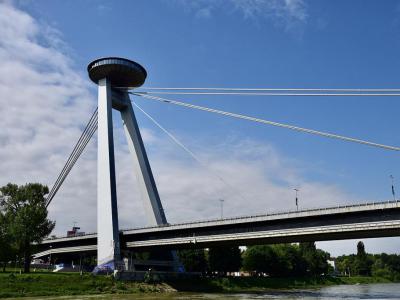
One of the most iconic features of modern-day Bratislava is the Novy Most, or "New Bridge." This modern thoroughfare connects the two halves of the city separated by the river Danube. Since 2012, the official name of the bridge was changed to "Bridge of the Slovak National Uprising" to commemorate the Slovak National Uprising against Nazi during World War II, but locals prefer to call it "UFO Bridge" for its UFO-shaped observation desk at the top.
The Novy Most was built between 1967 and 1972. The total length of the bridge is 1,413 feet or 430 meters. It is an asymmetrical cable-stayed bridge made of steel. It is the world's longest bridge that has only one pylon with one cable-stayed plane. One of the best features of the bridge is that the lower levels are reserved for pedestrian and bicycle traffic only.
Of course, the most notable feature of the Novy Most is the UFO-shaped restaurant and observation deck. The building is mounted on top of the bridge's 278-foot-tall (84.6-meter) pylon.
While the restaurant serves some delicious Slovak and international cuisine, the real lure of the UFO is the view of the city and river from above.
The Novy Most was built between 1967 and 1972. The total length of the bridge is 1,413 feet or 430 meters. It is an asymmetrical cable-stayed bridge made of steel. It is the world's longest bridge that has only one pylon with one cable-stayed plane. One of the best features of the bridge is that the lower levels are reserved for pedestrian and bicycle traffic only.
Of course, the most notable feature of the Novy Most is the UFO-shaped restaurant and observation deck. The building is mounted on top of the bridge's 278-foot-tall (84.6-meter) pylon.
While the restaurant serves some delicious Slovak and international cuisine, the real lure of the UFO is the view of the city and river from above.
