Custom Walk in Belfast, Ireland by beth_e_bayer_4b95b7 created on 2026-05-12
Guide Location: Ireland » Belfast
Guide Type: Custom Walk
# of Sights: 8
Tour Duration: 5 Hour(s)
Travel Distance: 12.3 Km or 7.6 Miles
Share Key: 8WGD5
Guide Type: Custom Walk
# of Sights: 8
Tour Duration: 5 Hour(s)
Travel Distance: 12.3 Km or 7.6 Miles
Share Key: 8WGD5
How It Works
Please retrieve this walk in the GPSmyCity app. Once done, the app will guide you from one tour stop to the next as if you had a personal tour guide. If you created the walk on this website or come to the page via a link, please follow the instructions below to retrieve the walk in the app.
Retrieve This Walk in App
Step 1. Download the app "GPSmyCity: Walks in 1K+ Cities" on Apple App Store or Google Play Store.



Step 2. In the GPSmyCity app, download(or launch) the guide "Belfast Map and Walking Tours".
Step 3. Tap the menu button located at upper right corner of the "Walks" screen and select "Retrieve custom walk". Enter the share key: 8WGD5
1) Titanic Belfast (must see)
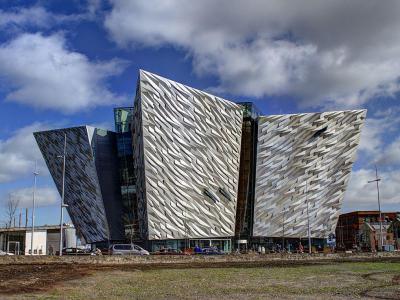
Nestled in the heart of Belfast’s revitalized Titanic Quarter, Titanic Belfast stands as a striking modern monument to one of history’s most famous ocean liners. Opened in 2012 on the very site where RMS Titanic was designed, built, and launched, the building’s jagged silvery exterior-crafted from over 3,000 aluminum shards-evokes the image of ship bows cutting through water and shimmering ice crystals.
Inside, the visitor experience unfolds across nine immersive galleries that chronicle Titanic’s entire journey-from conception and engineering marvels in Belfast’s bustling shipyards, through its tragic maiden voyage in 1912, to the discovery of its wreck and the evolution of modern maritime safety. Interactive displays, atmospheric dark-rides, full-scale cabin recreations and a rotating 7.6 meters scale model bring the narrative to life. A returning visitor on Reddit noted the focus is more on Titanic’s birthplace and industrial heritage, rather than the tragedy itself, which might influence your expectations.
Your ticket also includes access to SS Nomadic, the last surviving White Star Line vessel and Titanic’s original tender, moored nearby in Hamilton Dock. For a deeper dive, the optional Discovery Walking Tour guides you through the original Harland & Wolff drawing offices, historic slipways, and the launch site, with compelling architectural metaphors embedded in the building’s exterior.
Titanic Belfast is more than a museum-it’s the cultural heart of the Titanic Quarter, a regeneration success story and a gateway to Belfast’s evolving maritime narrative. Pair your visit with a stop at the Galley Café or Bistro 401 for locally sourced fare, and don’t miss the gift shop filled with artisan goods.
Inside, the visitor experience unfolds across nine immersive galleries that chronicle Titanic’s entire journey-from conception and engineering marvels in Belfast’s bustling shipyards, through its tragic maiden voyage in 1912, to the discovery of its wreck and the evolution of modern maritime safety. Interactive displays, atmospheric dark-rides, full-scale cabin recreations and a rotating 7.6 meters scale model bring the narrative to life. A returning visitor on Reddit noted the focus is more on Titanic’s birthplace and industrial heritage, rather than the tragedy itself, which might influence your expectations.
Your ticket also includes access to SS Nomadic, the last surviving White Star Line vessel and Titanic’s original tender, moored nearby in Hamilton Dock. For a deeper dive, the optional Discovery Walking Tour guides you through the original Harland & Wolff drawing offices, historic slipways, and the launch site, with compelling architectural metaphors embedded in the building’s exterior.
Titanic Belfast is more than a museum-it’s the cultural heart of the Titanic Quarter, a regeneration success story and a gateway to Belfast’s evolving maritime narrative. Pair your visit with a stop at the Galley Café or Bistro 401 for locally sourced fare, and don’t miss the gift shop filled with artisan goods.
2) St. George's Market (must see)
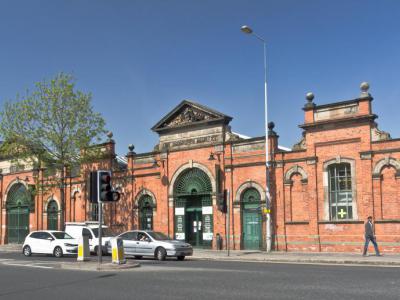
Saint George's Market is the last surviving Victorian covered market in Belfast. It was built in three phases between 1890 and 1896. Before 1890, Saint George's Market was an open market and most likely contained a slaughterhouse and a meat market.
The original (pre 1890) market was smaller than the new structure. It was built in red brick with sandstone dressing. Externally it features Roman styled arches with Latin and Irish inscriptions - the City’s Latin motto "what shall we give in return for so much?" and the Irish phrase "Red Hand of Ireland".
The main entrance arch displays the Belfast Coat of Arms. This newly covered market opened to the public on 20 June 1890. By the 1980s, Saint George’s Market had developed into a general market and it became the last of Belfast’s thriving Victorian markets.
Today Saint George’s Market is primarily used as a food market, however a number of other events are held at the site. These range from food festivals, art initiatives, exhibitions, charity launches, fashion shoots and live music events. The market also regularly holds music concerts. Acts including Duffy, Newton Faulkner, Deep Purple, Biffy Clyro and Mark Ronson have played the venue.
The original (pre 1890) market was smaller than the new structure. It was built in red brick with sandstone dressing. Externally it features Roman styled arches with Latin and Irish inscriptions - the City’s Latin motto "what shall we give in return for so much?" and the Irish phrase "Red Hand of Ireland".
The main entrance arch displays the Belfast Coat of Arms. This newly covered market opened to the public on 20 June 1890. By the 1980s, Saint George’s Market had developed into a general market and it became the last of Belfast’s thriving Victorian markets.
Today Saint George’s Market is primarily used as a food market, however a number of other events are held at the site. These range from food festivals, art initiatives, exhibitions, charity launches, fashion shoots and live music events. The market also regularly holds music concerts. Acts including Duffy, Newton Faulkner, Deep Purple, Biffy Clyro and Mark Ronson have played the venue.
3) Falls Road
Falls Road, winding approximately two miles (3.2 kilometers) west from Belfast’s city centre to Andersonstown, is the beating heart of west Belfast’s Catholic and Irish‑Republican community. Once a humble country lane named from Irish "territory of the enclosures", it thrived during the 19th‑century Industrial Revolution as narrow terraces sprouted to house workers in Belfast’s legendary linen mills. Today, the road remains densely residential, lined with small shops, churches, schools, and community spaces – a living portrait of local life.
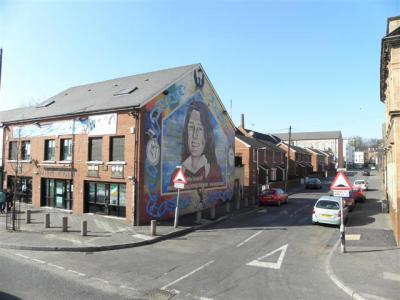
During the Troubles, Falls Road was a flashpoint of political conflict, lying just across the infamous Peace Wall from the predominantly Protestant Shankill Road. It witnessed events such as the 1970 "Falls Curfew," during which the British Army sealed off thousands of homes, sparking fierce confrontation and controversy. Mural art became the community’s visual voice – the Bobby Sands portrait, the International and Solidarity Walls, and republican memorials stand today as vivid expressions of identity, resistance, and remembrance.
Since the Good Friday Agreement of 1998, violence has largely ceased, yet the Peace Wall remains, alongside evolving murals that now include global themes, such as solidarity with other struggles. Stop‑off highlights include the Garden of Remembrance, Clonard Monastery, Eileen Hickey Irish Republican History Museum (in a restored 1842 linen mill), and the vibrant Irish‑language cultural hub Culturlann McAdam O Fiaich.
Today, Falls Road isn’t just a historical zone-it’s a dynamic quarter alive with community culture. Chat with locals in cafés, browse the Gaelic bookstore An Ceathru Poili, or catch an Irish play or music event at the Culturlann. Whether you seek poignant murals, compelling oral histories, or glimpses into Belfast’s evolving cultural identity, Falls Road offers an immersive and unforgettable introduction to the city.
During the Troubles, Falls Road was a flashpoint of political conflict, lying just across the infamous Peace Wall from the predominantly Protestant Shankill Road. It witnessed events such as the 1970 "Falls Curfew," during which the British Army sealed off thousands of homes, sparking fierce confrontation and controversy. Mural art became the community’s visual voice – the Bobby Sands portrait, the International and Solidarity Walls, and republican memorials stand today as vivid expressions of identity, resistance, and remembrance.
Since the Good Friday Agreement of 1998, violence has largely ceased, yet the Peace Wall remains, alongside evolving murals that now include global themes, such as solidarity with other struggles. Stop‑off highlights include the Garden of Remembrance, Clonard Monastery, Eileen Hickey Irish Republican History Museum (in a restored 1842 linen mill), and the vibrant Irish‑language cultural hub Culturlann McAdam O Fiaich.
Today, Falls Road isn’t just a historical zone-it’s a dynamic quarter alive with community culture. Chat with locals in cafés, browse the Gaelic bookstore An Ceathru Poili, or catch an Irish play or music event at the Culturlann. Whether you seek poignant murals, compelling oral histories, or glimpses into Belfast’s evolving cultural identity, Falls Road offers an immersive and unforgettable introduction to the city.
4) Bobby Sands Mural
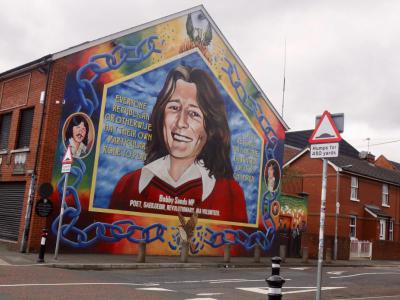
The Bobby Sands Mural is a world-famous portrait of the IRA leader. It is painted on the walls of the Sinn Fein Political Party Press Office at the corner of Sevastopol Street and Falls Road. It is based on a photograph taken of Sands while he was imprisoned.
In 1977, Bobby Sands was imprisoned in Long Kesh Maze Prison for 14 years for gun possession along with a number of other IRA members and leaders. While in prison, Sands and his cohorts demanded that they not be forced to wear prison uniforms or do prison work. They also wanted to be able to associate with other prisoners and receive visitors and/or packages. Denied these demands, Sands and the others went on a hunger strike.
Sands was elected to the UK parliament during his time in prison. However, he died from the hunger strike before he was able to take his seat. This mural of his smiling face was created as a memorial in 1998. It is one of many murals in Belfast, but is arguably the most well known.
In 1977, Bobby Sands was imprisoned in Long Kesh Maze Prison for 14 years for gun possession along with a number of other IRA members and leaders. While in prison, Sands and his cohorts demanded that they not be forced to wear prison uniforms or do prison work. They also wanted to be able to associate with other prisoners and receive visitors and/or packages. Denied these demands, Sands and the others went on a hunger strike.
Sands was elected to the UK parliament during his time in prison. However, he died from the hunger strike before he was able to take his seat. This mural of his smiling face was created as a memorial in 1998. It is one of many murals in Belfast, but is arguably the most well known.
5) Peace Wall (must see)
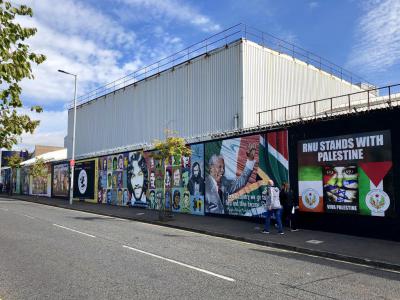
The Belfast Peace Walls are barriers that separate Protestant and Catholic neighborhoods through the city. They were originally built in 1969 to establish peace by separating sectarian groups. Today, they are popular tourist attractions.
Arguably, the most famous Peace Wall is located between Shankill Road and Falls Road. There is also a large Peace Wall along Cupar Way, which has become a canvas for local artists. Graffiti and street art intermingle on the Peace Walls to provide color to the city while also reminding citizens and tourists of the strife of the country.
The walls were originally meant to be temporary structures. Ironically, the structures have not only stayed in place, but have increased in number. The most recent Peace Wall was constructed in 2017. There are now 59 in the city.
The Belfast City Council began a plan to remove the Peace Walls, but the vast majority of residents believe they continue to help quell violence. Still, the plan is for all Peace Walls to be removed in the future.
Arguably, the most famous Peace Wall is located between Shankill Road and Falls Road. There is also a large Peace Wall along Cupar Way, which has become a canvas for local artists. Graffiti and street art intermingle on the Peace Walls to provide color to the city while also reminding citizens and tourists of the strife of the country.
The walls were originally meant to be temporary structures. Ironically, the structures have not only stayed in place, but have increased in number. The most recent Peace Wall was constructed in 2017. There are now 59 in the city.
The Belfast City Council began a plan to remove the Peace Walls, but the vast majority of residents believe they continue to help quell violence. Still, the plan is for all Peace Walls to be removed in the future.
6) Shankill Road
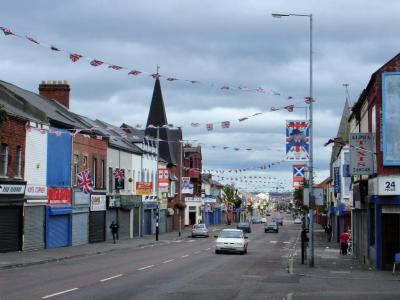
The Shankill Road is the arterial spine of West Belfast, stretching approximately 1.5 miles from the city centre towards the suburb of Woodvale. It arises from the Irish “road of the old church”, in reference to a 5th-century church once located here, remnants of which survive in the adjacent graveyard. Today, the road is a bustling portrait of working‑class loyalist life, lined with shops, schools, churches, and local services serving the Court district.
Once a 19th-century linen hub with streets named after Belgian flax regions, Shankill Road later became a center of loyalist activity during the Troubles. Groups like the Shankill Defence Association and UVF formed here, and the 1993 bombing at Frizzell’s Fish Shop marked a tragic chapter. Today, murals and memorials reflect both pride and remembrance.
Visitors will notice vibrant murals and peace lines peppered along the route, reflecting sectarian tensions while signaling hope. The famous Shankill Graveyard, dating back over a millennium, and the Somme memorial beside it, pay tribute to generations-including soldiers from the 36th Ulster Division. Nearby lie community treasures: the Shankill Women’s Centre, old pubs like the Rex Bar, and various sports facilities dedicated to boxing and football-halls of fame where locals such as Norman Whiteside and Wayne McCullough once trained.
Today, the Shankill Road offers tourists a genuine and complex Belfast experience. From its roots in early Christianity to its industrial heyday and through periods of conflict and reconciliation, this thoroughfare embodies a living neighbourhood. Visitors can explore its poignant memorials, admire street art, and enjoy the community spirit in local cafés, shops, or on a guided walking tour.
Once a 19th-century linen hub with streets named after Belgian flax regions, Shankill Road later became a center of loyalist activity during the Troubles. Groups like the Shankill Defence Association and UVF formed here, and the 1993 bombing at Frizzell’s Fish Shop marked a tragic chapter. Today, murals and memorials reflect both pride and remembrance.
Visitors will notice vibrant murals and peace lines peppered along the route, reflecting sectarian tensions while signaling hope. The famous Shankill Graveyard, dating back over a millennium, and the Somme memorial beside it, pay tribute to generations-including soldiers from the 36th Ulster Division. Nearby lie community treasures: the Shankill Women’s Centre, old pubs like the Rex Bar, and various sports facilities dedicated to boxing and football-halls of fame where locals such as Norman Whiteside and Wayne McCullough once trained.
Today, the Shankill Road offers tourists a genuine and complex Belfast experience. From its roots in early Christianity to its industrial heyday and through periods of conflict and reconciliation, this thoroughfare embodies a living neighbourhood. Visitors can explore its poignant memorials, admire street art, and enjoy the community spirit in local cafés, shops, or on a guided walking tour.
7) Crumlin Road Gaol (must see)
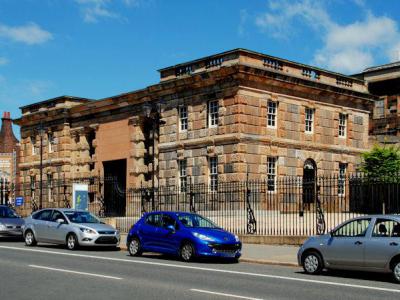
Crumlin Road Gaol, located in north Belfast, is one of the city's most compelling historical landmarks. Built between 1843 and 1845, the prison was operational for over 150 years and once held men, women, and children. Designed by Sir Charles Lanyon, the Victorian-era building was modeled on the radial prison design popular at the time, intended to improve surveillance and control. Now preserved as a museum and visitor attraction, it offers a stark insight into Northern Ireland’s troubled past and evolving justice system.
During its working years, Crumlin Road Gaol witnessed significant chapters of Irish history-from housing suffragettes and political prisoners during the Irish War of Independence to detaining individuals during the period known as The Troubles. The prison also held public executions, with the last hanging taking place in 1961. Visitors today can walk through restored cells, explore the underground tunnel that once connected the gaol to the nearby courthouse, and view the execution chamber that remains chillingly intact.
Guided tours and exhibitions detail the daily routines of prisoners, the harsh conditions they endured, and the broader political and social context that shaped the prison’s legacy. The preserved architecture, including its imposing facade and central hub layout, adds to the sense of immersion. Special events, evening ghost tours, and temporary exhibitions also offer unique ways to engage with the site.
Crumlin Road Gaol stands as a somber yet important reminder of Belfast’s complex history, inviting visitors to reflect on the intersections of punishment, politics, and human rights.
During its working years, Crumlin Road Gaol witnessed significant chapters of Irish history-from housing suffragettes and political prisoners during the Irish War of Independence to detaining individuals during the period known as The Troubles. The prison also held public executions, with the last hanging taking place in 1961. Visitors today can walk through restored cells, explore the underground tunnel that once connected the gaol to the nearby courthouse, and view the execution chamber that remains chillingly intact.
Guided tours and exhibitions detail the daily routines of prisoners, the harsh conditions they endured, and the broader political and social context that shaped the prison’s legacy. The preserved architecture, including its imposing facade and central hub layout, adds to the sense of immersion. Special events, evening ghost tours, and temporary exhibitions also offer unique ways to engage with the site.
Crumlin Road Gaol stands as a somber yet important reminder of Belfast’s complex history, inviting visitors to reflect on the intersections of punishment, politics, and human rights.
8) Belfast Cathedral (must see)
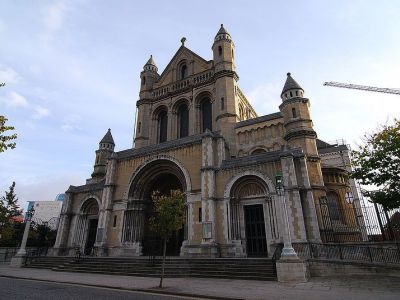
Belfast Cathedral, also known as Saint Anne’s Cathedral, stands as one of the city’s most striking landmarks, blending spiritual significance with architectural beauty. Located in the Cathedral Quarter-the historic heart of Belfast-this Anglican cathedral was founded in 1899 and has since become both a place of worship and a cultural hub. With its grand Romanesque Revival design, intricate mosaics, and commanding presence, the cathedral offers visitors a serene yet awe-inspiring atmosphere that reflects the city’s rich history and enduring spirit.
The building itself tells a story of resilience and ambition. Constructed over many decades, it combines late Victorian foundations with additions made throughout the 20th century, including the striking Spire of Hope, a modern stainless-steel spire added in 2007 that soars 40 meters into the sky. This striking feature, visible from across the city, symbolizes both faith and renewal. Inside, light streams through a kaleidoscope of stained glass, illuminating exquisite stonework and creating a setting that feels at once majestic and contemplative.
Visitors can explore remarkable artistic treasures, such as the elaborate mosaics designed by Sir Charles Nicholson and the stunning Chapel of the Holy Spirit, dedicated to those who lost their lives in the First World War. Another highlight is the “Spire of Hope” piercing through the cathedral roof, representing the city’s resilience and looking toward a brighter future. The cathedral also hosts concerts, exhibitions, and community events, extending its role beyond a sacred space to a vibrant gathering point for locals and visitors.
For travelers exploring Belfast, a stop at Saint Anne’s Cathedral provides not just a glimpse into the city’s religious heritage but also a chance to admire centuries of craftsmanship. Whether you’re drawn by its artistry, its peaceful atmosphere, or its role as a beacon of Belfast’s cultural life, the cathedral offers a moment of reflection and connection in the heart of Northern Ireland’s capital.
The building itself tells a story of resilience and ambition. Constructed over many decades, it combines late Victorian foundations with additions made throughout the 20th century, including the striking Spire of Hope, a modern stainless-steel spire added in 2007 that soars 40 meters into the sky. This striking feature, visible from across the city, symbolizes both faith and renewal. Inside, light streams through a kaleidoscope of stained glass, illuminating exquisite stonework and creating a setting that feels at once majestic and contemplative.
Visitors can explore remarkable artistic treasures, such as the elaborate mosaics designed by Sir Charles Nicholson and the stunning Chapel of the Holy Spirit, dedicated to those who lost their lives in the First World War. Another highlight is the “Spire of Hope” piercing through the cathedral roof, representing the city’s resilience and looking toward a brighter future. The cathedral also hosts concerts, exhibitions, and community events, extending its role beyond a sacred space to a vibrant gathering point for locals and visitors.
For travelers exploring Belfast, a stop at Saint Anne’s Cathedral provides not just a glimpse into the city’s religious heritage but also a chance to admire centuries of craftsmanship. Whether you’re drawn by its artistry, its peaceful atmosphere, or its role as a beacon of Belfast’s cultural life, the cathedral offers a moment of reflection and connection in the heart of Northern Ireland’s capital.
