Custom Walk in Nicosia, Cyprus by frangis_7b35eb created on 2026-05-27
Guide Location: Cyprus » Nicosia
Guide Type: Custom Walk
# of Sights: 11
Tour Duration: 2 Hour(s)
Travel Distance: 2.3 Km or 1.4 Miles
Share Key: X95QW
Guide Type: Custom Walk
# of Sights: 11
Tour Duration: 2 Hour(s)
Travel Distance: 2.3 Km or 1.4 Miles
Share Key: X95QW
How It Works
Please retrieve this walk in the GPSmyCity app. Once done, the app will guide you from one tour stop to the next as if you had a personal tour guide. If you created the walk on this website or come to the page via a link, please follow the instructions below to retrieve the walk in the app.
Retrieve This Walk in App
Step 1. Download the app "GPSmyCity: Walks in 1K+ Cities" on Apple App Store or Google Play Store.



Step 2. In the GPSmyCity app, download(or launch) the guide "Nicosia Map and Walking Tours".
Step 3. Tap the menu button located at upper right corner of the "Walks" screen and select "Retrieve custom walk". Enter the share key: X95QW
1) Eleftheria Square (Liberty Square)
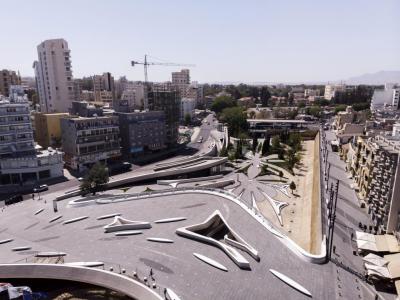
Liberty Square is Nicosia's main square. It was originally called Metaxas Square after Greek Prime Minister Ioannis Metaxas and was renamed Liberty Square in 1974. Liberty Square overlooks the city's medieval Venetian walls and is home to Nicosia Town Hall. As the city's center, the square often hosts various events such as political rallies and sporting events.
In 2005, Zaha Hadid Architects won the $45 million contract to redesign Liberty Square. The new Liberty Square's inauguration finally took place in late 2021. While Nicosia is divided between Greece and Turkey, the newly designed square seeks to unite Greek and Turkish communities.
The square has a beautiful, curving pedestrian bridge that connects to the city's streets. Under the bridge, visitors will find five acres of granite paved space. The square features plenty of trees and attractive water features. The new design is an extremely forward-thinking space that connects the old dry moat and ancient city walls to today's modern communities.
In 2005, Zaha Hadid Architects won the $45 million contract to redesign Liberty Square. The new Liberty Square's inauguration finally took place in late 2021. While Nicosia is divided between Greece and Turkey, the newly designed square seeks to unite Greek and Turkish communities.
The square has a beautiful, curving pedestrian bridge that connects to the city's streets. Under the bridge, visitors will find five acres of granite paved space. The square features plenty of trees and attractive water features. The new design is an extremely forward-thinking space that connects the old dry moat and ancient city walls to today's modern communities.
2) Ledra Street (must see)
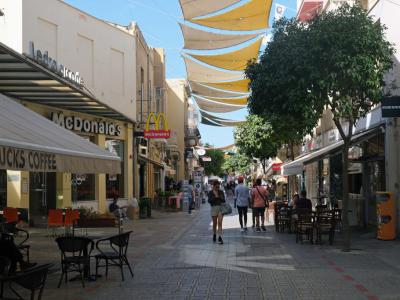
Ledra Street is a popular shopping street named after the ancient kingdom of Ledra. In 1050 BC, Ledra was located where Nicosia is today. Ledra Street is a pedestrian-only street, so you can walk and shop without the noise and inconvenience of vehicle traffic.
The street was known as Murder Mile during the EOKA struggle in the 1950s. During this time, EOKA fighters targeted the British military along Ledra Street.
The buffer zone was established in 1974 to separate the northern Turkish-controlled part of Nicosia from the Greek-controlled southern part.
It used to have a barricade as the center of the United Nations buffer zone between the Turkish and Greek sides of the city. The barricade was removed in 2008, and now people can walk across the border.
Most of Ledra Street is on the Greek side. The Greek side features international brands, and the Turkish side has smaller boutiques. The Shacolas Tower is one of the tallest buildings in Nicosia and links to three arcades that are filled with shops and cafes.
The street was known as Murder Mile during the EOKA struggle in the 1950s. During this time, EOKA fighters targeted the British military along Ledra Street.
The buffer zone was established in 1974 to separate the northern Turkish-controlled part of Nicosia from the Greek-controlled southern part.
It used to have a barricade as the center of the United Nations buffer zone between the Turkish and Greek sides of the city. The barricade was removed in 2008, and now people can walk across the border.
Most of Ledra Street is on the Greek side. The Greek side features international brands, and the Turkish side has smaller boutiques. The Shacolas Tower is one of the tallest buildings in Nicosia and links to three arcades that are filled with shops and cafes.
3) Shacolas Tower Museum & Observatory (must see)
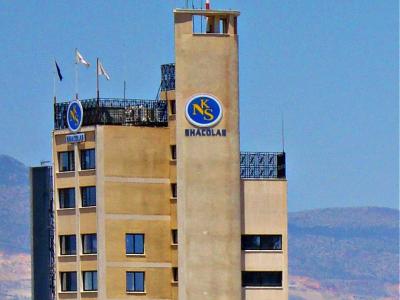
The Sharcolas Tower was originally called the Manglis Tower. It was built in 1959 by Costas Manglis and housed General Engineering and Hellenic Mining offices. The Shacolas Tower was Nicosia's tallest building until 1978.
The H&M Department store takes up the tower's first five floors. The 11th floor houses the Shacolas Tower Museum & Observatory.
The Shacolas Tower Museum & Observatory features exhibits of photographs and narratives describing Nicosia. In addition, visitors can listen to a taped history, available in several languages.
The museum features a beautiful view of the city. The view extends across the mountains and the rest of the island. In addition, guests can use binoculars and telescopes to get a closer look at different landmarks and attractions.
The museum's photos and descriptions are arranged so that visitors can look at the close-up photos and then look outside and see a bird's eye view of the referenced photo.
The museum also has a small shop that sells souvenirs.
The H&M Department store takes up the tower's first five floors. The 11th floor houses the Shacolas Tower Museum & Observatory.
The Shacolas Tower Museum & Observatory features exhibits of photographs and narratives describing Nicosia. In addition, visitors can listen to a taped history, available in several languages.
The museum features a beautiful view of the city. The view extends across the mountains and the rest of the island. In addition, guests can use binoculars and telescopes to get a closer look at different landmarks and attractions.
The museum's photos and descriptions are arranged so that visitors can look at the close-up photos and then look outside and see a bird's eye view of the referenced photo.
The museum also has a small shop that sells souvenirs.
4) Faneromeni Church
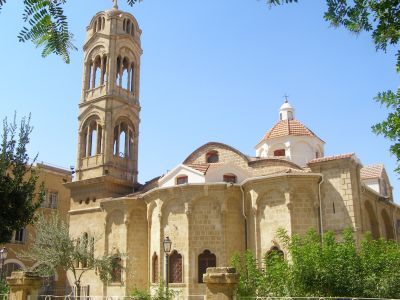
The Faneromeni Church has a long history. It was originally built in 1222 as part of a monastery for women. When the Ottomans conquered the island in 1570, they attempted to turn the church into a mosque. However, legends tell that several imams died trying to establish a mosque here, and the Ottomans abandoned their efforts.
The church was destroyed during an earthquake in 1715 and rebuilt. The rebuilt church was named after an icon of the Virgin that was found in the rubble. The current church's appearance dates to 1872 and features Byzantine, Latin, and neoclassical styles. Faneromeni Church is the largest church inside the city's walls.
The three-tiered iconostasis dates to 1659 and features 61 icons. The Virgin Faneromeni icon is a copy of the original ancient icon. The original icon originated between the 12th and 14th centuries and is now housed at the Byzantine Museum but returns to Faneromeni once a year.
The church features a bishop's throne that artist Papadopulos carved. Taliozoros carved the high pulpit. Artist Diamantis created the evangelist images on the pulpit. The impressive large silver-framed cross contains a piece from the True Cross.
The Marble Mausoleum was built to memorialize four clerks who were executed in 1821 during the Greek War of Independence.
The church was destroyed during an earthquake in 1715 and rebuilt. The rebuilt church was named after an icon of the Virgin that was found in the rubble. The current church's appearance dates to 1872 and features Byzantine, Latin, and neoclassical styles. Faneromeni Church is the largest church inside the city's walls.
The three-tiered iconostasis dates to 1659 and features 61 icons. The Virgin Faneromeni icon is a copy of the original ancient icon. The original icon originated between the 12th and 14th centuries and is now housed at the Byzantine Museum but returns to Faneromeni once a year.
The church features a bishop's throne that artist Papadopulos carved. Taliozoros carved the high pulpit. Artist Diamantis created the evangelist images on the pulpit. The impressive large silver-framed cross contains a piece from the True Cross.
The Marble Mausoleum was built to memorialize four clerks who were executed in 1821 during the Greek War of Independence.
5) Omeriye Mosque
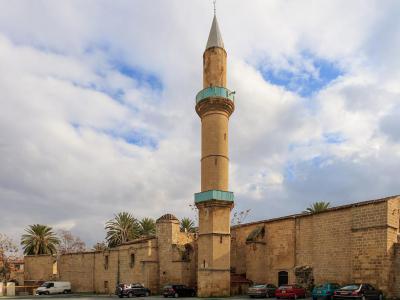
The Omeriye Mosque has gone through several transformations throughout its history. The building was originally built in the 14th century as the Augustinian monastery of Saint Mary. The monastery originally had six acres of grounds and featured orchards, a sugar plantation, fields, and gardens.
In 1570, the monastery was mostly destroyed by Ottoman invaders. In 1571, Ottoman ruler Lala Mustafa Pasha converted the monastery into a mosque. Tombstones from the monastery were used to repair the floor.
The Ottomans believed that the Prophet Omar, the second caliph of Islam, had rested here during the 7th century. So the mosque was named in Omar's memory. The Omeriye Mosque features Ottoman-Turkish architecture with a tall minaret, arches, and small domes. The interior features several beautiful paintings.
The mosque is open to visitors who can climb the minaret for outstanding views. In addition, the mosque features a beautiful garden.
In 1570, the monastery was mostly destroyed by Ottoman invaders. In 1571, Ottoman ruler Lala Mustafa Pasha converted the monastery into a mosque. Tombstones from the monastery were used to repair the floor.
The Ottomans believed that the Prophet Omar, the second caliph of Islam, had rested here during the 7th century. So the mosque was named in Omar's memory. The Omeriye Mosque features Ottoman-Turkish architecture with a tall minaret, arches, and small domes. The interior features several beautiful paintings.
The mosque is open to visitors who can climb the minaret for outstanding views. In addition, the mosque features a beautiful garden.
6) House of Dragoman Hadjigeorgakis Kornesios
Tucked in the historic Saint Antonios neighborhood near the Archbishopric in Nicosia, the House of Dragoman Hadjigeorgakis Kornesios is one of the finest surviving examples of late Ottoman urban architecture in Cyprus. Built in 1793 from local bloc-cut sandstone, the two-storey mansion belonged to Hadjigeorgakis Kornesios, a powerful Christian dragoman-official interpreter to the Sultan’s Divan-from 1779 to 1809. His wealth and influence, however, drew fatal envy; he was executed in Constantinople in 1809.
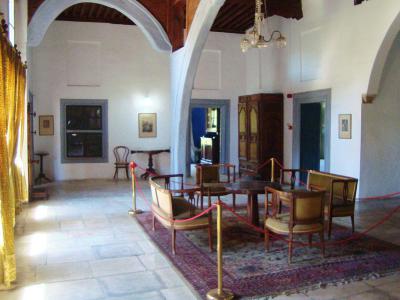
The mansion is designed in the shape of a Greek “Π,” enclosing a tranquil central garden with a fountain and a private three-room hammam (bathhouse). On the ground floor, you'll find the original kitchen and servant quarters. A wooden staircase with a stone base leads from the courtyard to the upper level, where the main living areas and the grand reception room (onda) are located. The richly decorated onda, with its gilded, carved woodwork and painted ceiling, reflects Ottoman tastes and ceremonial style.
The house was saved from demolition in the late 1950s thanks to public support and opened to the public on 3 May 1960. Today, it operates as the Ethnological Museum, Lefkosia, and received the Europa Nostra prize for its meticulous restoration.
The mansion is designed in the shape of a Greek “Π,” enclosing a tranquil central garden with a fountain and a private three-room hammam (bathhouse). On the ground floor, you'll find the original kitchen and servant quarters. A wooden staircase with a stone base leads from the courtyard to the upper level, where the main living areas and the grand reception room (onda) are located. The richly decorated onda, with its gilded, carved woodwork and painted ceiling, reflects Ottoman tastes and ceremonial style.
The house was saved from demolition in the late 1950s thanks to public support and opened to the public on 3 May 1960. Today, it operates as the Ethnological Museum, Lefkosia, and received the Europa Nostra prize for its meticulous restoration.
7) Archbishop's Palace
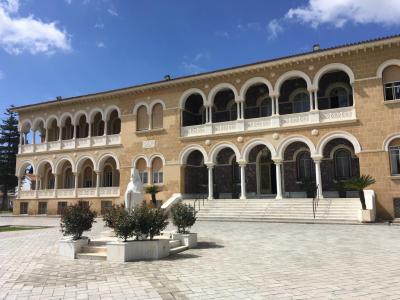
The Archbishop's Palace was built between 1956 and 1960 and stands next to the Old Archbishop's Palace, which was built in the 17th century. The new Archbishop's Palace features a neo-Byzantine style and was designed by George Nomikos.
The new Archbishop's Palace houses the Byzantine Museum and the Library of the Archdiocese. The Byzantine Museum has an impressive collection of Byzantine art. The museum displays over 200 icons that date from the 9th century to the 19th century. The icon exhibit features a large collection of icons from the 12th century.
The Byzantine Museum has sixth-century mosaics that were taken from the Church of Panagia Kanakaria. The museum also features a gallery with artworks on Greek mythology, Christianity, and portraits. In addition, the museum features historical books and sacred vessels.
The Old Archbishop's Palace hosts the Folk Art Museum and the National Resistance Museum.
The new Archbishop's Palace houses the Byzantine Museum and the Library of the Archdiocese. The Byzantine Museum has an impressive collection of Byzantine art. The museum displays over 200 icons that date from the 9th century to the 19th century. The icon exhibit features a large collection of icons from the 12th century.
The Byzantine Museum has sixth-century mosaics that were taken from the Church of Panagia Kanakaria. The museum also features a gallery with artworks on Greek mythology, Christianity, and portraits. In addition, the museum features historical books and sacred vessels.
The Old Archbishop's Palace hosts the Folk Art Museum and the National Resistance Museum.
8) Agios Ioannis (St. John's Cathedral)
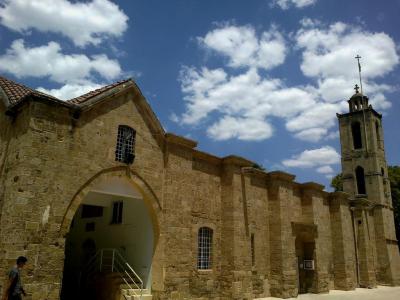
Saint John's Cathedral was built in the 17th century on the site of a 14th-century Benedictine Abbey. Saint John's Cathedral was built in 1662 and dedicated to Saint John the Theologian. The cathedral features Franco-Byzantine style. The Ottoman rulers required a modest exterior style, but the interior features stunning gilded woodwork and crystal chandeliers.
In 1720, the cathedral was renovated and converted into the Orthodox Archbishop's residence. Between 1736 and 1756, the interior walls were covered with beautiful frescoes depicting Biblical scenes. In addition to scenes showing the life of Christ, the frescoes show the history of the Church of Cyprus. Saint John's Cathedral is Nicosia's only church that still features complete original wall paintings.
Cretan artist John Kornaris created the four impressive icons between 1795 and 1797.
The cathedral serves as the official state church and has a throne for the archbishop and places for the Greek Ambassador and the President of the Republic of Cypress.
In 1720, the cathedral was renovated and converted into the Orthodox Archbishop's residence. Between 1736 and 1756, the interior walls were covered with beautiful frescoes depicting Biblical scenes. In addition to scenes showing the life of Christ, the frescoes show the history of the Church of Cyprus. Saint John's Cathedral is Nicosia's only church that still features complete original wall paintings.
Cretan artist John Kornaris created the four impressive icons between 1795 and 1797.
The cathedral serves as the official state church and has a throne for the archbishop and places for the Greek Ambassador and the President of the Republic of Cypress.
9) Nicosia Aqueduct
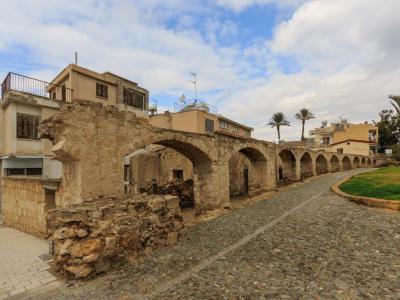
Tucked within the walled heart of Cyprus’s capital, the Nicosia Aqueduct is the island’s oldest aqueduct and a striking reminder of 18th-century engineering. Built in 1796 by Ottoman governor Silahtar Mustafa Aga, this stone-arched marvel once carried spring water from the mountainous north into the city, supplying the fountains, palaces, and mansions of Nicosia’s wealthiest inhabitants. The aqueduct stretched from the Kyrenia Gate to the Famagusta Gate, weaving its way through the city's fortified layout.
The most visible section today - known as the Silihtar Aqueduct - came to light only recently. Hidden for decades within the walls of newer buildings, eleven of its arches were unexpectedly uncovered during demolition works near Nikiforos Fokas Street, close to the Liberty Monument and Famagusta Gate. Although time had left the structure weathered, a comprehensive Nicosia Master Plan restoration project helped stabilize and showcase the monument, including updates to the local irrigation systems and pedestrian routes.
Now restored and integrated into the urban landscape, the Nicosia Aqueduct is more than a relic - it’s a peaceful and evocative stop on a walking tour of the city. It stands near several cultural landmarks, including the Archbishop’s Palace, the Byzantine Museum, the Cyprus Folk Art Museum, and the historic Pancyprian Gymnasium. Informative signage at the site enhances the experience, offering visitors insight into how this aqueduct once supported the rhythm of everyday life in Ottoman-era Nicosia.
The most visible section today - known as the Silihtar Aqueduct - came to light only recently. Hidden for decades within the walls of newer buildings, eleven of its arches were unexpectedly uncovered during demolition works near Nikiforos Fokas Street, close to the Liberty Monument and Famagusta Gate. Although time had left the structure weathered, a comprehensive Nicosia Master Plan restoration project helped stabilize and showcase the monument, including updates to the local irrigation systems and pedestrian routes.
Now restored and integrated into the urban landscape, the Nicosia Aqueduct is more than a relic - it’s a peaceful and evocative stop on a walking tour of the city. It stands near several cultural landmarks, including the Archbishop’s Palace, the Byzantine Museum, the Cyprus Folk Art Museum, and the historic Pancyprian Gymnasium. Informative signage at the site enhances the experience, offering visitors insight into how this aqueduct once supported the rhythm of everyday life in Ottoman-era Nicosia.
10) Liberty Monument
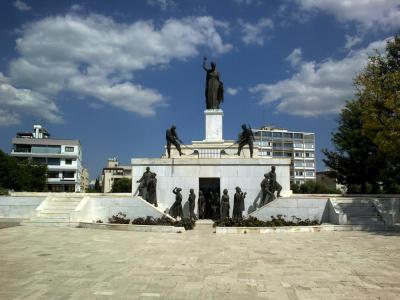
The Liberty Monument is located at the Podocattaro Bastion along the Venetian Walls. The monument honors EOKA fighters and was created in 1973 by Greek sculptor Ioannis Notaras.
EOKA stands for National Organization of Cypriot Fighters. This group fought to end British rule and unite Cyprus with Greece and was active between 1955 and 1959.
In 1959, officials from Cyprus, the U.K., Greece, and Turkey confirmed that Cyprus would become an independent country in the London-Zurich Agreements.
The imposing monument features seventeen bronze statues on a white marble pyramid. The top statue represents liberty and looks over two EOKA fighters. The liberty figure points to the sky with one finger.
The EOKA fighters are depicted pulling chains to open a prison gate and allow prisoners to escape. The prisoners are Cypriot peasants, soldiers, priests, villagers, men, and women who longed for freedom.
EOKA stands for National Organization of Cypriot Fighters. This group fought to end British rule and unite Cyprus with Greece and was active between 1955 and 1959.
In 1959, officials from Cyprus, the U.K., Greece, and Turkey confirmed that Cyprus would become an independent country in the London-Zurich Agreements.
The imposing monument features seventeen bronze statues on a white marble pyramid. The top statue represents liberty and looks over two EOKA fighters. The liberty figure points to the sky with one finger.
The EOKA fighters are depicted pulling chains to open a prison gate and allow prisoners to escape. The prisoners are Cypriot peasants, soldiers, priests, villagers, men, and women who longed for freedom.
11) Podocataro Bastion and Medieval Venetian Walls (must see)
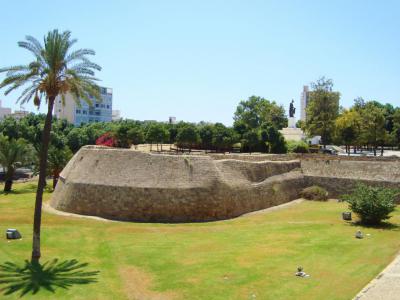
Nicosia's Medieval Venetian Walls are one of the city's most visited attractions. Nicosia's original walls were built during the Middle Ages. However, the Republic of Venice rebuilt the walls during the 16th century. Today, the walls are one of the Eastern Mediterranean's best-preserved city walls.
The first walls were built in the 14th century. When Cyprus became part of the Republic of Venice in 1489, the Venetians planned new fortifications, but their plans were delayed. Ottoman expansion inspired the Venetians to rebuild the city's walls in 1567. The Venetians also added an 80-meter-wide (262-feet) moat.
The walls were still under construction when the Ottomans invaded in 1570 and breached Podocattaro Bastion's walls. The Ottomans left thousands of soldiers in Nicosia and repaired the walls.
Nicosia's Venetian walls are circular and have eleven bastions and three gates. The bastions were named after members of the Italian aristocracy who donated funds to build the walls. Today, the Podocattaro Bastion is home to the Liberty Monument.
The walls feature innovative building techniques, such as improving the gate's protection and the wall's ability to withstand cannon fire.
Today, the walls are a much-visited tourist attraction. In addition, the dry moat is now used for sports fields, car parking, exhibitions, and a sculpture exhibition.
The first walls were built in the 14th century. When Cyprus became part of the Republic of Venice in 1489, the Venetians planned new fortifications, but their plans were delayed. Ottoman expansion inspired the Venetians to rebuild the city's walls in 1567. The Venetians also added an 80-meter-wide (262-feet) moat.
The walls were still under construction when the Ottomans invaded in 1570 and breached Podocattaro Bastion's walls. The Ottomans left thousands of soldiers in Nicosia and repaired the walls.
Nicosia's Venetian walls are circular and have eleven bastions and three gates. The bastions were named after members of the Italian aristocracy who donated funds to build the walls. Today, the Podocattaro Bastion is home to the Liberty Monument.
The walls feature innovative building techniques, such as improving the gate's protection and the wall's ability to withstand cannon fire.
Today, the walls are a much-visited tourist attraction. In addition, the dry moat is now used for sports fields, car parking, exhibitions, and a sculpture exhibition.
