Custom Walk in Chicago, Illinois by bdc1989_fed39c created on 2026-05-30
Guide Location: USA » Chicago
Guide Type: Custom Walk
# of Sights: 5
Tour Duration: 1 Hour(s)
Travel Distance: 2.6 Km or 1.6 Miles
Share Key: GJXXP
Guide Type: Custom Walk
# of Sights: 5
Tour Duration: 1 Hour(s)
Travel Distance: 2.6 Km or 1.6 Miles
Share Key: GJXXP
How It Works
Please retrieve this walk in the GPSmyCity app. Once done, the app will guide you from one tour stop to the next as if you had a personal tour guide. If you created the walk on this website or come to the page via a link, please follow the instructions below to retrieve the walk in the app.
Retrieve This Walk in App
Step 1. Download the app "GPSmyCity: Walks in 1K+ Cities" on Apple App Store or Google Play Store.



Step 2. In the GPSmyCity app, download(or launch) the guide "Chicago Map and Walking Tours".
Step 3. Tap the menu button located at upper right corner of the "Walks" screen and select "Retrieve custom walk". Enter the share key: GJXXP
1) Cloud Gate (must see)
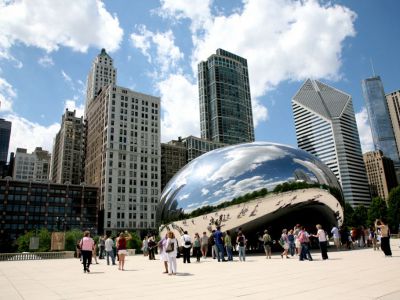
At the shiny center of AT&T Plaza in Millennium Park, stands the Cloud Gate - or as Chicagoans lovingly call it, The Bean. Sculpted between 2004 and 2006 by Anish Kapoor, an Indian-born British artist known for making giant shiny things that you can’t help staring at, this was his first outdoor public piece in the United States-which quickly became the selfie magnet of the Midwest.
Made from over 160 stainless steel plates seamlessly fused together (so well, in fact, you'd swear it was magic), this mirror-like blob stretches 66 feet long, stands 33 feet tall, and weighs in at a casual 100 tons. It's shaped like a drop of liquid mercury but looks more like an alien lentil from a sleek future where everything is polished to perfection.
Now, here’s the kicker: when Kapoor first proposed it, the art world blinked. Some said, “Gorgeous idea,” others said, “Logistically impossible.” Welding it, polishing it, cleaning it would be a nightmare! And yet - they pulled it off, nonetheless, although not without a few delays. When Millennium Park opened in 2004, The Bean wasn’t quite ready for its big debut. It took until May 15, 2006, for the formal unveiling, and since then it’s been soaking up praise, Instagram filters, and about ten million fingerprints a year.
Now, if you leave Chicago without a photo warped in The Bean’s belly, some may wonder if you've ever been to Chicago at all... Indeed, it's reflective, massive, and playful - and frankly, it’s probably already seen your face in someone else's selfie...
Made from over 160 stainless steel plates seamlessly fused together (so well, in fact, you'd swear it was magic), this mirror-like blob stretches 66 feet long, stands 33 feet tall, and weighs in at a casual 100 tons. It's shaped like a drop of liquid mercury but looks more like an alien lentil from a sleek future where everything is polished to perfection.
Now, here’s the kicker: when Kapoor first proposed it, the art world blinked. Some said, “Gorgeous idea,” others said, “Logistically impossible.” Welding it, polishing it, cleaning it would be a nightmare! And yet - they pulled it off, nonetheless, although not without a few delays. When Millennium Park opened in 2004, The Bean wasn’t quite ready for its big debut. It took until May 15, 2006, for the formal unveiling, and since then it’s been soaking up praise, Instagram filters, and about ten million fingerprints a year.
Now, if you leave Chicago without a photo warped in The Bean’s belly, some may wonder if you've ever been to Chicago at all... Indeed, it's reflective, massive, and playful - and frankly, it’s probably already seen your face in someone else's selfie...
2) Crown Fountain
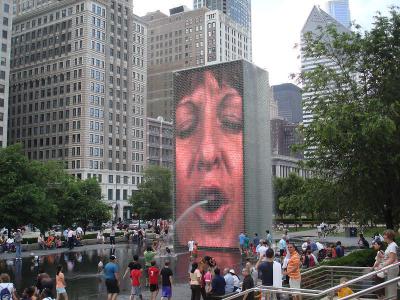
Heading south of Tribune Plaza, brace yourself for one of Chicago’s quirkiest icons-Crown Fountain, the brainchild of Spanish artist Jaume Plensa. Picture this: two towering glass monoliths, each 50 feet tall, silently facing off across a slick granite plaza. What's more-they’ve got faces. Lots of them. Hidden LED screens light up with close-ups of 1,000 real Chicagoans, captured mid-expression as they pretend to blow on a feather. The result is giant digital heads pursing their lips until-surprise!-a stream of water shoots from their mouths, giving the illusion that the city itself is spitting with playful charm. It’s weird, it’s wonderful, and yes, kids love it.
In summer, the space turns into an urban splash zone where businesspeople, toddlers, and tourists alike lose all dignity and just run through it. During the colder months, it becomes more of a sculpture garden with a twist-silent faces glowing in the frosty air like the city’s own Greek chorus.
But the magic of Crown Fountain isn’t just in the waterworks. It’s in the momentary community it creates. Strangers grin at each other as they get soaked, couples sneak kisses under the spray, and parents take far too many blurry photos. For a few minutes, nobody cares where you're from-they’re just dodging a digital spit-take together.
Swinging by, there's a good chance you'll get all in one: sunshine, shade, splashing, sitting, and sipping coffee while watching humanity be its messy, joyful self. The water’s clean, the vibe’s warm, and the maintenance crew deserves a medal. This is public art at its most entertaining-and it’s free. So, go on, get misted...
In summer, the space turns into an urban splash zone where businesspeople, toddlers, and tourists alike lose all dignity and just run through it. During the colder months, it becomes more of a sculpture garden with a twist-silent faces glowing in the frosty air like the city’s own Greek chorus.
But the magic of Crown Fountain isn’t just in the waterworks. It’s in the momentary community it creates. Strangers grin at each other as they get soaked, couples sneak kisses under the spray, and parents take far too many blurry photos. For a few minutes, nobody cares where you're from-they’re just dodging a digital spit-take together.
Swinging by, there's a good chance you'll get all in one: sunshine, shade, splashing, sitting, and sipping coffee while watching humanity be its messy, joyful self. The water’s clean, the vibe’s warm, and the maintenance crew deserves a medal. This is public art at its most entertaining-and it’s free. So, go on, get misted...
3) BP Pedestrian Bridge
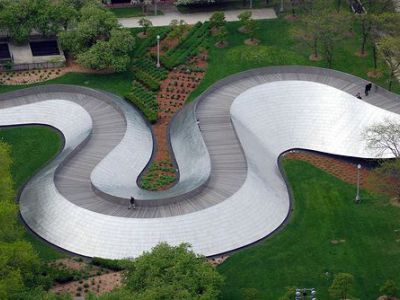
Now, for a curvy little masterpiece courtesy of the same architect Frank Gehry, check out the BP Pedestrian Bridge. Not content with just designing the Jay Pritzker Pavilion, Gehry decided to go full serpentine with this sleek, stainless-steel footpath that twists its way across Columbus Drive. It connects Millennium Park to what used to be Daley Bicentennial Plaza - now known as Maggie Daley Park - and, as a bonus, it helps muffle the traffic noise so that concertgoers at the pavilion aren’t treated to a backup horn section from passing cars.
Before you start guessing, “BP” doesn’t stand for “Bicentennial Plaza.” Nope. It’s named after British Petroleum, who kindly chipped in $5 million to get this shiny 960-foot bridge built. So yes, it’s technically a corporate-sponsored snake - but a classy one.
Gehry didn’t have to fight for the job. He was the only architect considered and agreed to build the bridge after the Pritzker family nailed down the funding. As for the inspiration, it wasn't some high-tech CAD sketch either. Apparently, it came from a live carp his grandmother used to buy at the fish market. A fish. That’s right...
Indeed, apart from having a pretty face, this bridge is also a structural overachiever. Designed to carry heavy foot traffic without crumpling under its own stylish weight, it’s been praised for its innovative use of stainless steel, shaped into flowing, organic lines that scream "Gehry" without saying a word.
So, being here, walk it, because on a sunny day, this promises to be one of Chicago’s most scenic strolls. You get skyline views, peeks at Lake Michigan, and a graceful glide between Millennium Park and Maggie Daley Park. It’s part walkway, part sculpture - and entirely worth your steps.
Before you start guessing, “BP” doesn’t stand for “Bicentennial Plaza.” Nope. It’s named after British Petroleum, who kindly chipped in $5 million to get this shiny 960-foot bridge built. So yes, it’s technically a corporate-sponsored snake - but a classy one.
Gehry didn’t have to fight for the job. He was the only architect considered and agreed to build the bridge after the Pritzker family nailed down the funding. As for the inspiration, it wasn't some high-tech CAD sketch either. Apparently, it came from a live carp his grandmother used to buy at the fish market. A fish. That’s right...
Indeed, apart from having a pretty face, this bridge is also a structural overachiever. Designed to carry heavy foot traffic without crumpling under its own stylish weight, it’s been praised for its innovative use of stainless steel, shaped into flowing, organic lines that scream "Gehry" without saying a word.
So, being here, walk it, because on a sunny day, this promises to be one of Chicago’s most scenic strolls. You get skyline views, peeks at Lake Michigan, and a graceful glide between Millennium Park and Maggie Daley Park. It’s part walkway, part sculpture - and entirely worth your steps.
4) Millennium Park (must see)
In 2004, when Anish Kapoor's colossal, gleaming Cloud Gate sculpture, the lively fountains, the captivating Crown Fountain, and a Disney-esque music pavilion all came together in this park, they quickly won the affection of both Chicagoans and tourists. This public space, which cost $250 million more than planned and opened four years later than scheduled, stands out as Chicago's most dazzling, showcasing contemporary architecture and design. Paul Goldberger, the architecture critic for The New York Times, hailed it as "one of the great new models for a kind of urban park." It has been embraced by locals and visitors alike and is widely considered the most impressive public project in Chicago since the 1893 World's Fair.
The park's origins trace back to a moment when Mayor Richard M. Daley conceived of it while sitting in his dentist's chair across the street, gazing at the sea of parking lots and railyards that occupied the site until the late 1990s. The initial design, created by the globally renowned Skidmore, Owings and Merrill firm based in Chicago, adhered to the traditional style of Grant Park, featuring formal fountains and gardens. However, private donors who had pledged to supplement public funding for the park's construction rejected this design as too conservative. Cindy Pritzker, a prominent Chicago philanthropist and the spouse of the late Jay Pritzker, the founder of the Hyatt hotel chain and the esteemed Pritzker Prize in architecture, eventually persuaded Frank Gehry (a previous Pritzker Prize laureate) to design the park's central pavilion, along with a bridge leading to the lake across Columbus Avenue. Gehry's involvement attracted other exceptional talents to the project, resulting in an impressively diverse yet cohesive masterpiece.
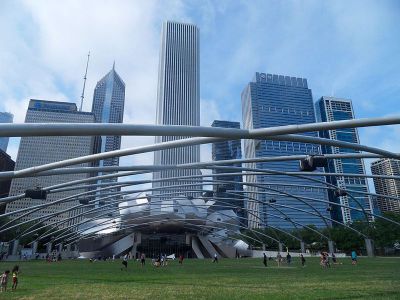
The star attraction undoubtedly lies in Gehry's remarkable Jay Pritzker Pavilion, featuring striking ribbons of stainless steel soaring 40 feet into the sky, resembling petals enveloping the music stage. Other notable elements include the Harris Theater for Music and Dance, offering an indoor option for performing arts enthusiasts, the McCormick Tribune Ice Rink, and the Lurie Garden, a year-round delight.
The park's origins trace back to a moment when Mayor Richard M. Daley conceived of it while sitting in his dentist's chair across the street, gazing at the sea of parking lots and railyards that occupied the site until the late 1990s. The initial design, created by the globally renowned Skidmore, Owings and Merrill firm based in Chicago, adhered to the traditional style of Grant Park, featuring formal fountains and gardens. However, private donors who had pledged to supplement public funding for the park's construction rejected this design as too conservative. Cindy Pritzker, a prominent Chicago philanthropist and the spouse of the late Jay Pritzker, the founder of the Hyatt hotel chain and the esteemed Pritzker Prize in architecture, eventually persuaded Frank Gehry (a previous Pritzker Prize laureate) to design the park's central pavilion, along with a bridge leading to the lake across Columbus Avenue. Gehry's involvement attracted other exceptional talents to the project, resulting in an impressively diverse yet cohesive masterpiece.
The star attraction undoubtedly lies in Gehry's remarkable Jay Pritzker Pavilion, featuring striking ribbons of stainless steel soaring 40 feet into the sky, resembling petals enveloping the music stage. Other notable elements include the Harris Theater for Music and Dance, offering an indoor option for performing arts enthusiasts, the McCormick Tribune Ice Rink, and the Lurie Garden, a year-round delight.
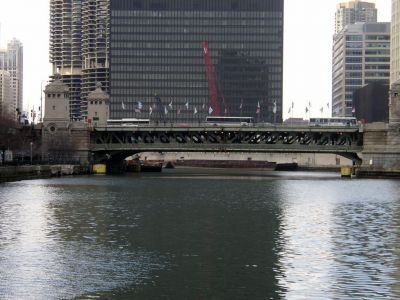
5) DuSable Bridge
Chicago boasts one of the largest collections of movable bridges in the world, with trunnion bascules being the predominant type. This particular bridge, well-suited for its prominent and bustling location, elegantly spans the river without any protruding superstructures, maintaining a generous, navigable channel. Its construction held paramount importance in the 1909 Plan of Chicago, serving as a catalyst for the rapid revitalization of real estate along North Michigan Avenue. Drawing inspiration from the design of Paris's Alexander III Bridge (1900), it features four corner pylons, decorative abutments, a gracefully flat arch profile, and seamlessly integrated embankments.
The forty-foot pylons, serving as functional operator houses, are adorned with sculptural reliefs narrating key events in Chicago's history. These include the explorations of Marquette and Joliet, the establishment of the city by trader Jean Baptiste Point du Sable, the Fort Dearborn Massacre of 1812, and the city's reconstruction following the devastating Great Chicago Fire of 1871. A commemorative plaque marks the site of the fort at the southern end of the bridge. Additionally, the southwest structure now houses a museum operated by the Friends of the Chicago River, open seasonally, providing visitors with the opportunity to observe the inner workings of the bridge's gears responsible for its opening and closing.
The forty-foot pylons, serving as functional operator houses, are adorned with sculptural reliefs narrating key events in Chicago's history. These include the explorations of Marquette and Joliet, the establishment of the city by trader Jean Baptiste Point du Sable, the Fort Dearborn Massacre of 1812, and the city's reconstruction following the devastating Great Chicago Fire of 1871. A commemorative plaque marks the site of the fort at the southern end of the bridge. Additionally, the southwest structure now houses a museum operated by the Friends of the Chicago River, open seasonally, providing visitors with the opportunity to observe the inner workings of the bridge's gears responsible for its opening and closing.
