Custom Walk in Liverpool, England by anita77955665 created on 2026-05-31
Guide Location: England » Liverpool
Guide Type: Custom Walk
# of Sights: 9
Tour Duration: 2 Hour(s)
Travel Distance: 2.5 Km or 1.6 Miles
Share Key: 6HS4U
Guide Type: Custom Walk
# of Sights: 9
Tour Duration: 2 Hour(s)
Travel Distance: 2.5 Km or 1.6 Miles
Share Key: 6HS4U
How It Works
Please retrieve this walk in the GPSmyCity app. Once done, the app will guide you from one tour stop to the next as if you had a personal tour guide. If you created the walk on this website or come to the page via a link, please follow the instructions below to retrieve the walk in the app.
Retrieve This Walk in App
Step 1. Download the app "GPSmyCity: Walks in 1K+ Cities" on Apple App Store or Google Play Store.



Step 2. In the GPSmyCity app, download(or launch) the guide "Liverpool Map and Walking Tours".
Step 3. Tap the menu button located at upper right corner of the "Walks" screen and select "Retrieve custom walk". Enter the share key: 6HS4U
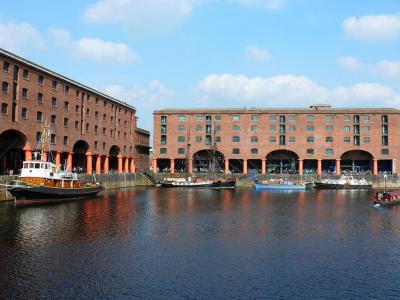
1) Royal Albert Dock & the Waterfront (must see)
Albert Dock, a historic complex of docks and warehouses on the banks of the Mersey river, is Liverpool’s biggest tourist draw, attracting over 4 million visitors each year. It was built in the 1840s and designed by local architects Jesse Hartley and Philip Hardwick. The new dock was ground-breaking in two ways – one of the first dock complexes to allow direct unloading of cargo into warehouses, it was also the first UK development not to use wood in its construction. The complex was crucial to Liverpool’s rapid development as a global trade port, with ivory, sugar, silk and tobacco stored in its five vast warehouses.
The dock ceased to function for trade purposes after the outbreak of WWII, instead becoming a base for Royal Navy ships. In the post-war era, Albert Dock fell into disuse, before a redevelopment plan was drawn up in the 1980s. The dock itself was regenerated and hosted the Tall Ships Race in 1983, bringing a million tourists into the city. Gradually, the historic warehouses around the water were renovated and used for a wide range of new attractions. They now host a Maritime Museum, the world’s only dedicated Beatles museum, and Liverpool’s Tate Gallery.
Albert Dock houses the largest collection of Grade I listed buildings in the UK and is the jewel of Liverpool’s historic waterfront area. Immediately west of the dock, you will find the Pier Head, a peninsula jutting into the river which houses the Three Graces – three of Liverpool’s most famous buildings, including the Royal Liver building. The ornamental birds on the Liver building have become a symbol for the city’s university, council, and eponymous football team, Liverpool FC.
Why You Should Visit:
Industrial heritage, museums (some are free entry), art galleries, countless shops, bars & restaurants – a focal point of Liverpool.
The only problem with this place is, it is too big to discover in a single day.
The dock ceased to function for trade purposes after the outbreak of WWII, instead becoming a base for Royal Navy ships. In the post-war era, Albert Dock fell into disuse, before a redevelopment plan was drawn up in the 1980s. The dock itself was regenerated and hosted the Tall Ships Race in 1983, bringing a million tourists into the city. Gradually, the historic warehouses around the water were renovated and used for a wide range of new attractions. They now host a Maritime Museum, the world’s only dedicated Beatles museum, and Liverpool’s Tate Gallery.
Albert Dock houses the largest collection of Grade I listed buildings in the UK and is the jewel of Liverpool’s historic waterfront area. Immediately west of the dock, you will find the Pier Head, a peninsula jutting into the river which houses the Three Graces – three of Liverpool’s most famous buildings, including the Royal Liver building. The ornamental birds on the Liver building have become a symbol for the city’s university, council, and eponymous football team, Liverpool FC.
Why You Should Visit:
Industrial heritage, museums (some are free entry), art galleries, countless shops, bars & restaurants – a focal point of Liverpool.
The only problem with this place is, it is too big to discover in a single day.
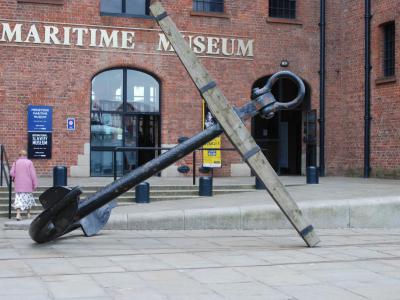
2) Merseyside Maritime Museum (must see)
The city of Liverpool, and the surrounding county of Merseyside, both have a proud maritime museum. The region’s name comes from the River Mersey, a wide inlet from the Irish Sea which adjoins Liverpool. Access to the sea along the river allowed the city to become one of the world’s great trading ports during the Industrial Revolution. The Merseyside Maritime Museum is a celebration of Liverpool’s shipping history. It is located on Albert Dock, at the heart of Liverpool’s Mercantile Maritime City, an area of historic docklands that have been made a UNESCO World Heritage site.
The ground floor of the museum houses an exhibition on the shipping lines and companies that made Liverpool a global maritime trade centre. Other exhibitions show life in a port city in the modern day, including an interactive feature on Customs and Border Control, as well as a poignant tribute to the Titanic, the ocean liner which bore the city’s name on her doomed maiden voyage.
The museum also offers a range of child-friendly, nautically themed events throughout the year, as well as a guided tour of Liverpool’s Old Dock, which lies close to the building.
Why You Should Visit:
Engaging for both kids and adults with lots of interactive exhibits; a fantastic place to learn about Liverpool's maritime history.
Even if you view the ocean as little more than a scary, jellyfish-packed beach-separator, a visit to this nautical relic-fest is advised.
Tip:
On the ground floor, there are lockers to put belongings in to save you carrying bags and coats about.
If you find you have a spare hour, get booked in for an entertaining and informative guided tour.
Afterward, you can go to the top floor café (opens around noon), grab a drink or a bite and look out at the fantastic views of the docks and liver birds.
The ground floor of the museum houses an exhibition on the shipping lines and companies that made Liverpool a global maritime trade centre. Other exhibitions show life in a port city in the modern day, including an interactive feature on Customs and Border Control, as well as a poignant tribute to the Titanic, the ocean liner which bore the city’s name on her doomed maiden voyage.
The museum also offers a range of child-friendly, nautically themed events throughout the year, as well as a guided tour of Liverpool’s Old Dock, which lies close to the building.
Why You Should Visit:
Engaging for both kids and adults with lots of interactive exhibits; a fantastic place to learn about Liverpool's maritime history.
Even if you view the ocean as little more than a scary, jellyfish-packed beach-separator, a visit to this nautical relic-fest is advised.
Tip:
On the ground floor, there are lockers to put belongings in to save you carrying bags and coats about.
If you find you have a spare hour, get booked in for an entertaining and informative guided tour.
Afterward, you can go to the top floor café (opens around noon), grab a drink or a bite and look out at the fantastic views of the docks and liver birds.
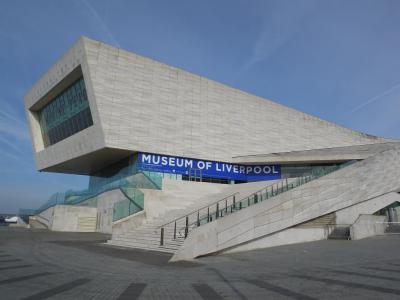
3) Museum of Liverpool (must see)
The Museum of Liverpool, the latest addition to the National Museums Liverpool group, opened its doors in 2011 as a modern replacement for the former Museum of Liverpool Life. Strategically located on Mann Island at the iconic Pier Head, this purpose-built venue was designed to narrate the story of Liverpool, its people, and its global significance.
The museum’s exhibits draw from the vast collections of National Museums Liverpool, showcasing an array of items that span costume and decorative arts, social and urban history, entomology, botany, archaeology, oral testimonies, and photographic archives. The displays are thoughtfully divided into four core themes: The Great Port, Global City, People’s Republic, and Wondrous Place.
In addition to these main galleries, the museum offers unique spaces such as Little Liverpool, a hands-on gallery tailored for children under six; History Detectives, an interactive resource center for history and archaeology enthusiasts; City Soldiers Gallery, dedicated to the story of the King’s Regiment; and a 180-seat theatre hosting community events and multimedia performances.
The Museum of Liverpool also serves as a dynamic cultural hub. Notable among its exhibitions was the Liverpool Love display, held from September to November 2012. This event brought together the creative expressions of prominent figures like Yoko Ono, Sir Peter Blake, and Noel Fielding to celebrate Liverpool's vibrant identity.
Whether exploring its rich urban history or engaging with its interactive features, the Museum of Liverpool offers a comprehensive and engaging tribute to the city’s enduring legacy.
Why You Should Visit:
Not only an outstanding piece of modernist design but also an amazing waterfront location, not to mention a surprising amount to learn about Liverpool's history.
Plus – helpful and friendly staff, a gift shop, clean toilets on every floor, a large affordable café, and even a separate room to use for indoor picnics when the weather is poor.
Tip:
Use the lockers on the ground floor to save you from having to carry any bags, then get the lift to the top floor so you can work your way down and not have to keep climbing stairs.
On the top floor, get into the exhibition room and walk straight till the end – there's a glass wall to enjoy the view of River Mersey and the Liver Building. The restrooms there have less of a queue, too.
The museum’s exhibits draw from the vast collections of National Museums Liverpool, showcasing an array of items that span costume and decorative arts, social and urban history, entomology, botany, archaeology, oral testimonies, and photographic archives. The displays are thoughtfully divided into four core themes: The Great Port, Global City, People’s Republic, and Wondrous Place.
In addition to these main galleries, the museum offers unique spaces such as Little Liverpool, a hands-on gallery tailored for children under six; History Detectives, an interactive resource center for history and archaeology enthusiasts; City Soldiers Gallery, dedicated to the story of the King’s Regiment; and a 180-seat theatre hosting community events and multimedia performances.
The Museum of Liverpool also serves as a dynamic cultural hub. Notable among its exhibitions was the Liverpool Love display, held from September to November 2012. This event brought together the creative expressions of prominent figures like Yoko Ono, Sir Peter Blake, and Noel Fielding to celebrate Liverpool's vibrant identity.
Whether exploring its rich urban history or engaging with its interactive features, the Museum of Liverpool offers a comprehensive and engaging tribute to the city’s enduring legacy.
Why You Should Visit:
Not only an outstanding piece of modernist design but also an amazing waterfront location, not to mention a surprising amount to learn about Liverpool's history.
Plus – helpful and friendly staff, a gift shop, clean toilets on every floor, a large affordable café, and even a separate room to use for indoor picnics when the weather is poor.
Tip:
Use the lockers on the ground floor to save you from having to carry any bags, then get the lift to the top floor so you can work your way down and not have to keep climbing stairs.
On the top floor, get into the exhibition room and walk straight till the end – there's a glass wall to enjoy the view of River Mersey and the Liver Building. The restrooms there have less of a queue, too.
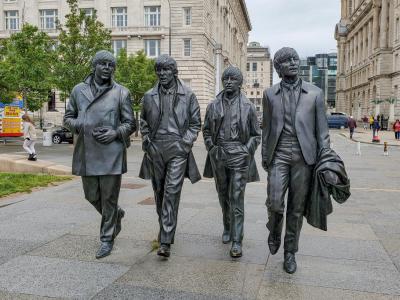
4) Beatles Statues (must see)
The Beatles Statue is an iconic monument located at Liverpool's Pier Head, near the intersection of Brunswick Street and Canada Boulevard. Designed by sculptor Andy Edwards, this striking bronze tribute to Paul McCartney, George Harrison, Ringo Starr, and John Lennon was unveiled on December 4, 2015. The ceremony, coinciding with the 50th anniversary of the Beatles' last Liverpool concert, was attended by Ann O'Byrne, the city’s deputy mayor, and Julia Baird, John Lennon's sister. The statue was generously donated to the city by The Cavern Club, the legendary music venue closely linked to the band’s early days.
The monument depicts the four Beatles walking together in a larger-than-life composition based on a 1963 photograph taken in Liverpool. Each figure features personal and symbolic details that celebrate the individuality of the band members. McCartney is seen holding a camera close to his chest, a nod to his late wife Linda McCartney, a photographer. Harrison's belt bears a Sanskrit inscription, symbolizing his spiritual interests. Starr’s right shoe has a card with the postal code "L8," referencing his childhood neighborhood in the Welsh Streets. He is positioned slightly behind the others, reflecting his placement as the drummer on stage. Lennon carries two acorns in his hand, referencing his and Yoko Ono’s 1968 acorn-planting gesture for world peace.
Standing prominently in front of the Liver Building, the statue has become a favorite photo stop for visitors and Beatles fans worldwide. Each small, thoughtful detail in the sculpture enriches the narrative of the Beatles' legacy, making it one of Liverpool’s most cherished attractions.
The monument depicts the four Beatles walking together in a larger-than-life composition based on a 1963 photograph taken in Liverpool. Each figure features personal and symbolic details that celebrate the individuality of the band members. McCartney is seen holding a camera close to his chest, a nod to his late wife Linda McCartney, a photographer. Harrison's belt bears a Sanskrit inscription, symbolizing his spiritual interests. Starr’s right shoe has a card with the postal code "L8," referencing his childhood neighborhood in the Welsh Streets. He is positioned slightly behind the others, reflecting his placement as the drummer on stage. Lennon carries two acorns in his hand, referencing his and Yoko Ono’s 1968 acorn-planting gesture for world peace.
Standing prominently in front of the Liver Building, the statue has become a favorite photo stop for visitors and Beatles fans worldwide. Each small, thoughtful detail in the sculpture enriches the narrative of the Beatles' legacy, making it one of Liverpool’s most cherished attractions.
5) Royal Liver Building
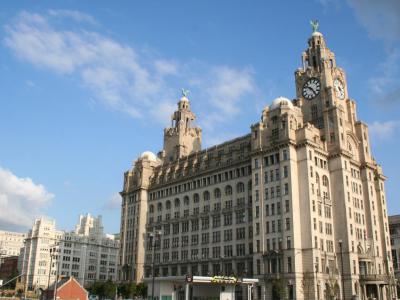
The Royal Liver Building, a Grade I listed structure, stands as an iconic emblem of Liverpool. Located at the Pier Head, it forms part of the renowned Three Graces, which also include the Cunard Building and the Port of Liverpool Building. These architectural marvels grace the city’s waterfront and were once part of Liverpool's UNESCO-designated World Heritage Maritime Mercantile City.
Opened in 1911, the Royal Liver Building was originally constructed as the headquarters for the Royal Liver Assurance Group, established in 1850 to assist families coping with the loss of a wage earner. It was a pioneering achievement in architecture, being one of the first buildings globally to utilize reinforced concrete in its construction. At 98.2 meters (322 feet) to the spires and 103.7 meters (340 feet) to the top of the iconic Liver Birds, it was once among the tallest buildings in the United Kingdom and remains the fourth-tallest building in Liverpool.
The building’s façade is crowned by two prominent clock towers, allowing sailors on the River Mersey to determine the time as they passed. Manufactured by Gent and Company of Leicester, the clock faces measuring an impressive 7.6 meters (25 feet) in diameter, larger than those of London’s Great Westminster Clock (Big Ben). Unique among such landmarks, the clocks feature no numerals, only facets marking the hours, and are powered by a single mechanism.
Atop the towers stand the iconic Liver Birds, designed by Carl Bernard Bartels. These 5.5-meter (18-foot) mythical cormorants symbolize Liverpool, with Bella watching the sea and Bertie guarding the city-or, as locals joke, checking pubs and sailors. Crafted from copper and chained in place, they carry seaweed sprigs in their beaks, a nod to the city’s maritime heritage. Legend warns that if they ever flew away, Liverpool would cease to exist.
Overlooking the River Mersey, the Royal Liver Building is a cherished Liverpool landmark, celebrating the city's maritime heritage and captivating all with its iconic Liver Birds and rich history.
Why You Should Visit:
In September 2019, during the UK Heritage Open Days, for the first time in its 100+ year history, the Royal Liver Building unlocked its doors to the public with the launch of Royal Liver Building 360, a brand new fully guided tower tour offering a world-class audiovisual experience complete with panoramic 360° views across Liverpool from the 15th floor viewing platform – a true ‘bucket list’ must-see attraction.
Tip:
Guided tours take around 70 minutes, with each group limited to 14 people to ensure that everyone gets a great view and the chance to capture images. Visitors are allowed access to all areas inside and outside of the building – from the marble lobby to the roof and a climb up the "chicken stairway" under the Liver Bird cupola. Yes, you can climb to as high as it gets and it is quite an incredible, unique experience, but to get tickets, you need to book well in advance.
Before booking tickets, prospective visitors should note that the tour is physically demanding and requires the negotiation of 124 steps, 71 of which are a narrow spiral stone staircase. The tour is also not open to children under seven years of age.
Opened in 1911, the Royal Liver Building was originally constructed as the headquarters for the Royal Liver Assurance Group, established in 1850 to assist families coping with the loss of a wage earner. It was a pioneering achievement in architecture, being one of the first buildings globally to utilize reinforced concrete in its construction. At 98.2 meters (322 feet) to the spires and 103.7 meters (340 feet) to the top of the iconic Liver Birds, it was once among the tallest buildings in the United Kingdom and remains the fourth-tallest building in Liverpool.
The building’s façade is crowned by two prominent clock towers, allowing sailors on the River Mersey to determine the time as they passed. Manufactured by Gent and Company of Leicester, the clock faces measuring an impressive 7.6 meters (25 feet) in diameter, larger than those of London’s Great Westminster Clock (Big Ben). Unique among such landmarks, the clocks feature no numerals, only facets marking the hours, and are powered by a single mechanism.
Atop the towers stand the iconic Liver Birds, designed by Carl Bernard Bartels. These 5.5-meter (18-foot) mythical cormorants symbolize Liverpool, with Bella watching the sea and Bertie guarding the city-or, as locals joke, checking pubs and sailors. Crafted from copper and chained in place, they carry seaweed sprigs in their beaks, a nod to the city’s maritime heritage. Legend warns that if they ever flew away, Liverpool would cease to exist.
Overlooking the River Mersey, the Royal Liver Building is a cherished Liverpool landmark, celebrating the city's maritime heritage and captivating all with its iconic Liver Birds and rich history.
Why You Should Visit:
In September 2019, during the UK Heritage Open Days, for the first time in its 100+ year history, the Royal Liver Building unlocked its doors to the public with the launch of Royal Liver Building 360, a brand new fully guided tower tour offering a world-class audiovisual experience complete with panoramic 360° views across Liverpool from the 15th floor viewing platform – a true ‘bucket list’ must-see attraction.
Tip:
Guided tours take around 70 minutes, with each group limited to 14 people to ensure that everyone gets a great view and the chance to capture images. Visitors are allowed access to all areas inside and outside of the building – from the marble lobby to the roof and a climb up the "chicken stairway" under the Liver Bird cupola. Yes, you can climb to as high as it gets and it is quite an incredible, unique experience, but to get tickets, you need to book well in advance.
Before booking tickets, prospective visitors should note that the tour is physically demanding and requires the negotiation of 124 steps, 71 of which are a narrow spiral stone staircase. The tour is also not open to children under seven years of age.
6) Town Hall
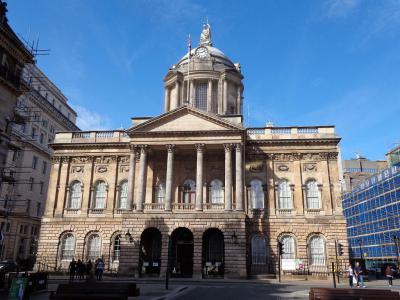
The Liverpool Town Hall, an architectural jewel of 18th-century England, is situated at the crossroads of High Street, Dale Street, Castle Street, and Water Street in Liverpool, Merseyside. Recognized as a Grade I listed building in the National Heritage List for England, it is celebrated as "one of the finest surviving 18th-century town halls."
Constructed between 1749 and 1754, the Town Hall was designed by John Wood the Elder to replace an earlier building nearby. An extension by James Wyatt in 1785 added grandeur, but a fire in 1795 led to extensive rebuilding, including Wyatt's distinctive dome. Over time, minor alterations have been made, and the surrounding streets were restructured, notably removing obstructing buildings to reveal the hall’s southern façade from Castle Street.
Unlike administrative buildings such as the nearby Cunard Building, Liverpool Town Hall serves as a civic suite. It houses the Lord Mayor's parlor, Council Chamber, and a Hall of Remembrance dedicated to Liverpool servicemen who perished in World War I. The opulent upper floor hosts events, functions, and weddings, with public tours offering a glimpse into its historical and decorative splendor.
The Town Hall, made of stone with a slate roof and lead dome, features a rectangular plan with a southern portico and Wyatt’s narrower northern extension. It has two stories, a rusticated basement, and façades with classical details. The south side has nine bays, a portico with rounded arches, and an upper balcony with Corinthian columns. The east and west façades have nine bays, plus three in Wyatt's extension, while the north includes five bays, a portico, and statues by Richard Westmacott from the Irish Houses of Parliament. Carvings above windows reflect Liverpool's trade history, and the dome, encircled by clock faces with lions and unicorns, is crowned by Minerva, a 10-foot statue symbolizing wisdom.
Liverpool Town Hall remains an enduring testament to the city's civic pride and Georgian architectural heritage, offering both a functional space and a visual marvel for visitors and locals alike.
Why You Should Visit:
Inside, visitors will find the grandest suite of civic rooms in the UK and a magnificent example of late Georgian decoration.
You also might want to go onto the balcony where the Beatles stood when returned to Liverpool.
Tip:
Guided tours inside are available, but check the opening times prior to the visit or just take photos from Castle Street.
Once the main business district, the area is now replete with bars and restaurants, so refreshments are only minutes away/opposite.
Constructed between 1749 and 1754, the Town Hall was designed by John Wood the Elder to replace an earlier building nearby. An extension by James Wyatt in 1785 added grandeur, but a fire in 1795 led to extensive rebuilding, including Wyatt's distinctive dome. Over time, minor alterations have been made, and the surrounding streets were restructured, notably removing obstructing buildings to reveal the hall’s southern façade from Castle Street.
Unlike administrative buildings such as the nearby Cunard Building, Liverpool Town Hall serves as a civic suite. It houses the Lord Mayor's parlor, Council Chamber, and a Hall of Remembrance dedicated to Liverpool servicemen who perished in World War I. The opulent upper floor hosts events, functions, and weddings, with public tours offering a glimpse into its historical and decorative splendor.
The Town Hall, made of stone with a slate roof and lead dome, features a rectangular plan with a southern portico and Wyatt’s narrower northern extension. It has two stories, a rusticated basement, and façades with classical details. The south side has nine bays, a portico with rounded arches, and an upper balcony with Corinthian columns. The east and west façades have nine bays, plus three in Wyatt's extension, while the north includes five bays, a portico, and statues by Richard Westmacott from the Irish Houses of Parliament. Carvings above windows reflect Liverpool's trade history, and the dome, encircled by clock faces with lions and unicorns, is crowned by Minerva, a 10-foot statue symbolizing wisdom.
Liverpool Town Hall remains an enduring testament to the city's civic pride and Georgian architectural heritage, offering both a functional space and a visual marvel for visitors and locals alike.
Why You Should Visit:
Inside, visitors will find the grandest suite of civic rooms in the UK and a magnificent example of late Georgian decoration.
You also might want to go onto the balcony where the Beatles stood when returned to Liverpool.
Tip:
Guided tours inside are available, but check the opening times prior to the visit or just take photos from Castle Street.
Once the main business district, the area is now replete with bars and restaurants, so refreshments are only minutes away/opposite.
7) The Cavern Club (must see)
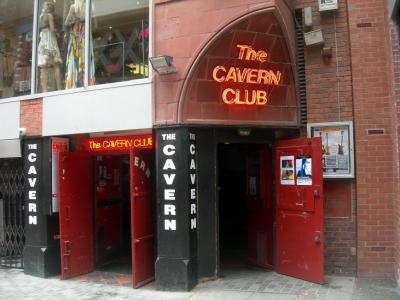
Opened on 16 January 1957 as a jazz club and later becoming a center of Liverpool's rock-and-roll scene in the early 1960s, the Cavern Club became closely associated with the Merseybeat music genre and, famously, regularly played host to The Beatles in their early years, initially as part of the weekday "beat sessions" at lunchtime.
The Beatles made their first appearance at the club after returning to Liverpool from Hamburg, Germany where they had been playing at the Indra and the Kaiserkeller clubs. There and then, on Tuesday, February 9, 1961, they were signed up as the club's resident lunchtime group, working in alternation with Gerry and the Pacemakers. Narrow, cobbled, uneventful Mathew Street thus began to lead an unexpected new life in daylight hours. At noon, Mondays to Fridays, a four-abreast line would begin to form at the Cavern's hatchlike entrance, growing by the minute until it stretched back past the warehouses and delivery trucks and piled-up fruit crates, eighty-odd yards to the junction with Whitechapel. Inside, there was no "security" whatsoever, and no alcohol was sold either at lunchtimes or at night, only coffee and soft drinks.
From 1961 to 1963, the Beatles made 292 appearances at The Cavern. By summer of 1963, "Beatlemania" was sprouting across England, and with girls demanding to see the Beatles and screaming just to get a glimpse of them, the group had to hide or sneak into concerts, and the small club could no longer satisfy audience demand. So on 3 August 1963, the Beatles made their final appearance at The Cavern.
In the decade that followed, a wide variety of popular acts appeared at the club, including The Rolling Stones, The Yardbirds, The Hollies, The Kinks, Elton John, Black Sabbath, Queen, The Who, and John Lee Hooker.
Even if you're not that bothered about the Beatles, The Cavern is a must-visit experience when in Liverpool. The live music is still brilliant, and the door charge of £2.50 per person after noon is not much to pay for such a historic place.
Why You Should Visit:
To check out the most legendary cellar club on the planet that has been the beating heart of Liverpool’s iconic music scene for over seven decades, visited by millions of people from all over the world passing down its famous stairway.
The Beatles made their first appearance at the club after returning to Liverpool from Hamburg, Germany where they had been playing at the Indra and the Kaiserkeller clubs. There and then, on Tuesday, February 9, 1961, they were signed up as the club's resident lunchtime group, working in alternation with Gerry and the Pacemakers. Narrow, cobbled, uneventful Mathew Street thus began to lead an unexpected new life in daylight hours. At noon, Mondays to Fridays, a four-abreast line would begin to form at the Cavern's hatchlike entrance, growing by the minute until it stretched back past the warehouses and delivery trucks and piled-up fruit crates, eighty-odd yards to the junction with Whitechapel. Inside, there was no "security" whatsoever, and no alcohol was sold either at lunchtimes or at night, only coffee and soft drinks.
From 1961 to 1963, the Beatles made 292 appearances at The Cavern. By summer of 1963, "Beatlemania" was sprouting across England, and with girls demanding to see the Beatles and screaming just to get a glimpse of them, the group had to hide or sneak into concerts, and the small club could no longer satisfy audience demand. So on 3 August 1963, the Beatles made their final appearance at The Cavern.
In the decade that followed, a wide variety of popular acts appeared at the club, including The Rolling Stones, The Yardbirds, The Hollies, The Kinks, Elton John, Black Sabbath, Queen, The Who, and John Lee Hooker.
Even if you're not that bothered about the Beatles, The Cavern is a must-visit experience when in Liverpool. The live music is still brilliant, and the door charge of £2.50 per person after noon is not much to pay for such a historic place.
Why You Should Visit:
To check out the most legendary cellar club on the planet that has been the beating heart of Liverpool’s iconic music scene for over seven decades, visited by millions of people from all over the world passing down its famous stairway.
8) The Bluecoat
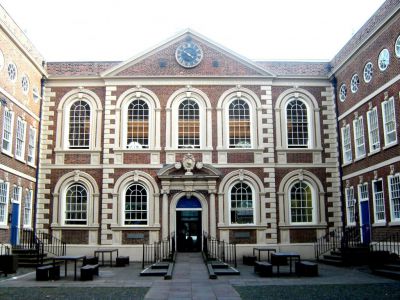
The Bluecoat, located on School Lane in Liverpool, holds the distinction of being the oldest surviving building in the city center. Constructed between 1716 and 1717 as a charity school, it served the Liverpool Blue Coat School until its relocation in 1906. Since then, the Bluecoat has undergone a remarkable transformation, becoming a vibrant arts hub with a storied past and a Grade I listing for its architectural significance.
Founded in 1708 by Reverend Robert Styth and Mayor Bryan Blundell, the Bluecoat began as a boarding school and expanded in 1725 to house 150 students. After the school moved to Wavertree in 1906, the building was saved from demolition by the Sandon Studios Society in 1907 and later secured by architect Charles Herbert Reilly and industrialist William Lever, who purchased it in 1909, renaming it the Liberty Buildings.
In 1927, the Bluecoat Society of Arts was established to preserve the building as a center for culture and creativity. During the Liverpool Blitz of 1941, parts of the building were severely damaged but later restored by 1951. Its historical importance was officially recognized in 1952 with its designation as a Grade I-listed building.
The Bluecoat, revitalized in 2008 during Liverpool's European Capital of Culture year, now hosts exhibitions, concerts, education programs, and events. It features 22 artist studios, a craft gallery, and the Bluecoat Café offering locally sourced food and drinks.
Architecturally, the Bluecoat is a stunning example of Georgian design. Built in brick with painted stone details, it features a central pediment with a clock, an octagonal cupola, and intricate cherub-adorned keystones. Its H-shaped layout encloses a charming quadrangle, separated from the street by a decorative wall and railings.
With its rich history and ongoing contributions to the arts, the Bluecoat is a cornerstone of Liverpool's cultural landscape, blending centuries-old heritage with a contemporary creative spirit.
Why You Should Visit:
Very relaxing place to have a drink or a snack; fully recommended in nice weather so you can sit outside and just relax!
Great venue if you're looking for somewhere that little bit more special than other places you may be considering.
Founded in 1708 by Reverend Robert Styth and Mayor Bryan Blundell, the Bluecoat began as a boarding school and expanded in 1725 to house 150 students. After the school moved to Wavertree in 1906, the building was saved from demolition by the Sandon Studios Society in 1907 and later secured by architect Charles Herbert Reilly and industrialist William Lever, who purchased it in 1909, renaming it the Liberty Buildings.
In 1927, the Bluecoat Society of Arts was established to preserve the building as a center for culture and creativity. During the Liverpool Blitz of 1941, parts of the building were severely damaged but later restored by 1951. Its historical importance was officially recognized in 1952 with its designation as a Grade I-listed building.
The Bluecoat, revitalized in 2008 during Liverpool's European Capital of Culture year, now hosts exhibitions, concerts, education programs, and events. It features 22 artist studios, a craft gallery, and the Bluecoat Café offering locally sourced food and drinks.
Architecturally, the Bluecoat is a stunning example of Georgian design. Built in brick with painted stone details, it features a central pediment with a clock, an octagonal cupola, and intricate cherub-adorned keystones. Its H-shaped layout encloses a charming quadrangle, separated from the street by a decorative wall and railings.
With its rich history and ongoing contributions to the arts, the Bluecoat is a cornerstone of Liverpool's cultural landscape, blending centuries-old heritage with a contemporary creative spirit.
Why You Should Visit:
Very relaxing place to have a drink or a snack; fully recommended in nice weather so you can sit outside and just relax!
Great venue if you're looking for somewhere that little bit more special than other places you may be considering.
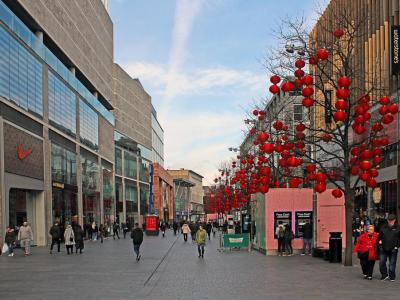
9) Liverpool One
Liverpool ONE is a vibrant shopping, residential, and leisure complex situated in the heart of Liverpool. Covering a sprawling 42 acres (170,000 square meters), it represents one of the most significant urban regeneration projects in the UK. Opened in phases in 2008 during Liverpool’s tenure as the European Capital of Culture, Liverpool ONE has transformed the city center into a premier retail and lifestyle destination, placing Liverpool among the top five most popular retail hubs in the UK.
Liverpool ONE, anchored by John Lewis and Marks & Spencer (since 2023), is the UK’s largest open-air shopping center and the tenth-largest overall. Its distinct architecture, with each building uniquely designed, sets it apart. The complex features a 14-screen Odeon cinema, a 36-hole mini-golf center, a variety of shops, restaurants, cafes, residential units, offices, and the reconstructed Chavasse Park.
Construction began in 2004, following meticulous archaeological investigations at Chavasse Park, which uncovered remnants of buildings destroyed during World War II and the historic Old Dock-the world’s first wet dock. Early completions, such as the multi-story car park and bus station, paved the way for demolitions and subsequent construction along Paradise Street.
Originally developed by Grosvenor Group, Liverpool ONE was acquired by Landsec in December 2024, marking a new chapter in its management. With its blend of retail, leisure, and cultural significance, Liverpool ONE continues to be a cornerstone of Liverpool’s dynamic cityscape, celebrated for its innovation and contribution to the city’s resurgence.
Liverpool ONE, anchored by John Lewis and Marks & Spencer (since 2023), is the UK’s largest open-air shopping center and the tenth-largest overall. Its distinct architecture, with each building uniquely designed, sets it apart. The complex features a 14-screen Odeon cinema, a 36-hole mini-golf center, a variety of shops, restaurants, cafes, residential units, offices, and the reconstructed Chavasse Park.
Construction began in 2004, following meticulous archaeological investigations at Chavasse Park, which uncovered remnants of buildings destroyed during World War II and the historic Old Dock-the world’s first wet dock. Early completions, such as the multi-story car park and bus station, paved the way for demolitions and subsequent construction along Paradise Street.
Originally developed by Grosvenor Group, Liverpool ONE was acquired by Landsec in December 2024, marking a new chapter in its management. With its blend of retail, leisure, and cultural significance, Liverpool ONE continues to be a cornerstone of Liverpool’s dynamic cityscape, celebrated for its innovation and contribution to the city’s resurgence.
