Custom Walk in Mainz, Germany by javiergalindo3_5ed638 created on 2026-06-06
Guide Location: Germany » Mainz
Guide Type: Custom Walk
# of Sights: 15
Tour Duration: 3 Hour(s)
Travel Distance: 4.8 Km or 3 Miles
Share Key: T5YB6
Guide Type: Custom Walk
# of Sights: 15
Tour Duration: 3 Hour(s)
Travel Distance: 4.8 Km or 3 Miles
Share Key: T5YB6
How It Works
Please retrieve this walk in the GPSmyCity app. Once done, the app will guide you from one tour stop to the next as if you had a personal tour guide. If you created the walk on this website or come to the page via a link, please follow the instructions below to retrieve the walk in the app.
Retrieve This Walk in App
Step 1. Download the app "GPSmyCity: Walks in 1K+ Cities" on Apple App Store or Google Play Store.



Step 2. In the GPSmyCity app, download(or launch) the guide "Mainz Map and Walking Tours".
Step 3. Tap the menu button located at upper right corner of the "Walks" screen and select "Retrieve custom walk". Enter the share key: T5YB6
1) Central Station (Hauptbahnhof)
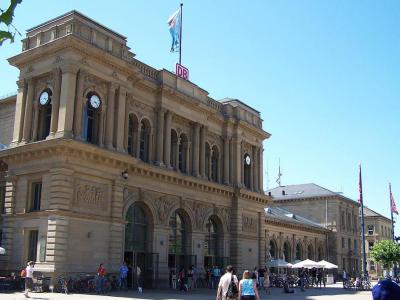
Mainz Central Station (Mainz Hauptbahnhof), the main railway station of Mainz, is an essential transport hub in Rhineland-Palatinate, serving approximately 60,000 travelers daily. This station, which became operational in 1884, was designed by Philipp Johann Berdellé in a blend of Italian neo-Renaissance with Baroque and Neoclassical influences. The structure is notable for its striking central section, adorned with intricate allegorical sculptures that depict the experiences of arrivals and departures, created by Mainz sculptors Valentin Barth and Anton Scholl.
The station's development reflects the broader history of Mainz's transition from a trading port to a key railway center. After losing its medieval trading rights in 1831 and facing competition from the Taunus Railway in 1840, Mainz regained significance when the Hessian Ludwig Railway Company initiated railway lines from the city in 1845. Key routes connected Mainz to Ludwigshafen, Aschaffenburg, Bingen, and Alzey, helping to solidify its position as a major railway hub. A permanent railway bridge over the Rhine, completed in 1862, further facilitated this growth.
Mainz Central Station is also known for its impressive train hall, which was the longest in Europe at the time of its opening. The hall spanned 300 meters in length and 47 meters in width, built with a structure of cast and wrought iron, glass, and corrugated iron, creating a vast space supported by 60 wrought-iron columns. This architectural marvel remains a symbol of the city’s industrial and architectural achievements.
The station's development reflects the broader history of Mainz's transition from a trading port to a key railway center. After losing its medieval trading rights in 1831 and facing competition from the Taunus Railway in 1840, Mainz regained significance when the Hessian Ludwig Railway Company initiated railway lines from the city in 1845. Key routes connected Mainz to Ludwigshafen, Aschaffenburg, Bingen, and Alzey, helping to solidify its position as a major railway hub. A permanent railway bridge over the Rhine, completed in 1862, further facilitated this growth.
Mainz Central Station is also known for its impressive train hall, which was the longest in Europe at the time of its opening. The hall spanned 300 meters in length and 47 meters in width, built with a structure of cast and wrought iron, glass, and corrugated iron, creating a vast space supported by 60 wrought-iron columns. This architectural marvel remains a symbol of the city’s industrial and architectural achievements.
2) CinéMayence
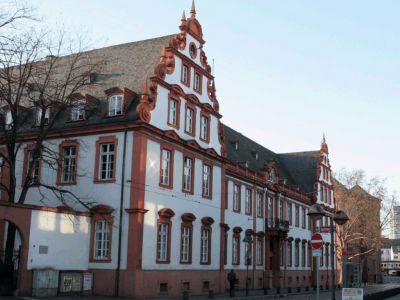
CinéMayence, situated within the Baroque Schönborner Hof, offers a unique cultural experience in Mainz. Housed in a building from the 17th century, it reflects the grandeur of historical architecture. Mainz's municipal cinema is run by AG Stadtkino, a non-profit organization supported by the city, focusing on film and media as tools for cultural enrichment. This cinema is a guest at the Institut Français and features a wide range of international films and cinema classics, including silent films with live piano accompaniment and modern digital media.
CinéMayence’s program spans various genres, from documentaries to animated films, often presented in their original language with German subtitles. With only 85 seats, it offers an intimate setting for film enthusiasts, providing opportunities for discussions, lectures, and filmmaker introductions after screenings. The cinema’s central location in Schillerplatz makes it a civil society meeting place for those passionate about film and cultural exchange.
CinéMayence’s program spans various genres, from documentaries to animated films, often presented in their original language with German subtitles. With only 85 seats, it offers an intimate setting for film enthusiasts, providing opportunities for discussions, lectures, and filmmaker introductions after screenings. The cinema’s central location in Schillerplatz makes it a civil society meeting place for those passionate about film and cultural exchange.
3) Schiller Square
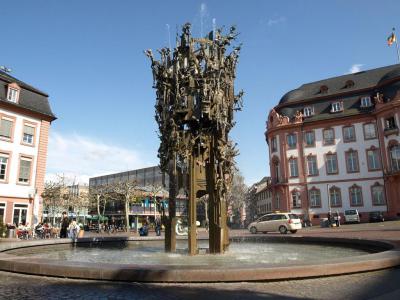
Schiller Square is one of downtown Mainz's central squares. This attractive square is filled with trees and surrounded by greenery. The square has several stately Baroque and Rococo-style aristocratic residences. It is best known for its famous Mainz carnival fountain and the Schiller statue.
The carnival fountain is about nine meters (29 feet) tall. It was created in 1967 and has over 200 bronze figures portraying the carnival story. Carnival is officially opened from the Osteiner Hof's balcony, which overlooks the square.
The Osteiner Hof is one of the square's impressive palaces and was built between 1747 and 1752. The Osteiner Hof features an ornate facade with detailed coats of arms.
Schiller Square also has a monument to Friedrich Schiller, the square's namesake. Friedrich Schiller was an influential 18th-century poet, playwright, philosopher, and historian. The bronze statue was erected in 1862 and sits on a marble base.
The carnival fountain is about nine meters (29 feet) tall. It was created in 1967 and has over 200 bronze figures portraying the carnival story. Carnival is officially opened from the Osteiner Hof's balcony, which overlooks the square.
The Osteiner Hof is one of the square's impressive palaces and was built between 1747 and 1752. The Osteiner Hof features an ornate facade with detailed coats of arms.
Schiller Square also has a monument to Friedrich Schiller, the square's namesake. Friedrich Schiller was an influential 18th-century poet, playwright, philosopher, and historian. The bronze statue was erected in 1862 and sits on a marble base.
4) Court of Ostein (Osteiner Hof)
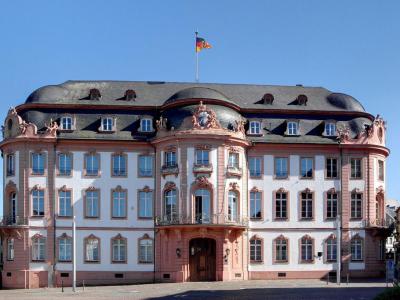
The Court of Ostein (Osteiner Hof) is a Baroque-era palatial mansion located on the southern edge of Schillerplatz square in Mainz. Constructed between 1747 and 1752 by architect Johann Valentin Thomann, the building was commissioned by Franz Wolfgang Damian von Ostein, the brother of Prince-Bishop Johann Friedrich Karl von Ostein. Its facade is distinguished by three round protrusions (risalits) at the entrance and corners, as well as lavish Rococo decorations, including cartouches representing air, earth, and water. The gods Diana and Mars are depicted on the balcony doors.
Although built as a noble residence, the von Osteins did not inhabit the mansion for long. In 1798, following the French occupation of the left bank of the Rhine during the Revolutionary Wars, the mansion was repurposed as the administrative seat of the French Mont-Tonnerre département. After the Napoleonic era, the building continued to serve governmental purposes, gaining the nickname "Gouvernement" during Emperor Wilhelm I’s time as military governor of Mainz (1854-1859). It later served as military headquarters during the Franco-Prussian War.
Notably, General Hugo von Kathen announced the start of World War I from the balcony of the Osteiner Hof in 1914. The mansion was severely damaged by fire during World War II but was restored in 1947-1948. From 1958 to 2014, the Bundeswehr used it as a military headquarters.
The Osteiner Hof is also central to Mainz’s carnival traditions. Every year, the start of the carnival season is proclaimed from its balcony on November 11 at precisely 11:11 AM.
Although built as a noble residence, the von Osteins did not inhabit the mansion for long. In 1798, following the French occupation of the left bank of the Rhine during the Revolutionary Wars, the mansion was repurposed as the administrative seat of the French Mont-Tonnerre département. After the Napoleonic era, the building continued to serve governmental purposes, gaining the nickname "Gouvernement" during Emperor Wilhelm I’s time as military governor of Mainz (1854-1859). It later served as military headquarters during the Franco-Prussian War.
Notably, General Hugo von Kathen announced the start of World War I from the balcony of the Osteiner Hof in 1914. The mansion was severely damaged by fire during World War II but was restored in 1947-1948. From 1958 to 2014, the Bundeswehr used it as a military headquarters.
The Osteiner Hof is also central to Mainz’s carnival traditions. Every year, the start of the carnival season is proclaimed from its balcony on November 11 at precisely 11:11 AM.
5) St. Stephen's Church (must see)
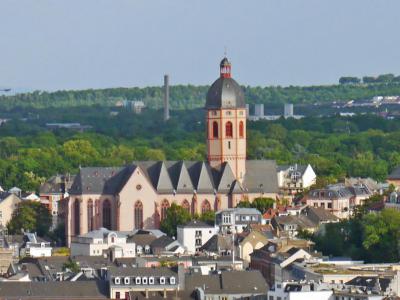
Saint Stephen's Church in Mainz is a remarkable historical and architectural monument. Originally built in 990 by Archbishop Willigis, who also commissioned the Mainz Cathedral, Saint Stephen’s was envisioned as the "Empire's Place of Prayer." It occupies Mainz's highest hill and was intended as a place of spiritual significance. Willigis himself was buried here in 1011.
The current structure, completed in 1340, is the oldest Gothic hall church along the Upper Rhine. The church’s red sandstone nave, with two side aisles, is a prominent feature of many Mainz buildings. Its 66-meter tower, which has been part of the church since its original construction, is notable for its pointed arch frieze. A dome and lantern were added in 1962 to celebrate Mainz’s 2,000-year anniversary.
Over the centuries, Saint Stephen’s has endured damage from various events. An explosion in 1857 damaged its façade, and World War II bombing caused significant destruction. Yet, the church’s resilience is evident in its restoration and preservation efforts.
One of the most striking elements of Saint Stephen’s Church is its stained glass windows, created by the renowned artist Marc Chagall. The nine windows, designed between 1978 and 1985, are unique for their vivid blue hues and their portrayal of Christian and Jewish themes, symbolizing Jewish-German reconciliation. Saint Stephen's is the only German church featuring Chagall’s work. Alongside these windows are 19 additional stained glass pieces created by Chagall’s collaborator, Charles Marq.
The church also houses impressive works of art, including a 15th-century painting of God the Father and a late Gothic sculpture of the Virgin and Child with Saint Ann. The baptismal font, dating back to 1330, adds to the historical significance of the church. Additionally, the Gothic cloister, built between 1462 and 1499, is known as one of the most beautiful in the region and serves as the resting place for many of Mainz’s dignitaries, marked by tombstones adorned with coats of arms.
Saint Stephen's Church, with its blend of history, art, and architecture, remains a spiritual and cultural treasure in Mainz.
The current structure, completed in 1340, is the oldest Gothic hall church along the Upper Rhine. The church’s red sandstone nave, with two side aisles, is a prominent feature of many Mainz buildings. Its 66-meter tower, which has been part of the church since its original construction, is notable for its pointed arch frieze. A dome and lantern were added in 1962 to celebrate Mainz’s 2,000-year anniversary.
Over the centuries, Saint Stephen’s has endured damage from various events. An explosion in 1857 damaged its façade, and World War II bombing caused significant destruction. Yet, the church’s resilience is evident in its restoration and preservation efforts.
One of the most striking elements of Saint Stephen’s Church is its stained glass windows, created by the renowned artist Marc Chagall. The nine windows, designed between 1978 and 1985, are unique for their vivid blue hues and their portrayal of Christian and Jewish themes, symbolizing Jewish-German reconciliation. Saint Stephen's is the only German church featuring Chagall’s work. Alongside these windows are 19 additional stained glass pieces created by Chagall’s collaborator, Charles Marq.
The church also houses impressive works of art, including a 15th-century painting of God the Father and a late Gothic sculpture of the Virgin and Child with Saint Ann. The baptismal font, dating back to 1330, adds to the historical significance of the church. Additionally, the Gothic cloister, built between 1462 and 1499, is known as one of the most beautiful in the region and serves as the resting place for many of Mainz’s dignitaries, marked by tombstones adorned with coats of arms.
Saint Stephen's Church, with its blend of history, art, and architecture, remains a spiritual and cultural treasure in Mainz.
6) Kirschgarten (Cherry Orchard) (must see)
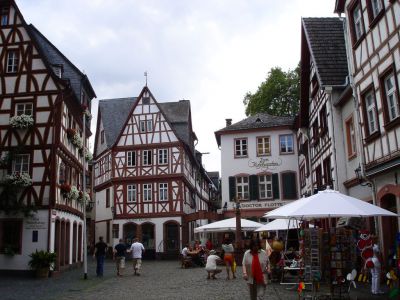
The Cherry Orchard in Mainz is one of the city’s most picturesque squares, rich with history and architectural charm. This square is lined with three-and-a-half-story half-timbered houses, some dating back to the 15th and 18th centuries. Originally part of the Nova Civitas urban expansion in the 13th and 14th centuries, the square has a long-standing presence in Mainz’s old town. The name “Kirschgarten” (Cherry Orchard) stems from the “Kirschborn” spring, which once rose near the old Rochus Hospital.
The Cherry Orchard features a unique combination of traditional Mainz architecture and cultural heritage. The square is a hub of narrow alleys, including the notable “Weihergarten,” which connects the half-timbered houses. The space once belonged to the immunity of the Mainz Cathedral Chapter, and by the 16th century, it had become a center for the book trade, housing a printing press established by Friedrich Heumann.
At the heart of the Cherry Orchard stands the Cherry Orchard Fountain, also called the Madonna Fountain, donated by the Mainz Beautification Association in 1932. Crafted from red sandstone, this fountain replaced an older iron one. The fountain is crowned with a statue of the Virgin Mary, a replica of the Harxheim Madonna, created by sculptor Jean Sauer. At the base of the fountain, a relief by Carl Moritz Hoffmann depicts the Blasius Chapel, which once stood at the entrance to the square until 1803.
Visitors can admire the well-preserved facades of the houses and search for historical inscriptions on the buildings. The Cherry Orchard remains a beautiful reminder of Mainz’s medieval history, offering both locals and tourists a glimpse into the city’s past.
The Cherry Orchard features a unique combination of traditional Mainz architecture and cultural heritage. The square is a hub of narrow alleys, including the notable “Weihergarten,” which connects the half-timbered houses. The space once belonged to the immunity of the Mainz Cathedral Chapter, and by the 16th century, it had become a center for the book trade, housing a printing press established by Friedrich Heumann.
At the heart of the Cherry Orchard stands the Cherry Orchard Fountain, also called the Madonna Fountain, donated by the Mainz Beautification Association in 1932. Crafted from red sandstone, this fountain replaced an older iron one. The fountain is crowned with a statue of the Virgin Mary, a replica of the Harxheim Madonna, created by sculptor Jean Sauer. At the base of the fountain, a relief by Carl Moritz Hoffmann depicts the Blasius Chapel, which once stood at the entrance to the square until 1803.
Visitors can admire the well-preserved facades of the houses and search for historical inscriptions on the buildings. The Cherry Orchard remains a beautiful reminder of Mainz’s medieval history, offering both locals and tourists a glimpse into the city’s past.

7) Frankfurter Hof
The Frankfurter Hof in Mainz's old town has been a central hub of cultural life since its reopening in 1991. Nearly lost to demolition in the early 90s, the venue was saved by dedicated citizens who recognized its importance to Mainz's cultural fabric. Today, it stands as a beacon of artistic and civic engagement, offering a wide array of performances and events that cater to all tastes and age groups.
From classical music and theater to pop culture and multicultural festivals, the Frankfurter Hof features a vibrant and diverse program. National and international stars, alongside local talents, grace its stage, making it a household name well beyond the Rhine-Main region. The venue's cultural significance is on par with Mainz's historical icons like the cathedral and Gutenberg.
In addition to its year-round programming, the Frankfurter Hof extends its influence to the city's summer festivals, including the Mainz Tent Festival and "Summer in the City." These events attract large crowds to venues like the Citadel and Cathedral Square, offering a mix of genres from comedy and world music to children's theater and literature.
Whether you're a fan of cabaret, avant-garde performances, or simply looking for a sophisticated evening, the Frankfurter Hof guarantees an immersive cultural experience in the heart of Mainz.
From classical music and theater to pop culture and multicultural festivals, the Frankfurter Hof features a vibrant and diverse program. National and international stars, alongside local talents, grace its stage, making it a household name well beyond the Rhine-Main region. The venue's cultural significance is on par with Mainz's historical icons like the cathedral and Gutenberg.
In addition to its year-round programming, the Frankfurter Hof extends its influence to the city's summer festivals, including the Mainz Tent Festival and "Summer in the City." These events attract large crowds to venues like the Citadel and Cathedral Square, offering a mix of genres from comedy and world music to children's theater and literature.
Whether you're a fan of cabaret, avant-garde performances, or simply looking for a sophisticated evening, the Frankfurter Hof guarantees an immersive cultural experience in the heart of Mainz.
8) Nagelsäule
The Nagelsäule in Mainz is a symbolic pillar erected during World War I as part of a German fundraising and propaganda campaign known as the "war nailing" initiative. The concept behind the pillar was to encourage donations for charitable causes, where donors would drive nails into the structure in exchange for contributing to the war effort. The design for the Nagelsäule was selected through a competition initiated by Mayor Karl Göttelmann on November 9, 1915. Out of 71 submitted entries, the design by city master builder Adolf Gelius and sculptor Ludwig Lipp was chosen on December 23, 1915.
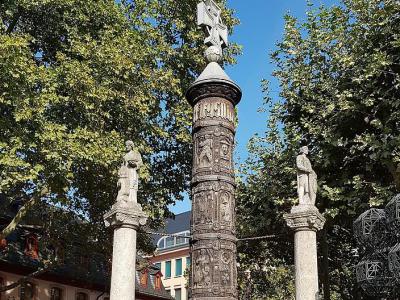
Inaugurated on July 1, 1916, the structure is made from oak trunks and surrounded by three limestone pillars, representing the allegories of charity, bravery, and unity. Each donor had the chance to hammer a nail into the oak wood, with prices ranging from 50 reichspfennigs for the smallest nail to 20 marks for a gold-plated one. The most prominent participants in the ceremony were the Hessian Grand Duke Ernst Ludwig and his family, who drove in the first nails. Proceeds from the campaign were directed towards war children's welfare, vacation camps for disadvantaged children, and the National Women’s Service, which supported the families of soldiers.
After undergoing restoration, the Nagelsäule was reintroduced to the public on July 21, 2011. Now suspended from a seven-meter-high stainless steel construction, the wooden pillar has been preserved, with its nails protected by a special layer to ensure its longevity. The restoration symbolizes the historical significance and the continued remembrance of the communal efforts during a turbulent period in German history.
Inaugurated on July 1, 1916, the structure is made from oak trunks and surrounded by three limestone pillars, representing the allegories of charity, bravery, and unity. Each donor had the chance to hammer a nail into the oak wood, with prices ranging from 50 reichspfennigs for the smallest nail to 20 marks for a gold-plated one. The most prominent participants in the ceremony were the Hessian Grand Duke Ernst Ludwig and his family, who drove in the first nails. Proceeds from the campaign were directed towards war children's welfare, vacation camps for disadvantaged children, and the National Women’s Service, which supported the families of soldiers.
After undergoing restoration, the Nagelsäule was reintroduced to the public on July 21, 2011. Now suspended from a seven-meter-high stainless steel construction, the wooden pillar has been preserved, with its nails protected by a special layer to ensure its longevity. The restoration symbolizes the historical significance and the continued remembrance of the communal efforts during a turbulent period in German history.
9) Mainz Cathedral (must see)
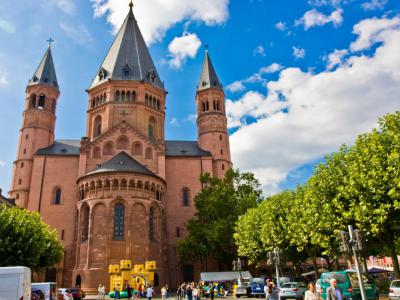
The Mainz Cathedral, a towering symbol of Christianity's long-standing presence in Mainz, traces its roots back to 746 when Saint Boniface introduced Christianity to the region. Archbishop Willigis, inspired by Saint Peter’s Basilica in Rome, ordered the construction of the cathedral, which was unfortunately ravaged by fire on the very day of its consecration in 1009. Despite the damage, the cathedral was repaired by 1036, and over time, it has evolved into a blend of styles that reflect centuries of architectural and historical changes.
The original Romanesque style is still visible in the cathedral’s triple-nave basilica and its bronze door facing the square. Over the years, additional chapels and structures have been added, each showcasing the design trends of their respective eras. One of the more notable additions is Saint Gotthard’s Chapel, built in 1137, which stands out with its lighter stone.
Fire has been a recurring adversary for Mainz Cathedral, striking seven times throughout its history. To prevent further damage, the spire was reconstructed from stone in 1767. The east chancel, the oldest part of the cathedral, features walls over two meters thick, providing a glimpse into its early construction. The Romanesque west chancel, dating to 1239, was later enhanced by a Gothic belfry in the 15th century.
Mainz Cathedral also holds historical significance as a site of royal coronations in the 11th, 12th, and 13th centuries. The Diet of Pentecost, one of the most legendary medieval feasts, was held here. Despite enduring heavy damage during attacks by French and Prussian troops in the late 18th century, as well as during World War II, the cathedral has been meticulously restored over the years. Its foundations were reinforced in the early 20th century after the Rhine River’s correction caused structural issues.
Inside, the cathedral remains a treasure trove of art and history. The Ketteler Chapel is home to an altar dedicated to the Virgin Mary, along with the serene statue of the "Serene Lady of Mainz," a wood-carved figure dating back to 1510. The cathedral also houses the tombs of its bishops and boasts a cherished portrait gallery of ecclesiastical dignitaries.
Today, Mainz Cathedral stands not only as a religious site but also as a testament to the city's resilience and rich history. It continues to be a focal point of Mainz, drawing visitors from around the world to marvel at its architecture, art, and historical significance.
The original Romanesque style is still visible in the cathedral’s triple-nave basilica and its bronze door facing the square. Over the years, additional chapels and structures have been added, each showcasing the design trends of their respective eras. One of the more notable additions is Saint Gotthard’s Chapel, built in 1137, which stands out with its lighter stone.
Fire has been a recurring adversary for Mainz Cathedral, striking seven times throughout its history. To prevent further damage, the spire was reconstructed from stone in 1767. The east chancel, the oldest part of the cathedral, features walls over two meters thick, providing a glimpse into its early construction. The Romanesque west chancel, dating to 1239, was later enhanced by a Gothic belfry in the 15th century.
Mainz Cathedral also holds historical significance as a site of royal coronations in the 11th, 12th, and 13th centuries. The Diet of Pentecost, one of the most legendary medieval feasts, was held here. Despite enduring heavy damage during attacks by French and Prussian troops in the late 18th century, as well as during World War II, the cathedral has been meticulously restored over the years. Its foundations were reinforced in the early 20th century after the Rhine River’s correction caused structural issues.
Inside, the cathedral remains a treasure trove of art and history. The Ketteler Chapel is home to an altar dedicated to the Virgin Mary, along with the serene statue of the "Serene Lady of Mainz," a wood-carved figure dating back to 1510. The cathedral also houses the tombs of its bishops and boasts a cherished portrait gallery of ecclesiastical dignitaries.
Today, Mainz Cathedral stands not only as a religious site but also as a testament to the city's resilience and rich history. It continues to be a focal point of Mainz, drawing visitors from around the world to marvel at its architecture, art, and historical significance.
10) Markt (Market Square) (must see)
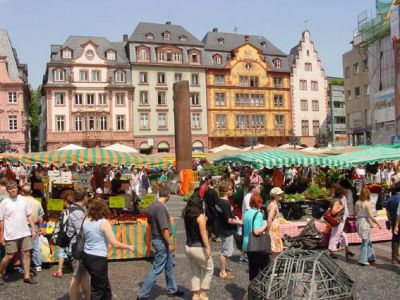
Market Square is Mainz's most popular square and is dominated by the iconic Mainz Cathedral. The square became a popular trading place when the cathedral was built in 975. Traditionally, merchants offered wool, cloth, fur, baked goods, and fruit and vegetables. Products were set out in large baskets on the floor.
The Renaissance market fountain was built in 1526. The water fountain was an important source of fresh water for nearby residents. In 1889, a Madonna figure was added to the fountain.
Most of the houses in the square date to the 18th century. World War II bombs heavily damaged Market Square. In 1975, Mainz celebrated the thousandth anniversary of the cathedral and committed to re-designing and rebuilding the square. Many of the buildings were rebuilt with historical facades.
The market takes place Tuesdays, Fridays, and Saturdays. Market Square hosts a vibrant Christmas Market during the Christmas holiday season.
The Renaissance market fountain was built in 1526. The water fountain was an important source of fresh water for nearby residents. In 1889, a Madonna figure was added to the fountain.
Most of the houses in the square date to the 18th century. World War II bombs heavily damaged Market Square. In 1975, Mainz celebrated the thousandth anniversary of the cathedral and committed to re-designing and rebuilding the square. Many of the buildings were rebuilt with historical facades.
The market takes place Tuesdays, Fridays, and Saturdays. Market Square hosts a vibrant Christmas Market during the Christmas holiday season.
11) Heunensaeule (Heunen Columns)
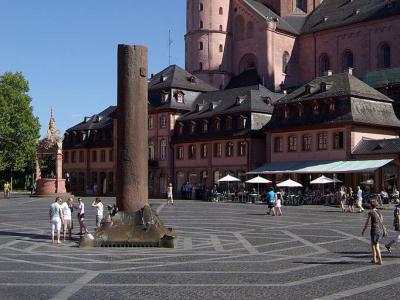
The Heunen Columns (Heunensäule) are historic sandstone columns that were originally crafted for the reconstruction of the Willigis Cathedral in Mainz after it burned down in 1009. Likely completed in the 11th century in a quarry near Miltenberg, these columns were created before the cathedral project was formally planned, a move showing early business foresight. However, the columns were never used, as alternative supports were chosen for the cathedral's reconstruction.
Over time, the number of Heunen Columns dwindled. By the 18th century, only 14 remained, and by the 1960s, just eight were still standing. Today, the surviving columns are dispersed across several locations, with the most famous one standing as a monument in Mainz. Others can be found in Nuremberg, Munich, and on the waterfront in Miltenberg.
In 1975, to commemorate the 1000th anniversary of the Mainz Cathedral's construction, the city of Miltenberg gifted one of these impressive columns to Mainz. This column, weighing 16 tons and measuring 6.4 meters in height with a diameter of 1.2 meters, now serves as a symbol of the city. It is prominently placed in the middle of the market square, set on a bronze base created by Palatinate sculptor Gernot Rumpf. Rumpf’s design tells the story of Mainz through symbolic headgear, incorporating elements such as a Roman gladiator mask, which includes a fox representing former Mayor Jockel Fuchs. Playful details like three mice, symbolizing political factions, and a rattling Jacobin hat make this sculpture both a historic artifact and a playful homage to Mainz’s civic identity.
Over time, the number of Heunen Columns dwindled. By the 18th century, only 14 remained, and by the 1960s, just eight were still standing. Today, the surviving columns are dispersed across several locations, with the most famous one standing as a monument in Mainz. Others can be found in Nuremberg, Munich, and on the waterfront in Miltenberg.
In 1975, to commemorate the 1000th anniversary of the Mainz Cathedral's construction, the city of Miltenberg gifted one of these impressive columns to Mainz. This column, weighing 16 tons and measuring 6.4 meters in height with a diameter of 1.2 meters, now serves as a symbol of the city. It is prominently placed in the middle of the market square, set on a bronze base created by Palatinate sculptor Gernot Rumpf. Rumpf’s design tells the story of Mainz through symbolic headgear, incorporating elements such as a Roman gladiator mask, which includes a fox representing former Mayor Jockel Fuchs. Playful details like three mice, symbolizing political factions, and a rattling Jacobin hat make this sculpture both a historic artifact and a playful homage to Mainz’s civic identity.
12) Iron Tower (Eisenturm)
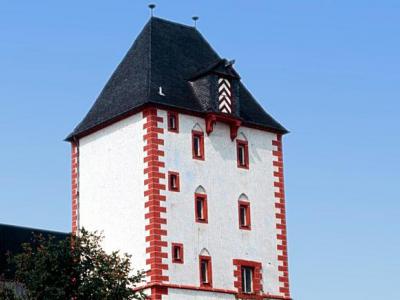
The Iron Tower (Eisenturm) in Mainz is a medieval structure that dates back to the early 13th century, with modifications made in the 15th century. Originally built as part of the city’s fortifications, the tower served as a watchtower and a gateway into Mainz. It was one of 34 gate towers and watchtowers that helped protect the city. Its name is derived from the Iron Market (Eisenmarkt), which took place nearby until the 19th century.
The Iron Tower has a rich historical context. Mainz, known as Mogontiacum during Roman times, was fortified with walls and towers, a practice that continued into the medieval period. After the walls were destroyed in 1160 due to political conflicts, they were rebuilt around 1200, and the Iron Tower was constructed during this period of renewed fortification. It featured a Romanesque gateway adorned with symbolic carvings of lions, representing both secular and ecclesiastical power.
In the 15th century, the tower was raised to six stories, and it later transitioned into a gaol. It housed prisoners, including figures from the March Revolution of 1848/49. Despite plans to demolish it in 1900, it was saved by the Mainz Association of Antiquities and became city property in 1905. Over time, it served various purposes, including a painter’s studio and living quarters.
Badly damaged in World War II, the tower was restored in the 1960s. Today, it is a vibrant cultural space, home to the Mainz Iron Tower Art Association (Kunstverein Eisenturm Mainz), which hosts art exhibitions and awards a prize in its name. The tower also houses other organizations and can be visited during European Heritage Days.
The Iron Tower has a rich historical context. Mainz, known as Mogontiacum during Roman times, was fortified with walls and towers, a practice that continued into the medieval period. After the walls were destroyed in 1160 due to political conflicts, they were rebuilt around 1200, and the Iron Tower was constructed during this period of renewed fortification. It featured a Romanesque gateway adorned with symbolic carvings of lions, representing both secular and ecclesiastical power.
In the 15th century, the tower was raised to six stories, and it later transitioned into a gaol. It housed prisoners, including figures from the March Revolution of 1848/49. Despite plans to demolish it in 1900, it was saved by the Mainz Association of Antiquities and became city property in 1905. Over time, it served various purposes, including a painter’s studio and living quarters.
Badly damaged in World War II, the tower was restored in the 1960s. Today, it is a vibrant cultural space, home to the Mainz Iron Tower Art Association (Kunstverein Eisenturm Mainz), which hosts art exhibitions and awards a prize in its name. The tower also houses other organizations and can be visited during European Heritage Days.
13) Theodor Heuss Bridge
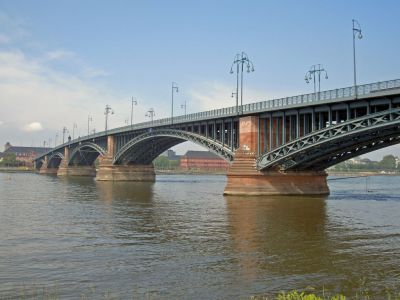
The Theodor Heuss Bridge in Mainz is a stunning example of an arch bridge that stretches across the Rhine River, linking Mainz, the capital of Rhineland-Palatinate, with the Mainz-Kastel district of Wiesbaden in Hesse. This essential connection between the Bundesstraßes 40 and 455 has a main span of 102.94 meters and serves not only as a key roadway but also as a popular route for cyclists and joggers, offering spectacular views of the river and the Mainz skyline.
The area has a long history of bridges, beginning with a Roman bridge built in 27 AD. However, the first modern arch bridge was inaugurated on May 30, 1885, constructed using 3.5 million kilograms of wrought iron and costing 3.6 million gold marks. The original toll system, which helped recoup the construction costs, was eventually abolished in 1912 after nearly three decades.
The bridge's five steel arches, supported by sandstone pillars, span the river with a rhythm of 87-99-103-99-87 meters, creating an elegant and functional design. This was a project born from a nationwide competition, with the companies Philipp Holzmann and the Benckiser brothers winning the bid. Despite setbacks caused by flooding during construction, the bridge was completed in 1885 and became an instant landmark.
The Theodor Heuss Bridge underwent widening from 1931 to 1934 due to increasing traffic. Unfortunately, it was destroyed by German military engineers during World War II, on March 17, 1945, to prevent advancing Allied forces from using it. Rebuilt between 1948 and 1950, and partially reconstructed in the 1990s, it remains a vital link between the two states. Its historical significance and architectural elegance continue to make it a cherished landmark, symbolizing connection and resilience across the Rhine.
The area has a long history of bridges, beginning with a Roman bridge built in 27 AD. However, the first modern arch bridge was inaugurated on May 30, 1885, constructed using 3.5 million kilograms of wrought iron and costing 3.6 million gold marks. The original toll system, which helped recoup the construction costs, was eventually abolished in 1912 after nearly three decades.
The bridge's five steel arches, supported by sandstone pillars, span the river with a rhythm of 87-99-103-99-87 meters, creating an elegant and functional design. This was a project born from a nationwide competition, with the companies Philipp Holzmann and the Benckiser brothers winning the bid. Despite setbacks caused by flooding during construction, the bridge was completed in 1885 and became an instant landmark.
The Theodor Heuss Bridge underwent widening from 1931 to 1934 due to increasing traffic. Unfortunately, it was destroyed by German military engineers during World War II, on March 17, 1945, to prevent advancing Allied forces from using it. Rebuilt between 1948 and 1950, and partially reconstructed in the 1990s, it remains a vital link between the two states. Its historical significance and architectural elegance continue to make it a cherished landmark, symbolizing connection and resilience across the Rhine.
14) Holzturm (Wood Tower)
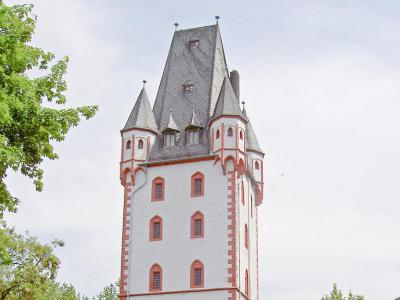
The Wood Tower (Holzturm) in Mainz is one of the remaining medieval structures that once formed part of the city’s fortifications, alongside the Iron and Alexander Towers. Originally constructed in the first half of the 15th century, the tower's Gothic design reflects the architectural style of the period, with its slender proportions emphasizing verticality, typical of the Gothic aesthetic.
The Wood Tower derives its name from the wood market historically held outside its gate and the wood transported down the Rhine River from southern Germany, which was stored on the nearby riverbanks. Initially serving as a watchtower and gate tower, the structure later functioned as a gaol during the late medieval and early modern periods. Among its most infamous prisoners was Johannes Bückler, also known as "Schinderhannes," a notorious bandit who, along with his gang, was held here for over 15 months before being executed in 1803.
Architecturally, the six-story tower is constructed from crushed stone, reinforced with square quoins, and divided by two prominent cornices. It features a steeply pitched hipped roof, a ribbed vault ceiling, and pointed-arch windows typical of Gothic design. Decorative elements include busts of couples-a burgher and his wife, as well as a king and queen-above the windows on the first floor facing the city.
Although severely damaged during World War II, the Wood Tower was meticulously reconstructed in 1961 as part of Mainz’s 2000th-anniversary celebrations. Today, it serves as a venue for various organizations and clubs.
The Wood Tower derives its name from the wood market historically held outside its gate and the wood transported down the Rhine River from southern Germany, which was stored on the nearby riverbanks. Initially serving as a watchtower and gate tower, the structure later functioned as a gaol during the late medieval and early modern periods. Among its most infamous prisoners was Johannes Bückler, also known as "Schinderhannes," a notorious bandit who, along with his gang, was held here for over 15 months before being executed in 1803.
Architecturally, the six-story tower is constructed from crushed stone, reinforced with square quoins, and divided by two prominent cornices. It features a steeply pitched hipped roof, a ribbed vault ceiling, and pointed-arch windows typical of Gothic design. Decorative elements include busts of couples-a burgher and his wife, as well as a king and queen-above the windows on the first floor facing the city.
Although severely damaged during World War II, the Wood Tower was meticulously reconstructed in 1961 as part of Mainz’s 2000th-anniversary celebrations. Today, it serves as a venue for various organizations and clubs.
15) Stadtpark (City Park)
The City Park (Stadtpark) in Mainz is one of the city's larger green spaces, nestled between the old town and the upper town. Originally outside the city gates near Neutor, the area once housed the Mainz pleasure palace, Favorite, before its destruction in the 1793 Siege of Mainz. Afterward, the grounds were left in ruins, with stones repurposed during the French occupation. In 1803, it became the execution site of the infamous Schinderhannes and his gang.
Between 1819 and 1825, landscape architect Peter Wolf transformed the neglected grounds into an English-style landscape park. Although some of Wolf's original designs were lost to development, including railway expansions and the construction of a gasworks, the park gained its current look in 1888, thanks to the Siesmayer brothers, who also designed the Palmengarten in Frankfurt.
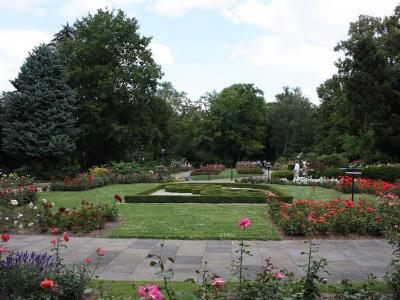
In 1962, to mark Mainz's 2000th anniversary, the park was redesigned with flower houses, a birdhouse, and a reading yard. Baroque elements like the Hercules statue and the Rhenus torso were reinstated. Today, it features lawns, mature trees, fountains, and winding pathways. A copy of the Father Rhine statue also stands nearby.
The City Park's rose garden, designed in 1925 by August Waltenberg for the Rhineland's millennium, covers 9,500 square meters with about 7,500 roses. It hosts events like the Mainz Wine Market and Sparkling Wine Festival, along with an Artists’ Market and Book Fair. Trees in the garden honor those executed here in 1803. Protected as a monument since 2006, the park blends history, nature, and community gatherings.
Between 1819 and 1825, landscape architect Peter Wolf transformed the neglected grounds into an English-style landscape park. Although some of Wolf's original designs were lost to development, including railway expansions and the construction of a gasworks, the park gained its current look in 1888, thanks to the Siesmayer brothers, who also designed the Palmengarten in Frankfurt.
In 1962, to mark Mainz's 2000th anniversary, the park was redesigned with flower houses, a birdhouse, and a reading yard. Baroque elements like the Hercules statue and the Rhenus torso were reinstated. Today, it features lawns, mature trees, fountains, and winding pathways. A copy of the Father Rhine statue also stands nearby.
The City Park's rose garden, designed in 1925 by August Waltenberg for the Rhineland's millennium, covers 9,500 square meters with about 7,500 roses. It hosts events like the Mainz Wine Market and Sparkling Wine Festival, along with an Artists’ Market and Book Fair. Trees in the garden honor those executed here in 1803. Protected as a monument since 2006, the park blends history, nature, and community gatherings.
