Custom Walk in Memphis, Tennessee by candi_798eda created on 2026-06-08
Guide Location: USA » Memphis
Guide Type: Custom Walk
# of Sights: 8
Tour Duration: 1 Hour(s)
Travel Distance: 1.7 Km or 1.1 Miles
Share Key: H5ZA6
Guide Type: Custom Walk
# of Sights: 8
Tour Duration: 1 Hour(s)
Travel Distance: 1.7 Km or 1.1 Miles
Share Key: H5ZA6
How It Works
Please retrieve this walk in the GPSmyCity app. Once done, the app will guide you from one tour stop to the next as if you had a personal tour guide. If you created the walk on this website or come to the page via a link, please follow the instructions below to retrieve the walk in the app.
Retrieve This Walk in App
Step 1. Download the app "GPSmyCity: Walks in 1K+ Cities" on Apple App Store or Google Play Store.



Step 2. In the GPSmyCity app, download(or launch) the guide "Memphis Map and Walking Tours".
Step 3. Tap the menu button located at upper right corner of the "Walks" screen and select "Retrieve custom walk". Enter the share key: H5ZA6
1) Memphis Rock 'n' Soul Museum (must see)
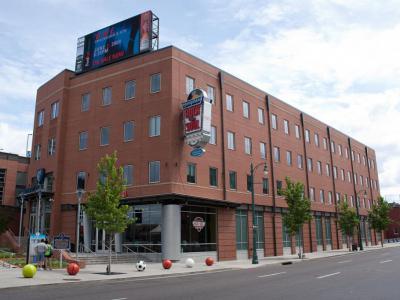
The Memphis Rock ’n’ Soul Museum is one of the best places in the city to understand how Memphis became a world capital of popular music. The museum opened in 2000 and grew out of a Smithsonian Institution research project.
Across seven galleries, the exhibition traces the story from music sung in the fields to gospel, blues, country, rhythm and blues, and rock ’n’ roll. Visitors follow the journey from rural field hollers, sharecropper songs, and porch music of the 1930s to the urban influence of Beale Street, the rise of radio, and the recording studios and labels that helped define the Memphis sound. Videos, recordings, photographs, instruments, stage costumes, film clips, and listening stations bring the displays to life, with figures such as Elvis Presley, B.B. King, Otis Redding, and Isaac Hayes standing out as key protagonists.
Start the exploration of the very root of this musical timeline by continuing straight ahead from the main ticket desk into the opening gallery space to find the centre of the "Rural Music" Exhibit. Here, the museum presents a life-sized recreation of a 1930s sharecropper cabin. The exhibit captures the humble, anonymous origins of Delta musicians who played homemade instruments on porches and sang field hollers, showing the stark, real-life conditions of their families.
The natural progression was for those sounds to reach the wider public. To find a visual link to that transition, exit the rural history rooms and walk around the central partition walls into the mid-century galleries detailing the rise of radio. Set into a prominent viewing alcove is the historic Wurlitzer jukebox. It shows a beautifully preserved, neon-lit 1950s music machine, an artifact that represents the exact moment rhythm and blues crossed over to mainstream youth culture. The jukebox is surrounded by rare vintage record covers and early broadcasting microphones, while the museum's digital audio-guide system lets you play the exact tracks that once spun on its turntables.
Several other sections are also worth noting. The Bravo Gallery, in particular, honors artists who made an impact on world music. Follow the main pathway toward the end of the museum and look to your right to find the Bravo Gallery Costume Display. This high-ceilinged glass vault was designed to honor the larger-than-life icons of the 1960s and ’70s. Here, you can stand face-to-face with spectacular original stage outfits worn by soul legends, including the glittering custom wardrobe of composer Isaac Hayes.
Across seven galleries, the exhibition traces the story from music sung in the fields to gospel, blues, country, rhythm and blues, and rock ’n’ roll. Visitors follow the journey from rural field hollers, sharecropper songs, and porch music of the 1930s to the urban influence of Beale Street, the rise of radio, and the recording studios and labels that helped define the Memphis sound. Videos, recordings, photographs, instruments, stage costumes, film clips, and listening stations bring the displays to life, with figures such as Elvis Presley, B.B. King, Otis Redding, and Isaac Hayes standing out as key protagonists.
Start the exploration of the very root of this musical timeline by continuing straight ahead from the main ticket desk into the opening gallery space to find the centre of the "Rural Music" Exhibit. Here, the museum presents a life-sized recreation of a 1930s sharecropper cabin. The exhibit captures the humble, anonymous origins of Delta musicians who played homemade instruments on porches and sang field hollers, showing the stark, real-life conditions of their families.
The natural progression was for those sounds to reach the wider public. To find a visual link to that transition, exit the rural history rooms and walk around the central partition walls into the mid-century galleries detailing the rise of radio. Set into a prominent viewing alcove is the historic Wurlitzer jukebox. It shows a beautifully preserved, neon-lit 1950s music machine, an artifact that represents the exact moment rhythm and blues crossed over to mainstream youth culture. The jukebox is surrounded by rare vintage record covers and early broadcasting microphones, while the museum's digital audio-guide system lets you play the exact tracks that once spun on its turntables.
Several other sections are also worth noting. The Bravo Gallery, in particular, honors artists who made an impact on world music. Follow the main pathway toward the end of the museum and look to your right to find the Bravo Gallery Costume Display. This high-ceilinged glass vault was designed to honor the larger-than-life icons of the 1960s and ’70s. Here, you can stand face-to-face with spectacular original stage outfits worn by soul legends, including the glittering custom wardrobe of composer Isaac Hayes.
2) Beale Street (must see)
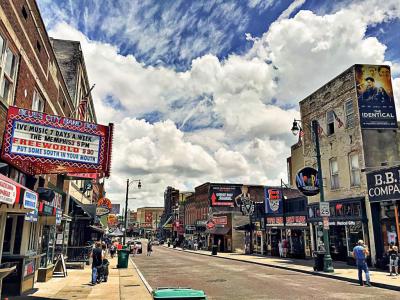
Beale Street stands in the historic core of Memphis and is one of the city’s defining places, a downtown street where music history, nightlife, and African American cultural heritage meet in a compact, energetic setting. The street lies within a district of restored 19th-century buildings, many of which were constructed over the remains of the city’s early commercial foundations.
The central performance area is located in Handy Park at the corner of Beale and 3rd Street, often visible as a vibrant outdoor stage. It reflects the foundations of the blues from the early 1900s. At the intersection near the centre of the district, the large bronze statue of W.C. Handy marks the park’s main focal point. The statue honours the man who composed “The Memphis Blues” in 1912 and “Beale Street Blues” in 1916. Nearby commemorative plaques honour performers such as Louis Armstrong and Muddy Waters, who helped define the “Memphis sound.”
Inside the historic storefront at 163 Beale Street, large wooden shelves stand as relics of an 1870s mercantile empire. After the business was established in 1876, it was purchased and maintained by the Schwab family, who converted the space into the A. Schwab Dry Goods Store. As the oldest business on the street, it serves as a living museum of 19th-century trade. Inside, the original tin ceilings, stone-top soda fountain, and worn stone floors preserve much of the old-store atmosphere. The shelves still carry “love potions,” voodoo powders, and historical oddities.
Other notable pieces include the Brass Notes, authentic sidewalk inscriptions honoring the “kings” of Memphis music, and the specific legacy of Elvis Presley. As you continue toward 4th Street, the names of B.B. King and Elvis appear underfoot among the sidewalk tributes.
As a teenager living in nearby Lauderdale Courts, Elvis frequently visited these blocks, standing at the doors of clubs like the Old Daisy to absorb the rhythm and energy of Black bluesmen. The site of the original Lansky Brothers store is now marked by a plaque; this was where Elvis bought the flashy pink-and-black suits that defined his early image. It was here that he absorbed the “voodoo” of the street’s sound and style, a fusion that would eventually change the world.
The central performance area is located in Handy Park at the corner of Beale and 3rd Street, often visible as a vibrant outdoor stage. It reflects the foundations of the blues from the early 1900s. At the intersection near the centre of the district, the large bronze statue of W.C. Handy marks the park’s main focal point. The statue honours the man who composed “The Memphis Blues” in 1912 and “Beale Street Blues” in 1916. Nearby commemorative plaques honour performers such as Louis Armstrong and Muddy Waters, who helped define the “Memphis sound.”
Inside the historic storefront at 163 Beale Street, large wooden shelves stand as relics of an 1870s mercantile empire. After the business was established in 1876, it was purchased and maintained by the Schwab family, who converted the space into the A. Schwab Dry Goods Store. As the oldest business on the street, it serves as a living museum of 19th-century trade. Inside, the original tin ceilings, stone-top soda fountain, and worn stone floors preserve much of the old-store atmosphere. The shelves still carry “love potions,” voodoo powders, and historical oddities.
Other notable pieces include the Brass Notes, authentic sidewalk inscriptions honoring the “kings” of Memphis music, and the specific legacy of Elvis Presley. As you continue toward 4th Street, the names of B.B. King and Elvis appear underfoot among the sidewalk tributes.
As a teenager living in nearby Lauderdale Courts, Elvis frequently visited these blocks, standing at the doors of clubs like the Old Daisy to absorb the rhythm and energy of Black bluesmen. The site of the original Lansky Brothers store is now marked by a plaque; this was where Elvis bought the flashy pink-and-black suits that defined his early image. It was here that he absorbed the “voodoo” of the street’s sound and style, a fusion that would eventually change the world.
3) Memphis Music Records Tapes & Souvenirs
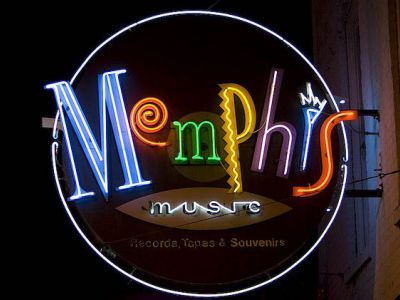
Memphis Music Records Tapes & Souvenirs brings Beale Street’s musical legacy into shop-window form. For blues lovers, gospel admirers, rock ’n’ roll fans, and jazz devotees, the shelves offer a wide range of recordings tied to the city’s sound, including music by Albert King, B.B. King, Memphis Minnie, Howlin’ Wolf, and artists connected with the Stax tradition.
Before he became the King of Rock ’n’ Roll, Elvis was listening to the same mixture of blues, gospel, country, rhythm and blues, and popular music that flowed through streets like Beale. Browsing the shop’s CDs, vinyl records, tapes, DVDs, posters, and music memorabilia gives visitors a sense of the musical environment that shaped his early style.
The store is also useful for tourists who want something more connected to Memphis than a generic keepsake. Alongside recordings, visitors can find T-shirts, posters, postcards, magnets, mugs, harmonicas, and other souvenirs.
Before he became the King of Rock ’n’ Roll, Elvis was listening to the same mixture of blues, gospel, country, rhythm and blues, and popular music that flowed through streets like Beale. Browsing the shop’s CDs, vinyl records, tapes, DVDs, posters, and music memorabilia gives visitors a sense of the musical environment that shaped his early style.
The store is also useful for tourists who want something more connected to Memphis than a generic keepsake. Alongside recordings, visitors can find T-shirts, posters, postcards, magnets, mugs, harmonicas, and other souvenirs.
4) Statue of Elvis
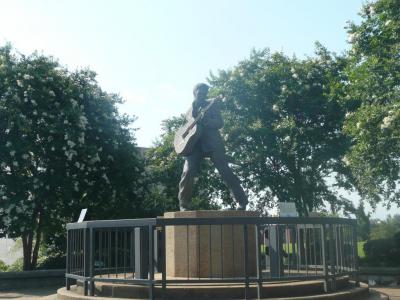
The Elvis Statue on Beale Street is one of Memphis’s most popular photo stops and a fitting tribute to the King of Rock ’n’ Roll. The statue stands just west of B.B. King’s Blues Club and shows a young Elvis in performance mode, guitar in hand, as he might have appeared in 1955, with a curled lip, swept-back hair, and stage clothes likely inspired by Lansky Bros. down the block.
The current sculpture is actually the second bronze Elvis to stand on this spot. The first, created by artist Eric Parks, was unveiled in 1980 and became one of the earliest bronze statues of Elvis. Unfortunately, it proved too fragile for both the weather and the enthusiasm of souvenir-hunting fans, who damaged its guitar strings and even removed tassels from the suit. To protect it from further wear, the original was taken off the street in 1994 and moved indoors to the downtown Tennessee Welcome Center in Memphis.
For three years, Elvis Presley Plaza remained empty, until a new 9.5-foot bronze statue by sculptor Andrea Lugar was installed in 1997. More durable than its predecessor, it is still kept behind a protective fence.
The current sculpture is actually the second bronze Elvis to stand on this spot. The first, created by artist Eric Parks, was unveiled in 1980 and became one of the earliest bronze statues of Elvis. Unfortunately, it proved too fragile for both the weather and the enthusiasm of souvenir-hunting fans, who damaged its guitar strings and even removed tassels from the suit. To protect it from further wear, the original was taken off the street in 1994 and moved indoors to the downtown Tennessee Welcome Center in Memphis.
For three years, Elvis Presley Plaza remained empty, until a new 9.5-foot bronze statue by sculptor Andrea Lugar was installed in 1997. More durable than its predecessor, it is still kept behind a protective fence.
5) Center for Southern Folklore
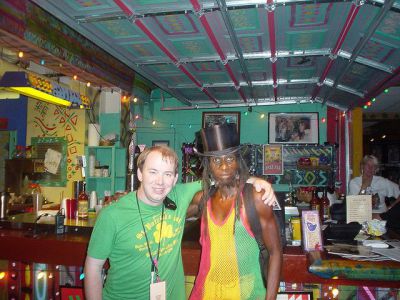
The Center for Southern Folklore is a Memphis nonprofit devoted to preserving and presenting the music, stories, art, crafts, and everyday traditions of the American South. Founded in 1972 by folklorist William Ferris and filmmaker Judy Peiser, after their documentary work in the Mississippi Delta, it grew into an important archive and cultural space focused on Memphis and the wider Delta region. Its collections include documentary films, video and audio recordings, contemporary and historic photographs, printed materials, slides, and artifacts that trace the lives of musical pioneers, mule traders, fife makers, folk artists, and many others who shaped Southern culture.
The Center is especially appealing to blues, soul, gospel, jazz, rockabilly, hip-hop, and regional music lovers, but its focus reaches beyond performance into community memory and local craft. Exhibits, photographs, films, folk art, cultural programs, and customized tours help visitors understand the people behind the music and traditions of the Memphis/Delta region.
Its Folklore Store adds another layer to the experience, offering regional folk art, archival prints, and Center-produced recordings. Depending on the seasonal schedule, visitors can still find periodic live music events, such as local jazz and gospel jams. Historically, the organization highlighted its mission with the free, family-friendly Memphis Music & Heritage Festival, which was traditionally held downtown over Labor Day weekend.
The Center is especially appealing to blues, soul, gospel, jazz, rockabilly, hip-hop, and regional music lovers, but its focus reaches beyond performance into community memory and local craft. Exhibits, photographs, films, folk art, cultural programs, and customized tours help visitors understand the people behind the music and traditions of the Memphis/Delta region.
Its Folklore Store adds another layer to the experience, offering regional folk art, archival prints, and Center-produced recordings. Depending on the seasonal schedule, visitors can still find periodic live music events, such as local jazz and gospel jams. Historically, the organization highlighted its mission with the free, family-friendly Memphis Music & Heritage Festival, which was traditionally held downtown over Labor Day weekend.
6) Cotton Museum at the Memphis Cotton Exchange
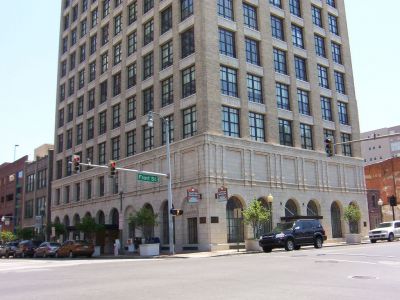
The Cotton Museum at the Memphis Cotton Exchange is an exhibition hall that tells you everything you ever wanted to know about cotton. Located on the corner of Front Street and Union Avenue, the building is where cotton farmers would bring their bounty to sell to traders who would sell their purchases to textile manufacturers around the world. The museum gives patrons a glimpse into the history of the cotton industry in Memphis from the 1920s to present times.
Memphis is and was one of the biggest spot-cotton markets in the world. In 1874, the Memphis Cotton Exchange was established to help regulate that market. Some of the items visitors will see are cotton gins, bales of cotton, a 135-foot custom mural by Memphis artist David Mah, a Western Union telegraph, the trading board used to make transactions, and a display featuring clothing from the Cotton Carnivals of the days long gone by.
It is highly recommended to take the Legends of Cotton Row tour that shows visitors to downtown Memphis where many cotton transactions occurred. The museum also offers brown bag lunch lectures on the third Thursday of each month.
Memphis is and was one of the biggest spot-cotton markets in the world. In 1874, the Memphis Cotton Exchange was established to help regulate that market. Some of the items visitors will see are cotton gins, bales of cotton, a 135-foot custom mural by Memphis artist David Mah, a Western Union telegraph, the trading board used to make transactions, and a display featuring clothing from the Cotton Carnivals of the days long gone by.
It is highly recommended to take the Legends of Cotton Row tour that shows visitors to downtown Memphis where many cotton transactions occurred. The museum also offers brown bag lunch lectures on the third Thursday of each month.
7) Peabody Hotel (must see)
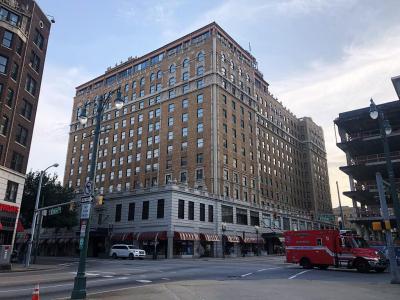
The Peabody Hotel stands on Union Avenue in the historic core of Memphis and is one of the city’s great landmarks, combining old Southern grandeur with one of the most unusual rituals in American hospitality. The hotel is housed in a magnificent structure constructed in 1925, which preserved the Peabody name as a symbol of elegance after the original 1869 building was closed.
Inside, the central highlight is the Grand Lobby Fountain, located on the ground floor of the hotel and often visible as the immediate focal point for everyone entering from Union Avenue. It reveals the craftsmanship of the early 20th century, having been carved from a single block of Italian travertine marble. To find this feature, walk into the heart of the lobby; look for the ornate carvings and flowing water where the mallards spend their day.
Each day at 11 a.m. and 5 p.m., guests will be treated for the famous Duck March show at the fountain. Listen for John Philip Sousa’s “King Cotton March” as five mallards march across a red carpet, a tradition that began as a joke in 1933, when the general manager placed live English Call ducks here after a hunting trip.
The hotel also has strong links to the succession of musical cultures that shaped the city, most notably through Elvis Presley. Beyond the main lobby level, the Peabody Memorabilia Room serves as a relic of this rock ’n’ roll history. To find this highlight, take the stairs or elevator to the mezzanine level overlooking the fountain. Once you find yourself in this quiet gallery, look for the glass-protected displays. Pay attention to the 1955 contract Elvis signed in the lobby when he left Sun Records for RCA, along with items from Bernard Lansky, the “Clothier to the Stars,” who sold Elvis his first shirts.
This room also recounts how Elvis attended his Humes High School senior prom here; despite his future fame, he was so nervous that he famously told his date he “didn’t dance.”
Beneath the open sky of the Plantation Roof, a specially designed structure represents the crowning relic of the hotel’s hospitality. After the ducks finish their 5 p.m. march, they return to the Duck Palace. Visit the Plantation Roof to see the miniature mansion constructed of solid granite and marble. Look for the original brass nameplates and the small fountain once used for the ducks’ private leisure, which sits alongside the Peabody Skyway. This area recalls the hotel’s glamorous 1940s social life and still offers fine views over the Memphis skyline.
Inside, the central highlight is the Grand Lobby Fountain, located on the ground floor of the hotel and often visible as the immediate focal point for everyone entering from Union Avenue. It reveals the craftsmanship of the early 20th century, having been carved from a single block of Italian travertine marble. To find this feature, walk into the heart of the lobby; look for the ornate carvings and flowing water where the mallards spend their day.
Each day at 11 a.m. and 5 p.m., guests will be treated for the famous Duck March show at the fountain. Listen for John Philip Sousa’s “King Cotton March” as five mallards march across a red carpet, a tradition that began as a joke in 1933, when the general manager placed live English Call ducks here after a hunting trip.
The hotel also has strong links to the succession of musical cultures that shaped the city, most notably through Elvis Presley. Beyond the main lobby level, the Peabody Memorabilia Room serves as a relic of this rock ’n’ roll history. To find this highlight, take the stairs or elevator to the mezzanine level overlooking the fountain. Once you find yourself in this quiet gallery, look for the glass-protected displays. Pay attention to the 1955 contract Elvis signed in the lobby when he left Sun Records for RCA, along with items from Bernard Lansky, the “Clothier to the Stars,” who sold Elvis his first shirts.
This room also recounts how Elvis attended his Humes High School senior prom here; despite his future fame, he was so nervous that he famously told his date he “didn’t dance.”
Beneath the open sky of the Plantation Roof, a specially designed structure represents the crowning relic of the hotel’s hospitality. After the ducks finish their 5 p.m. march, they return to the Duck Palace. Visit the Plantation Roof to see the miniature mansion constructed of solid granite and marble. Look for the original brass nameplates and the small fountain once used for the ducks’ private leisure, which sits alongside the Peabody Skyway. This area recalls the hotel’s glamorous 1940s social life and still offers fine views over the Memphis skyline.
8) W.C. Handy Statue
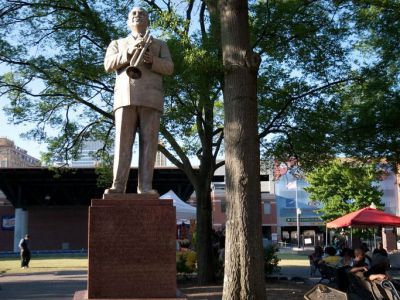
The W.C. Handy Statue stands in Handy Park, one of the most fitting places in Memphis to honour William Christopher Handy, long known as the “Father of the Blues.” Handy came to Memphis in 1909 and worked on Beale Street, where he helped bring the blues from regional folk tradition into published, widely circulated music. His “The Memphis Blues,” first published in 1912, and “Beale Street Blues,” published in 1917, helped connect the street’s name with the sound of the city.
The bronze statue was erected in 1960, only two years after Handy’s death, when Memphis was still segregated. Created by Italian sculptor Leone Tommasi and cast in Florence, Italy, the life-size figure publicly honoured an African American composer whose work had become central to American music. It stood at the entrance to the park bearing his name and later became the visual model for the Blues Foundation’s early W.C. Handy Blues Awards.
A commemorative plaque identifies Handy as a composer, music publisher, and “Father of the Blues.”
The statue is both a photo stop and a point of reflection. Handy himself gave Beale Street one of its best musical tributes in “Beale Street Blues”: “I’d rather be here than any place I know.”
The bronze statue was erected in 1960, only two years after Handy’s death, when Memphis was still segregated. Created by Italian sculptor Leone Tommasi and cast in Florence, Italy, the life-size figure publicly honoured an African American composer whose work had become central to American music. It stood at the entrance to the park bearing his name and later became the visual model for the Blues Foundation’s early W.C. Handy Blues Awards.
A commemorative plaque identifies Handy as a composer, music publisher, and “Father of the Blues.”
The statue is both a photo stop and a point of reflection. Handy himself gave Beale Street one of its best musical tributes in “Beale Street Blues”: “I’d rather be here than any place I know.”
