Custom Walk in Lyon, France by pranav_pulakkat_47ee24 created on 2026-06-12
Guide Location: France » Lyon
Guide Type: Custom Walk
# of Sights: 10
Tour Duration: 1 Hour(s)
Travel Distance: 1.5 Km or 0.9 Miles
Share Key: 2BYSR
Guide Type: Custom Walk
# of Sights: 10
Tour Duration: 1 Hour(s)
Travel Distance: 1.5 Km or 0.9 Miles
Share Key: 2BYSR
How It Works
Please retrieve this walk in the GPSmyCity app. Once done, the app will guide you from one tour stop to the next as if you had a personal tour guide. If you created the walk on this website or come to the page via a link, please follow the instructions below to retrieve the walk in the app.
Retrieve This Walk in App
Step 1. Download the app "GPSmyCity: Walks in 1K+ Cities" on Apple App Store or Google Play Store.



Step 2. In the GPSmyCity app, download(or launch) the guide "Lyon Map and Walking Tours".
Step 3. Tap the menu button located at upper right corner of the "Walks" screen and select "Retrieve custom walk". Enter the share key: 2BYSR
1) Saint-Georges Church
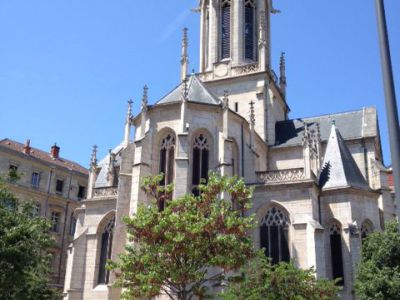
Saint Georges' Church is situated on the banks of the Saône River in the Old Neighborhood of Lyon. The history of this church dates back to 550 when the initial structure was erected, but unfortunately, it was destroyed in 732 by invading Saracens. However, it was reconstructed in 802. Later, in 1315, the Commandery of the Order of Malta was constructed alongside the church, and as a result, the church was entrusted to the Order.
During the French Revolution, like many other churches in France, Saint Georges' Church was repurposed as a hay barn. This act was intended to demonstrate that the people needed fodder for their animals more than they needed religion, which was seen as a gesture of defiance towards the Vatican. The Vatican's bishops were believed to be responsible for corrupting the monarchy and the nobility at that time. Fortunately, unlike many other churches that were completely destroyed during the Revolution, Saint Georges' Church was spared and later restored in 1869 by Bossan, adopting the Neo-Gothic architectural style. Bossan was also responsible for creating most of the church's furniture.
The church's facade was adorned with sculptures by Dufraine, and the stained-glass windows were skillfully crafted by the Marechal de Metz. In 1892, the church underwent further renovation work by Pollet, and a striking steeple was added to the top of the bell tower. While the main entrance is quite imposing, the side of the church facing the river is particularly captivating, boasting numerous arched windows and twin balconies.
During the French Revolution, like many other churches in France, Saint Georges' Church was repurposed as a hay barn. This act was intended to demonstrate that the people needed fodder for their animals more than they needed religion, which was seen as a gesture of defiance towards the Vatican. The Vatican's bishops were believed to be responsible for corrupting the monarchy and the nobility at that time. Fortunately, unlike many other churches that were completely destroyed during the Revolution, Saint Georges' Church was spared and later restored in 1869 by Bossan, adopting the Neo-Gothic architectural style. Bossan was also responsible for creating most of the church's furniture.
The church's facade was adorned with sculptures by Dufraine, and the stained-glass windows were skillfully crafted by the Marechal de Metz. In 1892, the church underwent further renovation work by Pollet, and a striking steeple was added to the top of the bell tower. While the main entrance is quite imposing, the side of the church facing the river is particularly captivating, boasting numerous arched windows and twin balconies.
2) Atelier des Ombres (L')
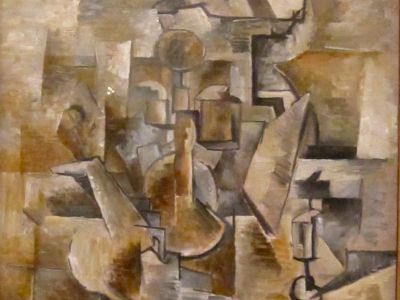
Shadow Workshop (L' Atelier des Ombres) is a distinctive blend of an art gallery and a creative workspace in the heart of Lyon. This establishment has emerged as a central hub for both emerging and established artists, providing an environment where people of all ages can learn the fundamentals of drawing and painting.
The origin of the Shadow Workshop can be traced back to the personal journey of Sylvie Samy. Motivated by a desire to reconnect with her creative spirit, she embarked on a path of art restoration. In 1994, Samy achieved a significant milestone by earning her diploma in this field. Her unwavering passion and commitment led to the founding of the Shadow Workshop in 1996, a space dedicated to both the creation and instruction of painting.
Since its inception in 1997, the Shadow Workshop has welcomed countless individuals, offering them the opportunity to explore and refine their skills in various painting techniques. While Sylvie Samy is particularly passionate about oil painting, she possesses extensive expertise in acrylic and watercolor painting as well, ensuring a comprehensive and enriching learning experience for her students.
The Shadow Workshop has played a pivotal role in the art community, notably as one of the first venues to showcase the works of now-renowned artists such as Hervé Maury, Eric Bleicher, and Clémence Torres. This aspect underscores the Atelier's influence and its significant contribution to the broader art scene.
The origin of the Shadow Workshop can be traced back to the personal journey of Sylvie Samy. Motivated by a desire to reconnect with her creative spirit, she embarked on a path of art restoration. In 1994, Samy achieved a significant milestone by earning her diploma in this field. Her unwavering passion and commitment led to the founding of the Shadow Workshop in 1996, a space dedicated to both the creation and instruction of painting.
Since its inception in 1997, the Shadow Workshop has welcomed countless individuals, offering them the opportunity to explore and refine their skills in various painting techniques. While Sylvie Samy is particularly passionate about oil painting, she possesses extensive expertise in acrylic and watercolor painting as well, ensuring a comprehensive and enriching learning experience for her students.
The Shadow Workshop has played a pivotal role in the art community, notably as one of the first venues to showcase the works of now-renowned artists such as Hervé Maury, Eric Bleicher, and Clémence Torres. This aspect underscores the Atelier's influence and its significant contribution to the broader art scene.
3) Lyon Cathedral (must see)
In 450 AD, on or about, Bishop Patiens of Lyon - later sainted, so clearly doing something right - decided the city needed a proper cathedral. He dedicated it to Saint Stephen. A baptistry followed in the 7th century, because what’s a cathedral without a place for dramatic spiritual beginnings? Nearby stood the Church of Saint Croix. All of this activity took place right here in Old Lyon, close to the Saône River - the very ground where Lyon Cathedral would rise 800 years later.
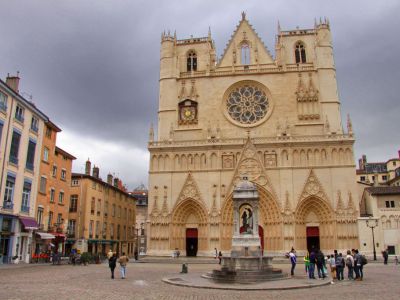
Now, here’s where the story gets ambitious. The new cathedral was built over the ruins of Saint Stephen’s and is traditionally linked to Saints Pothinus and Irenaeus, early Christian figures in Lyon. Construction began in 1180 and, in true medieval fashion, took nearly three centuries to wrap up in 1476.
And yet, somehow, the style holds together beautifully. Romanesque solidity meets Gothic height in a surprisingly calm architectural handshake - no dramatic identity crisis despite the long build...
The numbers are impressive. The cathedral stretches 263 feet in length, with the nave soaring 107 feet high. The façade leans Gothic, with pointed arches and vertical lines drawing your eyes upward. Move toward the apse and choir, and you feel the heavier, rounded strength of Romanesque design. Above you, the ribbed vault of the nave lifts in full Gothic confidence, as if the building is taking a deep, stone-carved breath.
Inside, you’ll see one of the cathedral's greatest stars: a 30-foot-high astronomical clock. Installed in 1383, it didn’t just tell time - it mapped the heavens. Its astrolabe charts the positions of the Sun, Moon, stars, and Earth. Quite advanced for the Middle Ages...
The clock was smashed in 1562, during the Wars of Religion, by François de Beaumont, Baron of Adrets - clearly not a fan of delicate mechanics - and later rebuilt in 1661 by master clockmaker Guillaume Norrisson. Second life, same cosmic ambition...
Each year, in December, candles glow in windows across Lyon to honor the Virgin Mary. It is then that the cathedral façade transforms into a canvas of light during the Festival of Lights, marking the city’s gratitude for the end of the plague in 1643. Stone, history, astronomy, and light are all layered into one remarkable building.
Now, here’s where the story gets ambitious. The new cathedral was built over the ruins of Saint Stephen’s and is traditionally linked to Saints Pothinus and Irenaeus, early Christian figures in Lyon. Construction began in 1180 and, in true medieval fashion, took nearly three centuries to wrap up in 1476.
And yet, somehow, the style holds together beautifully. Romanesque solidity meets Gothic height in a surprisingly calm architectural handshake - no dramatic identity crisis despite the long build...
The numbers are impressive. The cathedral stretches 263 feet in length, with the nave soaring 107 feet high. The façade leans Gothic, with pointed arches and vertical lines drawing your eyes upward. Move toward the apse and choir, and you feel the heavier, rounded strength of Romanesque design. Above you, the ribbed vault of the nave lifts in full Gothic confidence, as if the building is taking a deep, stone-carved breath.
Inside, you’ll see one of the cathedral's greatest stars: a 30-foot-high astronomical clock. Installed in 1383, it didn’t just tell time - it mapped the heavens. Its astrolabe charts the positions of the Sun, Moon, stars, and Earth. Quite advanced for the Middle Ages...
The clock was smashed in 1562, during the Wars of Religion, by François de Beaumont, Baron of Adrets - clearly not a fan of delicate mechanics - and later rebuilt in 1661 by master clockmaker Guillaume Norrisson. Second life, same cosmic ambition...
Each year, in December, candles glow in windows across Lyon to honor the Virgin Mary. It is then that the cathedral façade transforms into a canvas of light during the Festival of Lights, marking the city’s gratitude for the end of the plague in 1643. Stone, history, astronomy, and light are all layered into one remarkable building.
4) Rue Saint-Jean - Old Lyon Traboules (must see)
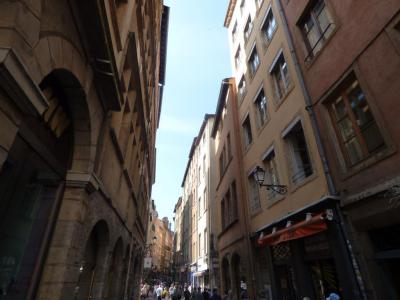
Back in 1954, Lyon’s Old Town made history. It became the first city in France to receive protection under the Malraux Law, long before “heritage preservation” became fashionable dinner conversation. The law shielded three Renaissance neighbourhoods wrapped around Fourvière Hill, namely: Saint Jean, Saint Paul, and Saint Georges.
In the Middle Ages, Saint Jean was the place to be - politically, religiously, and strategically. Power lived here. Right at the heart of it stands Lyon Cathedral, alongside the Romanesque Manecanterie, the former choir school.
But the real local secret isn’t just above ground - it’s hidden in the walls. The first traboule, or foot tunnel, linked Saint-Jean Street to Government Square. Why? Because medieval streets were few, the hill was steep, and everyone needed quicker access to the Saône River for fresh water. When streets failed, ingenuity stepped in...
So, Lyon built passageways - traboules - hidden corridors threading through buildings, across courtyards, quietly connecting one street to another. In the 19th century, more were added. The silk workers - the famous Canuts - used them to carry delicate rolls of silk down to the river without exposing them to rain.
When those same workers rebelled in the 1830s against wealthy silk merchants, the traboules turned into strategic hideouts. Fast forward to World War II, and the tunnels once again proved useful - this time sheltering members of the French Resistance. Indeed, these walls have seen more secrets than a confessional.
Now, if you’re curious, head to 54 Rue Saint-Jean. Look for a modest green door with a small engraved sign reading “The Long Traboule.” It doesn’t shout for attention - it doesn’t need to. This is the longest traboule in Old Lyon. Cross the threshold, and you’ll pass through five courtyards and four different buildings, emerging on Beef Street, if you’re translating literally. It feels less like walking through a corridor and more like slipping through time.
Around 50 traboules are open to the public today. But many more remain hidden, known mostly to residents. And that’s the charm of Lyon - a city where history doesn’t just sit in monuments. It runs behind walls, under your feet, and occasionally behind an unassuming green door...
In the Middle Ages, Saint Jean was the place to be - politically, religiously, and strategically. Power lived here. Right at the heart of it stands Lyon Cathedral, alongside the Romanesque Manecanterie, the former choir school.
But the real local secret isn’t just above ground - it’s hidden in the walls. The first traboule, or foot tunnel, linked Saint-Jean Street to Government Square. Why? Because medieval streets were few, the hill was steep, and everyone needed quicker access to the Saône River for fresh water. When streets failed, ingenuity stepped in...
So, Lyon built passageways - traboules - hidden corridors threading through buildings, across courtyards, quietly connecting one street to another. In the 19th century, more were added. The silk workers - the famous Canuts - used them to carry delicate rolls of silk down to the river without exposing them to rain.
When those same workers rebelled in the 1830s against wealthy silk merchants, the traboules turned into strategic hideouts. Fast forward to World War II, and the tunnels once again proved useful - this time sheltering members of the French Resistance. Indeed, these walls have seen more secrets than a confessional.
Now, if you’re curious, head to 54 Rue Saint-Jean. Look for a modest green door with a small engraved sign reading “The Long Traboule.” It doesn’t shout for attention - it doesn’t need to. This is the longest traboule in Old Lyon. Cross the threshold, and you’ll pass through five courtyards and four different buildings, emerging on Beef Street, if you’re translating literally. It feels less like walking through a corridor and more like slipping through time.
Around 50 traboules are open to the public today. But many more remain hidden, known mostly to residents. And that’s the charm of Lyon - a city where history doesn’t just sit in monuments. It runs behind walls, under your feet, and occasionally behind an unassuming green door...
5) La Tour Rose Traboule (The Pink Tower Passageway)
In the heart of Lyon’s Saint-Jean district stands a building with two names and plenty of personality: the House of the Sieve - or, more memorably, The Pink Tower. Built in the 16th century and attributed to the Italian architect Sebastiano Serlio of Bologna, it carries the elegance of the Renaissance with quiet confidence. The courtyard was refreshed in the 17th century, but the spirit of the place remains unmistakably Renaissance.
As for the curious name “House of the Sieve,” no one can say for certain. One popular theory links it to Martin de Troyes, a 16th-century tax collector whose coat of arms may have featured a sieve - perhaps a subtle reminder that taxes, like flour, must pass through fine filters.
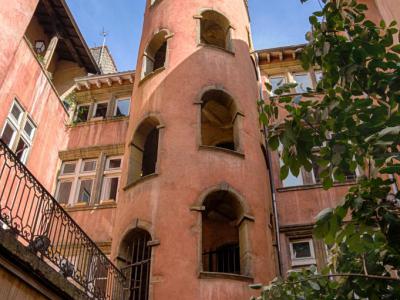
From the street, you might walk past without suspecting anything dramatic. The façade is reserved, almost discreet. But step through the gate, and the building changes character completely. Suddenly, rising before you, is a monumental circular tower washed in soft pink plaster - a bold architectural statement hidden in plain sight.
Inside that tower curls a grand spiral staircase-belvedere, climbing upward in elegant curves. Semicircular bay windows open onto terraces and gardens that unfold across several levels, while a historic well stands quietly at the courtyard’s edge, as if keeping watch over centuries of stories.
The Pink Tower has also hosted its share of distinguished guests. In 1600, King Henri IV of France stayed here briefly during his marriage celebrations with Marie de Medici. Imagine the courtyard filled with royal footsteps and whispered courtly conversations. Its significance was officially recognized in 1937, when it was listed as a historic monument. Still, like many grand old residences, it experienced periods of neglect before careful restoration efforts revived its former glory.
Today, known as the tallest building in the Saint-Jean area, the Pink Tower remains one of Old Lyon’s most captivating sights. It stands not just as an architectural curiosity, but as a symbol of the neighborhood’s hidden wonders - especially the famous traboules that weave through the district. So, whenever you wander these medieval streets, don’t be fooled by modest façades. Sometimes the real spectacle is waiting just behind the door.
As for the curious name “House of the Sieve,” no one can say for certain. One popular theory links it to Martin de Troyes, a 16th-century tax collector whose coat of arms may have featured a sieve - perhaps a subtle reminder that taxes, like flour, must pass through fine filters.
From the street, you might walk past without suspecting anything dramatic. The façade is reserved, almost discreet. But step through the gate, and the building changes character completely. Suddenly, rising before you, is a monumental circular tower washed in soft pink plaster - a bold architectural statement hidden in plain sight.
Inside that tower curls a grand spiral staircase-belvedere, climbing upward in elegant curves. Semicircular bay windows open onto terraces and gardens that unfold across several levels, while a historic well stands quietly at the courtyard’s edge, as if keeping watch over centuries of stories.
The Pink Tower has also hosted its share of distinguished guests. In 1600, King Henri IV of France stayed here briefly during his marriage celebrations with Marie de Medici. Imagine the courtyard filled with royal footsteps and whispered courtly conversations. Its significance was officially recognized in 1937, when it was listed as a historic monument. Still, like many grand old residences, it experienced periods of neglect before careful restoration efforts revived its former glory.
Today, known as the tallest building in the Saint-Jean area, the Pink Tower remains one of Old Lyon’s most captivating sights. It stands not just as an architectural curiosity, but as a symbol of the neighborhood’s hidden wonders - especially the famous traboules that weave through the district. So, whenever you wander these medieval streets, don’t be fooled by modest façades. Sometimes the real spectacle is waiting just behind the door.
6) Musée Gadagne: Museum of Lyon History / International Museum of Puppets
As the famous 19th-century puppet Guignol was created in Lyon, it is only natural that there should be a museum dedicated to him and his fellow-creatures.
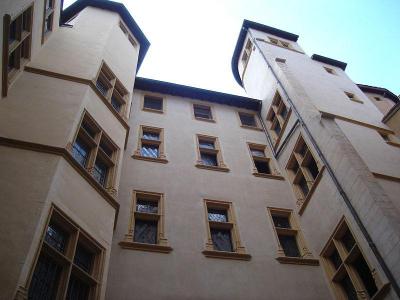
There actually are two twin museums housed in the same Gadagne Building: the Museum of Lyon History opened in 1921 and is an interesting, educational museum, dealing with the period from de Gaul’s to the present day.
You will learn all about the city of Lyon through the 80,000 items that take you through the daily lives of the people: their economic and social lives, religion and the planning and growth of Lyon over the ages. The items include objets d’art, silver and gold plated artefacts, furniture, drawings, paintings and plans of the city, set out in 31 permanent exhibition rooms.
The Puppet Museum opened in 1950 and started out with a small collection based on the Guignol puppet. Closed between 2003 and 2009 for major renovations and up-dating, the museum now boasts of over 2000 puppets from all over the world.
The puppets now have nine rooms for themselves, each equipped with multimedia for watching short plays and pedagogic slide shows that explain all about the techniques of puppeteering and its links with other forms of art. Contemporary puppeteers give interesting lectures at certain times during the day, and there is an audio guide in various languages.
On top of the building, there is a small theatre that seats 138 spectators. Puppet plays are put on at regular intervals to the delight of both adults and children.
There actually are two twin museums housed in the same Gadagne Building: the Museum of Lyon History opened in 1921 and is an interesting, educational museum, dealing with the period from de Gaul’s to the present day.
You will learn all about the city of Lyon through the 80,000 items that take you through the daily lives of the people: their economic and social lives, religion and the planning and growth of Lyon over the ages. The items include objets d’art, silver and gold plated artefacts, furniture, drawings, paintings and plans of the city, set out in 31 permanent exhibition rooms.
The Puppet Museum opened in 1950 and started out with a small collection based on the Guignol puppet. Closed between 2003 and 2009 for major renovations and up-dating, the museum now boasts of over 2000 puppets from all over the world.
The puppets now have nine rooms for themselves, each equipped with multimedia for watching short plays and pedagogic slide shows that explain all about the techniques of puppeteering and its links with other forms of art. Contemporary puppeteers give interesting lectures at certain times during the day, and there is an audio guide in various languages.
On top of the building, there is a small theatre that seats 138 spectators. Puppet plays are put on at regular intervals to the delight of both adults and children.
7) Maison Thomassin (Thomassin House)
When it comes to Thomassin House, standing proudly on Exchange Square, history doesn’t whisper on it - it practically clears its throat and begins a long story. This is one of the oldest buildings in the neighbourhood, and it has earned this title honestly.
Back in the Middle Ages, Exchange Square was the beating heart of Lyon’s textile trade. Three or four major fairs were held here every year, attracting merchants from France, Italy, and the Netherlands. Deals were struck, fortunes were made, and among the families counting their profits were the Thomassins.
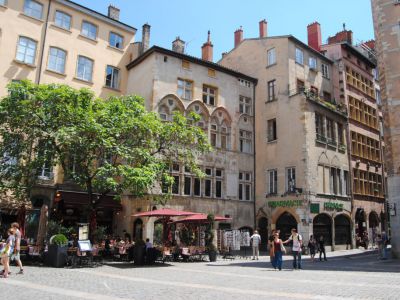
In 1493, they purchased a house that had already been standing on the square since 1298 - because when you’re doing well in business, you don’t always build new, you upgrade. The Thomassins gave the building a Gothic makeover, adding those elegant vertical lines and decorative details that still catch the eye today.
Later times could not resist leaving their own mark either. The 18th and 20th centuries brought further renovations, including first-floor mullioned windows topped with a frieze of the Zodiac signs - a kind of medieval astrology meeting merchant ambition... Twin bays of windows were framed with delicate trefoil arches, and above them rose a pointed ogival arch displaying carved coats of arms.
Looking closely, you can't help spotting the symbols of power: the Dauphin - literally a dolphin, representing the heir to the French throne - alongside the emblem of King Charles VIII, shown as a lily flower, and Queen Anne of Brittany, symbolized by an ermine. It’s almost like a stone résumé carved into the façade, announcing connections, loyalty, and prestige.
And yet, for all the architectural drama outside, the real treasure is hidden within. What survives from the original 13th-century house is a painted wooden ceiling on the first floor, uncovered during renovations in 1964. Decorated with the coats of arms of Saint Louis, his mother Blanche de Castille, and the Fuers - the building’s earliest known owners - it is one of the oldest surviving painted ceilings in France.
So, as you stand here, remember: this old house is a witness to trade fairs, royal symbols, ambitious merchants, and centuries of careful reinvention - all layered behind one very confident façade.
Back in the Middle Ages, Exchange Square was the beating heart of Lyon’s textile trade. Three or four major fairs were held here every year, attracting merchants from France, Italy, and the Netherlands. Deals were struck, fortunes were made, and among the families counting their profits were the Thomassins.
In 1493, they purchased a house that had already been standing on the square since 1298 - because when you’re doing well in business, you don’t always build new, you upgrade. The Thomassins gave the building a Gothic makeover, adding those elegant vertical lines and decorative details that still catch the eye today.
Later times could not resist leaving their own mark either. The 18th and 20th centuries brought further renovations, including first-floor mullioned windows topped with a frieze of the Zodiac signs - a kind of medieval astrology meeting merchant ambition... Twin bays of windows were framed with delicate trefoil arches, and above them rose a pointed ogival arch displaying carved coats of arms.
Looking closely, you can't help spotting the symbols of power: the Dauphin - literally a dolphin, representing the heir to the French throne - alongside the emblem of King Charles VIII, shown as a lily flower, and Queen Anne of Brittany, symbolized by an ermine. It’s almost like a stone résumé carved into the façade, announcing connections, loyalty, and prestige.
And yet, for all the architectural drama outside, the real treasure is hidden within. What survives from the original 13th-century house is a painted wooden ceiling on the first floor, uncovered during renovations in 1964. Decorated with the coats of arms of Saint Louis, his mother Blanche de Castille, and the Fuers - the building’s earliest known owners - it is one of the oldest surviving painted ceilings in France.
So, as you stand here, remember: this old house is a witness to trade fairs, royal symbols, ambitious merchants, and centuries of careful reinvention - all layered behind one very confident façade.

8) Hôtel de Bullioud Traboule (Bullioud Hotel Passageway)
The Bullioud Hotel Passageway is one of the most striking examples of Renaissance architecture in the city. To enter, step into the first courtyard, where a well topped with a Renaissance canopy and shell immediately catches the eye. Beyond it lies the second courtyard, where the highlight of the site-the famous gallery-awaits. Built in 1536, this masterpiece was the work of Philibert de L’Orme, often considered the greatest architect of the second French Renaissance.
The commission came from Antoine Bullioud, the mansion’s owner, who faced a practical dilemma: he wanted a gallery that would connect two buildings without reducing the courtyard’s size or removing the central well. De L’Orme’s solution was both inventive and elegant. He designed a raised gallery that preserved the courtyard’s openness while adding an architectural jewel that blended function and beauty. The resulting structure became a model of Renaissance ingenuity, integrating new ideas without sacrificing the integrity of the original space.
The gallery itself is decorated in the antique style, showcasing a refined combination of Doric and Ionic elements. Columns on both levels feature alternating fluting, while the volute capitals add a touch of sophistication. Inside, traces of frescoes bring further depth and color, animating the space with a sense of life and artistry. This blend of classical harmony and decorative richness reflects de L’Orme’s genius for balancing tradition with innovation, a quality that defined his career.
Today, the Bullioud Hotel Passageway stands as a testament to Lyon’s Renaissance heritage. With its carefully preserved gallery, distinctive architectural details, and connection to one of France’s most celebrated architects, it offers visitors a vivid glimpse into the artistic and cultural achievements that shaped Old Lyon.
The commission came from Antoine Bullioud, the mansion’s owner, who faced a practical dilemma: he wanted a gallery that would connect two buildings without reducing the courtyard’s size or removing the central well. De L’Orme’s solution was both inventive and elegant. He designed a raised gallery that preserved the courtyard’s openness while adding an architectural jewel that blended function and beauty. The resulting structure became a model of Renaissance ingenuity, integrating new ideas without sacrificing the integrity of the original space.
The gallery itself is decorated in the antique style, showcasing a refined combination of Doric and Ionic elements. Columns on both levels feature alternating fluting, while the volute capitals add a touch of sophistication. Inside, traces of frescoes bring further depth and color, animating the space with a sense of life and artistry. This blend of classical harmony and decorative richness reflects de L’Orme’s genius for balancing tradition with innovation, a quality that defined his career.
Today, the Bullioud Hotel Passageway stands as a testament to Lyon’s Renaissance heritage. With its carefully preserved gallery, distinctive architectural details, and connection to one of France’s most celebrated architects, it offers visitors a vivid glimpse into the artistic and cultural achievements that shaped Old Lyon.
9) Eglise Catholique Saint Paul (Catholic Church of Saint Paul)
The Catholic Church of Saint Paul (Eglise Catholique de Saint Paul) stands as one of Lyon's oldest and most remarkably preserved churches. Its history traces back to the early 6th century when the initial church, part of a monastery, was constructed around 549, only to face destruction in 732. Subsequently, a new church emerged on the foundations of its predecessor during the 9th century. However, the current structure you encounter today reflects a series of reconstructions spanning from the 11th to the 19th centuries.
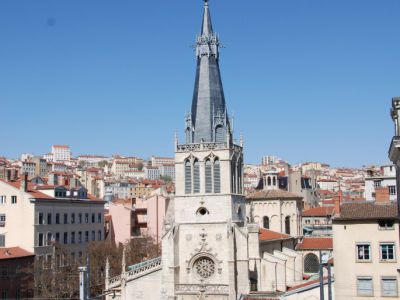
In the 10th century, the church assumed a role within a necropolis, encompassing three burial grounds. The addition of the bell tower in 1440 marked a significant architectural development. The exterior of the Gothic side chapels boasts intricate decorations featuring foliage and animal motifs adorning the cornices, with whimsical animal grotesques above them. The dome features two tiers of blind arches, arranged somewhat irregularly.
A notable addition came in 1835 when a lantern was affixed to the top of the bell tower, while in 1899, eleven bells found their home within the tower. The spire, once made of wood, underwent replacement with stone in 1982. During the tumultuous period of the Revolution, the church served as a storage site for saltpeter. When it resumed its role as a parish church in 1801, extensive renovations were required, including the replacement of the flooring.
Noteworthy decorations grace the entrance, characterized by ornate eggs and Acanthus leaves. Within the nave, you'll find four bays separated by four pillars, crowned with intricately sculpted capitals depicting foliage and human heads. The apse features a quarter-circle vault adorned with frescoes from the early 20th century, crafted by Borel. The side chapels, dating back to the 15th century, house various treasures, including "L’Adoration des Bergers," a painting by Blanchet from 1688, which is a sight to behold.
In the 10th century, the church assumed a role within a necropolis, encompassing three burial grounds. The addition of the bell tower in 1440 marked a significant architectural development. The exterior of the Gothic side chapels boasts intricate decorations featuring foliage and animal motifs adorning the cornices, with whimsical animal grotesques above them. The dome features two tiers of blind arches, arranged somewhat irregularly.
A notable addition came in 1835 when a lantern was affixed to the top of the bell tower, while in 1899, eleven bells found their home within the tower. The spire, once made of wood, underwent replacement with stone in 1982. During the tumultuous period of the Revolution, the church served as a storage site for saltpeter. When it resumed its role as a parish church in 1801, extensive renovations were required, including the replacement of the flooring.
Noteworthy decorations grace the entrance, characterized by ornate eggs and Acanthus leaves. Within the nave, you'll find four bays separated by four pillars, crowned with intricately sculpted capitals depicting foliage and human heads. The apse features a quarter-circle vault adorned with frescoes from the early 20th century, crafted by Borel. The side chapels, dating back to the 15th century, house various treasures, including "L’Adoration des Bergers," a painting by Blanchet from 1688, which is a sight to behold.
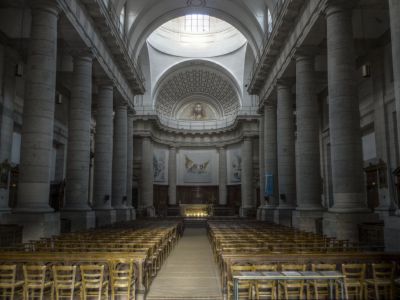
10) Notre-Dame de Saint-Vincent
Just like many of the churches in Lyon, Notre Dame de Saint Vincent has a historical connection to a monastery. The interior of this church reflects the humble preferences of the monks who once used it as their place of worship. It was originally constructed for the Augustinian monks who settled in the area back in 1319. However, between 1759 and 1789, the church underwent significant reconstruction to replace their aging chapel, which was deteriorating. This renovation was made possible thanks to the financial contribution of the crown prince, who honored it with the name Saint Louis.
During the French Revolution, the church had a change in purpose. Initially, it served as a storage facility and later as a hospital annex. Meanwhile, the military took control of the rest of the monastery, and in 1831, it was transformed into La Martinière College. In 1863, the church underwent a name change, and in 1862, its nave was expanded, and the facade was constructed by Franchet.
Unfortunately, in 1987, a fire destroyed the church, leading to its reconstruction in a 19th-century architectural style. It finally reopened its doors to the local congregation in 1992. While the interior may appear quite simple, there are some beautiful statues worth admiring. These include a statue of Saint Louis, one of the Virgin by Fabisch, another of Saint Vincent by an unidentified sculptor, and "The Baptism of Christ" by Dufraine. Additionally, the choir's paintings, such as "Light of Emmaus" and "The Annunciation" by Hamelin, were installed in 1996. If you look up at the apse's quarter-circle vault, you'll also find another work by Hamelin called "The Creator."
During the French Revolution, the church had a change in purpose. Initially, it served as a storage facility and later as a hospital annex. Meanwhile, the military took control of the rest of the monastery, and in 1831, it was transformed into La Martinière College. In 1863, the church underwent a name change, and in 1862, its nave was expanded, and the facade was constructed by Franchet.
Unfortunately, in 1987, a fire destroyed the church, leading to its reconstruction in a 19th-century architectural style. It finally reopened its doors to the local congregation in 1992. While the interior may appear quite simple, there are some beautiful statues worth admiring. These include a statue of Saint Louis, one of the Virgin by Fabisch, another of Saint Vincent by an unidentified sculptor, and "The Baptism of Christ" by Dufraine. Additionally, the choir's paintings, such as "Light of Emmaus" and "The Annunciation" by Hamelin, were installed in 1996. If you look up at the apse's quarter-circle vault, you'll also find another work by Hamelin called "The Creator."
