Custom Walk in Split, Croatia by funmimi19475375 created on 2026-06-16
Guide Location: Croatia » Split
Guide Type: Custom Walk
# of Sights: 7
Tour Duration: 2 Hour(s)
Travel Distance: 4.4 Km or 2.7 Miles
Share Key: XJFEG
Guide Type: Custom Walk
# of Sights: 7
Tour Duration: 2 Hour(s)
Travel Distance: 4.4 Km or 2.7 Miles
Share Key: XJFEG
How It Works
Please retrieve this walk in the GPSmyCity app. Once done, the app will guide you from one tour stop to the next as if you had a personal tour guide. If you created the walk on this website or come to the page via a link, please follow the instructions below to retrieve the walk in the app.
Retrieve This Walk in App
Step 1. Download the app "GPSmyCity: Walks in 1K+ Cities" on Apple App Store or Google Play Store.



Step 2. In the GPSmyCity app, download(or launch) the guide "Split Map and Walking Tours".
Step 3. Tap the menu button located at upper right corner of the "Walks" screen and select "Retrieve custom walk". Enter the share key: XJFEG
1) Riva Harbor (must see)
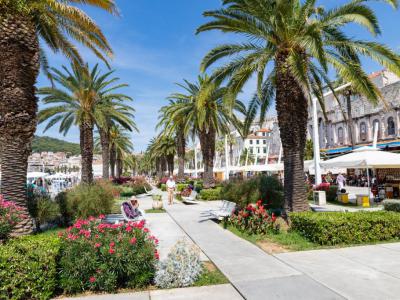
Strolling down Split’s iconic Riva Harbor feels less like sightseeing and more like slipping straight into the city’s daily rhythm. Imagine a wide, palm-lined promenade hugging the Adriatic, where every breeze seems to carry the scent of salt and roasted coffee beans. Locals call it simply “Riva,” but what it really is—Split’s living room: open-air, sunlit, and always buzzing.
Originally shaped by Marshal Marmont’s French-era urban redesign in the early 1800s, the Riva replaced defensive walls with a graceful promenade. Over a century later, it was pedestrianized in the 1990s, transforming it into one of Split’s most popular waterfront promenades.
Once upon a time, Emperor Diocletian himself had ships docked right at his palace walls, bringing exotic goods, fresh fish, and perhaps the occasional amphora of fine wine. Today, cruise ships glide into the Port of Split, which ranks as the largest passenger port in Croatia and the third busiest in the Mediterranean, handling around 5 million passengers annually. Visitors and locals alike sip espresso and watch the world drift by. The Riva is a living testament to Split’s soul as a port city shaped by centuries of trade, sea stories, and salty winds.
The first thing you might want to do here is claim a spot on one of the many benches. Watch as sunlight dances across the Adriatic’s deep blue surface, then wander past cheerful cafés and gelato stands. Feeling peckish? Fresh seafood, local pastries, or a quick espresso are always just steps away. And yes, you’ll be sharing your view with the city’s famously fearless pigeons.
Turn around, and you’ll see the ancient south wall of Diocletian’s Palace rising behind the promenade, a striking blend of Roman stone and lively modern façades. It is this collision of past and present that gives the Riva its vibrant energy.
As evening falls, don’t rush off. The sunset here is a nightly ritual. The sky shifts from rose-gold to deep indigo, street musicians begin to play, and the harbor seems to glow.
In Split, you don’t just pass through the Riva. You slow down, look around, and truly feel the heartbeat of the city.
Originally shaped by Marshal Marmont’s French-era urban redesign in the early 1800s, the Riva replaced defensive walls with a graceful promenade. Over a century later, it was pedestrianized in the 1990s, transforming it into one of Split’s most popular waterfront promenades.
Once upon a time, Emperor Diocletian himself had ships docked right at his palace walls, bringing exotic goods, fresh fish, and perhaps the occasional amphora of fine wine. Today, cruise ships glide into the Port of Split, which ranks as the largest passenger port in Croatia and the third busiest in the Mediterranean, handling around 5 million passengers annually. Visitors and locals alike sip espresso and watch the world drift by. The Riva is a living testament to Split’s soul as a port city shaped by centuries of trade, sea stories, and salty winds.
The first thing you might want to do here is claim a spot on one of the many benches. Watch as sunlight dances across the Adriatic’s deep blue surface, then wander past cheerful cafés and gelato stands. Feeling peckish? Fresh seafood, local pastries, or a quick espresso are always just steps away. And yes, you’ll be sharing your view with the city’s famously fearless pigeons.
Turn around, and you’ll see the ancient south wall of Diocletian’s Palace rising behind the promenade, a striking blend of Roman stone and lively modern façades. It is this collision of past and present that gives the Riva its vibrant energy.
As evening falls, don’t rush off. The sunset here is a nightly ritual. The sky shifts from rose-gold to deep indigo, street musicians begin to play, and the harbor seems to glow.
In Split, you don’t just pass through the Riva. You slow down, look around, and truly feel the heartbeat of the city.
2) Ivan Meštrović Gallery (must see)
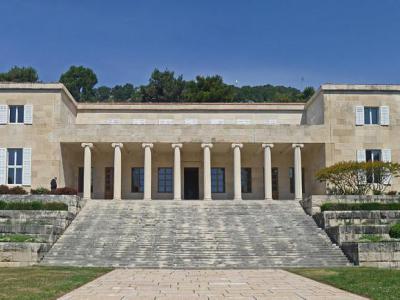
Artist and sculpture Ivan Mestrovic bought a plot of land in the 1920s. The land was on the Marjan peninsula, west of the City of Split. He intended to build a villa for a summer home. The villa was completed in 1939 after a design by Mestrovic. The building overlooked the Adriatic sea. It was meant to be a home, working and exhibition space.
In 1952 Mestrovic gave the building and 132 pieces of his art to the state, founding the Ivan Mestrovic Gallery. The Gallery is a part of the Ivan Mestrovic Foundation in Zagreb. The Gallery's mission is described as, "...protection, collection,...treatment and presentation...and popularization of Ivan Mestrovic's works and name."
Initially, the Gallery held 70 sculptures chosen to be shown in the museum of his work in Split. Over time these holdings grew through donations from Mestrovic, his heirs and other artists. The gallery was closed for renovations after the war of Croatian Independence. It had been damaged and it was in a near dilapidated condition.
The Gallery re-opened in 1998 with a new permanent collection. The Gallery's holdings today include 583 drawings, four paintings, 291 architectural plans and some sets of furniture. The Gallery also is home to 168 works of art donated by the heirs of Ivan Mestrovic.
On permanent exhibition are two floors of art and an outdoor sculpture garden. The works are arranged by theme rather than chronologically and in conformity with the space.
In 1952 Mestrovic gave the building and 132 pieces of his art to the state, founding the Ivan Mestrovic Gallery. The Gallery is a part of the Ivan Mestrovic Foundation in Zagreb. The Gallery's mission is described as, "...protection, collection,...treatment and presentation...and popularization of Ivan Mestrovic's works and name."
Initially, the Gallery held 70 sculptures chosen to be shown in the museum of his work in Split. Over time these holdings grew through donations from Mestrovic, his heirs and other artists. The gallery was closed for renovations after the war of Croatian Independence. It had been damaged and it was in a near dilapidated condition.
The Gallery re-opened in 1998 with a new permanent collection. The Gallery's holdings today include 583 drawings, four paintings, 291 architectural plans and some sets of furniture. The Gallery also is home to 168 works of art donated by the heirs of Ivan Mestrovic.
On permanent exhibition are two floors of art and an outdoor sculpture garden. The works are arranged by theme rather than chronologically and in conformity with the space.

3) People's Square (Pjaca) (must see)
Though everyone calls it People’s Square, its original name was Saint Lawrence’s Square, dating all the way back to the 13th century. What makes this place special is that it was the very first part of Split where folks dared to live outside the safety of Diocletian’s Palace walls, marking the city’s slow but steady expansion beyond the emperor’s ancient fortress.
Life here never stops. The city clock overlooking the square has 24 numerals instead of the usual 12, reminding everyone that in People’s Square, time flows on its own unique rhythm. This is where locals and visitors alike gather to rest, eat, drink, meet friends, and simply soak up the city’s lively atmosphere. Connected directly to the Peristyle of the old palace, the square blends the ancient with the everyday.
Surrounding the square, architecture tells its own story—Renaissance grace, Venetian elegance, and Gothic charm all line the streets. Dominating the north side is the Old Town Hall, a 15th-century building that today hosts art and history exhibitions. Legend has it that every building in Split holds a secret or a tale, and here those stories feel alive.
Among the gems you’ll discover in the square are the ornate palaces of former nobility, the Church of Our Lady of the Bell Tower, the Old Town Clock, the charming Old Town Café, and the historic Morpurgo Bookstore, welcoming readers since 1860.
At the base of the square’s flagpole, a quote from local poet Tonći Petrasov reads:
"One doesn’t need to travel anywhere,
nor does one have to search elsewhere,
what you are looking for is precisely here."
In People’s Square, those words ring true. This is where Split’s past and present meet, where stories are shared, and where the city’s spirit pulses strongest.
Life here never stops. The city clock overlooking the square has 24 numerals instead of the usual 12, reminding everyone that in People’s Square, time flows on its own unique rhythm. This is where locals and visitors alike gather to rest, eat, drink, meet friends, and simply soak up the city’s lively atmosphere. Connected directly to the Peristyle of the old palace, the square blends the ancient with the everyday.
Surrounding the square, architecture tells its own story—Renaissance grace, Venetian elegance, and Gothic charm all line the streets. Dominating the north side is the Old Town Hall, a 15th-century building that today hosts art and history exhibitions. Legend has it that every building in Split holds a secret or a tale, and here those stories feel alive.
Among the gems you’ll discover in the square are the ornate palaces of former nobility, the Church of Our Lady of the Bell Tower, the Old Town Clock, the charming Old Town Café, and the historic Morpurgo Bookstore, welcoming readers since 1860.
At the base of the square’s flagpole, a quote from local poet Tonći Petrasov reads:
"One doesn’t need to travel anywhere,
nor does one have to search elsewhere,
what you are looking for is precisely here."
In People’s Square, those words ring true. This is where Split’s past and present meet, where stories are shared, and where the city’s spirit pulses strongest.
4) Game of Thrones Museum (must see)
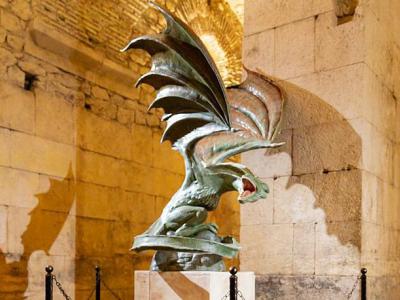
Tucked away on Bosanska Street, just a stone’s throw from actual filming spots, Split’s Game of Thrones Museum feels less like a gallery and more like a secret passage into Westeros itself. After all, it was right here, in the ancient Podrum cellars beneath Diocletian’s Palace, that Daenerys kept her dragons chained, turning centuries-old Roman stone into a set worthy of fire and blood.
Created by local enthusiast Luka Galik, the museum prides itself on authenticity, and it shows. Inside, you’ll find meticulously crafted replica weapons, costumes, and props echoing those used on set, alongside striking photographs captured during production. Each display is carefully arranged to draw you deeper into the world of noble houses, shifting alliances, and legendary battles.
Wander through themed rooms that bring fan-favorite characters to life: Khaleesi’s quiet resolve, Tyrion’s clever mischief, Jon Snow’s steadfast honor, and Hodor’s enduring loyalty. Dim lighting and raw stone walls create a mood that’s half medieval fortress, half cinematic set, reminding you this was filmed among real history, not just in a studio.
What makes this museum different? Beyond what you see, there’s what you smell: subtle hints of cedarwood, jasmine, and lavender float through the air, blending memory, imagination, and atmosphere. It’s a small detail, yet it transforms your visit into something immersive, part exhibition and part sensory journey.
And if you’re wondering, yes, the Podrum wasn’t the only filming site. Several courtyards and corridors of Diocletian’s Palace also became streets of Meereen, where unsullied marched and conspiracies simmered.
Step back outside into the sunlit streets of Split—and you’ll carry a bit of Westeros with you.
Created by local enthusiast Luka Galik, the museum prides itself on authenticity, and it shows. Inside, you’ll find meticulously crafted replica weapons, costumes, and props echoing those used on set, alongside striking photographs captured during production. Each display is carefully arranged to draw you deeper into the world of noble houses, shifting alliances, and legendary battles.
Wander through themed rooms that bring fan-favorite characters to life: Khaleesi’s quiet resolve, Tyrion’s clever mischief, Jon Snow’s steadfast honor, and Hodor’s enduring loyalty. Dim lighting and raw stone walls create a mood that’s half medieval fortress, half cinematic set, reminding you this was filmed among real history, not just in a studio.
What makes this museum different? Beyond what you see, there’s what you smell: subtle hints of cedarwood, jasmine, and lavender float through the air, blending memory, imagination, and atmosphere. It’s a small detail, yet it transforms your visit into something immersive, part exhibition and part sensory journey.
And if you’re wondering, yes, the Podrum wasn’t the only filming site. Several courtyards and corridors of Diocletian’s Palace also became streets of Meereen, where unsullied marched and conspiracies simmered.
Step back outside into the sunlit streets of Split—and you’ll carry a bit of Westeros with you.
5) Grgur Ninski Statue (must see)
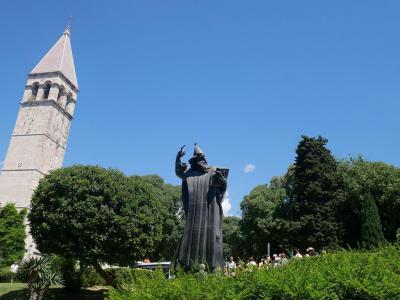
Just outside Split’s ancient Golden Gate stands a figure as bold in bronze as he once was in life. Meet Grgur Ninski (or Gregory of Nin): the 10th-century bishop whose raised hand still seems to call for change—and whose famously polished big toe might just bring you luck.
In 926 AD, Bishop Gregory did the unthinkable for his time: he began preaching and conducting services in Croatian rather than Latin. This wasn’t just a liturgical choice; it was an act of defiance against church tradition and Rome’s authority. For ordinary people across Dalmatia who spoke no Latin, it meant finally hearing prayers and sermons in words they understood. Over time, Grgur became more than a bishop—he became a national symbol of cultural identity and the right to speak one’s own language.
The statue you see today is the work of renowned Croatian sculptor Ivan Meštrović, completed in 1929. Towering at nearly 28 feet, Grgur’s figure is dramatic and commanding, his finger pointing skyward as if frozen mid-sermon. Originally, this monumental piece stood within the walls of Diocletian’s Palace. But during World War II, occupying Italian forces removed it. In 1954, it found its new and permanent home near the Golden Gate, where it welcomes both locals and travelers.
Did you know? Almost everything about the statue is dark bronze, except that famous toe. Generations of locals, travelers, and pilgrims have polished it to a golden gleam, each hoping for a wish to come true or a bit of luck to take home.
So when you visit, don’t just snap a photo. Pause, look up at Gregory’s determined gaze, and give that big toe a gentle rub. Because in Split, a little faith and a bit of bronze can still work wonders.
In 926 AD, Bishop Gregory did the unthinkable for his time: he began preaching and conducting services in Croatian rather than Latin. This wasn’t just a liturgical choice; it was an act of defiance against church tradition and Rome’s authority. For ordinary people across Dalmatia who spoke no Latin, it meant finally hearing prayers and sermons in words they understood. Over time, Grgur became more than a bishop—he became a national symbol of cultural identity and the right to speak one’s own language.
The statue you see today is the work of renowned Croatian sculptor Ivan Meštrović, completed in 1929. Towering at nearly 28 feet, Grgur’s figure is dramatic and commanding, his finger pointing skyward as if frozen mid-sermon. Originally, this monumental piece stood within the walls of Diocletian’s Palace. But during World War II, occupying Italian forces removed it. In 1954, it found its new and permanent home near the Golden Gate, where it welcomes both locals and travelers.
Did you know? Almost everything about the statue is dark bronze, except that famous toe. Generations of locals, travelers, and pilgrims have polished it to a golden gleam, each hoping for a wish to come true or a bit of luck to take home.
So when you visit, don’t just snap a photo. Pause, look up at Gregory’s determined gaze, and give that big toe a gentle rub. Because in Split, a little faith and a bit of bronze can still work wonders.
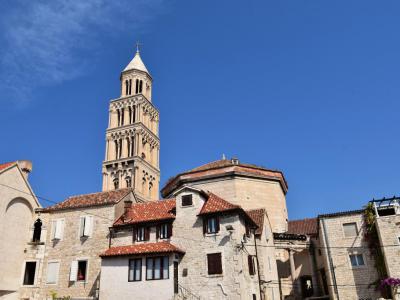
6) Cathedral of St. Domnius (must see)
In 305 AD, Emperor Diocletian, known for his brutal persecution of Christians, retired to sunny Dalmatia to cultivate cabbages and built himself a magnificent mausoleum at the heart of his new palace. A few centuries later, that same mausoleum was transformed into a cathedral dedicated to one of the very martyrs he had executed. What a dramatic irony of history...
The structure we see today was expertly crafted from white marble, limestone, and brick around the late third century. By the seventh century, refugees from destroyed Salona, who settled in the palace walls, consecrated it as a Christian church dedicated to the Virgin Mary. A choir was later added, and by the 12th century, the elegant bell tower honoring Bishop Domnius rose above the ancient stone.
Saint Domnius himself was the Bishop of Salona, born in Antioch and beheaded in 304 alongside other Christians, ironically dying just a year before Diocletian abdicated. Today, this cathedral is still in use within its original structure, making it the oldest Catholic cathedral in the world still used in its primary form.
As you approach the cathedral, you’ll walk along the same main north-south and east-west streets that guided pilgrims through the palace centuries ago. At their crossing lies the Peristyle, a grand courtyard that serves as the main entrance to the cathedral.
Cross the threshold, and you’re stepping into over 1,700 years of layered history: from an emperor’s resting place to a medieval choir loft, through the Romanesque tower, and into a treasury. The latter is filled with numerous masterpieces such as the 13th-century Madonna and Child panel, intricately crafted reliquaries, ceremonial chalices, and manuscripts spanning from the 6th to the 19th centuries.
It is fair to say that nowhere else do imperial power, medieval devotion, and contemporary faith converge so elegantly, especially when viewed through the lens of fate’s own historical twist...
The structure we see today was expertly crafted from white marble, limestone, and brick around the late third century. By the seventh century, refugees from destroyed Salona, who settled in the palace walls, consecrated it as a Christian church dedicated to the Virgin Mary. A choir was later added, and by the 12th century, the elegant bell tower honoring Bishop Domnius rose above the ancient stone.
Saint Domnius himself was the Bishop of Salona, born in Antioch and beheaded in 304 alongside other Christians, ironically dying just a year before Diocletian abdicated. Today, this cathedral is still in use within its original structure, making it the oldest Catholic cathedral in the world still used in its primary form.
As you approach the cathedral, you’ll walk along the same main north-south and east-west streets that guided pilgrims through the palace centuries ago. At their crossing lies the Peristyle, a grand courtyard that serves as the main entrance to the cathedral.
Cross the threshold, and you’re stepping into over 1,700 years of layered history: from an emperor’s resting place to a medieval choir loft, through the Romanesque tower, and into a treasury. The latter is filled with numerous masterpieces such as the 13th-century Madonna and Child panel, intricately crafted reliquaries, ceremonial chalices, and manuscripts spanning from the 6th to the 19th centuries.
It is fair to say that nowhere else do imperial power, medieval devotion, and contemporary faith converge so elegantly, especially when viewed through the lens of fate’s own historical twist...
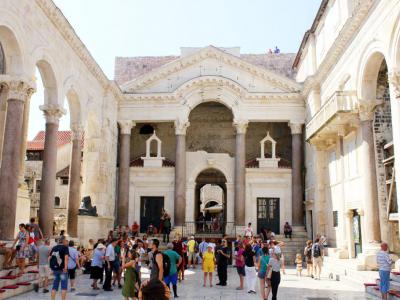
7) Diocletian's Palace (must see)
Call it a palace if you like, but Diocletian’s masterpiece is really part imperial retirement villa, part military fortress, and part living city. Built at the end of the third century AD for the Roman emperor who gave up power in favor of peace (and yes, cabbages), it’s a place where stone walls once sheltered soldiers, emperors, monks—and today, generations of Split’s residents.
Perched on a peninsula near Salona—then Dalmatia’s Roman capital and Diocletian’s birthplace—the palace originally served as a seaside sanctuary for the emperor’s final years. When he died in 312, the complex remained under Roman control and occasionally offered refuge to members of the imperial family who needed to lay low.
In the 7th century, when Slavic and Avar invaders destroyed Salona, survivors escaped behind these formidable walls, founding a new settlement right inside the palace. And here’s the surprise—they never left. Today, Split’s Old Town literally lives within those ancient foundations: temples transformed into churches, courtyards became vibrant squares, and homes sprang up between columns.
Later transformations added layers of history. The emperor’s mausoleum was converted into what is now recognized as the world’s oldest Catholic cathedral still in use in its original structure—the Cathedral of Domnius. In the 18th century, Scottish architect Robert Adam studied the palace ruins and helped inspire the elegance of Neoclassical architecture across Europe.
The palace’s layout originally formed an irregular rectangle, once fortified by 16 defensive towers. Its southern façade opened directly to the sea, with ships docking at what is still known as the Sea Gate. Three other gates connected the city walls to external routes: the Golden Gate to the north, leading toward Salona; the Silver Gate to the east, facing Stobreč; and the Iron Gate on the west, reserved for military access.
Indeed, there are few places like this, where centuries layer so vividly in stone—Roman ambition, medieval resilience, and Venetian finesse all mingle beneath your footsteps...
Perched on a peninsula near Salona—then Dalmatia’s Roman capital and Diocletian’s birthplace—the palace originally served as a seaside sanctuary for the emperor’s final years. When he died in 312, the complex remained under Roman control and occasionally offered refuge to members of the imperial family who needed to lay low.
In the 7th century, when Slavic and Avar invaders destroyed Salona, survivors escaped behind these formidable walls, founding a new settlement right inside the palace. And here’s the surprise—they never left. Today, Split’s Old Town literally lives within those ancient foundations: temples transformed into churches, courtyards became vibrant squares, and homes sprang up between columns.
Later transformations added layers of history. The emperor’s mausoleum was converted into what is now recognized as the world’s oldest Catholic cathedral still in use in its original structure—the Cathedral of Domnius. In the 18th century, Scottish architect Robert Adam studied the palace ruins and helped inspire the elegance of Neoclassical architecture across Europe.
The palace’s layout originally formed an irregular rectangle, once fortified by 16 defensive towers. Its southern façade opened directly to the sea, with ships docking at what is still known as the Sea Gate. Three other gates connected the city walls to external routes: the Golden Gate to the north, leading toward Salona; the Silver Gate to the east, facing Stobreč; and the Iron Gate on the west, reserved for military access.
Indeed, there are few places like this, where centuries layer so vividly in stone—Roman ambition, medieval resilience, and Venetian finesse all mingle beneath your footsteps...
