Custom Walk in Boston, Massachusetts by sandie_clarke12_43d2b4 created on 2026-06-25
Guide Location: USA » Boston
Guide Type: Custom Walk
# of Sights: 14
Tour Duration: 3 Hour(s)
Travel Distance: 6.1 Km or 3.8 Miles
Share Key: JVKYV
Guide Type: Custom Walk
# of Sights: 14
Tour Duration: 3 Hour(s)
Travel Distance: 6.1 Km or 3.8 Miles
Share Key: JVKYV
How It Works
Please retrieve this walk in the GPSmyCity app. Once done, the app will guide you from one tour stop to the next as if you had a personal tour guide. If you created the walk on this website or come to the page via a link, please follow the instructions below to retrieve the walk in the app.
Retrieve This Walk in App
Step 1. Download the app "GPSmyCity: Walks in 1K+ Cities" on Apple App Store or Google Play Store.



Step 2. In the GPSmyCity app, download(or launch) the guide "Boston Map and Walking Tours".
Step 3. Tap the menu button located at upper right corner of the "Walks" screen and select "Retrieve custom walk". Enter the share key: JVKYV
1) Boston Opera House
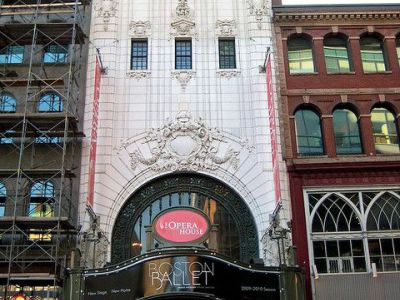
In the heart of Boston's cultural extravaganza stands the charismatic Boston Opera House, a performing arts venue that's like the architectural equivalent of wearing a monocle and a top hat – elegant with a touch of historical quirkiness. Erected in 1928 on the very spot where the old Boston Theatre once hung its hat, this architectural marvel is the brainchild of the ingenious Thomas W. Lamb and a loving tribute to Benjamin Franklin Keith, who, mind you, was like the godfather of vaudeville.
As you saunter past the opera house's flamboyantly dressed Spanish baroque exterior, you'll only get a whiff of the lavish grandeur that awaits inside. In a recent makeover, they painstakingly replicated the original carpet, which, mind you, had to be woven on custom-made looms. They even went ahead and slapped on an extra 4 lbs (2 kilos) of gold leaf onto the fancy woodwork and plaster cornices. So, brace yourself for a grand spectacle complete with murals on the ceiling, fancy gold molding, and curtains so plush they make you feel like royalty.
Now, despite its operatic moniker, the Boston Opera House has grown into quite the chameleon of culture. It's not just for high-brow singing and tuxedos; it's more like your versatile cultural Swiss Army knife. It's a tantalizing throwback to the Roaring Twenties, but also a buzzing hive for Broadway gems, live concerts, and those oh-so-serious political tête-à-têtes. Plus, it's the stage for the Boston Ballet and all their fancy moves, including the fan-favorite, 'The Nutcracker'.
As you saunter past the opera house's flamboyantly dressed Spanish baroque exterior, you'll only get a whiff of the lavish grandeur that awaits inside. In a recent makeover, they painstakingly replicated the original carpet, which, mind you, had to be woven on custom-made looms. They even went ahead and slapped on an extra 4 lbs (2 kilos) of gold leaf onto the fancy woodwork and plaster cornices. So, brace yourself for a grand spectacle complete with murals on the ceiling, fancy gold molding, and curtains so plush they make you feel like royalty.
Now, despite its operatic moniker, the Boston Opera House has grown into quite the chameleon of culture. It's not just for high-brow singing and tuxedos; it's more like your versatile cultural Swiss Army knife. It's a tantalizing throwback to the Roaring Twenties, but also a buzzing hive for Broadway gems, live concerts, and those oh-so-serious political tête-à-têtes. Plus, it's the stage for the Boston Ballet and all their fancy moves, including the fan-favorite, 'The Nutcracker'.
2) George Washington Statue
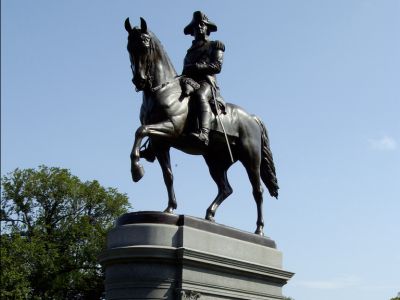
If you stroll to the base of Commonwealth Avenue, right in front of the Boston Public Garden, you'll come face to face with an impressive bronze equestrian statue of George Washington. This monumental work, towering at 38 feet in height (with Washington himself standing at 22 feet), holds the distinction of being the largest sculpture in all of Boston. It was created by the talented sculptor Thomas Ball and cast in 1869, a bit later than initially planned due to the scarcity of bronze during the tumultuous years of the Civil War.
Now, while most folks recognize George Washington as the first President of the United States and the "Father of the Nation", the statue portrays him not in his presidential role, but rather as the Commander in Chief of the Continental Army. Interestingly, Washington found his true calling as a soldier, more so than as a statesman. He had served as a colonel in the British Army during the French and Indian Wars, but when the War for Independence erupted, he led the Continental Army in their quest for freedom. Under his leadership, the American forces successfully forced the British out of Boston in 1776.
After retiring from politics in 1797, where he declined the opportunity to serve a third presidential term, Washington returned to his beloved home at Mount Vernon in Virginia, where he passed away just two years later, likely due to pneumonia. His final and enduring act of significance was revealed in his will, where he emancipated all the slaves on his estate-a remarkable gesture that set a precedent and eventually played a pivotal role in the abolition of slavery in the United States.
Now, while most folks recognize George Washington as the first President of the United States and the "Father of the Nation", the statue portrays him not in his presidential role, but rather as the Commander in Chief of the Continental Army. Interestingly, Washington found his true calling as a soldier, more so than as a statesman. He had served as a colonel in the British Army during the French and Indian Wars, but when the War for Independence erupted, he led the Continental Army in their quest for freedom. Under his leadership, the American forces successfully forced the British out of Boston in 1776.
After retiring from politics in 1797, where he declined the opportunity to serve a third presidential term, Washington returned to his beloved home at Mount Vernon in Virginia, where he passed away just two years later, likely due to pneumonia. His final and enduring act of significance was revealed in his will, where he emancipated all the slaves on his estate-a remarkable gesture that set a precedent and eventually played a pivotal role in the abolition of slavery in the United States.
3) Boston Public Garden (must see)
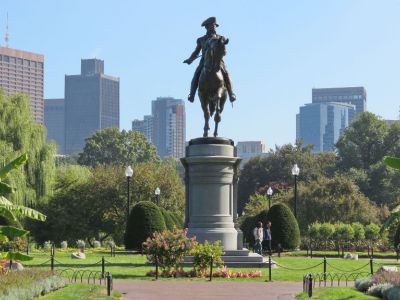
America's oldest botanical garden features exquisite formal plantings that have captured the hearts of visitors for generations. In its heart lies a 4-acre lagoon, a beloved feature since 1877, famous for its Swan Boats, guided by a captain, offering a serene and picturesque experience. A delightful addition to this landscape is the 'Make Way for Ducklings' bronze sculptures crafted by Nancy Schön, paying homage to the 1941 children's story penned by Robert McCloskey.
Now, remember, the Boston Public Garden and Boston Common are distinct entities with unique histories and purposes, with a clear-cut boundary at Charles Street. Boston Common has been a public expanse since the city's inception in 1630, while the Public Garden emerged later, occupying what was once salt marshes on the fringes of the Common and reflecting the influence of Victorian-era park designs.
Near the Swan Boat terminal, you'll stumble upon what might be the world's tiniest suspension bridge, thoughtfully designed in 1867 to span the pond's narrowest point. The garden's main walkways feature replanted flower beds each spring, with the vibrand display of tulips stealing the show in early May. Additionally, you can explore a diverse collection of native and European tree species.
Why You Should Visit:
Despite a period of decline during the urban renewal fervor of the 1970s, this garden stands today as a cherished oasis, often considered the more polished and formal counterpart to the neighboring Boston Common. An integral part of the city's Emerald Necklace, it offers a lush retreat throughout the year. With plantings nurtured by 14 city greenhouses, the garden showcases an array of tulips, roses, and flowering shrubs that can be enjoyed while leisurely cruising the tranquil lagoon.
Now, remember, the Boston Public Garden and Boston Common are distinct entities with unique histories and purposes, with a clear-cut boundary at Charles Street. Boston Common has been a public expanse since the city's inception in 1630, while the Public Garden emerged later, occupying what was once salt marshes on the fringes of the Common and reflecting the influence of Victorian-era park designs.
Near the Swan Boat terminal, you'll stumble upon what might be the world's tiniest suspension bridge, thoughtfully designed in 1867 to span the pond's narrowest point. The garden's main walkways feature replanted flower beds each spring, with the vibrand display of tulips stealing the show in early May. Additionally, you can explore a diverse collection of native and European tree species.
Why You Should Visit:
Despite a period of decline during the urban renewal fervor of the 1970s, this garden stands today as a cherished oasis, often considered the more polished and formal counterpart to the neighboring Boston Common. An integral part of the city's Emerald Necklace, it offers a lush retreat throughout the year. With plantings nurtured by 14 city greenhouses, the garden showcases an array of tulips, roses, and flowering shrubs that can be enjoyed while leisurely cruising the tranquil lagoon.
4) Beacon Hill / Charles Street
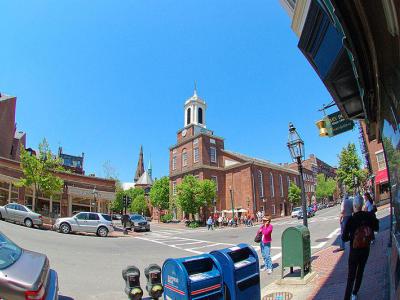
Most of the commercial activity in Beacon Hill nowadays centers around its primary street, Charles Street. In the not-so-distant past, this area was renowned for its antique shops, but in recent decades, upscale, independently owned boutiques specializing in gifts, jewelry, and women's clothing have established a presence and occupied the valuable commercial real estate in this affluent neighborhood.
Even if you don't visit any of the shops, you'll be captivated by the design and character of the homes and buildings, as well as the evident dedication of their owners to not only preserve but also showcase them in the best possible light. While many of the street's buildings date back to the 19th century, some received new facades during the 1920s due to widening efforts. The Charles Street Meeting House, designed in 1807, was constructed for a Baptist congregation known for practicing immersion in the nearby river.
For the most celebrated architecture in Beacon Hill, head to Upper Mount Vernon and Chestnut streets, where you'll find Federal-style mansions designed by Charles Bulfinch in the early 1800s. (The charming one-story structures between 50 and 60 Mount Vernon originally served as stables for the elegant residences on the adjacent block at 13, 15, and 17 Chestnut Street.)
Don't forget to take your time exploring Louisburg Square, a picturesque cobblestone street surrounding a central private garden that epitomizes Beacon Hill for many. The neighborhood's delightful Christmas Eve tradition of carolers, bell ringers, and candlelit windows originated here in the 1860s. Additionally, don't forget to wander down Cedar Lane Way and the block-long Acorn Street, the latter of which features cobblestone streets and charming small houses. These dwellings were originally constructed for the coachmen whose employers resided in the mansions on either side.
Even if you don't visit any of the shops, you'll be captivated by the design and character of the homes and buildings, as well as the evident dedication of their owners to not only preserve but also showcase them in the best possible light. While many of the street's buildings date back to the 19th century, some received new facades during the 1920s due to widening efforts. The Charles Street Meeting House, designed in 1807, was constructed for a Baptist congregation known for practicing immersion in the nearby river.
For the most celebrated architecture in Beacon Hill, head to Upper Mount Vernon and Chestnut streets, where you'll find Federal-style mansions designed by Charles Bulfinch in the early 1800s. (The charming one-story structures between 50 and 60 Mount Vernon originally served as stables for the elegant residences on the adjacent block at 13, 15, and 17 Chestnut Street.)
Don't forget to take your time exploring Louisburg Square, a picturesque cobblestone street surrounding a central private garden that epitomizes Beacon Hill for many. The neighborhood's delightful Christmas Eve tradition of carolers, bell ringers, and candlelit windows originated here in the 1860s. Additionally, don't forget to wander down Cedar Lane Way and the block-long Acorn Street, the latter of which features cobblestone streets and charming small houses. These dwellings were originally constructed for the coachmen whose employers resided in the mansions on either side.
5) Boston Common (must see)
Boston Common, the city's primary open space, spans fifty acres of greenery, effectively serving as a buffer between the historic and bustling Downtown area and its upscale neighbors, Beacon Hill and Back Bay. While it may not have the meticulous landscaping of the nearby Public Garden, it still offers an abundance of benches and open lawns for relaxing breaks, and it frequently transforms into a venue for concerts, events, and public gatherings.
Before John Winthrop and his fellow Puritan settlers designated Boston Common for public use, it served as pastureland for the Reverend William Braxton. Blaxton was a priest of the Church of England. In 1623, as chaplain to the Ferdinando Gorges expedition, he sailed on the ship Katherine to the settlement of Weymouth, Massachusetts. The expedition failed, and everyone returned to England in 1625. But Blaxton stayed and became the first European to settle in Boston.
Puritans from Charlestown joined Blaxton in 1630 and awarded him fifty acres. He cannily sold it back to them in 1634, and this land became known as Boston Common, the oldest city park in the United States. Soon after, it took on darker associations, functioning as a site for hangings, including those of alleged pirates, witches, and various religious dissenters. An unfortunate commoner by the name of Rachell Whall met her end here for the theft of a bonnet valued at 75¢.
In 1789, newly elected President George Washington made a memorable appearance on the Common. Over the years, renowned figures like Martin Luther King, Jr., Pope John Paul II, and Mikhail Gorbachev have delivered speeches on its grounds, while Judy Garland enthralled more than 100,000 fans with her performance here in 1967. The history of this place also extends far into the past, with prehistoric Native American sites dating back up to 8,500 years found within its boundaries.
Around the park, there are several noteworthy sites to explore, including Brewer Fountain Plaza, the Boston Common Visitor Information Center, the Soldiers and Sailors Monument, the Frog Pond, the Central Burying Ground, and the recently restored Robert Gould Shaw 54th Regiment Memorial.
Before John Winthrop and his fellow Puritan settlers designated Boston Common for public use, it served as pastureland for the Reverend William Braxton. Blaxton was a priest of the Church of England. In 1623, as chaplain to the Ferdinando Gorges expedition, he sailed on the ship Katherine to the settlement of Weymouth, Massachusetts. The expedition failed, and everyone returned to England in 1625. But Blaxton stayed and became the first European to settle in Boston.
Puritans from Charlestown joined Blaxton in 1630 and awarded him fifty acres. He cannily sold it back to them in 1634, and this land became known as Boston Common, the oldest city park in the United States. Soon after, it took on darker associations, functioning as a site for hangings, including those of alleged pirates, witches, and various religious dissenters. An unfortunate commoner by the name of Rachell Whall met her end here for the theft of a bonnet valued at 75¢.
In 1789, newly elected President George Washington made a memorable appearance on the Common. Over the years, renowned figures like Martin Luther King, Jr., Pope John Paul II, and Mikhail Gorbachev have delivered speeches on its grounds, while Judy Garland enthralled more than 100,000 fans with her performance here in 1967. The history of this place also extends far into the past, with prehistoric Native American sites dating back up to 8,500 years found within its boundaries.
Around the park, there are several noteworthy sites to explore, including Brewer Fountain Plaza, the Boston Common Visitor Information Center, the Soldiers and Sailors Monument, the Frog Pond, the Central Burying Ground, and the recently restored Robert Gould Shaw 54th Regiment Memorial.

6) Brewer Fountain
While ambling through the storied grounds of Boston Common, you can't miss the Brewer Fountain – a real gem generously bestowed upon the city in 1868 by the illustrious Gardner Brewer, a man so rich he probably used dollar bills as napkins at his lavish dinner parties. Born and bred in Boston, he dabbled in politics, tangoed with the Republican party, and then casually decided to build a fountain as a side gig.
During a jaunt to the 1855 World Trade Fair in Paris (because, why not?), Gardner fell head over heels for an exquisite fountain cast by Liénard, who netted himself a prestigious gold medal. What's a wealthy Bostonian to do? Naturally, commission a copy of the fountain and ship it across the pond, of course! Oh, but he wasn't the only one smitten; Lyon and Bordeaux got their own iron versions, while a lone bronze sibling found a forever home with an Egyptian viceroy.
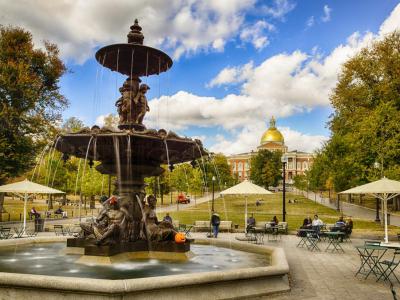
Standing proud at 22 feet, the seven-ton heavyweight Brewer Fountain is nestled in a stone basin, while surrounding its base are four statues that add a touch of mythological flair: Neptune, the Roman water god; Amphitrite, the Greek sea goddess; and the dynamic duo of Acis and Galatea, plucked straight from the pages of Ovid's "Metamorphoses". In 2010, after years of aquatic dormancy, this fountain underwent a well-deserved makeover, emerging with newfound vitality and a renewed commitment to spraying water skyward.
Why You Should Visit:
Besides the fountain's glittering allure, you'll find an array of food trucks that could probably serve up a meal fit for the gods themselves. Plus, you're just a hop, skip, and a jump away from the tadpole playground, frog pond, and a carousel that's just oozing nostalgia. So, why not make a splash at this fountain of delights?
During a jaunt to the 1855 World Trade Fair in Paris (because, why not?), Gardner fell head over heels for an exquisite fountain cast by Liénard, who netted himself a prestigious gold medal. What's a wealthy Bostonian to do? Naturally, commission a copy of the fountain and ship it across the pond, of course! Oh, but he wasn't the only one smitten; Lyon and Bordeaux got their own iron versions, while a lone bronze sibling found a forever home with an Egyptian viceroy.
Standing proud at 22 feet, the seven-ton heavyweight Brewer Fountain is nestled in a stone basin, while surrounding its base are four statues that add a touch of mythological flair: Neptune, the Roman water god; Amphitrite, the Greek sea goddess; and the dynamic duo of Acis and Galatea, plucked straight from the pages of Ovid's "Metamorphoses". In 2010, after years of aquatic dormancy, this fountain underwent a well-deserved makeover, emerging with newfound vitality and a renewed commitment to spraying water skyward.
Why You Should Visit:
Besides the fountain's glittering allure, you'll find an array of food trucks that could probably serve up a meal fit for the gods themselves. Plus, you're just a hop, skip, and a jump away from the tadpole playground, frog pond, and a carousel that's just oozing nostalgia. So, why not make a splash at this fountain of delights?
7) Massachusetts State House
Visitors might raise an eyebrow at Boston's claim to be the "Hub of the Universe," but this nickname has historical roots. The phrase was coined by Oliver Wendell Holmes in 1858 when he referred to the Massachusetts State House as the "hub of the solar system." In a somewhat cheeky and arrogant manner, he implied that Boston was the center of all intellectual and commercial activity at the time. The State House's copper dome, which was later replaced with gold, was a prominent feature in depictions of the city, reinforcing the idea that it was the center of global life at the time.
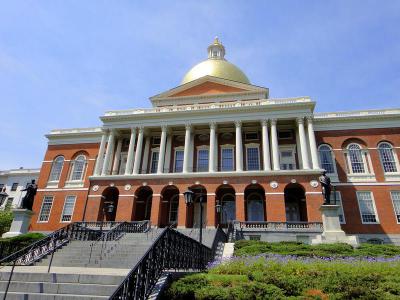
The Massachusetts State House, made of red brick and designed by renowned Boston architect Charles Bulfinch, is the oldest building in Beacon Hill, serving as the residence of the governor and the legislative body of Massachusetts, known as the General Court. During World War II, the gold dome was painted over with dark coloring to protect the area from potential bombings, leading to significant restoration costs after the war.
Today, this Federal-style building is open to the public, offering guided and self-guided tours. If you opt for a self-guided tour, the state provides brochures outside the State House to help you explore the building's highlights and historical details. You can visit impressive spaces like Doric Hall, the Hall of Flags displaying battle flags from Massachusetts regiments, the Great Hall used for state functions and featuring flags from cities and towns in Massachusetts, the governor's office, and the chambers of the House and Senate.
Why You Should Visit:
To explore the grand halls and chambers where legislators convene to debate and pass laws. The building boasts magnificent architecture and artwork, including rotundas, grand staircases, marble sculptures, and massive paintings. Best of all, it's open to the public free of charge, though visitors need to pass through security first.
The Massachusetts State House, made of red brick and designed by renowned Boston architect Charles Bulfinch, is the oldest building in Beacon Hill, serving as the residence of the governor and the legislative body of Massachusetts, known as the General Court. During World War II, the gold dome was painted over with dark coloring to protect the area from potential bombings, leading to significant restoration costs after the war.
Today, this Federal-style building is open to the public, offering guided and self-guided tours. If you opt for a self-guided tour, the state provides brochures outside the State House to help you explore the building's highlights and historical details. You can visit impressive spaces like Doric Hall, the Hall of Flags displaying battle flags from Massachusetts regiments, the Great Hall used for state functions and featuring flags from cities and towns in Massachusetts, the governor's office, and the chambers of the House and Senate.
Why You Should Visit:
To explore the grand halls and chambers where legislators convene to debate and pass laws. The building boasts magnificent architecture and artwork, including rotundas, grand staircases, marble sculptures, and massive paintings. Best of all, it's open to the public free of charge, though visitors need to pass through security first.
8) Benjamin Franklin Statue
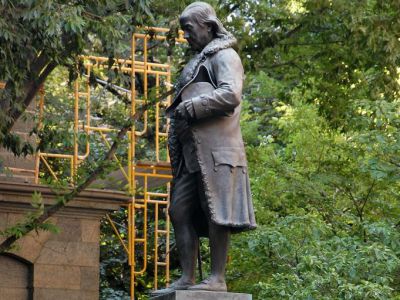
In front of the old City Hall, on the site where the original Boston Latin School once stood, you'll discover the 8-foot bronze statue of Benjamin Franklin. Created by local sculptor Richard Greenough and installed in 1856, it was notably the first statue of a human to be placed in any city in America. It's worth noting that while many people think of Benjamin Franklin as a U.S. president, he was, in fact, one of the Founding Fathers, a statesman, and a diplomat, but he never served as President of the United States.
Born in Boston in 1706, Franklin attended the Boston Latin School as a young boy; however, he did not complete his formal education and instead began working for his brother, who owned a printing press. Franklin eventually started publishing his own articles and ventured into politics, where he advocated passionately for the abolition of slavery and the protection of Native American rights. He holds the unique distinction of being the only person to have signed all four of the most significant documents in American history: the Declaration of Independence, the Alliance with France Treaty, the Peace with Great Britain Treaty, and the Constitution of the United States.
In addition to his political career, Benjamin Franklin was a renowned scientist and inventor. In 1749, he invented the lightning rod. He also played a significant role in establishing the first public lending library and the first fire department in Pennsylvania.
Tips:
For better lighting when photographing the statue, consider visiting in the morning – though you can still capture a decent photo in the afternoon. If you're a meat lover, Ruth's Chris Steak House is located nearby, making it a good dining option.
Born in Boston in 1706, Franklin attended the Boston Latin School as a young boy; however, he did not complete his formal education and instead began working for his brother, who owned a printing press. Franklin eventually started publishing his own articles and ventured into politics, where he advocated passionately for the abolition of slavery and the protection of Native American rights. He holds the unique distinction of being the only person to have signed all four of the most significant documents in American history: the Declaration of Independence, the Alliance with France Treaty, the Peace with Great Britain Treaty, and the Constitution of the United States.
In addition to his political career, Benjamin Franklin was a renowned scientist and inventor. In 1749, he invented the lightning rod. He also played a significant role in establishing the first public lending library and the first fire department in Pennsylvania.
Tips:
For better lighting when photographing the statue, consider visiting in the morning – though you can still capture a decent photo in the afternoon. If you're a meat lover, Ruth's Chris Steak House is located nearby, making it a good dining option.
9) Custom House Tower
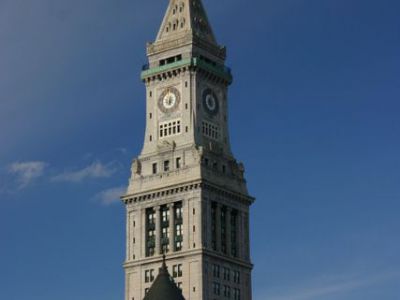
Say hello to the diva of Boston's architecture scene, the Custom House! This stunning 1847 creation has a flair for the dramatic and loves to channel its inner Greek Revival temple with a whopping 32 Doric columns. And don't even get it started on that thirty-story tower – it's like the skyscraper version of a fashion makeover that didn't happen until 1915. Back then, it was the talk of the town, strutting around as the crown jewel of New England, the tallest in all the land! But, well, time flies, and today it's merely Boston's 23rd-tallest building. Still, it's hanging in there, serving up heaps of character and fantastic views, like the grand dame it is.
Once upon a time, this place was all about inspecting and cataloging cargo for ships that pulled up at Long Wharf. But oh, how the times have changed! Now it's living the high life as a luxury hotel and vacation club. Who knew a cargo-checking building could have such a glow-up?
The Custom House is throwing a viewing party on its recently spruced-up 26th-floor observation deck. Get ready for unparalleled views of Downtown and Boston Harbor, served daily at 2 PM, except on Fridays. And guess what? They won't even charge you a pretty penny to partake in this visual feast. But here's the catch – they're a tad stingy with space, so you better call ahead to snag a ticket at least 48 hours in advance. Because nothing says "I'm cultured" quite like a rendezvous with a Greek Revival temple-turned-luxury hotel with a tower complex.
Once upon a time, this place was all about inspecting and cataloging cargo for ships that pulled up at Long Wharf. But oh, how the times have changed! Now it's living the high life as a luxury hotel and vacation club. Who knew a cargo-checking building could have such a glow-up?
The Custom House is throwing a viewing party on its recently spruced-up 26th-floor observation deck. Get ready for unparalleled views of Downtown and Boston Harbor, served daily at 2 PM, except on Fridays. And guess what? They won't even charge you a pretty penny to partake in this visual feast. But here's the catch – they're a tad stingy with space, so you better call ahead to snag a ticket at least 48 hours in advance. Because nothing says "I'm cultured" quite like a rendezvous with a Greek Revival temple-turned-luxury hotel with a tower complex.
10) Faneuil Hall Marketplace (must see)
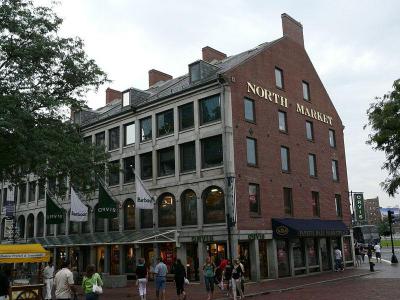
Faneuil Hall Marketplace, situated in a pedestrian zone east of Government Center, is a vibrant public gathering spot that appeals to both tourists and, to a lesser extent, locals. It's an excellent place to enjoy a meal, soak in a bit of history, and take advantage of free Wi-Fi access. Originally constructed during colonial times as a marketplace to accommodate the city's burgeoning mercantile industry, it saw a decline in the 19th century and, like the surrounding area, remained relatively inactive until the 1960s. At that point, it was successfully revitalized as a restaurant and shopping complex.
The much-talked-about Faneuil Hall itself might not appear particularly imposing from the outside. It's a modest four-story brick building crowned with a golden grasshopper weathervane-certainly not the grand auditorium that one might envision as the birthplace of Revolutionary War meetings, earning it the moniker "Cradle of Liberty". In its earlier days, the first floor housed an open-air market, while the second floor served as a space for political gatherings. This is where fiery revolutionaries like Samuel Adams and James Otis rallied popular support for independence by protesting British tax policies.
Today, the first floor houses an array of tourist-centric shops and an info-desk, but the second is more impressive, with the auditorium preserved to reflect the alterations made by Charles Bulfinch in 1805. Its centerpiece is a flamboyant (albeit somewhat exaggerated) canvas depicting "The Great Debate", during which Daniel Webster argued for the concept of the United States as one nation against South Carolina Senator Robert Hayne. While the debate indeed took place, the painting includes several 19th-century figures like Nathaniel Hawthorne and Alexis de Tocqueville, who were not actually present-the artist added them to boost the painting's appeal.
A more grounded story relates to how Boston sailors secured free passage back home from Britain during the War of 1812: captive Boston sailors who escaped to the American consulate were asked what adorned Faneuil Hall as a weathervane. Those who correctly identified it as a grasshopper were considered true Bostonians and given a free journey back, while those who couldn't were eyed with suspicion.
On the top floor, the Ancient & Honorable Artillery Co of Massachusetts, established in 1638, curates a peculiar collection of antique firearms, political memorabilia, and curious artifacts.
The much-talked-about Faneuil Hall itself might not appear particularly imposing from the outside. It's a modest four-story brick building crowned with a golden grasshopper weathervane-certainly not the grand auditorium that one might envision as the birthplace of Revolutionary War meetings, earning it the moniker "Cradle of Liberty". In its earlier days, the first floor housed an open-air market, while the second floor served as a space for political gatherings. This is where fiery revolutionaries like Samuel Adams and James Otis rallied popular support for independence by protesting British tax policies.
Today, the first floor houses an array of tourist-centric shops and an info-desk, but the second is more impressive, with the auditorium preserved to reflect the alterations made by Charles Bulfinch in 1805. Its centerpiece is a flamboyant (albeit somewhat exaggerated) canvas depicting "The Great Debate", during which Daniel Webster argued for the concept of the United States as one nation against South Carolina Senator Robert Hayne. While the debate indeed took place, the painting includes several 19th-century figures like Nathaniel Hawthorne and Alexis de Tocqueville, who were not actually present-the artist added them to boost the painting's appeal.
A more grounded story relates to how Boston sailors secured free passage back home from Britain during the War of 1812: captive Boston sailors who escaped to the American consulate were asked what adorned Faneuil Hall as a weathervane. Those who correctly identified it as a grasshopper were considered true Bostonians and given a free journey back, while those who couldn't were eyed with suspicion.
On the top floor, the Ancient & Honorable Artillery Co of Massachusetts, established in 1638, curates a peculiar collection of antique firearms, political memorabilia, and curious artifacts.
11) Hanover Street
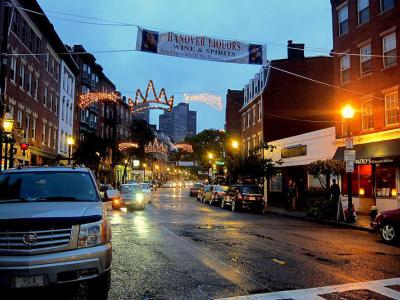
Hanover Street, together with Salem Street, forms the beating Italian heart of Boston’s North End — a place where the scent of espresso, tomato sauce, fresh bread, and pastry cream seems to have taken up permanent residence. You may still catch traces of Italian spoken by the older generation, though many of the Italian-American families who filled these streets in the early 20th century eventually moved to the suburbs. Their legacy, however, clearly refused to pack a suitcase. It lives on in cafés, restaurants, bakeries, bars, and even a private cigar-smoking club — because apparently, no proper neighborhood story is complete without one...
Hanover Street is narrow, busy, and wonderfully unsuitable for rushing. This is not a street to conquer but to nibble your way through. Walking is the best approach, preferably at a pace that allows for window-shopping, people-watching, and at least one serious internal debate over whether you really need another cannoli. By evening, the street shifts into full dinner mode, drawing both locals and visitors in search of something generous, garlicky, and difficult to resist.
One of the area’s notable landmarks is Saint Stephen’s Catholic Church, often associated with Rose Fitzgerald Kennedy, the matriarch of the Kennedy political dynasty. At the corner of Hanover and Prince streets stands Saint Leonard’s Church, built by Italian immigrants and widely regarded as the spiritual heart of the North End.
During the weekends of late July and August, the neighborhood turns even livelier, as old-country religious societies host street festivals and parades. Food stalls appear, music fills the air, saints are honored, and the North End proves once again that faith, community, and fried dough can coexist beautifully.
One practical note: the section of Hanover Street between the Rose Kennedy Greenway and Union Street is closed on Fridays and Saturdays for Haymarket, Boston’s centuries-old outdoor market. So, plan accordingly — or simply follow the crowd, the voices, and the smell of something delicious...
Hanover Street is narrow, busy, and wonderfully unsuitable for rushing. This is not a street to conquer but to nibble your way through. Walking is the best approach, preferably at a pace that allows for window-shopping, people-watching, and at least one serious internal debate over whether you really need another cannoli. By evening, the street shifts into full dinner mode, drawing both locals and visitors in search of something generous, garlicky, and difficult to resist.
One of the area’s notable landmarks is Saint Stephen’s Catholic Church, often associated with Rose Fitzgerald Kennedy, the matriarch of the Kennedy political dynasty. At the corner of Hanover and Prince streets stands Saint Leonard’s Church, built by Italian immigrants and widely regarded as the spiritual heart of the North End.
During the weekends of late July and August, the neighborhood turns even livelier, as old-country religious societies host street festivals and parades. Food stalls appear, music fills the air, saints are honored, and the North End proves once again that faith, community, and fried dough can coexist beautifully.
One practical note: the section of Hanover Street between the Rose Kennedy Greenway and Union Street is closed on Fridays and Saturdays for Haymarket, Boston’s centuries-old outdoor market. So, plan accordingly — or simply follow the crowd, the voices, and the smell of something delicious...
12) Old North Church (must see)
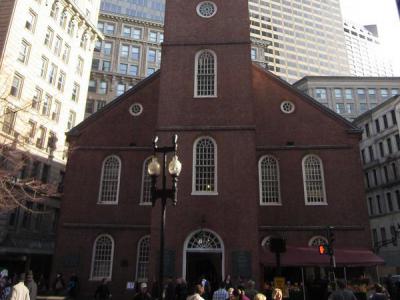
Few places in Boston manage to look this modest and still carry this much historical weight. Old North Church rises above the surrounding red-brick buildings with quiet confidence, as if it knows exactly what happened here and has no need to overact. Built in 1723, it is Boston’s oldest church, instantly recognized by its 191-foot steeple. The weather vane at the top is the original colonial one, which deserves applause, since the steeple itself has had a rougher life. The first one was destroyed by a hurricane in 1804, and its replacement met the same windy fate in 1954. Boston weather, clearly, has opinions...
But Old North did not enter history because of its steeple. It became famous because of two lanterns, one tense night, and a very sensible backup plan... On April 18, 1775, church sexton Robert Newman reportedly hung two lanterns inside the church, thus signaling to the colonial militia in Charlestown that British forces were moving by water from Boston. The message later became legendary: “One if by land, two if by sea.”
Paul Revere had already learned of the British movement and was heading toward Lexington when the lanterns were lit. The signal was meant as insurance, in case his mission failed. And history, being history, made things complicated: Revere and fellow rider William Dawes were both stopped by British patrols. The man who actually reached Concord was Dr. Samuel Prescott, the lesser-known third rider who quietly finished the job.
Inside, Old North Church is bright, white, and elegant, with Palladian windows behind the pulpit bringing plenty of light into the space. In the vestibule wall, look for twelve bricks taken from a prison cell in Boston, England, where early Pilgrims were once held. Near the organ are four 17th-century cherubim from a French ship, because apparently even church decoration can arrive with a dramatic backstory... At the rear stands a clock dated to 1726, considered the oldest working clock in an American public building.
Above, the belfry holds eight bells, the first cast for the British Empire in North America, which have since tolled the death of every U.S. president. Outside, the church softens its Revolutionary drama with gardens, including the Washington Memorial Garden and the 18th-Century Garden, where lilies, roses, and umbrella-shaped flowers fittingly known as archangels offer a peaceful ending after all those lanterns, hurricanes, and midnight riders...
But Old North did not enter history because of its steeple. It became famous because of two lanterns, one tense night, and a very sensible backup plan... On April 18, 1775, church sexton Robert Newman reportedly hung two lanterns inside the church, thus signaling to the colonial militia in Charlestown that British forces were moving by water from Boston. The message later became legendary: “One if by land, two if by sea.”
Paul Revere had already learned of the British movement and was heading toward Lexington when the lanterns were lit. The signal was meant as insurance, in case his mission failed. And history, being history, made things complicated: Revere and fellow rider William Dawes were both stopped by British patrols. The man who actually reached Concord was Dr. Samuel Prescott, the lesser-known third rider who quietly finished the job.
Inside, Old North Church is bright, white, and elegant, with Palladian windows behind the pulpit bringing plenty of light into the space. In the vestibule wall, look for twelve bricks taken from a prison cell in Boston, England, where early Pilgrims were once held. Near the organ are four 17th-century cherubim from a French ship, because apparently even church decoration can arrive with a dramatic backstory... At the rear stands a clock dated to 1726, considered the oldest working clock in an American public building.
Above, the belfry holds eight bells, the first cast for the British Empire in North America, which have since tolled the death of every U.S. president. Outside, the church softens its Revolutionary drama with gardens, including the Washington Memorial Garden and the 18th-Century Garden, where lilies, roses, and umbrella-shaped flowers fittingly known as archangels offer a peaceful ending after all those lanterns, hurricanes, and midnight riders...
13) Boston City Hall
Ah, Government Center, the delightful slice of Downtown Boston that oozes charm with its imposing sea of towering grey monoliths. Once upon a time, it was Scollay Square, Boston's vibrant den of "culture" that included a healthy dose of porn halls and tattoo parlors. But hey, who needs history when you can have a concrete jungle?
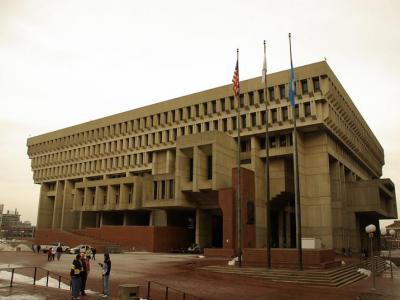
Back in the swinging '60s, Scollay Square was obliterated, taking with it all traces of its racy past and its vibrant character. All that remains as a reminder of its saucy days is the Oriental Tea Company's colossal 227-gallon Steaming Kettle ad, a relic that has been fogging up the skyline since 1873. The once lively area is now draped in concrete, courtesy of the grand plan hatched by I.M. Pei, flanked by two colossal giants: Boston City Hall on the plaza's east side and the ever-so-inviting John F. Kennedy Federal Building up north. The former is a shining example of Brutalism, an architectural style that embraces the philosophy of "rough" and "unadorned" concrete. It's so eye-catching that it's either the best or the worst thing you've ever seen – depending on your taste, of course.
Over the years, grand plans have been tossed around to make City Hall Plaza more people-friendly. Gardens, restaurants, music venues, and hotels have all been considered to warm up the frosty Government Center. If there's one thing that could possibly heal the collective aversion Bostonians have to this spot, it might just be tearing it all down. Well, guess what? Locals are getting their wish. City Hall Plaza, one of Boston's largest public spaces, is undergoing a massive transformation. The upside-down ziggurat design of City Hall and its brutalist redbrick plaza are getting a makeover. Soon, you'll find aesthetically pleasing tree canopies, terraces, and improved public spaces, and the plaza will once again become the vibrant hub for the city's legendary festivals, rallies, and outdoor concerts. Stay tuned for the grand unveiling!
Tip:
Free admission through security (be ready for a bag check and metal detector) – explore it!
Back in the swinging '60s, Scollay Square was obliterated, taking with it all traces of its racy past and its vibrant character. All that remains as a reminder of its saucy days is the Oriental Tea Company's colossal 227-gallon Steaming Kettle ad, a relic that has been fogging up the skyline since 1873. The once lively area is now draped in concrete, courtesy of the grand plan hatched by I.M. Pei, flanked by two colossal giants: Boston City Hall on the plaza's east side and the ever-so-inviting John F. Kennedy Federal Building up north. The former is a shining example of Brutalism, an architectural style that embraces the philosophy of "rough" and "unadorned" concrete. It's so eye-catching that it's either the best or the worst thing you've ever seen – depending on your taste, of course.
Over the years, grand plans have been tossed around to make City Hall Plaza more people-friendly. Gardens, restaurants, music venues, and hotels have all been considered to warm up the frosty Government Center. If there's one thing that could possibly heal the collective aversion Bostonians have to this spot, it might just be tearing it all down. Well, guess what? Locals are getting their wish. City Hall Plaza, one of Boston's largest public spaces, is undergoing a massive transformation. The upside-down ziggurat design of City Hall and its brutalist redbrick plaza are getting a makeover. Soon, you'll find aesthetically pleasing tree canopies, terraces, and improved public spaces, and the plaza will once again become the vibrant hub for the city's legendary festivals, rallies, and outdoor concerts. Stay tuned for the grand unveiling!
Tip:
Free admission through security (be ready for a bag check and metal detector) – explore it!
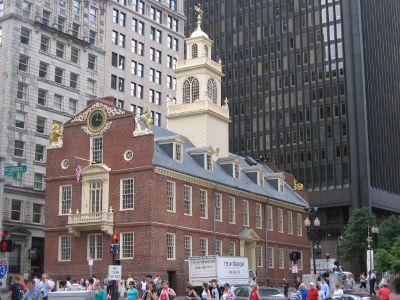
14) Old State House (must see)
As the oldest surviving public building in Boston, this colonial-era landmark has one of the most easily recognizable facades in the city. Its gable is adorned with a brightly gilded lion and silver unicorn, symbols representing British imperial power. From 1713 until the Revolutionary period, this structure served as the seat of colonial government. After the British evacuated Boston in 1776, it continued to function as the center of the independent Commonwealth until its replacement on Beacon Hill was constructed.
An impassioned speech delivered by James Otis in the Council Chamber on the second floor ignited the pursuit of independence from Britain. Otis, initially a Crown appointee who later aligned with the colonial cause, vehemently opposed the Writs of Assistance, which granted the British the authority to inspect private property without restriction. Legend has it that, on certain nights, one can still hear echoes of his anti-British rhetoric, accompanied by the enthusiastic cheers of the crowd he galvanized.
The balcony overlooking State Street is as renowned as Otis's speech, as it was from here on July 18, 1776, that the Declaration of Independence was first publicly read in Boston, just after its arrival from Philadelphia. That very night, the lion and unicorn figures symbolizing British rule, which were mounted above the balcony, were torn down and burned in front of the Bunch of Grapes tavern; the current ones on display are replicas. In a gesture of goodwill, Queen Elizabeth II, the first British monarch to visit Boston since the Revolution, delivered a speech from the balcony during the American bicentennial celebrations in 1976.
Today, the site hosts a small yet comprehensive museum. The ground-level permanent exhibit, titled "Colony to Commonwealth", features a series of well-curated displays that chronicle Boston's pivotal role in inciting the Revolutionary War. Among the exhibits are remnants from Boston's infamous tea party, the royal arms plaque that once adorned Province House (the official residence of colonial governors), the flag used by the Sons of Liberty to announce their gatherings, a stylish jacket owned by (Founding Father) John Hancock, and Paul Revere's stirring engraving of the Boston Massacre, one of the most evocative images of the Revolutionary era. Additionally, every half-hour, a colonial "guest speaker" in character provides insights into early Boston life and answers questions for the audience.
An impassioned speech delivered by James Otis in the Council Chamber on the second floor ignited the pursuit of independence from Britain. Otis, initially a Crown appointee who later aligned with the colonial cause, vehemently opposed the Writs of Assistance, which granted the British the authority to inspect private property without restriction. Legend has it that, on certain nights, one can still hear echoes of his anti-British rhetoric, accompanied by the enthusiastic cheers of the crowd he galvanized.
The balcony overlooking State Street is as renowned as Otis's speech, as it was from here on July 18, 1776, that the Declaration of Independence was first publicly read in Boston, just after its arrival from Philadelphia. That very night, the lion and unicorn figures symbolizing British rule, which were mounted above the balcony, were torn down and burned in front of the Bunch of Grapes tavern; the current ones on display are replicas. In a gesture of goodwill, Queen Elizabeth II, the first British monarch to visit Boston since the Revolution, delivered a speech from the balcony during the American bicentennial celebrations in 1976.
Today, the site hosts a small yet comprehensive museum. The ground-level permanent exhibit, titled "Colony to Commonwealth", features a series of well-curated displays that chronicle Boston's pivotal role in inciting the Revolutionary War. Among the exhibits are remnants from Boston's infamous tea party, the royal arms plaque that once adorned Province House (the official residence of colonial governors), the flag used by the Sons of Liberty to announce their gatherings, a stylish jacket owned by (Founding Father) John Hancock, and Paul Revere's stirring engraving of the Boston Massacre, one of the most evocative images of the Revolutionary era. Additionally, every half-hour, a colonial "guest speaker" in character provides insights into early Boston life and answers questions for the audience.
