Custom Walk in Dublin, Ireland by littlemisschatterbox09_8efda6 created on 2026-06-27
Guide Location: Ireland » Dublin
Guide Type: Custom Walk
# of Sights: 11
Tour Duration: 3 Hour(s)
Travel Distance: 5.7 Km or 3.5 Miles
Share Key: LKNCH
Guide Type: Custom Walk
# of Sights: 11
Tour Duration: 3 Hour(s)
Travel Distance: 5.7 Km or 3.5 Miles
Share Key: LKNCH
How It Works
Please retrieve this walk in the GPSmyCity app. Once done, the app will guide you from one tour stop to the next as if you had a personal tour guide. If you created the walk on this website or come to the page via a link, please follow the instructions below to retrieve the walk in the app.
Retrieve This Walk in App
Step 1. Download the app "GPSmyCity: Walks in 1K+ Cities" on Apple App Store or Google Play Store.



Step 2. In the GPSmyCity app, download(or launch) the guide "Dublin Map and Walking Tours".
Step 3. Tap the menu button located at upper right corner of the "Walks" screen and select "Retrieve custom walk". Enter the share key: LKNCH
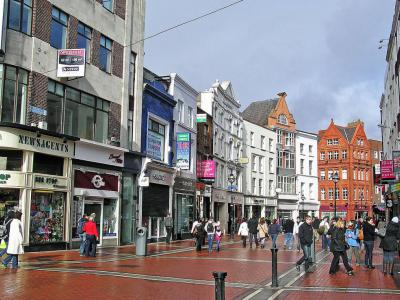
1) Grafton Street (must see)
Finding yourself in Grafton Street, you may feel like the spirit of Dublin is pulling on your sleeve, jingling in your pocket, and occasionally singing you a love song... This iconic pedestrian paradise stretches from the scholarly shadows of Trinity College to the leafy calm of St. Stephen’s Green, and indeed, this isn’t just a path, it’s a performance.
Named after the first Duke of Grafton (who likely never imagined his name would end up on shopping bags and street musician setlists), the street started off as a sleepy lane in the early 1700s. Fast forward a century or three, and it’s become Dublin’s unofficial catwalk for window shoppers, chocolate lovers, and busking hopefuls.
When cars were banned in 1982, Grafton Street didn’t merely sigh in relief - it bloomed. With its redbrick paving and carefree foot traffic, it turned into the city’s beating retail heart. Here, luxury and tradition shake hands daily: Brown Thomas, Dublin’s answer to London's Harrods, anchors the street, with stalwarts like Marks & Spencer, Weir & Sons, and the ever-sparkling Arnotts not far behind.
For a breather, duck into Bewley’s Oriental Café, where stained glass windows and velvet booths are the warm-up act to a killer cappuccino. Or satisfy your sweet side at Butlers Chocolate Café, where the drinks come with bonus truffles and a small dose of serotonin.
But shopping is just the start. Grafton Street is basically a stage where no one auditions - they just show up. Buskers, living statues, folk duos, jazz guitarists, and the occasional flaming juggler transform this strip into the friendliest street theatre around. In fact, singer-songwriters like Glen Hansard and Damien Rice cut their teeth right here, strumming before they were streaming.
And if the crowds get too thick, just take a sidestep. South Anne Street leads you into a more intimate rhythm, and the Powerscourt Townhouse Centre - once an 18th-century mansion, now a boutique arcade - offers elegance, quiet, and espresso-fueled calm.
So, whether you’re here to spend, snack, strum, or stare - Grafton Street is Dublin at its most charmingly alive. Just be warned: you may come for the shops, but you’ll leave humming a tune you didn’t know you knew...
Named after the first Duke of Grafton (who likely never imagined his name would end up on shopping bags and street musician setlists), the street started off as a sleepy lane in the early 1700s. Fast forward a century or three, and it’s become Dublin’s unofficial catwalk for window shoppers, chocolate lovers, and busking hopefuls.
When cars were banned in 1982, Grafton Street didn’t merely sigh in relief - it bloomed. With its redbrick paving and carefree foot traffic, it turned into the city’s beating retail heart. Here, luxury and tradition shake hands daily: Brown Thomas, Dublin’s answer to London's Harrods, anchors the street, with stalwarts like Marks & Spencer, Weir & Sons, and the ever-sparkling Arnotts not far behind.
For a breather, duck into Bewley’s Oriental Café, where stained glass windows and velvet booths are the warm-up act to a killer cappuccino. Or satisfy your sweet side at Butlers Chocolate Café, where the drinks come with bonus truffles and a small dose of serotonin.
But shopping is just the start. Grafton Street is basically a stage where no one auditions - they just show up. Buskers, living statues, folk duos, jazz guitarists, and the occasional flaming juggler transform this strip into the friendliest street theatre around. In fact, singer-songwriters like Glen Hansard and Damien Rice cut their teeth right here, strumming before they were streaming.
And if the crowds get too thick, just take a sidestep. South Anne Street leads you into a more intimate rhythm, and the Powerscourt Townhouse Centre - once an 18th-century mansion, now a boutique arcade - offers elegance, quiet, and espresso-fueled calm.
So, whether you’re here to spend, snack, strum, or stare - Grafton Street is Dublin at its most charmingly alive. Just be warned: you may come for the shops, but you’ll leave humming a tune you didn’t know you knew...
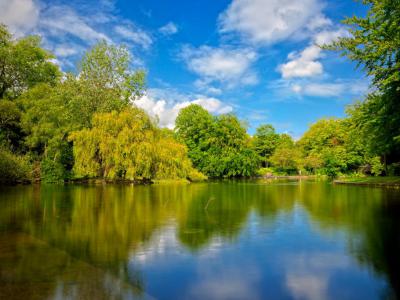
2) St. Stephen's Green (must see)
Not in the mood to play the "wait-for-a-table" game downtown? No problem. Just grab yourself a sandwich, a drink, and a little bit of rebellious charm, then head south to St. Stephen’s Green - Dublin’s answer to stress, queues, and too many menus.
Sprawling across 22 leafy acres at the foot of Grafton Street, this Georgian-era park is where grazing sheep once roamed - before it got a serious glow-up in the 18th century and became the place to see and be seen. By the late 1800s, it was given a full Victorian makeover, complete with manicured lawns, flowerbeds that would shame your grandma’s garden, shady tree-lined walks, fountains doing their best impression of zen, and benches galore, all circling an elegant lake where ducks reign supreme. Summer bonus: live music sometimes pops up in the open air. Feel free to bring snacks; they won’t judge...
This green rectangle of calm is ringed by fancy Georgian houses and dotted with more statues and memorials than you can count on two hands - or even four if you’re multitasking. Sir Arthur Guinness (yes, that same Guinness fellow) has pride of place for gifting the land to the public. Theobald Wolfe Tone, Irish revolutionary, is encircled by towering stones locals affectionately call “Tonehenge.” There’s also the Three Fates - a thank-you from post-WWII Germany for Ireland’s help with war orphans - and striking sculptures of Robert Emmet and James Joyce, the latter possibly judging your inner monologue.
And if you’re into poignant history, the park has that too. The Yeats Memorial Garden features work by Henry Moore; the Fusiliers Arch recalls fallen soldiers of the Boer War; a nod to Jeremiah O'Donovan Rossa of the Irish Republican Brotherhood; and a famine memorial quietly reminds us of the devastating years between 1845 and 1850.
Pro tip:
Before or after your stroll, check out the charming cafés just outside the gates. Cake, coffee, and green views - it’s the holy trinity of a perfect Dublin afternoon.
Sprawling across 22 leafy acres at the foot of Grafton Street, this Georgian-era park is where grazing sheep once roamed - before it got a serious glow-up in the 18th century and became the place to see and be seen. By the late 1800s, it was given a full Victorian makeover, complete with manicured lawns, flowerbeds that would shame your grandma’s garden, shady tree-lined walks, fountains doing their best impression of zen, and benches galore, all circling an elegant lake where ducks reign supreme. Summer bonus: live music sometimes pops up in the open air. Feel free to bring snacks; they won’t judge...
This green rectangle of calm is ringed by fancy Georgian houses and dotted with more statues and memorials than you can count on two hands - or even four if you’re multitasking. Sir Arthur Guinness (yes, that same Guinness fellow) has pride of place for gifting the land to the public. Theobald Wolfe Tone, Irish revolutionary, is encircled by towering stones locals affectionately call “Tonehenge.” There’s also the Three Fates - a thank-you from post-WWII Germany for Ireland’s help with war orphans - and striking sculptures of Robert Emmet and James Joyce, the latter possibly judging your inner monologue.
And if you’re into poignant history, the park has that too. The Yeats Memorial Garden features work by Henry Moore; the Fusiliers Arch recalls fallen soldiers of the Boer War; a nod to Jeremiah O'Donovan Rossa of the Irish Republican Brotherhood; and a famine memorial quietly reminds us of the devastating years between 1845 and 1850.
Pro tip:
Before or after your stroll, check out the charming cafés just outside the gates. Cake, coffee, and green views - it’s the holy trinity of a perfect Dublin afternoon.
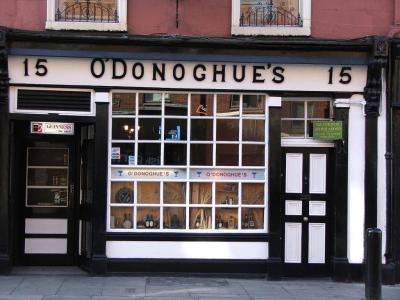
3) O'Donoghues Bar
The legendary pub where The Dubliners rose to fame in the 1960s still echoes with live music every night. But it's not just the tunes drawing crowds – it's the unbeatable pints and cozy atmosphere, whether you're in the historic bar or the covered coach yard.
Despite weekend tourist swarms, the pub maintains its authentic charm, with a rustic feel that's reminiscent of old-time watering holes. During quieter daytime hours, it's the perfect spot to enjoy a pint, especially since there's never a long wait for the renowned black stuff – thanks to a pre-poured row of pints always waiting to be served.
Situated at the heart of the action, the bar also serves the smoking area through a rear door and the side bar through a convenient hatch. Inside, wooden ledges provide a resting place for your pint when space becomes scarce.
Tip:
Look up and you might spot a cheeky sign questioning your curiosity about the ceiling.
Despite weekend tourist swarms, the pub maintains its authentic charm, with a rustic feel that's reminiscent of old-time watering holes. During quieter daytime hours, it's the perfect spot to enjoy a pint, especially since there's never a long wait for the renowned black stuff – thanks to a pre-poured row of pints always waiting to be served.
Situated at the heart of the action, the bar also serves the smoking area through a rear door and the side bar through a convenient hatch. Inside, wooden ledges provide a resting place for your pint when space becomes scarce.
Tip:
Look up and you might spot a cheeky sign questioning your curiosity about the ceiling.

4) Irish Whiskey Museum (must see)
Right across from Trinity College’s grand entrance on Grafton Street-where students cram for finals and tourists snap selfies-you’ll find a place that honours Ireland’s true dual passions: history and whiskey. Welcome to the Irish Whiskey Museum, where you don’t just sip spirits, you time-travel through them...
Since swinging open its doors in 2014, the museum has been charming visitors with the tales of “water of life”, complete with live traditional music, colourful storytelling, and generous pours of single grain, pot still, malt, and blended whiskeys. Think of it as a cultural deep-dive with a high-proof twist.
The interactive tour meanders through four immersive rooms, each styled to match a different era in Irish history. By the end, you’ll be confidently nodding along to whiskey trivia like a seasoned distiller-or at least faking it very convincingly.
Craving a next-level experience? Try the Whiskey Blending Experience-90 minutes of swirling, sniffing, sipping, and finally bottling your own custom blend to take home in a neat little Irish Whiskey Museum miniature (just try not to drink it on the flight back). Or if you like your spirits with sausages, opt for the Whiskey and Brunch Experience-a weekend exclusive that pairs three whiskeys with a hearty Irish brunch. Fancy a bit more? The VIP version adds a fourth dram and a souvenir shot glass to make your liver and Instagram equally happy.
One of the museum’s standout features is that it’s not owned by any particular distillery, so the history comes neat-no brand bias, just straight-up facts and flavor.
And fear not, teetotalers and designated drivers: there are non-drinker tickets, kids are welcome on the tour, and if you’re just here for the booze (no judgment), you can skip the history and head straight to the bar. Ask for a “Whiskey Flight” to sample a curated trio, or go full cocktail mode with an Irish Coffee or whiskey sour.
Bottom line: whether you’re a whiskey rookie or a peat-loving pro, this spot will leave you buzzing-in more ways than one...
Since swinging open its doors in 2014, the museum has been charming visitors with the tales of “water of life”, complete with live traditional music, colourful storytelling, and generous pours of single grain, pot still, malt, and blended whiskeys. Think of it as a cultural deep-dive with a high-proof twist.
The interactive tour meanders through four immersive rooms, each styled to match a different era in Irish history. By the end, you’ll be confidently nodding along to whiskey trivia like a seasoned distiller-or at least faking it very convincingly.
Craving a next-level experience? Try the Whiskey Blending Experience-90 minutes of swirling, sniffing, sipping, and finally bottling your own custom blend to take home in a neat little Irish Whiskey Museum miniature (just try not to drink it on the flight back). Or if you like your spirits with sausages, opt for the Whiskey and Brunch Experience-a weekend exclusive that pairs three whiskeys with a hearty Irish brunch. Fancy a bit more? The VIP version adds a fourth dram and a souvenir shot glass to make your liver and Instagram equally happy.
One of the museum’s standout features is that it’s not owned by any particular distillery, so the history comes neat-no brand bias, just straight-up facts and flavor.
And fear not, teetotalers and designated drivers: there are non-drinker tickets, kids are welcome on the tour, and if you’re just here for the booze (no judgment), you can skip the history and head straight to the bar. Ask for a “Whiskey Flight” to sample a curated trio, or go full cocktail mode with an Irish Coffee or whiskey sour.
Bottom line: whether you’re a whiskey rookie or a peat-loving pro, this spot will leave you buzzing-in more ways than one...
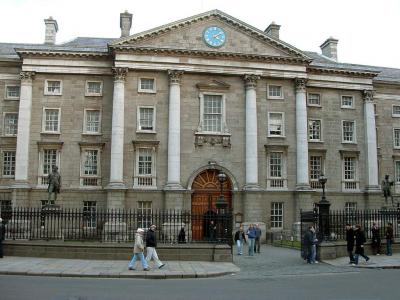
5) Trinity College (must see)
Tucked right into Dublin’s beating heart, Trinity College is both a university and a scene-stealing diva of stone and legacy wrapped into one. Founded in 1592 by none other than Queen Elizabeth I (because what’s an empire without a bit of academic propaganda?), it was originally meant to steer Irish students away from those pesky continental Catholic ideas. Over the centuries that followed, this world-renowned institution has churned out everyone from politicians and philosophers to literary legends like Swift, Wilde, and Beckett-talk about a star-studded alumni list...
Planted on College Green like a scholarly fortress, Trinity greets you with serious old-school charm and just enough mystery. Depending on the time of year-or the mood of the security gates-you might not get full access, but the west front gate usually plays nice. Stroll through and you’ll land in Parliament Square, where symmetry reigns supreme. The Chapel and Examination Hall face off across a lawn that occasionally moonlights as a concert venue.
Keep wandering further and you’ll find the Rubrics, the college’s oldest surviving building, all red brick and 18th-century vibes. But let’s be honest-the real showstopper here is the Old Library. Not only does it smell like intellectual dust and old wisdom, it houses the legendary Book of Kells, a 9th-century masterpiece of illuminated manuscript art that’s basically medieval bling.
Also, beyond the Old Library is Fellows' Square, where old meets new. On one side: the modernist Berkeley Library and the Arts Building. On the other: the Douglas Hyde Gallery, serving up contemporary Irish and international art with a side of cool detachment.
And just when you think Trinity’s done impressing, you stumble into New Square and meet the School of Engineering. Its home is the Museum Building-an absolute fever dream of Venetian Gothic architecture, decked out with stone-carved animals, twisting leaves, and enough floral motifs to make a Victorian jealous.
In short, Trinity College campus is a storybook that you can walk through, with a little drama, a lot of history, and just the right amount of academic swagger...
Planted on College Green like a scholarly fortress, Trinity greets you with serious old-school charm and just enough mystery. Depending on the time of year-or the mood of the security gates-you might not get full access, but the west front gate usually plays nice. Stroll through and you’ll land in Parliament Square, where symmetry reigns supreme. The Chapel and Examination Hall face off across a lawn that occasionally moonlights as a concert venue.
Keep wandering further and you’ll find the Rubrics, the college’s oldest surviving building, all red brick and 18th-century vibes. But let’s be honest-the real showstopper here is the Old Library. Not only does it smell like intellectual dust and old wisdom, it houses the legendary Book of Kells, a 9th-century masterpiece of illuminated manuscript art that’s basically medieval bling.
Also, beyond the Old Library is Fellows' Square, where old meets new. On one side: the modernist Berkeley Library and the Arts Building. On the other: the Douglas Hyde Gallery, serving up contemporary Irish and international art with a side of cool detachment.
And just when you think Trinity’s done impressing, you stumble into New Square and meet the School of Engineering. Its home is the Museum Building-an absolute fever dream of Venetian Gothic architecture, decked out with stone-carved animals, twisting leaves, and enough floral motifs to make a Victorian jealous.
In short, Trinity College campus is a storybook that you can walk through, with a little drama, a lot of history, and just the right amount of academic swagger...
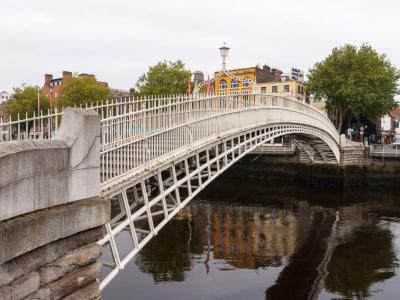
6) Ha'penny Bridge
Ask any Dubliner to name their favourite landmark, and odds are the Ha’penny Bridge will trot out at the top like a local celebrity on a victory lap. As you meander through the heart of the city, there’s a good chance you’ll end up crossing this charming cast-iron icon - Dublin’s oldest and most lovingly overphotographed pedestrian bridge, gracefully linking the north and south sides like a Victorian-era handshake.
It first opened in 1816 as the Wellington Bridge, but truth be told - nobody calls it that. The nickname "Ha’penny" stuck faster than a pub story, thanks to the halfpenny toll it once charged, which matched the fee for the seven ferries it put out of business. For a time, inflation did its thing, and the toll rose to a penny and a half, prompting locals to cheekily dub it the "Penny Ha’penny Bridge." Now, try saying that three times fast after a dram or two...
These days, crossing it is free - financially, at least. Emotionally? Well, that’s another story. Leaning against the railing under the old lanterns, taking in the ripple of the Liffey and watching Dublin unfold on either bank, you might find yourself wishing you could pay a toll just to stand here a little longer. But beware: stand still too long and you’ll find yourself getting nudged by folks who are just trying to get to work, rather than star in a romantic travel montage...
So keep it moving, take a mental snapshot, and know that for one glorious moment, you crossed a bridge that’s as much a part of Dublin’s soul as the Guinness in its veins.
It first opened in 1816 as the Wellington Bridge, but truth be told - nobody calls it that. The nickname "Ha’penny" stuck faster than a pub story, thanks to the halfpenny toll it once charged, which matched the fee for the seven ferries it put out of business. For a time, inflation did its thing, and the toll rose to a penny and a half, prompting locals to cheekily dub it the "Penny Ha’penny Bridge." Now, try saying that three times fast after a dram or two...
These days, crossing it is free - financially, at least. Emotionally? Well, that’s another story. Leaning against the railing under the old lanterns, taking in the ripple of the Liffey and watching Dublin unfold on either bank, you might find yourself wishing you could pay a toll just to stand here a little longer. But beware: stand still too long and you’ll find yourself getting nudged by folks who are just trying to get to work, rather than star in a romantic travel montage...
So keep it moving, take a mental snapshot, and know that for one glorious moment, you crossed a bridge that’s as much a part of Dublin’s soul as the Guinness in its veins.
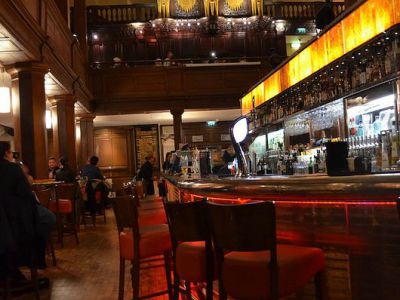
7) The Church (cafe bar & restaurant)
Prepare to be amazed by a truly remarkable transformation: an 18th-century Methodist church reborn as a chic new bar and restaurant, preserving its original pipe organ, stained glass windows, and marble wall memorials. Intrigued by this audacious venture, one may question the propriety of such a conversion. Yet, as the bartender at The Church will enlighten you, the building was teetering on the brink of ruin until John M. Keating intervened in the late 1990s. With millions of euros invested, what was once a dilapidated structure now stands as the epitome of coolness, a one-of-a-kind establishment on both banks of the Liffey.
Venture downstairs, and you'll discover the old crypt transformed into a second bar, accessible via a lengthy staircase; however, it's the main bar that truly captivates with its atmospheric charm. For a truly unique dining experience, ascend to the organ gallery-a rare architectural feature regardless of denomination-and enjoy your meal amidst history and grandeur.
Venture downstairs, and you'll discover the old crypt transformed into a second bar, accessible via a lengthy staircase; however, it's the main bar that truly captivates with its atmospheric charm. For a truly unique dining experience, ascend to the organ gallery-a rare architectural feature regardless of denomination-and enjoy your meal amidst history and grandeur.
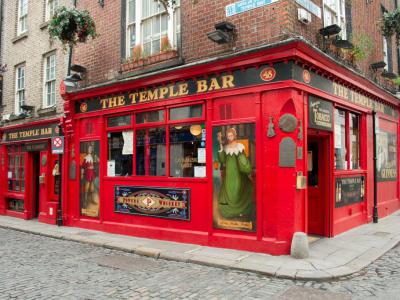
8) Temple Bar District (must see)
Wedged between the River Liffey and Dame Street, Temple Bar is Dublin’s flamboyant comeback kid - once rundown, now a nightlife legend and cultural hotspot, buzzing with tourists, buskers, and the occasional lost Viking spirit. Its cobbled lanes - yes, those charming, ankle-twisting 18th-century originals - are narrow, partly pedestrianized, and soaked in both Guinness and history.
You can wander in from Dame Street, or better yet, glide through the Merchants Arch - a photogenic stone portal opposite the Ha’penny Bridge - and step into the thumping heart of Temple Bar Square. Around here, between the arch and the fortress-like Central Bank, you’ll find a vibrant mess of art centres, souvenir-heavy shops, pubs on a mission, and eateries slinging everything from Irish stew to vegan tacos.
Keep walking and you’ll hit Eustace Street and Meeting House Square, where Dublin’s brainier side comes out to play. The Irish Film Institute screens arthouse flicks, foreign gems, and the occasional cinematic head-scratcher - all served up with excellent coffee, a bar, and a gift shop full of film theory and stylish posters. A few cobbles away, Photo Museum Ireland captures Dublin in frames past and present, while the National Photographic Archive next door lets you deep-dive into Ireland’s collective memory - or just browse a moody exhibition and pretend you're curating it.
Art fans, head to the Project Arts Centre on East Essex Street. It’s got edgy exhibitions, a theatre upstairs, and just enough blue lighting to make you feel like you’re in a European indie film. Around the corner, the Button Factory pumps out live music and late-night basslines, while Jam Art Factory lets you bring home some top-tier Irish creativity - minus the hangover...
And just when you think Temple Bar has given you all its goods, look south to Dame Street. There stands the Olympia Theatre, a Victorian dazzler complete with stained-glass canopy and more red velvet than your granny’s sitting room. Across the way, City Hall shows off with its Corinthian columns, and just a stone’s throw west, Dublin Castle reminds you that even in this city of pints and performance, the past still holds court.
Welcome to Temple Bar: come for the chaos, stay for the culture!
You can wander in from Dame Street, or better yet, glide through the Merchants Arch - a photogenic stone portal opposite the Ha’penny Bridge - and step into the thumping heart of Temple Bar Square. Around here, between the arch and the fortress-like Central Bank, you’ll find a vibrant mess of art centres, souvenir-heavy shops, pubs on a mission, and eateries slinging everything from Irish stew to vegan tacos.
Keep walking and you’ll hit Eustace Street and Meeting House Square, where Dublin’s brainier side comes out to play. The Irish Film Institute screens arthouse flicks, foreign gems, and the occasional cinematic head-scratcher - all served up with excellent coffee, a bar, and a gift shop full of film theory and stylish posters. A few cobbles away, Photo Museum Ireland captures Dublin in frames past and present, while the National Photographic Archive next door lets you deep-dive into Ireland’s collective memory - or just browse a moody exhibition and pretend you're curating it.
Art fans, head to the Project Arts Centre on East Essex Street. It’s got edgy exhibitions, a theatre upstairs, and just enough blue lighting to make you feel like you’re in a European indie film. Around the corner, the Button Factory pumps out live music and late-night basslines, while Jam Art Factory lets you bring home some top-tier Irish creativity - minus the hangover...
And just when you think Temple Bar has given you all its goods, look south to Dame Street. There stands the Olympia Theatre, a Victorian dazzler complete with stained-glass canopy and more red velvet than your granny’s sitting room. Across the way, City Hall shows off with its Corinthian columns, and just a stone’s throw west, Dublin Castle reminds you that even in this city of pints and performance, the past still holds court.
Welcome to Temple Bar: come for the chaos, stay for the culture!
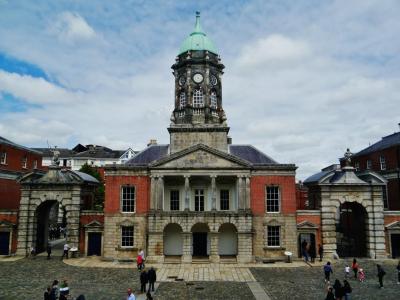
9) Dublin Castle (must see)
Standing tall and slightly smug on a ridge above the River Liffey, Dublin Castle is like that one friend who’s seen it all and still dresses sharp. This place packs over 800 years of drama - Vikings, royals, revolts, and a whole lot of renovations - into one surprisingly elegant complex.
Originally whipped up by the Anglo-Normans in the 1200s, it was built over a Viking settlement and served as the control center of English (and later British) rule in Ireland for seven centuries. A fire in 1684 charred most of the medieval bits, so the castle reinvented itself in the 18th century with Georgian flair. Think less fortress, more fancy manor - though if you join a guided tour, you can still find some medieval bones beneath the beauty.
The Upper Yard keeps the old castle layout alive, while the Cork Hill entrance, topped with a statue of Justice, offers a not-so-subtle historical joke - Lady Justice turns her back to the city. Not shady at all...
Inside, you’ll find the plush State Apartments, where British viceroys once threw parties and where Irish presidents now make things official. Expect glittering chandeliers, dramatic tapestries, and a strong "please don't touch" vibe. The nearby Chapel Royal, all Gothic charm and carved woodwork, is open for a peek - though the only thing being preached nowadays is great design.
Go underground and time-travel even further back: you’ll spot the remains of a Viking wall and the famed Dubh Linn (or “Black Pool”) that gave Dublin its name. Above ground, in that very spot, the Dubhlinn Gardens now bloom in Celtic patterns - ideal for pretending you’re in a historical drama, minus the beheadings...
And don’t skip the Chester Beatty Library set behind the castle walls. This under-the-radar gem is packed with ancient manuscripts and rare books from all over the world - basically, the Louvre of library nerds.
Dublin Castle isn’t just a relic of power; it’s a mash-up of past and present, stateliness and surprises. No matter if you're here for the politics, the Vikings, or the velvet furniture, it’s the kind of place that makes history feel less like homework and more like a plot twist.
Originally whipped up by the Anglo-Normans in the 1200s, it was built over a Viking settlement and served as the control center of English (and later British) rule in Ireland for seven centuries. A fire in 1684 charred most of the medieval bits, so the castle reinvented itself in the 18th century with Georgian flair. Think less fortress, more fancy manor - though if you join a guided tour, you can still find some medieval bones beneath the beauty.
The Upper Yard keeps the old castle layout alive, while the Cork Hill entrance, topped with a statue of Justice, offers a not-so-subtle historical joke - Lady Justice turns her back to the city. Not shady at all...
Inside, you’ll find the plush State Apartments, where British viceroys once threw parties and where Irish presidents now make things official. Expect glittering chandeliers, dramatic tapestries, and a strong "please don't touch" vibe. The nearby Chapel Royal, all Gothic charm and carved woodwork, is open for a peek - though the only thing being preached nowadays is great design.
Go underground and time-travel even further back: you’ll spot the remains of a Viking wall and the famed Dubh Linn (or “Black Pool”) that gave Dublin its name. Above ground, in that very spot, the Dubhlinn Gardens now bloom in Celtic patterns - ideal for pretending you’re in a historical drama, minus the beheadings...
And don’t skip the Chester Beatty Library set behind the castle walls. This under-the-radar gem is packed with ancient manuscripts and rare books from all over the world - basically, the Louvre of library nerds.
Dublin Castle isn’t just a relic of power; it’s a mash-up of past and present, stateliness and surprises. No matter if you're here for the politics, the Vikings, or the velvet furniture, it’s the kind of place that makes history feel less like homework and more like a plot twist.
10) St. Patrick's Cathedral (must see)
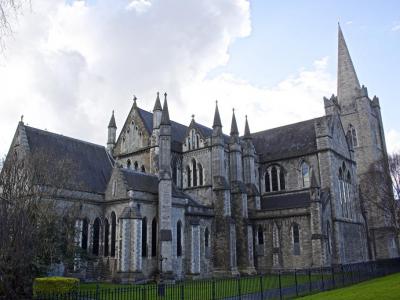
Saint Patrick’s Cathedral – Dublin’s oldest and tallest church, and possibly the only place where getting baptized by a saint, attending university, and stabling your horse all happened under the same roof...
Legend has it that Saint Patrick himself once dunked a few converts right here – a Celtic cross in the nave marks the alleged holy splash zone, dating things back to around 450 AD. Outside, there’s a peaceful park and a marker showing where the Holy Well once was – a perfect spot for pondering ancient blessings or just enjoying your sandwich...
Inside, the cathedral stretches an impressive 90 meters long, making it the longest church in Ireland – and tall too, with a 45-meter tower that houses the country’s largest peal of bells. Keep your ears ready and your neck limber. Above the choir stalls, look up to see carved helmets and swords – because sometimes "divine inspiration" can arrive amid medieval battle accessories.
Most of what you see today isn’t from the original 1191 structure, though. A fire in the 14th century did a number on it, and later restorations – especially in the Victorian era – gave it the grandeur we see now, minus the medieval draft...
This place has worn many hats over the centuries. In 1320, it was home to Ireland’s first university. Later, under Cromwell, it became an impromptu barracks – complete with equestrian parking in the aisles. But one of its most famous residents was Jonathan Swift, author of Gulliver’s Travels, who served as dean from 1713 to 1745. Known for his razor-sharp wit and concern for Dublin’s poor, Swift is buried here alongside Esther Johnson (otherwise known as "Stella," an Englishwoman and a close friend of Swift's). His pulpit and self-penned epitaph are still on display here, just in case you’d like to hear from the man himself, posthumously...
And then there's the door. Not just any door – but the door. A medieval peace treaty carved in wood. During a 1492 siege, Lord Kildare literally "chanced his arm" by cutting a hole in a door and reaching through to shake hands with his enemy. A bold move, and the source of a phrase still alive and kicking today.
Quick tip:
Check the cathedral’s website for upcoming concerts or events – because if you’re going to soak in history, you might as well do it with a choir echoing around you.
Legend has it that Saint Patrick himself once dunked a few converts right here – a Celtic cross in the nave marks the alleged holy splash zone, dating things back to around 450 AD. Outside, there’s a peaceful park and a marker showing where the Holy Well once was – a perfect spot for pondering ancient blessings or just enjoying your sandwich...
Inside, the cathedral stretches an impressive 90 meters long, making it the longest church in Ireland – and tall too, with a 45-meter tower that houses the country’s largest peal of bells. Keep your ears ready and your neck limber. Above the choir stalls, look up to see carved helmets and swords – because sometimes "divine inspiration" can arrive amid medieval battle accessories.
Most of what you see today isn’t from the original 1191 structure, though. A fire in the 14th century did a number on it, and later restorations – especially in the Victorian era – gave it the grandeur we see now, minus the medieval draft...
This place has worn many hats over the centuries. In 1320, it was home to Ireland’s first university. Later, under Cromwell, it became an impromptu barracks – complete with equestrian parking in the aisles. But one of its most famous residents was Jonathan Swift, author of Gulliver’s Travels, who served as dean from 1713 to 1745. Known for his razor-sharp wit and concern for Dublin’s poor, Swift is buried here alongside Esther Johnson (otherwise known as "Stella," an Englishwoman and a close friend of Swift's). His pulpit and self-penned epitaph are still on display here, just in case you’d like to hear from the man himself, posthumously...
And then there's the door. Not just any door – but the door. A medieval peace treaty carved in wood. During a 1492 siege, Lord Kildare literally "chanced his arm" by cutting a hole in a door and reaching through to shake hands with his enemy. A bold move, and the source of a phrase still alive and kicking today.
Quick tip:
Check the cathedral’s website for upcoming concerts or events – because if you’re going to soak in history, you might as well do it with a choir echoing around you.
11) Guinness Storehouse (must see)
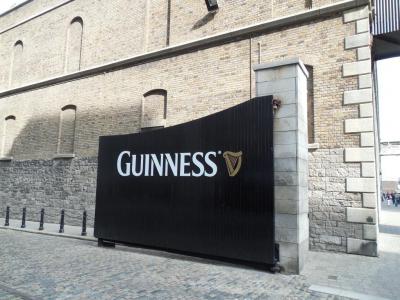
Arguably Dublin's most popular tourist destination, the Guinness Storehouse is a multimedia celebration of all things Guinness, housed within a converted grain storehouse nestled within the 26-hectare brewery grounds. Across its seven floors, visitors are treated to a comprehensive exploration of Guinness and the brewery's storied history, complete with interactive exhibits and insights into the art of mastering the famous two-part pour.
Any doubts or reservations you may harbor about the modern-day marketing and hype surrounding Guinness are swiftly laid to rest upon reaching the pinnacle of the building – the circular Gravity Bar. Here, you're rewarded with a complimentary glass of Guinness, served with breathtaking panoramic views of the city. And let's not beat around the bush – the Guinness itself? Let's just say it's as close to beer perfection as you can get.
For the true aficionados, there's the Connoisseur Experience, where you'll have the opportunity to sample four distinct varieties of Guinness – Draught, Original, Foreign Extra Stout, and Black Lager – all while soaking in their fascinating backstories from your designated bartender.
As if that wasn't enough, there are additional add-ons like the STOUTie – think latte art, but with stout – where a surprisingly accurate likeness of yourself is skillfully drawn in the creamy head of your pint. It's strictly for the 'gram, of course, but hey, who doesn't love a good photo op?
Tip:
Save time and money by booking your ticket online in advance.
Any doubts or reservations you may harbor about the modern-day marketing and hype surrounding Guinness are swiftly laid to rest upon reaching the pinnacle of the building – the circular Gravity Bar. Here, you're rewarded with a complimentary glass of Guinness, served with breathtaking panoramic views of the city. And let's not beat around the bush – the Guinness itself? Let's just say it's as close to beer perfection as you can get.
For the true aficionados, there's the Connoisseur Experience, where you'll have the opportunity to sample four distinct varieties of Guinness – Draught, Original, Foreign Extra Stout, and Black Lager – all while soaking in their fascinating backstories from your designated bartender.
As if that wasn't enough, there are additional add-ons like the STOUTie – think latte art, but with stout – where a surprisingly accurate likeness of yourself is skillfully drawn in the creamy head of your pint. It's strictly for the 'gram, of course, but hey, who doesn't love a good photo op?
Tip:
Save time and money by booking your ticket online in advance.
