Custom Walk in Sydney, Australia by headpurch1_dd2999 created on 2026-06-30
Guide Location: Australia » Sydney
Guide Type: Custom Walk
# of Sights: 7
Tour Duration: 2 Hour(s)
Travel Distance: 3.1 Km or 1.9 Miles
Share Key: 8F7GC
Guide Type: Custom Walk
# of Sights: 7
Tour Duration: 2 Hour(s)
Travel Distance: 3.1 Km or 1.9 Miles
Share Key: 8F7GC
How It Works
Please retrieve this walk in the GPSmyCity app. Once done, the app will guide you from one tour stop to the next as if you had a personal tour guide. If you created the walk on this website or come to the page via a link, please follow the instructions below to retrieve the walk in the app.
Retrieve This Walk in App
Step 1. Download the app "GPSmyCity: Walks in 1K+ Cities" on Apple App Store or Google Play Store.



Step 2. In the GPSmyCity app, download(or launch) the guide "Sydney Map and Walking Tours".
Step 3. Tap the menu button located at upper right corner of the "Walks" screen and select "Retrieve custom walk". Enter the share key: 8F7GC
1) Sydney Tower (must see)
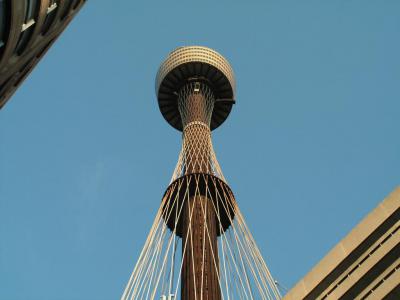
Should you ever lose your bearings in Sydney, no worries. Just look up-the city’s tallest attraction, Sydney Tower, is impossible to miss. Also known as the Sydney Tower Eye, this 309-metre needle shoots out of the Centrepoint complex on Market Street and spends its days keeping watch over the entire Central Business District like a polite, well-dressed sentinel.
The tower sprang from the imagination of architect Donald Crone, who set its construction in motion in 1975. By 1981, Sydney had a brand-new landmark that announced, with quiet confidence, that the city had fully embraced late-20th-century ambition. Its slender shaft lifts a golden turret that looks part spaceship, part crown-home to observation decks, restaurants, and more communication gear than a sci-fi movie prop room.
Engineers anchored the tower deep into Sydney’s sandstone bedrock, giving it the strength to withstand powerful winds and even the occasional tremor. During an earthquake, it can sway up to 30 centimetres, which sounds dramatic until you remember it’s meant to do that. Think of it as architectural yoga...
The enclosed Sydney Tower Eye observation deck sits 250 metres above the street, offering a 360-degree sweep of the harbour, the Pacific coastline, and the Blue Mountains lounging in the distance. A little higher up, at 268 metres, the SKYWALK takes things further: visitors strap into safety harnesses, step onto glass platforms, and instantly realise how tiny the cars look from up here.
Inside the turret, two revolving restaurants keep the scenery moving-literally-completing a full rotation every 70 to 90 minutes. High-speed lifts whisk guests to the top in under a minute, and at night the tower glows in whatever colour Sydney feels like celebrating.
In essence, Sydney Tower is the city’s proud vertical exclamation mark-tall, bright, and always ready for its close-up.
The tower sprang from the imagination of architect Donald Crone, who set its construction in motion in 1975. By 1981, Sydney had a brand-new landmark that announced, with quiet confidence, that the city had fully embraced late-20th-century ambition. Its slender shaft lifts a golden turret that looks part spaceship, part crown-home to observation decks, restaurants, and more communication gear than a sci-fi movie prop room.
Engineers anchored the tower deep into Sydney’s sandstone bedrock, giving it the strength to withstand powerful winds and even the occasional tremor. During an earthquake, it can sway up to 30 centimetres, which sounds dramatic until you remember it’s meant to do that. Think of it as architectural yoga...
The enclosed Sydney Tower Eye observation deck sits 250 metres above the street, offering a 360-degree sweep of the harbour, the Pacific coastline, and the Blue Mountains lounging in the distance. A little higher up, at 268 metres, the SKYWALK takes things further: visitors strap into safety harnesses, step onto glass platforms, and instantly realise how tiny the cars look from up here.
Inside the turret, two revolving restaurants keep the scenery moving-literally-completing a full rotation every 70 to 90 minutes. High-speed lifts whisk guests to the top in under a minute, and at night the tower glows in whatever colour Sydney feels like celebrating.
In essence, Sydney Tower is the city’s proud vertical exclamation mark-tall, bright, and always ready for its close-up.
2) Hyde Park Obelisk
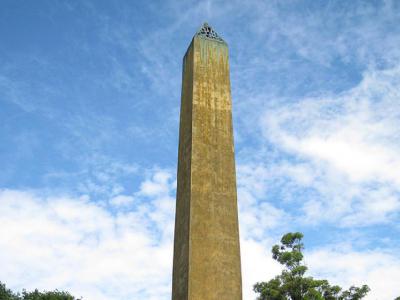
The Hyde Park Obelisk stands at the intersection of Elizabeth and Bathurst Streets, marking one of Sydney’s more curious pieces of 19th-century engineering. Unveiled in 1857, the 22-metre sandstone monument was modelled after the Cleopatra’s Needle obelisk on London’s Embankment. Though its classical design suggests a commemorative monument, the obelisk was in fact built as a ventilation shaft for the city’s newly constructed underground sewer system-the first of its kind in Australia. Its elegant form disguised a vital piece of civic infrastructure that helped modernise Sydney’s sanitation network during a period of rapid urban expansion.
The structure, designed by City Engineer Edward Bell, was carved from local sandstone and capped with a bronze orb. Beneath its ornate surface, internal vents once channelled sewer gases safely away from the streets below. The combination of practical engineering and classical styling reflected Victorian Sydney’s aspiration to merge function with beauty in public works.
Over time, the Hyde Park Obelisk became both a city landmark and a symbol of 19th-century progress. Standing near the southern entrance to Hyde Park, it anchors the surrounding streetscape of historic and modern buildings. The monument’s survival amid constant redevelopment highlights the period’s craftsmanship and the ambition of civic design that sought to elevate even utilitarian structures into works of urban ornamentation.
The structure, designed by City Engineer Edward Bell, was carved from local sandstone and capped with a bronze orb. Beneath its ornate surface, internal vents once channelled sewer gases safely away from the streets below. The combination of practical engineering and classical styling reflected Victorian Sydney’s aspiration to merge function with beauty in public works.
Over time, the Hyde Park Obelisk became both a city landmark and a symbol of 19th-century progress. Standing near the southern entrance to Hyde Park, it anchors the surrounding streetscape of historic and modern buildings. The monument’s survival amid constant redevelopment highlights the period’s craftsmanship and the ambition of civic design that sought to elevate even utilitarian structures into works of urban ornamentation.
3) ANZAC War Memorial
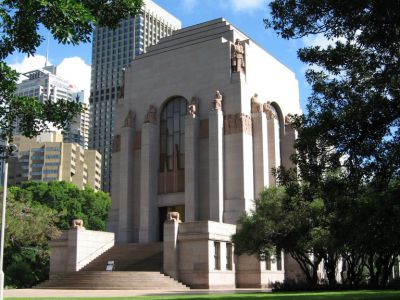
The ANZAC War Memorial in Hyde Park South is the main monument in New South Wales dedicated to the servicemen and women of the Australian and New Zealand Army Corps. Designed by C. Bruce Dellit and opened in 1934, it combines classical symmetry with Art Deco features. Its pink-granite exterior and stepped pyramid roof make it a prominent structure within the park.
Inside, the Hall of Silence contains Sacrifice, a sculpture by Rayner Hoff showing a fallen soldier supported by three women representing his mother, wife, and sister. A circular skylight above directs natural light onto the sculpture. Around the hall, walls list battlefields where Australians served, creating a straightforward space for reflection.
Outside, the memorial is complemented by the Pool of Reflection, lined with poplars and designed to mirror the building’s façade. The area serves as a quiet place to pause and is also the central location for Sydney’s ANZAC Day ceremonies each April.
Inside, the Hall of Silence contains Sacrifice, a sculpture by Rayner Hoff showing a fallen soldier supported by three women representing his mother, wife, and sister. A circular skylight above directs natural light onto the sculpture. Around the hall, walls list battlefields where Australians served, creating a straightforward space for reflection.
Outside, the memorial is complemented by the Pool of Reflection, lined with poplars and designed to mirror the building’s façade. The area serves as a quiet place to pause and is also the central location for Sydney’s ANZAC Day ceremonies each April.
4) Hyde Park
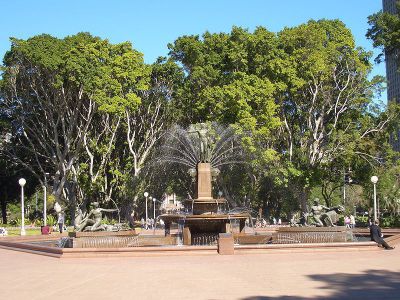
Hyde Park is where Sydney takes a deep breath. Stretching from St James Station down to Liverpool Street, it’s the city’s oldest public park-and the moment you step under its canopy of towering fig trees, you understand why generations have treated it as downtown’s unofficial living room. Back in 1810, this was grazing land and a makeshift parade ground, until someone decided Sydney deserved a dash of London and named it Hyde Park. The formal landscaping arrived in the 1920s, bringing neat avenues, sweeping lawns, and fountains that still cool the midday rush.
At the park’s northern end, the Archibald Fountain steals the show. Unveiled in 1932 and sculpted by French artist François-Léon Sicard, it throws Greek mythology into the Australian sunlight with surprising confidence-bronze figures, sparkling water, and just enough drama to stop even the most hurried commuter. Nearby statues of Captain Cook and James Martin serve as reminders that Sydney has never been shy about putting its history on a pedestal.
Down at the southern end, the mood shifts. Here stand the ANZAC War Memorial and the Pool of Reflection, a calm, solemn space framed by quiet pathways and still water. From this point, paths fan out toward lawns filled with office workers on lunch break, tourists plotting their next stop, and locals doing their best to make “a quick sit-down” last far longer than planned.
Between concerts, festivals, ceremonies, and the constant hum of people moving through, Hyde Park works double duty: part city shortcut, part sanctuary. It’s the rare place where you can admire cathedral spires, sip a takeaway coffee, and listen to the trees all at once-proof that even in the middle of Sydney’s urban bustle, a little calm is never far away...
At the park’s northern end, the Archibald Fountain steals the show. Unveiled in 1932 and sculpted by French artist François-Léon Sicard, it throws Greek mythology into the Australian sunlight with surprising confidence-bronze figures, sparkling water, and just enough drama to stop even the most hurried commuter. Nearby statues of Captain Cook and James Martin serve as reminders that Sydney has never been shy about putting its history on a pedestal.
Down at the southern end, the mood shifts. Here stand the ANZAC War Memorial and the Pool of Reflection, a calm, solemn space framed by quiet pathways and still water. From this point, paths fan out toward lawns filled with office workers on lunch break, tourists plotting their next stop, and locals doing their best to make “a quick sit-down” last far longer than planned.
Between concerts, festivals, ceremonies, and the constant hum of people moving through, Hyde Park works double duty: part city shortcut, part sanctuary. It’s the rare place where you can admire cathedral spires, sip a takeaway coffee, and listen to the trees all at once-proof that even in the middle of Sydney’s urban bustle, a little calm is never far away...
5) Saint Mary's Cathedral (must see)
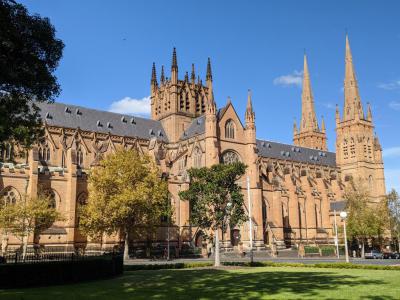
Follow College Street for a moment, and those sandstone spires, quietly asserting themselves above the treetops, will tip you off-you’ve reached Saint Mary’s Cathedral. This is the Catholic Archdiocese’s main stage, set right beside Hyde Park, on the very ground where the colony’s first Catholic chapel went up back in 1821. The version standing here today owes its existence to architect William Wardell, who began work on it in 1868.
Saint Mary’s is built from Pyrmont sandstone-the architectural equivalent of a warm sepia filter-and shaped in full Gothic Revival style, featuring pointed arches, flying buttresses, and enough vertical ambition to make medieval Europe nod in approval. The twin spires, finished only in the year 2000, give the cathedral its now-iconic silhouette, perfectly positioned for anyone aiming a camera even vaguely upward.
Step inside and the tone changes instantly. Stone columns rise like they’re trying to join the choir, stained-glass windows paint the light in jewel tones, and the vaulted ceiling creates the kind of acoustics that make even a hum feel profound. The rose window above the western entrance steals the show with shifting patterns of colour, while the reredos, carved choir stalls, and marble altar showcase the hands-on craftsmanship of the 19th century.
Beneath all this sits the crypt-a cool, quiet chamber decorated with mosaics of Australian plants and animals, housing the tombs of the city’s early bishops, including Cardinal Norman Gilroy, Australia’s first homegrown cardinal.
Outside, the cathedral opens onto gardens and Cathedral Square, creating a graceful link to Hyde Park and offering space for gatherings, ceremonies, or simply catching your breath. Set between green lawns and city towers, Saint Mary’s Cathedral stands as a long-running conversation between old-world design and modern Sydney life...
Saint Mary’s is built from Pyrmont sandstone-the architectural equivalent of a warm sepia filter-and shaped in full Gothic Revival style, featuring pointed arches, flying buttresses, and enough vertical ambition to make medieval Europe nod in approval. The twin spires, finished only in the year 2000, give the cathedral its now-iconic silhouette, perfectly positioned for anyone aiming a camera even vaguely upward.
Step inside and the tone changes instantly. Stone columns rise like they’re trying to join the choir, stained-glass windows paint the light in jewel tones, and the vaulted ceiling creates the kind of acoustics that make even a hum feel profound. The rose window above the western entrance steals the show with shifting patterns of colour, while the reredos, carved choir stalls, and marble altar showcase the hands-on craftsmanship of the 19th century.
Beneath all this sits the crypt-a cool, quiet chamber decorated with mosaics of Australian plants and animals, housing the tombs of the city’s early bishops, including Cardinal Norman Gilroy, Australia’s first homegrown cardinal.
Outside, the cathedral opens onto gardens and Cathedral Square, creating a graceful link to Hyde Park and offering space for gatherings, ceremonies, or simply catching your breath. Set between green lawns and city towers, Saint Mary’s Cathedral stands as a long-running conversation between old-world design and modern Sydney life...
6) Art Gallery of New South Wales (must see)
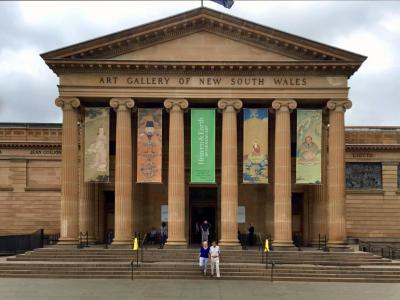
The Art Gallery of New South Wales stands as one of Australia’s foremost public art museums, located on the edge of The Domain overlooking Woolloomooloo Bay. Established in 1871, it began as a modest venue for colonial art and evolved into a major cultural institution that reflects both the breadth of Australian creativity and its global connections.
The gallery’s main building, with its neoclassical sandstone façade completed in 1909, embodies the civic ideals of the early 20th century-elevating art as a shared public experience. Behind its formal exterior, the interior spaces unfold into high-ceilinged galleries illuminated by natural light, designed to balance solemnity with openness.
The collection encompasses more than a century of Australian art, from early colonial landscapes to bold expressions of modern and contemporary practice. A defining feature is its substantial Aboriginal and Torres Strait Islander art collection, which includes traditional works, bark paintings, and contemporary pieces that engage with identity, memory, and Country.
Alongside this are European paintings and sculptures from the Renaissance to Impressionism, and an extensive Asian art collection that reflects cross-cultural exchange-featuring Japanese screens, Chinese ceramics, and Indian miniatures. Together, these collections reveal the gallery’s long-standing commitment to representing diverse artistic traditions.
In 2022, the opening of the Sydney Modern Project marked a transformative moment in the gallery’s history. Designed by the Japanese architectural firm SANAA, the expansion added a series of glass and concrete pavilions that step down the landscape toward the harbour. These new spaces showcase contemporary and large-scale installations, while a repurposed World War II oil tank provides a dramatic subterranean gallery. The project integrates outdoor terraces and sculpture gardens, extending the experience beyond the walls of the museum.
The gallery’s main building, with its neoclassical sandstone façade completed in 1909, embodies the civic ideals of the early 20th century-elevating art as a shared public experience. Behind its formal exterior, the interior spaces unfold into high-ceilinged galleries illuminated by natural light, designed to balance solemnity with openness.
The collection encompasses more than a century of Australian art, from early colonial landscapes to bold expressions of modern and contemporary practice. A defining feature is its substantial Aboriginal and Torres Strait Islander art collection, which includes traditional works, bark paintings, and contemporary pieces that engage with identity, memory, and Country.
Alongside this are European paintings and sculptures from the Renaissance to Impressionism, and an extensive Asian art collection that reflects cross-cultural exchange-featuring Japanese screens, Chinese ceramics, and Indian miniatures. Together, these collections reveal the gallery’s long-standing commitment to representing diverse artistic traditions.
In 2022, the opening of the Sydney Modern Project marked a transformative moment in the gallery’s history. Designed by the Japanese architectural firm SANAA, the expansion added a series of glass and concrete pavilions that step down the landscape toward the harbour. These new spaces showcase contemporary and large-scale installations, while a repurposed World War II oil tank provides a dramatic subterranean gallery. The project integrates outdoor terraces and sculpture gardens, extending the experience beyond the walls of the museum.
7) Mrs Macquarie's Chair
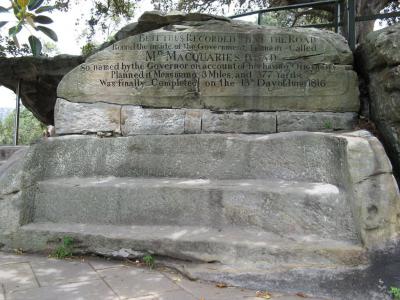
Mrs Macquarie’s Chair is a sandstone bench carved by convicts in 1810 for Elizabeth Macquarie, the wife of Governor Lachlan Macquarie, on the peninsula now known as Mrs Macquarie’s Point. Positioned within the Royal Botanic Garden Sydney, the seat was shaped directly from the rock overlooking Sydney Harbour, where Mrs Macquarie was said to sit and watch the ships arrive from England. The craftsmanship of the bench, hewn from a single sandstone ledge, reflects the early convict era and the personal history of the colonial administration.
The site offers one of the most celebrated viewpoints in Sydney, with sweeping vistas of the Harbour Bridge, Sydney Opera House, and the blue waters of Farm Cove. The peninsula’s elevated position and open lawns make it a popular spot for photography, picnics, and evening walks. The surrounding area retains the feel of early colonial landscaping, framed by native trees and the harbour’s natural contours.
A short walk from the Botanic Garden gates leads visitors along Mrs Macquarie’s Road, originally constructed by convicts as a scenic drive for the governor’s wife. Interpretive signs along the way describe the history of the site and its connection to the early European settlement of Sydney.
The site offers one of the most celebrated viewpoints in Sydney, with sweeping vistas of the Harbour Bridge, Sydney Opera House, and the blue waters of Farm Cove. The peninsula’s elevated position and open lawns make it a popular spot for photography, picnics, and evening walks. The surrounding area retains the feel of early colonial landscaping, framed by native trees and the harbour’s natural contours.
A short walk from the Botanic Garden gates leads visitors along Mrs Macquarie’s Road, originally constructed by convicts as a scenic drive for the governor’s wife. Interpretive signs along the way describe the history of the site and its connection to the early European settlement of Sydney.
