Custom Walk in Warsaw, Poland by colleen_hollis_82ca2e created on 2026-07-02
Guide Location: Poland » Warsaw
Guide Type: Custom Walk
# of Sights: 7
Tour Duration: 5 Hour(s)
Travel Distance: 11.9 Km or 7.4 Miles
Share Key: D354W
Guide Type: Custom Walk
# of Sights: 7
Tour Duration: 5 Hour(s)
Travel Distance: 11.9 Km or 7.4 Miles
Share Key: D354W
How It Works
Please retrieve this walk in the GPSmyCity app. Once done, the app will guide you from one tour stop to the next as if you had a personal tour guide. If you created the walk on this website or come to the page via a link, please follow the instructions below to retrieve the walk in the app.
Retrieve This Walk in App
Step 1. Download the app "GPSmyCity: Walks in 1K+ Cities" on Apple App Store or Google Play Store.



Step 2. In the GPSmyCity app, download(or launch) the guide "Warsaw Map and Walking Tours".
Step 3. Tap the menu button located at upper right corner of the "Walks" screen and select "Retrieve custom walk". Enter the share key: D354W
1) Old Town Market Place (Rynek Starego Miasta) (must see)
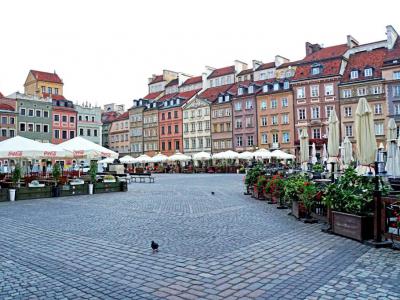
In the very center of Old Town Warsaw, you'll find the Old Town Market Place. Since the city was founded in the 13th century, merchants would meet here to sell their goods. The square has been the center of Warsaw life since, with everything from festivals to executions occurring here.
The townhouses built around the Old Town Market Place were Gothic until a fire destroyed them in 1607. Renaissance-style buildings replaced them, only to be replaced by the current late-Baroque style that you see today. There was a large town hall building here, but the German Luftwaffe destroyed it and the rest of the square during World War II.
The square was rebuilt in the 1950s, and efforts were taken to mimic its appearance from the 17th century. Each side of the square is named to an 18th-century parliamentarian. Dekert's Side on the north is named for Jan Dekert, a merchant and political activist. Barss' Side contains the Adam Mickiewicz Museum, honoring its namesake's poetry. Kollataj's Side honors Hugo Stumberg Kołłataj’s, a constitutional reformer and educationalist, while Zakrzewski's Side is named for mayor of Warsaw, nobleman, and art collector Ignacy Wyssogota Zakrzewski.
Several of the buildings on the square house the Warsaw Museum. Here, you can see collections of historical artifacts from the city that depict daily life. Their collection includes more than 300,000 objects spread over 21 themed rooms. The main entrance is in house No. 42 on Dekert's Side.
In the square, you will also see a statue of Syrenka, the "little mermaid" of Warsaw. She has appeared on the city's official coat of arms since at least the 14th century. The statue has stood here since 1855.
The townhouses built around the Old Town Market Place were Gothic until a fire destroyed them in 1607. Renaissance-style buildings replaced them, only to be replaced by the current late-Baroque style that you see today. There was a large town hall building here, but the German Luftwaffe destroyed it and the rest of the square during World War II.
The square was rebuilt in the 1950s, and efforts were taken to mimic its appearance from the 17th century. Each side of the square is named to an 18th-century parliamentarian. Dekert's Side on the north is named for Jan Dekert, a merchant and political activist. Barss' Side contains the Adam Mickiewicz Museum, honoring its namesake's poetry. Kollataj's Side honors Hugo Stumberg Kołłataj’s, a constitutional reformer and educationalist, while Zakrzewski's Side is named for mayor of Warsaw, nobleman, and art collector Ignacy Wyssogota Zakrzewski.
Several of the buildings on the square house the Warsaw Museum. Here, you can see collections of historical artifacts from the city that depict daily life. Their collection includes more than 300,000 objects spread over 21 themed rooms. The main entrance is in house No. 42 on Dekert's Side.
In the square, you will also see a statue of Syrenka, the "little mermaid" of Warsaw. She has appeared on the city's official coat of arms since at least the 14th century. The statue has stood here since 1855.
2) Warsaw Old Town (must see)
Warsaw's Old Town, nestled in the core of Poland's capital, stands as a beacon of historical and cultural significance, providing a window into the city's storied past. Referred to locally as "Stare Miasto," this district is recognized by UNESCO as a World Heritage Site, drawing tourists and history buffs alike. The Old Town, heavily damaged in World War II, has been meticulously restored, symbolizing Warsaw's revival.
The area is distinguished by its conservation of medieval and Renaissance architectural styles. It features an array of vibrant townhouses, cobblestone pathways, and heritage-rich squares. The Market Square, the epicenter of the Old Town, is a quaint area encircled by multicolored townhouses, hosting cafes and eateries. The Warsaw Mermaid statue, an emblematic figure of the city, takes pride of place in the square's center.
The Royal Castle, formerly the abode of Polish royalty, dominates Castle Square. It invites exploration of its opulent rooms, halls, and galleries, along with the Castle Museum, showcasing a vast collection of art and historical pieces. Saint John's Archcathedral, a notable Gothic edifice dating to the 14th century, stands as another prominent landmark, celebrated for its architectural grandeur and historical significance.
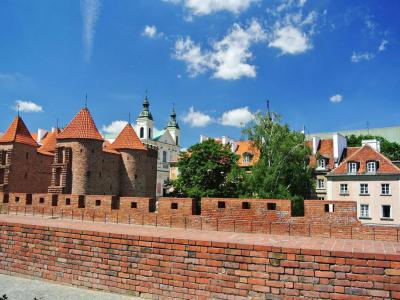
Enclosed by reconstructed defensive walls and a medieval Barbican, the Old Town offers insights into Warsaw's history as a fortified city. The area abounds with quaint cafes, restaurants, and bars, serving traditional Polish fare, global cuisine, and delectable sweets, perfect for enjoying a meal or coffee amidst the ambiance.
Throughout the year, the Old Town becomes a hub of cultural events, festivals, and open-air concerts, animating the historic quarter and providing opportunities to engage with local customs and entertainment. Additionally, it houses various souvenir shops, boutiques, and artisanal stores, offering unique keepsakes and Polish crafts as lasting reminders of one's visit.
The area is distinguished by its conservation of medieval and Renaissance architectural styles. It features an array of vibrant townhouses, cobblestone pathways, and heritage-rich squares. The Market Square, the epicenter of the Old Town, is a quaint area encircled by multicolored townhouses, hosting cafes and eateries. The Warsaw Mermaid statue, an emblematic figure of the city, takes pride of place in the square's center.
The Royal Castle, formerly the abode of Polish royalty, dominates Castle Square. It invites exploration of its opulent rooms, halls, and galleries, along with the Castle Museum, showcasing a vast collection of art and historical pieces. Saint John's Archcathedral, a notable Gothic edifice dating to the 14th century, stands as another prominent landmark, celebrated for its architectural grandeur and historical significance.
Enclosed by reconstructed defensive walls and a medieval Barbican, the Old Town offers insights into Warsaw's history as a fortified city. The area abounds with quaint cafes, restaurants, and bars, serving traditional Polish fare, global cuisine, and delectable sweets, perfect for enjoying a meal or coffee amidst the ambiance.
Throughout the year, the Old Town becomes a hub of cultural events, festivals, and open-air concerts, animating the historic quarter and providing opportunities to engage with local customs and entertainment. Additionally, it houses various souvenir shops, boutiques, and artisanal stores, offering unique keepsakes and Polish crafts as lasting reminders of one's visit.
3) Castle Square (Plac Zamkowy) (must see)
Located in the middle of Old Town, this square was first built in 1821. It's roughly triangular, with one side facing the Royal Castle.
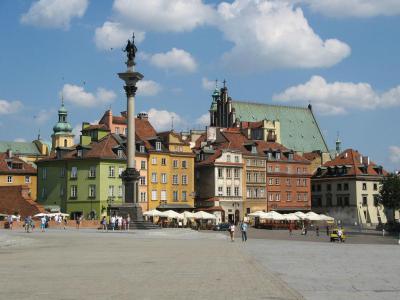
One of the most prominent features of the square is Sigismund's Column, a 17th-century monument to King Sigismund III. It was built in 1644 and is the world's oldest secular column built in modern history. It's a landmark that you can't miss.
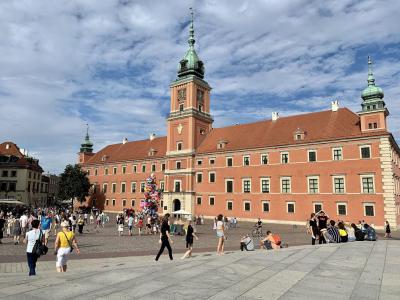
One of Warsaw's biggest highways runs underneath Castle Square. Besides the castle, the rest of the square is surrounded by historic townhouses. This is the center of exploration in Warsaw-it's a meeting point for locals and tourists alike, and it's full of life. There are street musicians, horse carriages, churches, and restaurants all around. The main attraction here, though, is the Royal Castle.
Castle Square also marks the northern point of the Royal Route, which led from the castle southward to King Jan III Sobieski's personal residence at Wilanów. Along that route, you'll pass many must-see Warsaw sights.
One of the most prominent features of the square is Sigismund's Column, a 17th-century monument to King Sigismund III. It was built in 1644 and is the world's oldest secular column built in modern history. It's a landmark that you can't miss.
One of Warsaw's biggest highways runs underneath Castle Square. Besides the castle, the rest of the square is surrounded by historic townhouses. This is the center of exploration in Warsaw-it's a meeting point for locals and tourists alike, and it's full of life. There are street musicians, horse carriages, churches, and restaurants all around. The main attraction here, though, is the Royal Castle.
Castle Square also marks the northern point of the Royal Route, which led from the castle southward to King Jan III Sobieski's personal residence at Wilanów. Along that route, you'll pass many must-see Warsaw sights.
4) Royal Castle (must see)
The Royal Castle as it stands today was rebuilt and restored in the late 1970s and early 1980s. The Germans had destroyed it during World War II, but the foundation and many components were rescued and used in the reconstruction.
The original structure was built in the Middle Ages. Sometime around 1410, the first parts of the Curia Maior, or Big Manor, were built. It functioned as a prince manor. When Masovia was incorporated into the Kingdom of Poland in 1526, the building became a royal residence. Between 1569 and 1572, King Sigismund II Augustus began altering the structure to accommodate the new parliament. Next to Curia Maior, the king built a Renaissance-style building known as Royal House, where he resided when parliament was in session. Over the years, the castle continued to expand.
The castle was destroyed during The Deluge from 1655 to 1657 when Sweden and Russia invaded. Reconstruction began in 1657, but the royal purse was stretched, so construction was limited to rebuilding what had already been there.
Why You Should Visit:
The castle operates as a museum while also being the setting of state functions. Inside the castle, you'll see one of the most impressive art collections in Europe.
The Jagiellonian Rooms contain the modern Gallery of Painting, Sculpture, and Decorative Arts. The Houses of Parliament, where the world's second-oldest constitution was signed into effect, is available to be toured. The Royal Apartments provide a glimpse into the lavish lifestyles of the royal families and the chance to view many masterpieces from the 1700s. The Lanckoronski Collection includes two Rembrandts and a Stradivari violin.
The castle, together with Old Town Warsaw, is a UNESCO World Heritage Site.
The original structure was built in the Middle Ages. Sometime around 1410, the first parts of the Curia Maior, or Big Manor, were built. It functioned as a prince manor. When Masovia was incorporated into the Kingdom of Poland in 1526, the building became a royal residence. Between 1569 and 1572, King Sigismund II Augustus began altering the structure to accommodate the new parliament. Next to Curia Maior, the king built a Renaissance-style building known as Royal House, where he resided when parliament was in session. Over the years, the castle continued to expand.
The castle was destroyed during The Deluge from 1655 to 1657 when Sweden and Russia invaded. Reconstruction began in 1657, but the royal purse was stretched, so construction was limited to rebuilding what had already been there.
Why You Should Visit:
The castle operates as a museum while also being the setting of state functions. Inside the castle, you'll see one of the most impressive art collections in Europe.
The Jagiellonian Rooms contain the modern Gallery of Painting, Sculpture, and Decorative Arts. The Houses of Parliament, where the world's second-oldest constitution was signed into effect, is available to be toured. The Royal Apartments provide a glimpse into the lavish lifestyles of the royal families and the chance to view many masterpieces from the 1700s. The Lanckoronski Collection includes two Rembrandts and a Stradivari violin.
The castle, together with Old Town Warsaw, is a UNESCO World Heritage Site.
5) Royal Route (must see)
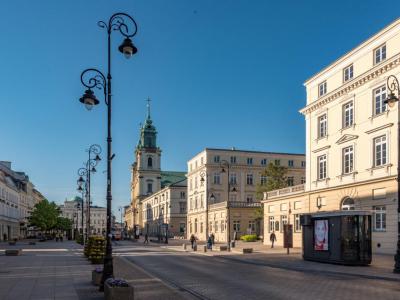
The Royal Route began as a communication route that led from the Royal Castle and Castle Square to King Jan III Sobieski's personal residence, known as Wilanów. The route runs through Old Town Warsaw, connecting many notable points and containing many monuments and sights.
The route spans south from Castle Square along Krakowskie Przedmieście Street, New World Street, Ujazdow Avenue, Belweder Street, and Sobieski Street. The route is named as an official historical monument in Poland.
The first part of the Royal Route, Krakowskie Przedmiescie, is one of Warsaw's best known and most prestigious streets. Around it, you will find many historical structures and sights. The north end of the road starts at the Presidential Palace and passes Warsaw University, the Polish Academy of Sciences. You'll also see Potocki Palace, Kazimierz Palace, Tyszkiewicz Palace, Czetwertyński Palace, Hotel Bristol, Saint Anne's Church, and Holy Cross Church.
Do not miss a stroll through the grounds of Lazienki Park. This 76-hectare park contains palaces, villas, monuments, and decorative structures. In the center of the park is the much-photographed Palace on the Isle. If you're in Warsaw during the summer, keep an ear out for the Sunday Chopin Concerts at the Fryderyk Chopin monument.
The Royal Route connects most of the must-see sights in Warsaw. Strolling the sidewalks here and taking your time to visit each monument, garden, and palace is well worth your time. There is much to explore and many quiet hidden treasures along the way.
One of the best-kept secrets is the summer residence of King Jan III Sobieski, known as Marysieńka. The palace is operated as a museum, with elaborate and authentic 17th, 18th, and 19th-century interiors throughout. It's also home to the Polish Portrait Gallery. The gardens are not to be missed. The house is often called the "Polish Versailles."
The route spans south from Castle Square along Krakowskie Przedmieście Street, New World Street, Ujazdow Avenue, Belweder Street, and Sobieski Street. The route is named as an official historical monument in Poland.
The first part of the Royal Route, Krakowskie Przedmiescie, is one of Warsaw's best known and most prestigious streets. Around it, you will find many historical structures and sights. The north end of the road starts at the Presidential Palace and passes Warsaw University, the Polish Academy of Sciences. You'll also see Potocki Palace, Kazimierz Palace, Tyszkiewicz Palace, Czetwertyński Palace, Hotel Bristol, Saint Anne's Church, and Holy Cross Church.
Do not miss a stroll through the grounds of Lazienki Park. This 76-hectare park contains palaces, villas, monuments, and decorative structures. In the center of the park is the much-photographed Palace on the Isle. If you're in Warsaw during the summer, keep an ear out for the Sunday Chopin Concerts at the Fryderyk Chopin monument.
The Royal Route connects most of the must-see sights in Warsaw. Strolling the sidewalks here and taking your time to visit each monument, garden, and palace is well worth your time. There is much to explore and many quiet hidden treasures along the way.
One of the best-kept secrets is the summer residence of King Jan III Sobieski, known as Marysieńka. The palace is operated as a museum, with elaborate and authentic 17th, 18th, and 19th-century interiors throughout. It's also home to the Polish Portrait Gallery. The gardens are not to be missed. The house is often called the "Polish Versailles."
6) Royal Baths Park (must see)
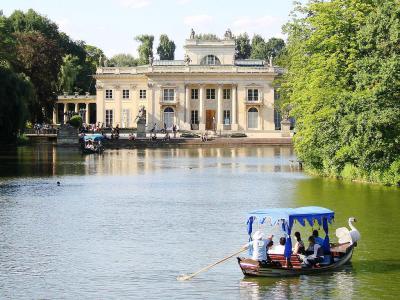
Royal Baths Park, or Lazienski Park as it is also known, is Warsaw's largest municipal park. The area is nearly 190 acres that includes a botanical garden, a stadium, numerous monuments, palaces, temples, green space and Lazienski lake.
The park was formerly owned by King Stanislaw August Poniatowski. This last Polish king was instrumental in creating the classical layout of the gardens, palace and amphitheatre. The "Palace on the Isle" was originally a bath house that the king converted into his private quarters in the late 18th century, thus giving the park its name.
Visitors to the park can explore the Palace on the Isle by crossing a footbridge. Inside the palace they will find a paintings gallery with works from artists like Rubens and Rembrandt. They will also see statues, columns and many examples of Neoclassical Architecture.
Another popular feature of the park is Bialy Domek, or the White House. This was the home of Louis XVIII while he was living in exile. However, the house was originally built for the mistress of King Stanislaus II Augustus. It was mostly destroyed during World War II, but was painstakingly restored using most of the original furnishings.
The orangeries are features that should not go unexplored during a visit to Royal Baths Park. The Old Orangery was built in 1788 in a space large enough to accommodate 200 guests. Paintings, sculptures and medallions dating to the 16th century are on display.
The deceptively named New Orangery was built in 1860 to accommodate Tsar Alexander II of Russia's tropical plant collection. Those plants died when left unattended during World War I, but the building is still used as a tropical plant sanctuary.
Visitors will find these areas of interest and many more throughout the park. Because there is so much to see and do, tourists should plan an entire day around exploration of Royal Baths Park.
Why You Should Visit:
- To see the largest park in Warsaw
- To admire numerous buildings and works of art from different eras
Tips:
The park is open daily from 6 AM to 8 PM. Most of the buildings are open for tours from 10 AM to 4 PM every day except Mondays and holidays.
The park was formerly owned by King Stanislaw August Poniatowski. This last Polish king was instrumental in creating the classical layout of the gardens, palace and amphitheatre. The "Palace on the Isle" was originally a bath house that the king converted into his private quarters in the late 18th century, thus giving the park its name.
Visitors to the park can explore the Palace on the Isle by crossing a footbridge. Inside the palace they will find a paintings gallery with works from artists like Rubens and Rembrandt. They will also see statues, columns and many examples of Neoclassical Architecture.
Another popular feature of the park is Bialy Domek, or the White House. This was the home of Louis XVIII while he was living in exile. However, the house was originally built for the mistress of King Stanislaus II Augustus. It was mostly destroyed during World War II, but was painstakingly restored using most of the original furnishings.
The orangeries are features that should not go unexplored during a visit to Royal Baths Park. The Old Orangery was built in 1788 in a space large enough to accommodate 200 guests. Paintings, sculptures and medallions dating to the 16th century are on display.
The deceptively named New Orangery was built in 1860 to accommodate Tsar Alexander II of Russia's tropical plant collection. Those plants died when left unattended during World War I, but the building is still used as a tropical plant sanctuary.
Visitors will find these areas of interest and many more throughout the park. Because there is so much to see and do, tourists should plan an entire day around exploration of Royal Baths Park.
Why You Should Visit:
- To see the largest park in Warsaw
- To admire numerous buildings and works of art from different eras
Tips:
The park is open daily from 6 AM to 8 PM. Most of the buildings are open for tours from 10 AM to 4 PM every day except Mondays and holidays.
7) Wilanow Palace (must see)
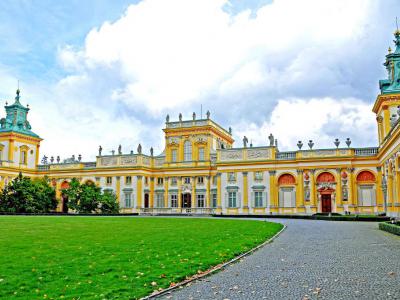
Wilanow Palace is a royal palace and important historic site in Warsaw. The palace was originally constructed in 1680 for King John III Sobieski. It was designed by architect Augustyn Wicenty Locci in the Baroque architectural style. The palace was originally a one-story, square manor house with four alcove towers. Additions continued through 1696. During that time, two gallery wings, alcove towers, a pavilion and spires were added.
A portion of the palace was opened to the public in 1805. This was one of the first public museums in Poland. Visitors can tour the museum where they will see paintings, sculptures, antiquities and royal memorabilia.
The gardens around the palace were carefully laid out to complement the palace itself. They were initially a circular, baroque Italianate garden. However, as the palace grew, so did the green space, plant life and outdoor sculptures. Tourists are welcome to explore these gardens, now known as a park, on their visit to Wilanow Palace.
The park is divided into the foreground, courtyard, north garden, baroque garden, rose garden, south landscape, north landscape, orangery and the Morysin Nature Reserve. Each has a distinctive design with unique features. For example, the palace foreground includes the caretaker's house, the north garden offers statues of famed Polish poets, the rose garden offers Japanese vases and the north landscape park includes a Chinese gazebo.
Visitors to the palace, museum and park must purchase tickets in advance or online.
Why You Should Visit:
- To see the stunning baroque architecture of the palace
- To enjoy one of the nation's first museums
- To explore the meticulously crafted gardens
Tips:
Those who want to save money can visit the palace and gardens for free on Thursdays between 11 AM and 3 PM.
A portion of the palace was opened to the public in 1805. This was one of the first public museums in Poland. Visitors can tour the museum where they will see paintings, sculptures, antiquities and royal memorabilia.
The gardens around the palace were carefully laid out to complement the palace itself. They were initially a circular, baroque Italianate garden. However, as the palace grew, so did the green space, plant life and outdoor sculptures. Tourists are welcome to explore these gardens, now known as a park, on their visit to Wilanow Palace.
The park is divided into the foreground, courtyard, north garden, baroque garden, rose garden, south landscape, north landscape, orangery and the Morysin Nature Reserve. Each has a distinctive design with unique features. For example, the palace foreground includes the caretaker's house, the north garden offers statues of famed Polish poets, the rose garden offers Japanese vases and the north landscape park includes a Chinese gazebo.
Visitors to the palace, museum and park must purchase tickets in advance or online.
Why You Should Visit:
- To see the stunning baroque architecture of the palace
- To enjoy one of the nation's first museums
- To explore the meticulously crafted gardens
Tips:
Those who want to save money can visit the palace and gardens for free on Thursdays between 11 AM and 3 PM.
