Custom Walk in Nuremberg, Germany by meganschulte99_f463da created on 2026-07-05
Guide Location: Germany » Nuremberg
Guide Type: Custom Walk
# of Sights: 7
Tour Duration: 3 Hour(s)
Travel Distance: 7.6 Km or 4.7 Miles
Share Key: VXPEM
Guide Type: Custom Walk
# of Sights: 7
Tour Duration: 3 Hour(s)
Travel Distance: 7.6 Km or 4.7 Miles
Share Key: VXPEM
How It Works
Please retrieve this walk in the GPSmyCity app. Once done, the app will guide you from one tour stop to the next as if you had a personal tour guide. If you created the walk on this website or come to the page via a link, please follow the instructions below to retrieve the walk in the app.
Retrieve This Walk in App
Step 1. Download the app "GPSmyCity: Walks in 1K+ Cities" on Apple App Store or Google Play Store.



Step 2. In the GPSmyCity app, download(or launch) the guide "Nuremberg Map and Walking Tours".
Step 3. Tap the menu button located at upper right corner of the "Walks" screen and select "Retrieve custom walk". Enter the share key: VXPEM
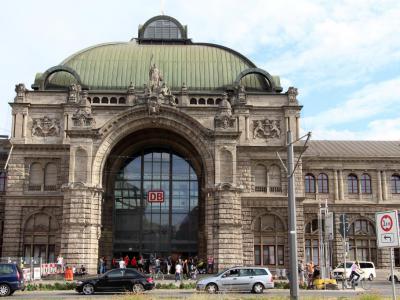
1) Nuremberg Central Station
Nuremberg Central Station stands as a prominent transportation hub in northern Bavaria, classified among the top 20 most significant stations due to its substantial role and historical significance. Situated on the southeastern edge of Nuremberg's Old Town (Altstadt), the station faces the historic King's Gate (Königstor). This strategic location not only facilitates easy access to the city's core but also places it near notable landmarks such as the DB Museum and the Staatstheater Nürnberg opera house.
The architectural evolution of the station is marked by its transition from neo-Gothic to neo-Baroque styles. Originally built in the neo-Gothic style, the station underwent a significant reconstruction in 1900 adopting a largely neo-Baroque aesthetic. A notable feature of the station is its Muschelkalk facade which provides a distinctive external appearance. The station's portals are intricately adorned, displaying symbols of technological advancement like the winged wheel above the Mittelhalle portal, embodying the era's industrial spirit.
The interior of the station boasts a Jugendstil lounge designed by Bruno Paul in 1904, which survived the devastations of the Second World War. This area is renowned for its elegant mosaics and subtle stucco work on the roof, presenting a historic ambiance that complements the modern-day travel center located within. Additionally, an advertising column from the early 20th century, placed above the main portal, adds to the historical charm of the station.
Despite plans in 1950 to revert the architectural style to neo-Gothic, these were largely halted before significant changes could be made, leaving only minor modifications. This decision preserved the unique Neo-Baroque character of the station, making Nuremberg Central Station not only a crucial transportation node but also a cultural and historical landmark in the heart of Nuremberg.
Why You Should Visit:
While the building itself is very nice it is worth noting that the reason Nuremberg was chosen for the Nazi rallying grounds was its ability to link Germany by rail, so this central station is historical as well.
The architectural evolution of the station is marked by its transition from neo-Gothic to neo-Baroque styles. Originally built in the neo-Gothic style, the station underwent a significant reconstruction in 1900 adopting a largely neo-Baroque aesthetic. A notable feature of the station is its Muschelkalk facade which provides a distinctive external appearance. The station's portals are intricately adorned, displaying symbols of technological advancement like the winged wheel above the Mittelhalle portal, embodying the era's industrial spirit.
The interior of the station boasts a Jugendstil lounge designed by Bruno Paul in 1904, which survived the devastations of the Second World War. This area is renowned for its elegant mosaics and subtle stucco work on the roof, presenting a historic ambiance that complements the modern-day travel center located within. Additionally, an advertising column from the early 20th century, placed above the main portal, adds to the historical charm of the station.
Despite plans in 1950 to revert the architectural style to neo-Gothic, these were largely halted before significant changes could be made, leaving only minor modifications. This decision preserved the unique Neo-Baroque character of the station, making Nuremberg Central Station not only a crucial transportation node but also a cultural and historical landmark in the heart of Nuremberg.
Why You Should Visit:
While the building itself is very nice it is worth noting that the reason Nuremberg was chosen for the Nazi rallying grounds was its ability to link Germany by rail, so this central station is historical as well.
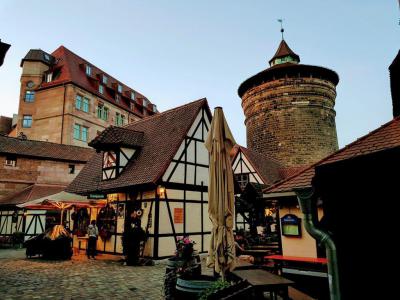
2) Handwerkerhof (Crafts Yard)
The Crafts Yard opened in 1971 and features traditional crafts. Visitors and locals can watch craft creators at work using traditional tools to create handmade goods. The Crafts Yard invited visitors to go back to a time period when goods were painstakingly made by hand and were treasured possessions, often passed from generation to generation.
The Crafts Yard is located in the Free Imperial City's former armory. Surrounded by the ancient town wall, the Crafts Yard features narrow walkways, half-timbered houses, and cozy inns.
As you stroll through the yard, you can walk tinsmiths and woodworkers making toys and goldsmiths creating art. Crafters create traditional goods such as model railways, miniature doll prams, and handmade figurines.
The yard hosts exhibitions showcasing crafting traditions such as bookbinding and gingerbread making.
Visitors can watch the artists at work as well as purchase these unique items. Bring home beautifully handmade souvenirs and gifts.
The Crafts Yard also has delightful cafes, restaurants, and bars sprinkled about the craft shops.
The Crafts Yard is located in the Free Imperial City's former armory. Surrounded by the ancient town wall, the Crafts Yard features narrow walkways, half-timbered houses, and cozy inns.
As you stroll through the yard, you can walk tinsmiths and woodworkers making toys and goldsmiths creating art. Crafters create traditional goods such as model railways, miniature doll prams, and handmade figurines.
The yard hosts exhibitions showcasing crafting traditions such as bookbinding and gingerbread making.
Visitors can watch the artists at work as well as purchase these unique items. Bring home beautifully handmade souvenirs and gifts.
The Crafts Yard also has delightful cafes, restaurants, and bars sprinkled about the craft shops.
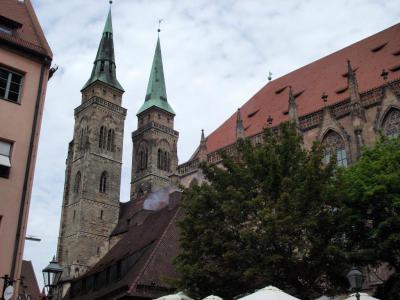
3) St. Lawrence's Church (must see)
Saint Lawrence's Church in Nuremberg stands as a testament to both the resiliency and rich artistic heritage of the region. Dedicated to Saint Lawrence, a revered Roman Catholic saint, the church is primarily noted for its transformation and significance within the Evangelical Lutheran tradition, particularly after it was one of the first to adopt Lutheranism in 1525. This historic church suffered considerable damage during World War II but was meticulously restored, preserving its status as a prominent landmark in Bavaria.
Architecturally, the church is celebrated for its splendid Gothic elements, particularly the "Saint Laurentius" choir, designed by the medieval master mason Konrad Roriczer in 1445. This choir is a masterpiece of Gothic design and craftsmanship, highlighting the church's architectural significance.
Artistically, Saint Lawrence's Church houses an impressive collection of medieval art, including altarpieces from the 14th and 15th centuries, with the earliest dating back to 1316. Among its notable sculptures is the "beautiful Madonna," an unusually cheerful representation from around 1280. Additionally, the church features a remarkable stone tabernacle created between 1493 and 1496, adorned with carvings that depict the Passion of Christ and capped with a dramatic array of pinnacles that reach up to the vaulting, soaring 20 meters high.
The church also boasts an exceptional collection of medieval stained glass, primarily from the 15th century, adding a vibrant splash of color and artistry to its interior. This collection survived the turbulent times of the Reformation, largely due to the determination of Nuremberg's affluent citizens who, during the Reformation's iconoclasm, chose to preserve these artworks as a tribute to their ancestors.
The west facade of the church is a striking feature, reflecting the opulence of the Nuremberg citizenry. It is distinguished by its two towers and an elaborate West portal that echoes the grandeur of Saint Sebald and Bamberg Cathedral, complete with a commanding rose window that measures 9 meters in diameter.
Architecturally, the church is celebrated for its splendid Gothic elements, particularly the "Saint Laurentius" choir, designed by the medieval master mason Konrad Roriczer in 1445. This choir is a masterpiece of Gothic design and craftsmanship, highlighting the church's architectural significance.
Artistically, Saint Lawrence's Church houses an impressive collection of medieval art, including altarpieces from the 14th and 15th centuries, with the earliest dating back to 1316. Among its notable sculptures is the "beautiful Madonna," an unusually cheerful representation from around 1280. Additionally, the church features a remarkable stone tabernacle created between 1493 and 1496, adorned with carvings that depict the Passion of Christ and capped with a dramatic array of pinnacles that reach up to the vaulting, soaring 20 meters high.
The church also boasts an exceptional collection of medieval stained glass, primarily from the 15th century, adding a vibrant splash of color and artistry to its interior. This collection survived the turbulent times of the Reformation, largely due to the determination of Nuremberg's affluent citizens who, during the Reformation's iconoclasm, chose to preserve these artworks as a tribute to their ancestors.
The west facade of the church is a striking feature, reflecting the opulence of the Nuremberg citizenry. It is distinguished by its two towers and an elaborate West portal that echoes the grandeur of Saint Sebald and Bamberg Cathedral, complete with a commanding rose window that measures 9 meters in diameter.
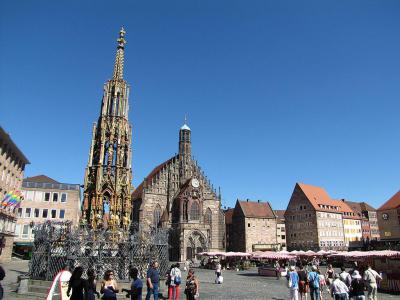
4) Hauptmarkt (Main Market Square) (must see)
The Main Market Square has been the center of activity and commerce in Nuremberg since ancient times. The celebrated marketplace runs Monday through Saturday. Visitors and locals love to shop the plentiful fruits and vegetables, fresh bread, treats, ready-to-eat meals, and fresh flowers.
The Main Market Square features several iconic landmarks. The Beautiful Fountain was completed in 1396 and is a Gothic masterpiece. It stands an impressive 19 meters (62 feet) tall.
Forty ornate figures decorate the fountain. The figures represent important icons in the Holy Roman Empire such as philosophy, liberal arts, the four Church Fathers, the four Evangelists, the seven Prince-electors, the Nine Worthies, Moses, and the seven Prophets. Legend tells of good luck brought to visitors who spin the two brass rings on the fence.
Another impressive landmark on the square is The Church of Our Lady. This Gothic church was built in the 14th century and features a beautiful facade.
The Main Market Square hosts various festivals and events throughout the year. Popular events include the Nuremberg Flea Market, the Nuremberg Old Town Festival, and the Christmas market.
The Main Market Square features several iconic landmarks. The Beautiful Fountain was completed in 1396 and is a Gothic masterpiece. It stands an impressive 19 meters (62 feet) tall.
Forty ornate figures decorate the fountain. The figures represent important icons in the Holy Roman Empire such as philosophy, liberal arts, the four Church Fathers, the four Evangelists, the seven Prince-electors, the Nine Worthies, Moses, and the seven Prophets. Legend tells of good luck brought to visitors who spin the two brass rings on the fence.
Another impressive landmark on the square is The Church of Our Lady. This Gothic church was built in the 14th century and features a beautiful facade.
The Main Market Square hosts various festivals and events throughout the year. Popular events include the Nuremberg Flea Market, the Nuremberg Old Town Festival, and the Christmas market.
5) Nuremberg Castle (must see)
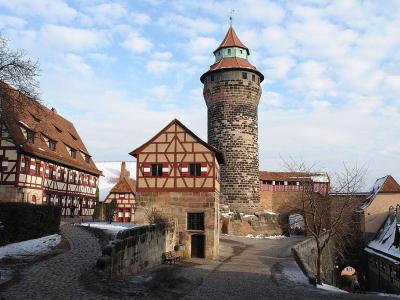
Nuremberg Castle is one of the most famous and magnificent castles in Germany. Every Holy Roman Emperor between 1050 and 1571 resided part-time at the castle. Essential administrative functions were carried out at the castle. Charles IV enacted the Golden Bull at the castle in 1356. This decree required that newly elected German kings would hold their first general assembly at Nuremberg.
The Sinwell Tower was built for defensive purposes in the 13th century. Sinwell means extremely round in Middle High German. Visitors can climb the tower's wooden spiral staircase to an observation platform. Photos of Nuremberg immediately after WWII are displayed at the top of the tower. You can see how much damage Nuremberg had and how meticulous the rebuild has been.
Visitors must be accompanied by a guide to see the Deep Well. This site is one of the highlights of the castle. The well is nearly 50 meters (164 feet) deep and was an essential water supply for the castle. The house covering the well was built in 1563.
The Double Chapel is another exquisite site. This Romanesque Imperial Chapel dates to the 13th century. The chapel features an emperor's gallery, which allowed the emperor to remain separate from the other worshippers.
The Imperial Hall was used as a dining hall and for festivities. Today, visitors can find Holy Roman Empire exhibits. The Emperor's Living Room features colorfully painted ceiling squares. The wall panels are decored with gold and date back to the 15th century.
The Corner Chamber features gorgeous art and gifts given to the Imperial Crown. Visitors will also find an impressive wooden model of the city, as well as the jeweled Imperial Crown. Visitors will find weapons from the 13th to 19th centuries in the Imperial Castle Museum.
After touring the castle, don't miss the Castle Garden with its beautiful flower beds.
Why You Should Visit:
Nuremberg Castle is steeped in history and has been beautifully restored. Visitors can walk the cobblestone paths, immerse themselves in the castle's history, and admire the stunning architecture and art displays.
Tips:
A combination ticket provides access to Nuremberg Castle, the Double Chapel, the Imperial Castle Museum, the Deep Well, and the Sinwell Tower. Guests can only visit the Deep Well with a guide. Audio guides for the castle are available in several languages.
The Sinwell Tower was built for defensive purposes in the 13th century. Sinwell means extremely round in Middle High German. Visitors can climb the tower's wooden spiral staircase to an observation platform. Photos of Nuremberg immediately after WWII are displayed at the top of the tower. You can see how much damage Nuremberg had and how meticulous the rebuild has been.
Visitors must be accompanied by a guide to see the Deep Well. This site is one of the highlights of the castle. The well is nearly 50 meters (164 feet) deep and was an essential water supply for the castle. The house covering the well was built in 1563.
The Double Chapel is another exquisite site. This Romanesque Imperial Chapel dates to the 13th century. The chapel features an emperor's gallery, which allowed the emperor to remain separate from the other worshippers.
The Imperial Hall was used as a dining hall and for festivities. Today, visitors can find Holy Roman Empire exhibits. The Emperor's Living Room features colorfully painted ceiling squares. The wall panels are decored with gold and date back to the 15th century.
The Corner Chamber features gorgeous art and gifts given to the Imperial Crown. Visitors will also find an impressive wooden model of the city, as well as the jeweled Imperial Crown. Visitors will find weapons from the 13th to 19th centuries in the Imperial Castle Museum.
After touring the castle, don't miss the Castle Garden with its beautiful flower beds.
Why You Should Visit:
Nuremberg Castle is steeped in history and has been beautifully restored. Visitors can walk the cobblestone paths, immerse themselves in the castle's history, and admire the stunning architecture and art displays.
Tips:
A combination ticket provides access to Nuremberg Castle, the Double Chapel, the Imperial Castle Museum, the Deep Well, and the Sinwell Tower. Guests can only visit the Deep Well with a guide. Audio guides for the castle are available in several languages.
6) Maxbrücke (Max Bridge)
Max Bridge (Maxbrücke) is a historic stone arch bridge located over the Pegnitz River in Nuremberg. This significant structure sits in the old town area, linking Unschlittplatz in the Lorenz district to the south with Nägeleinsplatz in the Sebald district to the north. Built in 1457 by Jakob Grimm, a master builder from Rothenburg, it is recognized as Nuremberg's oldest stone bridge. Originally named the Stone Bridge, it features three sandstone bays with intricate tracery fillings made of cast iron.
The bridge's name was changed to Max Bridge in 1810 to honor the Bavarian King Maximilian I Joseph. Around this time, two round cannons were installed on the bridge to enhance the city's defenses against riverine attacks. The renaming also led to the adjacent Max Bridge receiving its current name, further cementing the bridge's royal connection.
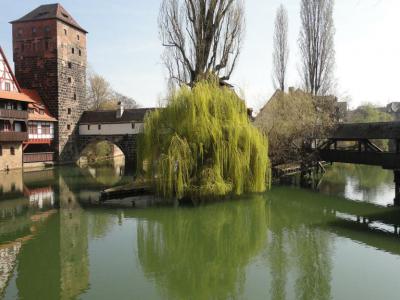
Max Bridge faced significant damage due to a fire at the Nägeleinsmühle’s wooden water tower on its northern bank. It was subsequently restored and reopened in 1852 based on designs by Bernhard Solger. Today, Maxbrücke is not only a vital passage within Nuremberg but also a vantage point offering picturesque views of prominent city landmarks like the Weinstadel and Henkerssteg.
The Weinstadel, close to Max Bridge, is an emblematic medieval building originally serving as the imperial city's wine warehouse since around 1571. It is now one of the most celebrated architectural monuments on the Nuremberg Historical Mile. Nearby, Hangman's Bridge (Henkerssteg), also built in 1457, holds its historical significance. Originally constructed for the town’s hangman, it was rebuilt with a roof after a flood in 1595, adding to the old town’s charming historical ensemble.
Together, these structures encapsulate a rich blend of architectural beauty and historical depth, making Maxbrücke and its surroundings a focal point of heritage and culture in Nuremberg.
The bridge's name was changed to Max Bridge in 1810 to honor the Bavarian King Maximilian I Joseph. Around this time, two round cannons were installed on the bridge to enhance the city's defenses against riverine attacks. The renaming also led to the adjacent Max Bridge receiving its current name, further cementing the bridge's royal connection.
Max Bridge faced significant damage due to a fire at the Nägeleinsmühle’s wooden water tower on its northern bank. It was subsequently restored and reopened in 1852 based on designs by Bernhard Solger. Today, Maxbrücke is not only a vital passage within Nuremberg but also a vantage point offering picturesque views of prominent city landmarks like the Weinstadel and Henkerssteg.
The Weinstadel, close to Max Bridge, is an emblematic medieval building originally serving as the imperial city's wine warehouse since around 1571. It is now one of the most celebrated architectural monuments on the Nuremberg Historical Mile. Nearby, Hangman's Bridge (Henkerssteg), also built in 1457, holds its historical significance. Originally constructed for the town’s hangman, it was rebuilt with a roof after a flood in 1595, adding to the old town’s charming historical ensemble.
Together, these structures encapsulate a rich blend of architectural beauty and historical depth, making Maxbrücke and its surroundings a focal point of heritage and culture in Nuremberg.
7) Nuremberg Palace of Justice (must see)
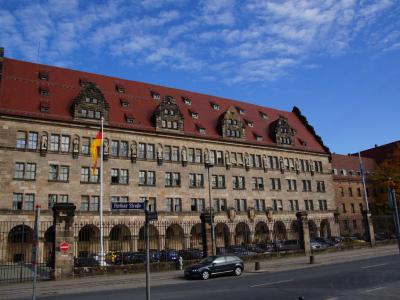
The Palace of Justice in Nuremberg is a significant building complex constructed between 1909 and 1916. It encompasses various judicial bodies including the appellate court (Oberlandesgericht), the regional court (Landgericht), the local court (Amtsgericht), and the public prosecutor's office (Staatsanwaltschaft). The complex is notably home to the Nuremberg Trials Memorial (Memorium Nürnberger Prozesse) situated on the top floor of the courthouse.
This building was selected for the Nuremberg trials, held between 1945 and 1949, where major surviving German war criminals of World War II were prosecuted. The choice of the Nuremberg Palace of Justice was strategic due to its almost untouched state post-war, ample space, and an adjoining large prison complex. Nuremberg itself was a symbolic location given its history with the Nazi Party's large rallies.
The trials primarily took place in Courtroom 600, located in the building's eastern wing. This courtroom, which is still operational today and often used for murder trials, underwent modifications after the trials. A previously removed wall was reinstalled to decrease the space, and the judges’ bench was rotated 90 degrees from its original position.
Starting in the year 2000, tourists were able to visit Courtroom 600 on weekends. The Nuremberg Trials Memorial, managed by the Nuremberg Municipal Museums, was inaugurated in November 2010. Since 2022, a media installation has been providing visitors with a virtual representation of the courtroom as it appeared during the Nuremberg Trials.
This building was selected for the Nuremberg trials, held between 1945 and 1949, where major surviving German war criminals of World War II were prosecuted. The choice of the Nuremberg Palace of Justice was strategic due to its almost untouched state post-war, ample space, and an adjoining large prison complex. Nuremberg itself was a symbolic location given its history with the Nazi Party's large rallies.
The trials primarily took place in Courtroom 600, located in the building's eastern wing. This courtroom, which is still operational today and often used for murder trials, underwent modifications after the trials. A previously removed wall was reinstalled to decrease the space, and the judges’ bench was rotated 90 degrees from its original position.
Starting in the year 2000, tourists were able to visit Courtroom 600 on weekends. The Nuremberg Trials Memorial, managed by the Nuremberg Municipal Museums, was inaugurated in November 2010. Since 2022, a media installation has been providing visitors with a virtual representation of the courtroom as it appeared during the Nuremberg Trials.
