Custom Walk in Amsterdam, Netherlands by susieprok_c49ce7 created on 2026-07-06
Guide Location: Netherlands » Amsterdam
Guide Type: Custom Walk
# of Sights: 8
Tour Duration: 2 Hour(s)
Travel Distance: 5.1 Km or 3.2 Miles
Share Key: LDURZ
Guide Type: Custom Walk
# of Sights: 8
Tour Duration: 2 Hour(s)
Travel Distance: 5.1 Km or 3.2 Miles
Share Key: LDURZ
How It Works
Please retrieve this walk in the GPSmyCity app. Once done, the app will guide you from one tour stop to the next as if you had a personal tour guide. If you created the walk on this website or come to the page via a link, please follow the instructions below to retrieve the walk in the app.
Retrieve This Walk in App
Step 1. Download the app "GPSmyCity: Walks in 1K+ Cities" on Apple App Store or Google Play Store.



Step 2. In the GPSmyCity app, download(or launch) the guide "Amsterdam Map and Walking Tours".
Step 3. Tap the menu button located at upper right corner of the "Walks" screen and select "Retrieve custom walk". Enter the share key: LDURZ
1) Sint Nicolaaskerk (St. Nicholas Church)
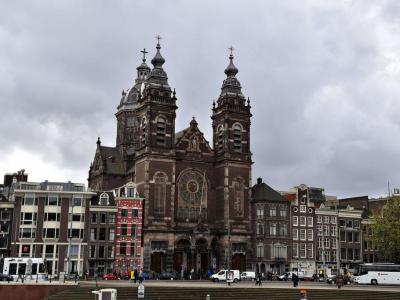
Across the water from the Station Square (“Stationsplein”), you'll see the striking twin towers and dome of Saint Nicholas. It’s Amsterdam’s main Catholic church, dedicated to the patron saint of sailors and the city itself. Built in the 1880s, it reflects a mix of revival styles, mainly Neo-Baroque and Neo-Renaissance influences.
Step inside and you’ll find a grand interior adorned with religious murals, which some might find a bit sentimental. The colorful brickwork, however, adds a distinctive charm. Above the main altar is the Habsburg Emperor Maximilian’s crown-a prominent symbol of the city. You’ll see this crown referenced often, as it represents an important historical connection.
In the late 15th century, Holy Roman Emperor Maximilian visited Amsterdam as a pilgrim. While recovering from an illness, he received considerable support from the city’s residents, who even helped fund his military campaigns. In return, Maximilian granted Amsterdam the right to incorporate his crown into its coat of arms. This royal emblem endured through centuries, even surviving the 17th-century revolt against Spain, and remains a proud part of the city’s identity.
Step inside and you’ll find a grand interior adorned with religious murals, which some might find a bit sentimental. The colorful brickwork, however, adds a distinctive charm. Above the main altar is the Habsburg Emperor Maximilian’s crown-a prominent symbol of the city. You’ll see this crown referenced often, as it represents an important historical connection.
In the late 15th century, Holy Roman Emperor Maximilian visited Amsterdam as a pilgrim. While recovering from an illness, he received considerable support from the city’s residents, who even helped fund his military campaigns. In return, Maximilian granted Amsterdam the right to incorporate his crown into its coat of arms. This royal emblem endured through centuries, even surviving the 17th-century revolt against Spain, and remains a proud part of the city’s identity.
2) Noorderkerk (Northern Church)
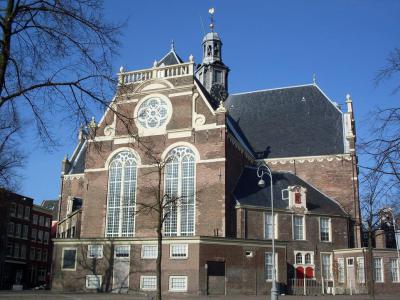
The Northern Church stands prominently at the intersection of Noordermarkt (Northern Market), serving as a notable landmark within the neighborhood. This unadorned church holds historical significance as one of the earliest constructions following the Protestant Reformation and represents the final architectural work attributed to Hendrick de Keyser. Surprisingly distinct in style from his other notable churches in the city, namely the Southern and Western churches, it was erected to cater to the impoverished residents of the Jordaan neighborhood. It takes the form of an austere brick structure, characterized by its short spire and bulky, somewhat imposing appearance-a stark departure from the prevailing church designs of the era.
Constructed with a stark, austere appearance, it featured a squat spire and a rather imposing, bulky structure, deviating radically from the conventional church architectural norms of its time. Notably, it adopted a symmetrical Greek cross floor plan, with four arms of equal dimensions extending from a central steeple. This unyieldingly somber design underscored the solemn commitment of the Calvinist congregation that gathered here. The positioning of the pulpit at the center, rather than the front of the church, symbolized a deliberate departure from Catholic traditions.
Visitors can enjoy weekly concerts at Noorderkerk every Saturday at 2pm, scheduled from June to September.
Constructed with a stark, austere appearance, it featured a squat spire and a rather imposing, bulky structure, deviating radically from the conventional church architectural norms of its time. Notably, it adopted a symmetrical Greek cross floor plan, with four arms of equal dimensions extending from a central steeple. This unyieldingly somber design underscored the solemn commitment of the Calvinist congregation that gathered here. The positioning of the pulpit at the center, rather than the front of the church, symbolized a deliberate departure from Catholic traditions.
Visitors can enjoy weekly concerts at Noorderkerk every Saturday at 2pm, scheduled from June to September.
3) Westerkerk (Western Church)
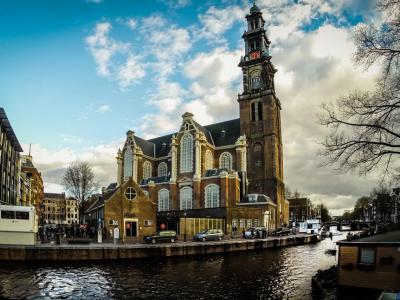
Anne Frank once found comfort in the gentle chimes of the Western Church’s bells-a reassuring hint of life outside her secret refuge-until those very bells were melted down for the German war effort. The church’s 85-meter-tall tower still stands as Amsterdam’s most dazzling spire. Rising gracefully above the city, it offers balconies with stunning panoramic views of the center and a carillon that strikes every quarter-hour, plus occasional full musical interludes. At its tip, you’ll find Emperor Maximilian’s crown, a proud emblem of Amsterdam and a glittering highlight of this Protestant landmark. Built by Hendrick de Keyser and completed in 1631, a decade after his passing, the church was a vital piece of the city’s early expansion.
Outwardly, the Western Church projects an air of restrained elegance; inside, however, it embraces Calvinist simplicity. Apart from the ample plain-glass windows that flood the space with natural light, the main attractions are the grand Baroque organ and the ornate wooden pulpit, topped by an oversized sounding board that once lent authority to lengthy sermons. While the Protestant elite shunned opulent decorations, they did indulge in a little exclusivity: boxed-in benches at the base of the nave’s stone columns, rented out by the well-to-do to signal their status.
Feeling adventurous? From April to October, you can climb the tower for a firsthand look at the bells and unbeatable views from a platform near the top. The stairs are steep enough to be interesting, but not so tough as to keep you from reaching one of the best vantage points in Amsterdam.
Outwardly, the Western Church projects an air of restrained elegance; inside, however, it embraces Calvinist simplicity. Apart from the ample plain-glass windows that flood the space with natural light, the main attractions are the grand Baroque organ and the ornate wooden pulpit, topped by an oversized sounding board that once lent authority to lengthy sermons. While the Protestant elite shunned opulent decorations, they did indulge in a little exclusivity: boxed-in benches at the base of the nave’s stone columns, rented out by the well-to-do to signal their status.
Feeling adventurous? From April to October, you can climb the tower for a firsthand look at the bells and unbeatable views from a platform near the top. The stairs are steep enough to be interesting, but not so tough as to keep you from reaching one of the best vantage points in Amsterdam.
4) Onze-Lieve-Vrouwekerk (Church of Our Lady)
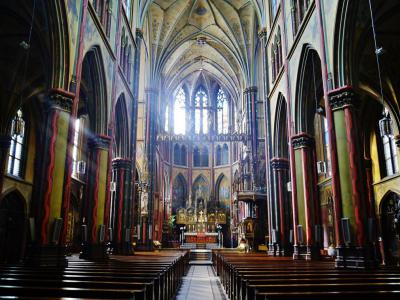
This neo-Gothic Roman Catholic church, with its striking brick façade from 1854, is a visual stunner-no tower necessary. Its exterior commands attention and makes a photographer’s job delightfully easy, while the interior goes all out: literally every column, corner, and crevice is painted, with stained glass windows adding an extra dose of grandeur. It’s a feast for the eyes, inside and out.
Back in the day, Gothic architecture held a special place in Catholic hearts, as it harked back to the glory days of majestic cathedrals. In December 1854, the Catholic newspaper De Tijd heaped praise on the newly built church: “The Church of Our Lady stands as a testament to the marvels of Gothic architecture. Within its walls, one encounters no mishmash of discordant styles and orders, a regrettable sight often witnessed in various church edifices, including those of more recent origin. This architectural style radiates purity and harmony among its diverse elements, coming together to form a breathtaking entirety that leaves an indelible mark on all who cross its sacred threshold. The facade, too, is a masterpiece, gracing the Emperor’s Canal.”
Fast forward to 1985, and the church was handed over to the Syrian Orthodox Church. But Catholic services still hold their ground. For Sunday Mass, tourists are more than welcome, with services conveniently offered in English.
Back in the day, Gothic architecture held a special place in Catholic hearts, as it harked back to the glory days of majestic cathedrals. In December 1854, the Catholic newspaper De Tijd heaped praise on the newly built church: “The Church of Our Lady stands as a testament to the marvels of Gothic architecture. Within its walls, one encounters no mishmash of discordant styles and orders, a regrettable sight often witnessed in various church edifices, including those of more recent origin. This architectural style radiates purity and harmony among its diverse elements, coming together to form a breathtaking entirety that leaves an indelible mark on all who cross its sacred threshold. The facade, too, is a masterpiece, gracing the Emperor’s Canal.”
Fast forward to 1985, and the church was handed over to the Syrian Orthodox Church. But Catholic services still hold their ground. For Sunday Mass, tourists are more than welcome, with services conveniently offered in English.
5) Nieuwe Kerk (New Church)
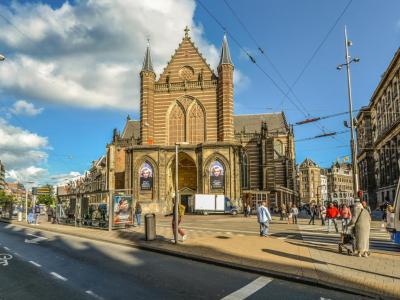
The New Church, a historical gem on Amsterdam's Dam Square, dates back to the 15th century. Originally serving as a Dutch Reformed Church parish, it is now part of the Protestant Church of the Netherlands.
The construction of this church in the late 14th century was prompted by a need for more religious space amid a growing population. It was completed in 1408 and consecrated a year later. Throughout the 15th century, the building suffered significant damage from fires and was nearly destroyed in 1645, which ultimately led to its Gothic-style reconstruction. Major renovations in the late 19th and mid-20th centuries introduced neo-Gothic and early-Renaissance elements.
The intricately adorned stained glass windows portray historical events associated with this church, such as Queen Wilhelmina's coronation in 1890. Notable features within the interior encompass an opulent, meticulously crafted mahogany pulpit (the result of fifteen years of painstaking effort), alongside a cunningly wrought copper chancel screen and a flamboyant Baroque organ case.
Historically significant, the New Church has hosted Dutch royal investiture ceremonies, including the most recent one of King Willem-Alexander, in 2013. It also has been the venue for royal weddings, such as Willem-Alexander's marriage to Máxima in 2002. Additionally, it serves as the final resting place for notable Dutch personalities like the naval hero Admiral Michiel de Ruyter and Joost van den Vondel, a Roman Catholic poet and playwright.
Although the church is still used for recitals, it no longer holds religious services but functions primarily as an exhibition space. The exhibitions held here cover diverse themes, including some rather unconventional ones. Attached to the church is a café accessible during opening hours and a museum store that offers a variety of related souvenirs like postcards, books, and gifts.
Tip:
Feel free to step inside the lobby to marvel at the beautiful giant stained glass panes.
Exhibitions can be a little overpriced but are good value with the I Amsterdam card.
The construction of this church in the late 14th century was prompted by a need for more religious space amid a growing population. It was completed in 1408 and consecrated a year later. Throughout the 15th century, the building suffered significant damage from fires and was nearly destroyed in 1645, which ultimately led to its Gothic-style reconstruction. Major renovations in the late 19th and mid-20th centuries introduced neo-Gothic and early-Renaissance elements.
The intricately adorned stained glass windows portray historical events associated with this church, such as Queen Wilhelmina's coronation in 1890. Notable features within the interior encompass an opulent, meticulously crafted mahogany pulpit (the result of fifteen years of painstaking effort), alongside a cunningly wrought copper chancel screen and a flamboyant Baroque organ case.
Historically significant, the New Church has hosted Dutch royal investiture ceremonies, including the most recent one of King Willem-Alexander, in 2013. It also has been the venue for royal weddings, such as Willem-Alexander's marriage to Máxima in 2002. Additionally, it serves as the final resting place for notable Dutch personalities like the naval hero Admiral Michiel de Ruyter and Joost van den Vondel, a Roman Catholic poet and playwright.
Although the church is still used for recitals, it no longer holds religious services but functions primarily as an exhibition space. The exhibitions held here cover diverse themes, including some rather unconventional ones. Attached to the church is a café accessible during opening hours and a museum store that offers a variety of related souvenirs like postcards, books, and gifts.
Tip:
Feel free to step inside the lobby to marvel at the beautiful giant stained glass panes.
Exhibitions can be a little overpriced but are good value with the I Amsterdam card.
6) Begijnhof Chapel
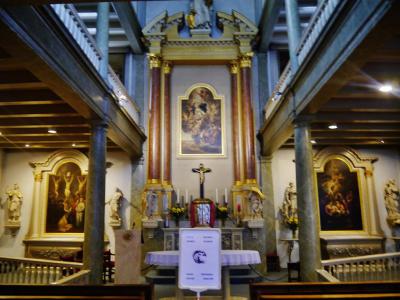
In Amsterdam, the beguines, devout Catholic women who remained unmarried, may have lost their original church to the rise of Calvinism, which led to the establishment of the current English Reformed Church in the city. However, in accordance with the terms of the 'Alteratie', which was then part of the larger conflict between Protestantism and Catholicism in Europe, they were granted the opportunity to discreetly conduct Mass in the secret Catholic Begijnhof Chapel, which was set up in a house situated directly across from their former church. Initially consecrated to Saint John the Baptist, it was subsequently rededicated to Saint Ursula, the patron saint of the beguines. This quaint little chapel is still in use today, adorned with rather sentimental religious paintings, a splendid altar featuring a depiction of the Last Supper, and an array of other religious artworks and relics.
The adjacent peaceful courtyard, which dates back to 1346, served as the residence for beguines who led a semi-monastic life in service to the community (the last beguine passed away in 1970). Nowadays, the little gabled houses in Begijnhof, constructed between the 14th and 17th centuries, provide homes for elderly retired women, so it's advisable to be respectful of their privacy. During springtime, the Begijnhof lawn is adorned with a colorful carpet of daffodils and crocuses, enhancing the tranquil and spiritual ambiance of the place.
Tip:
For those interested, you can find Het Houten Huys ("The Wooden House") just across the courtyard's lawn. This remarkable structure, dating back to 1425, is the oldest house in Amsterdam and one of only two surviving wooden residences in the city.
The adjacent peaceful courtyard, which dates back to 1346, served as the residence for beguines who led a semi-monastic life in service to the community (the last beguine passed away in 1970). Nowadays, the little gabled houses in Begijnhof, constructed between the 14th and 17th centuries, provide homes for elderly retired women, so it's advisable to be respectful of their privacy. During springtime, the Begijnhof lawn is adorned with a colorful carpet of daffodils and crocuses, enhancing the tranquil and spiritual ambiance of the place.
Tip:
For those interested, you can find Het Houten Huys ("The Wooden House") just across the courtyard's lawn. This remarkable structure, dating back to 1425, is the oldest house in Amsterdam and one of only two surviving wooden residences in the city.
7) Zuiderkerk (Southern Church)
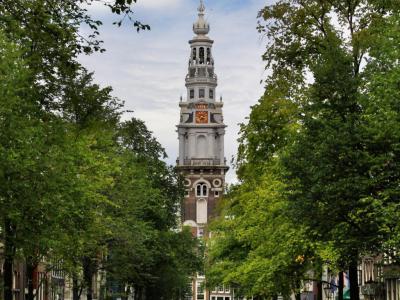
One of the most beautiful towers in Amsterdam, which even served as an inspiration for some of Monet's paintings, stands at the location of the Southern Church, known as the Zuiderkerk. Erected between 1603 and 1614, this church holds the distinction of being the first one in Amsterdam constructed exclusively for the Protestant faith. Responsible for its design was renowned architect and sculptor, Hendrick de Keyser, whose distinctive and highly popular style blended elements of traditional Flemish architecture with intricate embellishments, including ornate towers wherever possible. While the main body of the church adheres to a Gothic design, the towering spire exemplified his craftsmanship, featuring balconies, balustrades, arches, urns, and columns.
The Southern Church not only served as a source of inspiration, a model, and a symbol for some but also played an unexpected role as a morgue for the city at one point. During the harsh final years of the Second World War (1944–45), Amsterdam faced a severe shortage of food, leading to a situation where people were passing away more rapidly than they could be interred.
The famous Dutch painter Rembrandt is closely tied to this church in multiple ways, as three of his children found their final resting place here. Due to the proximity of Rembrandt's former residence to the location, there is even speculation that he completed some of his most renowned works within the church premises rather than in his studio.
Today, the building functions as a Municipal Exhibition Center, hosting a variety of events, concerts, and conferences.
The Southern Church not only served as a source of inspiration, a model, and a symbol for some but also played an unexpected role as a morgue for the city at one point. During the harsh final years of the Second World War (1944–45), Amsterdam faced a severe shortage of food, leading to a situation where people were passing away more rapidly than they could be interred.
The famous Dutch painter Rembrandt is closely tied to this church in multiple ways, as three of his children found their final resting place here. Due to the proximity of Rembrandt's former residence to the location, there is even speculation that he completed some of his most renowned works within the church premises rather than in his studio.
Today, the building functions as a Municipal Exhibition Center, hosting a variety of events, concerts, and conferences.
8) Oude Kerk (Old Church)
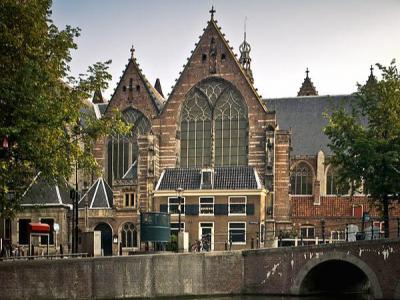
Amsterdam’s oldest building, the Old Church, boasts the largest medieval wooden vault in Europe. The initial wooden chapel on this site was built around 1213. Eventually replaced by a stone structure, in 1306, the church was dedicated to Saint Nicolas. To ensure its stability in a marshy area, the foundations were set on an artificial mound.
Throughout the centuries, the church has undergone numerous transformations. The most significant, in the 15th century, included the addition of north and south transepts, forming a cross shape, and the expansion of the aisles prompted by the necessity to recover from the destruction caused by fires in the early 1400s. Originally Roman Catholic, the church transitioned to its present Calvinist denomination in 1578, after the Dutch Revolt against Spanish rule. This transition led to the Iconoclastic Fury, with rioters destroying much of the church's art.
The Old Church boasts significant artistic and personal histories. It has ties to Rembrandt, who was a frequent visitor here for his children’s christenings. Today, this connection is honored by the annual celebration of Rembrandt’s wife, Saskia, who is buried inside. Each spring, on March 9, her tomb is illuminated by a unique play of sunlight in the morning.
The entire floor of the church is covered in gravestones. This is because it's built over a cemetery. Locals continued to be buried here until 1865. There are in total 2,500 graves, holding the remains of some 10,000 parishioners. Among them are the famed organist and composer Jan Pieterszoon Sweelinck; the revered naval hero Jacob van Heemskerck; and Frans Banning Cocq, the central character in Rembrandt's painting "The Night Watch".
Also, the interior – surprisingly spacious – contains a collection of exquisite stained glass, rare ceiling frescoes, and four pipe organs, including the renowned Vater-Müller organ built in 1724 and recognized as one of the finest Baroque organs in Europe.
As of 2012, the Old Church has been home to an art institute, the newest in town, featuring specific installations and a permanent exhibit on the history of Amsterdam.
Each year in mid-March, Catholics arrive at the Old Church to celebrate the so-called "Miracle of Amsterdam" which occurred in 1345. Legend has it that after taking communion, a dying man vomited the Sacramental bread – known as the Host – which is used in the Christian ritual of the Eucharist. When the bread was thrown into a fire, as prescribed by the tradition, it did not burn and was proclaimed a miracle. The Host was then put in a chest and displayed at the church. However, it disappeared during the Reformation period.
Tip:
Wonderful views from the tower (note the fee payable with credit/debit cards only); coffee and snacks are available in a charming garden.
Throughout the centuries, the church has undergone numerous transformations. The most significant, in the 15th century, included the addition of north and south transepts, forming a cross shape, and the expansion of the aisles prompted by the necessity to recover from the destruction caused by fires in the early 1400s. Originally Roman Catholic, the church transitioned to its present Calvinist denomination in 1578, after the Dutch Revolt against Spanish rule. This transition led to the Iconoclastic Fury, with rioters destroying much of the church's art.
The Old Church boasts significant artistic and personal histories. It has ties to Rembrandt, who was a frequent visitor here for his children’s christenings. Today, this connection is honored by the annual celebration of Rembrandt’s wife, Saskia, who is buried inside. Each spring, on March 9, her tomb is illuminated by a unique play of sunlight in the morning.
The entire floor of the church is covered in gravestones. This is because it's built over a cemetery. Locals continued to be buried here until 1865. There are in total 2,500 graves, holding the remains of some 10,000 parishioners. Among them are the famed organist and composer Jan Pieterszoon Sweelinck; the revered naval hero Jacob van Heemskerck; and Frans Banning Cocq, the central character in Rembrandt's painting "The Night Watch".
Also, the interior – surprisingly spacious – contains a collection of exquisite stained glass, rare ceiling frescoes, and four pipe organs, including the renowned Vater-Müller organ built in 1724 and recognized as one of the finest Baroque organs in Europe.
As of 2012, the Old Church has been home to an art institute, the newest in town, featuring specific installations and a permanent exhibit on the history of Amsterdam.
Each year in mid-March, Catholics arrive at the Old Church to celebrate the so-called "Miracle of Amsterdam" which occurred in 1345. Legend has it that after taking communion, a dying man vomited the Sacramental bread – known as the Host – which is used in the Christian ritual of the Eucharist. When the bread was thrown into a fire, as prescribed by the tradition, it did not burn and was proclaimed a miracle. The Host was then put in a chest and displayed at the church. However, it disappeared during the Reformation period.
Tip:
Wonderful views from the tower (note the fee payable with credit/debit cards only); coffee and snacks are available in a charming garden.
