Custom Walk in Geneva, Switzerland by philhowardfl6955 created on 2026-07-16
Guide Location: Switzerland » Geneva
Guide Type: Custom Walk
# of Sights: 12
Tour Duration: 4 Hour(s)
Travel Distance: 8.7 Km or 5.4 Miles
Share Key: Y83C4
Guide Type: Custom Walk
# of Sights: 12
Tour Duration: 4 Hour(s)
Travel Distance: 8.7 Km or 5.4 Miles
Share Key: Y83C4
How It Works
Please retrieve this walk in the GPSmyCity app. Once done, the app will guide you from one tour stop to the next as if you had a personal tour guide. If you created the walk on this website or come to the page via a link, please follow the instructions below to retrieve the walk in the app.
Retrieve This Walk in App
Step 1. Download the app "GPSmyCity: Walks in 1K+ Cities" on Apple App Store or Google Play Store.



Step 2. In the GPSmyCity app, download(or launch) the guide "Geneva Map and Walking Tours".
Step 3. Tap the menu button located at upper right corner of the "Walks" screen and select "Retrieve custom walk". Enter the share key: Y83C4
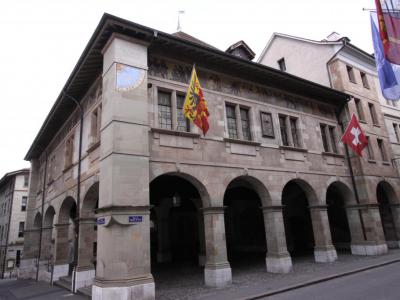
1) Ancien Arsenal (Old Arsenal)
Right near the Geneva Town Hall, the Old Arsenal sits quietly, as if it has nothing left to prove. These days, it keeps things civil, housing the State Archives. But rewind a few centuries, and this was Geneva’s no-nonsense storage unit for weapons and gunpowder—less paperwork, more boom...
The building still carries that tough exterior. It looks a bit like a fortified mansion, complete with a compact artillery display of five cannons lined up out front, as if they’re still on standby—just in case history decides to repeat itself. Before all that, though, this spot had a softer side. Back in Roman times, when Julius Caesar was passing through in 58 BC, it functioned as an open-air market. Only in the 15th century did it get a roof, followed by arcades in 1588, and eventually a granary above. By the 18th century, the whole place had fully committed to its military phase, serving as an arsenal until the late 1800s.
Step under those arcades today, and instead of soldiers, you’ll find three vivid mosaics situated just behind the retired cannons, depicting Geneva’s story in snapshots. These include Caesar’s arrival, the bustle of medieval trade fairs, and the city opening its doors to Huguenot refugees fleeing persecution after the revocation of the Edict of Nantes. Not a bad record for one courtyard...
In December, things take a surprisingly cozy turn. During the historic L'Escalade festival, marking Geneva’s successful defense against an ill-fated attempt to conquer it by the Catholic Duchy of Savoy in 1602-1603, this former weapons depot starts serving… vegetable soup. Yes, really. Ladled out in commemorative bowls, it’s a warm and slightly ironic tribute to a night that could have ended very differently. From gunpowder to soup—Geneva does seem to prefer its victories well-seasoned...
The building still carries that tough exterior. It looks a bit like a fortified mansion, complete with a compact artillery display of five cannons lined up out front, as if they’re still on standby—just in case history decides to repeat itself. Before all that, though, this spot had a softer side. Back in Roman times, when Julius Caesar was passing through in 58 BC, it functioned as an open-air market. Only in the 15th century did it get a roof, followed by arcades in 1588, and eventually a granary above. By the 18th century, the whole place had fully committed to its military phase, serving as an arsenal until the late 1800s.
Step under those arcades today, and instead of soldiers, you’ll find three vivid mosaics situated just behind the retired cannons, depicting Geneva’s story in snapshots. These include Caesar’s arrival, the bustle of medieval trade fairs, and the city opening its doors to Huguenot refugees fleeing persecution after the revocation of the Edict of Nantes. Not a bad record for one courtyard...
In December, things take a surprisingly cozy turn. During the historic L'Escalade festival, marking Geneva’s successful defense against an ill-fated attempt to conquer it by the Catholic Duchy of Savoy in 1602-1603, this former weapons depot starts serving… vegetable soup. Yes, really. Ladled out in commemorative bowls, it’s a warm and slightly ironic tribute to a night that could have ended very differently. From gunpowder to soup—Geneva does seem to prefer its victories well-seasoned...
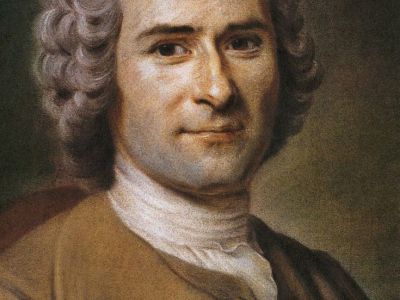
2) Jean-Jacques Rousseau House Museum
The Jean-Jacques Rousseau House Museum in Geneva provides a unique window into the life of one of the most influential thinkers of the Enlightenment period. Jean-Jacques Rousseau, who was born in Geneva in 1712, spent his early years in this very place. The museum is located on Grand-Rue in Geneva's Old Town and serves as a tribute to his life, ideas, and contributions.
Rousseau, a renowned humanist, philosopher, writer, and musician, has had a lasting impact on history. His most important works, such as "La Nouvelle Héloïse," "L’Émile," and "The Social Contract," were written in Geneva, reflecting the profound influence of his upbringing and experiences in the city.
Today, the Rousseau House Museum, once his modest residence, has been transformed into a vibrant cultural center. It's a space where ideas are exchanged, and discussions and literary gatherings take place, fostering an intellectual atmosphere reminiscent of Rousseau's time.
Visitors to the museum can delve into Rousseau's world through a thoughtfully curated exhibition that combines sound and visuals. This multimedia approach offers an intimate look into Rousseau's life, from his challenging childhood marked by the early loss of his mother and the influence of his father, a watchmaker, to his eventual move to Paris in 1742.
The museum not only traces Rousseau's personal journey but also houses an impressive collection of his writings, manuscripts, and other cultural artifacts. These items provide a tangible link to Rousseau's legacy and offer insights into his thoughts and the era in which he lived. Additionally, the museum caters to a diverse audience by offering audiovisual tours in multiple languages, including Chinese, to ensure that Rousseau's story is accessible to a global audience.
Rousseau, a renowned humanist, philosopher, writer, and musician, has had a lasting impact on history. His most important works, such as "La Nouvelle Héloïse," "L’Émile," and "The Social Contract," were written in Geneva, reflecting the profound influence of his upbringing and experiences in the city.
Today, the Rousseau House Museum, once his modest residence, has been transformed into a vibrant cultural center. It's a space where ideas are exchanged, and discussions and literary gatherings take place, fostering an intellectual atmosphere reminiscent of Rousseau's time.
Visitors to the museum can delve into Rousseau's world through a thoughtfully curated exhibition that combines sound and visuals. This multimedia approach offers an intimate look into Rousseau's life, from his challenging childhood marked by the early loss of his mother and the influence of his father, a watchmaker, to his eventual move to Paris in 1742.
The museum not only traces Rousseau's personal journey but also houses an impressive collection of his writings, manuscripts, and other cultural artifacts. These items provide a tangible link to Rousseau's legacy and offer insights into his thoughts and the era in which he lived. Additionally, the museum caters to a diverse audience by offering audiovisual tours in multiple languages, including Chinese, to ensure that Rousseau's story is accessible to a global audience.
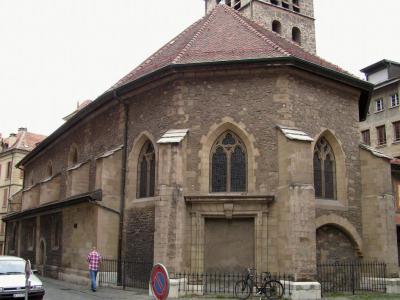
3) Eglise Saint-Germain
The Saint-Germain Church in Geneva is a historically significant Catholic church, originally one of the city's seven main parishes. Constructed in the Gothic style during the 15th century, it initially served as a Protestant church. This structure replaced earlier versions: a 9th-century early Christian basilica and a 12th-century Romanesque church, which underwent reconstruction in 1334 after a fire.
In 1535, the church was the site of Geneva's first Reformation sermon. Later, from 1537 to 1554, it was repurposed as a butcher's shop. It returned to its religious roots in the 18th century, temporarily taking over the role of the Saint-Pierre cathedral as a Protestant place of worship.
Following the French invasion in the 19th century and the 1801 concordat between Pope Pius VII and Napoleon Bonaparte, which required local acceptance of a Roman Catholic church, Saint-Germain was chosen for conversion in 1803. In 1873, it was handed over to the Christian Catholic Church and, after the 1907 Church-State separation, became the property of Geneva's Christian Catholic Church.
An early 20th-century fire in the bell tower led to the loss of the original bells. A replacement bell, weighing 120 kilos and crafted in 1764 by Jean-Louis Revillard, was sourced from the city's clock tower. The restoration, including this change, lasted from 1906 to 1908. In 1908, a morning-hour-specific sundial, designed by Albert Schmidt, was placed outside the sacristy wall above a fountain. It features a depiction of death on a donkey under the sun, symbolizing life's transience.
Designated as a historic monument and a national cultural asset in 1921, the church has been hosting outdoor classical music concerts each summer since 1973. In 2008, commemorating 100 years since the 1908 refurbishment of the bell tower, two new bells were installed. These bells, with weights of 260 kilograms and 70 kilograms, were made by Paccard Foundry in Annecy.
In 1535, the church was the site of Geneva's first Reformation sermon. Later, from 1537 to 1554, it was repurposed as a butcher's shop. It returned to its religious roots in the 18th century, temporarily taking over the role of the Saint-Pierre cathedral as a Protestant place of worship.
Following the French invasion in the 19th century and the 1801 concordat between Pope Pius VII and Napoleon Bonaparte, which required local acceptance of a Roman Catholic church, Saint-Germain was chosen for conversion in 1803. In 1873, it was handed over to the Christian Catholic Church and, after the 1907 Church-State separation, became the property of Geneva's Christian Catholic Church.
An early 20th-century fire in the bell tower led to the loss of the original bells. A replacement bell, weighing 120 kilos and crafted in 1764 by Jean-Louis Revillard, was sourced from the city's clock tower. The restoration, including this change, lasted from 1906 to 1908. In 1908, a morning-hour-specific sundial, designed by Albert Schmidt, was placed outside the sacristy wall above a fountain. It features a depiction of death on a donkey under the sun, symbolizing life's transience.
Designated as a historic monument and a national cultural asset in 1921, the church has been hosting outdoor classical music concerts each summer since 1973. In 2008, commemorating 100 years since the 1908 refurbishment of the bell tower, two new bells were installed. These bells, with weights of 260 kilograms and 70 kilograms, were made by Paccard Foundry in Annecy.
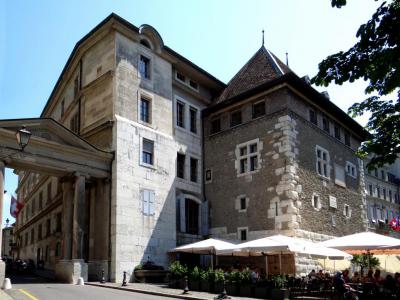
4) Hôtel de Ville (Geneva Town Hall)
For more than five centuries, Geneva Town Hall has been a place where decisions were made, deals were struck, and, occasionally, history cleared its throat and spoke up. As the seat of government for both the Canton and the Republic of Geneva, this building has quietly hosted moments that reached far beyond the city’s borders.
In 1864, inside what’s known as the Alabama Room, representatives gathered to sign the very first Geneva Convention, which laid the groundwork for the International Committee of the Red Cross. Quite an achievement for one afternoon’s work...
A few years later, in 1872, the same building helped settle a long-standing, tense dispute between the United States and Great Britain through international arbitration. Geneva, it seems, has long had a talent for getting people to sit down and sort things out...
Architecturally, the Town Hall keeps things elegant but practical. The 16th-century structure unfolds over three levels in a restrained neoclassical style, centered around a spacious courtyard. But the real conversation piece is that ramp—an unusually grand, cobbled spiral built between 1555 and 1578, tucked inside a square tower. It was designed so that officials could ride their horses straight up to the upper floors, because apparently, stairs were beneath both high-ranking riders and their horses...
Today, you can follow the same path—only without a horse. Just your own two feet, echoing up the stones, step by step, in what might be the most dignified uphill walk in Geneva.
In 1864, inside what’s known as the Alabama Room, representatives gathered to sign the very first Geneva Convention, which laid the groundwork for the International Committee of the Red Cross. Quite an achievement for one afternoon’s work...
A few years later, in 1872, the same building helped settle a long-standing, tense dispute between the United States and Great Britain through international arbitration. Geneva, it seems, has long had a talent for getting people to sit down and sort things out...
Architecturally, the Town Hall keeps things elegant but practical. The 16th-century structure unfolds over three levels in a restrained neoclassical style, centered around a spacious courtyard. But the real conversation piece is that ramp—an unusually grand, cobbled spiral built between 1555 and 1578, tucked inside a square tower. It was designed so that officials could ride their horses straight up to the upper floors, because apparently, stairs were beneath both high-ranking riders and their horses...
Today, you can follow the same path—only without a horse. Just your own two feet, echoing up the stones, step by step, in what might be the most dignified uphill walk in Geneva.
5) Mur des Réformateurs (Reformation Wall) (must see)
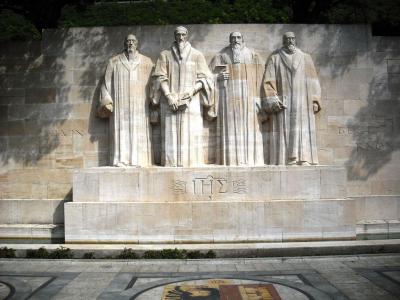
Inaugurated in 1909, the Reformation Wall celebrates the persons and events of the Protestant Reformation. Set within the grounds of the University of Geneva, this monument marks two milestones: 400 years since the birth of John Calvin and 350 years since he founded the university. Geneva clearly likes to celebrate with stone—and on a rather impressive scale...
The wall isn’t just placed here—it’s built straight into the old city fortifications, a subtle reminder that ideas once needed defending just as much as borders. The design came from a global competition—in total, 71 entries were submitted—before four Swiss architects teamed up to bring it to life. In a way, it was a kind of early-20th-century design showdown, only without reality-TV judges and more granite...
Because of its close connection to Protestantism, the individuals featured on the Wall most prominently are Calvinists, although key figures in other theologies are also included. Front and center, you’ll spot four towering figures—each over 16 feet tall— depicting William Farel, John Calvin, Theodore Beza, and John Knox. Robes on, small bibles in hand, expressions firmly set—they are not casual Sunday readers, indeed. Behind their calm poses lies a movement that reshaped half of Europe.
Flanking them on the left are three 10-foot figures, representing Frederick William of Brandenburg, William the Silent, and Gaspard de Coligny. On the one side, you'll find Roger Williams, Oliver Cromwell, and Stephen Bocskai. Different countries, different contexts—same big idea: reform, resistance, and a fair bit of controversy...
And running across the monument is the Latin motto that sums it all up: “After Darkness, Light.” Not exactly subtle, but then again, neither was the Reformation...
The wall isn’t just placed here—it’s built straight into the old city fortifications, a subtle reminder that ideas once needed defending just as much as borders. The design came from a global competition—in total, 71 entries were submitted—before four Swiss architects teamed up to bring it to life. In a way, it was a kind of early-20th-century design showdown, only without reality-TV judges and more granite...
Because of its close connection to Protestantism, the individuals featured on the Wall most prominently are Calvinists, although key figures in other theologies are also included. Front and center, you’ll spot four towering figures—each over 16 feet tall— depicting William Farel, John Calvin, Theodore Beza, and John Knox. Robes on, small bibles in hand, expressions firmly set—they are not casual Sunday readers, indeed. Behind their calm poses lies a movement that reshaped half of Europe.
Flanking them on the left are three 10-foot figures, representing Frederick William of Brandenburg, William the Silent, and Gaspard de Coligny. On the one side, you'll find Roger Williams, Oliver Cromwell, and Stephen Bocskai. Different countries, different contexts—same big idea: reform, resistance, and a fair bit of controversy...
And running across the monument is the Latin motto that sums it all up: “After Darkness, Light.” Not exactly subtle, but then again, neither was the Reformation...
6) Musée d'Art et d'Histoire (Museum of Art and History) (must see)
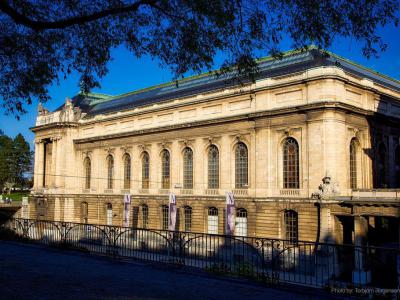
The Museum of Art and History in Geneva, constructed in the early 20th century, houses a remarkable collection of fine art spanning from the Middle Ages to the 20th century. This collection features works from various schools of art, including Italian, Dutch, French, English, Genevan, and Swiss. Among its notable pieces is 'The Miraculous Draught of Fishes' (1444) by Konrad Witz, a part of Witz's Saint Peter Altarpiece.
The museum also boasts works by renowned artists such as Rembrandt, Cézanne, Modigliani, and the sculptor Rodin. Notable contributions can also be found from artists like Jean-Étienne Liotard, Ferdinand Hodler, Félix Vallotton, and Jean-Baptiste-Camille Corot. The collection of works by Genevan Neoclassical painter Jean-Pierre Saint-Ours (who passed away in 1809) is considered one of the museum's most exceptional offerings.
In addition to its fine art holdings, the museum houses an Applied Art section, which includes diverse collections of Byzantine art, icons, medieval and Renaissance weaponry, silverware, tinware, musical instruments, and textiles. The museum also showcases the complete interior furnishings and wood paneling from several rooms of the Lower Castle Zizers, dating back to the late 17th century.
The Archaeology section of the museum presents a wide array of artifacts, including findings from European prehistory, ancient Egypt (featuring a mummy from the 9th century BC), the Kerma culture of Sudan, the Near East, ancient Greece, as well as Roman and pre-Roman Italy. Additionally, there is a numismatic cabinet displaying a collection of coins and currency.
The museum also boasts works by renowned artists such as Rembrandt, Cézanne, Modigliani, and the sculptor Rodin. Notable contributions can also be found from artists like Jean-Étienne Liotard, Ferdinand Hodler, Félix Vallotton, and Jean-Baptiste-Camille Corot. The collection of works by Genevan Neoclassical painter Jean-Pierre Saint-Ours (who passed away in 1809) is considered one of the museum's most exceptional offerings.
In addition to its fine art holdings, the museum houses an Applied Art section, which includes diverse collections of Byzantine art, icons, medieval and Renaissance weaponry, silverware, tinware, musical instruments, and textiles. The museum also showcases the complete interior furnishings and wood paneling from several rooms of the Lower Castle Zizers, dating back to the late 17th century.
The Archaeology section of the museum presents a wide array of artifacts, including findings from European prehistory, ancient Egypt (featuring a mummy from the 9th century BC), the Kerma culture of Sudan, the Near East, ancient Greece, as well as Roman and pre-Roman Italy. Additionally, there is a numismatic cabinet displaying a collection of coins and currency.
7) Eglise Russe (Russian Church)
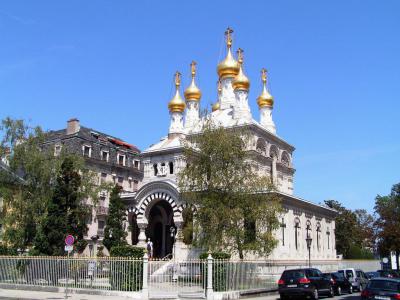
The Russian Church (Eglise Russe), otherwise known as the Cathedral of the Exaltation of the Holy Cross, is a historic Russian Orthodox temple in Geneva attached to a parish established on the orders of Emperor Alexander I in 1817. The temple was built in 1866, funded with generous donations by the Russian Grand Duchess Anna Fyodorovna, who lived in Switzerland at that time after separating from her husband, Grand Duke Constantine, as well as other members of the Imperial family of Alexander II (Michael, Olga, Constantine, Helena, Mary and Nicholas of Leuchtenberg), plus the Metropolitan of Kiev, Arsenius Moskvin.
The emergence of this church became possible after the revolution of 1846, following which the Geneva Constitution of 1847 guaranteed freedom of worship to various religious communities within the city. Among them was a small Russian diaspora comprising diplomats, military officers, aristocrats, engineers, civil servants, tourists, students and even left-wing activists. The building features Byzantine design, topped with nine bright golden onion domes and striped arches: five above the nave (symbolizing Jesus Christ and the four Evangelists), three on the apses, and one on the bell tower. Their total number represents the hierarchy of angels, composed of nine choirs.
The construction was carried out by Geneva-based architect, Jean-Pierre Guillebaud, to the design made by professor of architecture at the Imperial Academy of Fine Arts in Saint Petersburg, David Grimm. The foundation stone was laid on September 26, 1863 in the presence of Princes Serge and Georges de Leuchtenberg, the Russian Ambassador to Switzerland, as well as the State Councilor, Moïse Vautier. After three years of work, the church was completed on September 14, 1866 and was consecrated on September 26 of the same year by the Archpriests Joseph Vasiliev of Paris, Vassili Polejaiev of Nice, and Athanase Pétroff.
The Russian Church remains in active use to date, with the services held in Russian, Bulgarian, Serbian, and other languages.
The emergence of this church became possible after the revolution of 1846, following which the Geneva Constitution of 1847 guaranteed freedom of worship to various religious communities within the city. Among them was a small Russian diaspora comprising diplomats, military officers, aristocrats, engineers, civil servants, tourists, students and even left-wing activists. The building features Byzantine design, topped with nine bright golden onion domes and striped arches: five above the nave (symbolizing Jesus Christ and the four Evangelists), three on the apses, and one on the bell tower. Their total number represents the hierarchy of angels, composed of nine choirs.
The construction was carried out by Geneva-based architect, Jean-Pierre Guillebaud, to the design made by professor of architecture at the Imperial Academy of Fine Arts in Saint Petersburg, David Grimm. The foundation stone was laid on September 26, 1863 in the presence of Princes Serge and Georges de Leuchtenberg, the Russian Ambassador to Switzerland, as well as the State Councilor, Moïse Vautier. After three years of work, the church was completed on September 14, 1866 and was consecrated on September 26 of the same year by the Archpriests Joseph Vasiliev of Paris, Vassili Polejaiev of Nice, and Athanase Pétroff.
The Russian Church remains in active use to date, with the services held in Russian, Bulgarian, Serbian, and other languages.
8) Parc La Grange
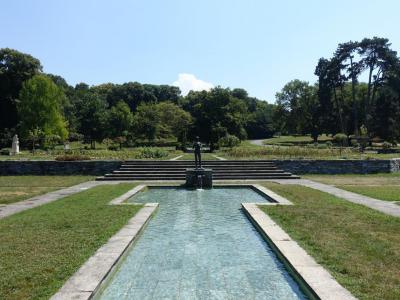
The La Grange Park is situated adjacent to the Eaux-Vives Park, providing a distinctive view of the lake basin. Covering an expansive area of 12,000 square meters, this splendid flower garden captivates its visitors with an impressive collection of over 200 rose varieties.
This park has a rich history, tracing back to its establishment in 1918 as a generous gift from the Favre family to the city of Geneva. It shares a connection with the neighboring Eaux-Vives Park through gates located at the end of both parks. Dominating the landscape within the park is an elegant manor house complemented by fountains and meticulously landscaped flower gardens.
Today, the park's main attraction is the rose garden, meticulously designed in 1945 by Armand Auberson, incorporating geometric patterns that harmoniously blend with the surrounding landscape. Within a spacious octagonal layout, visitors can admire an impressive array of approximately 200 rose varieties. Notably, this park hosts an annual international competition where rose enthusiasts from around the world showcase their latest rose varieties.
This park has a rich history, tracing back to its establishment in 1918 as a generous gift from the Favre family to the city of Geneva. It shares a connection with the neighboring Eaux-Vives Park through gates located at the end of both parks. Dominating the landscape within the park is an elegant manor house complemented by fountains and meticulously landscaped flower gardens.
Today, the park's main attraction is the rose garden, meticulously designed in 1945 by Armand Auberson, incorporating geometric patterns that harmoniously blend with the surrounding landscape. Within a spacious octagonal layout, visitors can admire an impressive array of approximately 200 rose varieties. Notably, this park hosts an annual international competition where rose enthusiasts from around the world showcase their latest rose varieties.
9) Temple de la Fusterie
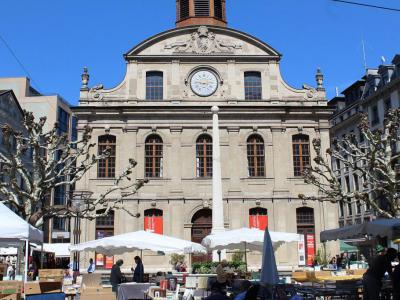
Located in the eponymous square at the heart of the Old Town of Geneva, the Temple de la Fusterie is a Reformed church that is distinguished from other local churches as the first religious site in the city specifically built for Calvinist worship. It was designed by architect Jean Vennes, taking two years to build – from 1713, and was consecrated on December 15, 1715.
Amid the inflow of oppressed Huguenot refugees from France to Geneva, the church imitated – in terms of both, architectural style and spatial planning – the Huguenot temple in the Paris suburb of Charenton-le-Pont that was designed by influential French architect Salomon de Bross in 1623 and destroyed in 1686.
The temple boasts late Baroque style, with a big clock at the top of the main façade. Contrary to the latter, the interior is rather modest, with a dormant and encircling gallery of Tuscan order colonnades and another colonnade set above the gallery, supporting the ceiling, which is flat, thus creating a basket arch vault above the main room of the nave.
Initially, the temple did not have an organ, which appeared only in the middle of the 18th century. The visual centerpiece of the church is the organ loft of the detached pulpit. Known for its excellent acoustics, the church serves as a concert hall these days. The musical performances last about 15 minutes.
Amid the inflow of oppressed Huguenot refugees from France to Geneva, the church imitated – in terms of both, architectural style and spatial planning – the Huguenot temple in the Paris suburb of Charenton-le-Pont that was designed by influential French architect Salomon de Bross in 1623 and destroyed in 1686.
The temple boasts late Baroque style, with a big clock at the top of the main façade. Contrary to the latter, the interior is rather modest, with a dormant and encircling gallery of Tuscan order colonnades and another colonnade set above the gallery, supporting the ceiling, which is flat, thus creating a basket arch vault above the main room of the nave.
Initially, the temple did not have an organ, which appeared only in the middle of the 18th century. The visual centerpiece of the church is the organ loft of the detached pulpit. Known for its excellent acoustics, the church serves as a concert hall these days. The musical performances last about 15 minutes.
10) Basilique Notre-Dame
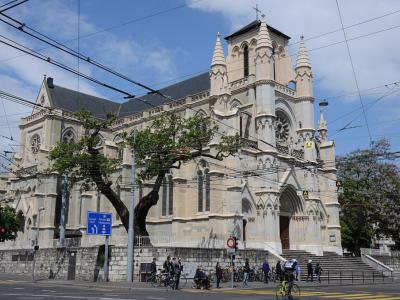
The Basilique de Notre-Dame serves as the primary Catholic church in Geneva. It was constructed between 1852 and 1857 based on the architectural plans of Alexandre Grigny. The basilica stands on the former site of defensive fortifications. This Neo-Gothic structure draws some of its design inspiration from the Beauvais Cathedral. Its establishment was made possible through a combination of factors, including the city of Geneva granting land to religious communities for the construction of places of worship, along with donations and manual labor contributed by the Catholic community in Geneva.
Inside the basilica, there is a statue of Our Lady of Geneva, a gift from Pope Pius IX, which is highly revered. However, the basilica is particularly renowned for its stained glass windows. While some of these windows are produced in a semi-industrial Neo-Gothic style, most of them showcase the evolution of stained glass art during the 20th century. These windows come in various styles, following the era of Claudius Lavergne, who installed them between 1857 and 1875. Starting in 1912, several artists have contributed to the decoration of the basilica, including Charles Brunner, Alexandre Cingria, Maurice Denis, Gherri Moro, Paul Monnier, Jean-Claude Morend, and Théodore Strawinsky.
The basilica has been recognized as a culturally significant National Heritage Site.
Inside the basilica, there is a statue of Our Lady of Geneva, a gift from Pope Pius IX, which is highly revered. However, the basilica is particularly renowned for its stained glass windows. While some of these windows are produced in a semi-industrial Neo-Gothic style, most of them showcase the evolution of stained glass art during the 20th century. These windows come in various styles, following the era of Claudius Lavergne, who installed them between 1857 and 1875. Starting in 1912, several artists have contributed to the decoration of the basilica, including Charles Brunner, Alexandre Cingria, Maurice Denis, Gherri Moro, Paul Monnier, Jean-Claude Morend, and Théodore Strawinsky.
The basilica has been recognized as a culturally significant National Heritage Site.
11) Voltaire House Museum
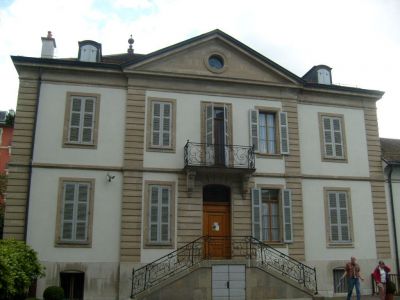
From 1755 to 1760, "Les Délices" in Geneva, served as the residence of the famous French philosopher Voltaire (1694–1778). Since 1952, this historic site has been home to the Institut et Musée Voltaire, a museum focusing on Voltaire's life and contributions.
Voltaire, along with his niece and romantic partner, Madame Marie-Louise Denis, sought a new home away from French authority, which frequently clashed with Voltaire due to his controversial writings. Despite the prohibition against Catholics owning land in Protestant Geneva, Voltaire managed to lease a property through local connections, gaining permission to reside in the city.
The property, owned by Geneva banker Jean-Jacques Millet, boasted impressive views, extensive gardens, and was fully furnished. On January 19, 1755, Voltaire and Mme. Denis were captivated by the property, particularly a gallery suitable for their theatrical interests. By March 1, 1755, after complex negotiations, they moved in and quickly enhanced the already magnificent residence with diverse plants and fruit trees, employing numerous gardeners, servants, and artisans. They named it "Les Délices" and Voltaire expressed his fondness for the place in a 1758 poem.
Voltaire left Les Délices for Ferney, France, in 1760. The Tronchin family later occupied it, and it served various purposes over the years, including as a Bible storage during the 1830s under Colonel Henri Tronchin.
The city of Geneva acquired the property in 1929, and it now hosts the museum dedicated to Voltaire, established in 1952. It contains a collection dedicated to the philosopher's memory, which includes manuscripts, printed materials, and various visual documents. Additionally, visitors can view items, especially furniture, that once belonged to the philosopher.
Voltaire, along with his niece and romantic partner, Madame Marie-Louise Denis, sought a new home away from French authority, which frequently clashed with Voltaire due to his controversial writings. Despite the prohibition against Catholics owning land in Protestant Geneva, Voltaire managed to lease a property through local connections, gaining permission to reside in the city.
The property, owned by Geneva banker Jean-Jacques Millet, boasted impressive views, extensive gardens, and was fully furnished. On January 19, 1755, Voltaire and Mme. Denis were captivated by the property, particularly a gallery suitable for their theatrical interests. By March 1, 1755, after complex negotiations, they moved in and quickly enhanced the already magnificent residence with diverse plants and fruit trees, employing numerous gardeners, servants, and artisans. They named it "Les Délices" and Voltaire expressed his fondness for the place in a 1758 poem.
Voltaire left Les Délices for Ferney, France, in 1760. The Tronchin family later occupied it, and it served various purposes over the years, including as a Bible storage during the 1830s under Colonel Henri Tronchin.
The city of Geneva acquired the property in 1929, and it now hosts the museum dedicated to Voltaire, established in 1952. It contains a collection dedicated to the philosopher's memory, which includes manuscripts, printed materials, and various visual documents. Additionally, visitors can view items, especially furniture, that once belonged to the philosopher.
12) Conservatory and Botanical Gardens (must see)
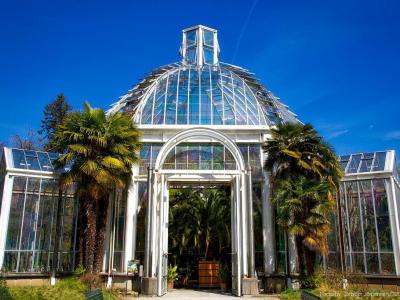
The Conservatory and Botanical Gardens (Conservatoire et Jardin Botaniques) in Geneve was founded in 1817 by the great Swiss botanist Augustin Pyramus de Candolle. Originally located in the old Bastions Park, the gardens were transferred to 192 Lausane Street (Rue de Lausane) in 1904. The Conservatory was built by architect Henri Juvet. It occupies 69 acres by Lake Geneva.
The Botanical Gardens were the design of Jules Allemand. The garden has a living collection of 10,000 species, a herbarium of six million specimens and a library with more than 220,000 books. The garden is divided into an arboretum, a rock garden, medicinal plants, horticulturals, and greenhouses. There is also a zoo by the lake.
The complete garden, with its greenhouses, libraries, collections and the mansions of "Le Chene" and "La Console," is registered as an important national cultural asset. This living museum also has a gift shop, a carousel, restaurant and free-roaming peacocks. Opening times may vary. A visit to the garden website is recommended.
The Botanical Gardens were the design of Jules Allemand. The garden has a living collection of 10,000 species, a herbarium of six million specimens and a library with more than 220,000 books. The garden is divided into an arboretum, a rock garden, medicinal plants, horticulturals, and greenhouses. There is also a zoo by the lake.
The complete garden, with its greenhouses, libraries, collections and the mansions of "Le Chene" and "La Console," is registered as an important national cultural asset. This living museum also has a gift shop, a carousel, restaurant and free-roaming peacocks. Opening times may vary. A visit to the garden website is recommended.
